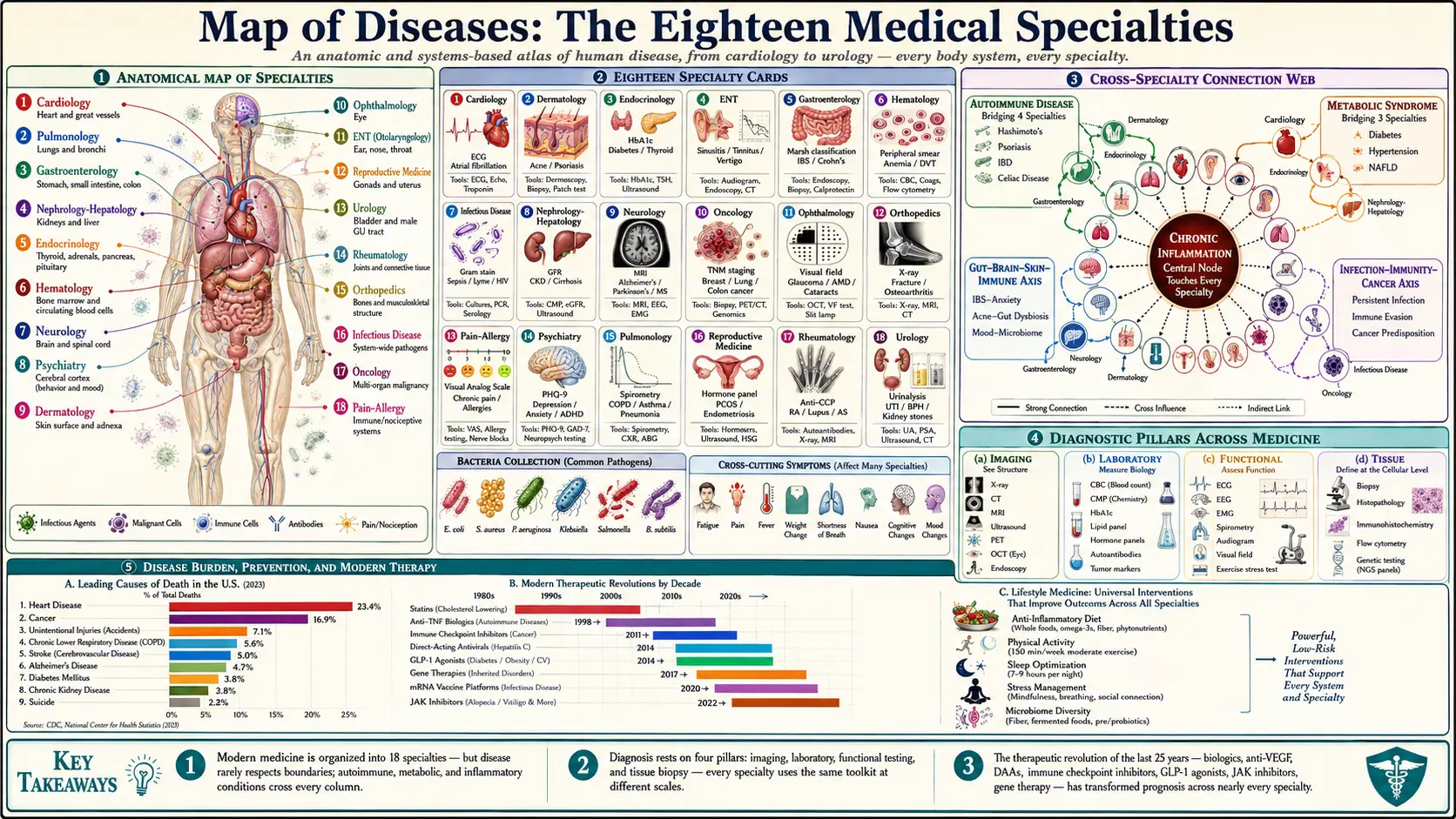
Diseases
Cancer and Parasites
A 37-page hub that sets each point of a 2026 presentation on cancer and parasites beside the published research.
Parasitic disease covers infections caused by protozoa, worms and free-living amoebae found in water and soil.
How conditions are measured: blood, urine, imaging and genetic tests, with reference ranges and thresholds, in eleven clinical categories.
Cardiology focuses on diseases and disorders of the heart and blood vessels.
Dentistry and oral health cover the teeth and gums — gingivitis is reversible, periodontitis is not.
Dermatology addresses conditions affecting the skin, hair, and nails.
Endocrinology deals with hormone-related disorders and metabolic conditions.
Gastroenterology focuses on the digestive system and related organs.
Hematology studies diseases of the blood, bone marrow, and coagulation system.
Infectious disease focuses on illnesses caused by bacteria, viruses, fungi, and parasites. The Infections overview gathers all of it in one place, grouped as Viral, Bacterial, Fungal, Parasitic and Tick-Borne infections, with Fighting Infections and Infection Animations — alongside the 36 bacteria and 35 parasite organism profiles.
This specialty addresses diseases of the kidneys and liver.
Neurology focuses on disorders of the brain, spinal cord, and nervous system.
Oncology is dedicated to the diagnosis and treatment of cancer.
This field focuses on chronic pain conditions and immune-mediated allergic disorders.
Pediatrics covers diseases and developmental conditions primarily affecting infants, children, and adolescents.
Psychiatry addresses mental health disorders and behavioral conditions.
Pulmonology focuses on diseases of the lungs and respiratory system.
Reproductive medicine deals with reproductive health, fertility, and pregnancy-related conditions.
Rheumatology focuses on autoimmune and inflammatory diseases affecting joints and connective tissues.
Urology focuses on diseases of the urinary tract and the male reproductive system.
ENT covers conditions affecting the ears, nose, throat, and related structures.
Ophthalmology addresses diseases and conditions of the eye and visual system.
Common symptoms that point to underlying disease — descriptions, causes, evaluation, and research.
Orthopedics focuses on musculoskeletal disorders and injuries.
Genetics covers inherited and de novo disorders — chromosomal, single-gene, and mitochondrial.
Immunology covers primary immunodeficiency diseases — inherited defects in immune defense, clearance, and regulation.
Profiles of major human bacterial pathogens — their biology, the diseases they cause, and treatment.
Connections
- Vitamins — the deficiencies that cause disease outright, and the vitamin status that changes its course.
- Minerals — magnesium, zinc, iron and iodine status behind a great many of the conditions listed here.
- Herbs — botanical medicine, organised by the conditions it is traditionally and clinically used for.
- Remedies — the practitioners, protocols and practices applied to these conditions.
- Food — the whole foods and dietary patterns that change disease risk most.
- Lab Tests — how each condition is actually measured, with reference ranges and thresholds.
- Toxins — environmental exposures that cause or worsen the diseases above.
- Biology — interactive animations of the mechanisms behind these conditions.
- Bacteria — the bacterial pathogens behind infectious disease, one page each.
- Type 2 Diabetes — insulin resistance, hemoglobin A1c (HbA1c) thresholds, and what actually reverses it.
- Small Intestinal Bacterial Overgrowth — small intestinal bacterial overgrowth, breath testing and relapse prevention.
- Rheumatoid Arthritis — the autoimmune joint disease, DMARDs, and where diet genuinely helps.
- Alzheimer’s Disease — amyloid, tau, and the risk factors that are actually modifiable.
- Hashimoto’s Thyroiditis — the commonest cause of hypothyroidism, and its antibody testing.
- Asthma — airway inflammation, inhaler types, and what a rescue-inhaler count tells you.
- Migraine — the neurological attack, its triggers, and the CGRP drugs that changed treatment.
- Fatty Liver Disease (Metabolic Dysfunction-Associated Steatotic Liver Disease) — the commonest liver disease in the world, and why it is reversible early.
Featured Videos