Stroke
Interactive Visualization How Blood Clots — and how thinners stop it Build a platelet plug, weave a fibrin mesh, then watch aspirin, warfarin and a DOAC each break a different step — with a live INR. Launch →
Table of Contents
What is a Stroke?
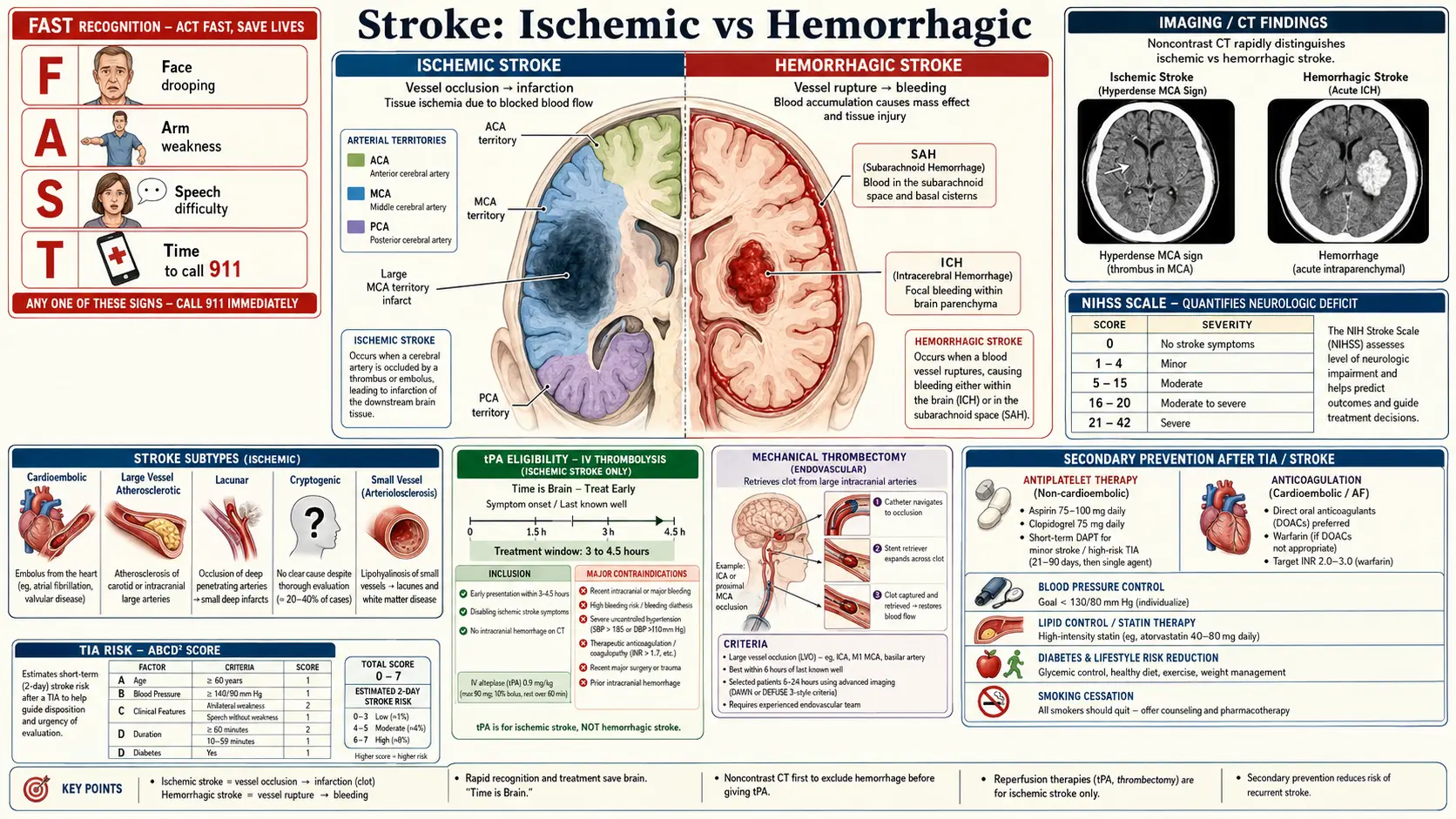
Stroke is a medical emergency that occurs when the blood supply to part of the brain is interrupted or reduced, preventing brain tissue from getting oxygen and nutrients. This can lead to brain cell death within minutes if not treated promptly.
Why minutes matter so much
The brain is about 2% of your body weight and takes roughly 20% of your blood supply. It stores almost no fuel of its own, so when flow stops, the cells downstream begin failing within seconds and dying within minutes. That is the whole reason stroke is treated as an emergency on a par with a heart attack.
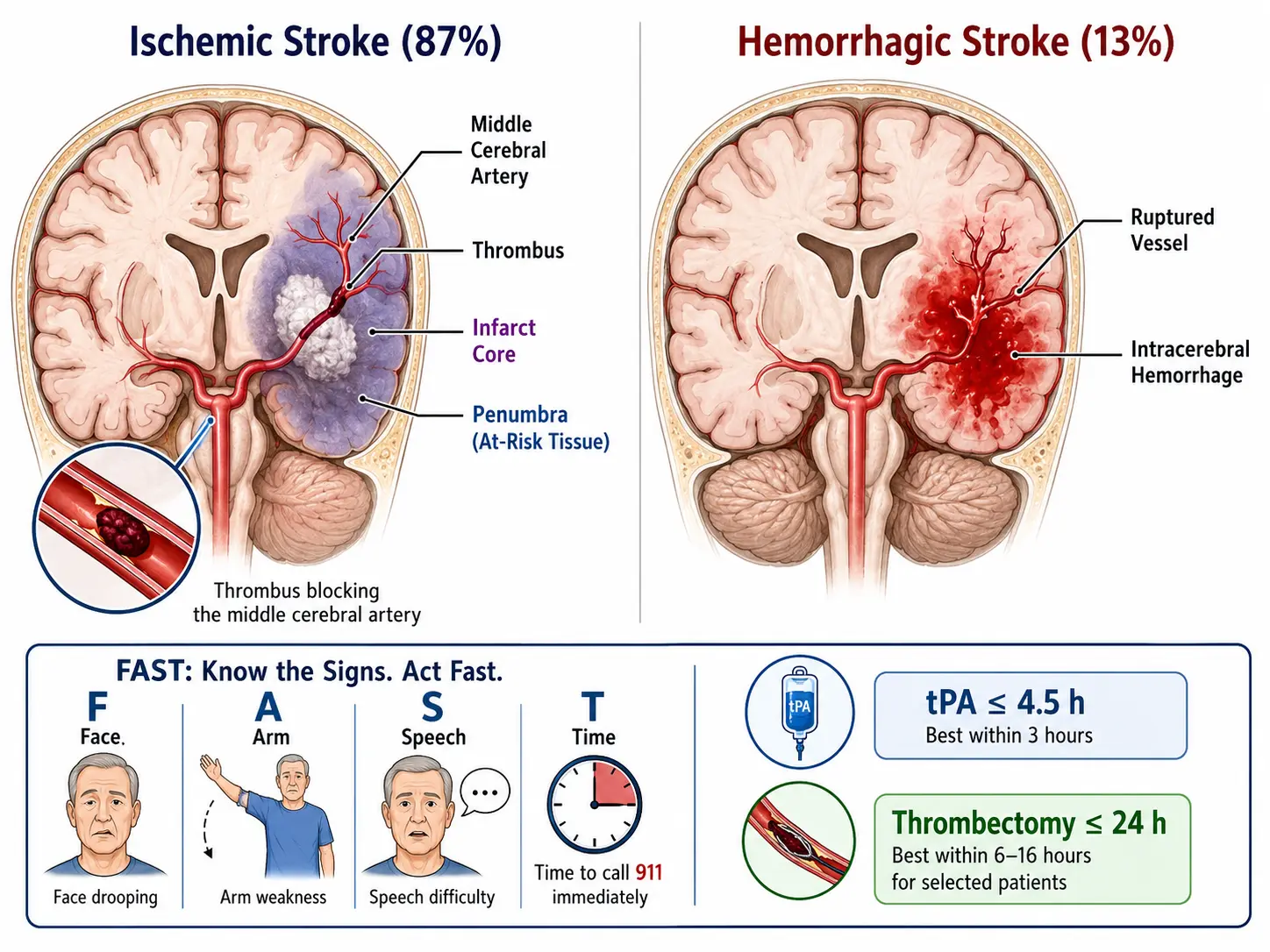
But not all the tissue dies at once, and this is the key to modern stroke treatment. At the centre of the blocked territory is the core — tissue that has already died and cannot be recovered. Around it is the penumbra — a rim of brain that is getting just enough blood from neighbouring vessels to stay alive but not enough to work. Those cells are switched off, not dead. They are the source of the symptoms you can see, and they are what treatment is racing to save.
The penumbra shrinks as the core expands. Every minute of delay converts salvageable brain into dead brain. That is what the phrase "time is brain" means, and it is the reason a stroke is not something to sleep on and reassess in the morning.
Types of Stroke
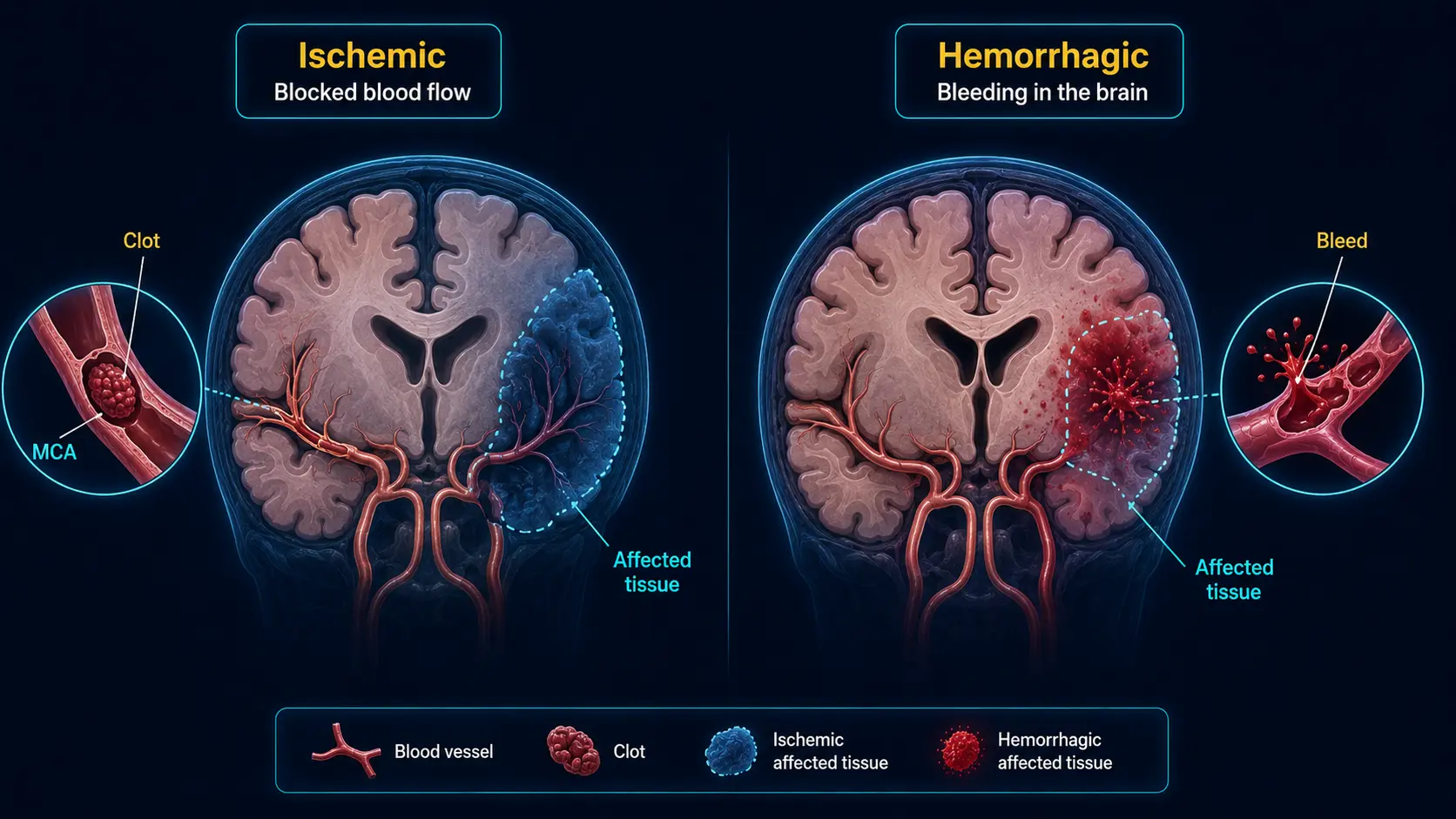
1. Ischemic Stroke
- Most common type: Accounts for about 87% of all strokes.
- Occurs due to a blocked artery: Caused by a blood clot or plaque buildup.
- Subtypes include:
- Thrombotic stroke: Clot forms in an artery supplying blood to the brain.
- Embolic stroke: Clot forms elsewhere in the body and travels to the brain.
- Where the clot comes from changes the prevention. A clot thrown from a fibrillating left atrium calls for an anticoagulant; plaque in a neck artery may call for surgery or a stent; disease of the brain's own small vessels calls for aggressive blood-pressure and cholesterol control. Finding the source is the main job of the workup after the emergency is over. See Atrial Fibrillation and Carotid Artery Stenosis.
2. Hemorrhagic Stroke
- Caused by a ruptured blood vessel in the brain.
- Can result from: High blood pressure, aneurysms, or head injuries.
- Types include:
- Intracerebral hemorrhage: Bleeding occurs within the brain.
- Subarachnoid hemorrhage: Bleeding occurs in the space between the brain and the thin tissues covering it.
- This is why nobody can treat a stroke before scanning it. The clot-busting drug that saves brain in an ischaemic stroke would be catastrophic in a bleed, and the two are indistinguishable at the bedside. A CT scan takes minutes and is the first thing that happens on arrival.
- Subarachnoid haemorrhage has its own signature: a thunderclap headache — the worst headache of your life, reaching maximum intensity within seconds, often with neck stiffness and vomiting. That description should never be waited out at home.
3. Transient Ischemic Attack (TIA)
- Also known as a “mini-stroke”.
- Temporary blockage of blood flow to the brain.
- Symptoms last a few minutes to hours but do not cause permanent damage.
- Warning sign of a potential future stroke.
- Treat it as an emergency, not a relief. The risk of a full stroke is concentrated in the first hours and days afterwards, and urgent assessment and treatment substantially reduce it. The word "mini" causes real harm here: it makes people book a routine appointment for next week. Symptoms that resolve completely still need same-day assessment.
Symptoms of Stroke
It is crucial to recognize stroke symptoms quickly. Common signs include:
- Sudden numbness or weakness in the face, arm, or leg, especially on one side of the body.
- Sudden confusion, trouble speaking, or difficulty understanding speech.
- Sudden trouble seeing in one or both eyes.
- Sudden dizziness, loss of balance, or lack of coordination.
- Sudden severe headache with no known cause.
BE FAST — and why the older FAST misses strokes
The memorable version most people know is FAST: Face drooping, Arm weakness, Speech difficulty, Time to call emergency services. The extended version adds the two that FAST misses:
- B — Balance. Sudden loss of balance or coordination, or a severe unsteadiness that came on in an instant.
- E — Eyes. Sudden loss of vision in one eye, double vision, or a chunk missing from your field of view.
- F — Face. One side droops when smiling.
- A — Arms. Raise both; one drifts down.
- S — Speech. Slurred, or the wrong words, or unable to follow what is said.
- T — Time. Call immediately, and note the time symptoms started.
Strokes in the back of the brain (the posterior circulation, supplying balance, vision and the brainstem) frequently produce no face droop and no arm weakness at all — just sudden vertigo, double vision, unsteadiness, or difficulty swallowing. These are the ones most often sent home as an inner-ear problem, and they are the reason the B and the E were added.
The single word that matters most is "sudden"
Almost every stroke symptom arrives abruptly, over seconds to a couple of minutes. Symptoms that build gradually over hours or days are usually something else. A sudden onset is the feature that should trigger the call, even if what happened seems minor.
Two traps that cost people their treatment window:
- The symptoms went away. That is a TIA, and it is a warning shot demanding same-day care, not a reprieve.
- It does not hurt. Most strokes are painless. People wait for pain that never comes.
Call emergency services. Do not drive, and do not have someone drive you. Ambulance crews alert the hospital in advance, can take you to a centre equipped for clot retrieval, and start assessment on the way. Self-presenting to a small emergency department routinely costs an hour or more.
Time Is Brain: What Happens in the First Hours
The times below decide which treatments are even possible, which is why the moment you were last known to be well is the single most important piece of information you can give.
- Clot-busting drugs (thrombolysis) — generally within 4.5 hours of onset. In the trial that established the treatment, patients given intravenous t-PA within three hours were at least 30% more likely to have minimal or no disability at three months (global odds ratio 1.7). The honest other half: symptomatic bleeding into the brain occurred in 6.4% of treated patients versus 0.6% on placebo, and mortality at three months was not significantly different [1]. It is a real trade of a bleeding risk for a disability benefit, and it is discussed with you or your family where possible.
- Mechanical clot retrieval (thrombectomy) — for large clots in major arteries, a catheter is threaded up and the clot pulled out. Pooled individual data from five randomized trials found substantially less disability at 90 days (adjusted common odds ratio 2.49), with a number needed to treat of just 2.6 to improve one patient by at least one level of disability — and the benefit held in people over 80 and in those treated more than five hours after onset [2]. Very few treatments in medicine have a number needed to treat that low.
- The late window. The old 6-hour ceiling has moved. DAWN treated selected patients 6 to 24 hours after they were last known to be well, chosen by a mismatch between how bad they looked and how little brain had actually died on imaging. Functional independence at 90 days was 49% with thrombectomy versus 13% without [3]. The practical consequence is important: waking up with symptoms is no longer automatically too late. Go anyway.
What to do while waiting for the ambulance: note the time symptoms began, or when the person was last seen normal. Do not give aspirin — it is dangerous if the stroke turns out to be a bleed. Do not give food or drink; swallowing is often impaired and choking is a real risk. Keep the person lying comfortably and stay with them. Gather their medication list, particularly any blood thinner.
Risk Factors
- High blood pressure (hypertension): The most significant risk factor for stroke.
- Diabetes: Increases stroke risk due to damage to blood vessels over time.
- Smoking: Damages blood vessels and increases clot formation.
- High cholesterol: Leads to plaque buildup in arteries.
- Heart disease: Conditions such as atrial fibrillation increase stroke risk.
- Obesity: Linked to other stroke risk factors like diabetes and high blood pressure.
- Family history of stroke or heart disease.
- Age: Risk increases with age, especially after 55.
Ten factors, about 90% of the risk
INTERSTROKE compared 13,447 people having a stroke with 13,472 controls across 32 countries. Ten modifiable factors together accounted for 90.7% of the population-attributable risk for all stroke — consistently across regions, both sexes, and both age groups [4].
The largest by a wide margin was hypertension, at 47.9% — roughly half of all stroke risk traced to one measurable, treatable number. Then physical inactivity (35.8%), the ApoB/ApoA1 ratio (26.8%), diet (23.2%), waist-to-hip ratio (18.6%), psychosocial factors (17.4%), smoking (12.4%), cardiac causes such as atrial fibrillation (9.1%), alcohol (5.8%) and diabetes (3.9%).
The study also found the mix differs by stroke type: hypertension was more strongly associated with brain haemorrhage, while smoking, diabetes, lipids and cardiac causes weighed more heavily in ischaemic stroke.
Risk factors specific to particular groups
- Atrial fibrillation deserves separate emphasis. It causes strokes that tend to be larger and more disabling, and much of that risk is removable with anticoagulation — see the treatment section.
- Younger adults — stroke under 50 is uncommon but not rare, and the causes differ: tearing of a neck artery (often after a neck injury, a sports impact, or occasionally neck manipulation), a hole between the heart's upper chambers (patent foramen ovale), clotting disorders, and stimulant drugs. See Patent Foramen Ovale.
- Women — pregnancy, pre-eclampsia, and the combination of oestrogen-containing contraception with smoking and migraine with aura all raise risk.
- Migraine with aura is an independent risk factor, particularly alongside smoking and combined oral contraceptives.
- Obstructive sleep apnea — common, treatable, and consistently associated with stroke risk.
Prevention Strategies
- Maintain healthy blood pressure: Regular monitoring and management.
- Exercise regularly: At least 30 minutes of moderate activity most days.
- Adopt a healthy diet: Emphasize vegetables, fruit, legumes, nuts, whole grains and fish.
- Manage diabetes: Keep blood sugar levels in check.
- Limit alcohol consumption: Excessive intake increases stroke risk.
- Avoid smoking: Quitting reduces risk significantly.
- Manage stress: Techniques like meditation and deep breathing can help.
The two interventions with the largest returns
Blood pressure. Given that hypertension accounts for close to half the population risk of stroke [4], controlling it is the single highest-yield thing most people can do. See Hypertension for how to measure it properly and how far to lower it.
Anticoagulation in atrial fibrillation. A meta-analysis of the randomized trials found adjusted-dose warfarin reduces stroke by roughly 60%, against roughly 20% for antiplatelet drugs, with warfarin about 40% more effective than antiplatelet therapy — and the absolute increase in major bleeding outside the brain was smaller than the absolute reduction in stroke [5]. Direct oral anticoagulants have since largely replaced warfarin, needing no routine monitoring and causing less bleeding into the brain. Aspirin is not adequate stroke prevention in atrial fibrillation, and the belief that it is remains one of the most consequential misunderstandings in this area.
Diet, and one unusually direct piece of evidence
SSaSS randomized 20,995 people in rural China — most with a previous stroke, or over 60 with high blood pressure — to replace ordinary salt with a potassium-enriched substitute (75% sodium chloride, 25% potassium chloride). Over 4.74 years, stroke fell (rate ratio 0.86), major cardiovascular events fell (0.87), and death from any cause fell (0.88), without a significant excess of serious high-potassium events [6]. Very few dietary interventions have hard stroke-outcome data behind them; this one does.
Caution: salt substitutes are not for everyone. With significant kidney disease, or while taking an ACE inhibitor, an ARB or spironolactone, the added potassium can be dangerous. Check first.
Otherwise: vegetables and fruit at most meals, legumes several times a week — lentils, chickpeas, black beans; oily fish twice a week; nuts and olive oil; whole grains rather than refined — oats, barley and brown rice; and much less processed meat, sugary drinks and ultra-processed food. See Potassium.
On supplements: no vitamin or mineral supplement has been shown to prevent stroke in a randomized trial. Vitamin E and beta-carotene failed; B vitamins lower homocysteine but the stroke benefit is small and inconsistent. Food and blood pressure are where the returns are.
Treatment Options
1. Ischemic Stroke Treatment
- Clot-busting drugs (thrombolytics): Tissue plasminogen activator (tPA) can dissolve the clot if administered within a few hours of symptom onset.
- Mechanical thrombectomy: A procedure to remove the clot using a catheter.
- Medications: Antiplatelet drugs and anticoagulants may be used to prevent future strokes.
2. Hemorrhagic Stroke Treatment
- Emergency surgery: To repair damaged blood vessels or relieve pressure in the brain.
- Medications: Used to control blood pressure, prevent seizures, and reduce brain swelling.
- Reversing blood thinners quickly, where the person was taking one, is among the first priorities.
3. Finding the cause — the part that prevents the next one
Once the emergency is over, the workup is aimed squarely at "why did this happen, and what stops it happening again?" Expect: imaging of the neck and brain arteries; an echocardiogram; and prolonged heart-rhythm monitoring, because intermittent atrial fibrillation is a common culprit that a single ECG will miss entirely. If no cause is found on a 24-hour monitor after a stroke of unclear origin, ask about longer monitoring or an implantable loop recorder — finding fibrillation changes treatment from an antiplatelet to an anticoagulant, which is a large difference in protection. Blood tests cover cholesterol, HbA1c, and clotting where the person is young.
4. The most under-appreciated treatment: the stroke unit itself
Organised inpatient stroke-unit care — a dedicated ward with a specialist multidisciplinary team — improves survival and independence compared with care on a general ward, independently of any drug or procedure. It works through unglamorous things done reliably: swallowing assessment before anything is eaten, early mobilisation, fever and glucose control, clot prevention, and early rehabilitation. If you are able to influence where a relative is admitted, a hospital with a stroke unit matters.
Complications of Stroke
- Paralysis or loss of muscle movement: Common on one side of the body.
- Speech and language difficulties: Can include problems speaking or understanding speech (aphasia).
- Cognitive impairment: Memory loss, difficulty thinking, or changes in behavior.
- Emotional challenges: Depression and anxiety are common after a stroke.
- Pain and sensory issues: May include numbness or unusual sensations.
Complications that are commonly missed and are treatable
- Swallowing difficulty (dysphagia) — present in a large share of strokes early on, and the main route to aspiration pneumonia. A formal swallow assessment before the first drink is standard care, and if it is being skipped, ask.
- Post-stroke depression — very common, under-treated, and it directly impairs rehabilitation. It is a consequence of the brain injury, not a character failing.
- Spasticity — muscles becoming stiff and clenched weeks to months later. Treatable with physiotherapy, splinting and botulinum toxin injections.
- Shoulder pain on the weak side — the joint can partially dislocate under the weight of an unsupported arm. Positioning and support prevent it.
- Central post-stroke pain — burning or aching in the affected side, generated by the brain rather than the limb. Ordinary painkillers do little; specific nerve-pain medications help.
- Fatigue — profound, out of proportion to effort, and one of the most disabling long-term effects. It is real and physiological, not deconditioning or low motivation.
- Emotional lability — sudden crying or laughing disconnected from how you feel. Distressing, frequently unmentioned out of embarrassment, and often treatable.
Recovery and Rehabilitation
The brain does not grow replacement cells for what was lost, but it can re-route function through surviving pathways. That capacity for rewiring is greatest in the first weeks to months, which is why intensive rehabilitation starts early — often within a day or two.
What helps most, in rough order of evidence: repetition and intensity of practice of the specific task you want back; starting early; and continuing longer than most people are told to. The old teaching that recovery plateaus at six months is too pessimistic — improvement is fastest in the first three to six months, but meaningful gains continue for years with continued practice, and losing access to therapy at six months is a service limitation rather than a biological one.
Practical points worth knowing: aphasia therapy works, and intensity matters more than total duration; constraint-induced movement therapy — restricting the good arm to force use of the weak one — has good evidence in selected patients; and home exercise programmes are what carry the gains between sessions. Ask for written goals, and ask what you should be doing on the days you are not seen.
Finally, one of the most useful things a family can do is treat rehabilitation as a job with hours rather than a set of appointments. The difference between a therapist's three hours a week and daily structured practice is, in the literature on intensity, usually the difference that matters.
Key Research Papers
The following PubMed topic searches return current peer-reviewed literature relevant to this condition. Each link opens a live PubMed query.
Key Research Papers
Every citation below was verified against its PubMed record before publication — author list, journal, year and title all checked against the source.
- Tissue plasminogen activator for acute ischemic stroke. N Engl J Med. 1995;333(24):1581-7 — PubMed PMID: 7477192 · doi:10.1056/NEJM199512143332401
- Goyal M, Menon BK, van Zwam WH, et al. Endovascular thrombectomy after large-vessel ischaemic stroke: a meta-analysis of individual patient data from five randomised trials. Lancet. 2016;387(10029):1723-31 — PubMed PMID: 26898852 · doi:10.1016/S0140-6736(16)00163-X
- Nogueira RG, Jadhav AP, Haussen DC, et al. Thrombectomy 6 to 24 Hours after Stroke with a Mismatch between Deficit and Infarct. N Engl J Med. 2018;378(1):11-21 — PubMed PMID: 29129157 · doi:10.1056/NEJMoa1706442
- O'Donnell MJ, Chin SL, Rangarajan S, et al. Global and regional effects of potentially modifiable risk factors associated with acute stroke in 32 countries (INTERSTROKE): a case-control study. Lancet. 2016;388(10046):761-75 — PubMed PMID: 27431356 · doi:10.1016/S0140-6736(16)30506-2
- Hart RG, Pearce LA, Aguilar MI. Meta-analysis: antithrombotic therapy to prevent stroke in patients who have nonvalvular atrial fibrillation. Ann Intern Med. 2007;146(12):857-67 — PubMed PMID: 17577005 · doi:10.7326/0003-4819-146-12-200706190-00007
- Neal B, Wu Y, Feng X, et al. Effect of Salt Substitution on Cardiovascular Events and Death. N Engl J Med. 2021;385(12):1067-1077 — PubMed PMID: 34459569 · doi:10.1056/NEJMoa2105675
PubMed Topic Searches
Each link opens a live PubMed query returning current peer-reviewed literature on that sub-topic.
- PubMed: Ischemic stroke epidemiology
- PubMed: Thrombolysis stroke tPA alteplase
- PubMed: Mechanical thrombectomy stroke
- PubMed: Hemorrhagic stroke
- PubMed: Stroke secondary prevention
- PubMed: Carotid endarterectomy
- PubMed: Stroke rehabilitation
- PubMed: Stroke management guidelines
- PubMed: Transient ischemic attack
- PubMed: Acute stroke CT MRI imaging
- PubMed: Stroke risk factors
- PubMed: Stroke mortality
Connections
- Cardiology
- How Blood Clots — interactive animation
- Hypertension
- Atrial Fibrillation
- Cardiovascular Disease
- Coronary Artery Disease
- Peripheral Artery Disease
- Deep Vein Thrombosis
- Sickle Cell Disease
- Lipid Panel
- Omega-3 Fatty Acids
- Diabetes
- Headache
- Anti-Inflammatory Diet
- Magnesium
- Garlic
- Atherosclerosis
- Heart Failure
- Potassium
- Inflammatory Markers
- Bell's Palsy
- Polycystic Kidney Disease
- Carotid Artery Stenosis — plaque in a neck artery as the clot source
- Patent Foramen Ovale — a hole between the atria, and a leading cause of stroke in the young
- Vascular Dementia — the cumulative cognitive cost of small-vessel disease