⚠ Evidence warning: Clinical trials or other evidence do not support the claim that lupus is more prevalent in people of Asian descent. This page keeps it as a report of what people, websites or other media say.
Lupus
Deep-Dive Articles
The articles below expand this overview into serology, diagnosis, organ-specific involvement, modern biologics, pregnancy planning, and the Sjögren's overlap. Written for patients, with real research citations.
Antinuclear Antibody, dsDNA & Lupus Autoantibodies
Antinuclear antibody (ANA) titer/pattern, anti-dsDNA, Smith, Ro/La, ribosomal P, and how antibodies predict organ involvement.
Read the deep dive →ACR/EULAR 2019 Criteria
The current classification system — antinuclear antibody entry criterion, weighted domains, clinical + immunologic scoring.
Read the deep dive →Lupus Nephritis
ISN/RPS classes I–VI, when to biopsy, induction with MMF or cyclophosphamide, belimumab add-on, voclosporin.
Read the deep dive →Neuropsychiatric Lupus
Cognitive dysfunction, headache, mood, stroke, seizures — separating primary NPSLE from steroid/drug effects.
Read the deep dive →Hydroxychloroquine & Antimalarials
Why HCQ is the backbone of lupus care, dosing by weight, retinal toxicity screening, level monitoring.
Read the deep dive →Biologics for Lupus
Belimumab (BLyS), anifrolumab (type I IFN), and off-label rituximab — mechanism, trials, sequencing.
Read the deep dive →Lupus & Pregnancy
Preconception remission, anti-Ro/La and congenital heart block, antiphospholipid overlap, medication safety.
Read the deep dive →Cutaneous Lupus
Acute, subacute, and chronic/discoid forms, photoprotection, topical therapy, and when skin lupus goes systemic.
Read the deep dive →Lupus & Sjögren's Overlap
Secondary Sjögren's in systemic lupus erythematosus (SLE), shared Ro/La antibodies, sicca symptoms, dental and ocular care.
Read the deep dive →What is Lupus?
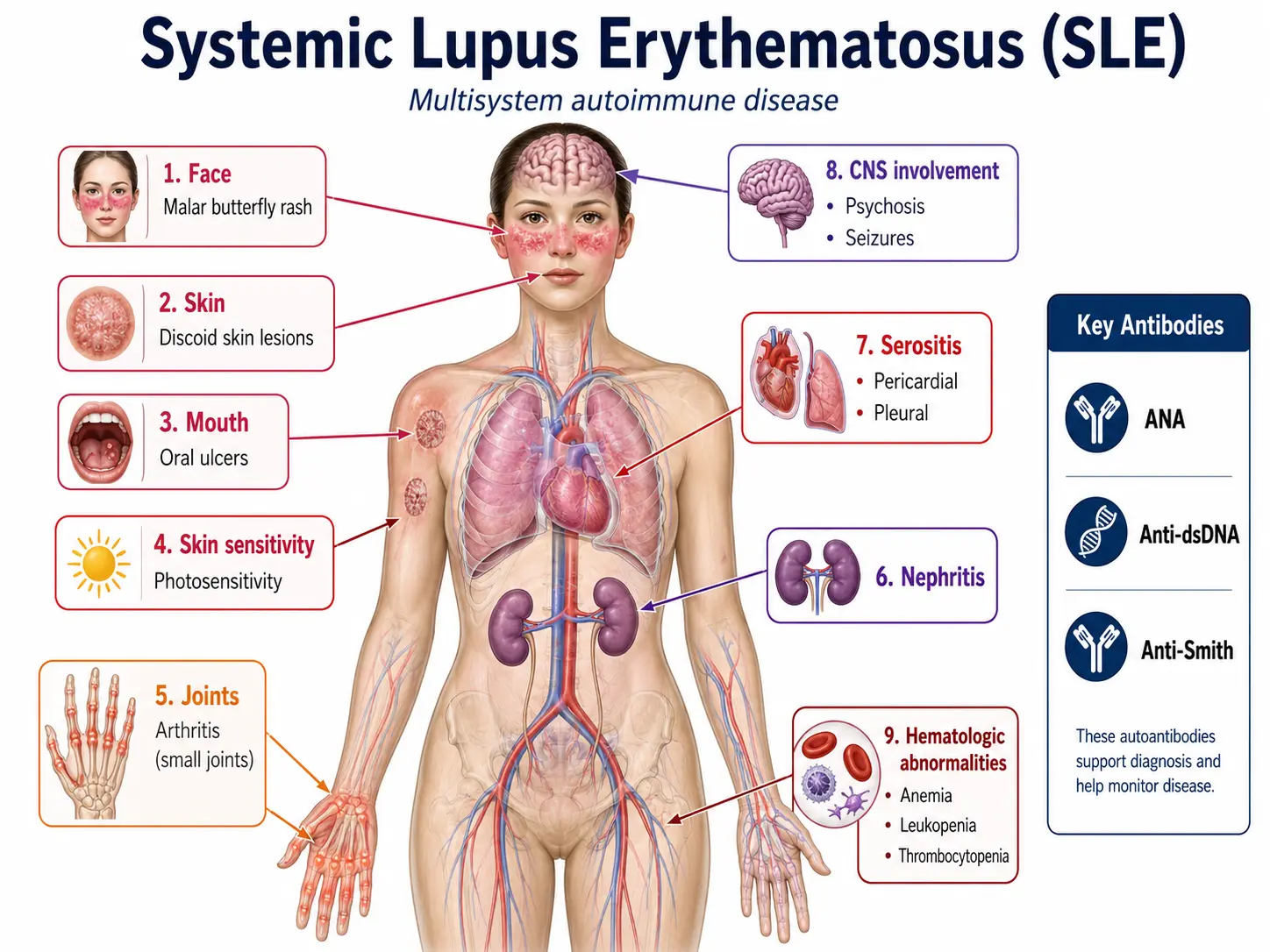
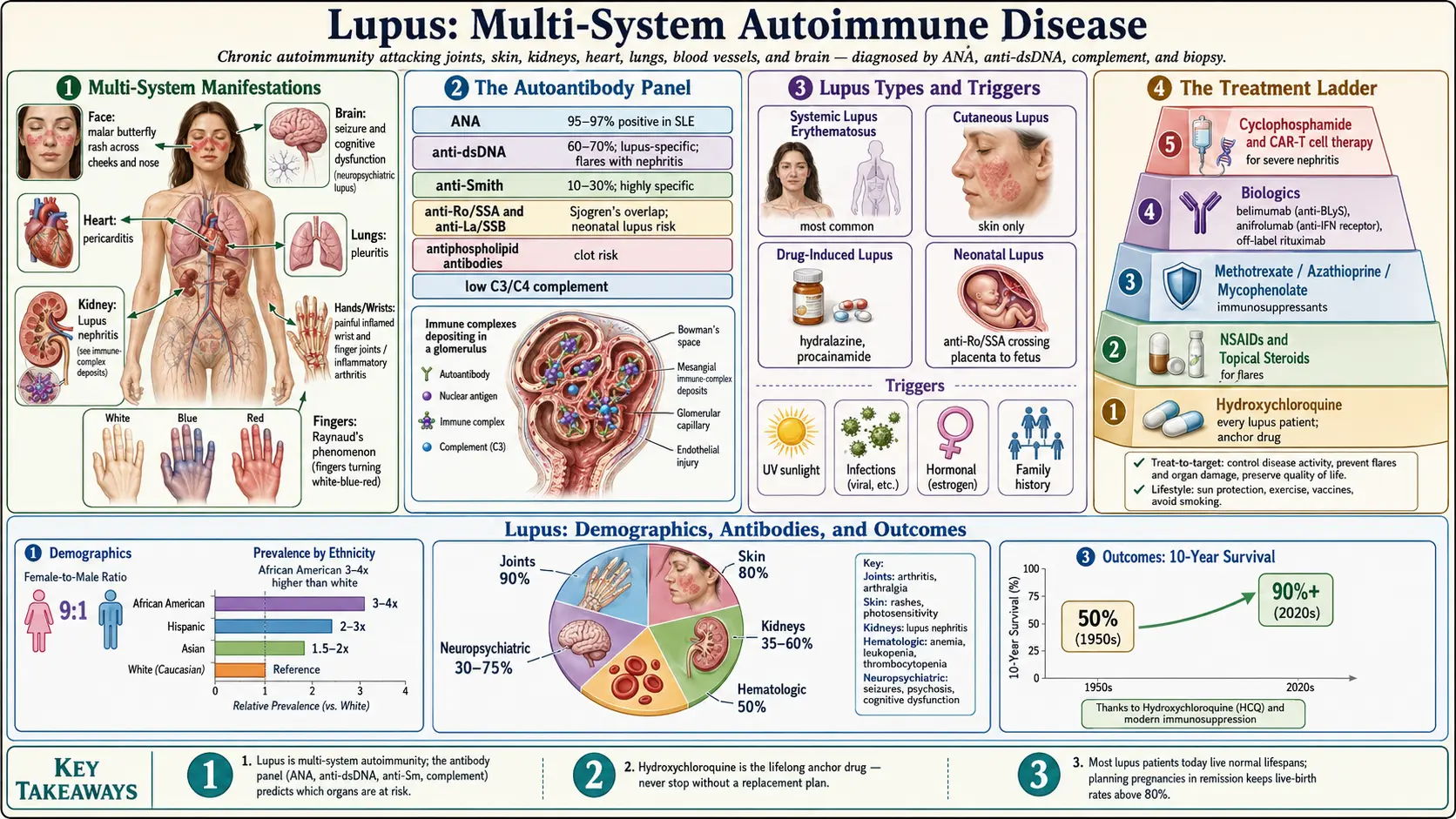
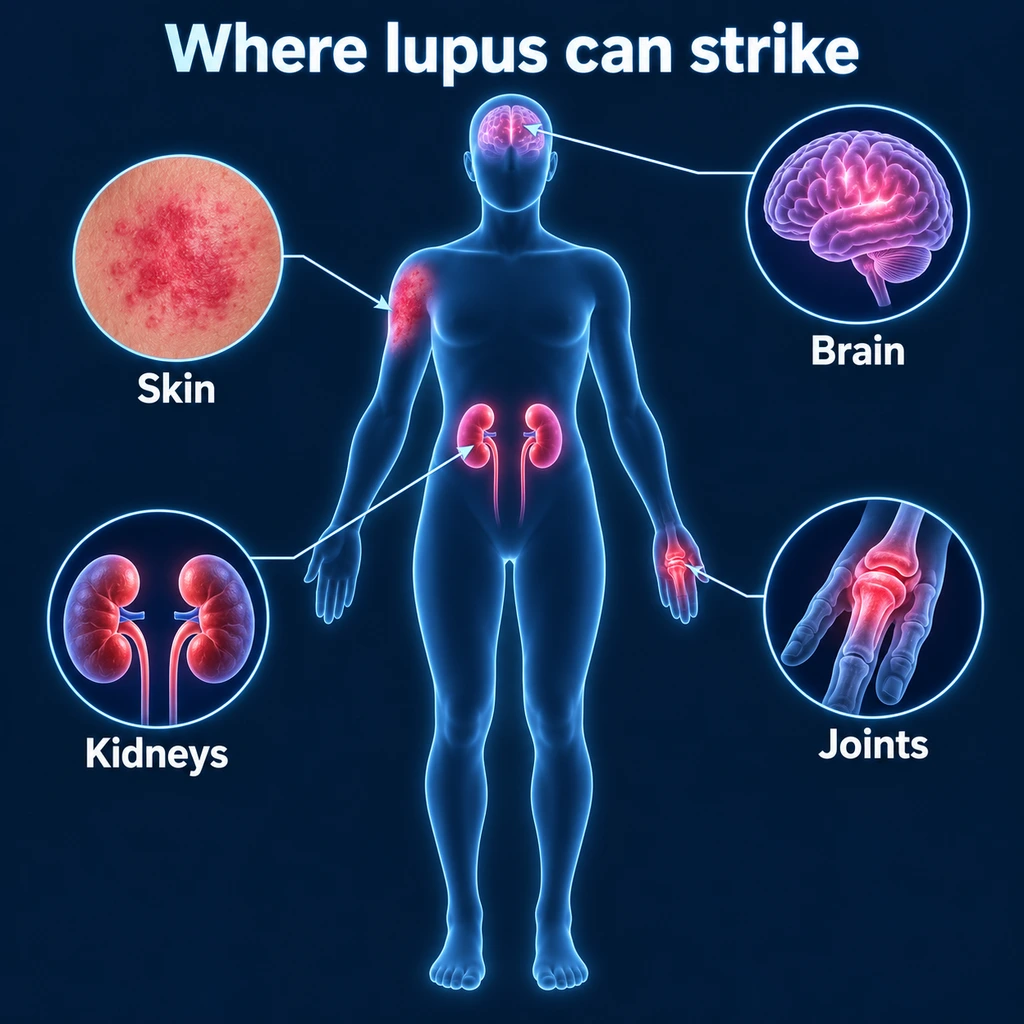
Lupus is a chronic autoimmune disease where the immune system mistakenly attacks healthy tissues and organs. This can cause widespread inflammation and damage to various body systems, including the joints, skin, kidneys, heart, lungs, blood vessels, and brain.
Types of Lupus
1. Systemic Lupus Erythematosus (SLE)
- Most common type of lupus.
- Affects multiple organ systems and can range from mild to severe.
2. Cutaneous Lupus
- Affects the skin and can cause rashes or lesions.
- Subtypes: Discoid lupus (chronic skin rashes), subacute cutaneous lupus (red, scaly patches).
3. Drug-Induced Lupus
- Caused by certain medications and usually resolves once the medication is stopped.
- Symptoms: Similar to those of systemic lupus erythematosus but typically less severe.
4. Neonatal Lupus
- Rare condition affecting infants born to mothers with certain autoimmune antibodies.
- Symptoms: Skin rash, liver problems, and in rare cases, congenital heart block.
Common Symptoms of Lupus
Symptoms can vary widely among individuals and may include:
- Fatigue
- Joint pain, stiffness, and swelling
- Butterfly-shaped facial rash across the cheeks and nose
- Skin rashes and lesions that worsen with sun exposure (photosensitivity)
- Fever
- Hair loss
- Raynaud's phenomenon: Fingers and toes turning white or blue in response to cold or stress
- Chest pain when taking deep breaths
- Headaches and cognitive difficulties
Causes and Risk Factors
- Genetic predisposition: Family history of lupus or other autoimmune diseases can increase the risk.
- Environmental triggers: Such as infections, sunlight, and certain medications.
- Hormonal factors: More common in women, particularly those aged 15-45, suggesting a link to estrogen.
- Ethnicity: More prevalent in people of African American, Hispanic, Asian, and Native American descent. In U.S. registries, prevalence among women was highest in American Indian/Alaska Native women (270.6 per 100,000), Black women (230.9) and Hispanic women (120.7), with White (84.7) and Asian/Pacific Islander women (84.4) similar (Izmirly 2021).
Diagnosis
- Medical history and physical examination: To evaluate symptoms and potential risk factors.
- Blood tests:
- Antinuclear antibody (ANA) test: Common initial test for detecting autoimmune activity.
- Other antibody tests: Such as anti-dsDNA and anti-Smith antibodies, which are more specific to lupus.
- Imaging tests: Such as X-rays or echocardiograms to detect organ involvement.
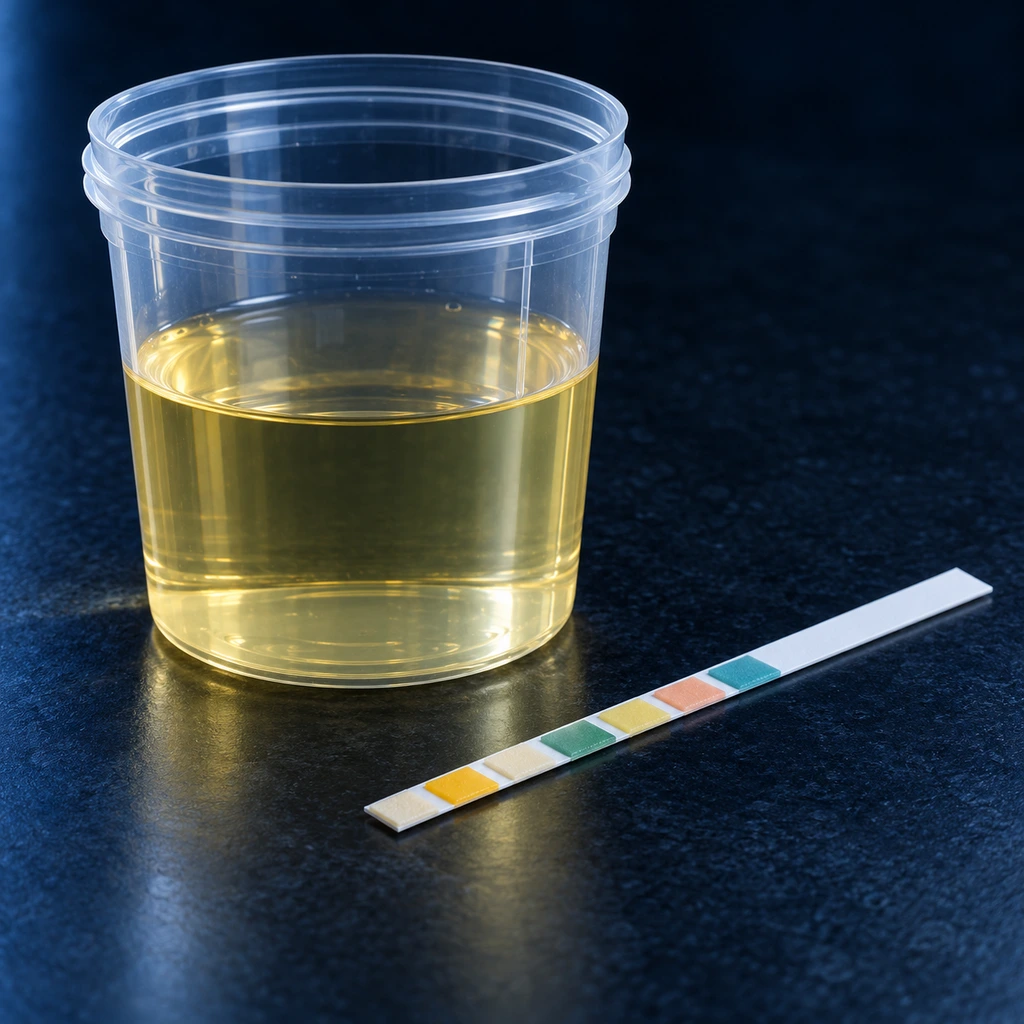
- Urinalysis: To check for kidney involvement by detecting proteins or red blood cells in urine.
- Skin or kidney biopsy: May be performed to confirm a diagnosis and determine the extent of the disease.
Treatment Options
- Medications:
- Nonsteroidal anti-inflammatory drugs (NSAIDs): For joint pain and inflammation.
- Antimalarial drugs: Such as hydroxychloroquine to help control lupus symptoms.
- Corticosteroids: To reduce inflammation and manage severe symptoms.
- Immunosuppressive drugs: Such as azathioprine and methotrexate to control immune system activity.
- Biologic agents: Such as belimumab for more targeted treatment.
- Lifestyle changes:
- Sun protection: Use sunscreen and wear protective clothing to reduce photosensitivity.
- Balanced diet: Emphasize nutrient-rich foods to support overall health.
- Regular exercise: Helps improve cardiovascular health and reduce joint stiffness.
- Stress management: Techniques like yoga and meditation to manage stress, which can trigger flares.
Prevention and Management Strategies
- Avoid known triggers: Such as excessive sun exposure and certain medications.
- Follow treatment plans: Adhere to prescribed medication regimens and attend regular medical check-ups.
- Monitor symptoms: Keep track of symptoms and report any new or worsening signs to a healthcare provider.
Complications of Lupus
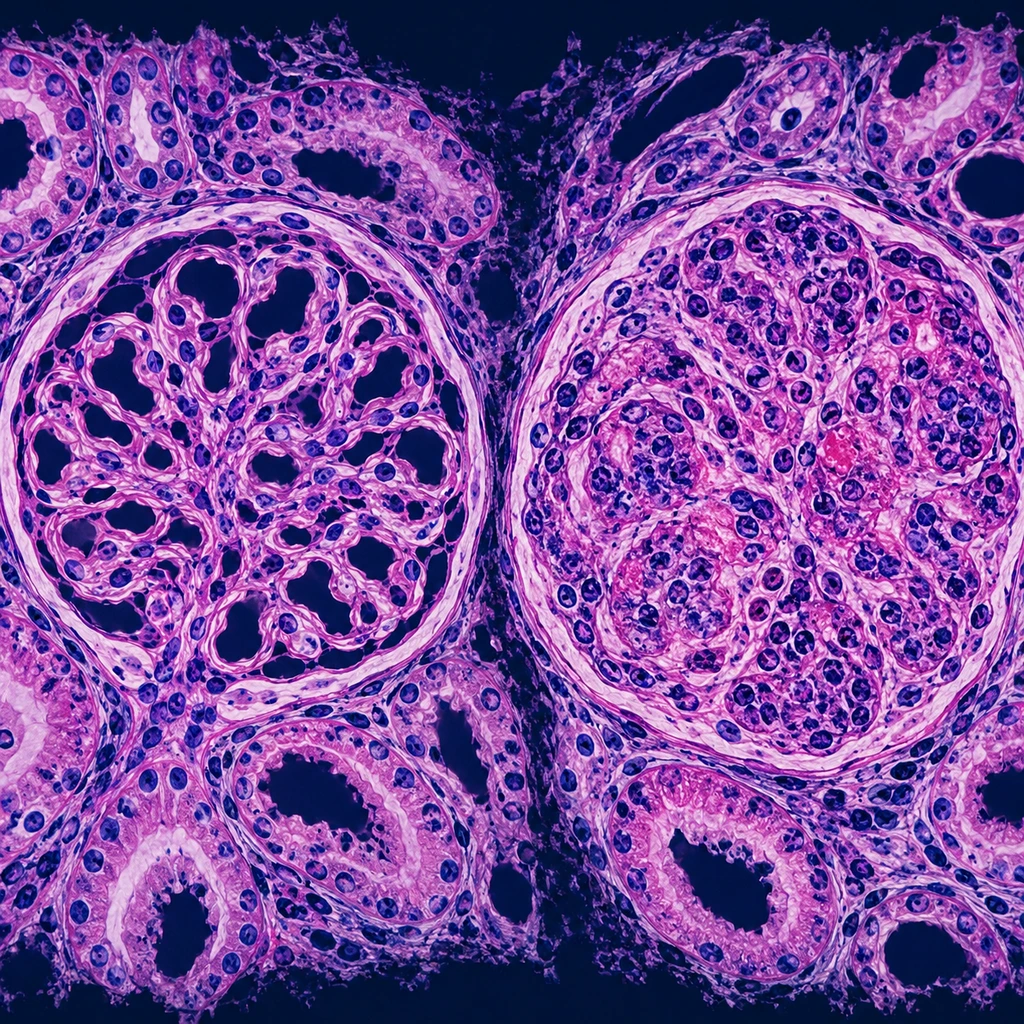
- Kidney damage (lupus nephritis): Can lead to kidney failure if not managed effectively.
- Heart and blood vessel issues: Increased risk of cardiovascular disease and inflammation of the heart (pericarditis).
- Lung involvement: Including pleuritis and potential lung damage.
- Blood disorders: Such as anemia, leukopenia, and thrombocytopenia.
- Nervous system problems: Seizures, headaches, and cognitive dysfunction.
- Infections: Due to weakened immune system function.
Interactive Visualization Immune Response — inject a pathogen and watch the defence Innate cells swarm, T cells activate B cells, antibodies rise — then vaccinate and compare the fast, strong secondary response. Launch → Interactive Visualization Autoimmunity: When Defence Turns on You Watch immune cells lose the ability to tell self from invader and attack the body's own tissue — then see how tolerance normally prevents it and why it breaks down. Launch →
Table of Contents
Key Research Papers
- Aringer M, Costenbader K, Daikh D, et al. (2019). 2019 European League Against Rheumatism/American College of Rheumatology classification criteria for systemic lupus erythematosus. Annals of the Rheumatic Diseases — PubMed PMID: 31383717
- Fanouriakis A, Kostopoulou M, Andersen J, et al. (2024). EULAR recommendations for the management of systemic lupus erythematosus: 2023 update. Annals of the Rheumatic Diseases — PubMed PMID: 37827694
- Navarra SV, Guzmán RM, Gallacher AE, et al. (2011). Efficacy and safety of belimumab in patients with active systemic lupus erythematosus: a randomised, placebo-controlled, phase 3 trial. Lancet (London, England) — PubMed PMID: 21296403
- Morand EF, Furie R, Tanaka Y, et al. (2020). Trial of Anifrolumab in Active Systemic Lupus Erythematosus. The New England Journal of Medicine — PubMed PMID: 31851795
- Furie R, Rovin BH, Houssiau F, et al. (2020). Two-Year, Randomized, Controlled Trial of Belimumab in Lupus Nephritis. The New England Journal of Medicine — PubMed PMID: 32937045
- Ruiz-Irastorza G, Ramos-Casals M, Brito-Zeron P, et al. (2010). Clinical efficacy and side effects of antimalarials in systemic lupus erythematosus: a systematic review. Annals of the Rheumatic Diseases — PubMed PMID: 19103632
- Kaul A, Gordon C, Crow MK, et al. (2016). Systemic lupus erythematosus. Nature Reviews. Disease Primers — PubMed PMID: 27306639
- Izmirly PM, Parton H, Wang L, et al. (2021). Prevalence of Systemic Lupus Erythematosus in the United States: Estimates From a Meta-Analysis of the Centers for Disease Control and Prevention National Lupus Registries. Arthritis & Rheumatology (Hoboken, N.J.) — PubMed PMID: 33474834
PubMed Topic Searches
Curated PubMed topic searches on Lupus (systemic lupus erythematosus). Each link opens a live PubMed query so the result set stays current as new studies are indexed.
- PubMed: Topic search: Systemic lupus erythematosus review
- PubMed: Topic search: SLE classification criteria EULAR ACR
- PubMed: Topic search: Anti-dsDNA antibody lupus
- PubMed: Topic search: Hydroxychloroquine lupus
- PubMed: Topic search: Belimumab lupus trial
- PubMed: Topic search: Anifrolumab lupus trial
- PubMed: Topic search: Lupus nephritis treatment
- PubMed: Topic search: Mycophenolate lupus nephritis
- PubMed: Topic search: Lupus pregnancy
- PubMed: Topic search: Antiphospholipid syndrome lupus
- PubMed: Topic search: ANA interpretation
- PubMed: Topic search: Cutaneous lupus erythematosus
Connections
- Rheumatology
- Autoimmunity: When Defence Turns on You — interactive animation
- Immune Response — interactive animation
- ACR-EULAR 2019 Classification Criteria
- Antinuclear Antibody, dsDNA and Lupus Autoantibodies
- Hydroxychloroquine and Antimalarials
- Biologics: Belimumab, Anifrolumab and Rituximab
- Lupus Nephritis and Kidney Involvement
- Neuropsychiatric Lupus
- Cutaneous Lupus and Photoprotection
- Lupus-Sjogren's Overlap
- Lupus and Pregnancy
- Sjogren's Syndrome
- Arthritis
- Raynaud's Disease
- Kidney Disease
- Myasthenia Gravis
- Magnesium
- Vitamin D3
- Turmeric
- Anemia
- Rheumatoid Arthritis
- Omega-3
- Inflammatory Markers
Featured Videos