Anxiety
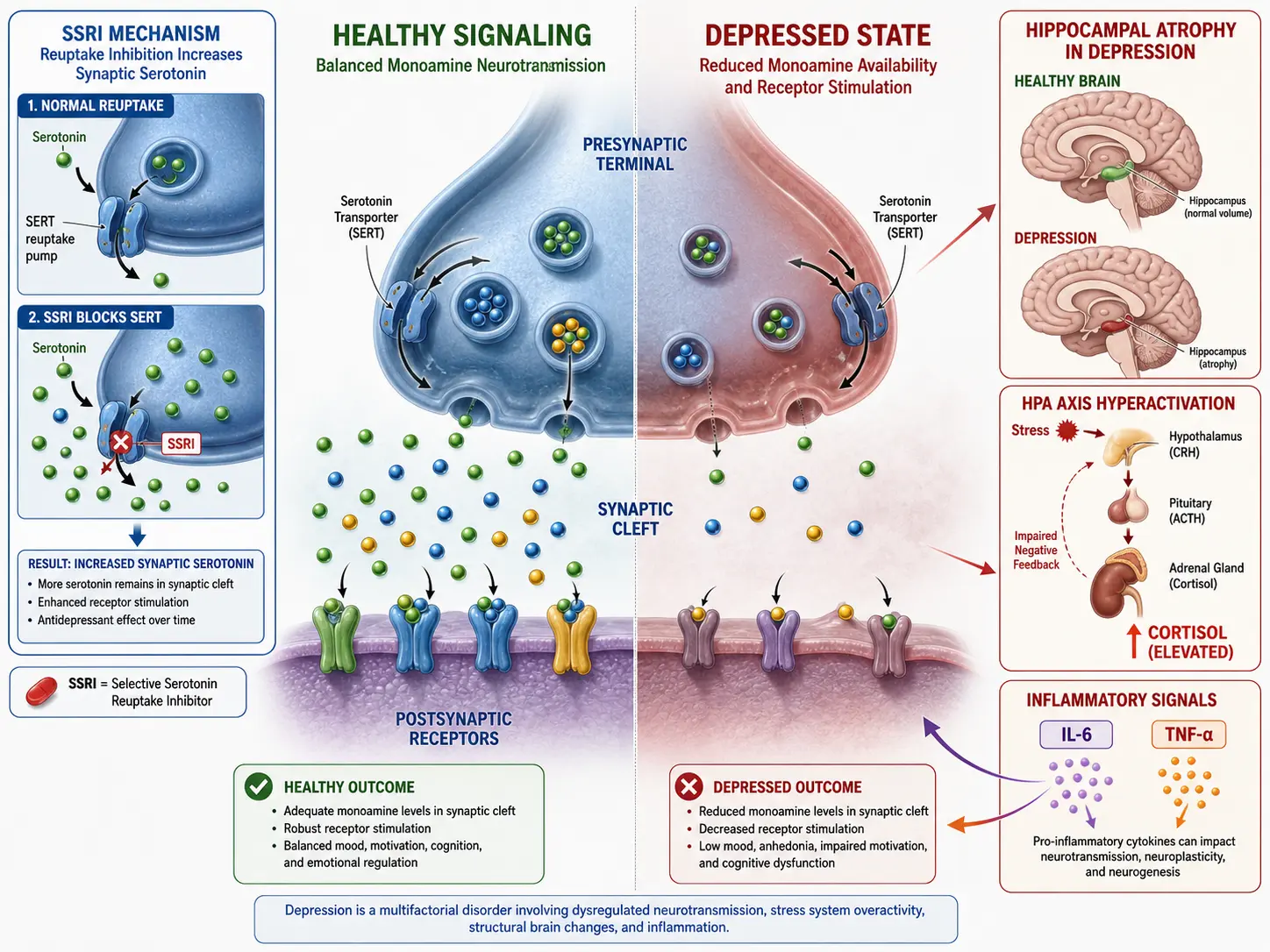
Interactive Visualization The Stress Response — fire a stressor and watch cortisol rise Adrenaline spikes in a second, cortisol follows in minutes — then compare acute stress with chronic, and watch the feedback loop blunt. Launch → Interactive Visualization Serotonin, Mood & selective serotonin reuptake inhibitors (SSRIs) — build it, fire it, block reuptake Assemble serotonin from tryptophan, fire it across the synapse, then take a selective serotonin reuptake inhibitor and watch the cleft flood — or starve the tryptophan and watch the signal fade. Launch → Interactive Visualization gamma-aminobutyric acid (GABA), the Brain's Brake — press it with a benzo or alcohol Watch glutamate try to fire a neuron while gamma-aminobutyric acid slams the chloride brake on — then add a benzodiazepine or alcohol and see the brake amplified, and why stacking them is dangerous. Launch → Interactive Visualization The Gut-Brain Axis — hear the gut talk to the brain Follow the vagus nerve carrying signals up from your gut, the gut making most of your serotonin, and the microbiome shaping mood — then flip it and watch stress disrupt the gut. Launch →
Table of Contents
What is Anxiety?
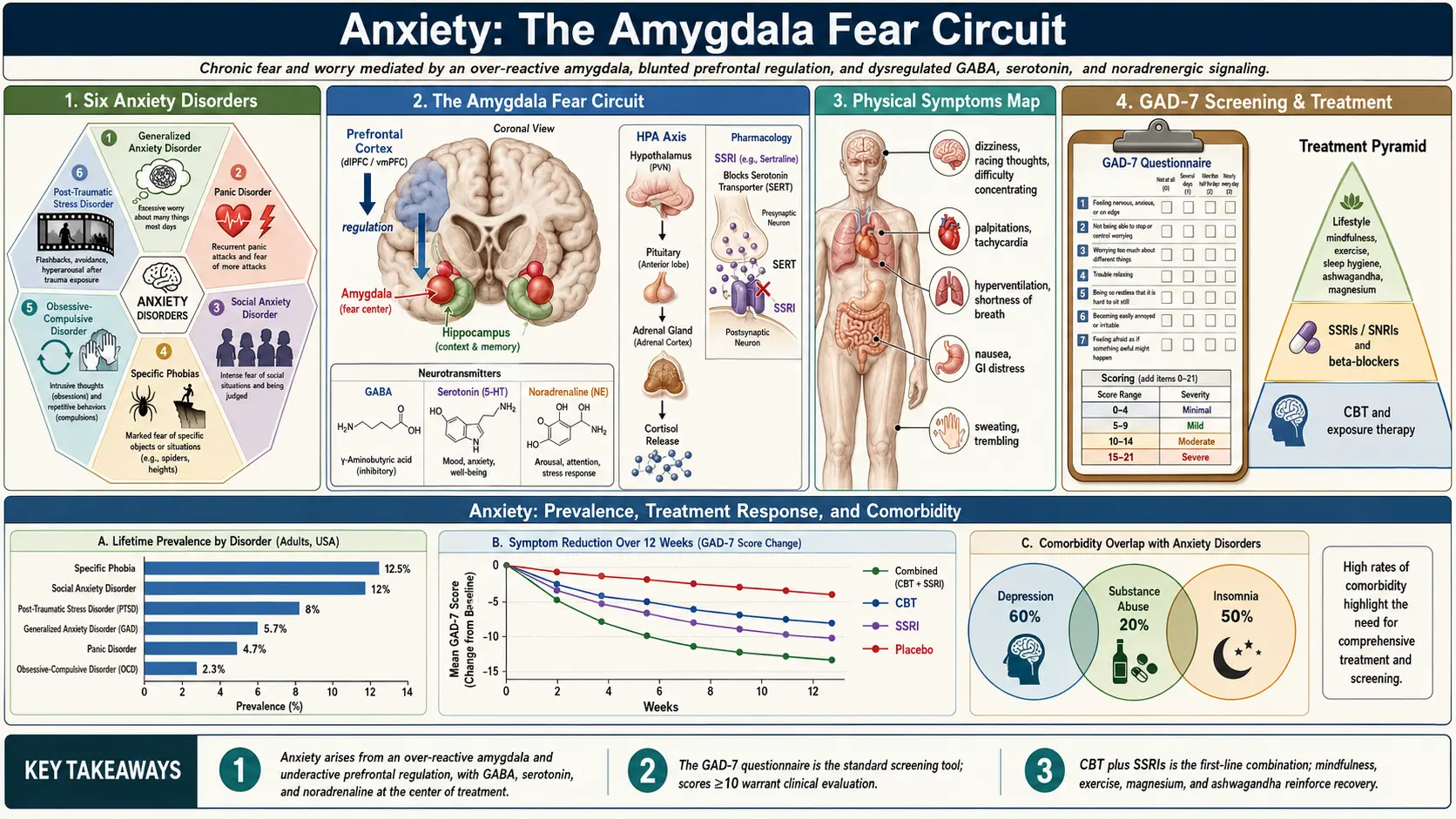
Anxiety is a natural response to stress and involves feelings of fear or apprehension about future events. While occasional anxiety is a normal part of life, anxiety disorders are chronic and can interfere with daily activities.
Types of Anxiety Disorders
1. Generalized Anxiety Disorder (GAD)
- Characterized by excessive, uncontrollable worry about various aspects of daily life.
- Common symptoms: Restlessness, fatigue, trouble concentrating, and sleep disturbances.
2. Panic Disorder
- Involves recurrent panic attacks: Sudden, intense episodes of fear accompanied by physical symptoms.
- Symptoms: Heart palpitations, shortness of breath, dizziness, and a sense of impending doom.
3. Social Anxiety Disorder
- Fear of social situations and being judged or embarrassed in front of others.
- Common symptoms: Avoidance of social interactions, sweating, and rapid heartbeat.
4. Specific Phobias
- Intense fear of a specific object or situation, such as heights, spiders, or flying.
- Symptoms: Immediate anxiety response and avoidance behavior.
5. Obsessive-Compulsive Disorder (OCD)
- Characterized by recurring, unwanted thoughts (obsessions) and repetitive behaviors (compulsions).
- Common examples: Excessive hand-washing, checking locks, or counting rituals.
- Classification: In the DSM-5 (2013), obsessive-compulsive disorder is no longer in the anxiety-disorders chapter; it has its own neighbouring chapter, "obsessive-compulsive and related disorders".
6. Post-Traumatic Stress Disorder (PTSD)
- Develops after experiencing or witnessing a traumatic event.
- Symptoms: Flashbacks, nightmares, and severe anxiety related to the event.
- Classification: In the DSM-5 (2013), post-traumatic stress disorder is no longer in the anxiety-disorders chapter; it is listed with the "trauma- and stressor-related disorders".
Common Symptoms of Anxiety
- Feelings of nervousness or restlessness
- Sense of impending danger or panic
- Increased heart rate
- Rapid breathing (hyperventilation)
- Sweating and trembling
- Fatigue and weakness
- Difficulty concentrating or thinking about anything other than the present worry
- Trouble sleeping
Causes and Risk Factors
- Genetics: Family history can increase the likelihood of developing anxiety disorders.
- Brain chemistry: Imbalances in neurotransmitters may play a role.
- Personality: Individuals with certain personality traits may be more prone to anxiety.
- Trauma and stress: Significant life events or ongoing stress can trigger anxiety disorders.
- Health conditions: Chronic illnesses or certain medical conditions can be associated with anxiety.
Diagnosis
- Clinical evaluation: Healthcare providers assess symptoms and medical history.
- Questionnaires: Standardized tools like the Generalized Anxiety Disorder 7 (GAD-7) scale help determine severity.
- Physical examination: To rule out any medical conditions that may contribute to anxiety symptoms.
Treatment Options
- Medications:
- Antidepressants: Such as selective serotonin reuptake inhibitors and serotonin-norepinephrine reuptake inhibitors (SNRIs) to help manage symptoms. Their labels carry a boxed warning (the FDA's strongest kind): in short-term studies, antidepressants increased suicidal thoughts and behavior in children, teenagers and young adults (under age 25 in the pooled trials).
- Benzodiazepines: For short-term relief of severe anxiety. Their labels carry a boxed warning: taken together with opioid drugs they can cause profound sedation, dangerously slowed breathing (respiratory depression), coma and death; they carry risks of abuse, misuse and addiction, which can lead to overdose or death; and stopping suddenly, or cutting the dose quickly, after continued use can cause withdrawal reactions that can be life-threatening.
- Beta-blockers: To manage physical symptoms like rapid heartbeat.
- Psychotherapy:
- Cognitive-behavioral therapy (CBT): Helps identify and change negative thought patterns and behaviors.
- Exposure therapy: Effective for phobias and post-traumatic stress disorder by gradually exposing individuals to the source of their anxiety.
- Lifestyle changes:
- Regular physical activity: Exercise can reduce stress and improve mood.
- Mindfulness and relaxation techniques: Such as deep breathing, yoga, and meditation.
- Sleep hygiene: Ensuring a regular sleep schedule and good sleep practices.
Prevention Strategies
- A healthy lifestyle: Balanced diet, regular exercise, and adequate sleep.
- Alcohol and caffeine: Both can aggravate anxiety symptoms.
- Stress management: Relaxation techniques and setting boundaries are used to prevent overload.
- Social connection: Engaging with friends and family can provide support and reduce feelings of isolation.
Complications of Anxiety
- Reduced quality of life: Difficulty enjoying daily activities and maintaining relationships.
- Physical health problems: Increased risk of heart disease, high blood pressure, and other chronic conditions.
- Substance abuse: Higher likelihood of developing alcohol or drug dependence.
- Depression: Anxiety often coexists with depression, compounding emotional challenges.
- Impaired work and school performance: Difficulty focusing and maintaining productivity.
Key Research Papers
Historical Background
Anxiety has a long medical history. A 2015 history of anxiety by Crocq (Dialogues in Clinical Neuroscience) describes how Greek and Latin physicians and philosophers already distinguished anxiety from other negative feelings and identified it as a medical disorder; in the 17th century Robert Burton described anxiety in The Anatomy of Melancholy, and the "panophobias" in Boissier de Sauvages' 18th-century classification of diseases correspond to panic attacks and generalized anxiety. In the 1890s Sigmund Freud separated "anxiety neurosis" from neurasthenia (nervous exhaustion) and other nervous conditions. The modern classification of anxiety disorders began with the DSM-III in 1980, which separated anxiety into distinct categories including panic disorder, generalized anxiety disorder, and phobias; the DSM-5 (2013) then moved obsessive-compulsive disorder and post-traumatic stress disorder into neighbouring chapters of their own.
Key Research Papers
- Kessler RC, et al. Lifetime prevalence and age-of-onset distributions of DSM-IV disorders in the National Comorbidity Survey Replication. Archives of General Psychiatry. 2005;62(6):593-602. — doi:10.1001/archpsyc.62.6.593
- Bandelow B, Michaelis S. Epidemiology of anxiety disorders in the 21st century. Dialogues in Clinical Neuroscience. 2015;17(3):327-335. — doi:10.31887/DCNS.2015.17.3/bbandelow
- Craske MG, et al. Anxiety disorders. Nature Reviews Disease Primers. 2017;3:17024. — doi:10.1038/nrdp.2017.24
- Stein MB, Sareen J. Generalized anxiety disorder. New England Journal of Medicine. 2015;373(21):2059-2068. — doi:10.1056/NEJMcp1502514
- Barlow DH. Cognitive-behavioral therapy for panic disorder: current status. Journal of Clinical Psychiatry. 1997;58(Suppl 2):32-36. — PubMed PMID: 9078992
- Bandelow B, et al. Efficacy of treatments for anxiety disorders: a meta-analysis. International Clinical Psychopharmacology. 2015;30(4):183-192. — doi:10.1097/YIC.0000000000000078
- Hofmann SG, Smits JA. Cognitive-behavioral therapy for adult anxiety disorders: a meta-analysis of randomized placebo-controlled trials. Journal of Clinical Psychiatry. 2008;69(4):621-632. — doi:10.4088/JCP.v69n0415
- Hettema JM, Neale MC, Kendler KS. A review and meta-analysis of the genetic epidemiology of anxiety disorders. American Journal of Psychiatry. 2001;158(10):1568-1578. — doi:10.1176/appi.ajp.158.10.1568
- Craske MG, Stein MB. Anxiety. The Lancet. 2016;388(10063):3048-3059. — doi:10.1016/S0140-6736(16)30381-6
- Spitzer RL, et al. A brief measure for assessing generalized anxiety disorder: the GAD-7. Archives of Internal Medicine. 2006;166(10):1092-1097. — doi:10.1001/archinte.166.10.1092
- Shin LM, Liberzon I. The neurocircuitry of fear, stress, and anxiety disorders. Neuropsychopharmacology. 2010;35(1):169-191. — doi:10.1038/npp.2009.83
- Baxter AJ, et al. Global prevalence of anxiety disorders: a systematic review and meta-regression. Psychological Medicine. 2013;43(5):897-910. — doi:10.1017/S003329171200147X
PubMed Topic Searches
- PubMed: anxiety disorders epidemiology
- PubMed: generalized anxiety disorder treatment
- PubMed: panic disorder SSRI
- PubMed: social anxiety CBT
- PubMed: anxiety GABA neurobiology
- PubMed: anxiety magnesium
- PubMed: anxiety ashwagandha
- PubMed: anxiety exercise
- PubMed: anxiety mindfulness meditation
- PubMed: anxiety microbiome gut-brain
- PubMed: anxiety omega-3
- PubMed: anxiety genetics GWAS
Connections
- Psychiatry
- The Gut-Brain Axis: How Your Gut Talks to Your Brain — interactive animation
- Gamma-Aminobutyric Acid: The Brain’s Brake — interactive animation
- Serotonin, Mood & Selective Serotonin Reuptake Inhibitors — interactive animation
- The Stress Response & Cortisol — interactive animation
- Depression
- Post-Traumatic Stress Disorder
- Obsessive-Compulsive Disorder
- Insomnia
- Magnesium
- Ashwagandha
- Passionflower
- Chamomile
- Vitamin B6
- Natural Anxiety Relief
- Stress Management
- Sleep Hygiene
- Shortness of Breath
- Chest Pain
- Fatigue
- Obstructive Sleep Apnea
- Irritable Bowel Syndrome
- Gut Healing
- Addiction
- Essential Tremor
- PMS and PMDD
- Postpartum Depression