Pancreatitis
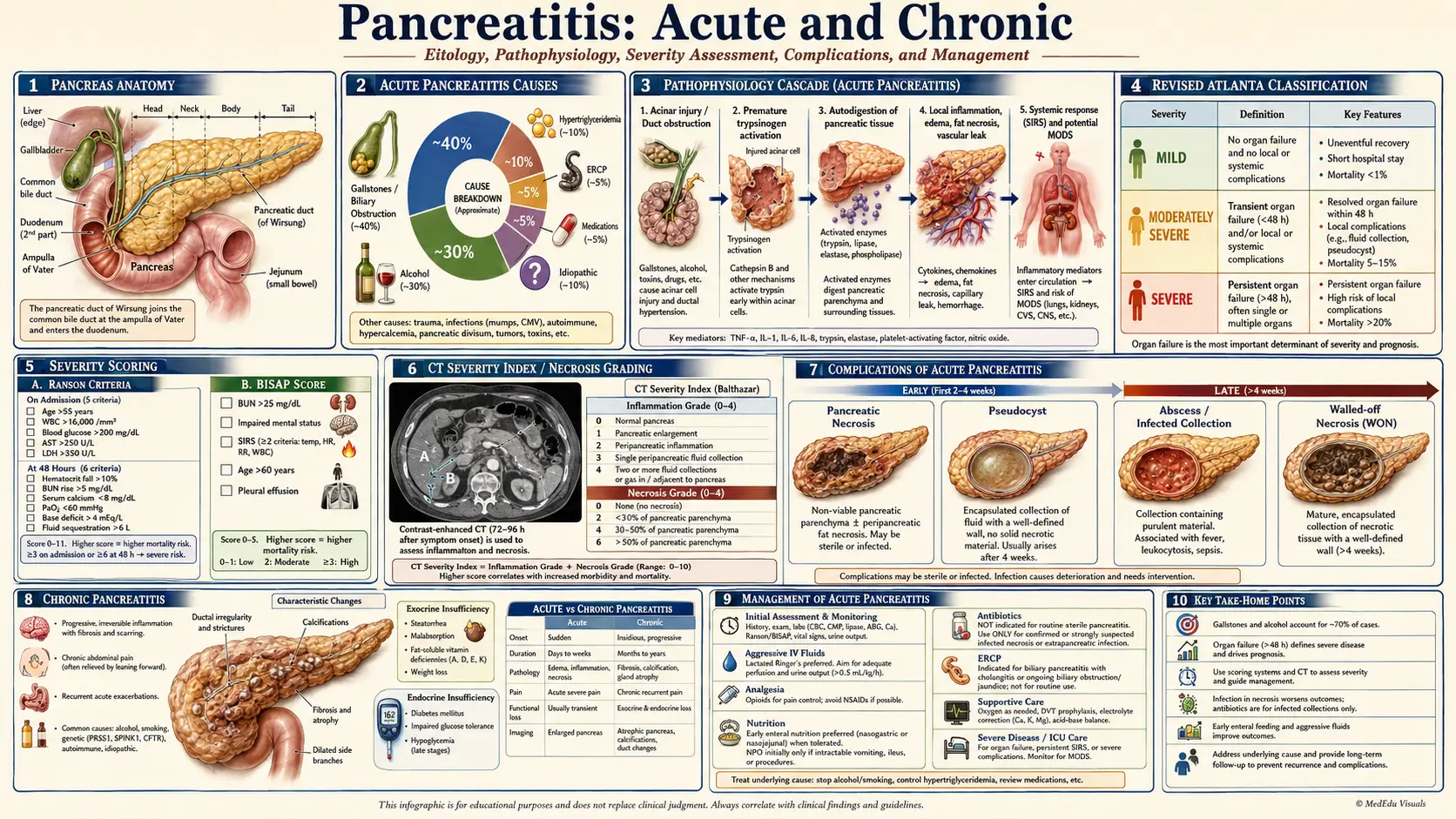
Table of Contents
1. Overview
Pancreatitis is inflammation of the pancreas. In acute pancreatitis (AP), digestive proenzymes are activated too early, inside the pancreas instead of in the gut; a 2019 review describes premature activation of trypsinogen, either by autoactivation or by the lysosomal enzyme cathepsin B, as a key step (Mayerle et al. 2019). AP is an acute attack that recurs in about a fifth of patients (Sankaran et al. 2015), while chronic pancreatitis (CP) is defined by an international consensus as "a pathologic fibro-inflammatory syndrome of the pancreas in individuals with genetic, environmental and/or other risk factors who develop persistent pathologic responses to parenchymal injury or stress" (Whitcomb et al. 2016).
The 2012 revision of the Atlanta classification identifies an early and a late phase of AP and three grades of severity: mild (no organ failure and no local or systemic complications, usually resolving in the first week), moderately severe (transient organ failure, local complications or exacerbation of a co-morbid disease) and severe (persistent organ failure, lasting more than 48 hours) (Banks et al. 2013). In CP, ongoing inflammation leads to progressive loss of the exocrine and endocrine pancreas through atrophy or fibrosis, with recurrent or constant abdominal pain, maldigestion (exocrine insufficiency) and diabetes mellitus (endocrine insufficiency) as the functional consequences (Kleeff et al. 2017). Diabetes secondary to pancreatic disease is classified as pancreatogenic or type 3c diabetes (HaPanEU guideline, 2017).
2. Epidemiology
A 2013 epidemiology review describes AP as the single most frequent gastrointestinal cause of hospital admission in the United States, with about 275,000 hospitalizations in 2009 and an annual incidence of 13–45 per 100,000 persons (Yadav and Lowenfels 2013). The 2024 American College of Gastroenterology (ACG) guideline reports almost 300,000 admissions a year in the United States, an incidence rising by 2%–5% per year and ranging from 3.4 to 73.4 cases per 100,000 worldwide; the 2013 review links the rise partly to obesity, which promotes gallstones, and to wider use of pancreatic enzyme blood tests, which detect milder cases.
The same review reports an overall AP mortality of approximately 1%. According to the 2019 World Society of Emergency Surgery (WSES) guideline, 80–85% of patients have a mild course with a mortality below 1–3%, while around 20% have a moderate or severe episode, with mortality from 13% to 35%. For chronic pancreatitis, the 2013 review reports an incidence of 5–12 per 100,000 persons a year and a prevalence of about 50 per 100,000; the European HaPanEU guideline gives an incidence of 5 to 10 per 100,000 in European countries and, with a median survival of 20 years, a calculated prevalence of around 120 per 100,000. Equal proportions of men and women develop AP, but CP is more common among men; alcohol-related pancreatitis is more common in men, though the sex difference disappears at similar levels of alcohol consumption (Yadav and Lowenfels 2013).
3. Pathophysiology
Acute Pancreatitis
The ACG guideline and a 2019 review in Gastroenterology describe the sequence as follows:
- Intrapancreatic enzyme activation: Trypsinogen can be activated inside the pancreas by autoactivation or by cathepsin B; the protective mechanisms that normally prevent this include trypsin inhibition by SPINK1 and trypsinogen degradation by chymotrypsin C (CTRC) and cathepsin L (Mayerle et al. 2019)
- Enzyme cascade: Trypsin activates chymotrypsinogens, proelastases and procarboxypeptidases (Mayerle et al. 2019)
- Acinar cell death and inflammation: The same review describes disrupted calcium signalling in acinar cells in animal models, and cell death by necrosis and necroptosis that releases damage-associated molecular patterns (DAMPs), which activate inflammatory pathways
- Fluid shifts: The ACG guideline describes marked systemic endothelial injury and increased vascular permeability, which move fluid into the interstitial space and peritoneum and reduce intravascular volume; hypoperfusion of the pancreas has been shown to lead to cell death and necrosis
- SIRS and organ failure: In the early phase (the first week), death occurs because of the development, persistence and progression of organ dysfunction, which the ACG guideline relates to the development and persistence of the systemic inflammatory response syndrome (SIRS)
Chronic Pancreatitis
The sentinel acute pancreatitis event (SAPE) model holds that a first (sentinel) attack of AP sensitizes the pancreas to recurrent attacks, while ongoing stressors drive inflammatory responses that cause CP (Whitcomb 2022). The 2017 Nature Reviews Disease Primers review lists acinar cell injury, acinar stress responses, duct dysfunction, persistent or altered inflammation and neuro-immune crosstalk among the mechanisms, and notes that they are not completely understood (Kleeff et al. 2017). Other points from the literature:
- Pancreatic stellate cells are central to fibrosis in CP; a 2024 review lists alcohol, cigarette smoke, hyperglycemia, mechanical stress, acinar cell injury and inflammatory cells among their triggers, and TGF-β, CTGF, IL-10 and PDGF among their regulators (Kong et al. 2024)
- Genetic variants in PRSS1, SPINK1, CTRC, CFTR and CASR are described as risk factors, acting through trypsin-dependent or ductal pathways (Mayerle et al. 2019)
- Pain in CP can be related to recurrent or chronic inflammation, local complications, or neurogenic mechanisms with corresponding changes in the nervous system (Drewes et al. 2017)
4. Etiology and Risk Factors
Causes of Acute Pancreatitis
- Gallstones: The most common cause; the 2024 ACG guideline puts gallstones at 40%–70% of cases
- Alcohol: 25%–35% of cases (ACG 2024). The guideline states that the diagnosis is not considered unless a person has consumed moderate or heavy amounts of alcohol for over 5 years, and that clinically evident AP occurs in only up to 5% of heavy drinkers. Smoking confers a strong, independent and dose-dependent risk of pancreatitis that may be additive or multiplicative with alcohol (Yadav and Whitcomb 2010)
- Hypertriglyceridemia: About 5% of all cases, and up to 56% of AP in pregnancy; triglycerides are considered the cause when they rise above 1,000 mg/dL (ACG 2024)
- Medications: The ACG guideline states that some drugs, such as 6-mercaptopurine, azathioprine and didanosine, clearly can cause AP, but that data supporting most medications as causes are limited, and that medications, infectious agents, hypercalcemia and hypertriglyceridemia are more often falsely attributed as causes
- ERCP: AP is the most common complication of endoscopic retrograde cholangiopancreatography, with an incidence that varies from 1% to 30% depending on the patient, the procedures performed and whether prophylaxis was given (ACG 2024)
- Tumors: An estimated 5%–14% of patients with benign or malignant pancreatobiliary tumors present with apparently idiopathic AP, and a recent review cited by the ACG guideline found about 1% of AP was due to pancreatic cancer
- Anatomic variants and autoimmune disease: Annular pancreas and ductal stricture are accepted causes, while the role of pancreas divisum and sphincter of Oddi dysfunction is controversial; fewer than 5% of patients with pancreatitis evaluated at tertiary centers are diagnosed with autoimmune pancreatitis (Yadav and Lowenfels 2013)
Chronic Pancreatitis — TIGAR-O Risk Categories
- Toxic-metabolic: The HaPanEU guideline names alcohol as the most common risk factor for CP, the predominant cause in up to 60% of adult cases, with a logarithmic increase in risk; a 2010 review found a statistical association only with 5 or more drinks a day, and describes smoking as a strong, independent, dose-dependent risk factor (Yadav and Whitcomb 2010). Hypertriglyceridemia can, uncommonly, cause CP (Yadav and Lowenfels 2013)
- Idiopathic: No cause found
- Genetic:
- PRSS1 (cationic trypsinogen) mutations cause autosomal dominant hereditary pancreatitis with incomplete penetrance (Mayerle et al. 2019); a 2013 review puts penetrance at about 80% and reports that most patients develop symptoms before age 20
- SPINK1 N34S: in a 2010 study it was not associated with the first (sentinel) attack of AP but substantially increased the risk of recurrent attacks (odds ratio 19.1) (Aoun et al. 2010)
- CFTR, CTRC and CASR variants (Mayerle et al. 2019)
- Autoimmune: Autoimmune pancreatitis is considered a form of CP with distinct clinical and histologic features (Yadav and Lowenfels 2013)
- Recurrent and severe acute pancreatitis: In a 2015 meta-analysis of 14 studies and 8,492 patients, 10% of patients developed CP after a first episode of AP and 36% after recurrent AP; the risk was higher in smokers, people with alcohol-related disease and men (Sankaran et al. 2015)
- Obstructive: Prolonged ductal obstruction can cause the histologic, structural and functional changes of CP (Yadav and Lowenfels 2013)
5. Clinical Presentation
Acute Pancreatitis
- Abdominal pain: The ACG guideline describes epigastric or left upper quadrant pain, usually constant, radiating to the back, chest or flanks; the intensity is usually severe but variable, and neither intensity nor location correlates with severity. Pain described as dull, colicky or in the lower abdomen is not consistent with AP
- Fluid loss: The guideline describes hypovolemia from third-space losses, vomiting, reduced oral intake, increased respiratory losses and sweating
- Signs of SIRS: The ACG guideline defines the systemic inflammatory response syndrome using pulse >90 per minute, respirations >20 per minute or PaCO2 <32 mm Hg, temperature above 38 °C, and a white-cell count >12,000 or <4,000 cells/mm3 or >10% immature neutrophils; it notes that SIRS early in AP may be indistinguishable from sepsis because of fever, tachycardia, rapid breathing and a raised white count
- Rising bilirubin: The ACG guideline describes progressive cholestasis, defined by a rising bilirubin, as a sign of a persistent bile duct stone in gallstone pancreatitis (see ERCP under Treatment)
Chronic Pancreatitis
- Chronic abdominal pain: Described by a 2017 international guideline as the foremost complication of CP; both its intensity and the frequency of attacks reduce quality of life (Drewes et al. 2017)
- Exocrine pancreatic insufficiency (EPI): Steatorrhea and azotorrhea appear when exocrine pancreatic function is reduced by more than 90%; patients report weight loss, more frequent bowel movements and fatty, bulky stools that are difficult to flush. Reduced absorption of fat-soluble vitamins has been found even in mild to moderate insufficiency (HaPanEU 2017)
- Diabetes (type 3c): The HaPanEU guideline reports that its occurrence in CP varies widely, from 5% to more than 80%, depending on cause, geography and length of follow-up, and that the risk rises with surgery (especially distal pancreatectomy), with age, with heavy smoking and with calcifications
- Later-stage changes: Fibrosis and calcification of the gland, duct dilatation and strictures, pseudocysts, bile duct stricturing, narrowing of the duodenum, and superior mesenteric, portal or splenic vein thrombosis (Kleeff et al. 2017)
6. Diagnosis
Acute Pancreatitis — Diagnostic Criteria
The 2024 ACG guideline, citing the revised Atlanta classification, states that the diagnosis is most often established when 2 of these 3 criteria are present:
- Abdominal pain consistent with the disease
- Serum amylase and/or lipase greater than 3 times the upper limit of normal
- Characteristic findings on abdominal imaging
The guideline states that serum lipase is preferred to amylase, and suggests that routine computed tomography (CT) not be performed early or at admission to determine severity, reserving it for patients whose diagnosis is unclear or who fail to improve clinically within the first 48–72 hours after admission and intravenous hydration.
Ranson Criteria
The Ranson score, developed in 1974, uses five parameters recorded at admission (age, white cell count, blood glucose, aspartate transaminase and lactate dehydrogenase) and six recorded at 48 hours (fall in hematocrit, rise in blood urea nitrogen, serum calcium, arterial PO2, base deficit and fluid sequestration), for a maximum of 11 points (Luo et al. 2023). The WSES guideline reports a positive predictive value of 28.6% to 49% for the Ranson score (sensitivity 75–87%, specificity 68–77.5%), and a 2023 study notes that the fluid-sequestration item is subjective.
Bedside Index of Severity in Acute Pancreatitis (BISAP)
One point is assigned for each of the following during the first 24 hours (Wu et al. 2008):
- Blood urea nitrogen (BUN) >25 mg/dL
- Impaired mental status
- Systemic inflammatory response syndrome (SIRS)
- Age >60 years
- Pleural effusion
The score was derived on 17,992 cases from 212 hospitals and validated on 18,256 cases from 177 hospitals; mortality ranged from more than 20% in the highest-risk group to less than 1% in the lowest, and in the validation cohort the area under the curve for mortality was 0.82, against 0.83 for APACHE II (Wu et al. 2008). In a prospective study of 397 cases, a BISAP score of 3 or more was associated with organ failure (odds ratio 7.4), persistent organ failure (odds ratio 12.7) and pancreatic necrosis (odds ratio 3.8) (Singh et al. 2009). The WSES guideline describes BISAP as probably one of the most accurate and applicable scores in everyday practice, while the ACG guideline states that no single laboratory test is consistently accurate for predicting severity.
CT Severity Index (CTSI) — Balthazar Score
The WSES guideline reproduces the CT severity index, modified from Balthazar et al. (1990):
- Grade A: Normal pancreas (0 points)
- Grade B: Pancreatic enlargement (1 point)
- Grade C: Pancreatic inflammation and/or peripancreatic fat changes (2 points)
- Grade D: Single peripancreatic fluid collection (3 points)
- Grade E: Two or more fluid collections and/or retroperitoneal air (4 points)
- Necrosis score: none (0), <30% (2), 30–50% (4), >50% (6)
- CTSI = grade score + necrosis score, maximum 10 points; in the WSES table, a CTSI of 7–10 corresponds to 92% morbidity and 17% mortality
In the original 1990 study of 88 patients, patients with necrosis had a 23% mortality, and those without necrosis had none (Balthazar et al. 1990).
Diagnosis of Chronic Pancreatitis
The HaPanEU guideline describes these tests:
- CT: The presence of pancreatic ductal calcifications is pathognomonic for CP; CT has moderate sensitivity and very high specificity for calcifications
- MRI/MRCP: Secretin-enhanced MRCP (s-MRCP) can show ductal changes and gives a semi-quantitative measure of pancreatic secretion
- Endoscopic ultrasound (EUS): The most sensitive imaging technique for CP, mainly in early disease; the Rosemont classification defines EUS criteria for CP
- ERCP: The Cambridge classification grades ductal changes seen at ERCP
- Fecal elastase-1 (FE-1): A simple, widely available, non-invasive test of exocrine function and the one most often used
- Coefficient of fat absorption (CFA): Generally accepted as the gold standard for steatorrhea; it requires a diet with 100 g of fat a day for five days and stool collection over the last three days, and a CFA below 93% is abnormal
7. Treatment
Acute Pancreatitis — Medical Management
- Intravenous fluids: The 2024 ACG guideline suggests moderately aggressive fluid resuscitation, with additional boluses if there is evidence of hypovolemia, and suggests lactated Ringer's solution over normal saline (both conditional recommendations, low-quality evidence). It describes fluid resuscitation as likely most important within the first 24 hours, and calls for volumes to be reassessed within 6 hours of presentation and over the next 24–48 hours, with the goal of a falling BUN. In the WATERFALL trial (see Recent Research), aggressive resuscitation caused more fluid overload without better outcomes
- Pain control: A 2022 meta-analysis of 12 randomized trials (542 patients) found a remarkable paucity of high-level evidence on pain management in AP; within the first 24 hours, NSAIDs gave pain relief similar to opiates, and epidural analgesia appeared effective, though it was tested in only one trial (Thavanesan et al. 2022)
- Nutrition: For mild AP, the ACG guideline suggests early oral feeding (within 24–48 hours) as tolerated, rather than nothing by mouth. In moderately severe or severe AP, it states that enteral nutrition seems to prevent infectious complications, that parenteral nutrition is avoided unless the enteral route is not possible, not tolerated or not meeting needs, and that a nasogastric route is preferred to nasojejunal because of comparable safety and efficacy. A 2010 Cochrane review of 8 trials found that enteral nutrition, compared with parenteral nutrition, reduced death (relative risk 0.50), multiple organ failure and systemic infection (Al-Omran et al. 2010)
- Antibiotics: The ACG guideline suggests against prophylactic antibiotics in severe AP and against fine-needle aspiration of suspected infected necrosis (conditional recommendations, very low-quality evidence). In infected necrosis, it describes antibiotics that penetrate necrosis (such as carbapenems, quinolones, cephalosporins and metronidazole) as an important part of treatment, used largely to delay drainage beyond 4 weeks; in some patients the infection resolves with antibiotics and no drainage is needed
- ERCP: In acute biliary pancreatitis without cholangitis, the ACG guideline suggests medical therapy over early ERCP (within the first 72 hours); in AP complicated by cholangitis, it states that ERCP within the first 24 hours has been shown to decrease morbidity and mortality
Management of Local Complications
- Collections and necrosis: The revised Atlanta classification defines the local complications as peripancreatic fluid collections, pancreatic and peripancreatic necrosis (sterile or infected), pseudocyst and walled-off necrosis (sterile or infected) (Banks et al. 2013). The ACG guideline notes that after 4 weeks a fibrous wall develops around necrosis, and suggests delaying any surgical, radiological or endoscopic intervention in stable patients, preferably for 4 weeks
- Infected necrosis: The WSES guideline describes percutaneous drainage as the first step of a step-up approach, which delays surgery or resolves the infection in 25–60% of patients. In the PANTER trial, a step-up approach (percutaneous drainage followed, if necessary, by minimally invasive retroperitoneal necrosectomy) reduced the composite of major complications or death compared with open necrosectomy; in the TENSION trial, an endoscopic step-up approach was not superior to a surgical step-up approach for major complications or death (see Recent Research). The ACG guideline describes minimally invasive methods as preferred to open surgery in stable patients
- Cholecystectomy: The ACG guideline states that patients with mild acute biliary pancreatitis undergo cholecystectomy early, preferably before discharge, and the WSES guideline recommends laparoscopic cholecystectomy during the index admission in mild gallstone pancreatitis
Chronic Pancreatitis Management
- Pain: A 2017 international guideline reports that current guidelines recommend a simple stepwise escalation of analgesic drugs of increasing potency, that pancreatic enzyme therapy and antioxidants may help as initial treatment, that behavioral interventions belong in a multidisciplinary approach, and that neurolytic interventions and neuromodulation can be considered in difficult cases (Drewes et al. 2017). The HaPanEU guideline notes that pregabalin is the only adjuvant analgesic tested in a placebo-controlled randomized trial, where it gave moderate pain relief, and that EUS-guided plexus block may be effective in selected cases
- Exocrine pancreatic insufficiency: Pancreatic enzyme replacement therapy (PERT) is dosed by lipase activity. The European HaPanEU guideline (2017) recommends a minimum lipase dose of 40,000–50,000 Ph.Eur. units with main meals and half that dose with snacks (GRADE 1A), and states that the enzymes are distributed along with meals and snacks; when more than one capsule is needed, it notes that part of the dose may be taken at the start of the meal and the rest during it. It reports that the most recent well-designed trials showed efficacy of enteric-coated mini-microspheres at 40,000–80,000 Ph.Eur. units of lipase per main meal, and half that per snack
- Diabetes (type 3c): The HaPanEU guideline describes insulin as commonly used first in patients with severe malnutrition, and metformin as a possible choice when hyperglycemia is mild and insulin resistance is present, in the absence of contraindications; it notes that no evidence-based study of treatment practice in type 3c diabetes has been reported
- Endoscopic therapy and lithotripsy: The 2017 pain guideline describes endoscopic treatment for patients with ductal obstruction, possibly combined with extracorporeal shock wave lithotripsy (ESWL), with the best candidates being those with distal obstruction of the main pancreatic duct in early disease. The HaPanEU guideline describes ESWL as a possible first step for larger, radiopaque stones (5 mm or more) obstructing the main pancreatic duct
- Surgery: The 2017 pain guideline states that surgery is considered early and after a maximum of five endoscopic interventions, with the type of surgery depending on the shape of the pancreas. The HaPanEU guideline describes pancreatic head resection (pancreatoduodenectomy or duodenum-preserving procedures such as the Beger, Berne and Frey operations) for CP with an enlarged pancreatic head, and reports no differences in long-term outcomes among the Beger, Berne and Frey procedures. For total pancreatectomy with islet autotransplantation (TPIAT), it reports limited experience and poor evidence, with insulin independence rates of around 50% at five years in case series
8. Complications
Acute Pancreatitis Complications
- Local: Peripancreatic fluid collections, pancreatic and peripancreatic necrosis (sterile or infected), pseudocyst and walled-off necrosis (Banks et al. 2013)
- Organ failure: The ACG guideline defines organ failure in clinical terms as shock (systolic blood pressure below 90 mm Hg), pulmonary insufficiency (PaO2 below 60 mm Hg), renal failure (creatinine above 2 mg/dL after rehydration) and/or gastrointestinal bleeding (more than 500 mL in 24 hours), or a modified Marshall score of 2 or more in the three accepted organ systems
- Infected necrosis: Occurs in about 20–40% of patients with severe AP (WSES 2019). The ACG guideline reports a mean mortality of 30% (range 14%–69%) in infected necrosis and notes that as many as 25% of infections have been found in the first week; the WSES guideline describes Candida species as common in infected necrosis and as a marker of higher mortality
- Recurrence and progression: In a 2015 meta-analysis, the pooled prevalence of recurrent AP was 22%, and CP developed in 10% after a first episode and in 36% after recurrent AP (Sankaran et al. 2015)
Chronic Pancreatitis Complications
- Pancreatic cancer: A meta-analysis cited in a 2013 review gave a pooled relative risk of 13.3 for pancreatic cancer in CP, though fewer than 5% of patients with CP develop it; in hereditary pancreatitis, the pooled relative risk was 69, with a lifetime risk of 40–55% (Yadav and Lowenfels 2013). The HaPanEU guideline notes that a recent epidemiological study found the cancer risk in CP lower than earlier reports
- Structural complications: Pseudocysts, bile duct stricturing, narrowing of the duodenum, and superior mesenteric, portal or splenic vein thrombosis (Kleeff et al. 2017)
- Nutritional and bone effects: The HaPanEU guideline reports reduced fat-soluble vitamin absorption even in mild to moderate insufficiency, and low fecal elastase correlating with low vitamin D3 in patients with an osteoporotic fracture; it describes clinical vitamin deficiency as rare and slow to develop, and notes the risk of thiamine deficiency with concomitant alcohol use
- Diabetes: See Clinical Presentation
9. Prognosis
Under the revised Atlanta classification, mild AP, the most common form, usually resolves in the first week (Banks et al. 2013). The ACG guideline states that moderately severe and severe AP make up approximately 15%–25% of cases and account for practically all of the disease's morbidity and mortality, and that only about 3% of cases predicted to be mild progress to moderately severe or severe. The WSES guideline reports a hospital mortality of about 15% in the severe form, describes patients whose organ failure persists for more than 48 hours as at high risk of death (one in three), and cites a meta-analysis of 6,970 patients in which mortality was 35.2% with infected necrosis plus organ failure, 19.8% with sterile necrosis plus organ failure, and 1.4% with infected necrosis without organ failure.
Patients with chronic pancreatitis have shorter survival than the general population, but most die from non-pancreatic causes such as other chronic diseases, cancers or infections (Yadav and Lowenfels 2013). The HaPanEU guideline cites observational evidence that early smoking cessation after diagnosis reduces the risk of developing pancreatic calcifications, and that alcohol abstinence seems to slow progression and may improve pain control.
Autoimmune pancreatitis responds well to steroid therapy, according to the 2013 review.
10. Prevention
- Gallstone pancreatitis: The ACG guideline reports that same-admission cholecystectomy reduces recurrent gallstone-related complications; in 8 cohort studies and 1 randomized trial (998 patients), 18% of those discharged without cholecystectomy were readmitted for recurrent biliary events, against 0% after early cholecystectomy, including recurrent biliary pancreatitis in 8%
- Alcohol: A 2010 review reports that intensive counseling against alcohol use may reduce the frequency of recurrent attacks (Yadav and Whitcomb 2010), and the HaPanEU guideline reports that abstinence seems to slow the progression of CP
- Tobacco: The same review reports that smoking cessation may help slow the progression of acute to chronic pancreatitis
- Hypertriglyceridemia: The ACG guideline cites an analysis in which the risk of AP rose by 4% for every 100 mg/dL of triglycerides above the normal limit, and more steeply above 500 mg/dL
- Post-ERCP pancreatitis: The 2024 ACG guideline recommends rectal indomethacin to prevent post-ERCP pancreatitis in people at high risk (strong recommendation, moderate-quality evidence) and suggests a pancreatic duct stent in high-risk patients receiving indomethacin; it describes periprocedural lactated Ringer's hydration as shown to prevent post-ERCP pancreatitis. The 2020 European Society of Gastrointestinal Endoscopy (ESGE) guideline recommends routine rectal administration of 100 mg of diclofenac or indomethacin immediately before ERCP in all patients without contraindications to NSAIDs (strong recommendation, moderate-quality evidence)
- Genetic testing: The HaPanEU guideline states that all patients with a family history or early-onset disease (before age 20) be offered genetic testing (GRADE 2C)
11. Recent Research and Advances
- Aggressive vs. moderate fluid resuscitation (WATERFALL, 2022): At 18 centers, patients with AP were randomized to goal-directed aggressive resuscitation with lactated Ringer's (a 20 mL/kg bolus, then 3 mL/kg per hour) or moderate resuscitation (a 10 mL/kg bolus only in patients with hypovolemia, then 1.5 mL/kg per hour). The trial was halted after 249 patients because of differences in safety outcomes: fluid overload developed in 20.5% with aggressive and 6.3% with moderate resuscitation, while moderately severe or severe pancreatitis did not differ significantly (22.1% vs 17.3%) (de-Madaria et al. 2022). The 2024 ACG guideline now suggests moderately aggressive resuscitation.
- Rectal indomethacin for post-ERCP pancreatitis: In a 2012 trial of 602 high-risk patients, post-ERCP pancreatitis developed in 9.2% given rectal indomethacin immediately after ERCP versus 16.9% given placebo (Elmunzer et al. 2012). In a 2016 trial of 2,600 patients in China, giving 100 mg of rectal indomethacin to all patients before ERCP reduced post-ERCP pancreatitis to 4%, against 8% when only high-risk patients received it after the procedure (Luo et al. 2016).
- Step-up approach for necrotizing pancreatitis (PANTER): In the 2010 trial of 88 patients with suspected or confirmed infected necrosis, the composite of major complications or death occurred in 40% with the step-up approach and 69% with open necrosectomy; 35% of step-up patients needed percutaneous drainage only, and the death rate did not differ significantly (van Santvoort et al. 2010). At a mean 86 months of follow-up, death or major complications had occurred in 44% versus 73%, without more reinterventions in the step-up group (Hollemans et al. 2019).
- Endoscopic vs. surgical step-up approach (TENSION, 2018): In 98 patients with infected necrosis, the endoscopic step-up approach (EUS-guided transluminal drainage, then endoscopic necrosectomy if needed) was not superior to the surgical step-up approach (percutaneous drainage, then video-assisted retroperitoneal debridement): major complications or death occurred in 43% versus 45%, and mortality did not differ (18% vs 13%); pancreatic fistulas and hospital stay were lower with the endoscopic approach (van Brunschot et al. 2018).
- Timing of tube feeding (PYTHON, 2014): In 208 patients at high risk of complications, nasoenteric tube feeding started within 24 hours did not reduce major infection or death compared with an oral diet started at 72 hours (30% vs 27%); 69% of the on-demand group tolerated an oral diet and needed no tube (Bakker et al. 2014).
- Severity prediction: The ACG guideline reports that at best 50% of cases predicted to be moderately severe or severe by any prediction system turn out to be so, and that no study has shown that using a prediction tool improves clinical outcomes.
- Probiotics (PROPATRIA, 2008): In 298 patients with predicted severe AP, a multispecies probiotic did not reduce infectious complications (30% vs 28%), and 16% of the probiotic group died compared with 6% of the placebo group; nine probiotic-group patients developed bowel ischaemia (eight fatal), against none on placebo (Besselink et al. 2008). The Lancet published an expression of concern about this trial report in 2010; the notice has no abstract in PubMed, so its grounds are not summarized here.
Key Research Papers
- Banks PA, Bollen TL, Dervenis C, et al. Classification of acute pancreatitis — 2012: revision of the Atlanta classification and definitions by international consensus. Gut. 2013;62(1):102–111. — doi:10.1136/gutjnl-2012-302779
- Leppäniemi A, Tolonen M, Tarasconi A, et al. 2019 WSES guidelines for the management of severe acute pancreatitis. World J Emerg Surg. 2019;14:27. — doi:10.1186/s13017-019-0247-0
- Crockett SD, Wani S, Gardner TB, et al. American Gastroenterological Association Institute Guideline on Initial Management of Acute Pancreatitis. Gastroenterology. 2018;154(4):1096–1101. — doi:10.1053/j.gastro.2018.01.032
- de-Madaria E, Buxbaum JL, Maisonneuve P, et al. Aggressive or Moderate Fluid Resuscitation in Acute Pancreatitis. N Engl J Med. 2022;387(11):989–1000. — doi:10.1056/NEJMoa2202884
- van Santvoort HC, Besselink MG, Bakker OJ, et al.; Dutch Pancreatitis Study Group. A step-up approach or open necrosectomy for necrotizing pancreatitis (PANTER trial). N Engl J Med. 2010;362(16):1491–1502. (Corrected entry: this list previously gave a Lancet 2010;375:294 citation, which is a different paper.) — doi:10.1056/NEJMoa0908821
- van Brunschot S, van Grinsven J, van Santvoort HC, et al. Endoscopic or surgical step-up approach for infected necrotising pancreatitis: a multicentre randomised trial. Lancet. 2018;391(10115):51–58. — doi:10.1016/S0140-6736(17)32404-2
- Elta GH, Enestvedt BK, Sauer BG, Lennon AM. ACG Clinical Guideline: Diagnosis and Management of Pancreatic Cysts. Am J Gastroenterol. 2018;113(4):464–479. — doi:10.1038/ajg.2018.14
- Kleeff J, Whitcomb DC, Shimosegawa T, et al. Chronic pancreatitis. Nat Rev Dis Primers. 2017;3:17060. — doi:10.1038/nrdp.2017.60
- Löhr JM, Dominguez-Munoz E, Rosendahl J, et al. United European Gastroenterology evidence-based guidelines for the diagnosis and therapy of chronic pancreatitis (HaPanEU). United European Gastroenterol J. 2017;5(2):153–199. — doi:10.1177/2050640616684695
- Yadav D, Whitcomb DC. The role of alcohol and smoking in pancreatitis. Nat Rev Gastroenterol Hepatol. 2010;7(3):131–145. — doi:10.1038/nrgastro.2010.6
- Whitcomb DC, Frulloni L, Garg P, et al. Chronic pancreatitis: An international draft consensus proposal for a new mechanistic definition. Pancreatology. 2016;16(2):218–224. — doi:10.1016/j.pan.2016.02.001
- Dumonceau JM, Kapral C, Aabakken L, et al. ERCP-related adverse events: European Society of Gastrointestinal Endoscopy (ESGE) Guideline. Endoscopy. 2020;52(2):127–149. — doi:10.1055/a-1075-4080
- Balthazar EJ, Robinson DL, Megibow AJ, Ranson JH. Acute pancreatitis: value of CT in establishing prognosis. Radiology. 1990;174(2):331–336. — doi:10.1148/radiology.174.2.2296641
- Ranson JH, Rifkind KM, Roses DF, Fink SD, Eng K, Spencer FC. Prognostic signs and the role of operative management in acute pancreatitis. Surg Gynecol Obstet. 1974;139(1):69–81. — PubMed PMID: 4834279
- Singh VK, Wu BU, Bollen TL, et al. A prospective evaluation of the bedside index for severity in acute pancreatitis score in assessing mortality and intermediate markers of severity in acute pancreatitis. Am J Gastroenterol. 2009;104(4):966–971. — doi:10.1038/ajg.2009.28
- Gardner TB, Vege SS, Chari ST, et al. Faster rate of initial fluid resuscitation in severe acute pancreatitis diminishes in-hospital mortality. Pancreatology. 2009;9(6):770–776. — doi:10.1159/000210022
- Drewes AM, Bouwense SAW, Campbell CM, et al. Guidelines for the understanding and management of pain in chronic pancreatitis. Pancreatology. 2017;17(5):720–731. — doi:10.1016/j.pan.2017.07.006
- Tenner S, Vege SS, Sheth SG, Sauer B, Yang A, Conwell DL, et al. American College of Gastroenterology Guidelines: Management of Acute Pancreatitis. Am J Gastroenterol. 2024;119(3):419–437. — PubMed PMID: 38857482
- Yadav D, Lowenfels AB. The epidemiology of pancreatitis and pancreatic cancer. Gastroenterology. 2013;144(6):1252–1261. — PubMed PMID: 23622135
- Wu BU, Johannes RS, Sun X, Tabak Y, Conwell DL, Banks PA. The early prediction of mortality in acute pancreatitis: a large population-based study. Gut. 2008;57(12):1698–1703. — PubMed PMID: 18519429
- Luo X, Wang J, Wu Q, Peng P, Liao G, Liang C, et al. A modified Ranson score to predict disease severity, organ failure, pancreatic necrosis, and pancreatic infection in patients with acute pancreatitis. Front Med (Lausanne). 2023;10:1145471. — PubMed PMID: 37332769
- Mayerle J, Sendler M, Hegyi E, Beyer G, Lerch MM, Sahin-Tóth M. Genetics, Cell Biology, and Pathophysiology of Pancreatitis. Gastroenterology. 2019;156(7):1951–1968.e1. — PubMed PMID: 30660731
- Whitcomb DC. Central role of the sentinel acute pancreatitis event (SAPE) model in understanding recurrent acute pancreatitis (RAP): Implications for precision medicine. Front Pediatr. 2022;10:941852. — PubMed PMID: 36046477
- Kong F, Pan Y, Wu D. Activation and Regulation of Pancreatic Stellate Cells in Chronic Pancreatic Fibrosis: A Potential Therapeutic Approach for Chronic Pancreatitis. Biomedicines. 2024;12(1):108. — PubMed PMID: 38255213
- Aoun E, Muddana V, Papachristou GI, Whitcomb DC. SPINK1 N34S is strongly associated with recurrent acute pancreatitis but is not a risk factor for the first or sentinel acute pancreatitis event. Am J Gastroenterol. 2010;105(2):446–451. — PubMed PMID: 19888199
- Sankaran SJ, Xiao AY, Wu LM, Windsor JA, Forsmark CE, Petrov MS. Frequency of progression from acute to chronic pancreatitis and risk factors: a meta-analysis. Gastroenterology. 2015;149(6):1490–1500.e1. — PubMed PMID: 26299411
- Thavanesan N, White S, Lee S, Ratnayake B, Oppong KW, Nayar MK, et al. Analgesia in the Initial Management of Acute Pancreatitis: A Systematic Review and Meta-Analysis of Randomised Controlled Trials. World J Surg. 2022;46(4):878–890. — PubMed PMID: 34994837
- Al-Omran M, Albalawi ZH, Tashkandi MF, Al-Ansary LA. Enteral versus parenteral nutrition for acute pancreatitis. Cochrane Database Syst Rev. 2010;(1):CD002837. — PubMed PMID: 20091534
- Bakker OJ, van Brunschot S, van Santvoort HC, Besselink MG, Bollen TL, Boermeester MA, et al. Early versus on-demand nasoenteric tube feeding in acute pancreatitis (PYTHON trial). N Engl J Med. 2014;371(21):1983–1993. — PubMed PMID: 25409371
- Hollemans RA, Bakker OJ, Boermeester MA, Bollen TL, Bosscha K, Bruno MJ, et al. Superiority of Step-up Approach vs Open Necrosectomy in Long-term Follow-up of Patients With Necrotizing Pancreatitis. Gastroenterology. 2019;156(4):1016–1026. — PubMed PMID: 30391468
- Elmunzer BJ, Scheiman JM, Lehman GA, Chak A, Mosler P, Higgins PD, et al. A randomized trial of rectal indomethacin to prevent post-ERCP pancreatitis. N Engl J Med. 2012;366(15):1414–1422. — PubMed PMID: 22494121
- Luo H, Zhao L, Leung J, Zhang R, Liu Z, Wang X, et al. Routine pre-procedural rectal indometacin versus selective post-procedural rectal indometacin to prevent pancreatitis in patients undergoing endoscopic retrograde cholangiopancreatography: a multicentre, single-blinded, randomised controlled trial. Lancet. 2016;387(10035):2293–2301. — PubMed PMID: 27133971
- Besselink MG, van Santvoort HC, Buskens E, Boermeester MA, van Goor H, Timmerman HM, et al. Probiotic prophylaxis in predicted severe acute pancreatitis: a randomised, double-blind, placebo-controlled trial (PROPATRIA). Lancet. 2008;371(9613):651–659. — PubMed PMID: 18279948 — Expression of concern (notice: PubMed PMID: 20226971)
PubMed Topic Searches
Curated PubMed topic searches of peer-reviewed literature on Pancreatitis. Each link opens a live PubMed query so you always see the most current studies.
- PubMed: Acute pancreatitis management
- PubMed: Chronic pancreatitis treatment
- PubMed: Gallstone pancreatitis
- PubMed: Alcoholic pancreatitis
- PubMed: Severity scoring
- PubMed: ERCP in pancreatitis
- PubMed: Enzyme replacement therapy
- PubMed: Hypertriglyceridemic pancreatitis
- PubMed: Necrotizing pancreatitis
- PubMed: Autoimmune pancreatitis
- PubMed: Pain management
- PubMed: Enteral nutrition
Connections
- Gastroenterology
- The Pancreas: Your Digestive Enzyme Factory — interactive animation
- Digestion — interactive animation
- Gallbladder Disease
- SIBO
- Diabetes
- Turmeric
- Milk Thistle
- Magnesium
- Vitamin D3
- Gut Healing
- Abdominal Pain
- Nausea and Vomiting
- Jaundice
- Hypertension
- Obesity
- Calcium
- Zinc
- Celiac Disease
- Crohn's Disease
- GERD
- Pancreatic Cancer
- Addiction
- Lipase Test — the blood test that the 2024 ACG guideline prefers to amylase for diagnosing acute pancreatitis.
- Liver Disease