⚠ Evidence warning: Clinical trials or other evidence do not support the claim that 0.6 mg/kg remains the most widely validated dexamethasone regimen. This page keeps it as a report of what people, websites or other media say.
Croup (Laryngotracheobronchitis)
- Overview and Epidemiology
- Symptoms and Clinical Presentation
- Westley Croup Score
- Diagnosis and Differential
- Treatment — Mild Croup
- Treatment — Moderate to Severe Croup
- Epiglottitis vs Bacterial Tracheitis vs Croup
- Complications
- Prevention
- Key Research Papers
- Connections
Overview and Epidemiology
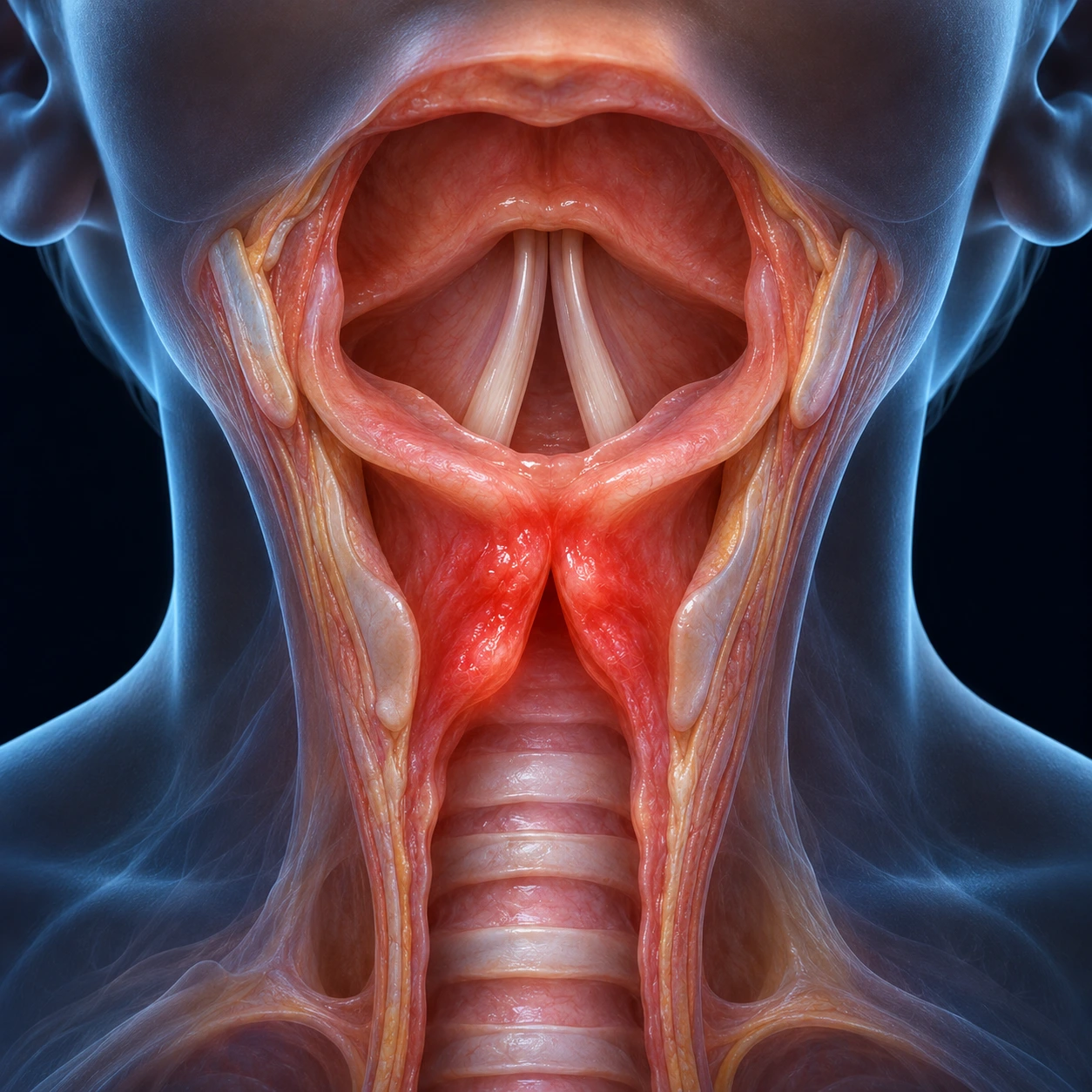
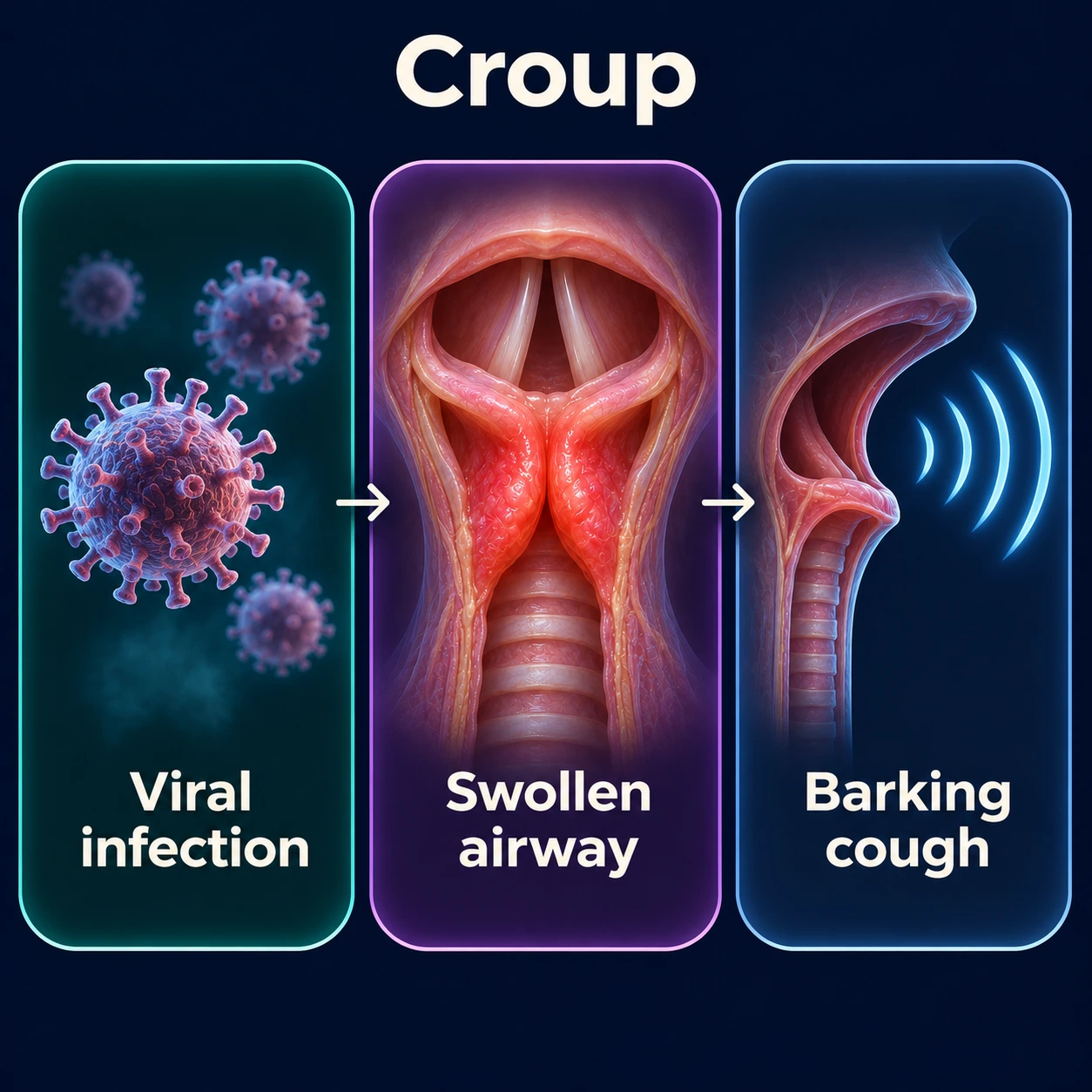
Croup, formally called laryngotracheobronchitis, is the most common cause of acute upper airway obstruction in young children. It is a viral infection causing inflammation and edema of the subglottic airway — the narrowest part of a child's airway — which produces the condition's characteristic symptoms. Croup accounts for approximately 15% of all respiratory infections seen in children presenting to healthcare settings.
The condition predominantly affects children between 6 months and 3 years of age, with peak incidence at 18 months. It is rare after age 6 because the airway has grown wide enough that the same degree of mucosal swelling no longer causes clinically significant obstruction. Boys are affected slightly more often than girls, at a ratio of approximately 1.4:1.
Parainfluenza virus type 1 is by far the most common cause, responsible for roughly 60% of cases. Parainfluenza type 3, respiratory syncytial virus (RSV), influenza A and B, and adenovirus account for most of the remainder. The disease follows a strong fall and winter seasonality, peaking in October and November when parainfluenza type 1 circulates most intensively. Each year's outbreak tends to be more pronounced in odd-numbered years, correlating with the biennial parainfluenza type 1 epidemic cycle.
Pathologically, the virus infects the epithelium of the larynx, trachea, and bronchi, triggering a vigorous inflammatory response. Subglottic edema narrows the already small pediatric airway — a 1 mm reduction in radius reduces airflow to one-sixteenth of normal (by Poiseuille's law) — creating turbulent flow and the hallmark stridor.
Symptoms and Clinical Presentation
Croup almost always begins with a 1–3 day prodrome of upper respiratory infection: mild fever, runny nose, and sore throat. Parents then typically describe their child waking suddenly in the middle of the night with a dramatically changed voice and breathing pattern.
The hallmark triad consists of:
- Barky, seal-like cough — often described as a "seal bark" or "goose honk"; caused by subglottic edema vibrating with air movement
- Inspiratory stridor — a harsh, high-pitched sound on breathing in; indicates significant airway narrowing
- Hoarse voice — laryngeal inflammation alters vocal cord vibration
Low-grade fever (38–39°C) is common. The child is usually not toxic-appearing — they are alert, interactive, and do not drool (distinguishing features from epiglottitis). Symptoms characteristically worsen at night and are exacerbated when the child is agitated or crying, because crying increases respiratory rate and airflow turbulence, amplifying resistance through the narrowed subglottis.
Most cases are mild and self-limiting, resolving in 3–5 days. Fewer than 5% of children with croup require hospitalization, and less than 1% require intubation.
Spasmodic croup is a variant that presents identically but without the viral prodrome. It tends to recur, respond dramatically to cool air, and resolve quickly. It may have an allergic or reactive airway component. The management is the same as viral croup.
Westley Croup Score
The Westley Croup Score, first published in 1978, is the validated clinical scoring system used to assess croup severity and guide treatment decisions. It rates five signs on a numerical scale, with a maximum possible score of 17.
| Sign | Finding | Points |
|---|---|---|
| Stridor | None | 0 |
| Only with agitation | 1 | |
| At rest | 2 | |
| Retractions | None | 0 |
| Mild | 1 | |
| Moderate | 2 | |
| Severe | 3 | |
| Air Entry | Normal | 0 |
| Decreased | 1 | |
| Markedly decreased | 2 | |
| Cyanosis | None | 0 |
| With agitation | 4 | |
| At rest | 5 | |
| Level of Consciousness | Normal | 0 |
| Altered (agitated, lethargic) | 5 |
Severity classification:
- Mild (score 0–2): The vast majority of croup cases. Barky cough, possibly hoarse voice, no stridor at rest. Managed with oral dexamethasone and observation.
- Moderate (score 3–7): Stridor at rest, visible retractions, anxious child. Requires dexamethasone plus consideration of nebulized epinephrine.
- Severe (score 8+): Marked stridor, significant retractions, poor air entry, altered level of consciousness or cyanosis. Requires immediate nebulized epinephrine, dexamethasone, oxygen, and likely intensive care unit (ICU) admission.
Retractions (the skin pulling in around the neck, between the ribs, and below the sternum with each breath) are the most visible signs of increased work of breathing, and hospitals treat them as a sign needing prompt medical attention.
Diagnosis and Differential Diagnosis
Croup is a clinical diagnosis. The combination of the barky cough, inspiratory stridor, hoarse voice, and age are essentially pathognomonic — no tests are required in a straightforward presentation. Investigations are reserved for atypical or severe cases.
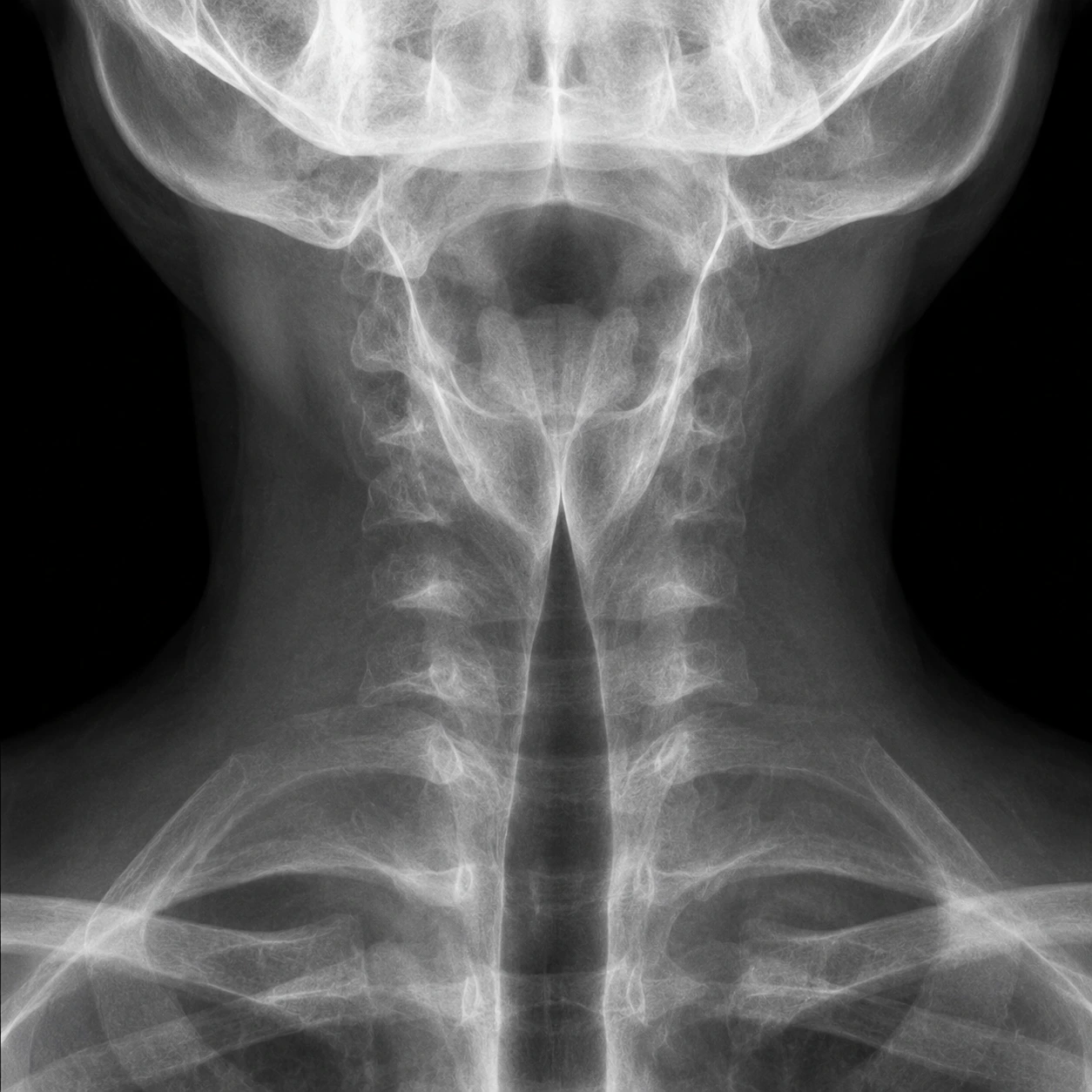
Imaging: An anteroposterior (AP) neck X-ray may show the "steeple sign" — symmetric subglottic narrowing that gives the trachea a church-steeple or pencil-point appearance. The steeple sign is present in only about 50% of croup cases and is also occasionally seen in normal children, so its presence confirms but its absence does not exclude the diagnosis. A lateral neck X-ray is useful to evaluate for epiglottitis (thumb sign — a swollen, thumb-shaped epiglottis) when that diagnosis is being considered. Treatment of a child in significant respiratory distress is not delayed for an X-ray.
Pulse oximetry is measured in any child with stridor at rest or moderate-to-severe scoring. Oxygen saturation below 92% in room air is a marker of severity.
Critical differential diagnoses to exclude:
- Epiglottitis — toxic-appearing child, high fever, drooling, soft inspiratory stridor (not barky), tripod posture, no cough; becomes extremely rare in Hib-vaccinated populations
- Bacterial tracheitis (pseudomembranous croup) — initially resembles croup but child appears much sicker, fails to improve with epinephrine, caused by Staphylococcus aureus
- Foreign body aspiration — sudden onset, no prodrome, may have unilateral wheeze, history of playing with small objects
- Peritonsillar or retropharyngeal abscess — fever, muffled voice, unilateral swelling, neck stiffness
- Angioedema — rapid onset, may have urticaria, family or drug history
- Subglottic hemangioma — recurrent stridor in infants under 6 months, often with cutaneous hemangiomas
Treatment — Mild Croup
The cornerstone of croup treatment is corticosteroids, which reduce airway inflammation and edema, decreasing the severity and duration of symptoms and reducing the need for return visits and hospitalization.
Dexamethasone is the corticosteroid of choice. A single oral dose of 0.6 mg/kg (maximum 10–16 mg) is highly effective. The 2018 Cochrane review found that glucocorticoids improved croup symptoms within 2 hours and that the effect lasted for at least 24 hours (the earlier version of the review had reported benefit within 6 hours). Oral administration is equivalent to intramuscular injection in bioavailability and is strongly preferred — it avoids the pain and distress of injection, which itself can worsen symptoms. Even children who are vomiting can usually retain oral dexamethasone given in small volumes. Lower doses (0.15 mg/kg) have shown similar efficacy in some studies but 0.6 mg/kg remains the most widely validated regimen. Lower doses have performed as well in trials: in a 1995 trial of 120 hospitalized children (Geelhoed and Macdonald), 0.15 mg/kg was as effective as 0.3 or 0.6 mg/kg in relieving symptoms, with a similar hospital stay.
The largest dose trial, published in 2019 (Parker and Cooper), enrolled 1,252 children in two emergency departments in Perth, Australia. Low-dose dexamethasone (0.15 mg/kg) and prednisolone (1 mg/kg) both worked as well as dexamethasone 0.6 mg/kg (the trial was designed to show they were not worse), both on the croup score one hour after the dose and in unplanned return visits over the following 7 days: 17.8% with 0.6 mg/kg, 19.5% with 0.15 mg/kg and 21.7% with prednisolone, differences that were not statistically significant. The authors concluded that the type of oral steroid seems to have no clinically significant impact on how well it works.
What the pooled evidence shows: the 2018 Cochrane review (Gates and colleagues; 43 trials, 4,565 children) found that, compared with placebo, glucocorticoids improved symptoms at 2 hours, cut return visits or (re)admissions by about half (risk ratio 0.52), and shortened hospital stays by about 15 hours; serious side effects were infrequent. Most of the trials (98%) were rated at high or unclear risk of bias. What is still not known, according to the review, is the best type, dose and route of steroid for reducing croup symptoms. In a 2001 trial of 264 children with mild croup (Luria and colleagues), oral dexamethasone worked better than nebulized dexamethasone: 3 treatment failures with oral dexamethasone against 12 with nebulized dexamethasone and 10 with placebo, and 10 children seeking further care against 27 and 29.
Nebulized budesonide (2 mg) is an alternative when the oral route is not tolerated. It has similar clinical efficacy to oral dexamethasone but is more expensive and requires a nebulizer. It is not superior to oral dexamethasone.
Humidified air and cool mist have been used for decades based on the theory that moist air reduces mucosal edema. Randomized controlled trials have not demonstrated a significant clinical benefit over room air, and the practice is no longer routinely recommended. However, many parents report that it comforts their child.
Minimizing agitation is critical. A crying child has significantly increased work of breathing. Care teams keep the child with the parents, limit invasive procedures where possible, and keep the surroundings calm.
Discharge criteria after dexamethasone (for children who also received epinephrine): no stridor at rest, normal or near-normal oxygen saturation, alert and interactive, tolerating oral fluids, and parents comfortable managing at home with clear return precautions.
Treatment — Moderate to Severe Croup
Children with stridor at rest, significant retractions, poor air entry, or a Westley score of 3 or above require more aggressive intervention in addition to corticosteroids.
Nebulized epinephrine is the mainstay of treatment for moderate-to-severe croup. It acts within 10–30 minutes by causing vasoconstriction of the subglottic mucosa, reducing edema and airway resistance. Two formulations are used:
- Racemic epinephrine — 0.5 mL of 2.25% solution diluted in 3 mL normal saline
- L-epinephrine 1:1000 — 5 mL nebulized undiluted; in a 1992 double-blind trial of 31 children (Waisman and colleagues) it was at least as effective as racemic epinephrine with no extra side effects, and it is more readily available and less expensive
The critical caveat of epinephrine is the rebound phenomenon: as the drug's effect wears off over 3–4 hours, symptoms can return to their pre-treatment severity. For this reason, any child who receives nebulized epinephrine is observed for at least 3–4 hours before discharge is considered; in a 1995 study (Ledwith and colleagues), 30 of 55 children treated with racemic epinephrine, oral dexamethasone and mist were sent home after 3 hours of observation, with no recurrence of breathing difficulty and no return visits.
Supplemental oxygen is given to keep oxygen saturation above 92%, by face mask or blow-by technique; a nasal cannula is left off in a distressed child if it increases agitation.
Heliox (helium-oxygen mixture, typically 70:30 or 80:20) reduces the density of inspired gas and converts turbulent to laminar flow in the narrowed airway, decreasing the work of breathing. It is used as a bridge to other treatments in severe cases and is not a definitive therapy. The 2021 Cochrane review of heliox (Moraa and colleagues) found only 3 small trials with 91 children and called the evidence very limited: heliox may be no better than 30% humidified oxygen in mild croup, may help in the short term in moderate croup treated with dexamethasone, and may work about as well as 100% oxygen given with one or two doses of epinephrine. Side effects were not reported. In one of those trials (Weber and colleagues, 2001; 29 children with moderate to severe croup), heliox gave similar improvement in croup scores to racemic epinephrine.
Intubation is required in fewer than 1% of croup cases. When necessary, an endotracheal tube 0.5–1.0 mm smaller than age-predicted normal is used, as the subglottic region is already narrowed, and teams prepare for a difficult airway with the most experienced airway provider available.
Sedatives and anxiolytics are generally withheld unless the child is being intubated; they can suppress the respiratory drive that is compensating for the obstructed airway.
Children with severe croup, those requiring repeated epinephrine doses, and those with oxygen saturation below 92% at rest require intensive care unit admission for continuous monitoring.
Epiglottitis vs Bacterial Tracheitis vs Croup
These three conditions all cause acute upper airway obstruction in children but differ fundamentally in etiology, presentation, and management. Distinguishing them rapidly is life-saving.
| Feature | Viral Croup | Epiglottitis | Bacterial Tracheitis |
|---|---|---|---|
| Causative organism | Parainfluenza, respiratory syncytial virus, influenza | H. influenzae type b (rare post-Hib); occasionally other bacteria | S. aureus (including methicillin-resistant Staphylococcus aureus, MRSA) |
| Age | 6 months–3 years | Older children (2–7 years), unvaccinated | Similar to croup; any age |
| Onset | Gradual (viral prodrome 1–3 days) | Rapid (hours) | Gradual then rapid deterioration |
| Cough | Barky, seal-like | None (child avoids movement) | Barky initially, then productive/purulent |
| Voice | Hoarse | Muffled "hot potato" voice | Hoarse |
| Drooling | Absent | Present (cannot swallow) | Absent to mild |
| Posture | Normal | Tripod (leaning forward on hands) | Normal to distressed |
| Toxicity | Not toxic | Toxic, high fever (>39°C) | Very toxic, high fever |
| X-ray finding | Steeple sign (50%) | Thumb sign (swollen epiglottis) | Irregular tracheal wall, subglottic narrowing |
| Response to epinephrine | Yes | Partial/poor | No — key distinguishing feature |
| Management | Dexamethasone ± nebulized epinephrine | Intubation in OR + intravenous (IV) ceftriaxone; throat not examined until the airway is secured | Intubation + intravenous anti-staphylococcal antibiotics (vancomycin) |
How emergency teams handle suspected epiglottitis: they do not examine the throat, do not lay the child flat, and do not start intravenous lines until the airway is secured in the operating room with an anesthesiologist present, because any agitation can precipitate complete obstruction.
Complications
The vast majority of children with croup recover completely without complications. Serious complications are uncommon, and early recognition matters.
Respiratory failure occurs in fewer than 1% of children hospitalized for croup. It results from progressive subglottic edema outpacing the child's respiratory reserve. Risk factors include age under 6 months, pre-existing subglottic narrowing (e.g., from prior intubation), and immunocompromise. When intubation is required, it is performed by the most experienced airway provider with full difficult-airway preparations.
Bacterial superinfection (bacterial tracheitis) is the most dangerous complication. The inflamed tracheal epithelium becomes colonized, most commonly with Staphylococcus aureus. The child initially appears to have viral croup but then deteriorates despite appropriate treatment, develops a toxic appearance and high fever, and fails to respond to epinephrine. This requires intubation and intravenous antibiotics (anti-staphylococcal coverage including methicillin-resistant Staphylococcus aureus).
Post-intubation subglottic stenosis can occur in children who require intubation for severe croup. Using a smaller-than-standard endotracheal tube and limiting the duration of intubation reduce this risk.
Pulmonary edema from severe airway obstruction (negative pressure pulmonary edema) is rare but recognized. Profound inspiratory effort against a closed or nearly closed glottis generates markedly negative intrathoracic pressure, forcing fluid from pulmonary capillaries into the alveoli.
Recurrence is common. Children who have had one episode of croup have approximately a 5% chance of a recurrent episode within the same illness and higher lifetime risk. Recurrent severe croup warrants investigation for structural airway abnormalities (subglottic stenosis, hemangioma) and assessment for atopic disease.
Prevention
There is no specific vaccine against the parainfluenza viruses that cause most croup. Prevention is therefore focused on reducing transmission of the causative viruses and mitigating the risk of severe disease.
Hib vaccine — while this does not prevent viral croup, the introduction of routine Haemophilus influenzae type b (Hib) vaccination has nearly eliminated bacterial epiglottitis, which historically was the most dangerous cause of acute upper airway obstruction in children. The complete Hib vaccine series protects against this most feared differential diagnosis.
Annual influenza vaccination — influenza A and B viruses are responsible for a proportion of croup cases, particularly those associated with more severe disease in older children. Annual influenza vaccination for all children 6 months and older reduces influenza-associated respiratory illnesses including influenza-triggered croup. It also reduces the risk of secondary bacterial infections.
Hand hygiene and respiratory etiquette — the parainfluenza and other respiratory viruses that cause croup spread through respiratory droplets and fomites. Regular handwashing, covering coughs and sneezes, and keeping symptomatic children home from daycare reduce community transmission.
Breastfeeding — epidemiological data suggest that breastfed infants experience lower rates and milder courses of respiratory viral infections, including those caused by parainfluenza viruses, likely through passive transfer of secretory immunoglobulin A (IgA) and innate immune factors.
Daycare attendance is associated with higher rates of viral respiratory illness in the first years of life, including croup. This is not modifiable for many families, but the increased viral exposures in early life may confer some long-term immune benefit.
Key Research Papers
- Bjornson CL, Johnson DW, 2013 — Croup in children — CMAJ 185(15):1317–1323 — Comprehensive clinical review of croup epidemiology, pathophysiology, assessment, and management published in CMAJ; widely cited reference for clinical practice. — PubMed PMID: 23939212
- Johnson DW, 2014 — Croup — BMJ Clinical Evidence 2014:0321 — Evidence-based systematic review (19 studies) evaluating interventions for croup including corticosteroids, nebulized adrenaline (epinephrine), heliox, and humidification. — PubMed PMID: 25263284
- Ausejo M et al., 1999 — The effectiveness of glucocorticoids in treating croup: meta-analysis — BMJ 319(7210):595–600 — Landmark meta-analysis of 24 trials (the BMJ version of the first Cochrane review) establishing the benefit of corticosteroids in croup: better severity scores at 6 and 12 hours, fewer adrenaline treatments, and shorter time in emergency departments and hospital. — PubMed PMID: 10473471
- Geelhoed GC, Macdonald WB, 1995 — Oral dexamethasone in the treatment of croup: 0.15 mg/kg versus 0.3 mg/kg versus 0.6 mg/kg — Pediatric Pulmonology 20(6):362–368 — Two randomized trials in 120 children hospitalized with croup: oral dexamethasone 0.15 mg/kg was as effective as 0.3 or 0.6 mg/kg in relieving symptoms, with a similar hospital stay. — PubMed PMID: 8649915
- Ledwith CA et al., 1995 — Safety and efficacy of nebulized racemic epinephrine in conjunction with oral dexamethasone and mist in the outpatient treatment of croup — Annals of Emergency Medicine 25(3):331–337 — Of 55 children treated with racemic epinephrine, oral dexamethasone and mist, 30 were discharged after 3 hours of observation with no recurrence or return visits; supports a 3-hour observation period. — PubMed PMID: 7864472
- Klassen TP et al., 1998 — Nebulized budesonide and oral dexamethasone for treatment of croup: a randomized controlled trial — JAMA 279(20):1629–1632 — Direct comparison of oral dexamethasone and nebulized budesonide, demonstrating equivalent clinical efficacy and supporting oral dexamethasone as the preferred route. — PubMed PMID: 9613912
- Fitzgerald DA, Kilham HA, 2003 — Croup: assessment and evidence-based management — Medical Journal of Australia 179(7):372–377 — Practical clinical review covering assessment, a treatment flow chart, and the evidence base for emergency and general-practice management. — PubMed PMID: 14503904
- Gates A et al., 2018 — Glucocorticoids for croup in children — Cochrane Database of Systematic Reviews 8:CD001955 — Updated Cochrane review (43 trials, 4,565 children) confirming corticosteroid benefit: symptoms improved at 2 hours, return visits or (re)admissions reduced (risk ratio 0.52, moderate-certainty evidence), hospital stay about 15 hours shorter. — PubMed PMID: 30133690
- Luria JW et al., 2001 — Effectiveness of oral or nebulized dexamethasone for children with mild croup — Archives of Pediatrics & Adolescent Medicine 155(12):1340–1345 — 264 children with mild croup: oral dexamethasone (0.6 mg/kg) worked better than nebulized dexamethasone or placebo, with fewer treatment failures (3 against 12 and 10) and fewer children seeking further care (10 against 27 and 29). — PubMed PMID: 11732953
- Weber JE et al., 2001 — A randomized comparison of helium-oxygen mixture (Heliox) and racemic epinephrine for the treatment of moderate to severe croup — Pediatrics 107(6):E96 — 29 children treated with humidified oxygen and dexamethasone: heliox gave similar improvement in croup scores to racemic epinephrine. — PubMed PMID: 11389294
- Waisman Y et al., 1992 — Prospective randomized double-blind study comparing L-epinephrine and racemic epinephrine aerosols in the treatment of laryngotracheitis (croup) — Pediatrics 89(2):302–306 — 31 children: L-epinephrine was at least as effective as racemic epinephrine, without additional side effects. — PubMed PMID: 1734400
- Cherry JD, 2008 — Clinical practice. Croup — New England Journal of Medicine 358(4):384–391 — Authoritative clinical practice review in the NEJM covering pathogenesis, diagnosis, and management with updated treatment recommendations. — PubMed PMID: 18216359
- Westley CR, Cotton EK, Brooks JG, 1978 — Nebulized racemic epinephrine by IPPB for the treatment of croup: a double-blind study — American Journal of Diseases of Children 132(5):484–487 — Original paper introducing the Westley Croup Score; in 20 hospitalized children, racemic epinephrine improved scores more than saline at 10 and 30 minutes but not at 120 minutes. This scoring system has become the standard validated tool for assessing croup severity in research and clinical practice. — PubMed PMID: 347921
- Parker CM, Cooper MN, 2019 — Prednisolone Versus Dexamethasone for Croup: a Randomized Controlled Trial — Pediatrics 144(3):e20183772 — 1,252 children: low-dose dexamethasone (0.15 mg/kg) and prednisolone (1 mg/kg) were not inferior to dexamethasone 0.6 mg/kg at 1 hour or over the following week. — PubMed PMID: 31416827
- Moraa I et al., 2021 — Heliox for croup in children — Cochrane Database of Systematic Reviews 8:CD006822 — 3 trials, 91 children: very limited evidence; heliox may not beat 30% humidified oxygen in mild croup and may help short-term in moderate croup. — PubMed PMID: 34397099