Influenza
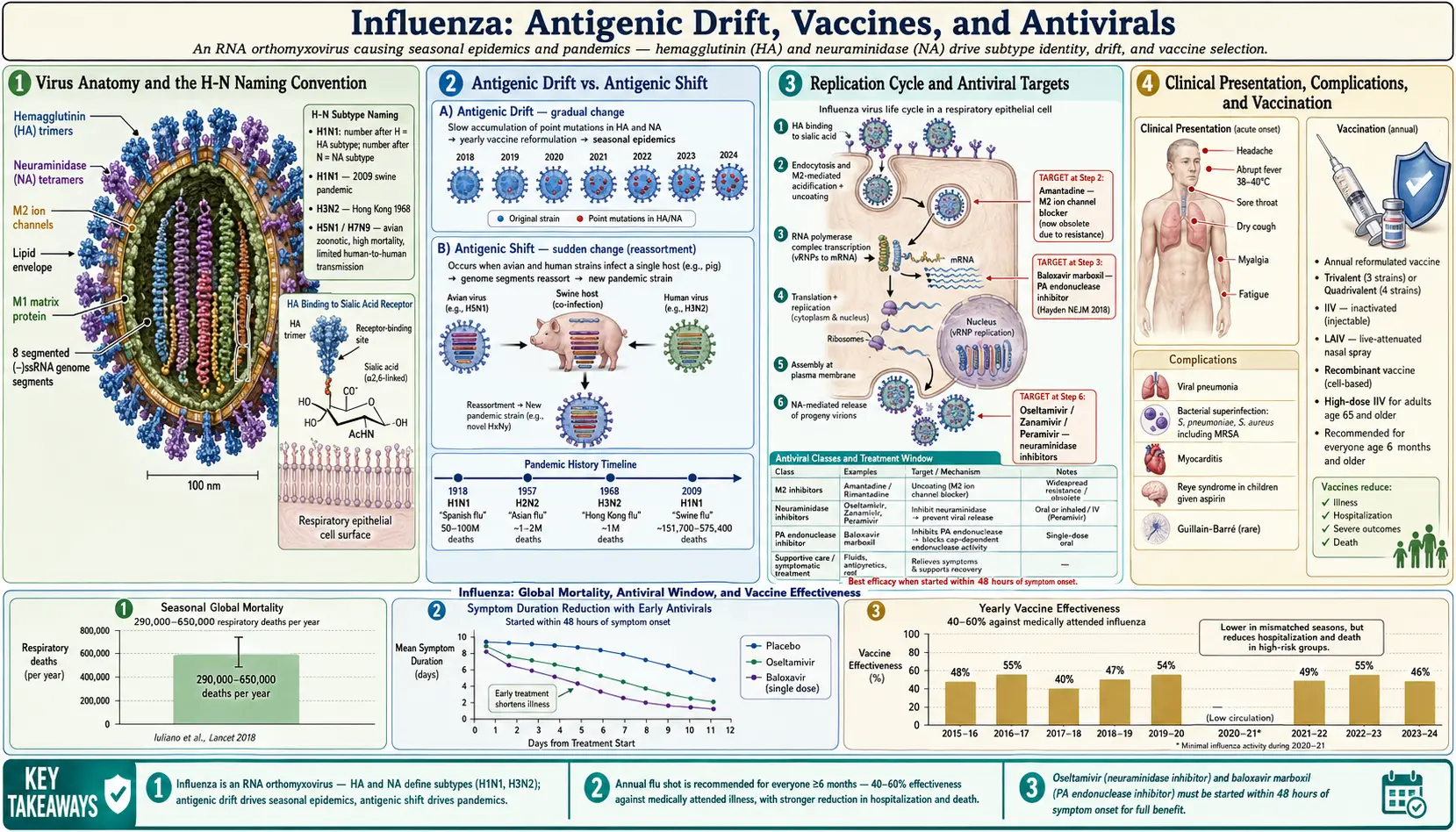
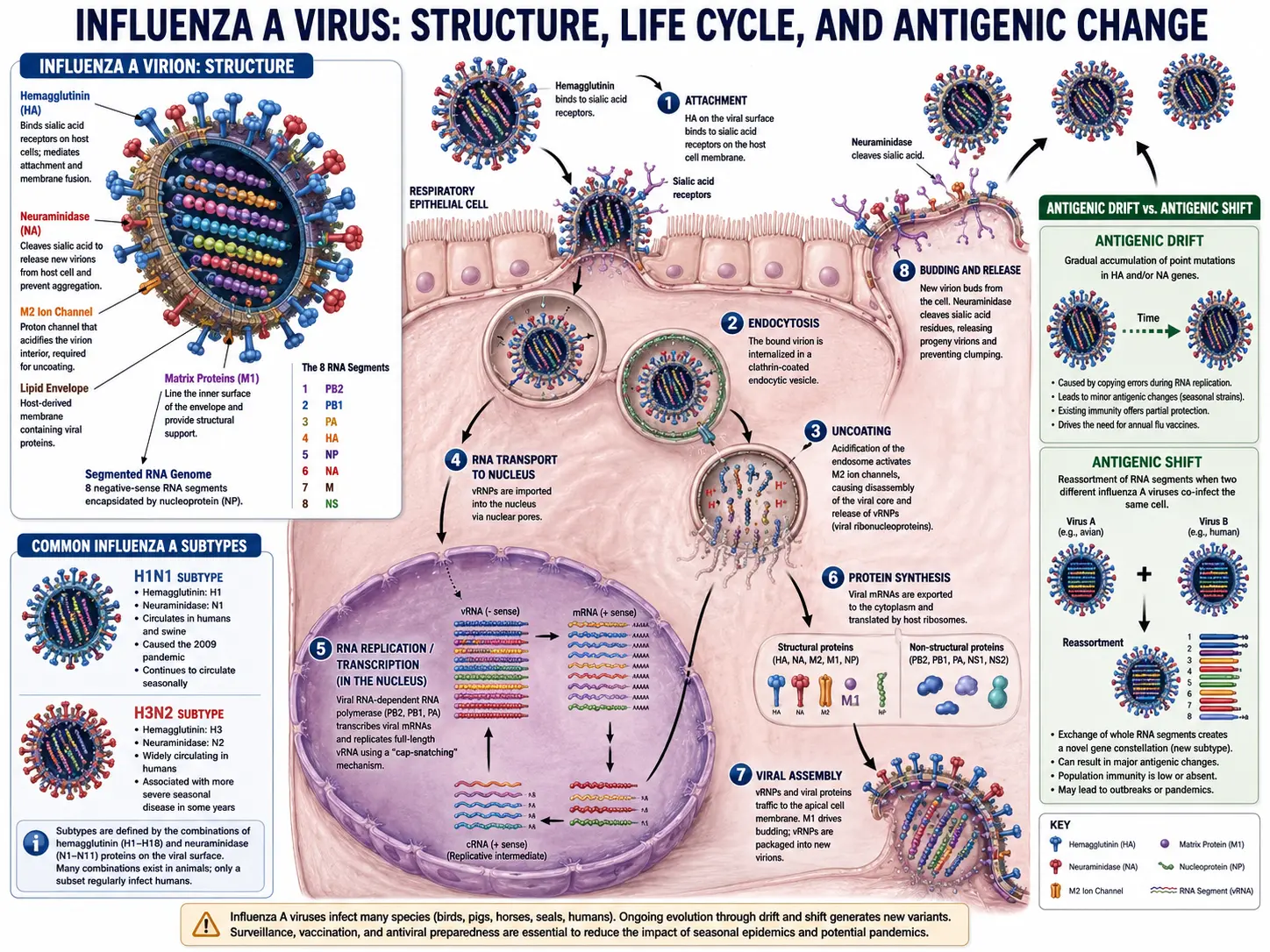
Table of Contents
- What is Influenza?
- Flu, Cold or COVID? Telling Them Apart
- Symptoms and How They Progress
- Who Is at Higher Risk
- Diagnosis and Testing
- Treatment: What the Antivirals Do and Do Not Do
- Caring for Yourself at Home
- Prevention and Vaccination
- Supplements: Honest Evidence Tiers
- Red Flags: When to Get Help Immediately
- Complications
- Key Research Papers
- Connections
- Featured Videos
What is Influenza?
Influenza — "the flu" — is an infection of the nose, throat and lungs caused by influenza viruses. It is a genuinely different illness from a common cold, and treating the two as interchangeable is the source of most of the confusion around it.
Why the flu comes back every year when measles does not
Have chickenpox once and you are generally done. Influenza comes back annually, and the reason is written into the virus's surface.
Two proteins stud that surface: haemagglutinin (H), the grappling hook the virus uses to attach to your airway cells, and neuraminidase (N), the scissors it uses to cut newly made copies free. That is where names like H1N1 and H3N2 come from. Your immune system learns to recognise those two shapes, and antibodies against them are what protect you.
The virus stores its genetic code as RNA and copies it with an enzyme that makes frequent mistakes and does not proofread. Every generation therefore carries small errors, and any error that changes the shape of H or N slightly makes last year's antibodies fit a little less well. Over a season or two the accumulated changes are enough to get past your defences. This gradual drift is why the vaccine is reformulated every year — it is not that the vaccine "wears off", it is that the target moved.
There is a rarer and more dangerous version. The influenza A genome comes in eight separate segments, so if two different influenza viruses infect the same cell they can swap whole segments like shuffling two decks together. An entirely new H can appear in a virus that spreads easily between people, and because nobody's immune system has seen it, it can spread worldwide. That reassortment — antigenic shift — is what produces pandemics, and it is why influenza in birds and pigs is watched so closely.
The types, briefly
- Influenza A — the one that causes pandemics. It infects birds, pigs and other animals as well as humans, which is what gives it somewhere to reassort. Currently circulating human subtypes are H1N1 and H3N2; H3N2 seasons tend to be harder on older people.
- Influenza B — essentially human-only, so it drifts but does not shift, and it does not cause pandemics. It can still cause severe illness, and it hits children relatively harder.
- Influenza C causes mild illness. Influenza D mainly affects cattle.
The scale is easy to underestimate. A modelling study covering countries representing 57% of the world's population estimated 291,000 to 646,000 seasonal influenza-associated respiratory deaths each year, with by far the highest rates in people aged 75 and over (51.3 to 99.4 per 100,000) — higher than previous estimates had suggested [1].
Flu, Cold or COVID? Telling Them Apart
People routinely say "flu" for any bad cold, which matters because the treatment window for real influenza is measured in hours.
The most useful single discriminator is how it started. A cold creeps up: a scratchy throat one day, a stuffy nose the next, gradually feeling worse over two or three days. Influenza arrives like a wall. People can often name the hour — "I was fine at two o'clock and by five I was in bed shivering". That abrupt onset, with fever and whole-body aches, in a season when flu is circulating, is the picture.
- Fever — common and often high in flu (38–40°C), uncommon and mild in adults with a cold. Note that older adults with influenza may have no fever at all, which is one reason it gets missed in exactly the group at highest risk.
- Body aches — prominent and often severe in flu; mild in a cold. People describe their hair or skin hurting.
- Exhaustion — sudden and profound in flu, and it can last two or more weeks after the fever settles.
- Runny nose and sneezing — the leading feature of a cold; present but usually secondary in flu.
- Cough — usually dry and can be severe in flu; milder and productive with a cold.
- Headache — common and often intense in flu.
COVID-19 overlaps heavily with influenza and cannot be told apart reliably on symptoms alone. Loss of taste or smell points more toward COVID but is far from universal, and onset can be gradual with either. Since the treatments differ, and both have antiviral options that work best when started early, a combined test is often the practical answer.
Two other things get called flu and are not: "stomach flu" — vomiting and diarrhoea — is gastroenteritis, usually norovirus or rotavirus, and has nothing to do with influenza; the flu vaccine does not prevent it. And a rapid onset of fever with a very sore throat and no cough may be strep throat, which needs antibiotics.
Symptoms and How They Progress
Typical symptoms include:
- Sudden fever and chills
- Severe muscle and joint aches
- Headache, often behind the eyes
- Dry, persistent cough
- Sore throat
- Extreme fatigue and weakness
- Runny or blocked nose
- Loss of appetite
- Vomiting and diarrhoea — more common in children than adults
The usual timeline
- Days 1–4 after exposure — incubation, usually about two days. You can be infectious about a day before symptoms start, which is why influenza spreads so efficiently.
- Days 1–3 of illness — the worst of it. Fever, aches, headache, exhaustion.
- Days 4–7 — fever settles; cough and fatigue take over and often worsen relatively.
- Week 2 onward — most people are functional again, but cough and tiredness commonly persist for two weeks or more. That lingering tail is normal and is not a sign of a second infection.
The pattern that should worry you is getting better and then getting worse again. A second fever after several days of improvement, or new breathlessness or chest pain, suggests a bacterial pneumonia developing on top of the flu, and needs medical assessment.
How presentation varies
- Older adults may have no fever, and can present instead with confusion, a fall, worsening of an existing heart or lung condition, or simply not eating. Any sudden functional decline in an older person during flu season deserves a thought about influenza.
- Young children more often have vomiting, diarrhoea, ear pain and febrile seizures, and are less able to describe aches.
- People with asthma or COPD frequently present as an exacerbation of their lung disease rather than as classic flu. See Asthma and COPD.
- People with weakened immune systems may shed virus for far longer and have a blunted, atypical picture.
Who Is at Higher Risk
This list matters practically: it determines who should be tested and treated quickly rather than told to rest at home.
- Adults 65 and over — by a wide margin the highest-mortality group [1].
- Children under 5, and especially under 2.
- Pregnancy and the first two weeks after delivery — pregnancy changes immune function, lung volume and heart workload, all in directions that make influenza more dangerous.
- Chronic lung disease — asthma, COPD, cystic fibrosis.
- Heart disease — including heart failure and coronary artery disease. Influenza measurably increases the risk of a heart attack in the weeks after infection.
- Diabetes, chronic kidney disease and chronic liver disease.
- Weakened immunity — from cancer treatment, transplant drugs, biologics for autoimmune disease, long-term steroids, or HIV.
- Neurological conditions that impair coughing or swallowing — stroke, dementia, cerebral palsy, muscular dystrophy.
- Severe obesity, and residents of long-term care facilities.
Diagnosis and Testing
In the middle of a busy flu season, a doctor may reasonably diagnose influenza on the story alone in a healthy adult, because testing will not change what happens. Testing matters when the answer would change treatment or precautions — in people at higher risk, in hospital, and in care homes.
- Rapid antigen tests — results in 10–15 minutes, but their sensitivity is limited. A negative rapid test does not rule out influenza, particularly when flu is widespread. A positive one is generally trustworthy.
- Molecular (PCR / rapid nucleic-acid) tests — much more accurate, and increasingly available with results in under an hour. These are the preferred test where treatment decisions hang on the result, and combined influenza/COVID panels are common.
- Timing matters. Virus levels are highest in the first three to four days, so a swab taken late in the illness is more likely to be falsely negative.
The IDSA guideline is explicit that in high-risk patients, antiviral treatment should be started on clinical suspicion without waiting for a test result, because the benefit depends on starting early [2]. If you are in a risk group, the useful thing to say on the phone is not "I think I have flu" but "I am in a high-risk group, this started suddenly today, and I would like to be assessed for antiviral treatment."
Treatment: What the Antivirals Do and Do Not Do
This is an area where the evidence is genuinely contested, and it is worth having the real numbers rather than either the marketing or the backlash.
Oseltamivir (Tamiflu) — two credible readings of the same drug
A meta-analysis of nine trials in 4,328 patients found that in those with confirmed influenza, oseltamivir shortened time to symptom relief by about 21% — a median of 97.5 hours versus 122.7, a difference of about 25 hours. It also reported fewer lower respiratory complications requiring antibiotics (4.9% versus 8.7%) and fewer hospital admissions (0.6% versus 1.7%). Against that, nausea rose from 6.2% to 9.9% and vomiting from 3.3% to 8.0% [3]. That analysis was funded by a group supported by the manufacturer, which is relevant context rather than a disqualification.
A Cochrane review that obtained the full clinical study reports — including unpublished trials — reached a more sceptical conclusion. It found oseltamivir shortened symptoms in adults by 16.8 hours (from about 7 days to 6.3), but found no significant effect on hospitalisation and no significant reduction in serious complications, while noting a high risk of bias across the trial programme [4].
The honest synthesis: oseltamivir reliably shortens symptoms by roughly a day. Whether it prevents complications and hospital admission in otherwise healthy people is genuinely disputed, and the strongest claims rest on the weaker evidence. What both sides broadly accept is that treatment is most worthwhile in people at high risk of complications and in those sick enough to be hospitalised, and that starting within 48 hours of symptom onset is what determines whether it does anything at all. For a healthy 30-year-old presenting on day four, it is close to pointless.
Baloxavir (Xofluza) — one dose, and a resistance caveat
Baloxavir works on a different viral enzyme and is taken as a single dose. In its phase 3 trial, median time to symptom relief was 53.7 hours versus 80.2 hours on placebo, and it reduced viral load faster than either placebo or oseltamivir — though time to symptom relief was similar to oseltamivir. Adverse events were no more frequent than placebo. The important caveat is resistance: virus variants with reduced susceptibility emerged in 9.7% of baloxavir recipients in the phase 3 trial [5].
What antivirals are not
They are not antibiotics, and antibiotics do nothing for influenza itself — they are for a bacterial infection developing on top of it. Antivirals also do not substitute for vaccination, and their modest benefit is a poor trade against skipping a vaccine.
Aspirin must not be given to children or teenagers with influenza or chickenpox because of the risk of Reye's syndrome, a rare but often fatal brain and liver injury. Use paracetamol/acetaminophen or ibuprofen instead.
Caring for Yourself at Home
For most healthy adults influenza is managed at home, and the basics genuinely help.
- Rest properly. Not "work from bed". The exhaustion is real and pushing through it prolongs it.
- Fluids. Fever, sweating and poor intake dehydrate you quickly, and dehydration makes the headache and weakness considerably worse. Water, broths, and diluted juice. Check urine colour — pale is the target.
- Fever and aches. Paracetamol/acetaminophen or ibuprofen. Do not take two products containing the same ingredient — combined cold remedies frequently contain paracetamol, and doubling up is a common route to liver injury.
- Cough and congestion. Honey is genuinely effective for cough in adults and children over one year, and is better supported than most cough syrups. Steam, saline nasal rinses, and a humidified room help. Never give honey to an infant under 12 months because of botulism risk.
- Food. Appetite disappears and that is fine for a couple of days; fluids matter more. When you can eat, keep it simple and whole: soups and broths, eggs, oats, brown rice, bananas, cooked vegetables, plain yogurt. Garlic, ginger and onions in a broth are traditional, pleasant and harmless.
- Do not smoke or vape while your airway is inflamed, and avoid alcohol, which worsens dehydration and sleep.
Protecting other people. You are typically infectious from about a day before symptoms until roughly five to seven days after they start, and longer in children and those with weakened immunity. Stay home until you have been fever-free for 24 hours without fever-reducing medicine. Cover coughs, wash hands, and keep away from anyone in a high-risk group — the newborn, the grandparent on chemotherapy.
Prevention and Vaccination
The vaccine, and the honest version of its effectiveness
Annual vaccination is the single most effective preventive measure. It is also routinely oversold and then over-dismissed, so here is the shape of it.
Effectiveness varies year to year, largely depending on how well the strains chosen months in advance match what actually circulates. In a good match it prevents a substantial share of infections; in a poor year it prevents fewer. Two things are consistently true even in mismatched years: it reduces the severity of illness in people who catch flu anyway, and it reduces hospitalisation and death, which is the outcome that matters most for those at risk.
"I got the flu from the flu shot" is not possible with the injected vaccines — they contain no live virus. A sore arm, mild aches and feeling off for a day are the immune system responding, not an infection. It also takes about two weeks to build protection, so flu caught in that window is often blamed on the vaccine.
Practical points: vaccination is recommended annually for essentially everyone from six months of age, with particular emphasis on the high-risk groups above. Higher-dose and adjuvanted formulations exist for adults 65 and over, because immune response weakens with age. Vaccination in pregnancy protects both the mother and, through transferred antibodies, the infant in its first months — the period when the baby is too young to be vaccinated and most vulnerable. An egg allergy is no longer a barrier for standard vaccines.
One under-appreciated benefit: influenza vaccination is associated with fewer cardiovascular events in people with heart disease. If you have had a heart attack or have heart failure, the flu vaccine is part of cardiac care, not just respiratory care.
Everything else
Hand-washing, not touching your face, ventilating indoor spaces, and staying home when ill all reduce transmission. Masks reduce it in crowded indoor settings. For household contacts of a confirmed case who are at high risk, antiviral prophylaxis is sometimes used [2].
Supplements: Honest Evidence Tiers
Vitamin D — modest, real, and concentrated in the deficient. A meta-analysis of individual participant data from 25 randomized trials covering 11,321 people found vitamin D supplementation reduced acute respiratory tract infection overall (adjusted odds ratio 0.88). The effect was seen with daily or weekly dosing (OR 0.81) but not with large intermittent bolus doses (OR 0.97), and it was much stronger in people who started very deficient, below 25 nmol/L (OR 0.30), than in those above that (OR 0.75) [6]. Practical translation: correcting a genuine deficiency with regular modest dosing is worthwhile; occasional megadoses are not; and this covers respiratory infections broadly rather than influenza specifically. See Vitamin D3.
Zinc — lozenges have reasonable evidence for shortening the common cold when started within 24 hours. The evidence in influenza specifically is thin, high doses cause nausea, and intranasal zinc has caused permanent loss of smell and should be avoided. See Zinc.
Vitamin C — regular supplementation slightly shortens cold duration in most people; starting it once you are already ill does little. It is not an influenza treatment. See Vitamin C.
Elderberry — small trials suggest shortened symptom duration, but they are small, several are industry-linked, and a larger trial was less positive. Reasonable to try, not a substitute for antivirals in a high-risk person. See Elderberry.
Echinacea — trials are numerous and inconsistent, with product preparations varying so much that results are hard to pool. The honest tier is unproven.
None of these is a reason to skip vaccination or to delay antivirals if you are in a high-risk group.
Red Flags: When to Get Help Immediately
Seek emergency care for an adult with:
- Difficulty breathing, or breathlessness at rest.
- Chest or abdominal pain or pressure.
- Confusion, or sudden dizziness.
- Persistent vomiting, or an inability to keep fluids down.
- Signs of dehydration — no urine for many hours, dry mouth, dizziness on standing.
- Blue or grey lips or face.
- Symptoms that improve and then return with fever and a worse cough — the pattern of secondary bacterial pneumonia.
- Seizures, or an inability to wake or stay awake.
In children, seek emergency care for: fast or laboured breathing, ribs pulling in with each breath, blue lips, not drinking or no wet nappy for many hours, no tears when crying, unusual sleepiness or floppiness, a rash that does not fade under pressure, fever in an infant under three months, or a seizure.
Contact a doctor promptly, rather than waiting, if you are in any of the high-risk groups above — the antiviral window is 48 hours, and it closes quietly.
Complications
- Pneumonia — either directly from the virus or, more often, a bacterial infection on top of it. This is the main cause of influenza deaths. See Pneumonia.
- Worsening of existing disease — asthma and COPD exacerbations, decompensated heart failure, unstable blood sugar in diabetes. In practice this accounts for a great deal of the hospital burden.
- Cardiovascular events — the risk of heart attack rises measurably in the days to weeks after influenza, driven by systemic inflammation destabilising existing plaque. See Heart Attack.
- Ear and sinus infections — common, particularly in children.
- Myocarditis and, rarely, encephalitis or Guillain–Barré syndrome. See Myocarditis.
- Muscle inflammation (myositis) — more common in children, presenting as sudden severe calf pain and refusal to walk.
- Pregnancy complications — including preterm birth.
- Prolonged fatigue — weeks of tiredness after the acute illness is common and usually resolves.
The comprehensive clinical overview of the disease, its virology, epidemiology and management is set out in the Nature Reviews Disease Primers review of influenza [7].
Key Research Papers
This list was rebuilt after an audit found that seven of the eight DOI links previously shown here resolved to an unrelated paper or to nothing at all. Every citation below was verified live against its own PubMed record — authors, journal, year and title all checked against the source.
- Iuliano AD, Roguski KM, Chang HH, et al. Estimates of global seasonal influenza-associated respiratory mortality: a modelling study. Lancet. 2018;391(10127):1285-1300 — PubMed PMID: 29248255 · doi:10.1016/S0140-6736(17)33293-2
- Uyeki TM, Bernstein HH, Bradley JS, et al. Clinical Practice Guidelines by the Infectious Diseases Society of America: 2018 Update on Diagnosis, Treatment, Chemoprophylaxis, and Institutional Outbreak Management of Seasonal Influenzaa. Clin Infect Dis. 2019;68(6):e1-e47 — PubMed PMID: 30566567 · doi:10.1093/cid/ciy866
- Dobson J, Whitley RJ, Pocock S, et al. Oseltamivir treatment for influenza in adults: a meta-analysis of randomised controlled trials. Lancet. 2015;385(9979):1729-1737 — PubMed PMID: 25640810 · doi:10.1016/S0140-6736(14)62449-1
- Jefferson T, Jones MA, Doshi P, et al. Neuraminidase inhibitors for preventing and treating influenza in adults and children. Cochrane Database Syst Rev. 2014;2014(4):CD008965 — PubMed PMID: 24718923 · doi:10.1002/14651858.CD008965.pub4
- Hayden FG, Sugaya N, Hirotsu N, et al. Baloxavir Marboxil for Uncomplicated Influenza in Adults and Adolescents. N Engl J Med. 2018;379(10):913-923 — PubMed PMID: 30184455 · doi:10.1056/NEJMoa1716197
- Martineau AR, Jolliffe DA, Hooper RL, et al. Vitamin D supplementation to prevent acute respiratory tract infections: systematic review and meta-analysis of individual participant data. BMJ. 2017;356:i6583 — PubMed PMID: 28202713 · doi:10.1136/bmj.i6583
- Krammer F, Smith GJD, Fouchier RAM, et al. Influenza. Nat Rev Dis Primers. 2018;4(1):3 — PubMed PMID: 29955068 · doi:10.1038/s41572-018-0002-y
Historical Background
Influenza has caused devastating pandemics throughout history, most notably the 1918 Spanish flu pandemic that killed an estimated 50-100 million people worldwide. The influenza virus was first isolated in 1933 by Wilson Smith, Christopher Andrewes, and Patrick Laidlaw at the National Institute for Medical Research in London, enabling the subsequent development of antiviral therapies.
PubMed Topic Searches
The following PubMed topic searches surface the current peer-reviewed literature on Influenza. Each link opens a live PubMed query; results update as new papers are indexed.
- PubMed: Search: influenza virus
- PubMed: Search: seasonal influenza vaccine
- PubMed: Search: influenza antiviral oseltamivir
- PubMed: Search: baloxavir marboxil influenza
- PubMed: Search: influenza pandemic
- PubMed: Search: influenza pathogenesis
- PubMed: Search: influenza complications pneumonia
- PubMed: Search: influenza hemagglutinin neuraminidase
- PubMed: Search: universal influenza vaccine
- PubMed: Search: influenza elderly mortality
- PubMed: Search: influenza H1N1 H3N2
- PubMed: Search: influenza A virus
Connections
- Pulmonology
- Pneumonia
- Asthma
- Zinc
- Vitamin C
- Vitamin D3
- Echinacea
- Elderberry
- Elderberry and Antiviral Activity
- Cold and Flu Treatments
- Vitamin D Status and Respiratory Infection — why influenza risk tracks winter Vitamin D deficiency, and the repletion protocol.
- Acute Respiratory Distress Syndrome
- Shortness of Breath
- Chronic Cough
- Eucalyptus
- Immune Boosting
- Magnesium
- Heart Failure
- Fatigue
- Allergies
- Thyme
- Mullein
- Common Cold
- RSV
- Whooping Cough
- Quercetin as Zinc Ionophore & Antiviral
- Herbs covered on this site that discuss this condition: Andrographis (Andrographis paniculata) · Olive Leaf (Olea europaea) · Houttuynia cordata (Fish Mint) · Star Anise (Illicium verum) · Boneset · Ginseng (Panax ginseng)
- Discussed in depth on these pages: Boneset for Fever and Influenza, and Where the Name Comes From
- COPD — the same pattern, and a high-risk group for antiviral treatment
- Heart Attack — risk rises measurably in the weeks after influenza