Hepatitis C
What Hepatitis C Is
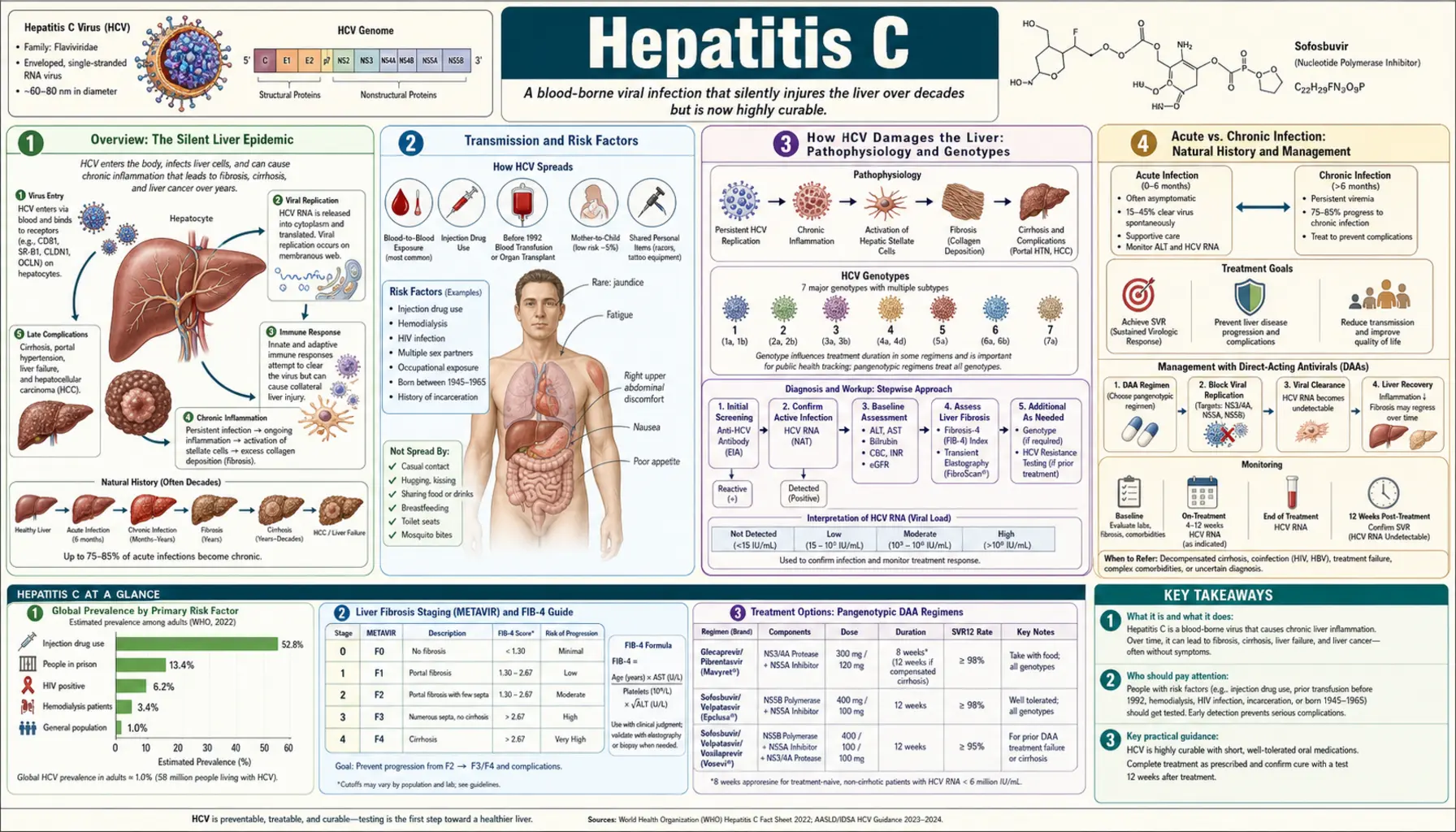
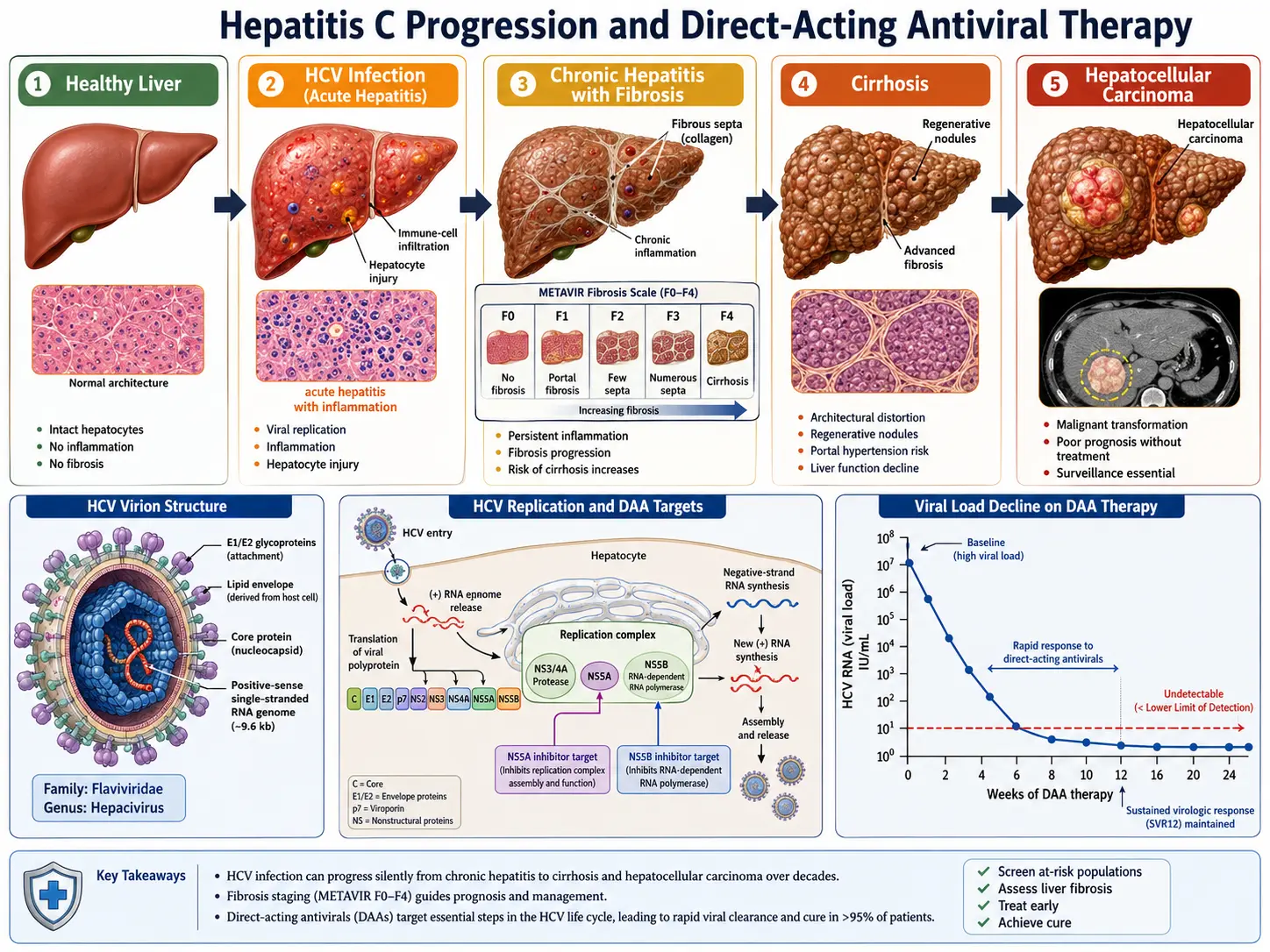
Hepatitis C is a viral infection that primarily affects the liver and is caused by the hepatitis C virus (HCV). It can lead to both acute and chronic infections, with chronic hepatitis C potentially resulting in severe liver damage, cirrhosis, liver failure, or liver cancer.
Transmission of Hepatitis C
- Blood-to-blood contact: hepatitis C virus is most commonly spread through contact with infected blood.
- Sharing needles: Common among people who use injectable drugs.
- Needle stick injuries: Risk for healthcare workers.
- Blood transfusions and organ transplants: Before 1992, when widespread screening of blood supply began.
- Mother to child: Can be passed during childbirth, although the risk is relatively low. A 2014 review that pooled 109 studies found that 5.8% of children born to mothers with active hepatitis C (virus detectable in the blood) became infected, and 10.8% when the mother also had human immunodeficiency virus (HIV).
Symptoms of Hepatitis C
Many people with hepatitis C do not show symptoms, especially in the early stages. If symptoms do appear, they may include:
- Fatigue
- Fever
- Loss of appetite
- Nausea and vomiting
- Abdominal pain, particularly in the upper right side
- Dark urine
- Joint pain
- Jaundice: Yellowing of the skin and eyes
Acute vs. Chronic Hepatitis C
- Acute Hepatitis C:
- Short-term illness that occurs within the first six months of exposure to hepatitis C virus.
- Can clear on its own without treatment, but often progresses to chronic hepatitis C: the U.S. Centers for Disease Control and Prevention (CDC) states that more than half of people who become infected develop chronic infection.
- Chronic Hepatitis C:
- Long-term infection that can last a lifetime if not treated.
- Can lead to serious liver damage, cirrhosis, or liver cancer.
Causes and Risk Factors
- Sharing needles or syringes: Highest risk factor for hepatitis C virus transmission.
- Receiving blood products: Before widespread screening in 1992.
- HIV-positive status: Increases risk of contracting hepatitis C.
- Being on long-term hemodialysis: Increased risk due to potential exposure to infected blood.
- Born to an infected mother
- Tattoos or body piercings: If done with unsterile equipment.
Diagnosis
- Blood tests:
- Antibody test: Detects antibodies to hepatitis C virus and indicates past or present infection.
- HCV RNA test: Confirms active infection by detecting the virus in the blood.
- Liver function tests: To assess liver health and potential damage.
- Imaging tests: Ultrasound, computed tomography (CT) scan, or magnetic resonance imaging (MRI) to detect liver damage.
- Liver biopsy: In some cases, a sample of liver tissue may be taken to assess the extent of liver damage.
Treatment Options
- Antiviral medications:
- Direct-acting antivirals (DAAs): Highly effective in curing hepatitis C, with a treatment duration of 8-12 weeks; CDC states that these all-tablet regimens cure most people.
- Combination therapies: Such as ledipasvir/sofosbuvir or glecaprevir/pibrentasvir.
- Sofosbuvir-velpatasvir: In a 2015 trial of 624 people with hepatitis C genotype 1, 2, 4, 5 or 6 (19% with cirrhosis, 32% treated before), one tablet a day for 12 weeks cured 99% (no virus found 12 weeks after treatment ended, called a sustained virologic response).
- Glecaprevir-pibrentasvir: In two 2018 trials of 1,208 people without cirrhosis, the cure rate in genotype 1 was 99.1% after 8 weeks and 99.7% after 12 weeks; in genotype 3 it was 95% with either 8 or 12 weeks.
- Lifestyle changes:
- Alcohol: Alcohol adds further liver damage.
- Diet: A healthy diet supports liver function.
- Monitoring: Regular check-ups to monitor liver function and detect any complications early.
Prevention Strategies
- Not sharing needles or syringes: Shared needles are the main route of spread.
- Condoms: Condom use reduces the risk of sexual transmission.
- Proper sterilization of medical and tattoo equipment prevents spread through instruments.
- Screening blood donations: Ensures blood is free of hepatitis C virus.
- No vaccine: CDC states that no vaccine against hepatitis C exists and no medicine taken before or after exposure prevents infection.
Complications of Hepatitis C
- Cirrhosis: Long-term liver damage that can lead to scarring.
- Liver cancer: Increased risk with chronic infection.
- Liver failure: Severe cases can result in the liver losing its ability to function.
- Other systemic issues: Such as type 2 diabetes, kidney disease, and cryoglobulinemia (a condition that affects blood vessels).
Who Gets Tested for Hepatitis C
Since 2020, CDC recommends hepatitis C screening at least once in a lifetime for every adult aged 18 and over, and for every pregnant woman during each pregnancy, except in settings where fewer than 0.1% of people are infected. People with ongoing risk factors, such as injecting drugs, are tested regardless of age and again from time to time while the risk lasts. CDC also states that anyone who asks for a hepatitis C test should receive one, whether or not they disclose a risk, because many people are reluctant to talk about stigmatized risks.
Key Research Papers
Historical Background
Hepatitis C virus was identified in 1989 by Michael Houghton, Qui-Lim Choo, and George Kuo at Chiron Corporation, along with Daniel Bradley at the CDC. Previously known as "non-A, non-B hepatitis," its discovery enabled blood supply screening and ultimately the development of curative direct-acting antiviral therapies. Harvey Alter, Michael Houghton, and Charles Rice were awarded the 2020 Nobel Prize in Physiology or Medicine for the discovery of hepatitis C virus.
Key Research Papers
- Choo QL, Kuo G, Weiner AJ, et al. Isolation of a cDNA clone derived from a blood-borne non-A, non-B viral hepatitis genome. Science. 1989;244(4902):359-362. — doi:10.1126/science.2523562
- Feld JJ, Jacobson IM, Hezode C, et al. Sofosbuvir and velpatasvir for HCV genotype 1, 2, 4, 5, and 6 infection. New England Journal of Medicine. 2015;373(27):2599-2607. — doi:10.1056/NEJMoa1512610
- Afdhal N, Zeuzem S, Kwo P, et al. Ledipasvir and sofosbuvir for untreated HCV genotype 1 infection. New England Journal of Medicine. 2014;370(20):1889-1898. — doi:10.1056/NEJMoa1402454
- Zeuzem S, Foster GR, Wang S, et al. Glecaprevir-pibrentasvir for 8 or 12 weeks in HCV genotype 1 or 3 infection. New England Journal of Medicine. 2018;378(4):354-369. — doi:10.1056/nejmoa1702417
- Ghany MG, Morgan TR; AASLD-IDSA Hepatitis C Guidance Panel. Hepatitis C guidance 2019 update: AASLD-IDSA recommendations for testing, managing, and treating hepatitis C virus infection. Hepatology. 2020;71(2):686-721. — doi:10.1002/hep.31060
- Pawlotsky JM, Negro F, Aghemo A, et al. EASL recommendations on treatment of hepatitis C: final update of the series. Journal of Hepatology. 2020;73(5):1170-1218. — doi:10.1016/j.jhep.2020.08.018
- Poordad F, McCone J Jr, Bacon BR, et al. Boceprevir for untreated chronic HCV genotype 1 infection. New England Journal of Medicine. 2011;364(13):1195-1206. — doi:10.1056/nejmoa1010494
- Manns MP, McHutchison JG, Gordon SC, et al. Peginterferon alfa-2b plus ribavirin compared with interferon alfa-2b plus ribavirin for initial treatment of chronic hepatitis C. The Lancet. 2001;358(9286):958-965. — doi:10.1016/s0140-6736(01)06102-5
- Mohd Hanafiah K, Groeger J, Flaxman AD, Wiersma ST. Global epidemiology of hepatitis C virus infection: new estimates of age-specific antibody to HCV seroprevalence. Hepatology. 2013;57(4):1333-1342. — doi:10.1002/hep.26141
- Curry MP, O'Leary JG, Bzowej N, et al. Sofosbuvir and velpatasvir for HCV in patients with decompensated cirrhosis. New England Journal of Medicine. 2015;373(27):2618-2628. — doi:10.1056/nejmoa1512614
- Falade-Nwulia O, Suarez-Cuervo C, Nelson DR, et al. Oral direct-acting agent therapy for hepatitis C virus infection: a systematic review. Annals of Internal Medicine. 2017;166(9):637-648. — doi:10.7326/m16-2575
- Liang TJ, Ghany MG. Current and future therapies for hepatitis C virus infection. New England Journal of Medicine. 2013;368(20):1907-1917. — doi:10.1056/nejmra1213651
- Schillie S, Wester C, Osborne M, Wesolowski L, Ryerson AB. CDC recommendations for hepatitis C screening among adults - United States, 2020. MMWR Recommendations and Reports. 2020;69(2):1-17. — doi:10.15585/mmwr.rr6902a1
- Benova L, Mohamoud YA, Calvert C, Abu-Raddad LJ. Vertical transmission of hepatitis C virus: systematic review and meta-analysis. Clinical Infectious Diseases. 2014;59(6):765-773. — doi:10.1093/cid/ciu447
PubMed Topic Searches
The following PubMed topic searches retrieve current peer-reviewed literature on Hepatitis C. Each link opens a live PubMed query so you always see the most recent publications.
- PubMed: Hepatitis C virus review
- PubMed: Sofosbuvir hepatitis C clinical trial
- PubMed: Ledipasvir sofosbuvir hepatitis C
- PubMed: Glecaprevir pibrentasvir hepatitis C
- PubMed: Hepatitis C sustained virological response
- PubMed: Direct acting antiviral real world hepatitis C
- PubMed: Hepatitis C cirrhosis hepatocellular carcinoma
- PubMed: AASLD IDSA hepatitis C guidance
- PubMed: Hepatitis C injection drug use
- PubMed: Hepatitis C vaccine development
- PubMed: WHO hepatitis C elimination
Connections
- Infectious Disease
- Hepatitis
- Cirrhosis
- Hepatitis B
- Liver Disease
- Liver Cleansing
- Turmeric
- N-Acetylcysteine
- Vitamin D3
- Milk Thistle
- Cancer
- Fatigue
- Jaundice
- Dark Urine
- Abdominal Pain
- Joint Pain
- Kidney Disease
- Gallbladder Disease
- N-Acetylcysteine and Liver Health
- Addiction
- Liver Cancer
- Ochoa & Kornberg — sofosbuvir is a counterfeit nucleotide — the polymerase swallows it and stops
- Discussed in depth on these pages: Alter, Houghton & Rice: Hepatitis C, from Mystery Virus to Cure