Lab Tests


The Eleven Test Categories
Every test on this site sits under a clinical category, on disk and in the URL, so a path reads Lab Tests → category → test and the sub-menu above always shows the neighbouring tests a doctor would order alongside the one you are reading.
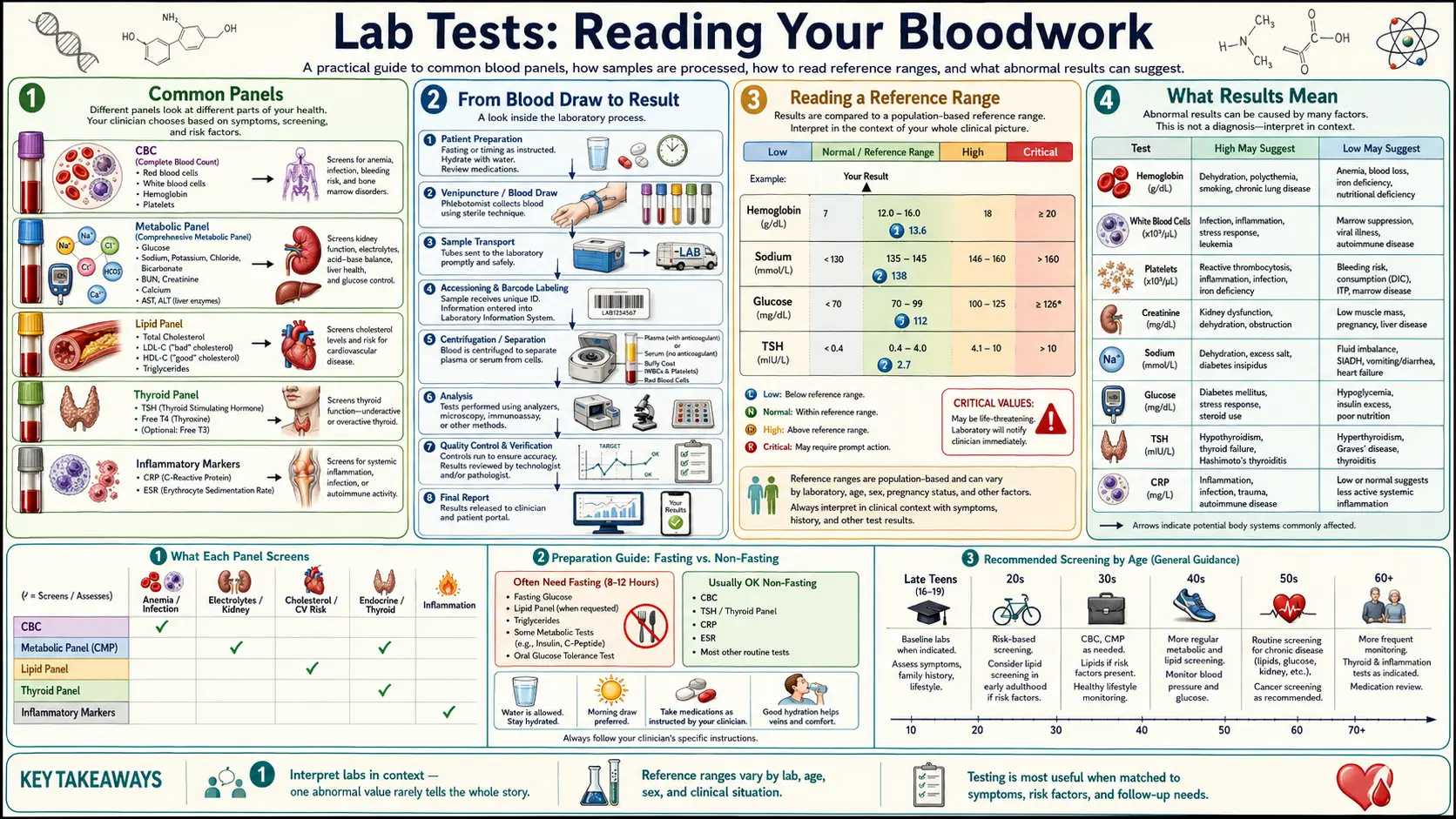
This visual reference helps you understand the most commonly ordered annual lab tests at a glance. Each marker includes a color-coded range bar showing where low, normal, and high values fall so you can quickly interpret your results and have more informed conversations with your doctor.
Interactive Visualization Blood pH — hold the acid–base balance yourself Keep blood pH between 7.35 and 7.45 — blow off CO₂ with the lungs in minutes, dump acid through the kidneys over hours, then break it with hyperventilation or diabetic ketoacidosis. Launch → Interactive Visualization Pharmacokinetics — follow a pill through ADME Swallow a pill and follow it through absorption, the liver's first-pass cut, distribution, CYP450 metabolism and kidney excretion — then block an enzyme with grapefruit and watch levels climb. Launch → Interactive Visualization Pulse Oximetry — read oxygen with two colours of light See how a finger clip reads your blood oxygen with two colours of light — measuring only the pulsing artery signal — and why it can read dangerously normal in carbon-monoxide poisoning. Launch →
Table of Contents
How to Read the Range Bars
Each bar is divided into segments representing where your result falls. The numbers on each segment show the threshold values. Ranges shown are standard adult reference ranges; your lab may use slightly different values.
Reference ranges vary by laboratory, so the range printed on your own report is the one that applies to it. The figures in these bars are the example ranges published by MedlinePlus (U.S. National Library of Medicine) wherever MedlinePlus gives one; the few bars it does not cover come from other sources.
Complete Blood Count (CBC)
The complete blood count is the most frequently ordered blood test. It evaluates red blood cells, white blood cells, and platelets to detect infections, anemia, clotting disorders, and immune system conditions.
WBC — White Blood Cells (×10³/µL)
RBC — Red Blood Cells, Male (×10⁶/µL)
RBC — Red Blood Cells, Female (×10⁶/µL)
Hemoglobin, Male (g/dL)
Hemoglobin, Female (g/dL)
Hematocrit, Male (%)
Hematocrit, Female (%)
Platelets (×10³/µL)
MCV — Mean Corpuscular Volume (fL)
Comprehensive Metabolic Panel (CMP)
The CMP is a group of 14 tests that evaluate kidney function, liver function, electrolyte balance, and blood sugar — providing a broad overview of your body's chemical balance and metabolism.
Glucose, Fasting (mg/dL)
Blood urea nitrogen (BUN) — Blood Urea Nitrogen (mg/dL)
Creatinine (mg/dL)
Estimated glomerular filtration rate (eGFR) — Estimated Glomerular Filtration Rate (mL/min)
Sodium (mEq/L)
Potassium (mEq/L)
Calcium (mg/dL)
Albumin (g/dL)
Total Protein (g/dL)
Alanine aminotransferase (ALT) — Alanine Aminotransferase (U/L)
Aspartate aminotransferase (AST) — Aspartate Aminotransferase (U/L)
Alkaline phosphatase (ALP) — Alkaline Phosphatase (U/L)
Bilirubin, Total (mg/dL)
Lipid Panel
The lipid panel measures fats and fatty substances in the blood to assess cardiovascular disease risk. It is one of the most important screening tests for heart health.
Total Cholesterol (mg/dL)
Low-density lipoprotein (LDL) Cholesterol (mg/dL)
High-density lipoprotein (HDL) Cholesterol (mg/dL)
Triglycerides (mg/dL)
Very-low-density lipoprotein (VLDL) Cholesterol (mg/dL)
Thyroid Panel
The thyroid panel evaluates how well your thyroid gland is functioning. Thyroid hormones regulate metabolism, energy, body temperature, heart rate, and many other vital processes.
Thyroid-stimulating hormone (TSH) — Thyroid-Stimulating Hormone (mIU/L)
Free T4 — Thyroxine (ng/dL)
Free T3 — Triiodothyronine (pg/mL)
Iron Panel
The iron panel measures how much iron is in your blood and how well your body stores and transports it. Iron is essential for oxygen delivery, energy production, and immune function.
Serum Iron (µg/dL)
Ferritin, Male (ng/mL)
Ferritin, Female (ng/mL)
TIBC — Total Iron-Binding Capacity (µg/dL)
Transferrin Saturation (%)
Diabetes Markers
These markers assess blood sugar regulation and diabetes risk. Hemoglobin A1c (HbA1c) reflects your average blood sugar over the past 2-3 months, while fasting glucose and insulin provide a snapshot of current metabolic status.
Hemoglobin A1c — Hemoglobin hemoglobin A1c (%)
Fasting Glucose (mg/dL)
Fasting Insulin (µinternational units (IU)/mL)
Inflammatory Markers
Chronic low-grade inflammation is linked to heart disease, cancer, diabetes, and autoimmune conditions. These tests help identify hidden inflammation before it progresses to serious disease.
High-sensitivity C-reactive protein (hs-CRP) — High-Sensitivity C-Reactive Protein (mg/L)
Erythrocyte sedimentation rate (ESR), Male — Erythrocyte Sedimentation Rate (mm/hr)
Erythrocyte sedimentation rate, Female — Erythrocyte Sedimentation Rate (mm/hr)
Homocysteine (µmol/L)
Hormone Panel
Hormones regulate virtually every process in your body — from energy and mood to reproductive health and body composition. Imbalances can cause fatigue, weight gain, depression, and many other symptoms.
Testosterone, Male (ng/dL)
Testosterone, Female (ng/dL)
Estradiol, Premenopausal (pg/mL)
Cortisol, Morning (µg/dL)
DHEA-S, Male (µg/dL)
DHEA-S, Female (µg/dL)
Vitamins & Minerals
Nutrient deficiencies are surprisingly common and can cause wide-ranging symptoms — from fatigue and brain fog to nerve damage and bone loss. These tests identify the most critical nutritional gaps.
Vitamin D (25-OH) (ng/mL)
Vitamin B12 (pg/mL)
Folate (ng/mL)
Magnesium (mg/dL)
Urinalysis
A urinalysis checks the appearance, concentration, and content of urine. It can detect kidney disease, urinary tract infections, diabetes, and other metabolic conditions.
pH
Specific Gravity
Protein
Glucose
Coagulation Panel
Coagulation tests measure how well your blood clots. They are essential before surgeries, for monitoring blood-thinning medications, and for diagnosing bleeding or clotting disorders.
PT — Prothrombin Time (seconds)
International normalized ratio (INR) — International Normalized Ratio (therapeutic on warfarin: 2.0–3.0)
aPTT — Activated Partial Thromboplastin Time (seconds)
Kidney Function (Blood Urea Nitrogen, Creatinine, Estimated Glomerular Filtration Rate, Cystatin C)
Blood urea nitrogen, creatinine, and estimated glomerular filtration rate appear on every Comprehensive Metabolic Panel and form the screening backbone for kidney function. Cystatin C is a muscle-mass-independent filtration marker that detects mild renal impairment earlier than creatinine and refines estimated glomerular filtration rate in non-standard body composition (frail elderly, athletes, amputees). Together they stage chronic kidney disease (chronic kidney disease (CKD) G1–G5) and detect acute kidney injury. Read the full Kidney Function guide →
Cystatin C (mg/L)
Estimated glomerular filtration rate — chronic kidney disease Staging (mL/min/1.73 m²)
Deep dives: blood urea nitrogen · Creatinine · estimated glomerular filtration rate · Cystatin C
Other Important Tests
These additional tests are frequently ordered during annual physicals and can reveal conditions such as gout, liver dysfunction, and prostate issues.
Uric Acid, Male (mg/dL)
Uric Acid, Female (mg/dL)
Gamma-glutamyl transferase (GGT) — Gamma-Glutamyl Transferase (U/L)
Prostate-specific antigen (PSA) — Prostate-Specific Antigen, Male (ng/mL)
Specialized Cardiovascular & Hormonal Tests
These tests go beyond the standard annual panel to provide deeper insight into inflammation, cellular omega-3 status, and reproductive hormone reserve — tools increasingly used in preventive cardiology, integrative medicine, and fertility planning.
High-sensitivity C-reactive protein — High-Sensitivity C-Reactive Protein (mg/L)
The most clinically useful marker of low-grade chronic vascular inflammation and independent cardiovascular risk. Detects inflammation invisible to standard C-reactive protein (CRP). Target for optimal cardiovascular health: below 0.5 mg/L. Elevated by smoking, obesity, sleep apnea, periodontal disease, and metabolic syndrome. Read the full high-sensitivity C-reactive protein guide →
Omega-3 Index (eicosapentaenoic acid (EPA) + docosahexaenoic acid (DHA) in red blood cell membranes) (%)
Measures eicosapentaenoic acid + docosahexaenoic acid as a percentage of total fatty acids in red blood cell membranes — reflecting true 3-month average omega-3 tissue status. Predicts sudden cardiac death risk, arrhythmia, depression, cognitive aging, and preterm birth. Most Americans fall in the high-risk 4–5% range. Target: above 8%, optimal above 10%. Read the full Omega-3 Index guide →
AMH — Anti-Müllerian Hormone (women, age 35) (ng/mL)
Primary marker of ovarian reserve — how many eggs remain. Stable across the menstrual cycle; can be drawn any day. Declines with age, smoking, endometriosis surgery, and chemotherapy. Elevated in polycystic ovary syndrome (PCOS) (>4–5 ng/mL). Reference ranges are age-specific — an AMH of 1.0 ng/mL means very different things at 28 vs. 40. Read the full AMH guide →
Genetic, Cardiac Injury & Autoimmune Tests
These tests assess genetic methylation risk, acute heart muscle injury, and autoimmune intestinal damage — three areas where targeted testing can dramatically change clinical management.
Methylenetetrahydrofolate reductase (MTHFR) Gene Mutation (C677T / A1298C) (genotype)
Identifies inherited variants that reduce the methylenetetrahydrofolate reductase enzyme responsible for converting folate to its active form (methylfolate) and recycling homocysteine. Homozygous C677T or compound heterozygous carriers need methylated B vitamins (methylfolate, methylcobalamin) and should monitor homocysteine. Always test homocysteine alongside methylenetetrahydrofolate reductase genotyping to assess functional impact. Read the full methylenetetrahydrofolate reductase guide →
Cardiac Troponin I & T (hs-cTnI / hs-cTnT) (ng/L)
The gold-standard marker of heart muscle injury. Elevated in acute myocardial infarction, myocarditis, heart failure, pulmonary embolism, and sepsis. High-sensitivity assays detect injury 10–100x earlier than conventional tests and enable 0h/1h rule-out protocols in emergency settings. A rising-and-falling pattern on serial measurements confirms acute myocardial infarction (MI). Read the full Cardiac Troponin guide →
Tissue Transglutaminase immunoglobulin A (IgA) (tTG-IgA) — Celiac Panel (U/mL)
The first-line serological test for celiac disease. Must be drawn while the patient is eating a gluten-containing diet — a gluten-free diet normalizes antibodies and causes false negatives. Always include total immunoglobulin A to detect immunoglobulin A deficiency, which invalidates all immunoglobulin A-based results. Positive serology in adults requires duodenal biopsy confirmation. Read the full Celiac Disease Panel guide →
Conventional vs. Functional/Optimal Ranges
Most lab reports use conventional reference ranges that are derived from population averages — which include many unhealthy individuals. Functional medicine practitioners often use narrower, optimal ranges based on healthy populations and peer-reviewed research. For example, a conventional thyroid-stimulating hormone range might be 0.4–4.0, while a functional optimal range is 1.0–2.5. Similarly, conventional fasting glucose of 65–99 may be considered normal, but functional practitioners prefer 75–86.
If your results fall within conventional ranges but you still experience symptoms, consider asking your provider about functional/optimal ranges — early intervention at the "sub-optimal" stage can prevent progression to diagnosable disease.
IMPORTANT DISCLAIMER: This page is an educational reference to help you understand your lab results. It does NOT replace professional medical interpretation. Reference ranges may vary between laboratories. Always discuss your results with a qualified healthcare provider who can consider your complete health picture, symptoms, medications, and medical history.
All Lab Tests A–Z
Every topic in this section, listed alphabetically — including the ones that do not belong to a standard panel above.
- ACE Level (Angiotensin-Converting Enzyme)
- Adrenocorticotropic Hormone Stimulation Test: Adrenal Insufficiency Diagnosis
- AFP Test: Alpha-Fetoprotein Lab Guide
- Albumin Test: Serum Albumin
- Aldolase
- Aldosterone-Renin Ratio (ARR)
- Ammonia (Blood Test)
- Amylase and Lipase
- Antinuclear Antibody Test: Antinuclear Antibody for Autoimmune Disease
- Antineutrophil Cytoplasmic Antibody Test: Antineutrophil Cytoplasmic Antibody Testing for Vasculitis
- Anti-CCP (Rheumatoid Arthritis Antibody)
- Anti-dsDNA (Lupus Antibody)
- Anti-Müllerian Hormone (AMH) Test
- Anti-Smith (Anti-Sm) Antibody Test
- Anticardiolipin Antibodies
- Apolipoprotein B (ApoB): Why It May Predict Your Heart Attack Better Than Low-Density Lipoprotein Cholesterol
- aPTT Test: Activated Partial Thromboplastin Time
- Basic Metabolic Panel (BMP)
- Beta-2 Microglobulin
- Beta-hCG (Pregnancy Hormone)
- Blood Culture
- Blood Type (ABO and Rh)
- BNP and NT-proBNP: Cardiac Biomarker Guide
- C-Peptide Test
- CA-125 Test: Ovarian Cancer Marker Lab Guide
- Cardiac Troponin Test (Troponin I & T)
- CEA Test: Carcinoembryonic Antigen Lab Guide
- Celiac Disease Panel (tTG-IgA)
- Ceruloplasmin Test
- Coagulation Panel: PT, INR, and aPTT
- Complement (C3, C4, CH50)
- Complete Blood Count (CBC)
- Comprehensive Metabolic Panel (CMP)
- Continuous Glucose Monitor (CGM): Real-Time Metabolic Insight Through a Sensor on Your Arm
- Copper Test (Serum Copper and Ceruloplasmin)
- Coronary Calcium Score (Coronary Artery Calcium): The 10-Minute Computed Tomography Scan That Sees Your Heart Disease Decades Before a Heart Attack
- Cortisol Test: Stress Hormone Levels and Adrenal Function
- Creatine Kinase (CK)
- Cystatin C
- D-Dimer Test: Fibrin Degradation and Clot Detection
- DHEA-S Test: The Anti-Aging Hormone Marker
- Echocardiogram: The Ultrasound Window Into Your Heart
- Erythrocyte Sedimentation Rate Test: Erythrocyte Sedimentation Rate and Inflammation
- Fasting Insulin: The Hidden Key to Metabolic Health
- Ferritin Test: Iron Storage Protein and Reference Ranges
- Fibrinogen Test
- Folate Test
- Fructosamine Test
- Full-Body Magnetic Resonance Imaging Screening: Benefits, Limits, Incidentalomas, and Whether to Get One
- Glucose-6-Phosphate Dehydrogenase Deficiency Test
- Gamma-Glutamyl Transferase: Liver Health and Oxidative Stress
- H. pylori Test
- Haptoglobin Test
- Heavy Metals Panel
- Hemoglobin A1C
- Hepatitis Panel
- High-Sensitivity C-Reactive Protein (hs-CRP) Test
- Homeostatic Model Assessment of Insulin Resistance
- Homocysteine: Cardiovascular Risk and Methylation Marker
- Hormone Panel
- Insulin-Like Growth Factor 1 Test
- Immunoglobulins (Immunoglobulin G, Immunoglobulin A, Immunoglobulin M, Immunoglobulin E)
- Inflammatory Markers
- Iron Panel
- Kidney Function Tests: Blood Urea Nitrogen, Creatinine, Estimated Glomerular Filtration Rate, and Cystatin C
- Lactate (Lactic Acid)
- Lactate Dehydrogenase Test: Lactate Dehydrogenase — Tissue Damage and Disease Activity Marker
- Lipase Test: Diagnosing Acute Pancreatitis and Pancreatic Disease
- Lipid Panel
- Lipoprotein(a): The Genetic Cardiovascular Risk Factor You Should Test Once in Your Life
- Liver Function Tests
- Magnesium Test: Serum and RBC Magnesium
- Mammogram
- Microalbumin & Albumin-to-Creatinine Ratio (ACR)
- Methylmalonic Acid (MMA)
- Methylenetetrahydrofolate Reductase Gene Mutation Testing
- Omega-3 Index Blood Test
- Parathyroid Hormone (PTH) Test
- Serum Calcium
- Peripheral Blood Smear
- Pharmacogenomics: How Your Genes Change Your Medications
- Prealbumin (Transthyretin) Test
- Procalcitonin Test (PCT): Bacterial Infection and Sepsis Marker
- Prostate-Specific Antigen Test: Prostate-Specific Antigen Screening Guide
- PT/INR Test: Prothrombin Time and International Normalized Ratio
- RBC Folate Test
- Retinal Imaging: The Only Place Doctors Watch Your Blood Vessels Live
- Reticulocyte Count
- Reverse T3 (rT3) Test
- Rheumatoid Factor (RF) Test
- Selenium Test
- SHBG (Sex Hormone Binding Globulin) Test
- Testosterone Test: Total, Free, and Bioavailable
- Thyroid Antibodies (Anti-TPO & Anti-Thyroglobulin) Test
- Thyroid-Stimulating Hormone
- Thyroid Panel
- Transferrin and TIBC Test
- Tryptase
- Tumor Markers: What Cancer Blood Tests Can and Cannot Say
- Uric Acid Test: Gout, Kidney Health, and Cardiovascular Risk
- Urinalysis: Complete Urine Analysis Guide
- Vitamin B12 Test: Levels, Deficiency, and Interpretation
- Vitamin D Test (25-Hydroxyvitamin D)
- Zinc Test (Serum Zinc)
Connections
- Conditions — the diseases these panels are ordered to find, confirm or monitor.
- Vitamins — measuring vitamin status rather than guessing at it.
- Minerals — serum, red-cell and urine testing for mineral status, and why serum often misleads.
- Food — the dietary changes that move these numbers, and how fast each one moves.
- Amino Acids — homocysteine, methylation and the amino-acid markers on a metabolic panel.
- Herbs — botanicals that alter liver enzymes, thyroid tests and coagulation results.
- Toxins — exposure testing, and the exposures that distort routine results.
- Remedies — the protocols and practitioners who work from these markers.
- Complete Blood Count — the most-ordered test in medicine, line by line.
- Comprehensive Metabolic Panel — kidneys, liver, electrolytes and glucose in fourteen numbers.
- Lipid Panel — low-density lipoprotein, high-density lipoprotein, triglycerides and what the ratios add.
- Thyroid Panel — thyroid-stimulating hormone, free T4, free T3 and antibodies, and the order to run them in.
- Hemoglobin Hemoglobin A1c — three months of average glucose, and the conditions that falsify it.
- Vitamin D Test — 25-hydroxyvitamin D, the target range argument, and dosing from a result.
- Iron Panel — ferritin, transferrin saturation and the deficiency ferritin alone can hide.
- Inflammatory Markers — high-sensitivity C-reactive protein, erythrocyte sedimentation rate and ferritin as an acute-phase reactant.
Featured Videos