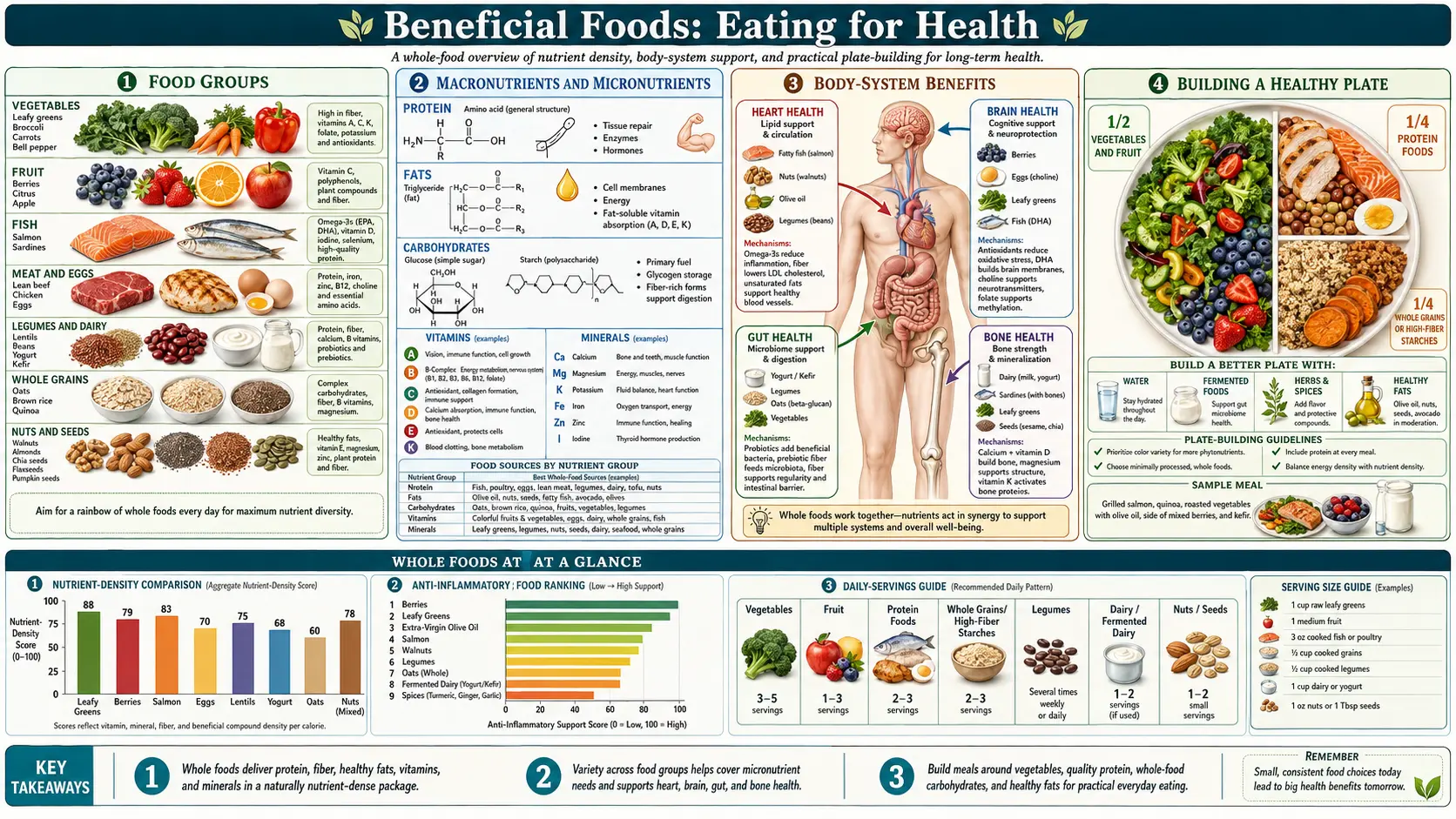

A science-based guide to the most health-promoting foods on Earth — from antioxidant-rich berries and omega-3-packed fish to ancient grains, healing beverages, and nutrient-dense superfoods that support every system in the human body.
Table of Contents
Beverages
- Coffee — The world's most consumed brain-boosting, disease-fighting beverage
- Green Tea — Ancient elixir of longevity rich in EGCG and L-theanine
Fruits
- Blueberries — Nature's antioxidant powerhouse for brain and heart health
- Cranberries — Tart red berry whose A-type proanthocyanidins modestly help prevent recurrent urinary-tract infections
- Avocado — The nutrient-absorbing superfruit packed with healthy monounsaturated fats
- Pomegranate — Ancient symbol of vitality with extraordinary antioxidant and anti-aging power
- Bananas — The world's most popular fruit for energy, potassium, and digestive health
- Pears — Gentle natural laxative fruit rich in sorbitol and fiber for digestion, regularity, and constipation relief
- Prunes — Dried plums — the classic natural laxative for constipation, with RCT-backed benefits for bone density
- Kiwifruit — Among the most effective fresh fruits for constipation; exceptionally high in vitamin C
- Figs — High-fiber traditional laxative (especially dried), with calcium and antioxidants
- Papaya — Gentle digestive fruit with the enzyme papain, fiber, vitamin C, and carotenoids
- Tomatoes — Lycopene-rich fruit that protects the heart, skin, and prostate
- Cherries — Sweet and tart varieties rich in anthocyanins; tart cherry is studied for gout, recovery, and sleep
- Blackberries — One of the highest-fiber fruits, loaded with anthocyanins and ellagitannins
- Watermelon — Hydrating summer fruit high in lycopene and the blood-vessel amino acid citrulline
- Grapes — Red, green, and black grapes rich in resveratrol and anthocyanins — the polyphenols of wine, without the alcohol
- Mango — The “king of fruits,” loaded with vitamin C, vitamin A, and the polyphenol mangiferin
- Pineapple — Tropical fruit rich in vitamin C, manganese, and the anti-inflammatory enzyme bromelain
- Cantaloupe — Sweet orange-fleshed melon loaded with vitamin A and vitamin C — just scrub the netted rind for food safety
- Oranges — The iconic vitamin C fruit, with the vascular flavonoid hesperidin — best eaten whole rather than juiced
- Peaches — Juicy summer stone fruit with vitamin C, carotenoids, and skin-concentrated polyphenols
- Apricots — Orange stone fruit rich in beta-carotene and potassium; dried apricots concentrate the fiber and minerals
- Plums — Juicy stone fruit rich in skin anthocyanins; the dried version (prunes) is the bone-and-gut standout
- Grapefruit — Tangy citrus high in vitamin C and lycopene — but check with a pharmacist, as it interacts with many medications
- Dates — Nature's caramel-sweet candy — surprisingly low-glycemic, with potassium, magnesium, and fiber
- Guava — A tropical fruit with several times an orange's vitamin C, plus high fiber and lycopene
- Persimmon — Sweet autumn fruit rich in vitamin A and antioxidants — eat it ripe to avoid the tannin bezoar risk
- Passionfruit — Fragrant tropical fruit whose edible seeds make it exceptionally high in fiber, plus vitamin C and vitamin A
- Rhubarb — Tart spring stalks used like a fruit, rich in vitamin K and anthocyanins — but the leaves are toxic and must never be eaten
Vegetables
- Asparagus — Folate-rich spring spear with prebiotic inulin, glutathione, and a famously distinctive effect on urine
- Broccoli — The cancer-fighting cruciferous champion loaded with sulforaphane
- Brussels Sprouts — Cruciferous mini-cabbages packed with vitamin K, vitamin C, and sulforaphane
- Carrots — Beta-carotene-rich root for vitamin A and eye health — plus the famous wartime eyesight myth
- Sweet Potatoes — Beta-carotene-rich root for immunity, vision, and gut health
- Spinach — Iron-rich leafy green for eyes, bones, and brain
- Kale — The queen of greens with unmatched nutrient density per calorie
- Beets — Nitric oxide powerhouse for blood pressure and athletic performance
- Cauliflower — Versatile cruciferous vegetable and low-carb swap, rich in vitamin C, choline, and sulforaphane
- Bell Peppers — Sweet, crunchy peppers with more vitamin C than an orange (especially the red ones)
- Cucumber — Cool, hydrating salad staple that is ~95% water, with vitamin K and silica in the skin
- Pumpkin — Beta-carotene-rich winter squash for eye, skin, and immune health (canned pure pumpkin counts)
- Butternut Squash — Sweet, nutty winter squash loaded with beta-carotene, fiber, and potassium
- Artichoke — A high-fiber thistle bud with prebiotic inulin and the liver-supporting polyphenol cynarin
- Green Beans — Crisp snap beans with fiber, vitamin K, and folate — a light, everyday vegetable
- Zucchini — A hydrating, very-low-calorie summer squash — the popular low-carb “zoodle” pasta swap
- Leeks — Mild, sweet allium in the onion-garlic family, with vitamin K and the prebiotic fiber inulin
- Okra — The gumbo pod whose soluble-fiber mucilage supports digestion and steady blood sugar
- Kohlrabi — Crunchy cruciferous stem-bulb with more vitamin C than an orange, mild and sweet raw or roasted
- Parsnip — Sweet, nutty, cream-colored root — a fiber- and folate-rich cousin of the carrot
- Radish — Peppery, crisp, ~95% water root with vitamin C and cruciferous compounds; the greens are edible too
- Turnip — Humble Brassica root whose vitamin-rich greens are the real nutritional star
- Arugula — Peppery cruciferous “rocket” salad green, high in vitamin K and blood-pressure-friendly dietary nitrates
- Bok Choy — Crisp Chinese cabbage rich in vitamin C, vitamin K, and calcium — a stir-fry staple
- Collard Greens — Sturdy Southern leafy green with standout vitamin K and well-absorbed plant calcium
- Swiss Chard — Colorful beet-family green loaded with vitamin K and magnesium (high in oxalates, like spinach)
- Watercress — The peppery, ultra-nutrient-dense powerhouse green that topped the CDC's nutrient-density ranking
Proteins
- Salmon — Premium source of omega-3 EPA/DHA for brain and heart
- Herring — Richest natural source of creatine and one of the lowest-mercury oily fish
- Tuna — Lean high-protein pelagic fish packed with B12 and selenium
- Cod — Ultra-lean white fish delivering top-tier protein at low caloric cost
- Eggs — Nature's perfect protein with choline, lutein, and every essential amino acid
- Sardines — One of Earth's most nutrient-dense foods with lowest mercury risk
- Beef — Complete protein with heme iron, zinc, B12, and creatine
- Pork — Richest dietary source of thiamine with complete protein and creatine
- Lentils — Ancient legume powerhouse for heart, blood sugar, and plant-based protein
- Milk — Complete dairy beverage with whey, casein, calcium, and B12
- Yogurt — Probiotic-rich fermented food for gut health and immunity
Fermented Foods
- Kefir — Caucasus-origin fermented milk with 30+ probiotic strains
- Sauerkraut — Lacto-fermented cabbage: live probiotics (when raw), vitamin C, and a slice of maritime history
- Kimchi — Korean fermented vegetables at the center of modern gut-microbiome science
- Natto — Japanese fermented soybean — the richest dietary source of vitamin K2 (MK-7)
Nuts & Seeds
- Almonds — Vitamin E-rich heart protector and blood sugar regulator
- Walnuts — The brain-shaped nut that truly nourishes the brain and heart
- Chia Seeds — Aztec superfood and the richest plant source of omega-3
- Flaxseed — The richest plant source of lignans, with ALA omega-3 and cholesterol-lowering fiber
Grains & Staples
- Oats — Beta-glucan-rich whole grain with FDA-approved heart health claims
- Quinoa — The Inca "mother of all grains" with complete plant protein
Oils & Sweeteners
- Coconut Oil — A ~90% saturated tropical fat, honestly weighed for cooking, skin, and the heart-health debate
- Olive Oil — Cornerstone of the Mediterranean diet for heart and brain longevity
- Dark Chocolate — Flavanol-rich indulgence for cardiovascular and cognitive health
- Honey — Ancient healer with antimicrobial, wound-healing, and immune-boosting properties
Whole-Food Superfoods
- Bee Pollen — One of nature's most complete foods, rich in protein, enzymes, and micronutrients
- Bone Broth — Ancient healing elixir rich in collagen, glycine, and minerals
- Organ Meats — Among the most nutrient-dense foods (liver, heart, kidney)
- Fermented Foods — Living cultures that restore and maintain gut health
- Probiotics — Beneficial bacteria that govern immunity and digestion
- Nattokinase — Fibrinolytic enzyme purified from fermented natto
- Omega-3 Fatty Acids — Essential fats for brain, heart, and whole-body health
- Resistant Starches — Prebiotic fiber that feeds gut bacteria and produces butyrate
Why These Foods?
The foods selected for this guide represent the most scientifically validated, nutrient-dense, and widely searched health foods based on global research interest and published clinical evidence. Each article provides an in-depth exploration of the food's history, nutritional profile, health benefits supported by peer-reviewed research, optimal consumption guidelines, and important safety considerations. Every food also has a Nutrient Profile page (the green Nutrients tab) showing exactly which vitamins, minerals, and amino acids it delivers the most of — per 100 g, with each nutrient linked to the best foods to get it from.
These foods span every major food group and collectively provide the full spectrum of essential vitamins, minerals, antioxidants, healthy fats, fiber, and phytochemicals that the human body needs to thrive. Many of them appear prominently in the world's healthiest dietary patterns, including the Mediterranean diet, the Okinawan diet, and the dietary habits of Blue Zone populations who routinely live past 100.
IMPORTANT DISCLAIMER: This information is educational, based on published scientific research and nutritional science. It does NOT replace medical consultation. Individual nutritional needs vary based on age, health conditions, medications, and other factors. Consult your healthcare provider before making significant dietary changes, especially if you have food allergies, chronic conditions, or take medications that may interact with certain foods.