Beef - Beneficial Foods
Beef is the culinary name for meat from domesticated cattle (Bos taurus and Bos indicus), one of the most widely consumed sources of animal protein in the world. Since cattle were first domesticated in the Fertile Crescent roughly 10,000 years ago, beef has provided humans with concentrated, highly bioavailable nutrients: complete protein with all nine essential amino acids, heme iron, zinc, vitamin B12, creatine, carnosine, and the full range of B vitamins. Grass-fed and pasture-raised beef additionally supplies omega-3 fatty acids, conjugated linoleic acid (CLA), and vitamin K2.
Beef's nutritional density made it a cornerstone of traditional diets from the Maasai of East Africa to the cattle cultures of the American plains and the Argentine pampas. Modern nutrition research increasingly distinguishes between lean, unprocessed beef — which fits well within healthy dietary patterns — and processed meats such as hot dogs and luncheon meats, which are associated with adverse health outcomes.
Table of Contents
- Nutritional Profile
- Protein and Amino Acids
- Creatine Content
- Iron, Zinc, and B12
- Health Benefits
- Grass-Fed vs Grain-Fed
- Safety and Considerations
- Connections
- Research Papers
- Featured Videos
1. Nutritional Profile
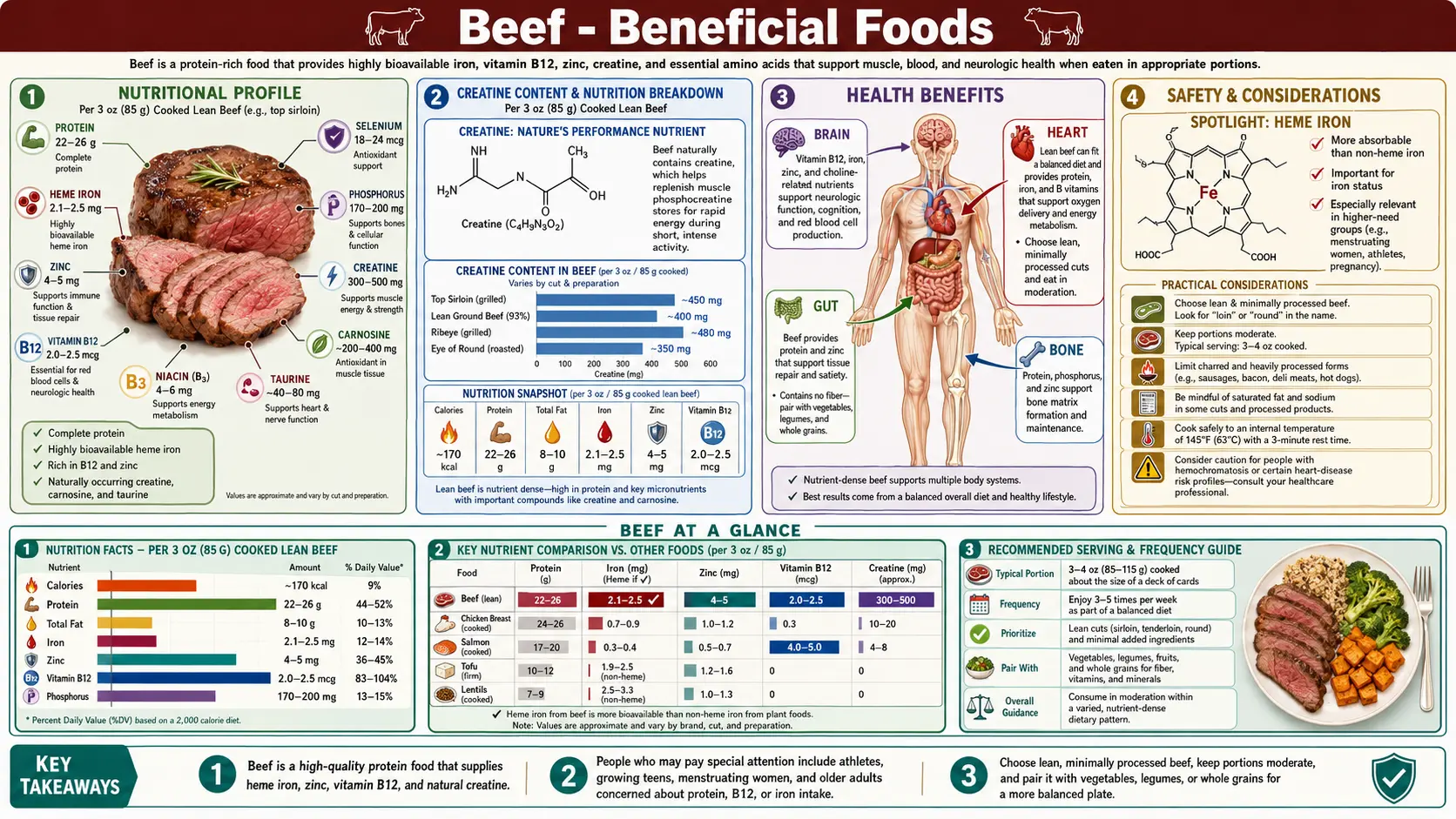
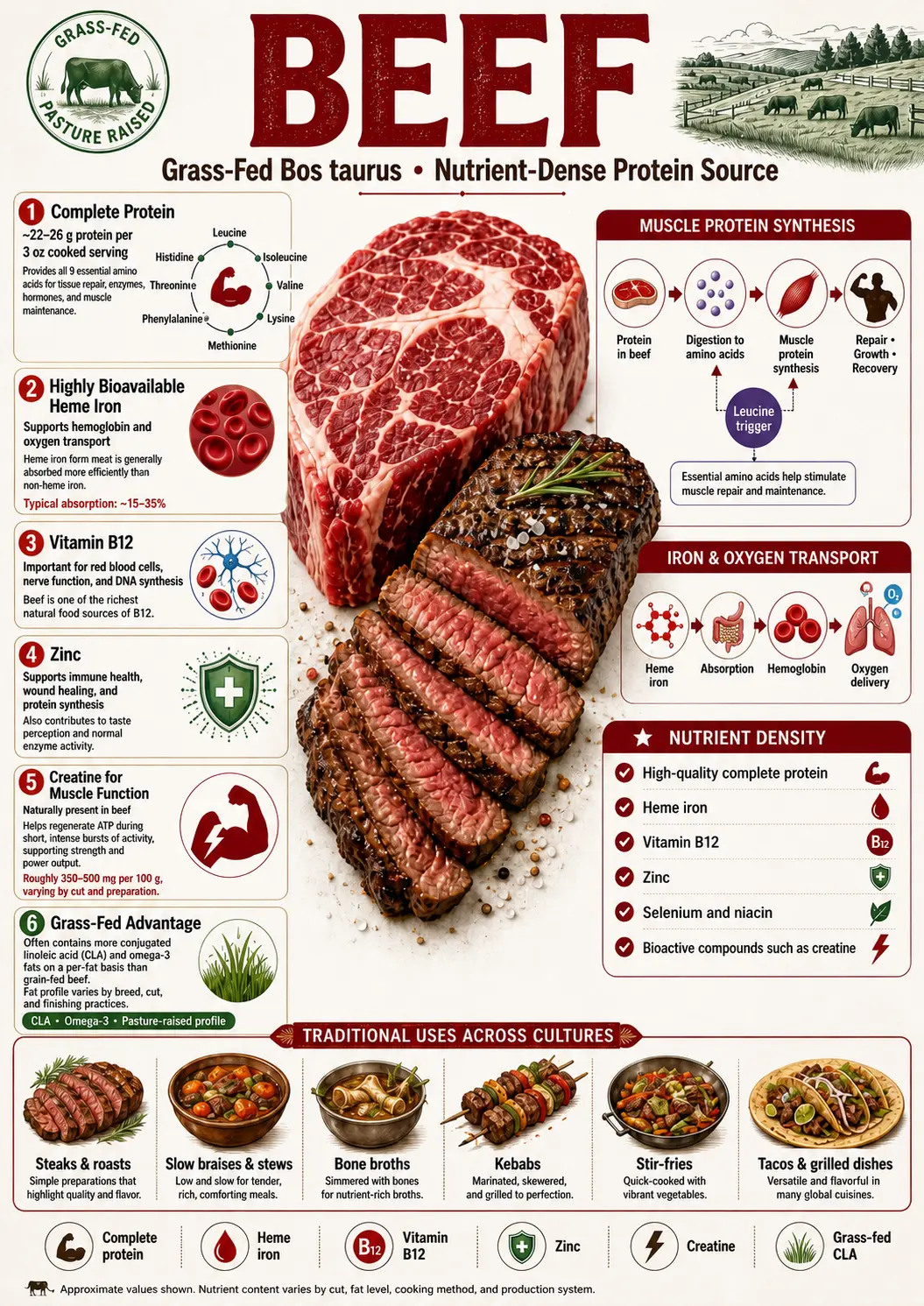
A 100-gram serving of cooked lean beef (around 10% fat) provides roughly 217 calories, 26 grams of protein, and 12 grams of fat. It supplies about 15% of the daily value for iron (largely as highly bioavailable heme iron), 40% for zinc, 100% for vitamin B12, 30% for selenium, and substantial amounts of niacin, vitamin B6, phosphorus, and choline. Beef also delivers roughly 2 grams of creatine per 500 g of raw meat, along with carnosine, taurine, and glutathione.
2. Protein and Amino Acids
Beef is a complete protein, meaning it contains all nine essential amino acids in proportions well matched to human requirements. It is particularly rich in leucine, the branched-chain amino acid that triggers muscle protein synthesis through the mTOR pathway, making beef an efficient food for building and maintaining lean body mass. A single 150 g serving provides approximately 3 grams of leucine, meeting the threshold associated with a maximal anabolic response.
3. Creatine Content
Raw beef contains approximately 4.5 grams of creatine per kilogram, comparable to salmon and somewhat below pork. Cooking reduces creatine content by 20-30%, with higher losses from prolonged boiling and braising. Because cattle muscle is composed of both fast-twitch and slow-twitch fibers, cuts vary: red-meat cuts from working muscles (shoulder, leg) are generally richer in creatine than lighter cuts. Achieving supplemental doses of creatine (3-5 g/day) from beef alone would require roughly 1 kilogram daily, which is why serious athletes typically use creatine monohydrate supplementation rather than relying on food alone.
4. Iron, Zinc, and B12
Beef is one of the most concentrated dietary sources of heme iron, which is absorbed 2-3 times more efficiently than the non-heme iron found in plant foods. This makes beef particularly valuable for women of reproductive age, endurance athletes, and anyone with iron-deficiency anemia. It is also one of the richest natural sources of vitamin B12, a nutrient found almost exclusively in animal foods and required for red blood cell formation, nervous system function, and DNA synthesis. The zinc in beef supports immune function, wound healing, and testosterone production.
5. Health Benefits
Muscle maintenance and sarcopenia prevention. The high-quality protein, leucine, creatine, and carnosine in beef together make it an excellent food for preserving lean body mass with aging.
Iron-deficiency anemia. Regular consumption of lean beef is associated with improved iron status in at-risk populations, including menstruating women and young children.
Satiety and body composition. High-protein meals anchored by lean beef promote satiety, reduce subsequent caloric intake, and help preserve lean mass during weight loss.
6. Grass-Fed vs Grain-Fed
Grass-fed beef, raised on pasture for its entire life, contains a more favorable omega-6 to omega-3 ratio, higher levels of conjugated linoleic acid (CLA), more vitamin E, and more beta-carotene than grain-finished beef. The absolute differences are modest in grams but meaningful for people who consume beef frequently. Grass-fed beef is typically leaner and may have a stronger flavor.
7. Safety and Considerations
Unprocessed lean beef can be part of a healthy diet, but several caveats apply. Processed meats (hot dogs, bacon, deli meats, sausages) are classified by the IARC as Group 1 carcinogens and are associated with increased risk of colorectal cancer; red meat is classified as Group 2A (probably carcinogenic). High-heat cooking methods (grilling, frying) can form heterocyclic amines and polycyclic aromatic hydrocarbons; lower-temperature cooking and marinating reduce formation. People with hemochromatosis or elevated ferritin should moderate heme-iron intake. Always cook ground beef to an internal temperature of 71°C (160°F) to kill pathogens such as E. coli O157:H7.
Connections
- Fake Meat — How beef is substituted, extended and relabelled — and how laboratories catch it
- All Food
- Carnosine
- Creatine
- Pork
- Salmon
- Eggs
- Iron
- Zinc
- Vitamin B12
- Leucine
- Choline
- Selenium
- Phosphorus
- Vitamin B12 Lab Test
- Anemia
- Hemochromatosis
- Taurine
- Copper
- Organ Meats
- Milk
- Conditions on this site that reference this page: Salmonella Gastroenteritis · Salmonella Prevention · Salmonella Treatment and Prevention · Salmonella typhimurium · Complete Mammalian Foods List for Alpha-Gal Syndrome · Restaurant & Travel Survival Guide for Alpha-Gal · Preventing Toxoplasmosis
Research Papers
The following curated PubMed topic searches lead to the peer-reviewed primary literature and systematic reviews that underpin the health claims discussed on this page. Each link opens PubMed in a new tab.
- Red meat consumption and cardiovascular disease
- Beef protein and muscle protein synthesis in older adults
- Grass-fed vs grain-fed beef fatty acid profile
- Heme iron bioavailability from beef
- Red meat and colorectal cancer: IARC evaluation
- Conjugated linoleic acid (CLA) in beef
- Lean beef and LDL cholesterol: BOLD study
- Vitamin B12 bioavailability from red meat
- Processed vs unprocessed red meat health effects
- Creatine content of beef
Browse all PubMed citations for “Beef”
This content is provided for informational purposes only and does not constitute medical advice. Consult a qualified healthcare provider for personalized dietary guidance.