Tuna - Beneficial Foods
Tuna is the common name for a group of fast-swimming, warm-blooded saltwater fish in the tribe Thunnini, including bluefin, yellowfin, bigeye, albacore, and skipjack. Tuna are apex pelagic predators found throughout the world's temperate and tropical oceans, capable of sustained speeds greater than 70 km/h and transoceanic migrations that span thousands of kilometers. Their dense, red-fleshed muscle reflects an extraordinary concentration of myoglobin, fast-twitch muscle fibers, and the cellular machinery of aerobic endurance, which also makes tuna one of the richest dietary sources of high-quality protein, selenium, vitamin B12, vitamin D, and long-chain omega-3 fatty acids (EPA and DHA).
Tuna has been fished by coastal peoples since antiquity — Phoenician, Roman, and Japanese fishing traditions all feature tuna prominently — and it is central to modern Japanese cuisine, where bluefin (maguro, toro) is prized for sushi and sashimi. Canned tuna, introduced in the early 20th century, transformed tuna into a global pantry staple. However, because tuna sit high on the marine food chain, they accumulate methylmercury, and intake should be moderated especially during pregnancy.
Table of Contents
- Tuna Species
- Nutritional Profile
- Omega-3 Fatty Acids
- Creatine Content
- Health Benefits
- Mercury and Safe Intake
- Culinary Uses
- Connections
- Research Papers
- Featured Videos
1. Tuna Species
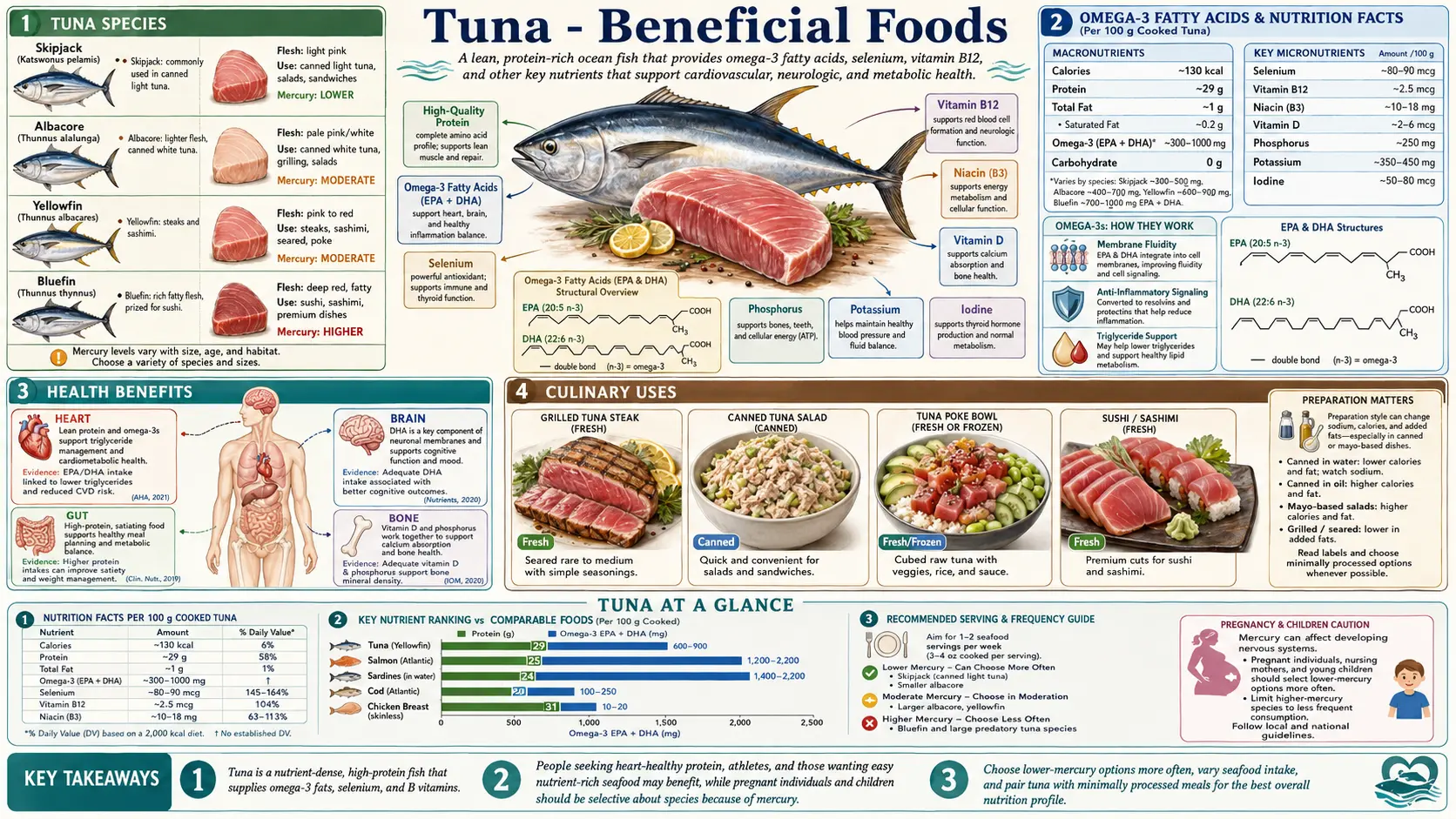
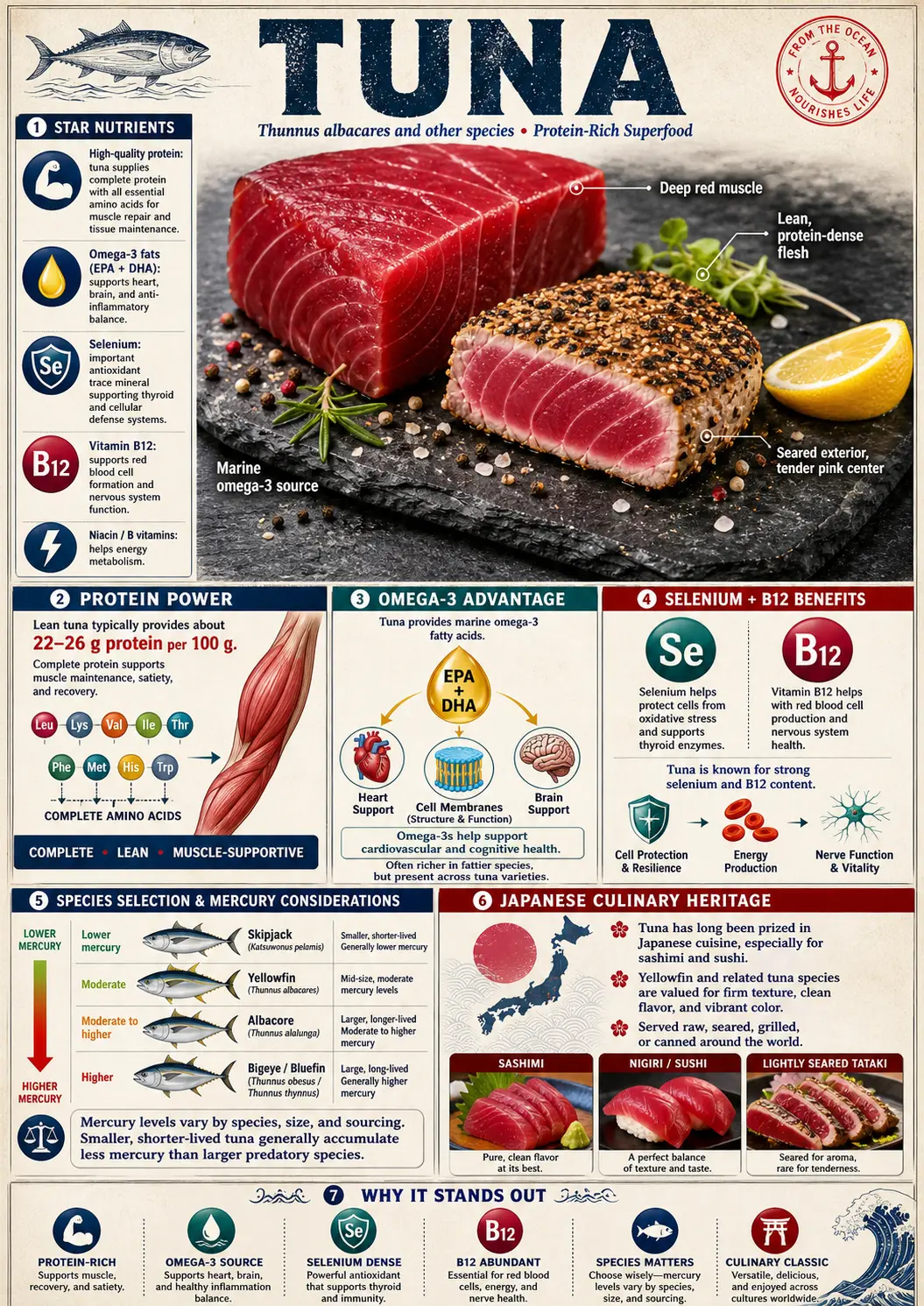
The commercial tuna trade is dominated by five main species. Skipjack (Katsuwonus pelamis) is the smallest and most abundant, supplying most of the world's canned “light tuna” and carrying the lowest mercury levels. Yellowfin (Thunnus albacares) and albacore (Thunnus alalunga, labeled “white tuna” in cans) are larger and contain more mercury. Bigeye (Thunnus obesus) is prized for sushi and sashimi. Bluefin (Thunnus thynnus Atlantic, Thunnus orientalis Pacific, Thunnus maccoyii southern) is the largest, most valuable, and most endangered, with stocks that have been severely depleted by decades of overfishing.
2. Nutritional Profile
A 100-gram serving of cooked yellowfin tuna provides about 130 calories, 30 grams of protein, and just 1 gram of fat, with essentially no carbohydrate. It supplies more than 100% of the daily value for vitamin B12, 80% for selenium, 40% for niacin, 40% for vitamin B6, and 20% for phosphorus. Fattier species such as bluefin and albacore contain considerably more omega-3s and vitamin D but also higher mercury burdens.
3. Omega-3 Fatty Acids
Tuna supplies long-chain marine omega-3s (EPA and DHA) in quantities that vary substantially by species. Fatty bluefin contains roughly 1.5 grams of EPA+DHA per 100 g, albacore about 0.7 grams, and lean skipjack about 0.3 grams. These omega-3s reduce triglycerides, lower blood pressure modestly, support anti-inflammatory pathways, and contribute to brain, eye, and cardiovascular health.
4. Creatine Content
Raw tuna contains approximately 4.0 grams of creatine per kilogram, slightly below beef, pork, and salmon but still substantial. The high myoglobin and mitochondrial density of tuna muscle reflect its endurance-oriented physiology, and creatine stored as phosphocreatine helps support the rapid ATP turnover required for burst swimming. Cooking reduces creatine content by 20-30%. Because canned tuna is pressure-cooked during processing, it typically contains less creatine than lightly seared fresh tuna. See the Creatine article for a complete discussion of creatine's role in muscle, brain, and longevity.
5. Health Benefits
Cardiovascular health. Regular consumption of fatty fish including tuna is associated with reduced risk of coronary heart disease and sudden cardiac death, attributed largely to the EPA and DHA content.
Lean body composition. Tuna is one of the leanest, most protein-dense foods available, making it valuable for body composition, satiety, and muscle maintenance.
Selenium and antioxidant defense. A single serving provides more than the daily requirement for selenium, which is incorporated into glutathione peroxidase and other selenoproteins that protect against oxidative damage. Selenium also partially mitigates mercury toxicity by binding inorganic mercury.
6. Mercury and Safe Intake
Because tuna are long-lived predators at the top of the marine food chain, they bioaccumulate methylmercury. The FDA and EPA advise that pregnant women, women who may become pregnant, nursing mothers, and young children should avoid bigeye and bluefin tuna entirely, limit albacore (“white”) canned tuna to one 6-oz serving per week, and can safely consume up to two or three servings per week of light (skipjack) canned tuna. Adult men and non-pregnant women can consume tuna more liberally but should still favor lighter species and lower-mercury varieties.
7. Culinary Uses
Tuna is eaten raw as sushi, sashimi, and tartare; seared rare as tataki; grilled as steaks; braised in Mediterranean stews; canned in oil or water for salads and sandwiches; and dried and smoked in traditional Mediterranean and Japanese preparations. Because tuna muscle is very lean, it dries out quickly when overcooked; the best preparations leave the center rare or medium-rare.
Connections
- Fake Meat — Why tuna is among the most mislabelled fish, and what that does to mercury exposure
- All Food
- Creatine
- Salmon
- Sardines
- Herring
- Cod
- Walnuts
- Omega-3 Fatty Acids
- Vitamin D3
- Vitamin B12
- Selenium
- Mercury
- Cardiovascular Disease
- Vitamin B12 Test
- Beef
- Pork
- Heavy Metals
- Selenium and Cancer Prevention
- Selenium and Thyroid Function
Research Papers
The following curated PubMed topic searches lead to the peer-reviewed primary literature and systematic reviews that underpin the health claims discussed on this page. Each link opens PubMed in a new tab.
- Tuna consumption and mercury exposure
- Omega-3 fatty acids from tuna and coronary heart disease
- Canned light vs albacore tuna mercury content
- Fish intake during pregnancy: FDA/EPA advisory
- Selenium in tuna and mercury toxicity modulation
- Tuna and cardiovascular mortality cohort
- EPA DHA and triglycerides
- Tuna protein quality and satiety
- Methylmercury neurodevelopmental risk assessment
- Fish consumption guidelines: Dietary Guidelines Americans
Browse all PubMed citations for “Tuna”
This content is provided for informational purposes only and does not constitute medical advice. Consult a qualified healthcare provider for personalized dietary guidance.