Herring - Beneficial Foods
Herring (Clupea harengus in the Atlantic and Clupea pallasii in the Pacific) is a small, silver-scaled schooling fish that has fed coastal civilizations for thousands of years. It is one of the most abundant and nutritionally dense fish in the world, rich in long-chain omega-3 fatty acids, vitamin D, vitamin B12, selenium, and complete protein. Because herring feed low on the marine food chain, they accumulate very little mercury compared with larger predatory fish, making them among the safest seafood choices for regular consumption.
Historically, herring shaped the economies of the Hanseatic League, the Dutch Golden Age, and the fishing ports of Scandinavia, Scotland, and Ireland. Preserved by salting, smoking, or pickling, herring sustained populations through long winters and long voyages. Traditional preparations such as Dutch haring, Swedish sill, German Bismarckhering, Scottish kippers, and Jewish schmaltz herring remain culturally important today.
Table of Contents
- Nutritional Profile
- Omega-3 Fatty Acids
- Creatine Content
- Health Benefits
- Culinary Uses
- Safety and Sustainability
- Connections
- Research Papers
- Featured Videos
1. Nutritional Profile
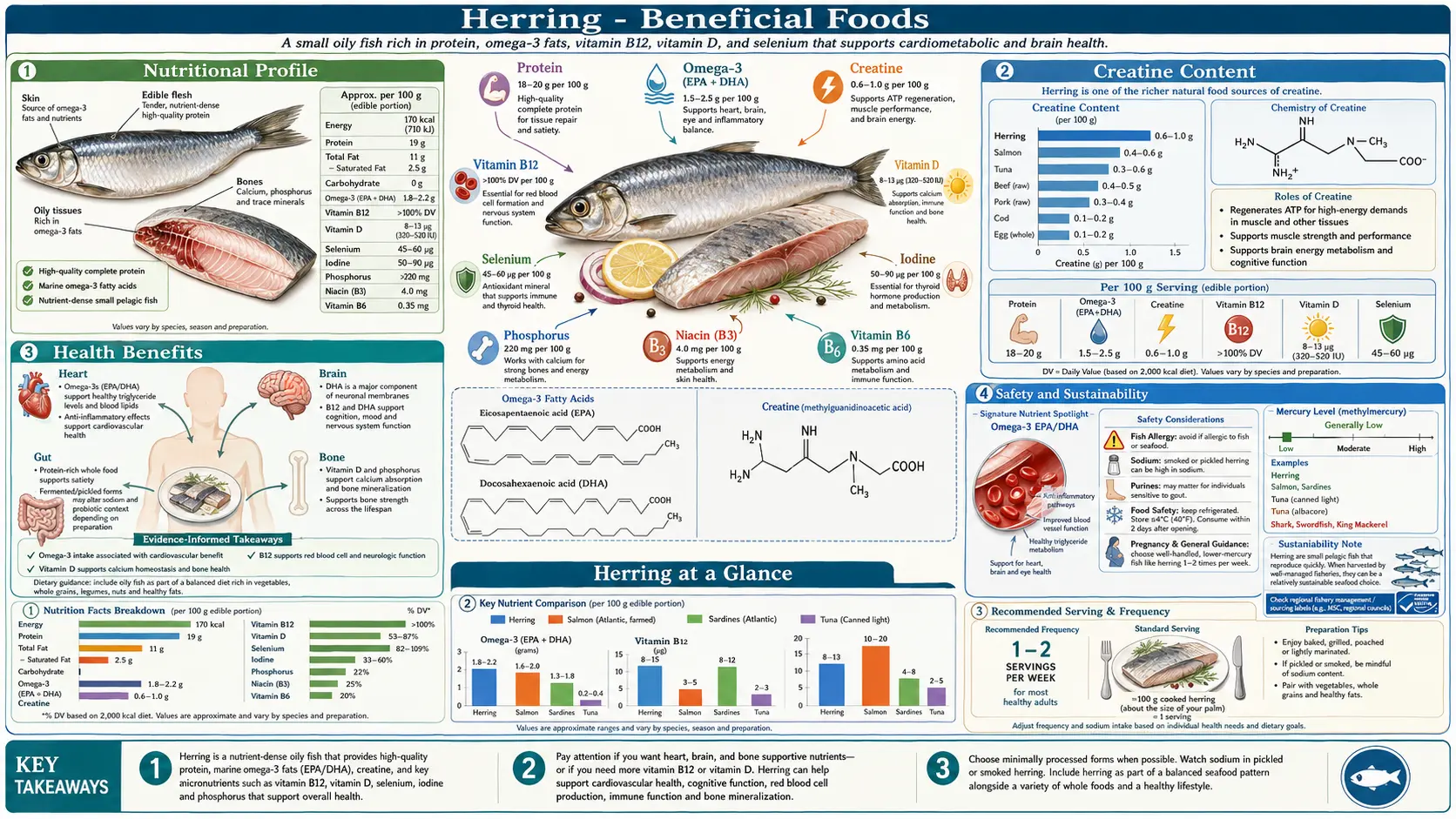
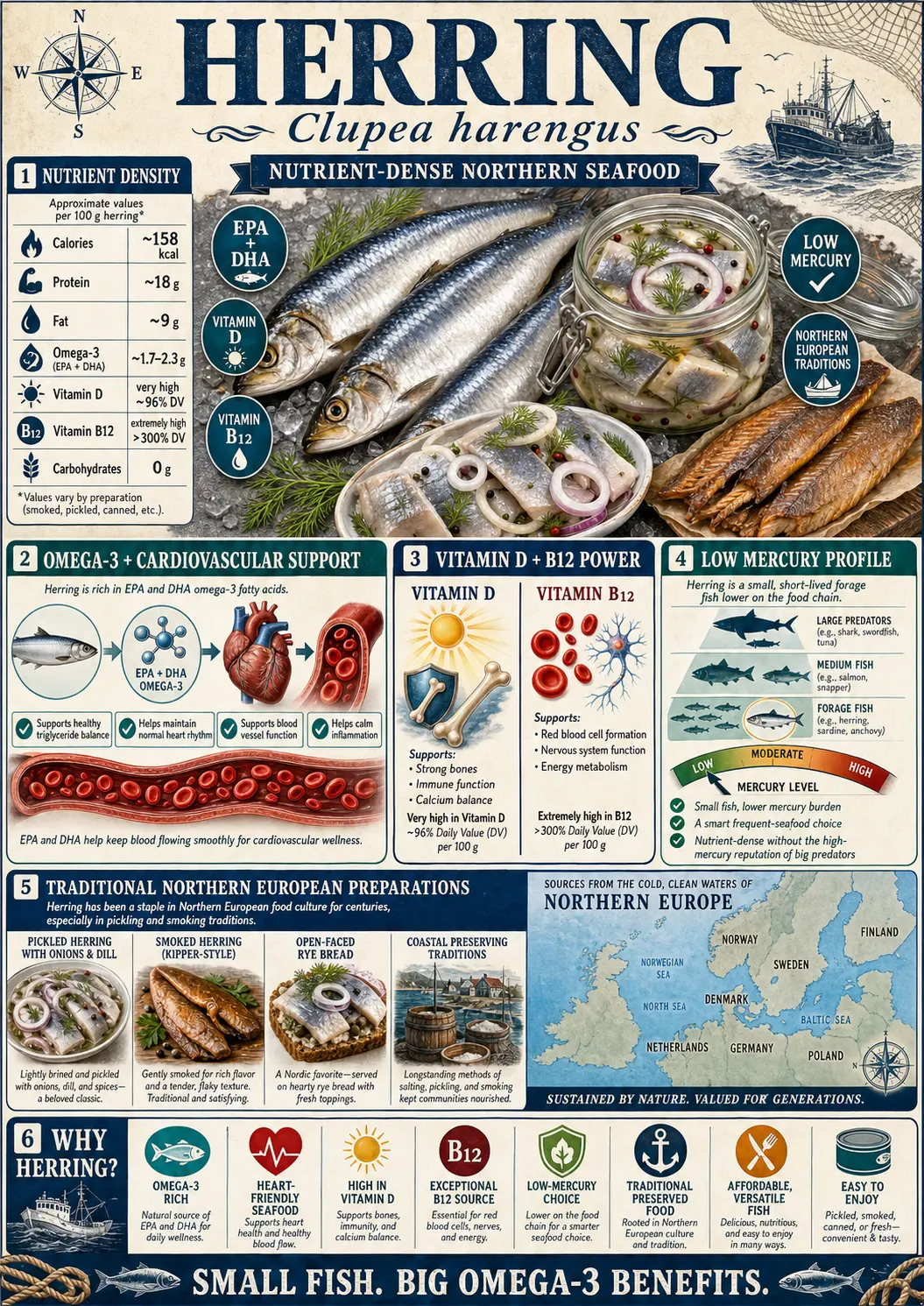
A 100-gram serving of raw Atlantic herring provides approximately 158 calories, 18 grams of high-quality protein, and 9 grams of fat, of which roughly 1.7 grams are EPA and DHA omega-3 fatty acids. Herring is also an outstanding source of vitamin D (around 1,600 IU per 100 g in some preparations), vitamin B12 (more than 400% of the daily value), selenium, phosphorus, and iodine. Pickled and smoked preparations concentrate sodium, so portion size matters for people watching blood pressure.
2. Omega-3 Fatty Acids
Herring is among the richest sources of long-chain marine omega-3s (EPA and DHA), rivaling or exceeding salmon on a per-gram basis depending on season and population. EPA and DHA support cardiovascular health by lowering triglycerides, reducing platelet aggregation, and improving endothelial function. DHA is a structural component of neural membranes and is essential for brain development, vision, and maintenance of cognitive function in older adults.
3. Creatine Content
Herring is the single richest dietary source of creatine, containing approximately 6.5 to 10 grams of creatine per kilogram of raw flesh, higher than salmon, beef, or pork. Creatine is a nitrogenous organic acid synthesized from the amino acids glycine, arginine, and methionine, and stored primarily in skeletal muscle as phosphocreatine, where it rapidly regenerates ATP for short-burst activity. Cooking reduces creatine content by 20-30%, so lightly cured or minimally cooked herring preparations preserve more creatine than deep-fried or long-boiled ones. See the Creatine article for a complete discussion of creatine's role in muscle, brain, and longevity.
4. Health Benefits
Cardiovascular protection. Large prospective studies consistently link regular fatty-fish consumption with lower rates of coronary heart disease, stroke, and sudden cardiac death. The omega-3s in herring reduce triglycerides, modestly lower blood pressure, and stabilize heart rhythm.
Brain and mood. Populations with high fatty-fish intake show reduced risk of age-related cognitive decline and lower prevalence of depression. DHA accumulates in the brain and retina across the lifespan.
Vitamin D status. Herring is one of very few foods that deliver clinically meaningful vitamin D, supporting bone health, immune function, and calcium balance in populations with limited sun exposure.
Low mercury burden. Because herring are small, short-lived, and feed on plankton and tiny crustaceans, they accumulate far less methylmercury than tuna, swordfish, or king mackerel, making them a safe choice during pregnancy when consumed from sustainable sources.
5. Culinary Uses
Herring is prepared in an extraordinary variety of ways: pickled in vinegar and spices (rollmops, matjes), cold-smoked (kippers, bloaters), hot-smoked, salted, grilled, baked, or eaten raw in Dutch and Japanese traditions. It pairs well with rye bread, boiled potatoes, sour cream, onions, dill, mustard, and beets. Canned herring in oil, tomato sauce, or mustard sauce is an inexpensive pantry staple packed with nutrition.
6. Safety and Sustainability
Most North Atlantic and North Pacific herring fisheries are certified sustainable by the Marine Stewardship Council, though stock health varies by region. Pickled and salt-cured herring are high in sodium, and smoked herring may contain polycyclic aromatic hydrocarbons depending on the curing method. Herring can trigger histamine reactions in sensitive individuals, and anisakid parasite larvae in raw herring are killed by freezing at −20°C for 24 hours, which is standard practice for herring sold for raw consumption.
Connections
- All Food
- Creatine
- Salmon
- Tuna
- Sardines
- Cod
- Omega-3 Fatty Acids
- Vitamin B12
- Selenium
- Iodine
- Phosphorus
- Mercury
- Depression
- Cardiovascular Disease
- Alzheimer's Disease
- Vitamin D3
- Conditions on this site that reference this page: Anisakis (Herring Worm / Sushi Worm) · Omega-3 Fatty Acids and Fish Oil for Rheumatoid Arthritis
Research Papers
The following curated PubMed topic searches lead to the peer-reviewed primary literature and systematic reviews that underpin the health claims discussed on this page. Each link opens PubMed in a new tab.
- Herring and cardiovascular disease prevention
- Pickled herring omega-3 content
- Herring, vitamin D and bone health
- Small oily fish and mercury content
- Herring roe and bioactive peptides
- Baltic herring dioxin and PCB content
- Nordic diet with herring and cardiometabolic health
- Herring EPA DHA content by season
- Fatty fish and type 2 diabetes risk
- Herring protein digestibility
Browse all PubMed citations for “Herring”
This content is provided for informational purposes only and does not constitute medical advice. Consult a qualified healthcare provider for personalized dietary guidance.