Pork - Beneficial Foods
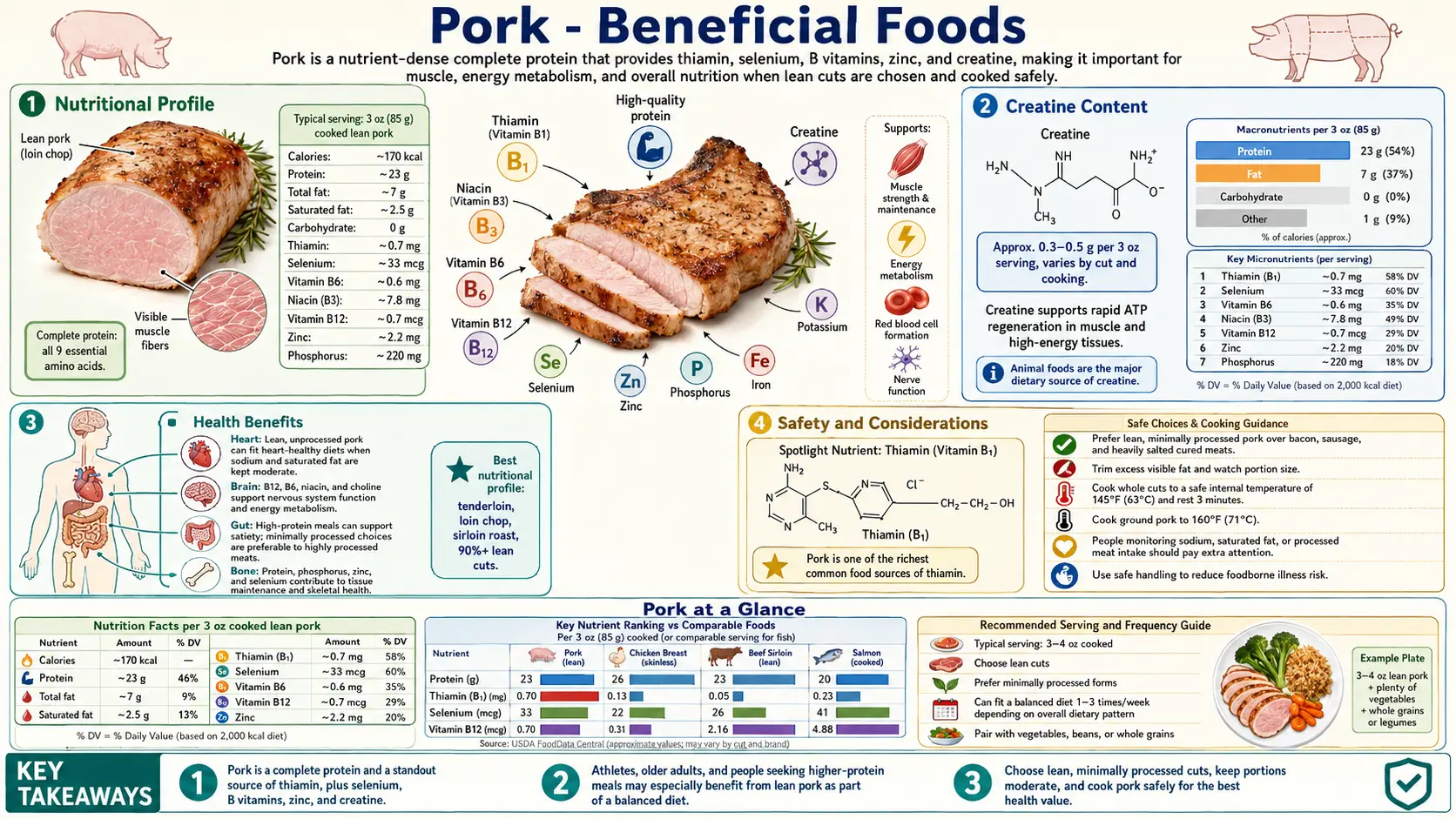
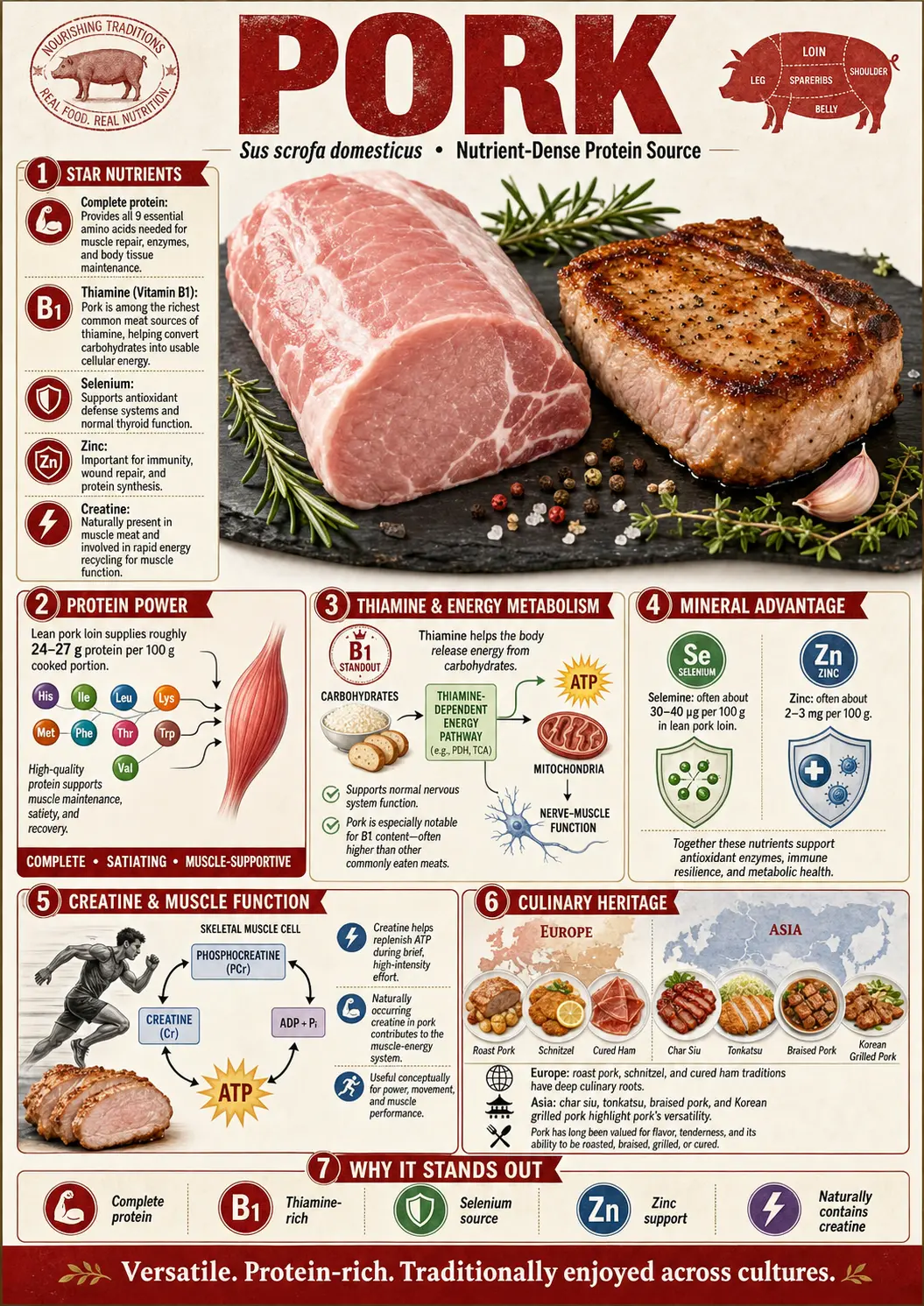
Pork, the meat from domesticated pigs (Sus scrofa domesticus), is the most widely consumed meat in the world, accounting for roughly 36% of global meat intake. Pigs were domesticated independently in China and the Near East around 9,000 years ago, and pork has since become central to the culinary traditions of Europe, East Asia, Southeast Asia, the Americas, and the Pacific. Lean cuts of fresh pork are nutritionally comparable to chicken and beef: a rich source of complete protein, thiamine, selenium, zinc, vitamin B6, vitamin B12, phosphorus, and creatine.
Pork is particularly distinctive for its exceptionally high thiamine (vitamin B1) content — far higher than beef, chicken, or lamb — which is why pork has historically been associated with nervous-system health and energy metabolism in traditional dietary wisdom. The distinction between fresh lean pork and processed pork products (bacon, ham, sausage) matters for long-term health, as the latter carry additional risks from curing salts, nitrites, and sodium.
Table of Contents
- Nutritional Profile
- Thiamine and B Vitamins
- Creatine Content
- Protein Quality
- Health Benefits
- Culinary Uses
- Safety and Considerations
- Connections
- Research Papers
- Featured Videos
1. Nutritional Profile
A 100-gram serving of cooked lean pork tenderloin provides approximately 143 calories, 26 grams of protein, and only 3.5 grams of fat. It delivers more than 50% of the daily value for thiamine, 60% for selenium, 50% for vitamin B6, 40% for niacin, 30% for phosphorus, and 25% for zinc. Modern lean pork cuts, developed through improved breeding and feeding programs over the past three decades, are roughly 16% leaner than they were in the 1990s, with tenderloin now rivaling skinless chicken breast in fat content.
2. Thiamine and B Vitamins
Pork is the single richest dietary source of thiamine (vitamin B1), containing 5 to 10 times more than beef, chicken, or fish. Thiamine is essential for carbohydrate metabolism, nerve conduction, and the synthesis of the neurotransmitter acetylcholine. Historical thiamine-deficiency disease (beriberi) afflicted populations subsisting on polished white rice; the addition of pork to such diets was one of the earliest known nutritional interventions for the condition. Pork also supplies substantial amounts of riboflavin, niacin, vitamin B6, and vitamin B12.
3. Creatine Content
Raw pork contains approximately 5.0 grams of creatine per kilogram, slightly higher than beef and salmon. Creatine is concentrated in fast-twitch skeletal muscle fibers, so cuts from the loin and leg contain more than organ meats or visceral tissues. Cooking reduces creatine content by 20-30%, with slow braises and boils causing greater losses than quick searing or roasting. Pork is therefore a reasonable dietary contributor to daily creatine intake, though creatine monohydrate supplementation remains the most efficient way to saturate muscle creatine stores for performance or cognitive benefits.
4. Protein Quality
Pork protein has a Protein Digestibility Corrected Amino Acid Score (PDCAAS) of essentially 1.0, the highest possible rating, indicating complete essential amino acid content and excellent digestibility. It is rich in leucine, lysine, and methionine, making it particularly well suited to supporting muscle protein synthesis and recovery.
5. Health Benefits
Energy metabolism. The high thiamine content in pork supports the enzymatic conversion of carbohydrates to ATP, making lean pork a practical food for active people and anyone recovering from illness.
Muscle mass preservation. Clinical trials in older adults have shown that including lean pork in the diet helps preserve lean body mass and physical function compared with lower-protein diets.
Satiety and weight control. Like other high-protein foods, lean pork increases satiety and diet-induced thermogenesis, supporting appetite control during weight loss.
6. Culinary Uses
Fresh pork is used in virtually every major cuisine: roasted pork loin in Western kitchens, char siu and red-braised pork in Chinese cooking, tonkatsu and shabu-shabu in Japan, adobo in the Philippines, carnitas and al pastor in Mexico, schnitzel in Central Europe, and countless sausage and charcuterie traditions across the Mediterranean. Tender cuts benefit from quick, dry-heat cooking; tough cuts from shoulder and leg transform with slow braising into some of the richest dishes in the world.
7. Safety and Considerations
Fresh pork should be cooked to an internal temperature of 63°C (145°F) for whole cuts with a 3-minute rest, or 71°C (160°F) for ground pork. Modern commercial pork in developed countries is essentially free of Trichinella, but the temperature guidelines remain a sensible safeguard. Processed pork products (bacon, ham, sausage, deli meats) are classified by the IARC as Group 1 carcinogens and should be consumed sparingly. Pork is avoided in Jewish, Islamic, and some Ethiopian Christian dietary traditions for religious reasons.
Connections
- Fake Meat — Pork as an undeclared substitute, and the DNA tests that find it
- All Food
- Creatine
- Beef
- Eggs
- Salmon
- Organ Meats
- Selenium
- Vitamin B6
- Vitamin B1
- Vitamin B12
- Zinc
- Phosphorus
- Leucine
- Lysine
- Cardiovascular Disease
- Anti-Inflammatory Diet
- Banned Additives
- Sodium Nitrite
- Restaurant and Travel Survival
- Conditions on this site that reference this page: Salmonella Gastroenteritis · Salmonella Prevention · Salmonella typhimurium · Complete Mammalian Foods List for Alpha-Gal Syndrome · Preventing Toxoplasmosis · Trichinella Prevention and Food Safety · Trichinella
Research Papers
The following curated PubMed topic searches lead to the peer-reviewed primary literature and systematic reviews that underpin the health claims discussed on this page. Each link opens PubMed in a new tab.
- Pork consumption and cardiovascular disease
- Lean pork and blood lipid profile
- Pork protein quality and amino acids
- Thiamine content of pork
- Processed pork (bacon) and colorectal cancer
- Pork selenium bioavailability
- Trichinella spiralis and pork safety
- Heme iron from pork and absorption
- Pork creatine content
- Pork fat and monounsaturated fatty acids
Browse all PubMed citations for “Pork”
This content is provided for informational purposes only and does not constitute medical advice. Consult a qualified healthcare provider for personalized dietary guidance.