Figs
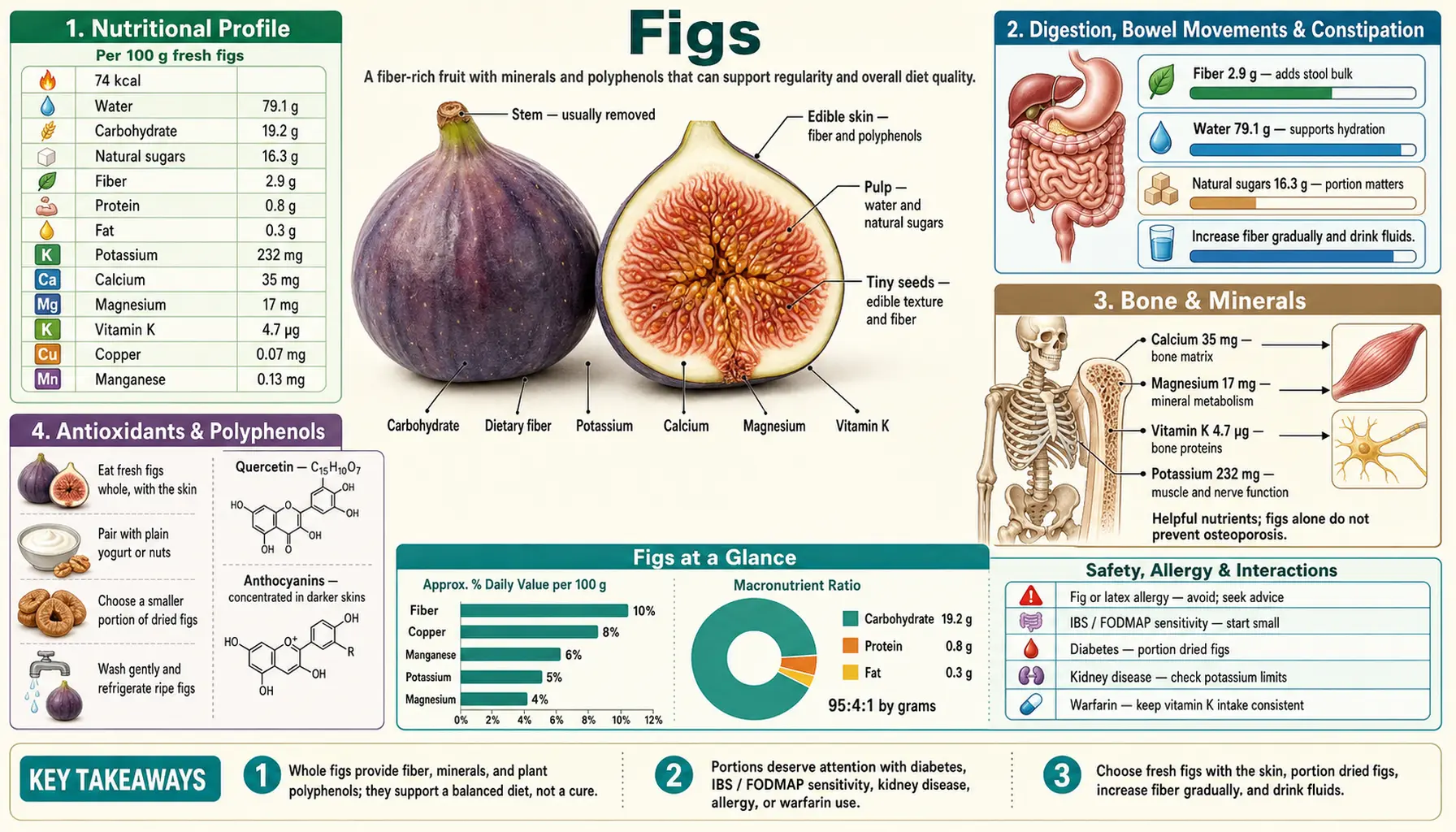
Figs (Ficus carica) are a high-fiber fruit with a long traditional reputation as a gentle food for constipation and regular bowel movements — especially dried figs, which pack roughly 10 grams of dietary fiber per 100 grams. A clinical trial of fig paste found it improved constipation and sped up gut transit, and figs are also one of the better plant sources of calcium plus useful potassium, magnesium, and skin-rich polyphenols. The honest caveat: drying concentrates everything, so dried figs are calorie- and sugar-dense — a small handful, not the whole bag.
Table of Contents
- Nutritional Profile
- Digestion, Bowel Movements & Constipation
- Bone & Minerals
- Antioxidants & Polyphenols
- Blood Sugar & Weight
- How to Choose & Eat Figs
- Considerations
- Research Papers
- Connections
- Featured Videos
Nutritional Profile
Figs come in two very different forms nutritionally, and the difference matters. A fresh fig is mostly water and fairly light — about 74 calories per 100 grams (a medium fresh fig is only around 35–50 grams). A dried fig has had most of that water removed, which concentrates both the good nutrients and the sugar: dried figs run roughly 250 calories per 100 grams. The drying is also why dried figs are the stronger choice for digestion — you get far more fiber per bite.
- Dietary fiber — figs are genuinely high in fiber. Fresh figs supply about 3 grams per 100 grams, while dried figs reach roughly 10 grams per 100 grams, a mix of soluble and insoluble fiber that adds bulk, holds water, and feeds gut bacteria. This is the headline nutrient and the reason figs help regularity.
- Calcium — figs are one of the better plant sources of calcium. Dried figs provide roughly 160 mg per 100 grams (fresh about 35 mg), which is meaningful for a fruit and useful for people who eat little dairy.
- Potassium — a solid amount (about 230 mg per 100 grams fresh, around 680 mg dried), the mineral relevant to healthy blood pressure.
- Magnesium — figs contribute magnesium (roughly 17 mg fresh, around 68 mg per 100 grams dried), which supports bone, muscle, and nerve function.
- Natural sugars — concentrated by drying. Dried figs are roughly half sugar by weight (about 48 grams per 100 grams), mostly glucose and fructose — the main reason portion size matters.
- Polyphenols — figs, especially dark-skinned varieties, carry a rich mix of plant antioxidants concentrated in the skin (more on this below).
- Other nutrients — figs add small amounts of B vitamins, vitamin K, copper, and manganese, plus a little vitamin C in the fresh form. None of these is a standout on its own, but together they round out figs as a genuinely nutritious fruit rather than empty sweetness.
One quick way to picture the fresh-versus-dried gap: it takes roughly three or four fresh figs to make a single dried fig, so a small handful of dried figs concentrates the fiber, calcium, and sugar of a much larger amount of fresh fruit. That concentration is exactly why dried figs are the better digestion tool — and also why they are so easy to over-eat.
The honest headline: figs deliver an unusual amount of fiber, calcium, and antioxidants in a small sweet package — but because drying multiplies the calories and sugar several-fold, a sensible serving of dried figs is a small handful, not an open bag.
Digestion, Bowel Movements & Constipation
This is the fig's flagship benefit and the reason it ranks among the top fruits for constipation relief. Figs help restore regular bowel movements mainly through their high dietary fiber, and the effect is strongest with dried figs.
- Fiber — bulk and softness. The fiber in figs adds bulk to stool and holds water, helping move things through the colon and keeping stool soft and easier to pass. Because drying concentrates the fiber to about 10 grams per 100 grams, dried figs are more potent for digestion than fresh ones — you simply get more fiber per mouthful.
- Fluid-holding effect. Fig fiber draws and retains water in the gut, which softens stool. This works best when you drink water alongside — fiber needs fluid to do its job.
- A gentle, food-based approach. Figs have been used as a traditional remedy for sluggish digestion for centuries, fitting naturally into the same role as other high-fiber fruits. Unlike stimulant laxatives, a high-fiber food works gradually and can be eaten daily as part of normal meals.
- Feeding the gut. Some of the fiber in figs is fermentable, meaning your beneficial gut bacteria use it as food. This is good basic nutrition — fermentable fiber supports a healthier microbial community — though the detailed microbiome benefits of figs specifically are not yet well studied in people.
The evidence. In a clinical trial, a fig paste supplement taken daily improved symptoms in people with constipation — speeding up gut transit and improving stool measures compared with a placebo. That is encouraging support for what tradition long claimed. An older study in pets found a similar transit-speeding effect, consistent with the mechanism. The honest framing: this is real but more limited evidence than for prunes, which have a larger and stronger trial record — figs are studied less, so think of them as a well-grounded, fiber-rich option rather than the single best-proven food remedy.
How to use figs for constipation. A practical approach is a small handful of dried figs (about 3–5) per day, or several fresh figs in season, with a glass of water. Soaking dried figs in water for a few hours (or overnight) softens them, makes them easier to eat, and adds fluid — a traditional and sensible trick. As with any fiber, start small and build up over a few days to let your gut adjust.
The flip side. The same fiber and natural sugars that help can cause gas, bloating, cramping, or loose stools if you eat too many, and dried fruit is easy to over-eat. Build up gradually and find your own amount. For the condition itself, see Constipation; the best-studied food remedy is prunes, and fresh pears help through their sorbitol. For the full ranked list of foods, see Natural Constipation Relief.
Bone & Minerals
Figs are an unusually good fruit for bone-relevant minerals. They are one of the better plant sources of calcium — dried figs supply roughly 160 mg per 100 grams — and they add potassium and magnesium, both of which play supporting roles in bone health. That makes figs a genuinely useful everyday food for people who eat little or no dairy and want plant sources of calcium.
Keep this in honest proportion. A serving of figs is a helpful contributor to your daily calcium, not a replacement for a full strategy — bones depend on the whole package of calcium, vitamin D, weight-bearing exercise, and overall diet. But as a sweet, mineral-rich snack, figs pull more weight on the bone front than most fruits. For the minerals themselves, see Calcium and Potassium.
Antioxidants & Polyphenols
Figs are rich in polyphenols — plant compounds with antioxidant activity — and a comprehensive review of Ficus carica documents the wide range of these compounds across the fruit, leaves, and skin. The most important practical point is about color: dark-skinned figs are noticeably higher in polyphenols than pale-skinned ones, because much of the antioxidant content (including anthocyanins, the same pigment family that makes berries blue and purple) is concentrated in the skin.
That leads to one simple habit: eat the skin. Peeling a fig discards a large share of its antioxidants, and figs are usually eaten skin-on anyway. Choosing deeply colored varieties (like dark purple Mission figs) is an easy way to get more polyphenols. As with most foods, the antioxidant story is promising and well-documented chemically, but it is best read as one more reason figs are a nutritious choice rather than a stand-alone health claim.
Blood Sugar & Weight
Figs come with a real trade-off worth being honest about. On the helpful side, their fiber slows how quickly sugar is absorbed, and the fiber and chew make figs reasonably filling — a portion-controlled fig can satisfy a sweet craving better than candy. Fresh figs, being mostly water, are fairly light and a sensible whole-fruit choice.
On the cautionary side, dried figs are concentrated in sugar and calories — roughly half sugar by weight and about 250 calories per 100 grams. They are not a "free" snack. Because they are small, sweet, and easy to keep eating, dried figs are simple to over-consume. The practical answer is portion honesty: enjoy a measured small handful (about 3–5 dried figs), pair them with a protein or fat like nuts to blunt the sugar response, and lean on fresh figs when they are in season. People watching blood sugar or weight should treat dried figs as an occasional, measured treat rather than an unlimited snack.
How to Choose & Eat Figs
- Fresh, ripe figs. A ripe fresh fig is soft to gentle pressure, fragrant, and slightly drooping at the stem. Figs do not ripen much after picking, so choose ones that already feel ripe. They are highly perishable — refrigerate and eat within a couple of days.
- Eat the skin. The skin holds much of the fig's fiber and antioxidants, and fresh and dried figs are normally eaten whole. Just rinse fresh figs and trim the tough stem tip.
- Soak dried figs. For constipation and for easier eating, soak dried figs in water (a few hours or overnight). This softens them and adds fluid — a long-standing traditional approach.
- Choose unsweetened dried figs and dark-skinned varieties when you can, for more polyphenols and no added sugar.
- Easy ways to eat them: fresh as a snack or sliced over yogurt and oatmeal; dried (chopped) into porridge, paired with nuts, or simmered into a compote. Mind the portion with the dried form.
Considerations
Figs are safe and beneficial for most people. A few practical points:
- Calorie and sugar density (dried). Dried figs are concentrated in sugar and calories and are easy to over-eat. Mind portions if you are watching weight or blood sugar — a small handful is a serving.
- Gas, bloating, and loose stools. The fiber that relieves constipation can cause gas or diarrhea in larger amounts. Build up slowly and drink water alongside.
- FODMAP sensitivity. Figs (especially dried) are high in fructose and other FODMAPs and can trigger symptoms in people with irritable bowel syndrome. Smaller portions may be tolerated.
- Possible oral allergy / latex. Some people get an itchy or tingly mouth from fresh figs, and figs are linked to the latex-fruit syndrome, so those with a latex allergy may react. Reactions are usually mild, but anyone with a history of more serious reactions should talk with their doctor. (Fresh fig sap can also irritate the skin and is best avoided.)
- Dental stickiness. Dried figs are sticky and sugary and cling to teeth — rinse or brush after eating, especially for children.
Research Papers
- Mawa S, et al. Ficus carica L. (Moraceae): phytochemistry, traditional uses and biological activities. Evidence-Based Complementary and Alternative Medicine. 2013. doi:10.1155/2013/974256 — A comprehensive review of the fig's plant compounds, traditional uses, and biological activity, documenting its rich polyphenol content.
- Sardari F, et al. Ficus carica (fig) paste supplementation in patients with constipation. Planta Medica. 2015. doi:10.1055/s-0035-1565300 — A clinical trial in which daily fig paste improved constipation symptoms and gut transit compared with placebo.
- Yang J, et al. Effect of dietary fiber on constipation: a meta analysis. World Journal of Gastroenterology. 2012. doi:10.3748/wjg.v18.i48.7378 — A meta-analysis confirming that increasing dietary fiber — the fig's main active ingredient — improves stool frequency in constipation.
- Lederle FA, et al. Cost-effective treatment of constipation in the elderly: a randomized double-blind comparison of sorbitol and lactulose. The American Journal of Medicine. 1990. doi:10.1016/0002-9343(90)90177-f — Context for how the natural sugars and osmotic effects in fruit can relieve constipation as effectively as a standard laxative.
- Anderson JW, et al. Health benefits of dietary fiber. Nutrition Reviews. 2009. doi:10.1111/j.1753-4887.2009.00189.x — A broad review of how dietary fiber supports regularity, gut health, and metabolic health.
PubMed Topic Searches
- PubMed: Figs (Ficus carica) & constipation
- PubMed: Fig dietary fiber & bowel function
- PubMed: Fig polyphenols & antioxidants
- PubMed: Dried fruit, fiber & digestion
Connections
- All Food
- Natural Constipation Relief (Foods Ranked)
- Prunes
- Pears
- Constipation
- Calcium
- Potassium
- Apples