Eggs - Beneficial Foods
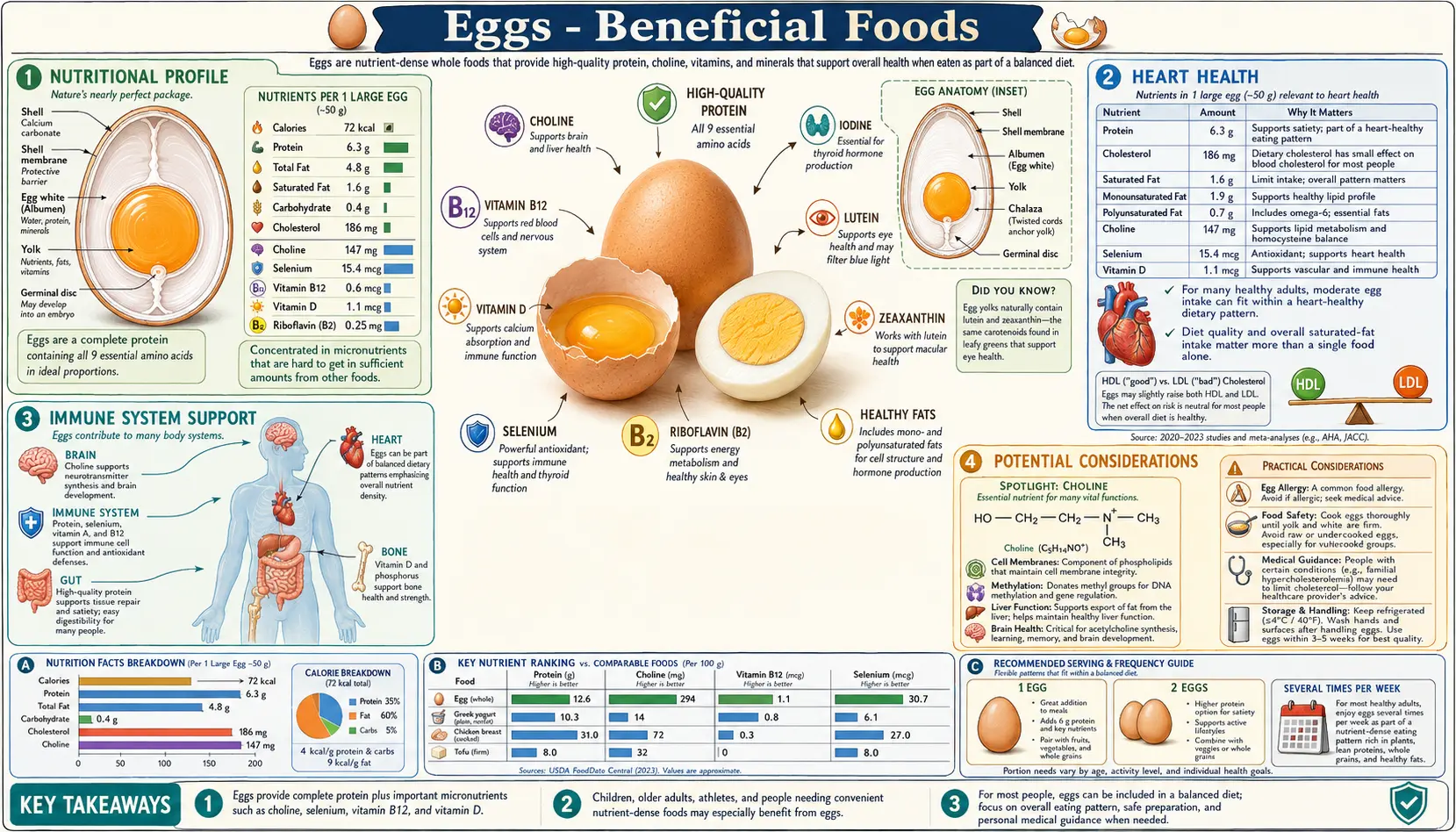
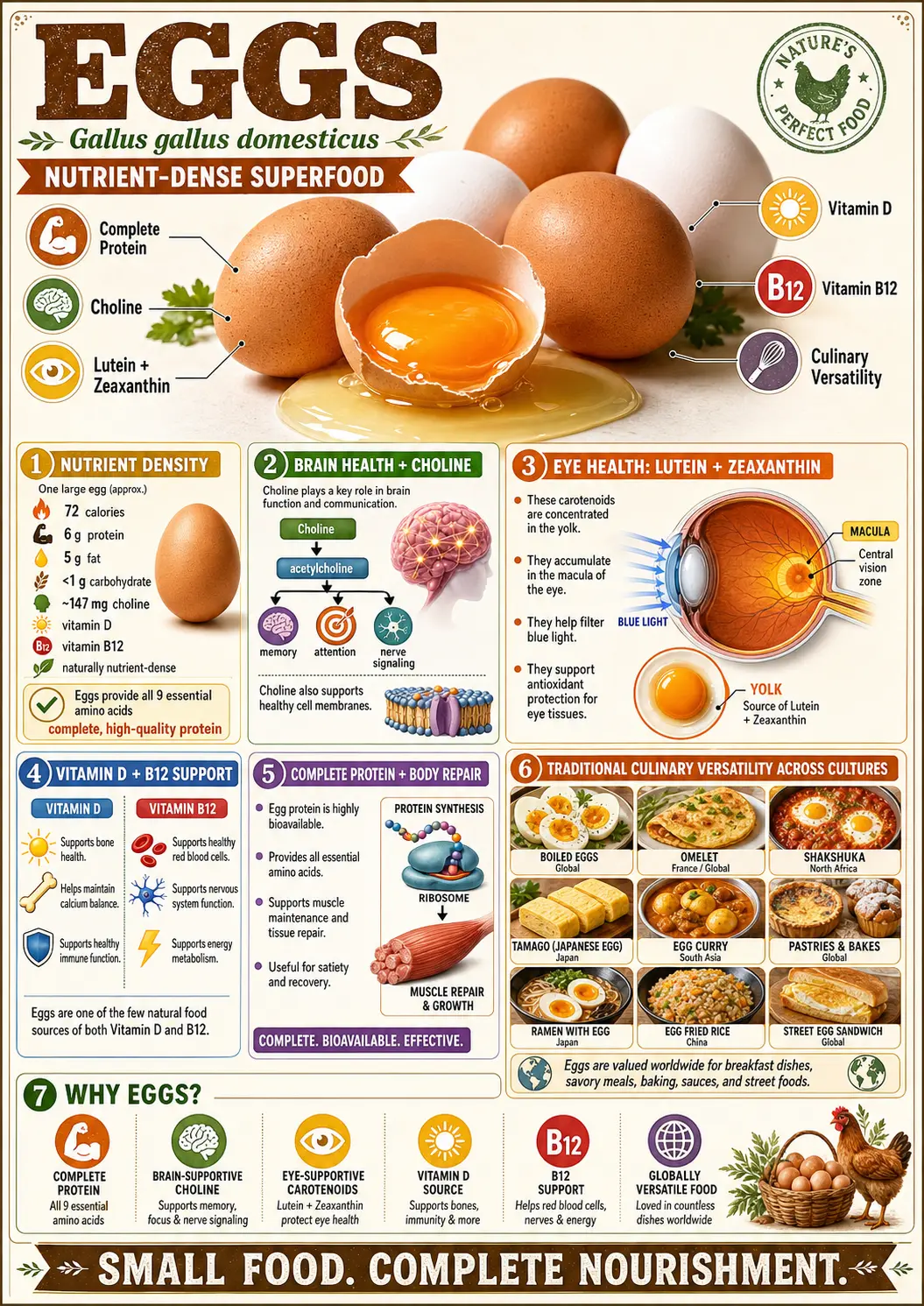
Table of Contents
- Nutritional Profile
- Complete Protein Source
- Cholesterol Myth Debunked
- Brain Health and Choline
- Eye Health
- Heart Health
- Weight Management
- Bone Health
- Pregnancy and Fetal Development
- Muscle Building and Recovery
- Immune System Support
- Skin and Hair Health
- Liver Health
- Egg Types Compared
- Optimal Preparation Methods
- Potential Considerations
- Scientific References
- Research Papers
- Connections
- Featured Videos
Eggs are among the most nutrient-dense and versatile foods available to humans, providing a remarkable concentration of essential vitamins, minerals, high-quality protein, and bioactive compounds within a modest caloric package. Once unfairly maligned due to their cholesterol content, eggs have undergone a dramatic rehabilitation in the scientific literature over the past two decades. Modern research consistently demonstrates that for the vast majority of people, regular egg consumption supports cardiovascular health, brain function, weight management, and overall well-being. From their ancient origins as a foraged wild food to their present status as a global dietary staple consumed by billions, eggs have earned their place as one of nature's most complete and accessible sources of nutrition.
The domestication of the red junglefowl (Gallus gallus) in Southeast Asia approximately 7,500 years ago marked the beginning of humanity's long relationship with the chicken egg. Archaeological evidence from sites in China and the Indus Valley confirms that egg production was well established by 3000 BCE. Ancient Egyptians and Romans raised poultry extensively, and eggs featured prominently in their cuisines and cultural practices. By the Middle Ages, eggs had become a cornerstone of European agriculture and cooking, a status they maintained through the industrial revolution and into the modern era of large-scale poultry farming.
The cholesterol controversy surrounding eggs began in earnest during the 1960s and 1970s, when early epidemiological research linked dietary cholesterol to elevated blood cholesterol and cardiovascular disease. The American Heart Association recommended limiting egg consumption, and for decades public health messaging treated eggs with suspicion. However, beginning in the late 1990s and accelerating through the 2000s and 2010s, a series of large prospective cohort studies and meta-analyses progressively dismantled the simplistic dietary cholesterol hypothesis. The 2015-2020 Dietary Guidelines for Americans removed the longstanding 300 mg daily cholesterol cap, acknowledging that dietary cholesterol was "not a nutrient of concern for overconsumption." Today, eggs are recognized by nutrition scientists worldwide as an affordable, sustainable, and extraordinarily healthful food suitable for nearly all populations.
1. Nutritional Profile
A single large egg (approximately 50 grams) delivers an impressive nutritional payload for only about 72 calories. It contains roughly 6.3 grams of complete protein distributed between the white (albumin) and the yolk, along with 4.8 grams of fat, most of which is unsaturated. The yolk is the nutritional powerhouse, housing the vast majority of the egg's vitamins, minerals, and bioactive compounds. The white, by contrast, is almost pure protein and water, contributing about 3.6 grams of protein with negligible fat and virtually no micronutrients.
Eggs are one of the richest dietary sources of choline, providing approximately 147 mg per large egg, which represents roughly 27% of the adequate intake for adult women and 20% for adult men. They are also an excellent source of vitamin B12 (0.45 mcg, about 19% of the daily value), selenium (15.4 mcg, about 28% DV), riboflavin or vitamin B2 (0.23 mg, about 18% DV), and phosphorus (99 mg, about 14% DV). Eggs supply meaningful amounts of vitamin D (1.1 mcg or 44 IU per egg, roughly 7% DV), vitamin A (80 mcg RAE, about 9% DV), folate (24 mcg, about 6% DV), and pantothenic acid (0.7 mg, about 14% DV). They also contain smaller but nutritionally relevant quantities of iron, zinc, iodine, and vitamin E.
The carotenoid content of egg yolks sets them apart from most other animal-derived foods. Each yolk contains approximately 252 mcg of lutein and zeaxanthin, xanthophyll carotenoids that accumulate in the macula of the eye and provide critical protection against oxidative damage. While the absolute quantity of these carotenoids is lower than in dark leafy greens, the lipid matrix of the yolk dramatically enhances their bioavailability. Research published in the Journal of Nutrition has demonstrated that the lutein from egg yolks is absorbed up to three times more efficiently than lutein from plant sources or supplements, making eggs a uniquely effective dietary vehicle for these protective compounds.
Eggs also contain all nine essential amino acids in proportions that closely match human requirements, earning them the highest possible protein digestibility-corrected amino acid score (PDCAAS) of 1.0. Additionally, eggs provide omega-3 fatty acids (particularly DHA in enriched varieties), conjugated linoleic acid, and the antioxidant mineral selenium in a highly bioavailable form. The combination of fat-soluble vitamins (A, D, E, K2) with the lipid content of the yolk creates an ideal environment for absorption, a synergy that is difficult to replicate with supplements or lower-fat foods.
From a mineral standpoint, the iodine content of eggs deserves special mention. A single large egg provides approximately 24 mcg of iodine, contributing about 16% of the recommended daily intake. Given that iodine deficiency remains one of the most common micronutrient deficiencies worldwide, particularly in regions where iodized salt usage is inconsistent, regular egg consumption offers a practical and reliable means of maintaining adequate thyroid function. The zinc content (0.65 mg per egg) and the trace amounts of copper, manganese, and chromium further round out the mineral profile of this remarkably complete food.
2. Complete Protein Source
Eggs have long served as the reference standard for protein quality in nutrition science. The concept of "biological value" (BV), which measures the proportion of absorbed protein that is retained and utilized by the body, was originally calibrated using whole egg protein, which was assigned a BV of 100. Although whey protein isolate has since been measured at slightly higher values under certain experimental conditions, whole egg protein remains the benchmark against which all other food proteins are evaluated. This exceptional biological value reflects the near-perfect alignment between the amino acid composition of egg protein and the amino acid requirements of human tissues.
The amino acid profile of a whole egg includes generous amounts of all nine essential amino acids: histidine, isoleucine, leucine, lysine, methionine, phenylalanine, threonine, tryptophan, and valine. Leucine, the primary trigger for muscle protein synthesis via the mTOR signaling pathway, is present at approximately 0.54 grams per large egg. The sulfur-containing amino acids methionine and cysteine are particularly abundant, supporting glutathione production and numerous methylation reactions. Lysine, often the limiting amino acid in grain-based diets, is well represented, making eggs an ideal complement to plant protein sources for individuals seeking to optimize their amino acid intake without relying exclusively on meat.
The digestibility of egg protein is exceptionally high. Cooked egg protein achieves a true ileal digestibility of approximately 94-97%, meaning that nearly all of the ingested protein is broken down and absorbed in the small intestine. This contrasts with many plant proteins, which may have digestibilities ranging from 70-85% due to the presence of antinutritional factors such as trypsin inhibitors, phytates, and fibrous cell walls. The DIAAS (Digestible Indispensable Amino Acid Score), the most current and precise measure of protein quality adopted by the Food and Agriculture Organization, rates whole cooked egg at approximately 1.13, confirming its status as an excellent protein source that exceeds human amino acid requirements on a gram-for-gram basis.
Research on muscle protein synthesis has consistently shown that egg protein stimulates robust anabolic responses in skeletal muscle. A 2017 study published in the American Journal of Clinical Nutrition demonstrated that consuming whole eggs after resistance exercise stimulated myofibrillar protein synthesis to a significantly greater extent than consuming an isonitrogenous quantity of egg whites alone. The researchers attributed this difference to the synergistic effects of the yolk's micronutrients, phospholipids, and fatty acids, which appear to enhance the muscle-building response beyond what the protein content alone would predict. This finding underscores the importance of consuming whole eggs rather than discarding the yolk.
3. Cholesterol Myth Debunked
For nearly half a century, eggs bore the brunt of public health anxieties about dietary cholesterol and heart disease. A single large egg contains approximately 186 mg of cholesterol, virtually all of it concentrated in the yolk. When the American Heart Association first issued dietary guidelines in the 1960s recommending that Americans limit cholesterol intake to no more than 300 mg per day, eggs became the most conspicuous target. The logic seemed straightforward: eating cholesterol raises blood cholesterol, and high blood cholesterol causes heart disease. However, this syllogism, while intuitively appealing, proved to be a dramatic oversimplification of human lipid metabolism.
The human body produces approximately 800-1,000 mg of cholesterol per day endogenously, primarily in the liver. This endogenous production is tightly regulated through feedback mechanisms involving the enzyme HMG-CoA reductase. When dietary cholesterol intake increases, the liver compensates by reducing its own cholesterol synthesis, and vice versa. For approximately 70% of the population (termed "hypo-responders" or "compensators"), this homeostatic mechanism effectively buffers blood cholesterol levels against changes in dietary cholesterol intake. In the remaining 30% ("hyper-responders"), dietary cholesterol does modestly increase blood levels, but critically, it tends to raise both LDL and HDL cholesterol proportionally while shifting LDL particles from the small, dense, atherogenic pattern B to the larger, more buoyant, and less harmful pattern A.
The evolution of official dietary guidelines reflects the accumulating evidence against the cholesterol-heart disease link. The 2015 Dietary Guidelines Advisory Committee concluded that "cholesterol is not a nutrient of concern for overconsumption," a landmark reversal that effectively removed the 300 mg daily cap that had been in place for decades. The American Heart Association updated its position in 2019, stating that healthy individuals could include up to one whole egg per day (or the equivalent) as part of a heart-healthy dietary pattern. A 2020 umbrella review published in the BMJ analyzing data from multiple meta-analyses found no significant association between egg consumption of up to one egg per day and cardiovascular disease risk in the general population.
A particularly influential study was the 2018 analysis of data from the China Kadoorie Biobank, which followed nearly 500,000 adults for a median of nine years. Researchers found that participants who consumed eggs daily had an 11% lower risk of cardiovascular disease and an 18% lower risk of death from cardiovascular disease compared to those who rarely consumed eggs. While observational data cannot prove causation, the sheer scale and consistency of these findings, combined with mechanistic evidence from controlled feeding studies, have effectively put the egg-cholesterol myth to rest in mainstream nutrition science. The focus has rightly shifted from dietary cholesterol to more significant dietary determinants of cardiovascular risk, including trans fats, excessive refined carbohydrates, and overall dietary patterns.
4. Brain Health and Choline
Choline is an essential nutrient that plays indispensable roles in brain development, neurotransmitter synthesis, cell membrane integrity, and lipid transport. Despite its critical importance, choline was not officially recognized as an essential nutrient by the Institute of Medicine until 1998, and it remains one of the most under-consumed nutrients in the Western diet. National survey data from the United States consistently indicate that approximately 90% of Americans fail to meet the adequate intake for choline, which is set at 550 mg per day for men and 425 mg per day for women. Eggs represent one of the most concentrated and bioavailable dietary sources of choline, with a single large egg providing roughly 147 mg.
Choline serves as the precursor for acetylcholine, a neurotransmitter essential for memory consolidation, learning, attention, and muscle control. Acetylcholine is the primary neurotransmitter of the parasympathetic nervous system and plays a central role in the cholinergic pathways of the hippocampus and prefrontal cortex, brain regions critical for cognitive function. Deficits in cholinergic signaling are a hallmark of Alzheimer's disease, and in fact, the cholinesterase inhibitor drugs used as first-line treatments for Alzheimer's work precisely by preventing the breakdown of acetylcholine in the synaptic cleft. Maintaining adequate dietary choline intake throughout life may help support the substrate availability for acetylcholine synthesis and thereby protect cognitive function.
Beyond its role as a neurotransmitter precursor, choline is a major component of phosphatidylcholine, the most abundant phospholipid in cell membranes. Phosphatidylcholine is particularly critical in the brain, where it maintains the structural integrity and fluidity of neuronal membranes and facilitates signal transduction. Choline also serves as a methyl donor through its metabolite betaine, participating in the conversion of homocysteine to methionine. Elevated homocysteine is an independent risk factor for cognitive decline and dementia, and adequate choline intake helps maintain healthy homocysteine metabolism.
A 2011 study published in the American Journal of Clinical Nutrition followed 1,391 adults from the Framingham Heart Study Offspring cohort and found that higher choline intake was associated with better performance on verbal memory and visual memory tests. Participants in the highest quintile of choline intake demonstrated significantly less white matter hyperintensity on brain MRI, a marker of cerebrovascular damage associated with cognitive decline. A 2019 study in Aging Cell using a mouse model of Alzheimer's disease showed that lifelong choline supplementation reduced amyloid-beta plaque burden, improved spatial memory performance, and decreased neuroinflammation. While animal studies do not translate directly to humans, these findings align with the epidemiological evidence supporting a protective role for dietary choline against age-related cognitive decline.
The choline content of eggs is concentrated almost entirely in the yolk, which reinforces the nutritional importance of consuming whole eggs rather than egg whites alone. For individuals who struggle to meet their choline requirements through diet, which includes the vast majority of the population, incorporating two to three whole eggs daily can substantially close the gap. Given the widespread prevalence of choline inadequacy and the nutrient's fundamental importance to brain health across the lifespan, eggs deserve recognition as one of the most practical and accessible tools for supporting cognitive well-being.
5. Eye Health
Age-related macular degeneration (AMD) is the leading cause of irreversible vision loss in adults over 50 in developed countries, affecting an estimated 196 million people worldwide. Cataracts, while treatable surgically, remain the leading cause of blindness globally. Both conditions involve oxidative damage to the delicate structures of the eye, and both are influenced by nutritional status. Egg yolks contain two xanthophyll carotenoids, lutein and zeaxanthin, that selectively accumulate in the macula lutea, the small central region of the retina responsible for sharp, detailed central vision. These pigments function as both blue light filters and antioxidants, protecting photoreceptor cells from photooxidative damage.
While dark leafy greens such as kale and spinach contain far higher absolute concentrations of lutein and zeaxanthin per serving, the carotenoids in egg yolks are embedded in a lipid matrix that dramatically enhances their absorption. A landmark study published in the Journal of Nutrition in 2004 demonstrated that serum lutein concentrations increased by 26% and serum zeaxanthin concentrations increased by 38% in participants who consumed 1.3 egg yolks per day for 4.5 weeks, with no significant change in total or LDL cholesterol. A subsequent study found that the bioavailability of lutein from egg yolks was approximately 200-300% greater than from lutein supplements or vegetable sources, owing to the co-ingestion of dietary fat and the phospholipid composition of the yolk.
The macular pigment formed by lutein and zeaxanthin (along with the lutein metabolite meso-zeaxanthin) serves as an internal sunscreen for the retina, absorbing high-energy blue and near-ultraviolet light before it can reach and damage the underlying photoreceptors and retinal pigment epithelium. In addition, these carotenoids quench singlet oxygen and scavenge reactive oxygen species generated by the photochemical reactions that occur continuously in the light-exposed retina. Higher macular pigment optical density (MPOD) has been consistently associated with reduced risk of AMD progression in observational studies and randomized controlled trials, including the landmark Age-Related Eye Disease Study 2 (AREDS2).
Research on cataract prevention has also yielded encouraging results. The Nurses' Health Study and the Health Professionals Follow-Up Study found that individuals with the highest intakes of lutein and zeaxanthin had a 22% lower risk of cataract extraction compared to those with the lowest intakes. A 2014 meta-analysis published in the British Journal of Nutrition confirmed a significant inverse association between dietary lutein and zeaxanthin intake and nuclear cataract risk. Because eggs provide these carotenoids in a highly bioavailable form alongside other eye-supporting nutrients including zinc, vitamin A (retinol), and omega-3 fatty acids, regular egg consumption represents a practical dietary strategy for long-term visual health.
6. Heart Health
The relationship between egg consumption and cardiovascular health has been one of the most intensely studied and debated topics in nutritional epidemiology. As the cholesterol myth has been progressively dismantled, a clearer picture has emerged: for the majority of the population, moderate egg consumption is not only neutral with respect to heart disease risk but may confer meaningful cardiovascular benefits. This shift in understanding is supported by a substantial body of evidence from prospective cohort studies, randomized controlled trials, and systematic reviews published over the past two decades.
One of the most consistent findings in the egg-cardiovascular literature is that regular egg consumption increases HDL (high-density lipoprotein) cholesterol, commonly known as "good cholesterol." HDL particles play a crucial role in reverse cholesterol transport, ferrying cholesterol from peripheral tissues back to the liver for excretion. Multiple controlled feeding studies have demonstrated that consuming two to three eggs per day for periods of six to twelve weeks results in significant increases in HDL-C levels, typically in the range of 5-10%. A 2013 study published in Metabolism found that consuming three whole eggs per day for 12 weeks increased HDL-C by 10.7% in overweight men following a carbohydrate-restricted diet.
Equally important is the effect of egg consumption on LDL particle size and density. Not all LDL particles carry equal cardiovascular risk. Small, dense LDL particles (pattern B) are more atherogenic because they more readily penetrate the arterial wall and are more susceptible to oxidation, whereas larger, more buoyant LDL particles (pattern A) are associated with lower cardiovascular risk. Several studies have demonstrated that egg consumption shifts the LDL particle distribution toward the larger, less harmful pattern A phenotype. A 2006 study in the Journal of Nutrition showed that consuming three eggs per day increased LDL particle size significantly compared to a yolk-free substitute, even though total LDL cholesterol also increased modestly.
Large-scale observational data further support the cardiovascular safety and potential benefits of egg consumption. A 2013 meta-analysis published in the BMJ pooled data from 17 prospective cohort studies involving more than 3.1 million person-years of follow-up and found no significant association between consumption of up to one egg per day and risk of coronary heart disease or stroke. The previously mentioned China Kadoorie Biobank study, with its nearly half-million participants, found that daily egg consumers had significantly lower rates of cardiovascular events. The phospholipids, antioxidants (including selenium and vitamin E), and anti-inflammatory compounds in eggs may collectively contribute to vascular protection through mechanisms that extend well beyond their effects on traditional lipid parameters.
7. Weight Management
Eggs possess several properties that make them an exceptionally effective food for weight management and body composition improvement. Their high protein content, moderate caloric density, and strong satiety-promoting effects combine to support reduced overall caloric intake without the hunger and deprivation that undermine most weight loss efforts. A growing body of research from randomized controlled trials confirms that incorporating eggs into the diet, particularly at breakfast, can significantly enhance weight loss outcomes and improve metabolic health markers.
The satiety-promoting effects of eggs have been documented in numerous controlled studies. A landmark 2005 study published in the Journal of the American College of Nutrition found that women who consumed a two-egg breakfast reported significantly greater satiety throughout the morning and consumed approximately 164 fewer calories at a buffet lunch compared to women who consumed a bagel breakfast of equal caloric value. A subsequent 2008 study published in the International Journal of Obesity extended these findings over eight weeks, demonstrating that overweight and obese adults who consumed an egg breakfast as part of an energy-restricted diet lost 65% more weight, reduced their waist circumference by 34% more, and reported greater improvements in energy levels compared to those who consumed a bagel breakfast of equal caloric content.
The thermic effect of food (TEF), which represents the energy expended in digesting, absorbing, and metabolizing nutrients, is substantially higher for protein than for carbohydrates or fats. Protein has a TEF of approximately 20-30%, meaning that roughly one-quarter of the calories consumed from protein are expended during its processing, compared to 5-10% for carbohydrates and 0-3% for fat. Because eggs derive approximately 35% of their calories from protein, they effectively deliver fewer net calories than their caloric content would suggest. This thermogenic advantage, combined with the sustained satiety provided by protein and the moderate fat content of eggs, creates a metabolic environment conducive to negative energy balance.
The protein content of eggs also supports the preservation of lean body mass during caloric restriction, a critical consideration in any weight management program. Loss of muscle mass during dieting reduces resting metabolic rate, makes weight regain more likely, and diminishes physical function. The high biological value and leucine content of egg protein make it particularly effective at stimulating muscle protein synthesis and attenuating the catabolic effects of energy restriction. For individuals seeking to improve their body composition, consuming two to three eggs daily provides a practical, affordable, and enjoyable means of increasing protein intake while supporting satiety, metabolic rate, and lean tissue preservation.
8. Bone Health
Maintaining strong, healthy bones requires a complex interplay of nutrients that extends far beyond calcium alone. Eggs contribute meaningfully to bone health through their content of vitamin D, phosphorus, high-quality protein, and several other bone-supporting micronutrients. While a single egg is not a sufficient sole source of any of these nutrients, regular egg consumption within the context of a balanced diet provides a reliable and bioavailable supply of the building blocks needed for skeletal integrity throughout life.
Vitamin D is essential for calcium absorption in the intestine and plays a central regulatory role in calcium and phosphorus homeostasis. Deficiency of vitamin D is associated with osteomalacia in adults and rickets in children, and suboptimal vitamin D status has been linked to increased fracture risk in older adults. Eggs are one of the few natural food sources of vitamin D3 (cholecalciferol), with a single large egg providing approximately 1.1 mcg (44 IU). While this represents only about 7% of the daily value, it is a meaningful contribution given that dietary sources of vitamin D are limited. Pasture-raised hens with greater sun exposure produce eggs with vitamin D levels that can be three to six times higher than those from conventionally housed birds, making pasture-raised eggs a particularly valuable source.
Phosphorus, the second most abundant mineral in the human body, is a major structural component of hydroxyapatite, the mineral matrix that gives bones and teeth their rigidity and strength. Each large egg provides approximately 99 mg of phosphorus, about 14% of the daily value. The phosphorus in eggs is highly bioavailable compared to the phytate-bound phosphorus found in many plant foods, which may be only 40-60% absorbable. Adequate dietary protein is also essential for bone health, as protein constitutes approximately 50% of bone volume and one-third of bone mass. The amino acids from dietary protein serve as building blocks for the collagenous matrix of bone, and protein intake has been positively associated with bone mineral density in multiple epidemiological studies.
Eggs also contain vitamin K2 (menaquinone), a nutrient that activates osteocalcin, a protein that directs calcium into bones and teeth while preventing its deposition in soft tissues such as arteries. While the K2 content of conventional eggs is modest, pasture-raised eggs from hens consuming insects and green vegetation contain significantly higher levels. Additionally, the B-vitamins in eggs, particularly B12 and folate, support bone health through their roles in homocysteine metabolism. Elevated homocysteine has been identified as an independent risk factor for osteoporotic fractures, and maintaining adequate B-vitamin status helps keep homocysteine levels in a healthy range. The combination of these nutrients makes eggs a valuable component of a bone-protective dietary pattern.
9. Pregnancy and Fetal Development
Pregnancy imposes dramatically increased nutritional demands on the mother's body, and several of the nutrients most critical to healthy fetal development are found in abundance in eggs. Choline, iodine, high-quality protein, folate, vitamin D, iron, and omega-3 fatty acids all play essential roles during gestation, and eggs provide meaningful amounts of each. For this reason, eggs are increasingly recognized by maternal nutrition experts as one of the most important whole foods that pregnant women can incorporate into their diets.
The role of choline during pregnancy deserves particular emphasis. Choline is critical for neural tube closure in early embryonic development, and inadequate choline intake during pregnancy has been associated with increased risk of neural tube defects independent of folate status. Beyond the first trimester, choline supports the explosive development of the fetal brain, particularly the hippocampus, the brain region responsible for memory and spatial navigation. Animal studies have consistently demonstrated that higher maternal choline intake during gestation produces offspring with enhanced memory, learning capacity, and attention, effects that persist into adulthood. A 2018 randomized controlled trial published in the FASEB Journal found that pregnant women consuming 930 mg of choline per day (approximately double the adequate intake) had children who demonstrated significantly faster information processing speed at seven months of age compared to children of mothers consuming 480 mg per day.
Iodine is another nutrient of critical importance during pregnancy, as it is required for the synthesis of thyroid hormones that regulate fetal brain development. Even mild iodine deficiency during pregnancy has been associated with reduced cognitive function in offspring. Each large egg provides approximately 24 mcg of iodine, making eggs a reliable dietary contributor to iodine status. The protein demands of pregnancy increase by approximately 25 grams per day during the second and third trimesters to support the growth of fetal tissues, the placenta, expanded maternal blood volume, and breast tissue development. The high-quality, complete protein in eggs is ideally suited to meeting these increased demands.
The vitamin D content of eggs supports maternal calcium metabolism and fetal skeletal development, while the iron content (0.9 mg per egg), although modest, contributes to the markedly increased iron requirements of pregnancy. The folate in eggs (24 mcg per large egg) complements supplemental folic acid in supporting DNA synthesis and cell division during the period of most rapid fetal growth. The DHA (docosahexaenoic acid) found in egg yolks, particularly in omega-3 enriched varieties, supports the development of the fetal brain and retina. Taken together, the nutritional profile of eggs aligns remarkably well with the specific demands of pregnancy, and consuming two to three eggs daily can make a substantial contribution to meeting the increased nutritional requirements of this critical period.
10. Muscle Building and Recovery
Eggs have long been a staple food for athletes and fitness enthusiasts, and modern exercise science has validated their reputation as an outstanding food for supporting muscle growth, repair, and recovery. The combination of high-quality protein, leucine, and a broad spectrum of vitamins and minerals that support anabolic processes makes whole eggs a uniquely effective post-exercise recovery food. Recent research suggests that the benefits of whole eggs for muscle building extend beyond their protein content alone, pointing to synergistic effects of the yolk's nutrients on the muscle protein synthetic response.
Leucine, a branched-chain amino acid (BCAA), is the primary dietary trigger for muscle protein synthesis through its activation of the mTORC1 signaling pathway. A single large egg contains approximately 0.54 grams of leucine, and a three-egg meal provides roughly 1.6 grams, approaching the 2.0-2.5 gram leucine threshold generally considered optimal for maximally stimulating muscle protein synthesis in young adults. The leucine in egg protein is rapidly digested and absorbed, producing a sharp rise in blood leucine levels that effectively triggers the anabolic signaling cascade. When combined with resistance training, this leucine stimulus translates into enhanced rates of myofibrillar protein synthesis, the process by which new contractile proteins are incorporated into muscle fibers.
A groundbreaking 2017 study published in the American Journal of Clinical Nutrition by researchers at the University of Illinois compared the muscle protein synthetic response to consuming three whole eggs (18 grams of protein, 17 grams of fat) versus six egg whites (18 grams of protein, 0 grams of fat) after a bout of resistance exercise. Despite identical protein and leucine content, the whole egg condition stimulated myofibrillar protein synthesis approximately 40% more than the egg white condition. The researchers proposed that bioactive compounds in the yolk, including phospholipids, fat-soluble vitamins, and micronutrients, may enhance the intracellular signaling pathways that drive protein synthesis or improve the delivery of amino acids to muscle tissue.
Beyond acute protein synthesis, eggs support muscle recovery through several additional mechanisms. The selenium in eggs supports antioxidant defense via glutathione peroxidase, helping to mitigate the oxidative stress generated during intense exercise. The B-vitamins facilitate energy metabolism and the processing of amino acids for protein synthesis. The anti-inflammatory properties of the phospholipids and carotenoids in egg yolks may help modulate the inflammatory response that follows exercise-induced muscle damage. For athletes and recreationally active individuals, consuming whole eggs in the post-exercise window provides a cost-effective, convenient, and scientifically validated strategy for optimizing muscle adaptation and recovery.
11. Immune System Support
A properly functioning immune system depends on adequate supplies of numerous vitamins, minerals, and amino acids, many of which are found in meaningful concentrations in eggs. Selenium, zinc, vitamin A, vitamin D, and high-quality protein all play documented roles in immune cell development, function, and regulation. While no single food can guarantee immune protection, eggs provide a well-rounded foundation of immune-supporting nutrients in a highly bioavailable form.
Selenium is a trace mineral that serves as an essential cofactor for the selenoprotein family of enzymes, including the glutathione peroxidases and thioredoxin reductases that protect immune cells from oxidative damage. Selenium deficiency has been associated with impaired immune function, increased susceptibility to viral infections, and more severe disease outcomes. A single large egg provides approximately 15.4 mcg of selenium, roughly 28% of the daily value. Studies in selenium-deficient populations have demonstrated that restoration of selenium status through dietary supplementation or food-based interventions improves natural killer cell activity, T-cell proliferation, and antibody production.
Vitamin A, present in egg yolks as preformed retinol (approximately 80 mcg RAE per large egg), is often referred to as the "anti-infective vitamin" due to its critical roles in maintaining the integrity of mucosal barriers, supporting the development and differentiation of immune cells, and modulating inflammatory responses. The mucosal surfaces of the respiratory tract, gastrointestinal tract, and genitourinary tract represent the body's first line of defense against pathogens, and vitamin A is essential for maintaining their structural integrity and secretory function. Vitamin D, also present in egg yolks, modulates both innate and adaptive immune responses and has been associated with reduced risk of respiratory infections in multiple randomized controlled trials.
The zinc content of eggs (approximately 0.65 mg per large egg), while modest, contributes to overall zinc status, which is critical for the development and function of neutrophils, natural killer cells, and T-lymphocytes. Zinc deficiency is one of the most common micronutrient deficiencies worldwide and is associated with significantly impaired immune function and increased infection risk. The high-quality protein in eggs provides the amino acids necessary for the rapid proliferation of immune cells during an active immune response, including the synthesis of immunoglobulins (antibodies) and acute-phase proteins. The sulfur-containing amino acids cysteine and methionine, abundant in egg protein, are precursors for glutathione, the master intracellular antioxidant that is essential for optimal lymphocyte function and overall immune defense.
12. Skin and Hair Health
The health and appearance of skin, hair, and nails are outward reflections of internal nutritional status, and eggs provide several nutrients that are directly relevant to the maintenance and repair of these tissues. Biotin, high-quality protein, sulfur-containing amino acids, vitamin A, riboflavin, and zinc all contribute to the structural integrity and vitality of skin and hair. While topical treatments address surface-level concerns, the foundation of healthy skin and hair is built from the inside out through adequate nutrition.
Biotin (vitamin B7) is perhaps the nutrient most commonly associated with hair and nail health in popular awareness. Egg yolks are a good dietary source of biotin, providing approximately 10 mcg per large egg, roughly 33% of the adequate intake. Biotin serves as a cofactor for carboxylase enzymes involved in fatty acid synthesis, amino acid metabolism, and gluconeogenesis, all of which are essential for the rapid cell division that occurs in hair follicles and the basal layer of the skin. Clinical biotin deficiency manifests with dermatitis, hair loss, and brittle nails, highlighting the nutrient's importance for these tissues. It is worth noting that raw egg whites contain avidin, a glycoprotein that binds biotin with extraordinary affinity and prevents its absorption. However, cooking denatures avidin completely, eliminating this concern for anyone consuming cooked eggs.
The sulfur-containing amino acids methionine and cysteine, which are abundant in egg protein, are essential building blocks for keratin, the fibrous structural protein that constitutes approximately 95% of hair and the outermost layer of skin (stratum corneum). Cysteine forms disulfide bonds that give keratin its strength, resilience, and structural integrity. Adequate dietary supply of these amino acids supports the continuous production of new keratin as hair grows and skin renews. The complete protein in eggs ensures that all amino acids required for collagen synthesis (the primary structural protein of the dermis) are available, including proline, glycine, and hydroxyproline precursors.
Vitamin A supports skin health through its regulation of keratinocyte differentiation and proliferation, sebum production, and the integrity of epithelial tissues. Riboflavin (vitamin B2) is involved in cellular energy production and the maintenance of mucosal surfaces, including the skin. Zinc participates in wound healing, cell division, and the regulation of sebaceous gland activity. The omega-3 fatty acids found in egg yolks (particularly in enriched varieties) exert anti-inflammatory effects that may benefit individuals with inflammatory skin conditions. The combination of these nutrients makes eggs a practical and comprehensive dietary support for maintaining healthy, resilient skin and strong, vibrant hair.
13. Liver Health
Non-alcoholic fatty liver disease (NAFLD) has become the most common chronic liver condition in developed countries, affecting an estimated 25-30% of the global adult population. Characterized by the accumulation of excessive fat in hepatocytes in the absence of significant alcohol consumption, NAFLD can progress through stages of inflammation (steatohepatitis), fibrosis, and ultimately cirrhosis. Choline, the essential nutrient found in exceptional concentrations in egg yolks, plays a central and well-documented role in preventing hepatic fat accumulation, making eggs one of the most important dietary allies for liver health.
Choline is required for the synthesis of phosphatidylcholine, the principal phospholipid component of very low-density lipoprotein (VLDL) particles. VLDL assembly and secretion is the primary mechanism by which the liver exports triglycerides into the bloodstream for distribution to peripheral tissues. When choline is insufficient, the liver cannot produce adequate VLDL particles, and triglycerides accumulate within hepatocytes, leading to steatosis (fatty liver). This mechanism has been definitively demonstrated in controlled human depletion studies: when healthy adults are placed on choline-deficient diets under clinical supervision, they develop fatty liver within weeks, and the condition reverses promptly upon choline repletion.
A 2014 study published in the Journal of the American College of Nutrition found that higher dietary choline intake was associated with lower risk of NAFLD in a cross-sectional analysis of the National Health and Nutrition Examination Survey (NHANES) data. Women with the highest choline intakes had a significantly lower prevalence of hepatic steatosis compared to those with the lowest intakes. The association was particularly strong in postmenopausal women, who have reduced endogenous choline synthesis due to lower estrogen levels. Given that approximately 90% of Americans consume less than the adequate intake for choline, widespread choline inadequacy may be a significant and under-recognized contributor to the NAFLD epidemic.
Beyond choline, eggs provide additional nutrients that support liver health. The high-quality protein in eggs supports the synthesis of albumin and other liver-produced proteins. Selenium supports hepatic antioxidant defenses through glutathione peroxidase. The B-vitamins facilitate the numerous metabolic reactions that the liver performs continuously. The methionine in egg protein participates in the production of S-adenosylmethionine (SAMe), a critical methyl donor involved in hepatic detoxification pathways. For individuals concerned about liver health, consuming two to three whole eggs daily represents a simple and effective strategy for ensuring adequate choline intake and supporting the liver's complex metabolic functions.
14. Egg Types Compared
Not all eggs are created equal, and the conditions under which hens are raised have measurable effects on the nutritional composition of their eggs. The four main categories of eggs commonly available to consumers are conventional (caged), cage-free, free-range, and pasture-raised, with omega-3 enriched eggs representing a separate category based on dietary supplementation rather than housing conditions. Understanding the differences between these types can help consumers make informed choices that align with their nutritional goals and values.
Conventional eggs come from hens housed in battery cages or enriched colony cages in large indoor facilities. These hens are fed a standard commercial diet based primarily on corn and soybean meal. Cage-free eggs come from hens that are uncaged within an indoor barn or warehouse but typically have no outdoor access. Free-range eggs come from hens that have some degree of outdoor access, though the actual amount of time spent outdoors and the quality of the outdoor environment vary widely. Pasture-raised eggs, which represent the premium category, come from hens that spend significant time outdoors on pasture, where they supplement their feed by foraging for insects, worms, seeds, and green vegetation.
Research comparing the nutritional profiles of these egg types has revealed significant differences. A 2010 study conducted by Penn State University found that pasture-raised eggs contained twice as much vitamin E, 2.5 times more omega-3 fatty acids, and six times more vitamin D than conventional eggs. A 2007 study by Mother Earth News testing eggs from 14 pasture-based farms found that compared to USDA nutrient data for conventional eggs, pasture-raised eggs had one-third less cholesterol, one-quarter less saturated fat, two-thirds more vitamin A, two times more omega-3 fatty acids, three times more vitamin E, and seven times more beta-carotene. The deeper orange color of pasture-raised egg yolks visually reflects their higher carotenoid content.
Omega-3 enriched eggs are produced by supplementing hens' feed with omega-3 fatty acid sources such as flaxseed, fish oil, or marine algae. These eggs typically contain 100-600 mg of total omega-3 fatty acids per egg compared to approximately 37 mg in conventional eggs. The omega-3 content is predominantly alpha-linolenic acid (ALA) when flaxseed is used, or DHA and EPA when fish oil or algae is used. DHA-enriched eggs are particularly valuable because DHA is the omega-3 fatty acid most directly beneficial for brain and eye health, and many people do not consume adequate amounts from fish and seafood. For consumers seeking the most nutritious eggs, pasture-raised eggs from hens with access to diverse forage offer the broadest nutritional advantages, while omega-3 enriched eggs provide targeted improvements in essential fatty acid content.
15. Optimal Preparation Methods
The method by which eggs are prepared affects both their nutritional value and their safety. Different cooking techniques influence protein digestibility, the preservation or destruction of heat-sensitive nutrients, the oxidation of cholesterol and fatty acids, and the formation of potentially harmful compounds. Understanding these effects can help individuals maximize the health benefits of the eggs they consume while minimizing any potential downsides associated with suboptimal preparation.
Boiling (both soft-boiled and hard-boiled) and poaching are generally considered the healthiest preparation methods for eggs. These techniques use moderate temperatures and require no added fat, preserving the nutritional integrity of the egg while achieving full protein denaturation for optimal digestibility. Cooking egg protein increases its digestibility from approximately 51% when raw to 91-94% when cooked, as heat unfolds the protein structures and makes them more accessible to digestive enzymes. Soft-boiling and poaching, which keep the yolk partially liquid, may better preserve heat-sensitive nutrients such as certain B-vitamins and the xanthophyll carotenoids compared to hard-boiling, where the yolk is fully solidified at higher temperatures.
Scrambling and frying expose the yolk to higher temperatures and greater surface area contact with heat, which increases the potential for cholesterol oxidation. Oxysterols (oxidized cholesterol products) are formed when cholesterol is exposed to heat, oxygen, and light, and these compounds are considerably more atherogenic and cytotoxic than unoxidized cholesterol. Studies have shown that scrambled eggs and fried eggs contain significantly higher levels of oxysterols than boiled or poached eggs. Frying at high temperatures, particularly in oxidized or polyunsaturated seed oils, compounds this issue. If scrambling or frying eggs, using moderate heat, minimizing cooking time, and choosing stable cooking fats such as butter, extra-virgin olive oil, or coconut oil can help reduce oxysterol formation.
Consuming raw eggs, a practice once popular among bodybuilders, is generally not recommended for two reasons. First, the digestibility of raw egg protein is substantially lower than that of cooked egg protein, meaning that a significant portion of the protein is not absorbed. Second, raw eggs carry a small but real risk of Salmonella contamination, which can cause serious foodborne illness (discussed further in the Considerations section). The one exception to the cooking recommendation relates to biotin: raw egg whites contain avidin, which binds biotin and prevents its absorption. Cooking completely denatures avidin, restoring full biotin availability. This is yet another reason to consume eggs cooked rather than raw. For optimal nutrition and safety, soft-boiling, poaching, or gentle scrambling represent the best balance of digestibility, nutrient preservation, and minimal cholesterol oxidation.
16. Potential Considerations
While eggs are a safe and healthful food for the vast majority of people, several important considerations apply to specific populations and circumstances. Awareness of these factors allows individuals to make informed decisions about egg consumption in the context of their personal health status, medical history, and risk factors. As with all foods, the appropriateness and optimal quantity of egg consumption may vary based on individual circumstances.
Egg allergy is one of the most common food allergies, particularly in children, affecting approximately 1-2% of children in Western countries. The major allergens are found primarily in the egg white, including ovomucoid (Gal d 1), ovalbumin (Gal d 2), ovotransferrin (Gal d 3), and lysozyme (Gal d 4). Egg allergy typically presents in infancy or early childhood with symptoms ranging from mild urticaria and gastrointestinal distress to severe anaphylaxis. The encouraging news is that the majority of children with egg allergy (estimated at 70-80%) outgrow it by adolescence, as confirmed by declining specific IgE levels and supervised oral food challenges. Individuals with confirmed egg allergy must strictly avoid eggs and egg-containing products and should carry injectable epinephrine in case of accidental exposure.
Salmonella contamination remains a relevant food safety concern with eggs, although the actual risk is low. Estimates suggest that approximately 1 in 20,000 to 1 in 10,000 eggs produced in the United States is internally contaminated with Salmonella enteritidis. Contamination occurs when the bacterium colonizes the hen's ovaries and is deposited inside the egg before shell formation, meaning that even externally intact eggs may harbor the pathogen. Thorough cooking to an internal temperature of 71 degrees Celsius (160 degrees Fahrenheit) kills Salmonella effectively, making properly cooked eggs safe for all populations. Individuals who are immunocompromised, pregnant, very young, or elderly should be especially careful to consume only fully cooked eggs and avoid preparations that leave the yolk runny.
Although the dietary cholesterol in eggs does not significantly affect cardiovascular risk in the majority of the population, a subset of individuals known as "cholesterol hyper-responders" exhibit exaggerated blood cholesterol increases in response to dietary cholesterol. These individuals, estimated to comprise approximately 15-25% of the population, show a measurable rise in LDL cholesterol when consuming high-cholesterol foods. However, even in hyper-responders, the increase in LDL is typically accompanied by a proportional increase in HDL, and the LDL particles tend to shift toward the larger, less atherogenic pattern A. Nonetheless, individuals with pre-existing hypercholesterolemia or established cardiovascular disease should discuss their egg intake with their healthcare provider and may benefit from monitoring their lipid panel in response to dietary changes.
Individuals with chronic kidney disease (CKD) may need to moderate their egg consumption depending on their stage of disease and specific dietary restrictions. Eggs are a significant source of phosphorus, and advanced CKD often requires phosphorus restriction to prevent hyperphosphatemia and its complications, including bone mineral disorder and vascular calcification. However, the phosphorus in eggs is less well absorbed than the inorganic phosphorus additives found in processed foods, and the high biological value of egg protein means that less total protein may be needed to meet requirements, potentially reducing the overall dietary phosphorus load. Patients with CKD should work with a renal dietitian to determine the appropriate role of eggs in their individualized dietary plan.
For individuals with type 2 diabetes, the evidence regarding egg consumption and cardiovascular risk is more nuanced. Some observational studies have suggested a slightly increased risk of cardiovascular events among diabetic individuals who consume eggs frequently, although other studies have found no such association or have reported benefits. A 2018 randomized controlled trial published in the American Journal of Clinical Nutrition found that consumption of 12 eggs per week for 12 months did not adversely affect cardiovascular risk factors in adults with type 2 diabetes. Given the conflicting evidence, individuals with diabetes should discuss egg consumption with their healthcare team and consider monitoring their individual cardiovascular risk markers.
Scientific References
- Chung HY et al. "Lutein bioavailability is higher from lutein-enriched eggs than from supplements and spinach in men" Journal of Nutrition, 2004. (Egg yolk lutein was significantly more bioavailable than lutein from supplements or spinach in a crossover study of healthy men.)
- Goodrow EF et al. "Consumption of one egg per day increases serum lutein and zeaxanthin concentrations in older adults without altering serum lipid and lipoprotein cholesterol concentrations" Journal of Nutrition, 2006. (Consuming one egg daily for five weeks raised serum lutein by 26% and zeaxanthin by 38% without affecting cholesterol levels.)
- Greene CM et al. "Plasma LDL and HDL characteristics and carotenoid content are positively influenced by egg consumption in an elderly population" Journal of Nutrition, 2006. (Three eggs per day shifted LDL particles toward larger, less atherogenic sizes compared to a yolk-free substitute.)
- Mutungi G et al. "Dietary cholesterol from eggs increases plasma HDL cholesterol in overweight men consuming a carbohydrate-restricted diet" Journal of Nutrition, 2008. (Three eggs daily on a carbohydrate-restricted diet significantly increased HDL cholesterol in overweight men.)
- Vander Wal JS et al. "Short-term effect of eggs on satiety in overweight and obese subjects" Journal of the American College of Nutrition, 2005. (An egg breakfast produced greater satiety and reduced subsequent caloric intake compared to an isocaloric bagel breakfast.)
- Vander Wal JS et al. "Egg breakfast enhances weight loss" International Journal of Obesity, 2008. (An egg breakfast combined with an energy-deficit diet produced 65% greater weight loss than a bagel breakfast over eight weeks.)
- Poly C et al. "The relation of dietary choline to cognitive performance and white-matter hyperintensity in the Framingham Offspring Cohort" American Journal of Clinical Nutrition, 2011. (Higher choline intake was associated with better verbal and visual memory and less white matter hyperintensity on brain MRI.)
- Rong Y et al. "Egg consumption and risk of coronary heart disease and stroke: dose-response meta-analysis of prospective cohort studies" BMJ, 2013. (Meta-analysis of 17 studies with over 3.1 million person-years found no association between up to one egg per day and coronary heart disease or stroke risk.)
- Age-Related Eye Disease Study 2 Research Group. "Lutein + zeaxanthin and omega-3 fatty acids for age-related macular degeneration: the AREDS2 randomized clinical trial" JAMA, 2013. (Lutein and zeaxanthin supplementation showed benefit in secondary analyses for reducing AMD progression, supporting their role as a safer alternative to beta-carotene.)
- Ma L et al. "A dose-response meta-analysis of dietary lutein and zeaxanthin intake in relation to risk of age-related cataract" British Journal of Nutrition, 2014. (Higher lutein and zeaxanthin intake was associated with a 25% reduced risk of nuclear cataract in a dose-response meta-analysis.)
- van Vliet S et al. "Consumption of whole eggs promotes greater stimulation of postexercise muscle protein synthesis than consumption of isonitrogenous amounts of egg whites in young men" American Journal of Clinical Nutrition, 2017. (Whole eggs stimulated myofibrillar protein synthesis approximately 40% more than egg whites alone after resistance exercise, despite identical protein content.)
- Caudill MA et al. "Maternal choline supplementation during the third trimester of pregnancy improves infant information processing speed" FASEB Journal, 2018. (Pregnant women consuming 930 mg choline daily had infants with significantly faster information processing speed at seven months.)
- Qin C et al. Search PubMed Heart, 2018. (Daily egg consumers had 11% lower CVD risk and 18% lower CVD mortality compared to non-consumers in the China Kadoorie Biobank.)
- Fuller NR et al. "Effect of a high-egg diet on cardiometabolic risk factors in people with type 2 diabetes: the DIABEGG Study" American Journal of Clinical Nutrition, 2018. (Consuming 12 eggs per week for 12 months did not adversely affect cardiovascular risk factors in adults with type 2 diabetes.)
- Velazquez R et al. "Lifelong choline supplementation ameliorates Alzheimer's disease pathology and associated cognitive deficits by attenuating microglia activation" Aging Cell, 2019. (Lifelong choline supplementation reduced amyloid-beta plaque load and improved spatial memory in an Alzheimer's mouse model.)
Research Papers
The following curated PubMed topic searches lead to the peer-reviewed primary literature and systematic reviews that underpin the health claims discussed on this page. Each link opens PubMed in a new tab.
- Egg consumption and cardiovascular disease: meta-analysis
- Egg choline and brain development
- Egg protein digestibility (DIAAS)
- Eggs and lutein zeaxanthin bioavailability
- Eggs and satiety: breakfast studies
- Egg consumption and type 2 diabetes risk
- Egg yolk cholesterol and LDL response
- Eggs and pregnancy choline requirement
- Pasture-raised vs conventional eggs nutrients
- Egg consumption and all-cause mortality
Browse all PubMed citations for “Eggs”
This content is provided for informational purposes only and does not constitute medical advice. Consult a qualified healthcare provider for personalized dietary guidance.
Connections
- Fake Eggs — The “plastic egg” myth debunked, and the production-system fraud that is real
- Fake Meat — Welfare and provenance claims, and what auditing actually stands behind them
- All Food
- Lutein
- Zeaxanthin
- Choline
- Phosphatidylcholine
- Lecithin
- Vitamin D3
- Vitamin B12
- Beef
- Salmon
- Milk
- Vitamin A
- Zinc
- Selenium
- Iodine
- Phosphorus
- Leucine
- Methionine
- Cysteine
- Homocysteine
- Omega-3 Fatty Acids
- Alzheimer's Disease
- Iron
- Conditions on this site that reference this page: Salmonella Gastroenteritis · Salmonella Prevention · Salmonella Treatment and Prevention · Salmonella typhimurium