Cod - Beneficial Foods
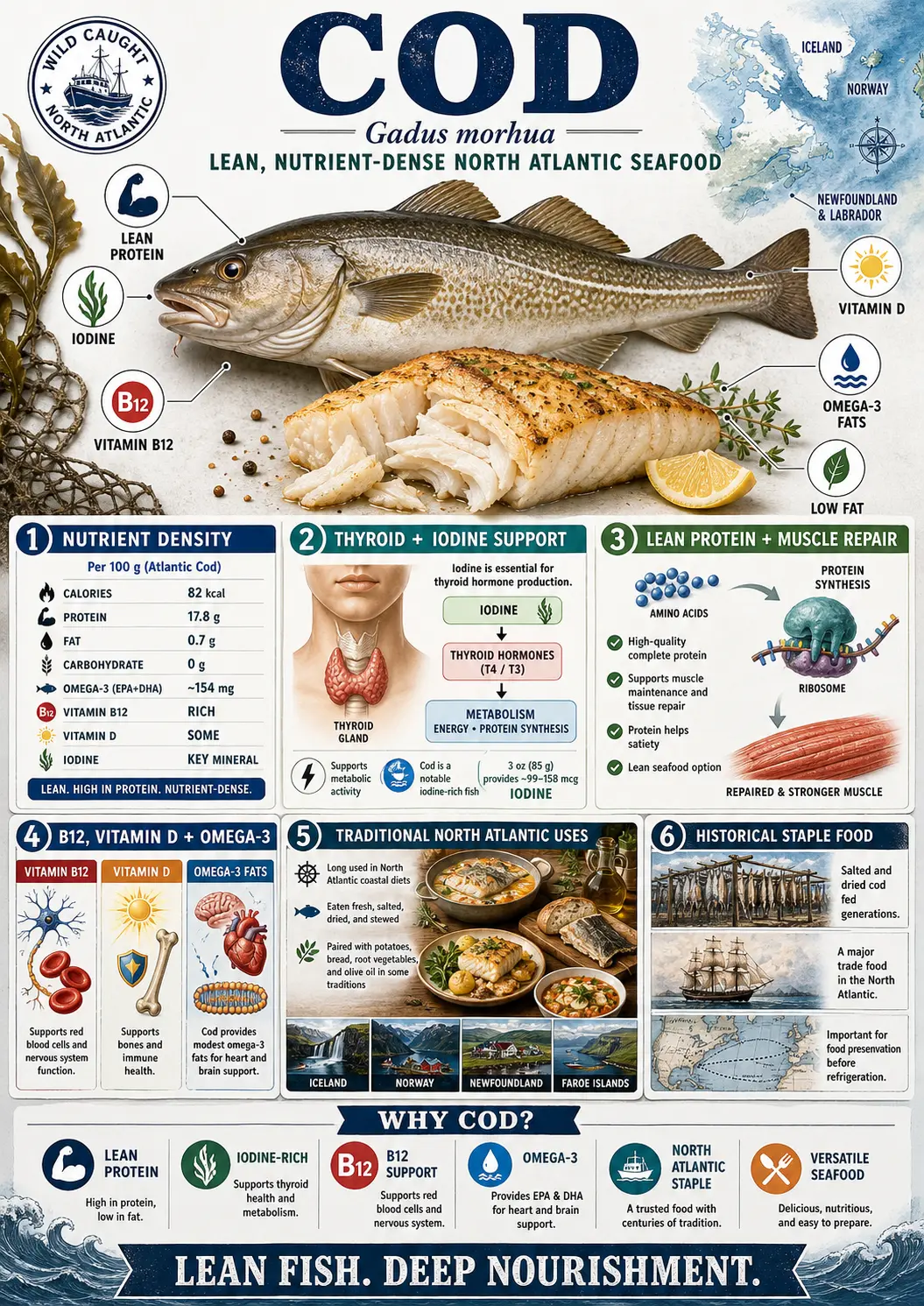
Cod (genus Gadus) is a cold-water bottom-dwelling fish found throughout the North Atlantic and North Pacific oceans. Atlantic cod (Gadus morhua) and Pacific cod (Gadus macrocephalus) are the two species that have dominated commercial fisheries for centuries. Cod has shaped human history in ways few other foods can claim: the medieval and early-modern cod fisheries of Newfoundland's Grand Banks helped build transatlantic trade, and salted cod (bacalao, bacalhau, klippfisk) became a staple from the Iberian Peninsula to West Africa to the Caribbean.
Unlike fatty fish such as salmon, herring, or sardines, cod is a lean white fish. Its flesh is nearly fat-free (less than 1%), making it an excellent low-calorie, high-protein food. Cod is also notable for cod liver oil, a traditional remedy valued since the 18th century as one of the richest natural sources of vitamin D, vitamin A, and long-chain omega-3 fatty acids. Cod liver oil was historically used to prevent and treat rickets and continues to be used for cardiovascular, skeletal, and inflammatory health.
Table of Contents
- Nutritional Profile
- Protein Quality
- Creatine Content
- Cod Liver Oil
- Health Benefits
- Sustainability
- Culinary Uses
- Connections
- Research Papers
- Featured Videos
1. Nutritional Profile
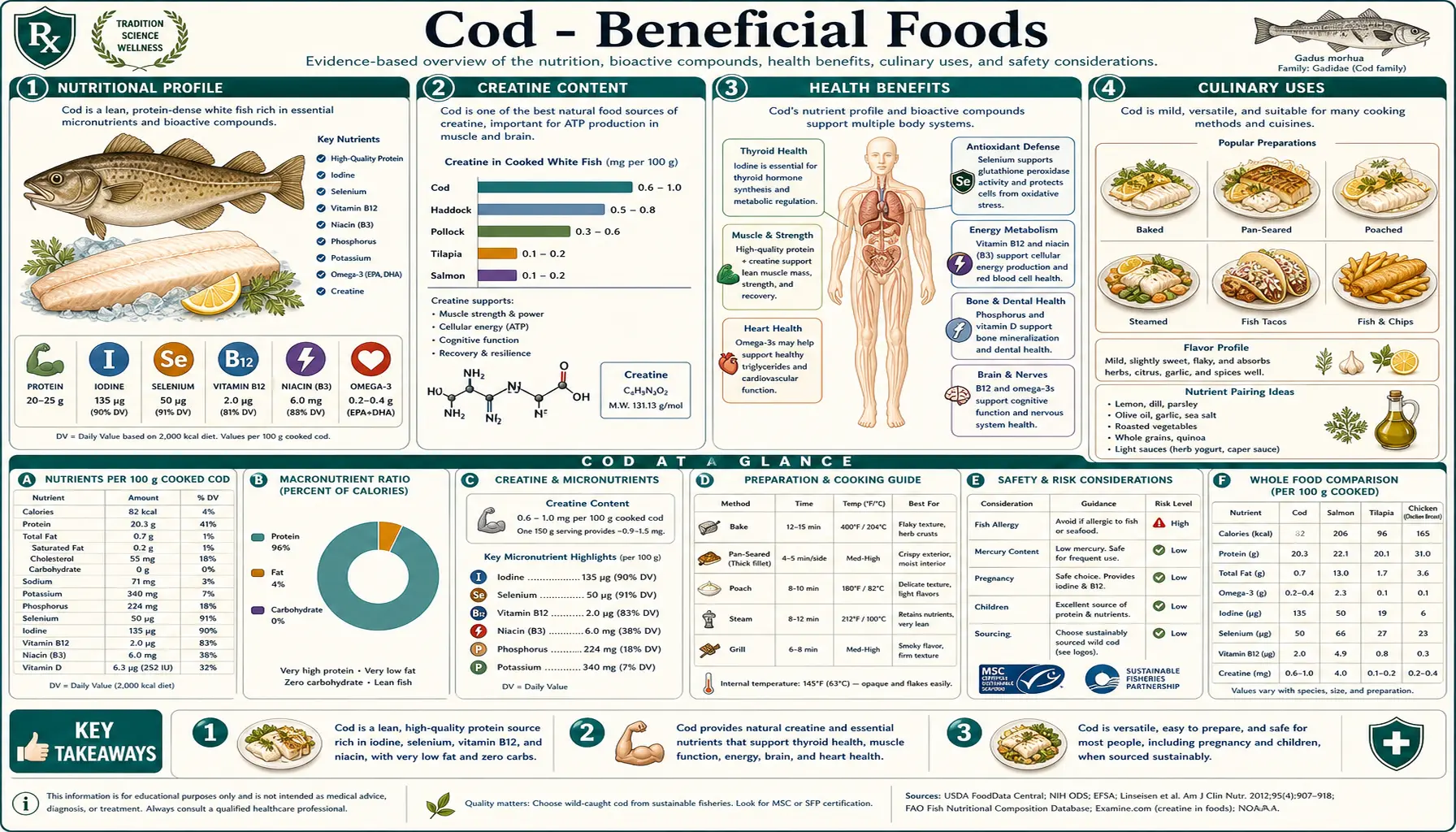
A 100-gram serving of cooked Atlantic cod provides approximately 105 calories, 23 grams of protein, and less than 1 gram of fat. It supplies more than 30% of the daily value for vitamin B12, 45% for selenium, 25% for phosphorus, and 20% for vitamin B6. Cod is also a significant source of iodine (particularly important for thyroid function), niacin, and potassium. Its protein-to-calorie ratio is among the highest of any food.
2. Protein Quality
Cod protein is complete, highly digestible, and rich in all essential amino acids, including a generous share of leucine. Because cod is so low in fat, a large serving delivers substantial protein with minimal calories, which is valuable for athletes during cutting phases, people managing body weight, and older adults who need high protein intake but have reduced appetite.
3. Creatine Content
Raw cod contains approximately 3.0 grams of creatine per kilogram, somewhat lower than fatty fish such as salmon or herring. This reflects cod's predominantly white (fast-twitch) muscle composition typical of ambush-predator fish, which relies heavily on phosphocreatine-powered bursts for short strikes rather than sustained aerobic swimming. Cooking reduces creatine content by 20-30%, so quick-cooking methods like steaming and baking preserve more than prolonged boiling. See the Creatine article for a complete discussion of creatine's role in muscle, brain, and longevity.
4. Cod Liver Oil
Cod liver oil is pressed from the fresh livers of Atlantic or Pacific cod and is one of the most nutrient-dense traditional supplements known. A single teaspoon (5 mL) typically delivers around 4,500 IU of vitamin A, 400-500 IU of vitamin D, and 800-1,000 mg of combined EPA and DHA. Historically, cod liver oil was used to treat rickets in children, and it remains widely used today for its anti-inflammatory, cardiovascular, skeletal, and immune-supporting properties. Care should be taken not to exceed upper limits for vitamin A, particularly in pregnancy.
5. Health Benefits
Lean protein at low caloric cost. Cod is ideal for weight management, body composition, and high-protein diets that aim to preserve lean mass.
Thyroid support. The iodine and selenium in cod are both required for thyroid hormone synthesis and conversion.
Cardiovascular and cognitive support (via cod liver oil). Regular cod liver oil supplementation is associated with improved lipid profiles, reduced inflammation, and better vitamin D status.
Low mercury burden. Cod accumulates relatively little methylmercury and is considered safe for regular consumption by pregnant women and children.
6. Sustainability
Atlantic cod stocks off Newfoundland and in the North Sea collapsed dramatically in the late 20th century due to overfishing and have only partially recovered. Sustainable seafood guides generally recommend choosing Pacific cod from well-managed Alaskan fisheries (MSC-certified) or Icelandic and Norwegian Atlantic cod from stocks that have rebuilt under strict quotas. Consumers concerned about sustainability should check eco-labels and country-of-origin information.
7. Culinary Uses
Cod is one of the most versatile cooking fish. It is the traditional choice for British fish and chips, Portuguese and Spanish bacalao preparations, New England fish chowder, Norwegian lutefisk, French brandade, and Japanese nabe hotpots. Its mild flavor accepts virtually any seasoning, and its flaky texture holds up to baking, poaching, steaming, frying, and broiling.
Connections
- Fake Meat — Species substitution in white fish, with the documented mislabelling rates
- All Food
- Creatine
- Herring
- Salmon
- Sardines
- Tuna
- Omega-3 Fatty Acids
- Selenium
- Iodine
- Phosphorus
- Vitamin B12
- Vitamin A
- Mercury
- Anti-Inflammatory Diet
- Cardiovascular Disease
- Dementia
- Arthritis
- Mammalian Foods List
- Restaurant and Travel Survival
Research Papers
The following curated PubMed topic searches lead to the peer-reviewed primary literature and systematic reviews that underpin the health claims discussed on this page. Each link opens PubMed in a new tab.
- Cod protein and insulin sensitivity
- Cod liver oil and vitamin D
- Cod protein and weight loss
- Lean white fish and cardiovascular risk
- Cod protein hydrolysate and blood pressure
- Cod iodine content and thyroid function
- Cod and omega-3 fatty acids content
- Cod selenium and antioxidant function
- Atlantic cod muscle protein quality
- Cod liver oil and childhood respiratory infection
Browse all PubMed citations for “Cod”
This content is provided for informational purposes only and does not constitute medical advice. Consult a qualified healthcare provider for personalized dietary guidance.