Milk - Beneficial Foods
Milk is the nutrient-rich liquid produced by the mammary glands of mammals to nourish their young, and in human diets it refers most commonly to cow's milk, though goat, sheep, buffalo, camel, and other species' milks are widely consumed in different parts of the world. Milk has been part of the human diet since the Neolithic agricultural revolution roughly 8,000-10,000 years ago. The subsequent evolution of lactase persistence — the genetic trait that allows adults to continue digesting the milk sugar lactose — in populations of European, East African, and Middle Eastern origin is one of the clearest examples of recent human adaptation driven by diet.
Whole cow's milk is a complete food containing all three macronutrients (carbohydrate as lactose, high-quality protein, and fat), along with calcium, phosphorus, potassium, magnesium, iodine, zinc, vitamin B12, riboflavin, vitamin A, and in fortified products, vitamin D. Milk and dairy products remain among the most concentrated dietary sources of calcium and vitamin B12 and play a significant role in global nutrition, particularly in bone health and infant growth.
Table of Contents
- Nutritional Profile
- Protein: Whey and Casein
- Creatine Content
- Calcium and Bone Health
- Health Benefits
- Lactose Intolerance and Alternatives
- Safety and Considerations
- Connections
- Research Papers
- Featured Videos
1. Nutritional Profile
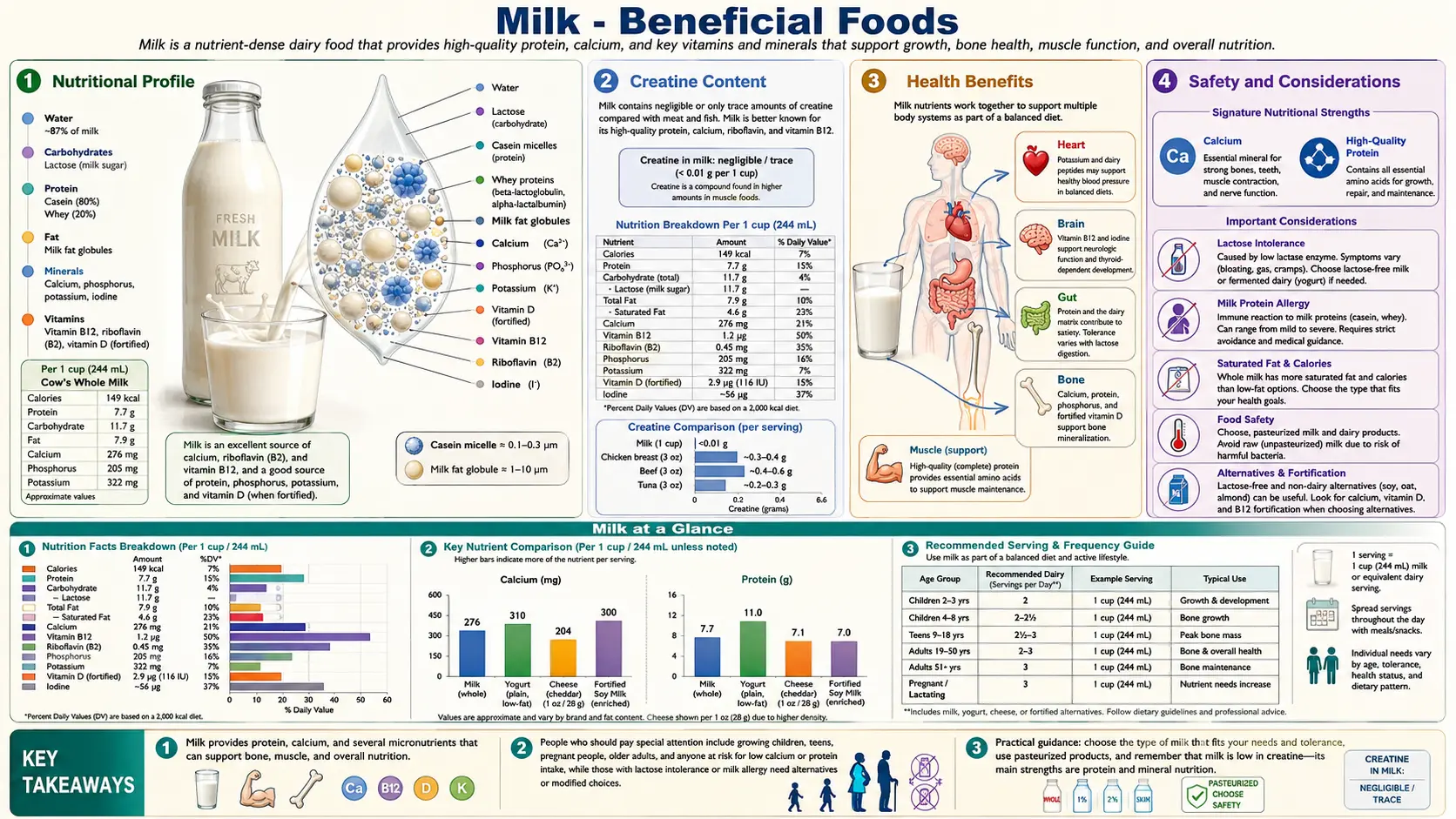
One cup (240 mL) of whole cow's milk provides about 150 calories, 8 grams of protein, 12 grams of carbohydrate (all as lactose), and 8 grams of fat. It supplies roughly 28% of the daily value for calcium, 18% for phosphorus, 12% for potassium, 50% for vitamin B12, 35% for riboflavin, 15% for vitamin A, and (in fortified versions) 15% for vitamin D. Skim and low-fat milk deliver the same protein, calcium, and B vitamins with reduced fat and calories.
2. Protein: Whey and Casein
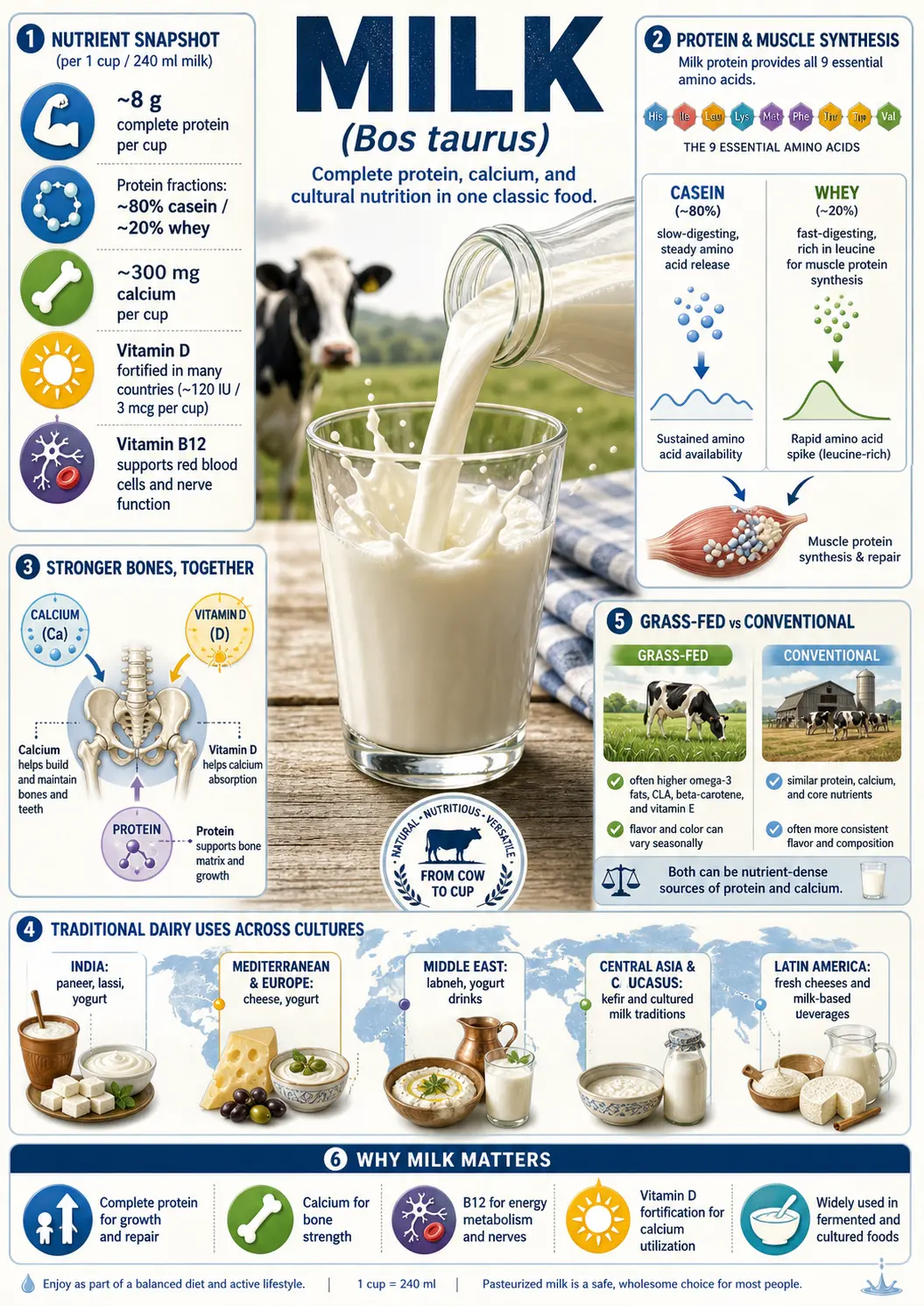
Cow's milk protein is approximately 80% casein and 20% whey, both complete proteins rich in essential amino acids. Whey protein is rapidly digested and causes a sharp rise in blood amino acids, making it especially effective at stimulating muscle protein synthesis after exercise. Casein forms a gel in the stomach and is absorbed slowly, providing a sustained release of amino acids that helps support muscle protein balance over several hours. The combination of fast and slow proteins makes milk an almost ideal post-exercise recovery food, a use supported by a number of randomized controlled trials.
3. Creatine Content
Cow's milk contains approximately 0.1 grams of creatine per liter, making it a minor dietary contributor compared with meat and fish. This is because creatine is stored primarily in skeletal muscle, not in secretory tissue, and mammalian milk is not a significant carrier of creatine. Human breast milk contains similarly low levels of free creatine. Achieving a supplemental creatine dose (3-5 g/day) from cow's milk alone would require drinking tens of liters per day, which is impractical. For meaningful creatine benefits, creatine monohydrate supplementation is far more efficient, though milk remains valuable as a recovery beverage because of its protein, carbohydrate, and electrolyte content.
4. Calcium and Bone Health
Milk is one of the most bioavailable dietary sources of calcium, supplying roughly 300 mg per cup. Calcium, combined with the vitamin D, phosphorus, and protein also found in milk, supports bone mineral accrual in children and adolescents and helps slow age-related bone loss in adults. Large observational studies link moderate dairy intake with modestly reduced risk of osteoporotic fractures, though the association is less strong than early 20th-century promotion suggested, and calcium requirements can also be met through leafy greens, tofu, sardines, and fortified plant milks.
5. Health Benefits
Post-exercise recovery. Randomized trials show that milk rehydrates more effectively than water or sports drinks and supports muscle recovery through its mix of casein, whey, carbohydrate, and electrolytes.
Childhood growth. Regular milk consumption is associated with linear growth in children, particularly in populations where dietary protein and micronutrients are limiting.
Blood pressure. The DASH dietary pattern, which includes low-fat dairy, produces reductions in blood pressure comparable to some antihypertensive medications.
Metabolic health. Fermented and whole-fat dairy products have been associated in meta-analyses with neutral or slightly favorable effects on cardiovascular risk markers and type 2 diabetes risk, reversing long-held assumptions about dairy fat.
6. Lactose Intolerance and Alternatives
A majority of the world's adult population — particularly people of East Asian, Southeast Asian, Native American, and West African ancestry — does not produce lactase as adults and experiences bloating, cramping, and diarrhea after consuming significant amounts of lactose. Options for lactose-intolerant individuals include lactose-free cow's milk (where lactose is enzymatically broken down), hard cheeses and yogurt (naturally lower in lactose), small portions with meals, lactase enzyme supplements, and plant-based alternatives made from soy, almonds, oats, coconut, or pea protein. Plant milks vary widely in nutritional quality; fortified soy milk most closely matches cow's milk in protein content.
7. Safety and Considerations
Cow's milk allergy, distinct from lactose intolerance, affects 2-3% of young children and usually resolves by school age. It is mediated by IgE or non-IgE immune responses to milk proteins (mainly casein and beta-lactoglobulin) and requires strict avoidance. Unpasteurized (raw) milk carries real risks of Listeria, Salmonella, E. coli O157:H7, and Campylobacter infection and is not recommended for pregnant women, young children, older adults, or immunocompromised people. Pasteurization destroys pathogens without significantly degrading nutritional value. Some observational studies link very high intakes of milk (3+ servings per day) with slightly increased risk of certain outcomes, suggesting that moderate intake is likely optimal for most adults.
Connections
- Fake Milk — Melamine, watering and reconstitution: how milk is faked and how laboratories catch it
- All Food
- Creatine
- Yogurt
- Kefir
- Eggs
- Calcium
- Phosphorus
- Vitamin B12
- Vitamin A
- Potassium
- Calcium and Bone Health
- Allergies
- Cardiovascular Disease
- Sardines
- Beef
- Vitamin B12 Test
- Iodine
- Banned Additives
- Carrageenan
- Conditions on this site that reference this page: Coxiella burnetii (Q Fever) · Lactose Intolerance · Calcium, Vitamin D, and Protein Intake for Bone Health
Research Papers
The following curated PubMed topic searches lead to the peer-reviewed primary literature and systematic reviews that underpin the health claims discussed on this page. Each link opens PubMed in a new tab.
- Milk consumption and bone mineral density: meta-analysis
- Dairy intake and cardiovascular disease risk
- Whey protein and muscle protein synthesis
- Casein protein and overnight muscle recovery
- Milk and post-exercise rehydration
- Lactose intolerance: diagnosis and management
- A1 vs A2 beta-casein and gastrointestinal symptoms
- Milk consumption and type 2 diabetes risk
- Dairy and blood pressure: DASH diet evidence
- Full-fat dairy and metabolic health
Browse all PubMed citations for “Milk”
This content is provided for informational purposes only and does not constitute medical advice. Consult a qualified healthcare provider for personalized dietary guidance.