Walnuts - Beneficial Foods
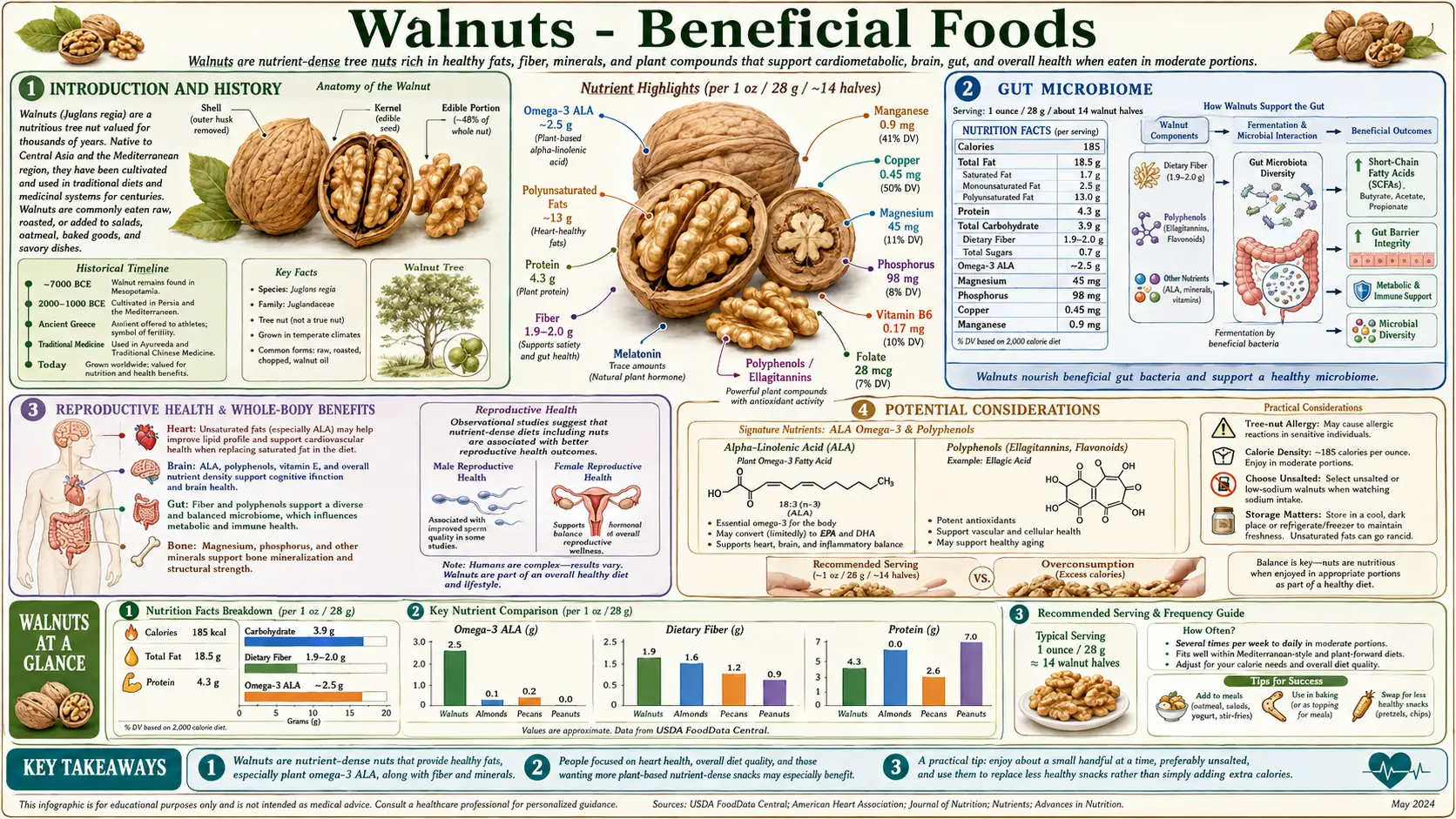
Table of Contents
- Introduction and History
- Nutritional Profile
- Brain Health
- Heart Health
- Anti-Inflammatory Properties
- Gut Microbiome
- Cancer Prevention
- Blood Sugar and Diabetes
- Weight Management
- Bone Health
- Reproductive Health
- Skin and Hair Health
- Sleep Quality
- Antioxidant Capacity
- Optimal Consumption
- Potential Considerations
- Scientific References
- Research Papers
- Connections
- Featured Videos
1. Introduction and History
Walnuts (Juglans regia) hold the distinction of being one of the oldest known tree foods consumed by humans. Archaeological evidence from the Shanidar Cave in modern-day Iraq dates walnut consumption to approximately 7000 BC, making these wrinkled kernels a dietary staple for at least nine millennia. Ancient civilizations across Persia, Greece, and Rome prized walnuts not only as nourishment but also as medicine, trade goods, and symbols of intellect and fertility.
The walnut's origin traces primarily to the regions of ancient Persia (modern Iran), from which it spread along trade routes to Greece, Rome, and eventually throughout Europe and Asia. The Romans called them Juglans regia, meaning "Jupiter's royal acorn," reflecting the high esteem in which they held this nut. Persian royalty cultivated walnut orchards extensively, and the nut became so associated with the region that early English speakers referred to it as the "Persian walnut" to distinguish it from native species.
One of the most enduring associations with walnuts comes from the Doctrine of Signatures, a philosophy dating to the time of Paracelsus in the 16th century, which held that plants resembling body parts could treat ailments of those organs. The walnut, with its two lobed halves enclosed in a hard shell, bears a striking resemblance to the human brain, complete with folds and wrinkles mimicking the cerebral cortex. While the Doctrine of Signatures was not based in empirical science, modern research has validated the intuition behind this ancient observation, demonstrating that walnuts do indeed provide substantial benefits for brain health and cognitive function.
Today, California produces the vast majority of walnuts in the United States, while China leads global production. The English walnut (Juglans regia) is the most widely consumed variety worldwide, though black walnuts (Juglans nigra), native to North America, offer their own distinct flavor profile and nutritional advantages. Walnuts remain one of the most extensively researched nuts in nutritional science, with hundreds of clinical trials and epidemiological studies examining their effects on human health.
What sets walnuts apart from other tree nuts is their uniquely comprehensive nutritional profile. They are the only major tree nut that provides a significant amount of alpha-linolenic acid (ALA), a plant-based omega-3 fatty acid. Combined with their rich content of polyphenols, gamma-tocopherol vitamin E, and an array of minerals, walnuts deliver a synergistic package of bioactive compounds that few other single foods can match.
2. Nutritional Profile
A standard serving of walnuts (one ounce, or approximately 28 grams, roughly 14 halves) provides about 185 calories, 18.5 grams of fat, 4.3 grams of protein, and 3.9 grams of carbohydrates including 1.9 grams of dietary fiber. What makes the fat composition of walnuts exceptional is the predominance of polyunsaturated fatty acids (PUFAs), which account for roughly 13 grams per serving. Of these, approximately 2.5 grams come from alpha-linolenic acid (ALA), the essential plant-based omega-3 fatty acid that the body cannot synthesize on its own. This ALA content is the highest of any commonly consumed nut and provides a meaningful contribution toward the recommended daily intake of 1.1 to 1.6 grams.
The polyphenol content of walnuts is among the richest in the entire nut family. Walnuts contain pedunculagin, a major ellagitannin that is hydrolyzed in the gut to release ellagic acid, which is then further metabolized by intestinal bacteria into urolithins. These compounds exhibit potent antioxidant, anti-inflammatory, and antiproliferative properties. Notably, the thin papery skin (pellicle) that surrounds the walnut kernel contains the highest concentration of polyphenols, which is why consuming walnuts with the skin intact is nutritionally preferable to blanched or skinned versions.
Walnuts are a particularly good source of gamma-tocopherol, a form of vitamin E that is less commonly discussed than alpha-tocopherol but possesses unique anti-inflammatory and antioxidant functions. Gamma-tocopherol traps reactive nitrogen species more effectively than alpha-tocopherol and has been linked to reduced risk of cardiovascular disease and certain cancers. A single ounce of walnuts provides approximately 5.9 milligrams of gamma-tocopherol, making them one of the leading dietary sources of this important compound.
The mineral profile of walnuts is equally impressive. They are an excellent source of copper (0.45 mg per ounce, about 50% of the daily value), which is essential for iron metabolism, connective tissue formation, and nervous system function. Manganese content reaches 0.97 mg per ounce (roughly 42% of the daily value), supporting bone metabolism, blood sugar regulation, and antioxidant defense via the enzyme manganese superoxide dismutase. Walnuts also supply meaningful amounts of molybdenum, a trace mineral required for the function of sulfite oxidase, xanthine oxidase, and aldehyde oxidase enzymes involved in detoxification processes.
Biotin (vitamin B7) is another noteworthy nutrient in walnuts, with one ounce providing approximately 5.6 micrograms, or about 19% of the adequate intake. Biotin plays critical roles in fatty acid synthesis, amino acid metabolism, and glucose homeostasis. It is also widely recognized for its contributions to healthy hair, skin, and nails. Additional micronutrients in walnuts include phosphorus, magnesium, iron, zinc, folate, and vitamin B6, making them a remarkably nutrient-dense food relative to their caloric content.
3. Brain Health
The connection between walnuts and brain health extends far beyond the nut's brain-like appearance. Alpha-linolenic acid (ALA), the predominant omega-3 fatty acid in walnuts, serves as a precursor to eicosapentaenoic acid (EPA) and docosahexaenoic acid (DHA), both of which are critical structural components of neuronal cell membranes. While the conversion rate of ALA to DHA is relatively modest in humans (estimated at 2 to 10%), regular walnut consumption has been shown to increase circulating ALA levels substantially, contributing to the overall omega-3 pool available for brain tissue maintenance and repair.
The polyphenolic compounds in walnuts provide direct neuroprotective benefits. Ellagic acid and its gut-derived metabolites, the urolithins, have demonstrated the ability to cross the blood-brain barrier and reduce neuroinflammation in animal models. These compounds suppress the activation of microglia (the brain's immune cells), reduce the production of pro-inflammatory cytokines such as interleukin-6 and tumor necrosis factor-alpha, and protect neurons from oxidative damage. In cell culture studies, walnut extracts have been shown to inhibit the aggregation of amyloid-beta peptides, which are implicated in the pathogenesis of Alzheimer's disease.
The Walnuts and Healthy Aging (WAHA) study, a landmark two-year randomized controlled trial conducted in Barcelona, Spain, and Loma Linda, California, provided some of the most compelling clinical evidence for walnut neuroprotection. In this trial, cognitively healthy older adults (aged 63 to 79) who consumed approximately 30 to 60 grams of walnuts daily showed significantly less decline in cognitive function compared to the control group. Brain MRI scans revealed that walnut consumers maintained greater integrity of white matter tracts, suggesting preservation of the structural connections essential for efficient neural communication.
Additional clinical evidence supports the role of walnuts in enhancing memory and cognitive processing speed. A study published in the British Journal of Nutrition found that young adults who consumed walnuts for eight weeks demonstrated improvements in inferential reasoning compared to a placebo group. Observational data from the National Health and Nutrition Examination Survey (NHANES) found that walnut consumers scored significantly higher on cognitive tests, including those measuring memory, concentration, and information processing speed, even after controlling for confounding factors such as age, education, and overall dietary quality.
The mechanisms underlying walnut-mediated neuroprotection appear to be multifactorial. Beyond the direct antioxidant and anti-inflammatory effects of polyphenols and omega-3 fatty acids, walnuts may enhance neuroplasticity by promoting the expression of brain-derived neurotrophic factor (BDNF), a protein that supports the growth and survival of neurons. Animal studies have shown that walnut-supplemented diets increase BDNF levels in the hippocampus, the brain region most critical for learning and memory formation. These converging lines of evidence position walnuts as one of the most well-supported dietary interventions for long-term cognitive health.
4. Heart Health
Cardiovascular disease remains the leading cause of death globally, and dietary interventions represent one of the most accessible strategies for risk reduction. Walnuts have been the subject of extensive cardiovascular research, with evidence consistently demonstrating their ability to improve multiple risk factors simultaneously. The alpha-linolenic acid (ALA) omega-3 fatty acid in walnuts is a key driver of these benefits, as ALA has been independently associated with reduced risk of fatal coronary heart disease in large prospective cohort studies.
One of the best-documented cardiovascular benefits of walnut consumption is the reduction of low-density lipoprotein (LDL) cholesterol, often referred to as "bad" cholesterol. A pooled analysis of 26 clinical trials found that walnut-enriched diets reduced total cholesterol by an average of 7 mg/dL and LDL cholesterol by approximately 5.5 mg/dL compared to control diets. These reductions are clinically meaningful, as every 1% decrease in LDL cholesterol is associated with a roughly 1 to 2% reduction in cardiovascular event risk. Notably, walnuts appear to reduce small dense LDL particles preferentially, which are considered the most atherogenic subfraction.
Beyond cholesterol management, walnuts exert favorable effects on blood pressure. A systematic review published in the Journal of the American Heart Association found that walnut consumption was associated with modest but significant reductions in both systolic and diastolic blood pressure, particularly among individuals with elevated baseline values. The vasodilatory properties of ALA and the polyphenol-mediated enhancement of nitric oxide production are believed to underlie these effects. Improved endothelial function, the ability of blood vessel walls to relax and dilate appropriately, has been documented in multiple walnut feeding trials using flow-mediated dilation (FMD) as a biomarker.
The PREDIMED (Prevencion con Dieta Mediterranea) trial, one of the largest and most influential dietary intervention studies ever conducted, provided powerful evidence for the cardiovascular benefits of nut consumption. In this trial, participants assigned to a Mediterranean diet supplemented with mixed nuts (including walnuts) experienced a 28% reduction in the incidence of major cardiovascular events (heart attack, stroke, and cardiovascular death) compared to those following a low-fat control diet. Sub-analyses specific to walnut intake within the PREDIMED cohort found that participants consuming more than three servings of walnuts per week had a 45% lower risk of cardiovascular mortality.
Walnuts also contribute to cardiovascular health through their effects on inflammation and oxidative stress, both of which are central to the pathogenesis of atherosclerosis. Regular walnut consumption has been shown to reduce circulating levels of C-reactive protein (CRP), interleukin-6, and other inflammatory biomarkers. The combined effect of cholesterol reduction, blood pressure improvement, enhanced endothelial function, and systemic anti-inflammatory activity makes walnuts one of the most thoroughly validated heart-healthy foods in the nutritional science literature.
5. Anti-Inflammatory Properties
Chronic low-grade inflammation is increasingly recognized as a root driver of many modern diseases, including cardiovascular disease, type 2 diabetes, cancer, and neurodegenerative conditions. Walnuts contain a remarkable array of anti-inflammatory compounds that work through complementary mechanisms to modulate the body's inflammatory response. Chief among these are the ellagitannins, large polyphenolic molecules that are abundant in the walnut pellicle and are not commonly found in such concentrations in other foods.
Ellagitannins, particularly pedunculagin, undergo hydrolysis in the gastrointestinal tract to release ellagic acid. Ellagic acid itself possesses anti-inflammatory and antioxidant properties, but the story does not end there. Gut microbiota further metabolize ellagic acid into a family of compounds called urolithins, primarily urolithin A and urolithin B. These metabolites have attracted considerable research attention due to their superior bioavailability compared to the parent polyphenols and their potent biological activities. Urolithin A, in particular, has been shown to inhibit the NF-kB signaling pathway, one of the master regulators of inflammatory gene expression, and to enhance mitochondrial function through a process called mitophagy.
The omega-3 fatty acid ALA contributes independently to walnut's anti-inflammatory profile. ALA competes with the omega-6 fatty acid linoleic acid for the same enzymatic pathways (delta-6 desaturase and elongase), and a higher ratio of omega-3 to omega-6 intake shifts the balance of eicosanoid production away from pro-inflammatory prostaglandins and leukotrienes toward less inflammatory or anti-inflammatory mediators. Clinical trials have demonstrated that walnut consumption reduces the production of pro-inflammatory cytokines by peripheral blood mononuclear cells and decreases the expression of adhesion molecules on endothelial cells, both of which are early steps in the inflammatory cascade that leads to atherosclerotic plaque formation.
A randomized crossover trial published in the Journal of the American College of Cardiology found that a walnut-enriched diet consumed for eight weeks significantly reduced levels of several inflammatory biomarkers, including E-selectin, intercellular adhesion molecule-1 (ICAM-1), and interleukin-1 beta, compared to a control diet matched for macronutrient content. These findings suggest that the anti-inflammatory benefits of walnuts extend beyond what would be predicted from their fatty acid composition alone and are likely attributable to the synergistic action of polyphenols, tocopherols, and omega-3 fatty acids working in concert.
The gut metabolites produced from walnut polyphenols may also play a role in resolving inflammation rather than merely suppressing it. Urolithins have been shown to promote the production of specialized pro-resolving mediators (SPMs), lipid-derived molecules that actively orchestrate the resolution of inflammation and the return to tissue homeostasis. This distinction between suppressing and resolving inflammation is an important frontier in immunology, and walnut-derived metabolites appear to contribute meaningfully to both processes.
6. Gut Microbiome
The human gut microbiome, comprising trillions of bacteria, fungi, and other microorganisms, plays a fundamental role in health through its effects on digestion, immune function, metabolism, and even brain function via the gut-brain axis. Walnuts have emerged as a particularly effective food for promoting a diverse and beneficial gut microbial community. Their combination of fiber, polyunsaturated fatty acids, and polyphenols provides multiple substrates that selectively nourish health-promoting bacterial species.
The prebiotic effects of walnuts have been documented in several well-designed clinical trials. A study published in the Journal of Nutrition found that participants consuming 43 grams of walnuts daily for three weeks experienced significant increases in the abundance of butyrate-producing bacteria, including species of Faecalibacterium, Roseburia, and Clostridium. Butyrate is a short-chain fatty acid that serves as the primary energy source for colonocytes (the cells lining the colon), strengthens the intestinal barrier, and exerts anti-inflammatory effects both locally and systemically. The enhancement of butyrate production through walnut consumption represents a meaningful pathway by which walnuts may reduce the risk of inflammatory bowel disease and colorectal cancer.
Walnut consumption has also been associated with increased populations of Lactobacillus species, beneficial bacteria widely recognized for their roles in maintaining gut barrier integrity, producing antimicrobial compounds, and modulating immune responses. A randomized controlled trial at the University of Illinois found that walnut intake altered the gut microbiome composition in ways that were associated with reduced secondary bile acid production. Secondary bile acids, produced by certain gut bacteria from primary bile acids, have been implicated in colon carcinogenesis, suggesting another mechanism by which walnuts may protect against colorectal cancer.
The relationship between walnuts and the gut microbiome is bidirectional. While walnuts nourish beneficial bacteria, these bacteria in turn metabolize walnut polyphenols into bioactive compounds that the human body can absorb and utilize. The conversion of ellagitannins to urolithins, described in the anti-inflammatory section, depends entirely on the activity of gut microbiota and varies among individuals based on their microbial composition. This individual variation in "metabotype" (urolithin producer status) may partly explain why the health benefits of walnut consumption differ among people and underscores the importance of gut health as a determinant of dietary response.
Emerging research suggests that the gut microbiome changes induced by walnut consumption may have systemic metabolic consequences. Shifts in microbial communities have been linked to improvements in lipid metabolism, glucose homeostasis, and inflammatory tone, effects that are consistent with the cardiovascular and metabolic benefits observed in walnut feeding trials. The prebiotic properties of walnuts thus represent a unifying mechanism that may help explain the broad spectrum of health benefits associated with regular consumption.
7. Cancer Prevention
The potential cancer-preventive properties of walnuts have been explored across multiple cancer types, with the most promising evidence emerging for prostate, breast, and colorectal cancers. The biological plausibility of walnut's anticancer effects rests on the combined actions of several bioactive compounds, including ellagitannins, gamma-tocopherol, omega-3 fatty acids, and phytosterols, each of which has demonstrated antiproliferative, pro-apoptotic, or anti-angiogenic properties in laboratory studies.
Ellagitannins and their metabolites are among the most potent anticancer compounds found in walnuts. In cell culture studies, ellagic acid has been shown to induce apoptosis (programmed cell death) in prostate cancer cells, breast cancer cells, and colon cancer cells while sparing normal cells. The urolithins produced by gut microbial metabolism of ellagitannins exhibit similar selective cytotoxicity and have the additional advantage of superior bioavailability. Urolithin A has been shown to inhibit the Wnt signaling pathway, which is frequently dysregulated in colorectal cancer, and to suppress the expression of matrix metalloproteinases involved in tumor invasion and metastasis.
Gamma-tocopherol, the predominant form of vitamin E in walnuts, has attracted particular attention for its potential role in prostate cancer prevention. Unlike alpha-tocopherol, gamma-tocopherol can trap reactive nitrogen species, which contribute to DNA damage and mutagenesis in the prostate gland. Epidemiological studies have found inverse associations between serum gamma-tocopherol levels and prostate cancer risk, and laboratory studies have demonstrated that gamma-tocopherol inhibits the growth of prostate cancer cell lines by inducing cell cycle arrest and apoptosis. The SELECT trial's finding that alpha-tocopherol supplementation alone did not prevent prostate cancer has reinforced the importance of gamma-tocopherol as the more relevant form of vitamin E for cancer protection.
Animal model research has provided compelling evidence for walnut's anticancer effects in vivo. In a study conducted at Marshall University, mice implanted with human breast cancer cells and fed a diet containing walnuts (equivalent to two ounces daily in humans) showed a 50% reduction in tumor growth rate compared to control-fed mice. The walnut diet also reduced the number of breast tumor metastases. Similar findings have been reported in prostate cancer models, where walnut-supplemented diets slowed tumor growth and reduced serum levels of insulin-like growth factor 1 (IGF-1), a hormone associated with cancer progression.
For colorectal cancer, the evidence connects walnut consumption to favorable changes in the gut environment that may reduce cancer risk. As described in the gut microbiome section, walnuts reduce secondary bile acid production and increase butyrate-producing bacteria. Butyrate has been shown to inhibit the proliferation of colon cancer cells and promote their differentiation and apoptosis. A pilot clinical trial in colorectal cancer patients found that walnut consumption before surgery altered gene expression in tumor tissue in ways consistent with reduced proliferation and enhanced immune surveillance, though larger trials are needed to confirm clinical significance.
8. Blood Sugar and Diabetes
Type 2 diabetes and impaired glucose regulation represent an escalating global health crisis, and dietary strategies to improve glycemic control are of paramount importance. Walnuts, with their favorable macronutrient composition of healthy fats, protein, and fiber combined with minimal rapidly digestible carbohydrates, represent an ideal food for individuals concerned about blood sugar management. The low glycemic index of walnuts means they produce virtually no postprandial glucose spike when consumed, and their inclusion in mixed meals can attenuate the glycemic response to higher-carbohydrate foods.
The healthy fat profile of walnuts, dominated by polyunsaturated fatty acids including ALA, plays a direct role in improving insulin sensitivity. Polyunsaturated fats enhance the fluidity and function of cell membranes, including the membranes of muscle and adipose cells where insulin receptors are located. Greater membrane fluidity facilitates more efficient insulin signaling and glucose uptake. Clinical studies have shown that replacing saturated fat with polyunsaturated fat from sources like walnuts can improve whole-body insulin sensitivity by 10 to 15%, as measured by homeostatic model assessment of insulin resistance (HOMA-IR).
The fiber content of walnuts, while modest at approximately 2 grams per ounce, contributes to glycemic regulation by slowing gastric emptying and the rate of nutrient absorption. This fiber works synergistically with the fat and protein content to create a slowly digested food matrix that provides sustained energy without the blood sugar volatility associated with refined carbohydrate consumption. Additionally, the prebiotic fiber in walnuts supports gut microbial production of short-chain fatty acids like butyrate and propionate, which have been shown to improve hepatic insulin sensitivity and regulate gluconeogenesis.
Clinical evidence specifically examining walnuts and diabetes outcomes has been encouraging. A randomized controlled trial published in Diabetes/Metabolism Research and Reviews found that overweight adults with type 2 diabetes who consumed 56 grams of walnuts daily for three months experienced significant improvements in endothelial function and reductions in fasting insulin levels compared to those following a nut-free diet. Another trial in adults at risk for diabetes demonstrated that daily walnut consumption for six months improved HbA1c levels (a measure of average blood sugar over the preceding two to three months) by a clinically meaningful margin, suggesting that walnuts may help prevent the progression from prediabetes to overt type 2 diabetes.
Large prospective cohort studies further support the association between walnut consumption and reduced diabetes risk. Data from the Nurses' Health Study, following over 137,000 women for up to 10 years, found that those who consumed walnuts at least twice weekly had a 24% lower risk of developing type 2 diabetes compared to those who rarely or never consumed walnuts. These observational findings, combined with the mechanistic evidence from clinical trials, provide a strong rationale for including walnuts as part of a dietary strategy for blood sugar management and diabetes prevention.
9. Weight Management
Despite their caloric density of approximately 185 calories per ounce, walnuts have not been associated with weight gain in clinical trials. In fact, multiple studies have found that adding walnuts to the diet does not lead to the expected increase in body weight, suggesting that compensatory mechanisms reduce the net caloric impact of walnut consumption. This paradox is explained by several interconnected physiological effects, including enhanced satiety, incomplete calorie absorption, and modulation of appetite-regulating brain circuits.
The satiety-promoting properties of walnuts are substantial. The combination of protein, fiber, and polyunsaturated fat triggers the release of appetite-suppressing hormones including cholecystokinin (CCK), peptide YY (PYY), and glucagon-like peptide-1 (GLP-1). These hormonal signals communicate fullness to the brain, leading to spontaneous reductions in calorie intake at subsequent meals. A controlled feeding study at Purdue University found that when participants were given walnuts as a snack, they compensated by eating approximately 65% fewer calories during the remainder of the day, effectively negating the majority of the calories consumed from the walnuts themselves.
Incomplete calorie absorption is another key factor that mitigates the caloric impact of walnut consumption. The rigid cell walls of walnut tissue resist complete digestion in the gastrointestinal tract, meaning that a measurable fraction of the fat contained within intact walnut cells passes through the body unabsorbed. Research published in the American Journal of Clinical Nutrition found that the metabolizable energy of walnuts is approximately 21% lower than the value calculated by traditional Atwood factors, meaning that a serving of walnuts delivers roughly 146 calories rather than the 185 calories listed on nutrition labels.
A fascinating functional magnetic resonance imaging (fMRI) study conducted at Beth Israel Deaconess Medical Center provided neurological evidence for walnut's appetite-modulating effects. In this randomized crossover trial, obese participants consumed walnut-containing smoothies or placebo smoothies for five days, then underwent brain imaging while viewing images of highly desirable foods, neutral foods, and less desirable foods. When participants had consumed the walnut-containing diet, the insula, a brain region involved in appetite and impulse control, showed increased activation in response to healthy food cues and decreased activation in response to highly caloric junk food images. This finding suggests that walnuts may alter brain reward processing in ways that support healthier food choices.
Long-term observational data align with these clinical findings. In the PREDIMED and Nurses' Health Study cohorts, regular nut consumers, including walnut consumers, consistently showed lower body mass index and smaller waist circumference compared to non-consumers, despite higher total calorie intakes. These findings collectively indicate that the fear of weight gain should not deter individuals from incorporating walnuts into their diets and that walnuts may, paradoxically, support weight management goals.
10. Bone Health
Bone health is a critical concern across the lifespan, from building peak bone mass during youth to preventing osteoporosis and fractures in older age. While calcium and vitamin D receive the most attention in discussions of bone health, the roles of other nutrients, including those found abundantly in walnuts, are increasingly recognized as essential for maintaining skeletal integrity. Walnuts contribute to bone health through several mechanisms involving their omega-3 fatty acid content, mineral composition, and anti-inflammatory properties.
Alpha-linolenic acid (ALA) may support bone health by favorably influencing calcium balance. Diets rich in omega-3 fatty acids have been associated with reduced urinary calcium excretion, suggesting that ALA helps the body retain more calcium for bone mineralization rather than losing it through the kidneys. Additionally, omega-3 fatty acids modulate the balance between osteoblasts (bone-forming cells) and osteoclasts (bone-resorbing cells) by shifting the production of inflammatory mediators. Pro-inflammatory prostaglandins derived from omega-6 fatty acids tend to stimulate osteoclast activity and bone resorption, while omega-3-derived mediators suppress this process, favoring net bone formation.
The manganese content of walnuts is particularly relevant to bone metabolism. Manganese is a cofactor for glycosyltransferases, enzymes essential for the synthesis of proteoglycans that form the organic matrix of bone and cartilage. Manganese deficiency has been associated with reduced bone density and increased susceptibility to fractures in both animal and human studies. A single ounce of walnuts provides over 40% of the daily recommended intake of manganese, making them one of the more concentrated dietary sources of this trace mineral.
Copper, another mineral abundant in walnuts, plays an essential role in the cross-linking of collagen and elastin, the structural proteins that provide tensile strength to bone tissue. The copper-dependent enzyme lysyl oxidase catalyzes the formation of these cross-links, and copper deficiency leads to weakened bone structure that is more prone to fracture. Furthermore, the anti-inflammatory effects of walnut polyphenols may indirectly support bone health by reducing chronic systemic inflammation, which is increasingly recognized as a driver of accelerated bone loss, particularly in postmenopausal women and older adults.
While clinical trials specifically examining walnuts and bone mineral density are limited, the totality of evidence from nutritional epidemiology and mechanistic studies suggests that the nutrient profile of walnuts is well-suited to supporting skeletal health. Their combination of ALA, manganese, copper, magnesium, and phosphorus, alongside their anti-inflammatory polyphenols, provides a multifaceted approach to bone preservation that complements traditional calcium and vitamin D supplementation.
11. Reproductive Health
Male fertility has declined significantly over recent decades, with studies documenting a 50% reduction in sperm concentration across Western nations since the 1970s. Dietary and environmental factors are believed to play major roles in this trend, and targeted nutritional interventions have emerged as a practical strategy for improving reproductive outcomes. Walnuts have been among the most studied foods in this context, with multiple clinical trials demonstrating measurable improvements in sperm quality parameters following walnut supplementation.
A landmark randomized controlled trial conducted at the University of California, Los Angeles (UCLA), enrolled 117 healthy young men aged 21 to 35 who were randomized to either add 75 grams of walnuts daily to their Western-style diet or to continue their habitual diet without walnuts for 12 weeks. The walnut group experienced significant improvements in sperm vitality (the percentage of living sperm), motility (the ability of sperm to swim effectively), morphology (the percentage of normally shaped sperm), and chromosomal integrity. These improvements were attributed to the high ALA and antioxidant content of walnuts, which protect sperm membranes from oxidative damage, a primary cause of reduced sperm quality.
Sperm cells are uniquely vulnerable to oxidative stress because their membranes are exceptionally rich in polyunsaturated fatty acids, particularly DHA, which are highly susceptible to lipid peroxidation. The antioxidant compounds in walnuts, including vitamin E (gamma-tocopherol), polyphenols, and melatonin, can neutralize reactive oxygen species before they damage sperm membranes and DNA. Importantly, oxidative damage to sperm DNA has been linked not only to reduced fertility but also to increased risk of genetic abnormalities in offspring, giving walnut consumption relevance beyond conception rates to the health of future generations.
The effects of walnuts on hormone balance are also relevant to reproductive health in both men and women. Walnuts contain phytosterols, plant-derived compounds that share structural similarities with human steroid hormones. While the direct effects of walnut phytosterols on human hormone levels require further study, the anti-inflammatory and insulin-sensitizing properties of walnuts may indirectly support hormonal health by reducing the metabolic dysfunction that frequently accompanies reproductive disorders such as polycystic ovary syndrome (PCOS) in women and hypogonadism in men.
A small clinical trial in women with PCOS found that consuming 36 grams of walnuts daily for six weeks improved lipid profiles and sex hormone-binding globulin (SHBG) levels, a protein that regulates the bioavailability of testosterone and estrogen. These changes suggest a favorable shift in the hormonal milieu that may improve ovulatory function and fertility. While larger and longer-term trials are needed, the existing evidence supports the inclusion of walnuts as part of a fertility-friendly dietary pattern for both men and women.
12. Skin and Hair Health
The health of skin and hair is deeply influenced by nutritional status, and walnuts provide several key nutrients that support the structure, function, and appearance of these tissues. The vitamin E content of walnuts, predominantly in the gamma-tocopherol form, protects skin cell membranes from oxidative damage caused by ultraviolet radiation, pollution, and metabolic processes. Gamma-tocopherol's unique ability to neutralize reactive nitrogen species is particularly relevant for skin health, as nitrogen-derived free radicals contribute to the breakdown of collagen and elastin, the structural proteins that maintain skin firmness and elasticity.
The omega-3 fatty acid ALA in walnuts contributes to skin health by supporting the integrity of the skin's lipid barrier, the outermost layer that prevents water loss and protects against environmental irritants and pathogens. Diets deficient in essential fatty acids are associated with dry, flaky, and prematurely aged skin, while adequate omega-3 intake helps maintain skin hydration and suppleness. ALA also modulates inflammatory pathways in the skin, potentially reducing the severity of inflammatory skin conditions such as eczema, psoriasis, and acne. Clinical observations have noted that individuals who consume diets rich in omega-3 fatty acids tend to exhibit fewer signs of photoaging and sun-induced skin damage.
Biotin, present in meaningful quantities in walnuts, is perhaps the nutrient most popularly associated with hair and nail health. While biotin deficiency is uncommon in the general population, suboptimal intake may contribute to hair thinning and brittle nails. Biotin functions as a cofactor for carboxylase enzymes involved in the synthesis of keratin, the primary structural protein of hair and nails. Regular walnut consumption contributes to biotin intake and may support the maintenance of thick, resilient hair and strong nails, particularly when combined with other biotin-rich foods.
The anti-aging properties of walnuts extend to their effects on advanced glycation end products (AGEs), compounds formed when proteins or fats combine with sugars. AGEs accumulate in skin tissue over time and contribute to the cross-linking and stiffening of collagen, a hallmark of skin aging. The polyphenolic compounds in walnuts, particularly ellagic acid, have been shown to inhibit AGE formation in laboratory studies, suggesting a potential mechanism by which walnut consumption could slow the visible signs of skin aging from within.
The copper content of walnuts supports the production of melanin, the pigment responsible for hair and skin color, through the copper-dependent enzyme tyrosinase. Adequate copper intake is essential for maintaining normal hair pigmentation, and copper deficiency has been associated with premature graying. The synergistic combination of vitamin E, omega-3 fatty acids, biotin, copper, and polyphenols in walnuts makes them a comprehensive food for supporting skin and hair health through multiple complementary pathways.
13. Sleep Quality
Quality sleep is fundamental to health, yet millions of people worldwide experience chronic sleep difficulties. Walnuts contain several naturally occurring compounds that may support sleep initiation and maintenance, most notably melatonin. Melatonin is a hormone produced by the pineal gland that regulates the circadian rhythm and signals the body to prepare for sleep. While melatonin is widely available as a supplement, walnuts are one of the few whole foods that contain meaningful amounts of bioavailable melatonin, with concentrations measured at approximately 3.5 nanograms per gram of walnut.
Research published in the journal Nutrition demonstrated that walnut consumption increased circulating melatonin levels in rats, and the degree of increase correlated with improved total antioxidant capacity of the blood. While human studies specifically examining walnut consumption and melatonin blood levels are limited, the presence of dietary melatonin in walnuts, combined with their other sleep-supportive nutrients, provides a plausible basis for their inclusion in an evening dietary routine aimed at promoting restful sleep.
Beyond melatonin, walnuts contain tryptophan, an essential amino acid that serves as the precursor for serotonin synthesis. Serotonin, in turn, is the biochemical precursor to melatonin. This two-step pathway (tryptophan to serotonin to melatonin) means that adequate tryptophan availability is essential for endogenous melatonin production. While many protein-containing foods provide tryptophan, the specific macronutrient context of walnuts may enhance tryptophan's effects. The carbohydrate content of walnuts, though small, triggers a modest insulin response that facilitates the transport of tryptophan across the blood-brain barrier by reducing competition from other large neutral amino acids.
The magnesium content of walnuts may also contribute to sleep quality. Magnesium activates the parasympathetic nervous system, the branch responsible for calm and relaxation, and regulates the neurotransmitter gamma-aminobutyric acid (GABA), which promotes sedation and sleep. Magnesium deficiency has been linked to insomnia and restless sleep, and supplementation with magnesium has been shown to improve subjective sleep quality in older adults. While a single ounce of walnuts provides a modest amount of magnesium (approximately 45 mg, or 11% of the daily value), regular consumption contributes to overall magnesium adequacy.
The anti-inflammatory effects of walnut consumption may indirectly support sleep quality as well. Systemic inflammation has been associated with disrupted sleep architecture, including reduced time spent in deep slow-wave sleep and REM sleep. By lowering inflammatory markers such as CRP and IL-6, regular walnut consumption may help create the physiological conditions conducive to restorative sleep. For individuals seeking natural dietary strategies to support healthy sleep patterns, consuming a small handful of walnuts in the evening offers a simple, evidence-informed approach.
14. Antioxidant Capacity
Among all commonly consumed tree nuts, walnuts possess the highest total antioxidant capacity, as measured by the ORAC (Oxygen Radical Absorbance Capacity) assay and the Folin-Ciocalteu method for total polyphenol content. A study published in Food and Function compared the antioxidant activity of nine different nut types and found that walnuts contained nearly twice the antioxidant content of the next highest nut (pecans), and significantly more than almonds, pistachios, cashews, macadamias, and Brazil nuts. This exceptional antioxidant capacity is attributable to the diverse and concentrated array of polyphenolic compounds found predominantly in the pellicle, the thin brown skin surrounding the kernel.
The polyphenol profile of walnuts is dominated by ellagitannins, which account for the majority of the measured antioxidant activity. Pedunculagin is the primary ellagitannin in walnuts, followed by casuarictin and other related compounds. These molecules are large, complex structures with multiple hydroxyl groups capable of donating electrons to neutralize free radicals. In addition to ellagitannins, walnuts contain flavonoids (including catechin and epicatechin), proanthocyanidins, and phenolic acids (including gallic acid and ellagic acid), all of which contribute to the total antioxidant pool.
The pellicle skin of the walnut kernel is the primary repository of these antioxidant compounds. Analysis has shown that the pellicle alone accounts for approximately 90% of the total phenolic content of the walnut, while the lighter-colored interior of the kernel contributes relatively little. This distribution has important practical implications: removing the skin by blanching or soaking walnuts dramatically reduces their antioxidant value. For maximum health benefit, walnuts should be consumed with their skins intact, despite the slightly bitter taste that the tannins in the skin impart.
The antioxidant compounds in walnuts exhibit biological activity beyond simple free radical scavenging. They modulate cellular antioxidant defense systems by upregulating the expression of endogenous antioxidant enzymes such as superoxide dismutase (SOD), catalase, and glutathione peroxidase through activation of the Nrf2 signaling pathway. This pathway, often called the "master regulator" of antioxidant defense, controls the expression of over 200 genes involved in cellular protection against oxidative stress. By activating Nrf2, walnut polyphenols amplify the body's own antioxidant machinery rather than simply providing exogenous antioxidant molecules.
Roasting walnuts at high temperatures can degrade some of the more heat-sensitive polyphenolic compounds, although the loss is typically modest at conventional roasting temperatures (around 170 degrees Celsius for 20 minutes). However, raw walnuts retain the full complement of antioxidant compounds and are nutritionally preferable when antioxidant benefit is the primary goal. The combination of extraordinarily high polyphenol content, unique ellagitannin chemistry, and the ability to upregulate endogenous antioxidant defenses makes walnuts arguably the most powerful antioxidant food in the entire nut family.
15. Optimal Consumption
The most widely recommended serving size for walnuts is one ounce (approximately 28 grams) per day, which corresponds to roughly 14 walnut halves or a small handful. This quantity has been used in many of the clinical trials that have demonstrated cardiovascular, cognitive, and metabolic benefits, and it represents a practical, sustainable amount that can be easily incorporated into a daily dietary routine. Some studies, particularly those examining cardiovascular outcomes, have used larger amounts of 43 to 56 grams daily, which may provide greater benefits but also contribute more calories.
The choice between raw and roasted walnuts involves trade-offs. Raw walnuts retain the full spectrum of heat-sensitive nutrients, including the complete polyphenol profile and the delicate omega-3 fatty acids that can be partially oxidized by prolonged heat exposure. Roasted walnuts, however, offer a more intense, toasty flavor that many people find more palatable, and the reduction in antioxidant content from light roasting is relatively modest. If roasting walnuts at home, using moderate temperatures (300 to 325 degrees Fahrenheit or 150 to 165 degrees Celsius) for 8 to 10 minutes preserves most of the nutritional value while enhancing flavor. Deep-frying or sugar-coating walnuts negates many of their health benefits and should be avoided.
As discussed in the antioxidant section, consuming walnuts with their thin brown pellicle skin intact is nutritionally important, as this skin contains approximately 90% of the polyphenolic antioxidants. Some recipes call for blanching walnuts to remove the skin for aesthetic or textural reasons, but this practice significantly reduces the antioxidant and anti-inflammatory value of the nut. When possible, choose walnuts that retain their natural skin and have not been excessively processed.
Proper storage is critical for maintaining walnut quality and preventing rancidity. The high polyunsaturated fat content that makes walnuts so nutritionally valuable also makes them susceptible to oxidation when exposed to heat, light, and air. Rancid walnuts not only taste bitter and unpleasant but may contain lipid peroxides that counteract the health benefits of fresh walnuts. Shelled walnuts should be stored in an airtight container in the refrigerator, where they will remain fresh for up to six months, or in the freezer for up to one year. In-shell walnuts can be stored at cool room temperature for up to three months. Always smell walnuts before consuming them; a paint-like or chemical odor indicates rancidity.
Walnuts can be incorporated into the diet in numerous ways beyond simple snacking. They complement salads, oatmeal, yogurt, and grain bowls; they can be ground into walnut butter or meal for baking; and they add richness and nutrition to pesto, stir-fries, and pasta dishes. Soaking walnuts in water for several hours before consumption may improve digestibility by neutralizing phytic acid and enzyme inhibitors, though this practice also leaches some water-soluble nutrients. For most people, a daily handful of raw, unsalted walnuts with the skin intact, stored properly to prevent rancidity, represents the simplest and most effective approach to capturing the full range of health benefits these remarkable nuts offer.
16. Potential Considerations
Tree nut allergy is one of the most common and potentially severe food allergies, affecting approximately 1 to 2% of the population in Western countries. Walnut allergy can cause reactions ranging from mild oral itching and hives to life-threatening anaphylaxis, and unlike some childhood food allergies, tree nut allergies tend to persist throughout life. Individuals with a diagnosed tree nut allergy must strictly avoid walnuts and products containing walnuts. Cross-reactivity between different tree nuts is variable, so some individuals allergic to one tree nut may tolerate others, but this should be determined through proper allergy testing under medical supervision rather than self-experimentation.
Walnuts contain moderate levels of oxalates, naturally occurring compounds found in many plant foods that can bind with calcium in the body to form calcium oxalate crystals. In susceptible individuals, particularly those with a history of calcium oxalate kidney stones, high oxalate intake may increase the risk of stone recurrence. While walnuts are not among the highest oxalate foods (spinach, rhubarb, and beet greens contain considerably more), individuals following a low-oxalate diet should be mindful of their walnut intake and consult with their healthcare provider regarding appropriate consumption levels.
Calorie density is a consideration for individuals on calorie-restricted diets, although as discussed in the weight management section, the net caloric impact of walnuts is lower than their nominal calorie count suggests due to incomplete fat absorption and compensatory reductions in appetite. Nevertheless, mindless overconsumption of any calorie-dense food can contribute to excess calorie intake. Practicing portion awareness, such as pre-measuring a one-ounce serving rather than eating directly from a large bag, can help ensure that walnut consumption remains within a healthful range.
The omega-6 to omega-3 fatty acid ratio in walnuts deserves consideration, as walnuts contain both linoleic acid (an omega-6 fatty acid) and ALA (an omega-3 fatty acid) in a ratio of approximately 4:1. While this ratio is more favorable than many other nuts and seeds (almonds and sunflower seeds, for example, contain virtually no omega-3), it is higher than the ratio found in some other omega-3-rich foods like flaxseeds or chia seeds. For individuals whose overall diet is already heavily skewed toward omega-6 fatty acids (common in diets high in vegetable oils and processed foods), diversifying omega-3 sources to include fatty fish, flaxseeds, and chia seeds alongside walnuts may help achieve a more optimal overall omega-6 to omega-3 balance.
Finally, walnuts contain phytic acid, an antinutrient that can bind minerals such as zinc, iron, and calcium in the digestive tract and reduce their absorption. While phytic acid content is a consideration for individuals with marginal mineral status, it is not a concern for most people consuming a varied diet. Soaking, sprouting, or fermenting walnuts can reduce phytic acid content, though these practices are not necessary for the majority of consumers. Overall, the health benefits of regular walnut consumption far outweigh the potential considerations for most individuals, and walnuts remain one of the most nutrient-dense and health-promoting foods available.
Scientific References
- Sala-Vila A et al. "Effect of a 2-year diet intervention with walnuts on cognitive decline. The Walnuts And Healthy Aging (WAHA) study: a randomized controlled trial" American Journal of Clinical Nutrition, 2020. (Two-year walnut supplementation in healthy elders aged 63-79 showed trends toward preserved cognitive function and white matter integrity on brain MRI.)
- Pribis P et al. "Effects of walnut consumption on cognitive performance in young adults" British Journal of Nutrition, 2012. (Eight weeks of walnut consumption significantly improved inferential verbal reasoning by 11.2% in college-aged adults.)
- Arab L and Ang A. "A cross sectional study of the association between walnut consumption and cognitive function among adult US populations represented in NHANES" Journal of Nutrition, Health and Aging, 2015. (NHANES data showed walnut consumers had significantly better cognitive test scores for memory, concentration, and processing speed across all age groups.)
- Estruch R et al. "Primary Prevention of Cardiovascular Disease with a Mediterranean Diet Supplemented with Extra-Virgin Olive Oil or Nuts" New England Journal of Medicine, 2018. (The PREDIMED trial demonstrated a 28% reduction in major cardiovascular events with a Mediterranean diet supplemented with mixed nuts including walnuts.)
- Guasch-Ferre M et al. "Effects of walnut consumption on blood lipids and other cardiovascular risk factors: an updated meta-analysis and systematic review of controlled trials" American Journal of Clinical Nutrition, 2018. (Meta-analysis of 26 trials found walnut-enriched diets reduced total cholesterol by 7 mg/dL and LDL cholesterol by 5.5 mg/dL.)
- Asbaghi O et al. "Effects of walnut intake on blood pressure: A systematic review and meta-analysis of randomized controlled trials" Complementary Therapies in Medicine, 2020. (Systematic review found walnut consumption at doses of 40g or less significantly reduced both systolic and diastolic blood pressure.)
- Holscher HD et al. "Walnut Consumption Alters the Gastrointestinal Microbiota, Microbially Derived Secondary Bile Acids, and Health Markers in Healthy Adults: A Randomized Controlled Trial" Journal of Nutrition, 2018. (Daily walnut consumption increased butyrate-producing bacteria including Faecalibacterium and Roseburia and reduced secondary bile acid production.)
- Bamberger C et al. "A Walnut-Enriched Diet Affects Gut Microbiome in Healthy Caucasian Subjects: A Randomized, Controlled Trial" Nutrients, 2018. (43g walnuts daily for eight weeks enhanced probiotic and butyric acid-producing bacterial species in healthy adults.)
- Hardman WE et al. "Suppression of implanted MDA-MB 231 human breast cancer growth in nude mice by dietary walnut" Nutrition and Cancer, 2008. (Mice fed a walnut-enriched diet equivalent to 2 oz daily in humans showed significantly reduced breast tumor growth rate.)
- Hardman WE et al. "Dietary walnut altered gene expressions related to tumor growth, survival, and metastasis in breast cancer patients: a pilot clinical trial" Nutrition Research, 2019. (Walnut consumption before surgery altered expression of 456 genes in breast tumor tissue, activating apoptosis pathways and inhibiting proliferation.)
- Ma Y et al. "Effects of walnut consumption on endothelial function in type 2 diabetic subjects: a randomized controlled crossover trial" Diabetes Care, 2010. (56g walnuts daily for 8 weeks significantly improved endothelial function in type 2 diabetic adults.)
- Pan A et al. "Walnut consumption is associated with lower risk of type 2 diabetes in women" Journal of Nutrition, 2013. (Nurses' Health Study data from over 137,000 women showed walnut consumption of two or more servings per week was associated with a 24% lower risk of type 2 diabetes.)
- Baer DJ et al. "Walnuts Consumed by Healthy Adults Provide Less Available Energy than Predicted by the Atwater Factors" Journal of Nutrition, 2016. (Metabolizable energy of walnuts was 21% less than predicted, yielding approximately 146 kcal per serving rather than 185 kcal.)
- Farr OM et al. "Walnut consumption increases activation of the insula to highly desirable food cues: A randomized, double-blind, placebo-controlled, cross-over fMRI study" Diabetes, Obesity and Metabolism, 2017. (fMRI showed walnut consumption increased right insula activation to food cues, suggesting improved appetite regulation via brain reward processing.)
- Robbins WA et al. "Walnuts improve semen quality in men consuming a Western-style diet: randomized control dietary intervention trial" Biology of Reproduction, 2012. (75g walnuts daily for 12 weeks significantly improved sperm vitality, motility, and morphology in 117 healthy young men.)
- Kalgaonkar S et al. "Differential effects of walnuts vs almonds on improving metabolic and endocrine parameters in PCOS" European Journal of Clinical Nutrition, 2011. (36g walnuts daily for 6 weeks improved lipid profiles and sex hormone-binding globulin levels in women with polycystic ovary syndrome.)
- Vinson JA and Cai Y. "Nuts, especially walnuts, have both antioxidant quantity and efficacy and exhibit significant potential health benefits" Food and Function, 2012. (Walnuts had the highest total polyphenol content and antioxidant efficacy among all commonly consumed tree nuts.)
- Reiter RJ et al. "Melatonin in walnuts: influence on levels of melatonin and total antioxidant capacity of blood" Nutrition, 2005. (Walnuts contain 3.5 ng/g melatonin; feeding walnuts to rats increased blood melatonin levels and total antioxidant capacity.)
Research Papers
The following curated PubMed topic searches lead to the peer-reviewed primary literature and systematic reviews that underpin the health claims discussed on this page. Each link opens PubMed in a new tab.
- Walnuts and LDL cholesterol: meta-analysis
- Walnuts and cardiovascular disease: PREDIMED
- Walnut ALA and omega-3 status
- Walnuts and gut microbiota
- Walnuts and cognitive function: WAHA trial
- Walnuts and endothelial function
- Walnuts and inflammatory markers
- Walnuts and type 2 diabetes risk
- Walnuts and blood pressure: randomized trial
- Walnuts and weight: no weight gain studies
Browse all PubMed citations for “Walnuts”
This content is provided for informational purposes only and does not constitute medical advice. Consult a qualified healthcare provider for personalized dietary guidance.
Connections
- All Food
- Omega-3 Fatty Acids
- Almonds
- Olive Oil
- Chia Seeds
- Salmon
- Spinach
- Cholesterol Management
- Vitamin E
- Magnesium
- Manganese
- Copper
- Tryptophan
- Cardiovascular Disease
- Diabetes
- Gut-Brain Axis
- Cancer
- Atherosclerosis
- Sardines
- Peanuts
- Pistachios
- Pecans
- Hazelnuts