Beets - Beneficial Foods
Interactive Visualization Nitric Oxide — make an artery relax Watch the endothelium turn L-arginine into nitric oxide and widen the artery — then let oxidative stress uncouple eNOS and stiffen it, or pour in beet nitrate to rescue the flow. Launch →
Table of Contents
- Introduction and History
- Nutritional Profile
- Nitric Oxide and Blood Pressure
- Athletic Performance
- Heart Health
- Anti-Inflammatory Properties
- Brain Health
- Liver Health and Detoxification
- Cancer Prevention
- Digestive Health
- Anti-Aging
- Anemia and Blood Health
- Stamina and Energy
- Kidney Health
- Beet Greens
- Raw vs Cooked vs Juice
- Optimal Consumption
- Potential Considerations
- Scientific References
- Research Papers
- Connections
- Featured Videos
Introduction and History
Beets (Beta vulgaris) all descend from the wild sea beet, a hardy, salt-tolerant plant of Mediterranean and Atlantic shorelines that people first gathered for its leaves rather than its root. The plant has an ancient pedigree, with written mentions reaching back to roughly the eighth century BC in Mesopotamia, but the deep-crimson storage root we picture today is a far more recent development — one that took shape in Renaissance Europe and later gave rise to the sugar beet.
Modern nutritional science has circled back to this humble root, revealing a dense concentration of bioactive compounds — especially dietary nitrate and the betalain pigments — that support cardiovascular health, athletic performance, and cognitive function, the subjects of the sections below. The beet's journey from wild seaside green to global vegetable, dye, fodder, and sweetener is a remarkable one — the fuller story is told in the dedicated History article.
Nutritional Profile
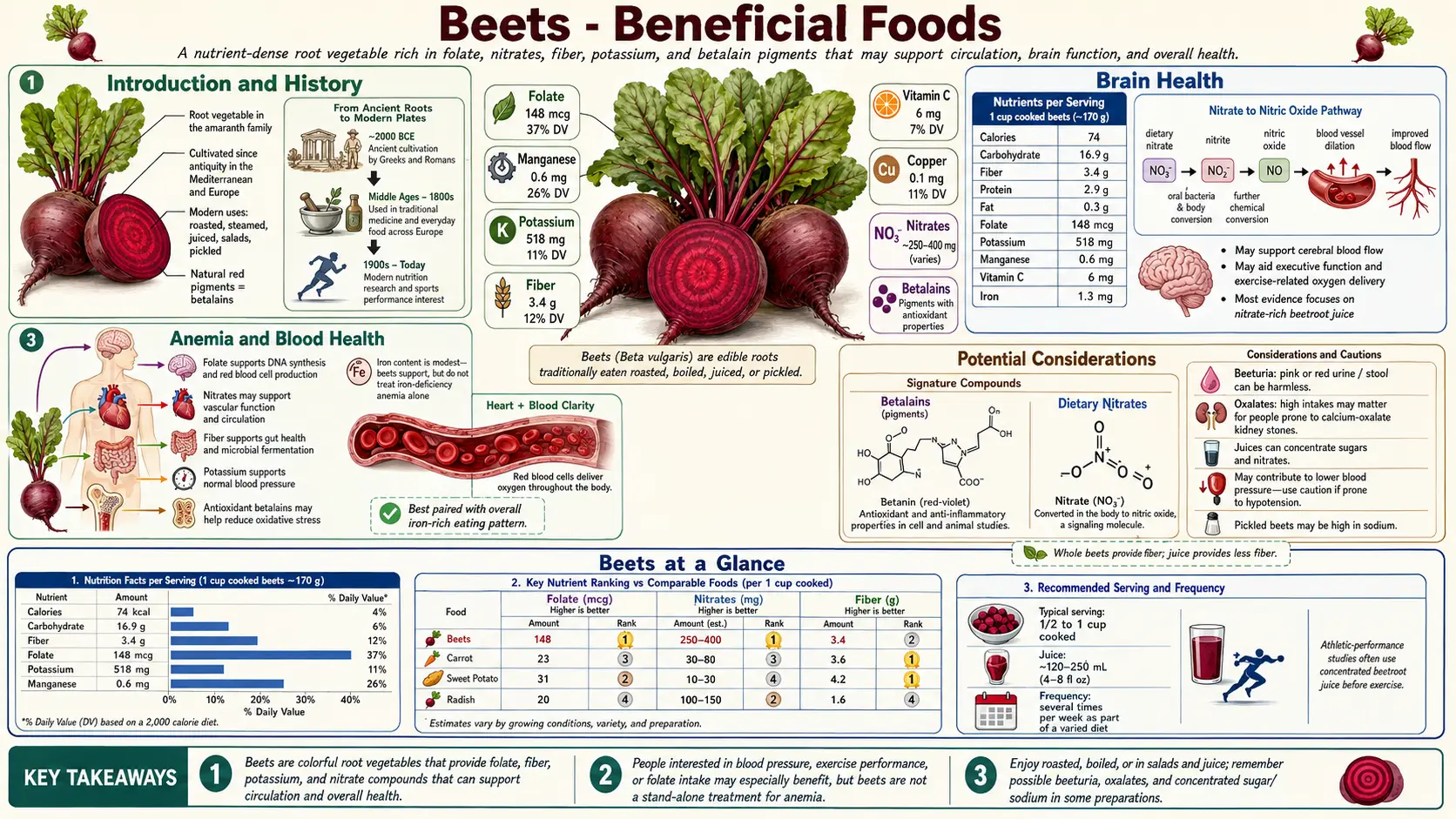
Beets offer an impressive nutritional profile that explains their growing reputation as a superfood. One cup (approximately 136 grams) of raw beets provides roughly 58 calories, 13 grams of carbohydrates, 3.8 grams of dietary fiber, and 2.2 grams of protein. While modest in macronutrient content, beets deliver a remarkable concentration of vitamins, minerals, and unique phytonutrients that are difficult to obtain from other food sources. Their deep crimson color signals the presence of powerful bioactive pigments found in very few other foods.
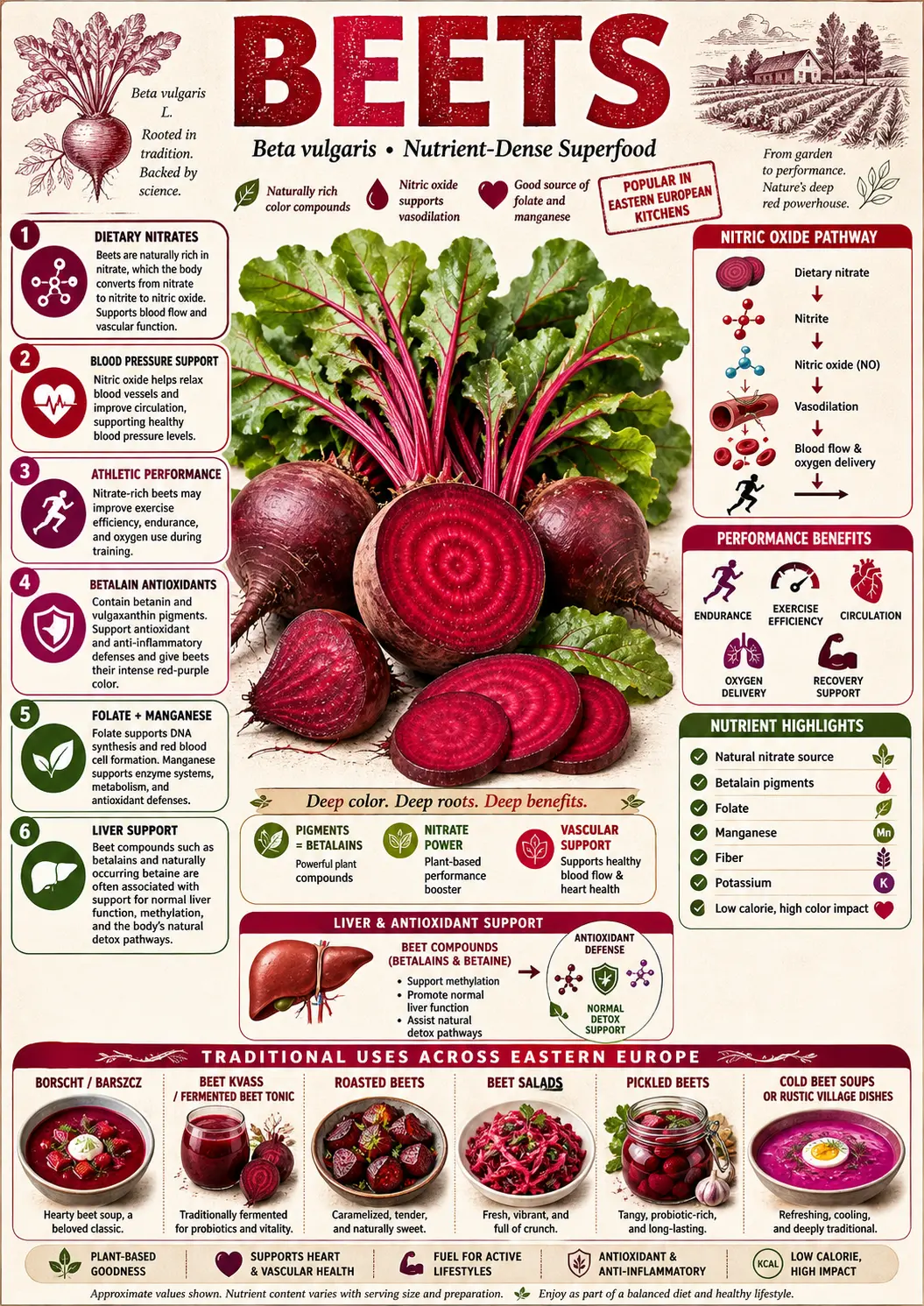
Among the most notable compounds in beets are dietary nitrates, with concentrations ranging from 110 to 3,670 milligrams per kilogram of fresh weight depending on growing conditions. These naturally occurring nitrates are the primary driver behind many of beets' cardiovascular and performance-enhancing benefits. Beets are also one of the richest dietary sources of betalains, the red-violet pigments (betacyanins) and yellow pigments (betaxanthins) responsible for their striking color. Betalains are potent antioxidants and anti-inflammatory agents with bioactivities distinct from other common plant pigments.
In terms of vitamins, one cup of raw beets provides approximately 148 micrograms of folate (37% of the daily value), making beets one of the best whole-food sources of this essential B vitamin. Folate plays critical roles in DNA synthesis, cell division, and red blood cell formation. Beets also supply about 6.7 milligrams of vitamin C (11% DV), which supports immune function and collagen synthesis. The manganese content is notable at 0.45 milligrams (20% DV), a trace mineral essential for bone health, metabolism, and antioxidant defense via superoxide dismutase.
The mineral profile of beets extends well beyond manganese. One cup provides approximately 442 milligrams of potassium (13% DV), a critical electrolyte for blood pressure regulation and heart rhythm. Beets contain about 1.09 milligrams of iron (6% DV), along with smaller but meaningful amounts of magnesium (31 milligrams), phosphorus (54 milligrams), zinc (0.48 milligrams), and copper (0.1 milligrams). The combination of iron and folate makes beets particularly valuable for supporting healthy blood cell production. Additionally, beets contain betaine (trimethylglycine), a compound that supports liver function and cellular hydration.
The fiber content in beets deserves special attention. The 3.8 grams of fiber per cup includes both soluble and insoluble forms. Soluble fiber, including pectin, helps regulate blood sugar and cholesterol levels, while insoluble fiber promotes healthy bowel movements and feeds beneficial gut bacteria. This dual fiber content, combined with the unique phytonutrient profile, makes beets a nutritionally complex food that delivers benefits far beyond what their basic macronutrient numbers might suggest.
Nitric Oxide and Blood Pressure
The relationship between beets and blood pressure centers on a remarkable biochemical pathway: the conversion of dietary nitrate into nitric oxide (NO). When beets are consumed, the inorganic nitrate they contain is absorbed in the upper gastrointestinal tract and concentrated in the salivary glands, where it is secreted back into the mouth. Oral bacteria on the tongue then reduce the nitrate to nitrite through enzymatic action. This nitrite is subsequently swallowed and either absorbed into the bloodstream or further converted to nitric oxide in the acidic environment of the stomach and in tissues throughout the body.
Nitric oxide is one of the most important signaling molecules in cardiovascular physiology. It causes the smooth muscle cells lining blood vessel walls to relax, a process known as vasodilation. When blood vessels dilate, their internal diameter increases, reducing the resistance to blood flow and consequently lowering blood pressure. This is the same mechanism targeted by pharmaceutical drugs such as nitroglycerin, but dietary nitrate from beets provides a gentler, sustained delivery that can produce meaningful blood pressure reductions without the side effects associated with medications.
Clinical research has consistently demonstrated the blood-pressure-lowering effects of beetroot consumption. A landmark 2008 study published in Hypertension showed that drinking 500 milliliters of beetroot juice reduced systolic blood pressure by an average of 10.4 mmHg within three hours, with effects lasting up to 24 hours. A subsequent meta-analysis published in the Journal of Nutrition in 2013, which pooled data from 16 clinical trials, concluded that inorganic nitrate and beetroot juice supplementation were associated with significant reductions in systolic blood pressure averaging 4.4 mmHg.
The magnitude of blood pressure reduction from beet consumption is clinically significant. Research published in The BMJ has estimated that a sustained 2 mmHg reduction in systolic blood pressure across a population could reduce stroke mortality by 10% and coronary heart disease mortality by 7%. The 4-10 mmHg reductions observed in beetroot studies therefore represent a meaningful cardiovascular benefit. These effects appear to be most pronounced in individuals with elevated blood pressure, though healthy individuals also experience measurable improvements in vascular function and blood flow.
It is important to note that the nitrate-nitrite-nitric oxide pathway depends on oral bacteria. Studies have shown that using antibacterial mouthwash can eliminate the blood-pressure-lowering effect of dietary nitrate by destroying the bacteria responsible for the initial nitrate-to-nitrite conversion step. This finding underscores the importance of the oral microbiome in mediating the cardiovascular benefits of beet consumption and suggests that individuals seeking these benefits should avoid using antiseptic mouthwash immediately before or after consuming beets or beet juice.
Athletic Performance
Beetroot juice has emerged as one of the most well-studied natural ergogenic aids in sports nutrition. The performance-enhancing effects stem primarily from the same nitrate-to-nitric-oxide pathway that drives cardiovascular benefits. In exercising muscles, nitric oxide improves the efficiency of mitochondria, the cellular powerhouses responsible for aerobic energy production. By reducing the oxygen cost of exercise, dietary nitrate from beets allows athletes to perform the same amount of work while consuming less oxygen, effectively improving exercise economy by 3 to 5 percent.
The pioneering research in this field came from Professor Andrew Jones and his team at the University of Exeter. Their 2009 study, published in the Journal of Applied Physiology, demonstrated that drinking 500 milliliters of beetroot juice daily for six days reduced the oxygen cost of submaximal cycling by 19% and extended time to exhaustion by 16%. These findings were groundbreaking because few nutritional interventions had ever shown such dramatic improvements in exercise efficiency. Subsequent studies confirmed these results and extended them to various exercise modalities, including running, rowing, and swimming.
Time trial performance, a highly relevant measure of real-world athletic competition, has also shown improvement with beetroot supplementation. A 2011 study found that trained cyclists who consumed beetroot juice improved their 10-kilometer time trial performance by 2.8%, while a 16.1-kilometer time trial showed a 2.7% improvement. In competitive sport, where the margin between first and second place is often less than 1%, a 2-3% improvement is enormous. Research has also shown benefits in high-intensity intermittent exercise, such as repeated sprints in team sports like soccer and basketball.
The performance benefits of beetroot appear to be most significant in recreational and moderately trained athletes, with somewhat smaller effects observed in elite athletes. This may be because highly trained individuals already have optimized nitric oxide production and vascular function. However, even among elite athletes, benefits have been documented, particularly at altitude or in hypoxic conditions where oxygen availability is limited. The nitrate from beets helps compensate for reduced oxygen availability, making beetroot juice a popular supplement among altitude training camps and mountaineering expeditions.
Optimal timing for athletic performance involves consuming beetroot juice approximately two to three hours before exercise, which corresponds to the peak in plasma nitrite levels. Both acute (single dose) and chronic (multiple days) supplementation strategies have shown benefits, though some research suggests that a loading period of three to six days may maximize the ergogenic effect. The typical effective dose used in research is 300 to 600 milligrams of nitrate, equivalent to roughly 500 milliliters of beetroot juice or 70 milliliters of concentrated beetroot shot.
Heart Health
The cardiovascular benefits of beets extend well beyond their blood-pressure-lowering effects. Beets support heart health through multiple synergistic mechanisms, including anti-inflammatory action, improvement of endothelial function, enhancement of blood flow, and reduction of oxidative stress in the cardiovascular system. This multifaceted approach to cardiovascular protection makes beets one of the most heart-friendly foods available, addressing several of the key risk factors that contribute to heart disease, the leading cause of death worldwide.
Endothelial function, the health and responsiveness of the cells lining blood vessels, is a critical determinant of cardiovascular risk. Dysfunction of the endothelium is considered an early event in the development of atherosclerosis. Research has demonstrated that dietary nitrate from beets improves endothelial function by increasing nitric oxide bioavailability. A 2015 study in the American Journal of Clinical Nutrition found that daily beetroot juice consumption for four weeks improved flow-mediated dilation (a standard measure of endothelial function) by 20% in older adults with risk factors for cardiovascular disease.
Chronic inflammation plays a central role in the initiation and progression of atherosclerosis. The betalain pigments in beets possess significant anti-inflammatory properties that may help protect the cardiovascular system. Research has shown that betalains inhibit the activity of cyclooxygenase (COX) enzymes, the same targets of anti-inflammatory drugs like ibuprofen. By reducing vascular inflammation, beets may help prevent the formation and rupture of atherosclerotic plaques that cause heart attacks and strokes.
Beets also contribute to heart health through their effects on blood lipids and platelet function. Some studies have suggested that regular beet consumption may help reduce LDL cholesterol oxidation, a key step in the development of arterial plaque. Additionally, nitric oxide derived from dietary nitrate has antiplatelet effects, reducing the tendency of blood to form dangerous clots. The combination of improved blood flow, reduced inflammation, better endothelial function, and modest antiplatelet activity creates a comprehensive cardiovascular protection profile that few other single foods can match.
The potassium content of beets further supports heart health by helping to regulate heart rhythm and counterbalance the blood-pressure-raising effects of sodium. The folate in beets helps lower homocysteine levels, an amino acid that at elevated concentrations is associated with increased cardiovascular risk. Together, these nutritional components work alongside the bioactive compounds in beets to create a food that addresses virtually every major modifiable risk factor for cardiovascular disease.
Anti-Inflammatory Properties
Beets owe much of their anti-inflammatory power to betalains, a class of pigments found almost exclusively in beets and a small number of other plants, including prickly pear cactus and Swiss chard. Unlike the anthocyanins found in berries and red wine or the carotenoids in carrots and tomatoes, betalains represent a chemically distinct family of pigments with unique biological activities. The two main subgroups are betacyanins (red-violet pigments, primarily betanin) and betaxanthins (yellow-orange pigments, primarily vulgaxanthin I and II). Together, these compounds give beets their characteristic deep red color and provide potent anti-inflammatory effects.
Betanin, the most abundant betalain in red beets, has been extensively studied for its anti-inflammatory mechanisms. Research published in the journal Food Chemistry demonstrated that betanin inhibits the activity of nuclear factor kappa B (NF-kB), a master transcription factor that controls the expression of dozens of genes involved in the inflammatory response. When NF-kB is chronically activated, it drives the production of pro-inflammatory cytokines such as tumor necrosis factor alpha (TNF-alpha), interleukin-1 beta (IL-1B), and interleukin-6 (IL-6). By suppressing NF-kB activation, betanin helps reduce the cascade of inflammatory signaling that underlies many chronic diseases.
Vulgaxanthin, the yellow betaxanthin pigment in beets, complements the anti-inflammatory action of betanin through additional mechanisms. Studies have shown that vulgaxanthin inhibits cyclooxygenase-2 (COX-2) enzyme activity, reducing the production of prostaglandins that promote pain, swelling, and inflammation. In laboratory studies, beet extracts rich in both betanin and vulgaxanthin demonstrated anti-inflammatory activity comparable to synthetic COX inhibitors, though at concentrations achievable through dietary intake rather than supplementation alone.
The clinical relevance of beets' anti-inflammatory properties has been examined in human studies. A study published in the European Journal of Nutrition found that participants who consumed 250 milliliters of beetroot juice daily for two weeks showed significant reductions in C-reactive protein (CRP) and other inflammatory markers. Individuals with osteoarthritis have reported reduced joint pain and stiffness with regular beet consumption, consistent with the anti-inflammatory mechanisms observed in laboratory research. These findings suggest that beets may serve as a useful dietary strategy for managing chronic inflammatory conditions.
Beyond the betalains, beets contain additional anti-inflammatory compounds including betaine (trimethylglycine) and various phenolic acids. Betaine has been shown to reduce inflammatory markers in both animal and human studies, particularly in the context of metabolic syndrome and non-alcoholic fatty liver disease. The combined anti-inflammatory effects of betalains, betaine, and phenolic compounds make beets a uniquely powerful food for combating the chronic low-grade inflammation that underlies conditions ranging from heart disease and diabetes to neurodegenerative disorders and cancer.
Brain Health
The brain is one of the most metabolically demanding organs in the body, consuming approximately 20% of the body's oxygen supply despite representing only 2% of total body weight. Adequate cerebral blood flow is essential for delivering oxygen and nutrients to brain cells and for removing metabolic waste products. Nitric oxide, produced from the dietary nitrate in beets, is a potent vasodilator that improves blood flow throughout the body, including to the brain. This enhanced cerebral perfusion may help maintain cognitive function, particularly in regions of the brain that are vulnerable to age-related decline.
Research published in Nitric Oxide: Biology and Chemistry used MRI imaging to demonstrate that older adults who consumed a high-nitrate diet including beetroot juice showed increased blood flow to the frontal lobe, a brain region associated with executive function, decision-making, and working memory. This area is among the first to show reduced perfusion with aging and is particularly affected in early-stage dementia. The finding that dietary nitrate can selectively enhance blood flow to this vulnerable region suggests a potential mechanism by which beet consumption could help preserve cognitive function in older adults.
A 2016 study published in the Journals of Gerontology examined the combined effects of beetroot juice and exercise on brain neuroplasticity in older adults. Participants who consumed beetroot juice before moderate-intensity walking exercise showed brain connectivity patterns that more closely resembled those of younger adults compared to those who exercised without beetroot supplementation. The researchers hypothesized that the enhanced nitric oxide availability from beets amplified the neurovascular coupling response during exercise, leading to greater benefits for brain health.
The potential role of beets in dementia prevention is an active area of research. Alzheimer's disease and vascular dementia are both characterized by reduced cerebral blood flow in their early stages, often years before clinical symptoms appear. By improving cerebral perfusion and reducing vascular inflammation, the nitrate and betalains in beets may help address two of the key pathological processes underlying these devastating conditions. Additionally, the antioxidant properties of betalains may help protect brain cells from oxidative damage, which accumulates with age and contributes to neurodegeneration.
Beyond the vascular mechanisms, beets may support brain health through their folate content. Adequate folate status is essential for neurotransmitter synthesis and for preventing elevated homocysteine levels, which have been associated with increased risk of cognitive decline and Alzheimer's disease. The betaine in beets also serves as a methyl donor in the conversion of homocysteine to methionine, further supporting healthy homocysteine metabolism. This combination of vascular, antioxidant, and nutritional mechanisms positions beets as a valuable food for long-term brain health maintenance.
Liver Health and Detoxification
The liver is the body's primary organ of detoxification, responsible for processing and neutralizing thousands of potentially harmful compounds encountered through diet, environment, and normal metabolism. Beets have a long history of use in traditional medicine for supporting liver function, and modern research has begun to validate these traditional claims. The key liver-supportive compounds in beets include betaine, betalains, pectin, and various antioxidants that work together to protect liver cells and enhance detoxification pathways.
Betaine (trimethylglycine), found in high concentrations in beets, plays a critical role in liver health. As a methyl donor, betaine participates in the methylation cycle that is essential for Phase II liver detoxification, the process by which the liver conjugates toxic metabolites with methyl groups, sulfate, or other molecules to make them water-soluble for excretion. Research published in the American Journal of Clinical Nutrition has shown that betaine supplementation can reduce liver fat accumulation, improve liver enzyme levels, and decrease markers of liver inflammation in individuals with non-alcoholic fatty liver disease (NAFLD).
Non-alcoholic fatty liver disease affects an estimated 25% of the global population and is closely linked to obesity, insulin resistance, and metabolic syndrome. Animal studies have demonstrated that beetroot extract can significantly reduce liver fat content, improve insulin sensitivity, and decrease oxidative stress markers in the liver. A study in the World Journal of Gastroenterology found that rats fed a high-fat diet supplemented with beetroot showed 40% less liver fat accumulation compared to controls. While human clinical trials are still limited, these findings are promising for the millions of people affected by fatty liver conditions.
The pectin fiber in beets also contributes to liver health by binding to toxins, heavy metals, and bile acids in the digestive tract, reducing the burden on the liver for processing these substances. By facilitating the elimination of toxins through the gastrointestinal tract rather than requiring hepatic processing, pectin effectively reduces the liver's workload. Additionally, pectin supports the growth of beneficial gut bacteria that produce short-chain fatty acids, which have been shown to improve liver function through the gut-liver axis.
The betalain pigments in beets provide direct antioxidant protection to liver cells. The liver generates large quantities of reactive oxygen species (ROS) as a byproduct of its detoxification activities, making it particularly vulnerable to oxidative damage. Betalains have been shown to upregulate the expression of antioxidant enzymes including glutathione peroxidase and superoxide dismutase within liver tissue. This enhanced antioxidant defense helps protect hepatocytes (liver cells) from damage during intense detoxification activity and may help prevent the progression of fatty liver disease to more serious conditions such as non-alcoholic steatohepatitis (NASH) and cirrhosis.
Cancer Prevention
The potential cancer-preventive properties of beets have garnered increasing scientific attention, with research focusing primarily on the bioactive effects of betalains and other phytochemicals found in the root. Laboratory studies have demonstrated that beet extracts can inhibit the growth and proliferation of cancer cells through multiple mechanisms, including induction of apoptosis (programmed cell death), inhibition of cell division, suppression of angiogenesis (new blood vessel formation that feeds tumors), and reduction of oxidative DNA damage that can lead to cancerous mutations.
Studies on prostate cancer cells have shown particularly promising results. Research published in the journal Anti-Cancer Agents in Medicinal Chemistry found that betanin from beets induced apoptosis in human prostate cancer cells while leaving healthy cells relatively unaffected. The mechanism involved activation of caspase enzymes, the molecular executioners of programmed cell death, and downregulation of anti-apoptotic proteins that cancer cells use to evade destruction. Similar results have been observed in breast cancer cell lines, where beet extract reduced cell viability in a dose-dependent manner.
Pancreatic cancer, one of the most aggressive and difficult-to-treat malignancies, has also been the subject of beet research. A 2014 study demonstrated that beetroot extract inhibited the growth of pancreatic cancer cells and enhanced their sensitivity to chemotherapy drugs. The researchers attributed these effects to the combined action of betalains and phenolic compounds that disrupted multiple signaling pathways simultaneously, making it more difficult for cancer cells to develop resistance. This multi-target approach is a key advantage of whole-food compounds over single-molecule pharmaceutical agents.
The antioxidant mechanisms of beets contribute to cancer prevention at the earliest stages by protecting DNA from oxidative damage. Reactive oxygen species can cause mutations in tumor suppressor genes and oncogenes, initiating the process of carcinogenesis. Betalains, with their potent free-radical-scavenging activity, help neutralize these reactive species before they can damage DNA. Research has shown that betalains are particularly effective at scavenging certain types of reactive oxygen and nitrogen species, including peroxynitrite, a highly damaging compound associated with chronic inflammation and cancer development.
While laboratory studies are encouraging, it is essential to note that most cancer research on beets has been conducted in cell cultures and animal models. Large-scale human clinical trials specifically examining beet consumption and cancer outcomes are still needed. Nevertheless, the epidemiological evidence supporting high vegetable intake for cancer prevention, combined with the specific anticancer mechanisms demonstrated for beet compounds, provides a strong rationale for including beets as part of a cancer-preventive dietary pattern. The unique betalain compounds in beets offer bioactivities not found in other commonly consumed vegetables, making them a valuable addition to a diverse, plant-rich diet.
Digestive Health
Beets support digestive health through their fiber content, unique phytonutrients, and beneficial effects on the gut microbiome. One cup of raw beets provides approximately 3.8 grams of dietary fiber, a blend of soluble and insoluble forms that serve complementary functions in the digestive tract. Insoluble fiber adds bulk to stool and promotes regular bowel movements, helping to prevent constipation. Soluble fiber, particularly pectin, forms a gel-like substance that slows digestion, promotes satiety, and serves as a prebiotic food source for beneficial gut bacteria.
The prebiotic effects of beet fiber are significant for overall gut health. When beneficial bacteria in the colon ferment soluble fiber from beets, they produce short-chain fatty acids (SCFAs) including butyrate, propionate, and acetate. Butyrate is the primary energy source for colonocytes (cells lining the colon) and has been shown to strengthen the intestinal barrier, reduce inflammation in the gut lining, and even exert anti-cancer effects in the colon. Regular consumption of prebiotic-rich foods like beets helps maintain a diverse and healthy gut microbiome, which is increasingly recognized as essential for overall health.
Glutamine, an amino acid present in beets, plays a crucial role in maintaining the integrity of the intestinal lining. The cells of the small intestine rely heavily on glutamine as their primary fuel source, and adequate glutamine availability is essential for the rapid turnover and repair of the gut epithelium. Research has shown that glutamine helps strengthen the tight junctions between intestinal cells, reducing intestinal permeability (sometimes called "leaky gut"). By supporting the structural integrity of the gut barrier, glutamine from beets may help prevent the translocation of bacteria and toxins from the gut into the bloodstream.
Beet greens, the leafy tops of the beet plant, are an often-overlooked component that provides additional digestive benefits. Beet greens contain even more fiber per serving than the root and are rich in compounds that stimulate bile production. Adequate bile flow is essential for the digestion and absorption of dietary fats and fat-soluble vitamins. The combination of root and greens provides a comprehensive package of digestive support, from the prebiotic fiber that nourishes gut bacteria to the bile-stimulating compounds that enhance nutrient absorption.
For individuals with sensitive digestive systems, beets can be introduced gradually. Some people experience increased gas or bloating when first adding high-fiber foods to their diet, and the natural sugars in beets (including raffinose) can be fermented by gut bacteria, producing gas. Cooking beets softens the fiber and may improve digestibility for those with gastrointestinal sensitivity. Fermented beet preparations such as beet kvass also support digestive health by providing both the beneficial compounds of beets and the probiotics generated during fermentation.
Anti-Aging
The anti-aging properties of beets are rooted in the potent antioxidant activity of their betalain pigments, which combat the oxidative stress that drives cellular aging. Oxidative damage to cellular components including DNA, proteins, and lipid membranes accumulates over a lifetime and is considered one of the primary mechanisms of biological aging. Betalains have demonstrated exceptional free-radical-scavenging capacity in laboratory studies, with some research suggesting that they are more effective than many well-known antioxidants, including ascorbic acid and certain flavonoids, at neutralizing specific types of reactive oxygen species.
Telomere length, a biomarker of biological age, may be influenced by the antioxidant compounds in beets. Telomeres are protective caps at the ends of chromosomes that shorten with each cell division and with exposure to oxidative stress. When telomeres become critically short, cells enter a state of senescence or die, contributing to tissue aging and age-related diseases. Antioxidants that reduce oxidative stress can slow the rate of telomere shortening. While direct studies on beet consumption and telomere length in humans are limited, the powerful antioxidant profile of beets suggests a protective effect consistent with research on other antioxidant-rich foods.
Mitochondrial function declines with age, leading to reduced energy production, increased oxidative stress, and impaired cellular repair mechanisms. The nitrate in beets has been shown to improve mitochondrial efficiency by reducing the amount of oxygen needed to produce a given amount of cellular energy (ATP). A study published in Cell Metabolism demonstrated that dietary nitrate improved mitochondrial coupling efficiency, meaning that mitochondria produced more energy per unit of oxygen consumed. This enhanced efficiency may help counteract the age-related decline in mitochondrial function and help maintain cellular energy production as we age.
The anti-aging benefits of beets also manifest in skin health. Oxidative stress and chronic inflammation are major drivers of skin aging, contributing to wrinkle formation, loss of elasticity, and age spots. The betalains and vitamin C in beets provide antioxidant protection to skin cells, while the anti-inflammatory properties help reduce the chronic low-grade inflammation (sometimes called "inflammaging") that accelerates skin deterioration. Some dermatological research has suggested that diets rich in nitrate-containing vegetables are associated with improved skin microcirculation, delivering more oxygen and nutrients to skin cells.
The betaine in beets contributes to anti-aging through its role as an osmolyte, a molecule that helps cells maintain proper hydration under stress conditions. As cells age, they become less efficient at maintaining fluid balance, which can impair cellular function and accelerate degradation. Betaine helps stabilize cellular proteins and membranes, protecting them from damage caused by dehydration, heat stress, and other environmental insults. This cellular protection mechanism, combined with the antioxidant and mitochondrial benefits, makes beets a valuable dietary component in a comprehensive anti-aging nutrition strategy.
Anemia and Blood Health
Beets have been traditionally associated with blood health, and modern nutritional science supports this connection through several mechanisms. While beets are not the richest source of iron among foods, they provide a meaningful contribution of approximately 1.09 milligrams per cup of raw beet. More importantly, beets contain several nutrients that work synergistically to support healthy red blood cell production and prevent anemia. The combination of iron, folate, vitamin C, and betaine creates a comprehensive blood-building nutritional package that is greater than the sum of its individual parts.
Folate is arguably the most important blood-health nutrient in beets. With approximately 148 micrograms per cup (37% of the daily value), beets are among the richest whole-food sources of this essential vitamin. Folate is required for the synthesis of DNA in rapidly dividing cells, including the precursor cells in bone marrow that develop into red blood cells. Folate deficiency leads to megaloblastic anemia, a condition in which red blood cells are abnormally large and immature, unable to carry oxygen efficiently. Regular beet consumption provides substantial folate to support normal red blood cell maturation and prevent this form of anemia.
The vitamin C in beets enhances the absorption of non-heme iron (the form of iron found in plant foods) from the digestive tract. Non-heme iron absorption is typically much lower than that of heme iron from animal sources, but vitamin C can increase absorption by two to six fold by converting ferric iron (Fe3+) to the more absorbable ferrous form (Fe2+). When beets are consumed as part of a meal that includes other iron-rich plant foods, the vitamin C they contain helps maximize iron uptake, making the overall dietary iron more bioavailable.
Betaine, the unique compound abundant in beets, also contributes to blood health through its role in the methylation cycle. Betaine serves as an alternative methyl donor for the conversion of homocysteine to methionine, a process that is essential for the production of S-adenosylmethionine (SAMe), the body's universal methyl donor. Proper methylation is required for the synthesis of hemoglobin and for the maturation of red blood cells. Elevated homocysteine, which betaine helps reduce, has been associated with impaired red blood cell production and increased risk of various types of anemia.
In traditional medicine systems around the world, beet juice has long been prescribed as a blood tonic, particularly for women during menstruation and pregnancy when iron demands are elevated. While beet juice alone cannot treat severe iron-deficiency anemia (which typically requires iron supplementation or dietary changes involving heme iron sources), it can serve as a valuable complementary food for maintaining healthy blood parameters. The combined iron, folate, vitamin C, and betaine content makes beets an excellent choice for individuals seeking to support their blood health through whole-food nutrition.
Stamina and Energy
Beyond the acute performance benefits observed in athletic studies, regular beet consumption may support sustained energy levels and stamina through effects on mitochondrial function and cellular energy metabolism. The dietary nitrate in beets, once converted to nitric oxide, improves the efficiency of mitochondrial ATP production. Research has shown that nitric oxide interacts with cytochrome c oxidase (Complex IV) and other components of the electron transport chain, reducing proton leakage and improving the coupling between oxygen consumption and ATP synthesis. This means that cells can produce more energy per unit of oxygen consumed, translating to improved stamina and reduced fatigue.
Mitochondrial biogenesis, the process by which cells create new mitochondria, may also be stimulated by regular dietary nitrate intake. A study published in The Journal of Physiology found that nitrate supplementation activated PGC-1 alpha, a master regulator of mitochondrial biogenesis, in skeletal muscle tissue. More mitochondria per cell means greater overall capacity for aerobic energy production, which is fundamental to sustained physical and mental stamina. This effect is particularly relevant for older adults, who experience a natural decline in mitochondrial density and function with aging.
For individuals suffering from chronic fatigue, beets may offer particular benefit. Chronic fatigue syndrome and general fatigue are often associated with impaired mitochondrial function, reduced nitric oxide bioavailability, and chronic inflammation. Beets address all three of these factors simultaneously through their nitrate content (improving NO and mitochondrial efficiency), betalains (reducing inflammation), and betaine (supporting cellular energy metabolism). While beets are not a cure for chronic fatigue syndrome, incorporating them into the diet may help improve energy levels as part of a comprehensive management strategy.
The natural sugars in beets, primarily sucrose, glucose, and fructose, provide a quick source of readily available energy. Unlike refined sugar, the sugars in whole beets are accompanied by fiber, which slows their absorption and prevents rapid blood sugar spikes and subsequent crashes. This balanced delivery of natural sugars, combined with the mitochondrial-enhancing effects of nitrate, provides both immediate and sustained energy. Many endurance athletes report that beetroot juice provides a sustained energy boost without the jitteriness or crash associated with caffeine or other stimulants.
The B vitamins in beets, particularly folate and small amounts of B6, also contribute to energy metabolism. B vitamins serve as coenzymes in the metabolic pathways that convert food into cellular energy, including the citric acid cycle and beta-oxidation of fatty acids. The iron in beets supports oxygen transport in the blood, which is essential for aerobic energy production in all tissues. Together, these nutrients create a food that supports energy production at multiple levels, from oxygen delivery to mitochondrial efficiency to metabolic cofactor supply.
Kidney Health
The relationship between beets and kidney health is nuanced, involving both potential benefits and considerations that deserve careful attention. On the beneficial side, the nitric oxide derived from dietary nitrate in beets can improve renal blood flow by dilating the blood vessels that supply the kidneys. Adequate renal perfusion is essential for maintaining kidney function, and research has shown that nitric oxide deficiency contributes to the progression of chronic kidney disease. By enhancing nitric oxide availability, moderate beet consumption may help support healthy kidney circulation.
Beeturia, the phenomenon of red or pink urine after consuming beets, is a harmless condition that affects approximately 10 to 14 percent of the population. It results from the excretion of betalain pigments, particularly betanin, through the kidneys. Beeturia is not a sign of kidney damage or dysfunction; rather, it reflects individual variation in the metabolism and absorption of betalain compounds. Factors that increase the likelihood of beeturia include low stomach acid, which allows more intact betalains to reach the small intestine and be absorbed into the bloodstream for subsequent renal excretion.
The anti-inflammatory and antioxidant properties of beet compounds may help protect the kidneys from damage caused by oxidative stress and inflammation. Animal studies have shown that beetroot extract reduced markers of kidney damage in models of drug-induced nephrotoxicity. The betalains in beets appear to protect renal tubular cells from oxidative injury, potentially reducing the risk of acute kidney injury in situations of oxidative stress such as contrast dye exposure during medical imaging procedures. These findings, while primarily from animal research, suggest a protective role for beet compounds in kidney health.
However, beets contain oxalates, naturally occurring compounds that can bind with calcium in the body to form calcium oxalate, the most common component of kidney stones. Individuals with a history of calcium oxalate kidney stones are often advised to moderate their intake of high-oxalate foods, which include beets, spinach, rhubarb, and chocolate. The oxalate content of beets is approximately 675 milligrams per cup of raw beet, placing them in the high-oxalate category. Cooking beets and discarding the cooking water can reduce oxalate content by approximately 30%, and consuming beets with calcium-rich foods may help bind oxalates in the gut before they can be absorbed.
For individuals with healthy kidneys and no history of oxalate kidney stones, moderate beet consumption is generally considered safe and potentially beneficial. Those with chronic kidney disease should consult with their healthcare provider, as the potassium content of beets (442 milligrams per cup) may need to be considered in the context of overall potassium intake management. Balancing the potential vascular benefits of dietary nitrate against individual kidney health status is important for making informed decisions about beet consumption.
Beet Greens
Beet greens, the leafy tops attached to the beet root, are among the most nutritionally dense leafy greens available, yet they are frequently discarded by consumers unaware of their exceptional nutritional value. Gram for gram, beet greens are more nutritious than the root in several key nutrients, making them a valuable food in their own right. Historically, beet greens were the primary edible portion of the plant before selective breeding produced the enlarged, sweet roots we consume today. Reclaiming beet greens as a regular part of the diet represents a return to traditional food use and an opportunity to reduce food waste.
The vitamin K content of beet greens is remarkably high, with one cup of cooked beet greens providing approximately 697 micrograms, which is more than 500% of the daily recommended value. Vitamin K is essential for blood clotting and plays a critical role in bone metabolism by activating osteocalcin, a protein involved in calcium deposition in bones. Adequate vitamin K intake has been associated with reduced risk of bone fractures and improved bone mineral density. For individuals taking blood-thinning medications such as warfarin, the high vitamin K content of beet greens is an important dietary consideration that should be discussed with a healthcare provider.
Beet greens are also an excellent source of vitamin A in the form of beta-carotene, providing approximately 5,500 international units per cup of cooked greens (over 100% of the daily value). Beta-carotene is a precursor to retinol, the active form of vitamin A, and serves as a powerful antioxidant in its own right. Adequate vitamin A is essential for vision, immune function, skin health, and cellular differentiation. The combination of high vitamin A and vitamin K content makes beet greens particularly valuable for immune and skeletal health.
The mineral content of beet greens surpasses that of the root, particularly for calcium and iron. One cup of cooked beet greens provides approximately 164 milligrams of calcium (16% DV) and 2.7 milligrams of iron (15% DV), significantly more than an equivalent serving of the root. Beet greens also contain substantial amounts of magnesium, potassium, and manganese. The iron in beet greens, while non-heme, is accompanied by vitamin C that enhances its absorption. For individuals following plant-based diets, beet greens represent an excellent source of these often-challenging nutrients.
Preparing beet greens is simple and versatile. Young, tender leaves can be used raw in salads, while more mature leaves benefit from quick cooking methods such as sauteing with garlic and olive oil, steaming, or adding to soups and stews. Beet greens have a mild, slightly sweet flavor similar to Swiss chard (which is actually a close relative of the beet). When purchasing beets with intact greens, the freshness of the greens is also an indicator of the overall freshness of the root. Storing beet greens separately from the root in the refrigerator helps prevent moisture loss and extends their usable life to several days.
Raw vs Cooked vs Juice
The method of beet preparation significantly influences the bioavailability and retention of key nutrients, making it valuable to understand the trade-offs between raw, cooked, and juiced forms. Raw beets retain the maximum amount of heat-sensitive compounds, including betalains and vitamin C. Betalains begin to degrade at temperatures above 50 degrees Celsius (122 degrees Fahrenheit) and lose significant potency with prolonged cooking at higher temperatures. Studies have shown that boiling beets for 60 minutes can reduce betalain content by up to 50%, while steaming retains more of these valuable pigments.
Nitrate content, the compound responsible for cardiovascular and performance benefits, is relatively stable during cooking. However, boiling beets causes nitrates to leach into the cooking water, reducing the nitrate content of the beet itself by approximately 25 to 30 percent. Roasting and steaming preserve nitrate content more effectively because there is no water to facilitate leaching. For individuals primarily interested in the nitrate-related benefits of beets, roasting or steaming are preferable cooking methods, while those seeking maximum betalain content should emphasize raw consumption or very brief, gentle cooking.
Juicing beets concentrates the soluble nutrients, including nitrate, betalains, folate, and minerals, while removing most of the insoluble fiber. This concentration effect makes beet juice a particularly potent delivery vehicle for these bioactive compounds. Studies comparing whole beet consumption with beet juice have found that juice provides a faster and more pronounced spike in plasma nitrite levels, which may be advantageous for acute applications such as pre-exercise supplementation. However, the removal of fiber eliminates the prebiotic benefits and may lead to faster sugar absorption.
Raw beets offer the complete nutritional package, including intact fiber, maximum betalain content, and full nitrate levels. Grated raw beet adds a sweet, earthy crunch to salads and can be mixed with other vegetables for a nutrient-dense dish. However, raw beets contain more antinutrients, including oxalates and phytic acid, which can reduce mineral absorption. Cooking reduces these antinutrients and also makes certain nutrients more bioavailable by breaking down cell walls and denaturing proteins that may bind minerals.
The optimal approach for most people is to include a variety of beet preparations in the diet. Raw beets in salads provide maximum betalains and intact fiber. Roasted or steamed beets offer improved digestibility and concentrated flavor with good nutrient retention. Fresh beet juice or concentrated beet shots deliver maximum nitrate for cardiovascular and performance applications. Fermented beet preparations such as beet kvass combine the nutritional benefits of beets with the probiotic benefits of fermentation. By rotating between these preparation methods, individuals can maximize the diverse health benefits that beets offer.
Optimal Consumption
Determining the optimal amount of beet consumption depends on individual health goals, overall diet, and personal tolerance. For general health maintenance, consuming one to two cups of beets daily (or the equivalent in juice form) provides a meaningful dose of nitrate, betalains, fiber, and other beneficial compounds. This amount is consistent with the serving sizes used in most clinical studies demonstrating health benefits and fits comfortably within general dietary recommendations for vegetable intake. Regular, consistent consumption appears to provide greater benefits than occasional large doses.
For athletic performance enhancement, the timing of beet juice consumption is critical. Research consistently shows that peak plasma nitrite levels occur approximately two to three hours after ingestion of beetroot juice. Athletes seeking performance benefits should therefore consume their beet juice or concentrated beet shot approximately two to three hours before competition or training. The effective dose used in most performance studies is 300 to 600 milligrams of nitrate, which corresponds to roughly 500 milliliters of beetroot juice or one to two 70-milliliter concentrated beetroot shots. A loading protocol of three to six days of daily consumption before an important event may further enhance the ergogenic effect.
Fermented beet preparations, particularly beet kvass, offer a unique way to consume beets that combines their inherent nutritional benefits with the probiotic advantages of fermentation. Traditional beet kvass is made by combining chopped beets with water and salt, allowing naturally present lactobacillus bacteria to ferment the mixture over several days. The resulting tart, earthy beverage contains beneficial bacteria, organic acids, and many of the bioactive compounds found in fresh beets. Drinking one-quarter to one-half cup of beet kvass daily can support both digestive health and provide the general benefits of beet nutrients.
Incorporating beets into the daily diet can be accomplished through numerous culinary strategies. Grated raw beets add color and nutrition to salads, while roasted beet wedges serve as a satisfying side dish. Beet smoothies combining raw beet with berries, banana, and yogurt create a nutrient-dense breakfast option. Beet hummus, made by blending roasted beets with chickpeas and tahini, provides a visually striking and nutritious dip. Beet chips, made by thinly slicing beets and baking at low temperature, offer a healthy snack alternative. The natural sweetness of beets also makes them suitable for inclusion in baked goods and desserts.
For individuals new to beet consumption, a gradual introduction is advisable. Starting with one-half cup of cooked beets or a small glass of diluted beet juice allows the digestive system to adjust to the fiber and unique compounds. Over one to two weeks, the amount can be gradually increased to the full recommended serving. Those who experience digestive discomfort may find that cooked beets are better tolerated than raw, and that beet juice diluted with water or combined with other vegetable juices (such as carrot or celery) produces fewer gastrointestinal symptoms while still delivering meaningful nutritional benefits.
Potential Considerations
Beeturia, the passage of red or pink urine after eating beets, is the most common and most benign consideration associated with beet consumption. This harmless condition occurs in approximately 10 to 14 percent of the population and is caused by the excretion of betalain pigments through the kidneys. Beeturia is more likely to occur in individuals with low stomach acid (hypochlorhydria) or those who have consumed beets on an empty stomach. While beeturia requires no treatment and poses no health risk, it can cause unnecessary alarm in individuals who are unaware that beets can cause this color change. Red stools can also occur after eating significant amounts of beets and are similarly harmless.
Oxalate content is a more substantive consideration for certain individuals. Beets are among the higher-oxalate foods, containing approximately 675 milligrams of oxalate per cup of raw beet. For the estimated 12% of the population prone to calcium oxalate kidney stones, high-oxalate foods can contribute to stone formation. Individuals with a history of kidney stones should discuss beet consumption with their healthcare provider. Strategies to mitigate oxalate absorption include consuming beets with calcium-rich foods (which bind oxalates in the gut), cooking beets to reduce oxalate content, and maintaining adequate hydration to dilute urinary oxalate concentrations.
Interactions between dietary nitrate from beets and certain medications merit attention. Individuals taking nitrate-based medications for angina (such as nitroglycerin or isosorbide) should exercise caution with concentrated beet juice, as the combined nitric oxide effect could cause excessive blood pressure lowering. Similarly, those on phosphodiesterase-5 (PDE5) inhibitors such as sildenafil should be aware that concurrent high-dose nitrate intake could potentiate hypotensive effects. Blood pressure medications in general may produce enhanced effects when combined with significant dietary nitrate, potentially requiring dosage adjustments under medical supervision.
The natural sugar content of beets is worth considering for individuals managing blood glucose levels. One cup of raw beets contains approximately 9 grams of natural sugar, and beet juice concentrates this sugar while removing the fiber that moderates its absorption. While whole beets have a moderate glycemic index of approximately 61, beet juice has a higher glycemic impact due to the absence of fiber. People with diabetes or insulin resistance should favor whole beets over juice and consume them as part of a mixed meal to slow sugar absorption. The metabolic benefits of beet compounds may actually help improve insulin sensitivity over time, but acute blood sugar management remains an important practical consideration.
Beet juice is notorious for its staining potential, and this practical consideration is worth mentioning. Betalain pigments readily stain skin, clothing, cutting boards, and countertops. Using gloves when handling raw beets, cutting beets on a glass or stainless steel surface, and treating stains promptly with cold water and soap can minimize this issue. Finally, individuals purchasing beetroot juice supplements should choose products from reputable manufacturers that test for nitrate content and purity. The nitrate content of beets varies significantly depending on growing conditions, soil nitrogen levels, and variety, so standardized supplements may provide more consistent dosing than whole food sources for those seeking specific therapeutic effects.
Scientific References
- Webb et al. "Acute blood pressure lowering, vasoprotective, and antiplatelet properties of dietary nitrate via bioconversion to nitrite" Hypertension, 2008. (500 ml beetroot juice reduced systolic blood pressure by 10.4 mmHg within 3 hours via the nitrate-nitrite-NO pathway.)
- Siervo et al. "Inorganic nitrate and beetroot juice supplementation reduces blood pressure in adults: a systematic review and meta-analysis" The Journal of Nutrition, 2013. (Meta-analysis of 16 trials found average systolic blood pressure reduction of 4.4 mmHg with nitrate/beetroot supplementation.)
- Bailey et al. "Dietary nitrate supplementation reduces the O2 cost of low-intensity exercise and enhances tolerance to high-intensity exercise in humans" Journal of Applied Physiology, 2009. (Pioneering study from University of Exeter showing beetroot juice reduced oxygen cost of submaximal exercise and extended time to exhaustion.)
- Lansley et al. "Acute dietary nitrate supplementation improves cycling time trial performance" Medicine and Science in Sports and Exercise, 2011. (Trained cyclists improved time trial performance after consuming beetroot juice containing dietary nitrate.)
- Coles et al. "Nitrate supplementation's improvement of 10-km time-trial performance in trained cyclists" International Journal of Sport Nutrition and Exercise Metabolism, 2012. (Nitrate supplementation improved 10-km cycling time trial performance in trained athletes.)
- Bondonno et al. "Effects of inorganic nitrate and beetroot supplementation on endothelial function: a systematic review and meta-analysis" European Journal of Nutrition, 2015. (Systematic review confirming that nitrate and beetroot supplementation improves vascular endothelial function.)
- Esatbeyoglu et al. "Betanin — a food colorant with biological activity" Molecular Nutrition and Food Research, 2015. (Betanin demonstrated antioxidant and anti-inflammatory activity including NF-kB pathway modulation and COX enzyme inhibition.)
- Rahimi et al. "Improvement of hypertension, endothelial function and systemic inflammation following short-term supplementation with red beet juice: a randomized crossover pilot study" Journal of Human Hypertension, 2016. (Beetroot juice reduced C-reactive protein, TNF-alpha, and other inflammatory markers in participants.)
- Presley et al. "Acute effect of a high nitrate diet on brain perfusion in older adults" Nitric Oxide: Biology and Chemistry, 2011. (MRI imaging showed that high-nitrate diet including beetroot juice increased blood flow to the frontal lobe in older adults.)
- Petrie et al. "Beet root juice: an ergogenic aid for exercise and the aging brain" The Journals of Gerontology, 2017. (Combined beetroot juice and exercise produced brain connectivity patterns resembling those of younger adults in older participants.)
- Abdelmalek et al. "Betaine for nonalcoholic fatty liver disease: results of a randomized placebo-controlled trial" Hepatology, 2009. (Betaine supplementation reduced hepatic steatosis and protected against worsening of fatty liver disease.)
- Kapadia et al. "Synergistic cytotoxicity of red beetroot extract with doxorubicin in human pancreatic, breast and prostate cancer cell lines" Journal of Complementary and Integrative Medicine, 2013. (Beetroot extract inhibited cancer cell growth and enhanced chemotherapy drug sensitivity in pancreatic, breast, and prostate cancer cells.)
- Larsen et al. "Dietary inorganic nitrate improves mitochondrial efficiency in humans" Cell Metabolism, 2011. (Dietary nitrate improved mitochondrial oxidative phosphorylation coupling efficiency in human skeletal muscle.)
- Nisoli et al. "Nitric oxide and AMPK cooperatively regulate PGC-1alpha in skeletal muscle cells" The Journal of Physiology, 2010. (Nitric oxide activates PGC-1 alpha, a master regulator of mitochondrial biogenesis, via cooperation with AMPK in skeletal muscle.)
- Dos Santos Baiao et al. "Beetroot and leaf extracts present protective effects against prostate cancer cells, inhibiting cell proliferation, migration, and growth signaling pathways" Food and Function, 2021. (Beetroot extracts containing betanin induced apoptosis in prostate cancer cells while inhibiting proliferation and migration.)
Research Papers
The following curated PubMed topic searches lead to the peer-reviewed primary literature and systematic reviews that underpin the health claims discussed on this page. Each link opens PubMed in a new tab.
- Beetroot juice and blood pressure: meta-analysis
- Dietary nitrate and endothelial function
- Beetroot and exercise performance: systematic review
- Nitrate-nitrite-nitric oxide pathway
- Betalains in beets and antioxidant activity
- Beetroot and cognitive blood flow
- Beetroot and oxygen consumption
- Dietary nitrate and heart failure
- Beetroot and liver steatosis
- Beetroot fiber and gut motility
Browse all PubMed citations for “Beets”
This content is provided for informational purposes only and does not constitute medical advice. Consult a qualified healthcare provider for personalized dietary guidance.
Connections
- All Food
- Nitric Oxide & Vessel Dilation — interactive animation
- Hypertension
- Spinach
- Kale
- Pomegranate
- Iron
- Potassium
- Vitamin C
- Homocysteine
- Detoxification
- Oxidative Stress
- Anemia
- Cancer
- Diabetes
- Gut-Brain Axis
- Dementia
- Inflammatory Markers
- Blood Pressure
- Oral Microbiome
- Furchgott, Ignarro & Murad — the Nobel-winning nitric-oxide science behind beets and blood pressure