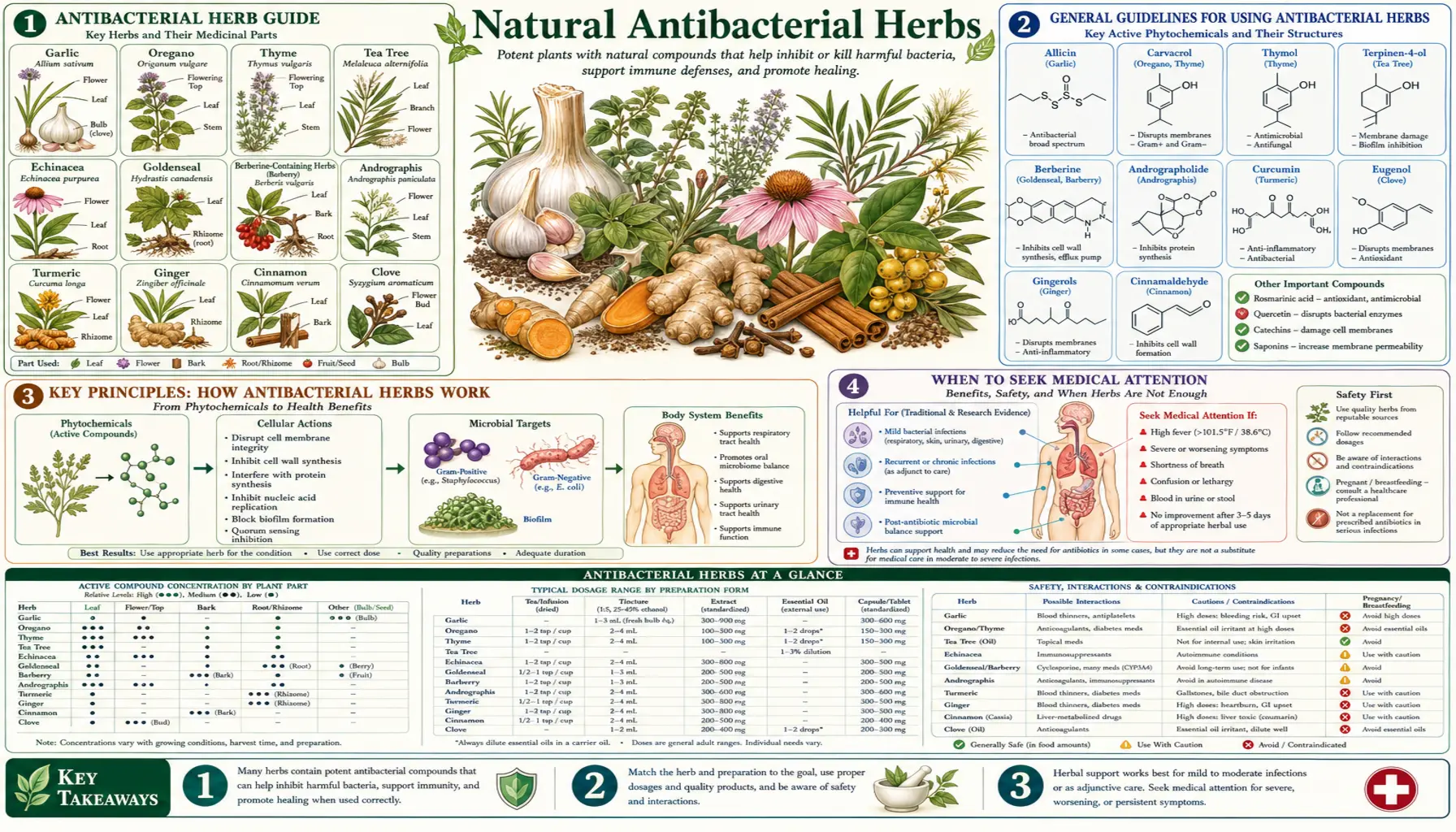
Natural Antibacterial Herbs
For thousands of years, civilizations across every continent have relied on medicinal plants to fight infections long before the discovery of modern antibiotics. Today, with the growing crisis of antibiotic resistance, scientific research is rediscovering what ancient healers knew — that nature provides an extraordinary arsenal of antibacterial compounds. These herbs contain complex phytochemicals that attack bacteria through multiple mechanisms simultaneously, making it far more difficult for pathogens to develop resistance.
Click any herb to learn more about its antibacterial properties, active compounds, and the research behind it.
Table of Contents
- Antibacterial Herb Guide
- How Antibacterial Herbs Work
- General Guidelines for Using Antibacterial Herbs
- Key Principles
- Synergistic Combinations
- When to Seek Medical Attention
- Connections
- Featured Videos
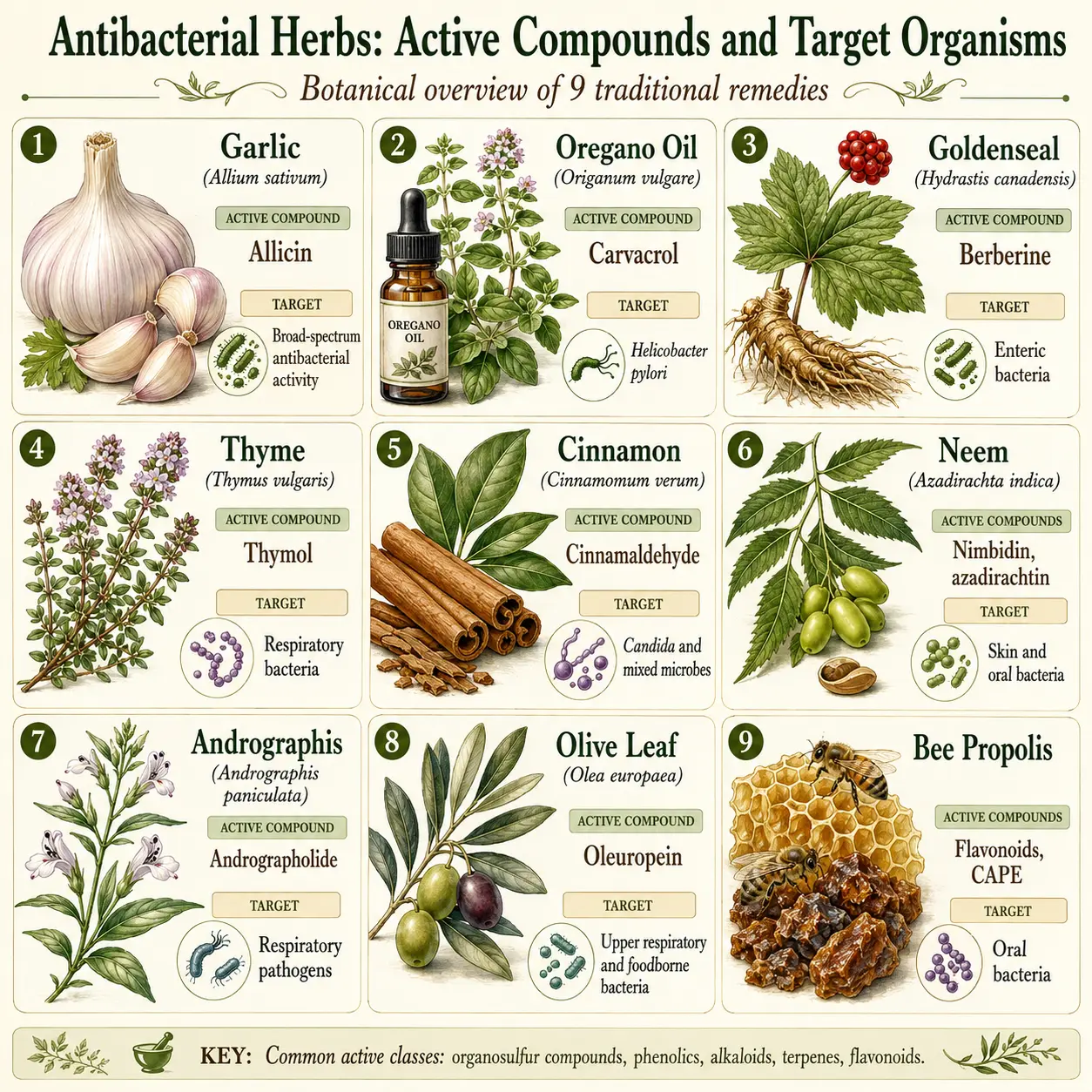
Antibacterial Herb Guide
Oregano
Carvacrol, thymol
Broad-spectrum, MDR bugs
Garlic
Allicin
E. coli, Staph, H. pylori
Thyme
Thymol, carvacrol
Respiratory, oral bacteria
Goldenseal
Berberine
MRSA, C. diff, Candida
Echinacea
Alkylamides, polysaccharides
Immune boost, respiratory
Tea Tree
Terpinen-4-ol
Skin, wounds, MRSA
Turmeric
Curcumin
Anti-inflammatory, Staph
Ginger
Gingerol, shogaol
E. coli, Salmonella, H. pylori
Manuka Honey
Methylglyoxal (MGO)
Wounds, MRSA, biofilm
Clove
Eugenol
Oral bacteria, fungi
Cinnamon
Cinnamaldehyde
E. coli, Listeria, quorum sensing
Barberry
Berberine
GI infections, Candida
Neem
Nimbin, gedunin
Skin, oral, antifungal
Cat’s Claw
Oxindole alkaloids
Immune, anti-inflammatory
Olive Leaf
Oleuropein
Antiviral, antibacterial
Sage
Thujone, 1,8-cineole
Oral, respiratory pathogens
Holy Basil (Tulsi)
Eugenol, ursolic acid
Respiratory, urinary, skin
Rosemary
Carnosic acid, rosmarinic acid
Food safety, Listeria, E. coli
Black Seed
Thymoquinone
MRSA, H. pylori, MDR bacteria
Myrrh
Terpenoids, sesquiterpenes
Wound, oral, parasitic
Andrographis
Andrographolide
Biofilm, respiratory infections
Eucalyptus
1,8-Cineole (eucalyptol)
Respiratory, sinus infections
Pau d’Arco
Lapachol, beta-lapachone
Candida, Staph, anti-inflammatory
How Antibacterial Herbs Work
Unlike pharmaceutical antibiotics that typically target a single bacterial mechanism, medicinal herbs contain dozens of bioactive compounds that attack bacteria through multiple pathways simultaneously. This multi-target approach is why bacteria rarely develop resistance to herbal antibacterials.
Primary Mechanisms of Action
- Cell membrane disruption: Phenolic compounds like carvacrol, thymol, and eugenol insert themselves into bacterial cell membranes, increasing permeability and causing leakage of cellular contents — effectively puncturing the bacterial cell wall.
- Enzyme inhibition: Compounds like allicin (garlic) and berberine (goldenseal) inactivate essential bacterial enzymes required for metabolism, energy production, and DNA replication.
- Biofilm disruption: Many herbs break down the protective biofilm matrices that bacteria form to shield themselves from both immune cells and antibiotics. This is particularly important for chronic and recurrent infections.
- Quorum sensing interference: Compounds like cinnamaldehyde disrupt bacterial communication systems, preventing bacteria from coordinating group behaviors such as virulence factor production and biofilm formation.
- Efflux pump inhibition: Some herbal compounds block the molecular pumps that resistant bacteria use to expel antibiotics, potentially restoring the effectiveness of conventional medications.
General Guidelines for Using Antibacterial Herbs
Preparation Methods
- Herbal teas (infusions): Steep 1–2 teaspoons of dried herb in hot water for 10–15 minutes. Best for mild infections and general immune support.
- Tinctures: Alcohol-based extracts that preserve active compounds. Take as directed, typically 30–60 drops in water, 2–3 times daily.
- Essential oils: Highly concentrated — always dilute before use. 1–2 drops per teaspoon of carrier oil for topical application. Never apply undiluted to skin.
- Capsules and standardized extracts: Most convenient for consistent dosing. Choose products standardized to key active compounds.
- Fresh herb poultices: Crushed fresh herbs applied directly to wounds or skin infections. Cover with clean cloth and change every few hours.
Key Principles
- Start low, go slow: Begin with the lowest recommended dose and increase gradually to assess tolerance.
- Rotation prevents adaptation: Alternate between different antibacterial herbs on 2–3 week cycles to maintain effectiveness and protect gut flora.
- Quality matters: Use organic, third-party tested herbs from reputable sources. Standardized extracts ensure consistent potency.
- Support beneficial bacteria: Take probiotics during and after antibacterial herb protocols to replenish beneficial gut flora.
- Consistency is critical: Take herbs at regular intervals throughout the day rather than in a single large dose, maintaining consistent blood levels of active compounds.
- Food and timing: Most antibacterial herbs are best taken with food to reduce stomach irritation, unless specifically directed otherwise.
Synergistic Combinations
Many antibacterial herbs work more powerfully together than alone. Well-researched synergistic pairings include:
- Oregano + Thyme: Carvacrol and thymol together produce enhanced membrane disruption beyond what either achieves alone.
- Garlic + Turmeric: Allicin and curcumin target different bacterial defense systems simultaneously.
- Goldenseal + Echinacea: Berberine's direct antibacterial action combined with echinacea's immune stimulation creates a dual offensive.
- Cinnamon + Clove: Cinnamaldehyde and eugenol disrupt both quorum sensing and cell membranes.
- Tea Tree + Eucalyptus: Combined topical application provides broad-spectrum coverage for skin and respiratory infections.
- Neem + Holy Basil: Ayurvedic pairing that provides complementary antibacterial mechanisms for skin and respiratory infections.
When to Seek Medical Attention
Antibacterial herbs are valuable for prevention, mild infections, and complementary support, but they are not a replacement for medical treatment in serious situations.
- Fever above 39°C (102.2°F) lasting more than 24 hours
- Signs of spreading infection (red streaks, increasing swelling, pus)
- Infected wounds that worsen despite treatment
- Urinary tract infections with back pain or fever
- Respiratory infections with difficulty breathing or chest pain
- Any infection in immunocompromised individuals
- Infections following surgery or medical procedures
IMPORTANT DISCLAIMER: This information is educational, based on traditional herbal medicine and published scientific research. It does NOT replace medical consultation. Never stop prescribed antibiotics or medications based on this information alone. Consult your doctor about using antibacterial herbs as complementary support and ask about any contraindications or drug interactions.
Connections
- All Herbs
- Oregano
- Garlic
- Goldenseal
- Echinacea
- Neem
- Tea Tree
- Thyme
- Turmeric
- Holy Basil
- Cinnamon
- Clove
- Andrographis
- Black Seed
- Olive Leaf
- Berberine
- Cat's Claw
- Urinary Tract Infections
- Staphylococcus Aureus