Thyme (Thymus vulgaris)
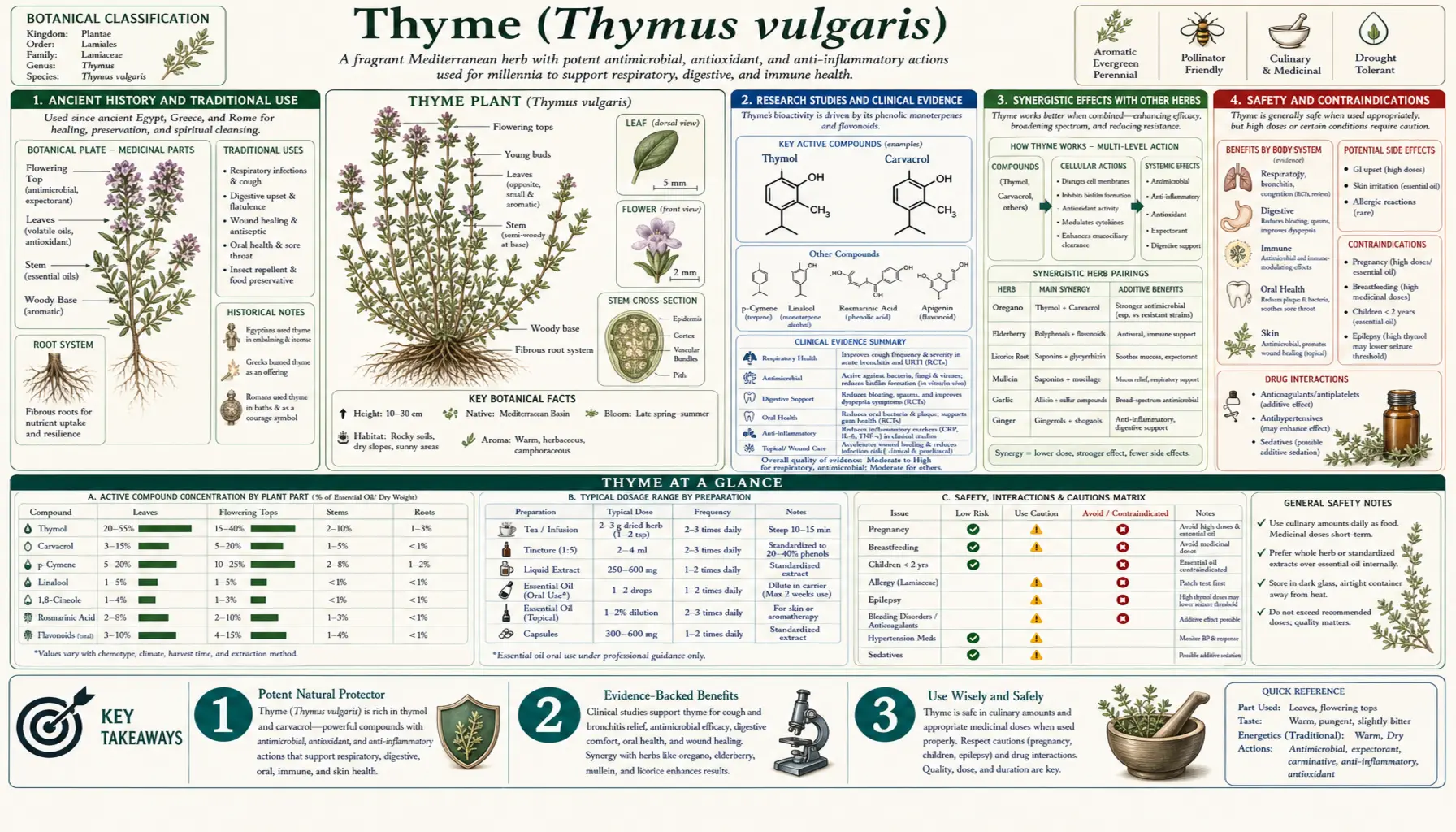
Table of Contents
- Ancient History and Traditional Use
- Key Antibacterial Compounds
- Mechanism of Antibacterial Action
- Bacteria Targeted by Thyme
- Research Studies and Clinical Evidence
- Respiratory Antibacterial Applications
- Oral Health Applications
- Food Preservation and Safety
- Thyme Essential Oil vs Culinary Thyme
- Synergistic Effects with Other Herbs
- Other Health Benefits
- Forms and Preparations
- Recommended Dosage
- Safety and Contraindications
- Key Research Papers and References
- Featured Videos
1. Ancient History and Traditional Use
Thyme has one of the longest documented histories of any medicinal herb: the ancient Egyptians used it in embalming, the Greeks bathed in it and burned it as incense in their temples as a source of courage, and the Romans used it to purify rooms and flavour cheese. It runs through the medieval European herbals and monastery gardens and is the source of thymol, the crystalline compound first isolated from thyme oil in 1719. — the fuller story is told in the dedicated History & Traditional Use article.
2. Key Antibacterial Compounds
Thymol
Thymol is the primary bioactive compound in thyme, typically constituting 20 to 55 percent of the essential oil depending on the chemotype, growing conditions, and harvest timing. This monoterpene phenol is the principal driver of thyme's potent antibacterial activity. Thymol disrupts the structural integrity of bacterial cell membranes, causing leakage of intracellular contents and ultimately cell death. Its efficacy has been demonstrated against a remarkably broad spectrum of both gram-positive and gram-negative bacteria. Thymol is also the active ingredient in several commercially available antiseptic products, including the well-known mouthwash Listerine, which has included thymol in its formulation since the 1870s.
Carvacrol
Carvacrol is an isomer of thymol and the second most abundant antimicrobial compound in thyme essential oil, typically present at concentrations between 2 and 15 percent. Like thymol, carvacrol is a monoterpene phenol that targets bacterial cell membranes, but research published in the Journal of Applied Microbiology has shown that carvacrol and thymol together produce synergistic antibacterial effects that exceed what either compound achieves alone. Carvacrol has demonstrated particular effectiveness against foodborne pathogens including Escherichia coli O157:H7 and Salmonella enterica, making it a compound of significant interest in food safety research.
Linalool
Linalool is a monoterpene alcohol found in thyme at concentrations that vary by chemotype, with certain varieties (classified as Thymus vulgaris ct. linalool) producing this compound as their dominant constituent. Linalool exhibits moderate antibacterial activity through mechanisms distinct from the phenolic compounds, primarily by interfering with bacterial enzyme systems and disrupting quorum sensing, the communication system bacteria use to coordinate virulence factor production. This anti-quorum sensing activity means linalool can reduce bacterial pathogenicity even at concentrations below the minimum inhibitory concentration, making it a valuable complementary compound in thyme's antibacterial arsenal.
p-Cymene
p-Cymene is a monoterpene hydrocarbon that serves as a biological precursor to both thymol and carvacrol. While p-cymene has limited antibacterial activity on its own, research has demonstrated that it plays a critical facilitating role in thyme's antimicrobial action. As a highly lipophilic compound, p-cymene readily inserts itself into bacterial cell membranes, expanding and destabilizing the lipid bilayer. This membrane perturbation enhances the penetration and efficacy of thymol and carvacrol, effectively acting as a carrier that potentiates the action of the more active phenolic compounds. Studies in Food Chemistry have confirmed that combinations of p-cymene with thymol show significantly greater antibacterial activity than thymol alone at equivalent concentrations.
Rosmarinic Acid
Rosmarinic acid is a polyphenolic compound found in thyme leaves and other members of the Lamiaceae family. Unlike the volatile terpenoids, rosmarinic acid is a water-soluble compound that contributes to the antibacterial properties of thyme teas and aqueous extracts. Rosmarinic acid inhibits bacterial growth through multiple mechanisms including iron chelation, which deprives bacteria of an essential nutrient, and inhibition of bacterial adhesion to host tissues. Additionally, rosmarinic acid possesses strong antioxidant and anti-inflammatory properties that support the immune system's own antibacterial defenses. Research published in Phytomedicine has documented its activity against Staphylococcus aureus, Bacillus subtilis, and several strains of Escherichia coli.
3. Mechanism of Antibacterial Action
Cell Membrane Disruption
The primary antibacterial mechanism of thyme's active compounds, particularly thymol and carvacrol, involves direct disruption of bacterial cell membranes. These phenolic monoterpenes are amphipathic molecules, meaning they possess both hydrophilic (water-attracting) and hydrophobic (water-repelling) regions. This dual nature allows them to insert into the phospholipid bilayer of bacterial cell membranes, where they increase membrane permeability and fluidity. Electron microscopy studies have revealed that exposure to thymol causes visible structural damage to bacterial cell envelopes, including blebbing, pore formation, and complete membrane disintegration at higher concentrations.
Once membrane integrity is compromised, essential intracellular contents leak out, including ions (particularly potassium and phosphate), ATP, amino acids, and nucleic acids. This loss of cellular homeostasis rapidly leads to dissipation of the proton motive force, collapse of the transmembrane pH gradient, and cessation of ATP synthesis. Research published in Applied and Environmental Microbiology has shown that thymol can cause measurable potassium ion leakage from bacterial cells within minutes of exposure, indicating a rapid and catastrophic disruption of membrane function. This mechanism is effective against both gram-positive bacteria, which have a single membrane surrounded by a thick peptidoglycan wall, and gram-negative bacteria, although higher concentrations are sometimes required to penetrate the outer membrane of gram-negative organisms.
Protein Denaturation
Beyond membrane disruption, thyme compounds interact with bacterial proteins, causing structural denaturation that inactivates critical enzymes and transport proteins. Thymol's hydroxyl group forms hydrogen bonds with active sites on bacterial enzymes, altering their three-dimensional conformation and rendering them non-functional. This mechanism has been shown to inhibit ATPase activity, which is essential for bacterial energy metabolism, and to disrupt efflux pump proteins that bacteria use to expel antimicrobial agents. The denaturation of outer membrane proteins in gram-negative bacteria also contributes to the overall bactericidal effect by creating additional points of entry for other antimicrobial compounds. Studies using proteomic analysis have identified dozens of bacterial proteins whose expression or structure is altered following exposure to thyme essential oil, suggesting a multi-target mode of action that makes the development of bacterial resistance particularly difficult.
Enzyme Inhibition
Thyme's antibacterial compounds also target specific bacterial enzyme systems critical for survival and virulence. Thymol and carvacrol have been shown to inhibit bacterial lipase, coagulase, and beta-lactamase enzymes. The inhibition of beta-lactamase is particularly significant from a clinical perspective, as this enzyme is the primary mechanism by which bacteria such as methicillin-resistant Staphylococcus aureus (MRSA) deactivate beta-lactam antibiotics. Research published in the Journal of Antimicrobial Chemotherapy has demonstrated that sub-inhibitory concentrations of thymol can restore the sensitivity of certain resistant bacterial strains to conventional antibiotics by suppressing efflux pump activity and beta-lactamase production. Additionally, thyme compounds inhibit bacterial biofilm formation by interfering with the enzymes responsible for producing the extracellular polymeric substances that form the biofilm matrix. Since biofilms can increase bacterial resistance to antibiotics by a factor of 100 to 1,000, this anti-biofilm activity represents a critically important mechanism of action.
4. Bacteria Targeted by Thyme
Gram-Positive Bacteria
Thyme essential oil and its constituent compounds have demonstrated potent activity against a wide range of gram-positive pathogens. Staphylococcus aureus, including methicillin-resistant strains (MRSA), is among the most extensively studied targets. Multiple research groups have reported minimum inhibitory concentrations (MICs) for thyme essential oil against S. aureus in the range of 0.05 to 0.5 percent, with thymol-rich chemotypes consistently showing the strongest activity. Research published in BMC Complementary and Alternative Medicine found that thyme oil inhibited the growth of 120 clinical isolates of S. aureus, including 60 methicillin-resistant strains, at concentrations achievable in topical applications.
Streptococcus pyogenes, the causative agent of strep throat, scarlet fever, and necrotizing fasciitis, has shown significant susceptibility to thyme compounds. Streptococcus mutans, the primary bacterium responsible for dental caries, is also effectively inhibited by thymol, which is the basis for its inclusion in commercial mouthwash formulations. Listeria monocytogenes, a dangerous foodborne pathogen that can cause severe illness in pregnant women, the elderly, and immunocompromised individuals, has been shown in numerous studies to be highly sensitive to thyme essential oil, with MIC values often lower than those observed for many gram-negative bacteria.
Gram-Negative Bacteria
Escherichia coli, including the highly pathogenic O157:H7 serotype, is effectively inhibited by thyme essential oil. Studies published in the International Journal of Food Microbiology have documented the bactericidal activity of thyme oil against E. coli in both laboratory culture and food matrix environments. Salmonella enterica serovars Typhimurium and Enteritidis, major causes of foodborne gastroenteritis worldwide, have also demonstrated susceptibility to thyme compounds, with research showing significant reductions in viable cell counts following exposure to thyme essential oil vapors.
Pseudomonas aeruginosa, an opportunistic pathogen notorious for its intrinsic antibiotic resistance and its role in hospital-acquired infections, is more resistant to thyme oil than most gram-positive bacteria but can still be inhibited at higher concentrations. Klebsiella pneumoniae, Helicobacter pylori, and Campylobacter jejuni have all shown measurable sensitivity to thyme compounds in laboratory studies. The activity against H. pylori, the bacterium responsible for gastric ulcers and a risk factor for stomach cancer, has generated particular interest in the gastroenterological research community.
Respiratory Pathogens
Thyme has a long traditional history of use against respiratory infections, and modern research has validated this application. Streptococcus pneumoniae, the leading bacterial cause of community-acquired pneumonia, is susceptible to thyme essential oil. Haemophilus influenzae, a common cause of bronchitis, sinusitis, and otitis media, has also shown sensitivity in disk diffusion and broth microdilution assays. Moraxella catarrhalis, another frequent respiratory pathogen, is effectively inhibited by thymol and carvacrol. The volatile nature of thyme's active compounds allows them to be delivered directly to the respiratory tract through steam inhalation, providing a targeted delivery mechanism that is not available with most conventional oral antibiotics.
5. Research Studies and Clinical Evidence
The antibacterial properties of thyme have been the subject of extensive scientific investigation over the past three decades, with research published across numerous peer-reviewed journals providing robust evidence for its efficacy. A landmark comparative study published in the Journal of Applied Microbiology evaluated the antibacterial activity of 52 plant essential oils against a panel of clinically relevant bacteria, including drug-resistant strains. Thyme essential oil ranked among the top three most potent oils tested, demonstrating broad-spectrum activity against both gram-positive and gram-negative organisms, with particularly strong inhibition of Staphylococcus aureus and Escherichia coli.
Research published in Food Chemistry investigated the antibacterial activity of thyme essential oil components individually and in combination, establishing that thymol and carvacrol are responsible for the majority of the oil's antimicrobial activity. The study demonstrated that these compounds exhibit concentration-dependent bactericidal effects and that combinations of thymol with carvacrol show synergistic interactions at certain ratios. This finding has significant implications for the standardization and optimization of thyme-based antimicrobial preparations.
A clinical trial published in the journal Arzneimittelforschung (Drug Research) evaluated a thyme-based syrup preparation in patients with acute bronchitis. The study found that patients receiving the thyme preparation experienced significantly faster resolution of symptoms, including cough frequency and sputum production, compared to the placebo group. Microbiological analysis showed reduced bacterial loads in sputum samples from the treatment group, supporting an antibacterial mechanism of action in addition to the expectorant effects.
A systematic review published in Evidence-Based Complementary and Alternative Medicine analyzed the available clinical and preclinical data on thyme's antimicrobial properties. The review concluded that thyme essential oil and thymol demonstrate consistent antibacterial activity across a wide range of study designs and bacterial species. The authors noted that thyme's multi-target mechanism of action, involving simultaneous disruption of membranes, proteins, and enzyme systems, makes the development of resistance less likely than with single-target conventional antibiotics. Research in the Journal of Medicinal Food further confirmed that aqueous thyme extracts, as would be obtained from drinking thyme tea, retain significant antibacterial activity, though at lower potency than the concentrated essential oil.
Studies published in Letters in Applied Microbiology have explored thyme's potential as a resistance-modifying agent, finding that sub-inhibitory concentrations of thyme oil can reduce the minimum inhibitory concentration of certain conventional antibiotics against resistant bacterial strains by up to 16-fold. This synergistic interaction between thyme compounds and pharmaceutical antibiotics represents one of the most promising areas of current research, with potential applications in combating the global crisis of antimicrobial resistance.
6. Respiratory Antibacterial Applications
Thyme has been one of the most widely prescribed herbs for respiratory infections throughout the history of herbal medicine, and it remains an approved treatment for bronchitis and upper respiratory infections in the pharmacopoeias of Germany and several other European countries. The German Commission E, one of the most rigorous regulatory bodies for herbal medicines, has officially approved thyme for the treatment of symptoms of bronchitis, whooping cough, and upper respiratory catarrh. Thyme's efficacy in respiratory infections stems from its dual action as both an antibacterial agent and an expectorant that promotes the clearance of mucus from the airways.
For acute bronchitis, thyme preparations work by directly attacking the bacteria responsible for the infection while simultaneously reducing inflammation in the bronchial mucosa and stimulating the ciliary escalator mechanism that moves mucus upward and out of the lungs. Steam inhalation with thyme essential oil allows the volatile antibacterial compounds to be delivered directly to the infected respiratory tissues, achieving local concentrations sufficient to inhibit or kill common respiratory pathogens including Streptococcus pneumoniae, Haemophilus influenzae, and Staphylococcus aureus. European clinical practice commonly employs combination preparations of thyme with ivy leaf or primrose root for enhanced expectorant and antibacterial effects.
Thyme tea and thyme-based gargles have long been used as remedies for sore throat caused by Streptococcus pyogenes and other pharyngeal pathogens. The warm liquid delivers water-soluble antibacterial compounds such as rosmarinic acid directly to the inflamed pharyngeal tissues, while the aromatic vapors carry volatile terpenoids into the nasal passages and sinuses. For sinus infections, thyme steam inhalation helps to thin and mobilize trapped mucus while delivering antibacterial compounds to the sinus cavities, which are otherwise difficult to reach with systemic antibiotics. Thyme-based nasal rinses and sprays have been investigated as adjunctive treatments for chronic rhinosinusitis, with preliminary results showing reductions in bacterial colonization and improvements in patient-reported symptom scores.
7. Oral Health Applications
The antibacterial properties of thyme, particularly those conferred by thymol, have extensive applications in oral health and dental hygiene. Thymol has been a key active ingredient in Listerine antiseptic mouthwash since its formulation in 1879, originally developed as a surgical antiseptic by Dr. Joseph Lawrence, who named it after the pioneering surgeon Joseph Lister. The inclusion of thymol in commercial mouthwash formulations is one of the most enduring and commercially successful applications of a plant-derived antibacterial compound in modern medicine.
Research on thyme's oral health benefits has focused primarily on its activity against Streptococcus mutans, the bacterium most strongly associated with dental caries formation. S. mutans produces acids that demineralize tooth enamel and synthesizes sticky glucan polymers that enable it to adhere to tooth surfaces and form the dental plaque biofilm. Studies published in the Journal of Dentistry and Caries Research have demonstrated that thymol inhibits the growth of S. mutans, reduces its acid production, and disrupts glucan synthesis, addressing multiple stages of the caries formation process. Thymol has also shown activity against Porphyromonas gingivalis and Aggregatibacter actinomycetemcomitans, the two bacteria most strongly implicated in periodontal disease and gingivitis.
Clinical studies have confirmed that mouthwashes containing thymol as part of an essential oil blend significantly reduce plaque accumulation and gingival inflammation compared to placebo rinses. A meta-analysis published in the Journal of Clinical Periodontology found that essential oil mouthwashes containing thymol, used as an adjunct to mechanical oral hygiene, produced statistically significant reductions in both plaque index scores and gingival bleeding index scores compared to controls. Thyme-based oral care preparations have also been investigated for their potential to combat oral candidiasis, halitosis caused by volatile sulfur compound-producing bacteria, and post-surgical oral infections. The broad-spectrum antibacterial and anti-biofilm activity of thymol, combined with its generally recognized as safe (GRAS) status, makes it an attractive ingredient for natural oral care products.
8. Food Preservation and Safety
Thyme has been used as a food preservative for millennia, long before the scientific basis for this practice was understood. Ancient Mediterranean cultures seasoned meats, cheeses, and oils with thyme not only for flavor but also to extend shelf life and prevent spoilage. Modern food science has validated this traditional practice, and thyme essential oil is now one of the most extensively studied natural antimicrobial agents for food preservation applications. The growing consumer demand for "clean label" products free from synthetic chemical preservatives has intensified research interest in thyme compounds as natural alternatives to conventional food additives.
Research published in the International Journal of Food Microbiology and Food Control has demonstrated that thyme essential oil effectively inhibits the growth of major foodborne pathogens including Salmonella enterica, Listeria monocytogenes, Escherichia coli O157:H7, Campylobacter jejuni, and Staphylococcus aureus in a variety of food matrices. Studies have shown that thyme oil can be applied to fresh produce, meat, poultry, seafood, and dairy products through direct addition, edible coatings, or active packaging materials. Vapor-phase application of thyme essential oil has proven particularly effective for the preservation of fresh fruits and vegetables, as the volatile compounds can reach the food surface without altering texture or causing excess moisture.
The development of thyme-based active packaging represents one of the most promising applications in food technology. Researchers have incorporated thyme essential oil into biodegradable films made from chitosan, starch, and polylactic acid, creating packaging materials that slowly release antibacterial compounds and extend product shelf life. Studies published in LWT - Food Science and Technology have reported shelf life extensions of 3 to 7 days for fresh meat and poultry products stored in thyme-infused active packaging compared to conventional packaging. The European Food Safety Authority (EFSA) has evaluated thymol and carvacrol as flavoring substances and recognized their safety for use in food products, which facilitates their regulatory approval as natural preservative ingredients in the European Union.
9. Thyme Essential Oil vs Culinary Thyme
Understanding the distinction between thyme essential oil and culinary thyme is critically important for safe and effective use. Thyme essential oil is a highly concentrated extract obtained through steam distillation of the flowering tops and leaves of Thymus vulgaris. Approximately 100 to 200 pounds of fresh thyme plant material are required to produce a single pound of essential oil, resulting in a product that is 50 to 100 times more concentrated in active compounds than the fresh herb. This extreme concentration means that thyme essential oil must be treated as a potent pharmacological substance, not a simple kitchen ingredient. Undiluted thyme essential oil can cause severe skin irritation, chemical burns, and mucous membrane damage, and ingestion of even small quantities can produce toxic effects including nausea, vomiting, and respiratory distress.
Culinary thyme, whether used fresh or dried, delivers its antibacterial compounds at much lower and inherently safer concentrations. A typical thyme tea made by steeping one to two teaspoons of dried thyme in boiling water for 10 minutes provides a gentle aqueous extract containing water-soluble polyphenols such as rosmarinic acid, along with small quantities of volatile terpenoids. While this preparation has measurable antibacterial activity, it is far milder than the essential oil and is generally safe for regular consumption. Cooking with thyme incorporates the herb's antibacterial properties into food at concentrations that contribute to food safety without any risk of toxicity. Studies have shown that thyme added to marinades and cooking liquids can significantly reduce bacterial contamination in meat and poultry, providing both culinary enhancement and food safety benefits.
For therapeutic applications, the choice between essential oil and culinary preparations depends on the intended use and the required potency. Topical applications for skin infections or wound care typically employ the essential oil diluted to 1 to 5 percent in a carrier oil. Respiratory applications may use 3 to 5 drops of essential oil added to hot water for steam inhalation, or alternatively, strong thyme tea can be used for the same purpose with a wider margin of safety. Internal use of thyme essential oil should only be undertaken under the guidance of a qualified practitioner, as the concentrated phenolic compounds can irritate the gastrointestinal mucosa and place a metabolic burden on the liver. Culinary use and thyme tea represent the safest approaches for obtaining thyme's antibacterial benefits on a daily basis.
10. Synergistic Effects with Other Herbs
One of the most actively researched aspects of thyme's antibacterial properties is its synergistic interaction with other antimicrobial herbs and their essential oils. Synergy occurs when the combined effect of two or more agents exceeds the sum of their individual effects, enabling lower doses of each component to achieve the same or greater antibacterial activity. This principle is particularly valuable in the context of natural antimicrobials, as it can address concerns about flavor impact in food applications and reduce the risk of adverse effects in therapeutic use.
The combination of thyme and oregano essential oils represents one of the best-documented synergistic pairings in antimicrobial research. Both herbs belong to the Lamiaceae family and share similar bioactive compounds, particularly thymol and carvacrol, but in different proportions. Research published in the Journal of Applied Microbiology has demonstrated that blends of thyme and oregano oils produce synergistic antibacterial effects against Staphylococcus aureus, Escherichia coli, and Salmonella species, with fractional inhibitory concentration (FIC) indices consistently below 0.5, indicating true synergy. The complementary ratios of thymol and carvacrol in the two oils, combined with the membrane-destabilizing effects of p-cymene and gamma-terpinene, are believed to account for this enhanced activity.
Thyme also demonstrates synergistic antibacterial effects when combined with cinnamon (Cinnamomum verum), whose primary active compound cinnamaldehyde operates through a different mechanism of action than thyme's phenolic terpenoids. The combination of thymol's membrane-disrupting activity with cinnamaldehyde's enzyme-inhibiting properties creates a multi-pronged antibacterial attack that bacteria find extremely difficult to resist. Research in Food Microbiology has shown that thyme-cinnamon combinations can reduce the required effective concentration of each oil by 50 to 75 percent compared to their use alone, which is particularly advantageous in food preservation where strong flavors must be minimized. Rosemary (Rosmarinus officinalis) provides yet another complementary profile, with its carnosic acid and carnosol compounds adding antioxidant protection that extends the antibacterial shelf life of thyme-based preparations. Studies have also documented synergistic interactions between thyme and clove, thyme and tea tree oil, and thyme and lemongrass, expanding the range of possible combinatorial approaches for natural antibacterial applications.
11. Other Health Benefits
Antioxidant Properties
Thyme is one of the most potent antioxidant herbs available, with an oxygen radical absorbance capacity (ORAC) value that ranks among the highest of all common culinary herbs. Thymol, carvacrol, and rosmarinic acid all function as powerful free radical scavengers, neutralizing reactive oxygen species that contribute to cellular damage, aging, and chronic disease. Research published in the Journal of Agricultural and Food Chemistry has demonstrated that thyme extracts protect lipids, proteins, and DNA from oxidative damage. The antioxidant properties of thyme support its antibacterial function by protecting immune cells from the oxidative stress generated during the inflammatory response to infection.
Anti-Inflammatory Properties
Thyme compounds modulate inflammatory pathways through multiple mechanisms, including inhibition of cyclooxygenase (COX) and lipoxygenase (LOX) enzymes, suppression of nuclear factor kappa-B (NF-kB) activation, and reduction of pro-inflammatory cytokine production. Studies in Journal of Lipid Research and Mediators of Inflammation have shown that carvacrol and thymol significantly reduce levels of tumor necrosis factor-alpha (TNF-alpha), interleukin-1 beta (IL-1B), and interleukin-6 (IL-6) in cell culture and animal models. These anti-inflammatory effects complement thyme's antibacterial activity by reducing the tissue damage caused by excessive inflammatory responses to infection.
Antifungal Activity
Thyme essential oil exhibits broad-spectrum antifungal activity against dermatophytes, yeasts, and molds. Candida albicans, the most common cause of human fungal infections, is highly susceptible to thymol and carvacrol. Research has shown that thyme oil inhibits Candida biofilm formation and kills established biofilm cells, which is particularly relevant given that biofilm-associated Candida infections are notoriously resistant to conventional antifungal drugs. Thyme oil has also demonstrated activity against Aspergillus species, dermatophytes responsible for athlete's foot and ringworm, and food spoilage molds.
Antiviral Activity
Emerging research has identified antiviral properties in thyme compounds, with studies documenting activity against herpes simplex virus (HSV), influenza viruses, and other enveloped viruses. The mechanism appears to involve disruption of the viral envelope, which is structurally analogous to the bacterial membrane disruption caused by thymol and carvacrol. Research published in Phytomedicine found that thyme essential oil reduced herpes simplex virus infectivity by over 90 percent at non-cytotoxic concentrations. While thyme should not be considered a primary antiviral treatment, these findings suggest additional protective benefits during respiratory and other viral infections.
12. Forms and Preparations
- Fresh Thyme: Fresh sprigs and leaves contain the full spectrum of volatile and non-volatile bioactive compounds. Fresh thyme can be used in cooking, steeped for tea, or applied as a poultice for minor skin infections. The essential oil content in fresh thyme typically ranges from 1 to 2.5 percent of dry weight. Fresh thyme should be used within one to two weeks of harvest and stored wrapped in a damp paper towel in the refrigerator.
- Dried Thyme: Drying concentrates the flavor and active compounds while extending shelf life to one to three years when stored in a cool, dark, airtight container. Dried thyme is the most common form used for making medicinal teas and is the standard preparation in most herbal pharmacopoeias. The drying process causes some loss of volatile compounds, but properly dried thyme retains 60 to 80 percent of its essential oil content.
- Thyme Essential Oil: The most concentrated form, obtained by steam distillation. Essential oil is used for aromatherapy, topical applications (always diluted in a carrier oil), and steam inhalation. There are several chemotypes of thyme essential oil, with the thymol chemotype being the most potent antibacterial and the linalool chemotype being the mildest and most suitable for use with children and sensitive individuals. Therapeutic-grade essential oil should specify the chemotype and thymol content on the label.
- Thyme Tincture: An alcohol-based extraction that captures both water-soluble and fat-soluble bioactive compounds. Tinctures offer a convenient, standardized dosage form with a long shelf life of two to five years. They are typically prepared at a 1:5 herb-to-solvent ratio using 45 to 60 percent ethanol. Tinctures can be taken directly, diluted in water, or added to warm beverages.
- Thyme Tea (Infusion): Prepared by steeping dried or fresh thyme in freshly boiled water for 10 to 15 minutes in a covered vessel to minimize loss of volatile compounds. Thyme tea is the gentlest therapeutic preparation and the most suitable for daily use. It extracts water-soluble polyphenols including rosmarinic acid and flavonoids, along with small amounts of volatile terpenoids. Covering the cup during steeping is essential to trap the aromatic compounds that would otherwise evaporate.
- Thyme Syrup: A traditional preparation made by simmering thyme in water with honey or sugar, commonly used for coughs and sore throats. Commercial thyme syrups are available in many European pharmacies as approved over-the-counter remedies for bronchitis. Honey-based thyme syrups offer the additional antibacterial and soothing properties of honey.
- Capsules and Standardized Extracts: Thyme extract capsules provide a convenient oral dosage form with standardized thymol content. These are available from various herbal supplement manufacturers and typically contain dried thyme powder or concentrated extracts standardized to a specific percentage of thymol or total phenolic content.
13. Recommended Dosage
Thyme Tea
- Adults: 1 to 2 teaspoons of dried thyme per cup of boiling water, steeped covered for 10 to 15 minutes. Drink 2 to 3 cups daily during acute respiratory infections, or 1 cup daily for general health maintenance.
- Children (ages 4 to 12): Half the adult dose, using 1/2 to 1 teaspoon per cup. Sweeten with honey for palatability (honey should not be given to children under 1 year of age).
Essential Oil
- Steam inhalation: 3 to 5 drops of thyme essential oil added to a bowl of hot (not boiling) water. Inhale the vapors for 10 to 15 minutes with a towel draped over the head, 2 to 3 times daily during respiratory infections.
- Topical application: Dilute to 1 to 3 percent in a carrier oil (such as jojoba, coconut, or sweet almond oil) for skin infections. This equates to approximately 6 to 18 drops of essential oil per ounce of carrier oil. Always perform a patch test on a small area of skin before wider application.
- Diffusion: 3 to 5 drops in an ultrasonic diffuser to disperse antibacterial compounds into room air. Limit diffusion to 30 to 60 minutes at a time and ensure adequate ventilation.
Tincture
- Adults: 2 to 4 milliliters (approximately 40 to 80 drops) of a 1:5 tincture, taken 3 times daily, diluted in a small amount of water or juice. During acute infections, the upper end of the dosage range may be used for up to two weeks.
Capsules
- Dried herb capsules: 300 to 500 milligrams of dried thyme powder, taken 3 times daily with meals.
- Standardized extract capsules: Follow manufacturer's dosage recommendations, which vary depending on the concentration and standardization of the product.
Thyme Syrup
- Adults: 1 to 2 tablespoons, 3 to 4 times daily for coughs and bronchitis.
- Children (ages 4 to 12): 1 to 2 teaspoons, 3 to 4 times daily.
14. Safety and Contraindications
Pregnancy and Breastfeeding
Culinary amounts of thyme used in cooking are generally considered safe during pregnancy. However, medicinal doses of thyme, including concentrated teas, tinctures, and especially essential oil, should be avoided during pregnancy. Thyme has been traditionally associated with emmenagogue (menstruation-promoting) effects, and high doses may theoretically stimulate uterine contractions. Thymol crosses the placental barrier and its effects on fetal development have not been adequately studied in humans. Breastfeeding mothers should similarly limit use to culinary amounts, as thymol and other active compounds may be excreted in breast milk.
Blood Thinners and Anticoagulant Medications
Thyme may interact with anticoagulant and antiplatelet medications including warfarin, heparin, aspirin, and clopidogrel. Thyme contains vitamin K, which can interfere with warfarin therapy, and some thyme compounds have been shown to inhibit platelet aggregation in laboratory studies. Patients taking blood-thinning medications should consult their healthcare provider before using thyme in medicinal doses and should maintain consistent dietary intake of thyme rather than making sudden large changes.
Allergies
Individuals with known allergies to plants in the Lamiaceae (mint) family, which includes oregano, basil, sage, rosemary, lavender, and marjoram, may experience cross-reactive allergic responses to thyme. Symptoms can include skin rash, hives, swelling, and in rare cases, anaphylaxis. Contact dermatitis from topical application of thyme or thyme essential oil has been documented in the dermatological literature. Anyone with a history of plant allergies should perform a small patch test before using thyme products topically and should start with small amounts when consuming thyme tea or supplements.
Essential Oil Precautions
Thyme essential oil is one of the more potent and potentially irritating essential oils and demands particular respect in its handling. Undiluted thyme essential oil should never be applied directly to the skin, as it can cause severe chemical burns and contact dermatitis. The thymol chemotype is the most irritating and should always be diluted to no more than 3 percent for topical use. Internal ingestion of thyme essential oil should only be undertaken under professional guidance, as even small quantities can cause nausea, vomiting, dizziness, and gastrointestinal irritation. Thyme essential oil should be kept out of reach of children, as accidental ingestion by young children can produce serious toxic effects. Individuals with hypertension should use thyme essential oil cautiously, as thymol may have a stimulating effect on blood pressure in concentrated doses. Store essential oils in dark glass bottles away from heat and light to preserve potency and prevent oxidative degradation of active compounds.
Drug Interactions
In addition to anticoagulant interactions, thyme may interact with thyroid medications, as some studies have suggested that thyme compounds can influence thyroid hormone levels. Thyme's antioxidant compounds may also theoretically interfere with the activity of certain chemotherapy drugs that rely on oxidative mechanisms. Patients taking prescription medications should discuss the use of medicinal thyme preparations with their healthcare provider, particularly if they are taking medications with a narrow therapeutic index.
15. Key Research Papers and References
- Antimicrobial Activity of Essential Oils -- Journal of Applied Microbiology -- Comprehensive comparative studies evaluating the antibacterial efficacy of thyme essential oil against clinical bacterial isolates, establishing thyme among the most potent antimicrobial plant oils.
- Thymol and Carvacrol: Bioactivity and Mechanisms -- Food Chemistry -- Analysis of individual and synergistic antibacterial activities of thyme's primary phenolic monoterpenes, including structure-activity relationships and concentration-dependent effects.
- Essential Oil Membrane Disruption Studies -- Applied and Environmental Microbiology -- Electron microscopy and ion leakage studies documenting the membrane-disrupting mechanisms of thymol and carvacrol against gram-positive and gram-negative bacteria.
- Anti-biofilm Properties of Plant Phenolics -- Journal of Antimicrobial Chemotherapy -- Research on thymol's ability to inhibit biofilm formation and disrupt established biofilms in clinically relevant bacterial species including MRSA and Pseudomonas aeruginosa.
- Natural Antimicrobials in Food Preservation -- International Journal of Food Microbiology -- Studies evaluating thyme essential oil as a natural food preservative against Salmonella, Listeria, and E. coli O157:H7 in various food matrices.
- Clinical Efficacy of Thyme in Bronchitis -- Arzneimittelforschung (Drug Research) -- Randomized controlled trial data on thyme-based preparations for the treatment of acute bronchitis, demonstrating significant symptom improvement and reduced bacterial loads.
- Thymol in Oral Health -- Journal of Clinical Periodontology -- Meta-analysis of clinical trials evaluating essential oil mouthwashes containing thymol for plaque and gingivitis reduction, confirming statistically significant benefits.
- Antimicrobial Resistance Modulation -- Letters in Applied Microbiology -- Studies demonstrating that sub-inhibitory concentrations of thyme essential oil can restore antibiotic sensitivity in drug-resistant bacterial strains by inhibiting efflux pumps and beta-lactamase production.
- Synergistic Antimicrobial Combinations -- Food Microbiology -- Research on fractional inhibitory concentration indices for thyme oil in combination with oregano, cinnamon, and other essential oils against foodborne pathogens.
- Antiviral Properties of Lamiaceae Essential Oils -- Phytomedicine -- In vitro studies documenting thyme essential oil activity against herpes simplex virus and influenza viruses, with proposed mechanisms involving viral envelope disruption.
Research Papers
The following PubMed topic searches aggregate the peer-reviewed literature underpinning the claims above. Each link opens a live PubMed query so the result set stays current as new research is published.
- PubMed — thymol antibacterial activity
- PubMed — essential oil antimicrobial
- PubMed — cough and bronchitis clinical trial
- PubMed — antifungal activity against Candida
- PubMed — thymol antioxidant
- PubMed — biofilm inhibition
- PubMed — oral health and gingivitis
- PubMed — acne and Propionibacterium
- PubMed — respiratory infection in children
- PubMed — systematic review
- PubMed — thymol and carvacrol pharmacology
Connections
- All Herbs
- Thyme Benefits Deep Dive
- Oregano
- Rosemary
- Sage
- Garlic
- Eucalyptus
- Immune Boosting
- Escherichia Coli
- Staphylococcus Aureus
- Cinnamon
- Honey
- Influenza
- Sinusitis
- Tea Tree
- Clove
- Pseudomonas Aeruginosa
- Oxidative Stress
- Asthma
- Lemon Balm
- Mullein