Garlic (Allium sativum)
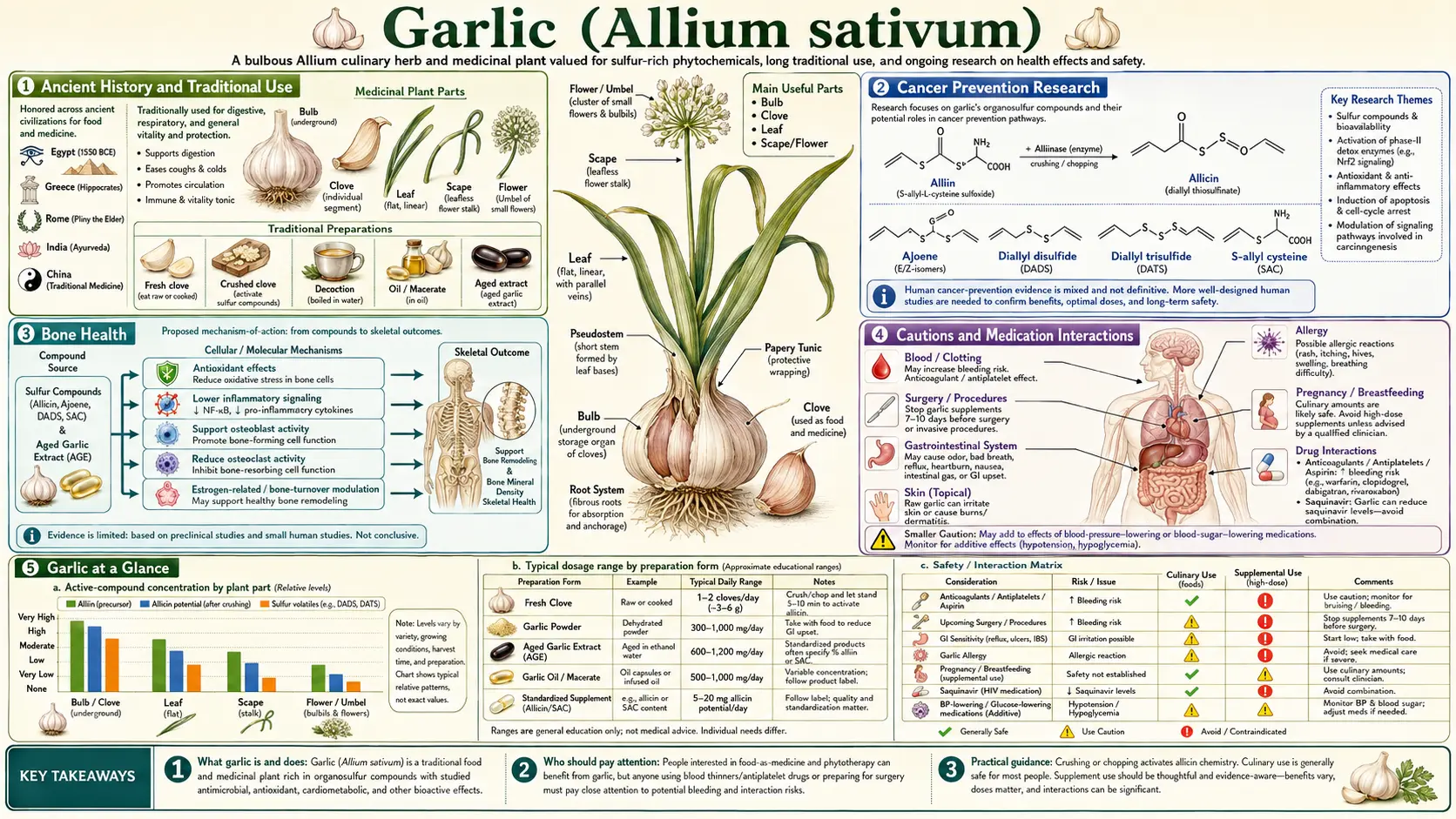
Table of Contents
- Ancient History and Traditional Use
- Allicin: The Primary Active Compound
- Antimicrobial Properties: "Russian Penicillin"
- Cardiovascular Health
- Immune System Enhancement
- Cancer Prevention Research
- Detoxification and Heavy Metal Chelation
- Blood Sugar Regulation
- Anti-Inflammatory and Antioxidant Properties
- Bone Health
- Respiratory Health
- Raw vs Cooked vs Aged Garlic vs Supplements
- The "Crush and Wait" Method
- Recommended Dosage
- Cautions and Medication Interactions
- Featured Videos
Ancient History and Traditional Use
Garlic is one of the oldest cultivated plants in human history, used as both food and medicine for thousands of years across ancient Egypt, Greece, Rome, India, and China. From the Ebers Papyrus around 1500 BCE to its battlefield use as “Russian penicillin” in the World Wars, this pungent bulb has been trusted to fight infection and support health long before anyone could explain why — the fuller story is told in the dedicated History & Traditional Use article.
Allicin: The Primary Active Compound
The remarkable medicinal properties of garlic center on a sulfur-containing compound called allicin (diallyl thiosulfinate), which is not present in intact garlic cloves. Understanding how allicin is formed is essential for maximizing garlic's therapeutic potential.
- Formation mechanism: When garlic tissue is damaged by crushing, chopping, or chewing, the enzyme alliinase comes into contact with the substrate alliin (S-allyl-L-cysteine sulfoxide). This enzymatic reaction rapidly converts alliin into allicin.
- Instability and metabolites: Allicin is highly reactive and unstable. It quickly breaks down into a cascade of bioactive organosulfur compounds including diallyl sulfide (DAS), diallyl disulfide (DADS), diallyl trisulfide (DATS), ajoene, and S-allyl cysteine (SAC). These metabolites are responsible for many of garlic's long-term health benefits.
- Heat sensitivity: Alliinase is destroyed by heat. Cooking garlic immediately after cutting prevents full allicin formation and significantly reduces therapeutic potency. This is why the "crush and wait" technique is so important.
- Sulfur content: Garlic contains the highest sulfur concentration of any Allium vegetable, approximately 1% of its dry weight. These sulfur compounds give garlic both its characteristic odor and its medicinal power.
- Additional compounds: Beyond allicin and its derivatives, garlic contains flavonoids, selenium, germanium, tellurium, vitamins (C, B6), manganese, and fiber, all contributing to its broad-spectrum healing activity.
Antimicrobial Properties: "Russian Penicillin"
Garlic earned the nickname "Russian Penicillin" during World War II when the Soviet army relied on garlic to treat infected wounds after their antibiotic supplies ran out. Its broad-spectrum antimicrobial activity makes it one of nature's most versatile infection fighters.
- Antibacterial action: Allicin disrupts bacterial enzyme systems by reacting with thiol groups in essential enzymes. Research has demonstrated effectiveness against Staphylococcus aureus (including MRSA), Escherichia coli, Helicobacter pylori, Salmonella, and Streptococcus species. Unlike pharmaceutical antibiotics, garlic does not appear to promote resistant bacterial strains.
- Antiviral properties: Garlic compounds have shown activity against influenza A and B, rhinovirus, herpes simplex virus (HSV-1 and HSV-2), and viral pneumonia. A well-known clinical trial found that daily garlic supplementation reduced the number of colds by 63% and shortened cold duration by 70%.
- Antifungal effects: Garlic demonstrates potent activity against Candida albicans, Aspergillus species, and dermatophytes responsible for athlete's foot and ringworm. Ajoene, a garlic derivative, has been shown to be as effective as terbinafine against certain fungal infections.
- Antiparasitic activity: Traditional use against intestinal parasites is supported by research showing garlic's effectiveness against Giardia lamblia, Entamoeba histolytica, and various helminth species.
Cardiovascular Health
Cardiovascular protection may be garlic's most well-documented modern health benefit. From a naturopathic standpoint, garlic addresses the root causes of cardiovascular disease rather than merely managing symptoms.
- Blood pressure reduction: Meta-analyses of clinical trials show that garlic supplementation can reduce systolic blood pressure by 8-10 mmHg and diastolic by 5-7 mmHg in hypertensive individuals. This effect is comparable to some first-line antihypertensive medications. Garlic stimulates nitric oxide production, promoting vasodilation and relaxing arterial walls.
- Cholesterol management: Garlic has been shown to reduce total cholesterol by 10-15% and LDL cholesterol by 10-18% in multiple clinical studies. It inhibits HMG-CoA reductase, the same enzyme targeted by statin drugs, and reduces cholesterol absorption in the intestines.
- Atherosclerosis prevention: Aged garlic extract (AGE) has demonstrated the ability to reduce coronary artery calcium scores and slow the progression of atherosclerotic plaque. Garlic inhibits LDL oxidation, a key step in plaque formation, and reduces arterial stiffness.
- Blood clot prevention: Ajoene and other garlic compounds inhibit platelet aggregation through multiple mechanisms, reducing the risk of thrombosis. This antiplatelet activity is one reason garlic must be used cautiously with blood-thinning medications.
- Homocysteine reduction: Elevated homocysteine is an independent risk factor for cardiovascular disease. Garlic's sulfur compounds help lower homocysteine levels by supporting methylation pathways.
Immune System Enhancement
Garlic acts as a comprehensive immune modulator, strengthening the body's innate and adaptive defense systems rather than simply stimulating immune activity.
- Natural killer cell activation: Garlic compounds enhance the cytotoxic activity of natural killer (NK) cells, which serve as the immune system's first line of defense against virally infected cells and tumor cells.
- Macrophage stimulation: Garlic increases the phagocytic activity of macrophages, enhancing their ability to engulf and destroy pathogens and cellular debris.
- T-cell proliferation: Studies show that garlic supplementation increases the proliferation of gamma-delta T-cells and enhances overall lymphocyte function.
- Cytokine modulation: Garlic helps regulate pro-inflammatory and anti-inflammatory cytokines, promoting an appropriate immune response without excessive inflammation. This immunomodulatory quality distinguishes garlic from simple immune stimulants.
- Glutathione support: Garlic's sulfur compounds serve as precursors for glutathione, the body's master antioxidant, which is essential for optimal immune function and detoxification.
Cancer Prevention Research
Epidemiological studies consistently associate higher garlic consumption with reduced cancer risk, particularly for cancers of the digestive tract. While garlic should never replace conventional cancer treatment, the evidence supporting its preventive role is compelling.
- Stomach cancer: Populations with high garlic consumption show significantly lower rates of gastric cancer. Garlic's ability to inhibit Helicobacter pylori, a major risk factor for stomach cancer, partially explains this protective effect. The Iowa Women's Health Study found that women with the highest garlic intake had a 50% lower risk of distal colon cancer.
- Colorectal cancer: A meta-analysis of 18 epidemiological studies concluded that high garlic intake was associated with approximately 30% reduced risk of colorectal cancer. Organosulfur compounds appear to induce apoptosis in colorectal cancer cells and inhibit tumor angiogenesis.
- Mechanisms of action: Garlic compounds act through multiple anti-cancer pathways including: induction of Phase II detoxification enzymes, inhibition of cell proliferation, promotion of apoptosis (programmed cell death), suppression of angiogenesis, and inhibition of cancer cell migration and invasion.
- Diallyl trisulfide (DATS): This garlic-derived compound has shown particular promise in laboratory studies, demonstrating the ability to trigger cell cycle arrest and apoptosis in prostate, breast, and lung cancer cell lines.
- Biomarker studies: Clinical trials have shown that garlic supplementation can reduce levels of certain cancer biomarkers and increase the activity of detoxification enzymes that help neutralize carcinogens.
Detoxification and Heavy Metal Chelation
Garlic is one of the most effective natural agents for supporting the body's detoxification pathways. Its high sulfur content makes it particularly valuable for chelating heavy metals and supporting liver function.
- Sulfur compounds and liver support: The organosulfur compounds in garlic activate Phase I and Phase II liver detoxification enzymes, enhancing the body's ability to process and eliminate toxins. Garlic increases glutathione S-transferase activity, a critical enzyme for conjugating and excreting harmful substances.
- Heavy metal chelation: A landmark clinical study of workers at a car battery plant (with chronic lead exposure) found that garlic supplementation was as effective as D-penicillamine in reducing blood lead levels, while producing far fewer side effects. The sulfur compounds in garlic bind to heavy metals including lead, mercury, cadmium, and arsenic, facilitating their excretion.
- Protection against organ damage: Garlic has been shown to protect the liver, kidneys, and brain from heavy metal-induced oxidative damage. In animal studies, garlic supplementation significantly reduced organ toxicity from cadmium and mercury exposure.
- Environmental toxin support: For individuals exposed to environmental pollutants, pesticides, or industrial chemicals, regular garlic consumption supports the conjugation and elimination pathways needed to process these modern toxins.
Blood Sugar Regulation
Garlic offers meaningful support for blood sugar management, making it a valuable ally for individuals with diabetes or metabolic syndrome. From a naturopathic perspective, garlic addresses insulin resistance at the cellular level.
- Fasting glucose reduction: Clinical studies have demonstrated that garlic supplementation can reduce fasting blood glucose levels by 10-25 mg/dL. A meta-analysis of randomized controlled trials confirmed statistically significant reductions in fasting glucose with garlic use.
- Insulin sensitivity: Garlic compounds, particularly S-allyl cysteine, improve insulin sensitivity by enhancing insulin receptor signaling and glucose transporter (GLUT4) activity in muscle and fat cells.
- HbA1c improvement: Studies have shown modest but clinically meaningful reductions in glycated hemoglobin (HbA1c) with regular garlic supplementation over 12-week periods, indicating improved long-term blood sugar control.
- Diabetic complication prevention: Garlic's antioxidant and anti-inflammatory properties help protect against common diabetic complications including neuropathy, nephropathy, and retinopathy by reducing oxidative stress and advanced glycation end-products (AGEs).
- Synergy with dietary approaches: When combined with a low-glycemic diet and other blood sugar-supportive herbs such as cinnamon and fenugreek, garlic's effects on glycemic control are enhanced.
Anti-Inflammatory and Antioxidant Properties
Chronic low-grade inflammation is recognized as a root driver of nearly every modern degenerative disease. Garlic's ability to modulate inflammatory pathways while simultaneously providing antioxidant protection makes it a foundational remedy in naturopathic practice.
- NF-kB inhibition: Garlic compounds inhibit nuclear factor kappa B (NF-kB), a master regulator of inflammatory gene expression. By suppressing NF-kB activation, garlic reduces the production of pro-inflammatory cytokines, adhesion molecules, and enzymes like COX-2 and iNOS.
- Reactive oxygen species scavenging: Allicin and its metabolites directly neutralize superoxide radicals, hydrogen peroxide, and hydroxyl radicals. Garlic's antioxidant capacity has been shown to exceed that of many commonly consumed fruits and vegetables.
- Glutathione elevation: As noted earlier, garlic provides sulfur-containing precursors that support glutathione synthesis. Glutathione is the body's primary intracellular antioxidant and is essential for reducing oxidative stress in every tissue.
- Nrf2 pathway activation: Garlic compounds activate the Nrf2 transcription factor, which upregulates a battery of endogenous antioxidant and detoxification enzymes including superoxide dismutase, catalase, and heme oxygenase-1.
- Joint and muscle inflammation: Clinical evidence supports garlic's use for reducing pain and inflammation in osteoarthritis. The anti-inflammatory sulfur compounds in garlic may slow cartilage degradation and reduce joint swelling.
Bone Health
Emerging research reveals garlic as a surprisingly effective agent for maintaining bone density and preventing osteoporosis, particularly in postmenopausal women.
- Estrogen-like effects: Garlic supplementation has been shown to increase estrogen levels in menopausal women. Since estrogen decline is a primary driver of postmenopausal bone loss, this effect may help preserve bone mineral density.
- Osteoclast inhibition: Diallyl disulfide (DADS) from garlic has been demonstrated to suppress osteoclast differentiation and activity, reducing the rate of bone resorption.
- Calcium absorption: Garlic appears to enhance intestinal calcium absorption and may improve the efficiency of calcium utilization for bone mineralization.
- Collagen protection: The antioxidant properties of garlic protect bone collagen from oxidative cross-linking, helping maintain the flexible matrix that gives bones their resilience and resistance to fracture.
- Clinical evidence: A study of osteoporotic postmenopausal women found that daily garlic supplementation for one month significantly reduced markers of bone resorption and increased markers of bone formation.
Respiratory Health
Garlic has been used for respiratory conditions since antiquity. Its combined antimicrobial, anti-inflammatory, and mucolytic properties make it particularly well suited for supporting lung and airway health.
- Expectorant action: Garlic's volatile sulfur compounds are partially excreted through the lungs, where they exert direct antimicrobial effects on respiratory pathogens while thinning mucus and facilitating its expulsion.
- Bronchitis and pneumonia: Traditional naturopathic protocols use garlic extensively for upper and lower respiratory infections. The combination of antibacterial, antiviral, and immune-stimulating properties makes garlic effective at multiple stages of respiratory illness.
- Asthma support: Preliminary research suggests that garlic may help reduce airway inflammation and bronchospasm. Diallyl disulfide has demonstrated bronchodilatory effects in animal models.
- Allergy modulation: Garlic's ability to modulate the Th1/Th2 immune balance may help reduce allergic airway inflammation and ease symptoms of allergic rhinitis and allergic asthma.
- Tuberculosis: Historical use of garlic for tuberculosis has been partially validated by modern research showing that garlic compounds inhibit the growth of Mycobacterium tuberculosis, including drug-resistant strains.
Raw vs Cooked vs Aged Garlic vs Supplements
Not all forms of garlic deliver the same therapeutic benefits. Understanding the differences is essential for choosing the right form for specific health goals.
- Raw garlic: Provides the highest concentration of allicin when properly prepared (crushed and allowed to rest). Most potent for acute antimicrobial applications, immune stimulation, and cardiovascular effects. However, raw garlic can cause gastrointestinal irritation in sensitive individuals.
- Cooked garlic: Cooking destroys alliinase and reduces allicin content, but certain beneficial compounds like diallyl sulfides and ajoene are heat-stable and may even increase during gentle cooking. Cooked garlic retains cardiovascular, antioxidant, and anti-cancer benefits, though at somewhat reduced potency.
- Aged garlic extract (AGE): Produced by aging sliced garlic in ethanol for 20 months. The aging process converts harsh, unstable compounds into gentler but highly bioactive metabolites, primarily S-allyl cysteine (SAC). AGE is odorless, well-tolerated, and has the strongest clinical evidence for cardiovascular protection and atherosclerosis reduction. Best choice for long-term supplementation.
- Garlic oil supplements: Produced by steam distillation, garlic oil contains diallyl sulfides but no allicin or SAC. Less clinical evidence supports this form, and quality varies significantly between products.
- Garlic powder supplements: Enteric-coated garlic powder tablets preserve alliinase and alliin in dried form, allowing allicin to be produced in the intestines. Effectiveness depends heavily on manufacturing quality and coating integrity. Look for standardized allicin yield on the label.
- Black garlic: Produced by controlled fermentation at high temperature and humidity for weeks, black garlic has a sweet, umami flavor and higher concentrations of S-allyl cysteine and antioxidants compared to raw garlic, though it lacks allicin.
The "Crush and Wait" Method
This simple technique is perhaps the most important practical advice for anyone using garlic medicinally. It maximizes allicin production and preserves therapeutic potency even when garlic will be cooked.
- The method: Crush, mince, or finely chop garlic cloves, then let them rest for at least 10 minutes before eating or cooking. This waiting period allows the alliinase enzyme to fully convert alliin into allicin.
- Why 10 minutes: The enzymatic conversion of alliin to allicin begins immediately upon tissue damage but requires approximately 10 minutes to reach maximum yield. Shorter resting periods produce significantly less allicin.
- Heat protection: Once allicin has fully formed during the resting period, it rapidly converts into stable organosulfur compounds (diallyl sulfides, ajoene) that are resistant to cooking temperatures. Garlic that is cooked immediately after cutting never forms adequate allicin because the heat destroys alliinase before the reaction can complete.
- Practical application: When preparing a meal, crush or chop your garlic first, set it aside, and prepare other ingredients during the 10-minute wait. Then add the garlic to your cooking as desired.
- Maximum potency: For the strongest medicinal effect, consume garlic raw after the 10-minute rest. Mixing crushed raw garlic with honey or olive oil can improve palatability and reduce the risk of gastric irritation.
Recommended Dosage
Optimal garlic dosage varies depending on the form used and the health condition being addressed. The following are general naturopathic guidelines for adults.
- Raw garlic: 1-2 fresh cloves daily (approximately 4 grams), crushed and rested 10 minutes before consumption. For acute infections, up to 3-4 cloves daily for short periods.
- Aged garlic extract (AGE): 600-1,200 mg daily, standardized to S-allyl cysteine content. The dose used in most clinical studies is 2,400 mg per day for cardiovascular outcomes.
- Garlic powder (dried): 600-900 mg daily in divided doses, standardized to provide 3,600-5,400 mcg of allicin potential. Enteric-coated tablets are preferred.
- Garlic oil: 2-5 mg daily, though this form has less clinical support than whole garlic or AGE.
- Timing: Garlic is best taken with food to reduce gastrointestinal side effects. Dividing the daily dose into two or three portions improves tolerability and may maintain more consistent blood levels of active compounds.
- Duration: For chronic health conditions, garlic supplementation should be maintained for a minimum of 8-12 weeks to assess effectiveness. Long-term use is considered safe for most individuals.
Cautions and Medication Interactions
While garlic is safe for the vast majority of people at culinary doses, medicinal doses require awareness of certain precautions and potential interactions.
- Blood-thinning medications: Garlic's antiplatelet and anticoagulant effects can potentiate the action of warfarin, aspirin, clopidogrel, and other blood thinners, increasing the risk of bleeding. If taking these medications, consult your healthcare provider before using garlic supplements.
- Surgery precaution: Due to its blood-thinning properties, discontinue garlic supplements at least 7-10 days before any scheduled surgery to reduce the risk of excessive bleeding during and after the procedure.
- GERD and gastric sensitivity: Raw garlic can aggravate gastroesophageal reflux disease (GERD), gastritis, and peptic ulcers. Individuals with these conditions should use cooked garlic or aged garlic extract, which are significantly gentler on the digestive tract.
- Medication interactions: Garlic may interact with HIV protease inhibitors (particularly saquinavir), cyclosporine, and isoniazid by affecting cytochrome P450 enzyme activity. It may also enhance the effects of hypoglycemic medications, necessitating blood sugar monitoring.
- Pregnancy and breastfeeding: Culinary amounts of garlic are safe during pregnancy and breastfeeding. However, medicinal doses of garlic supplements should be avoided during pregnancy due to potential uterotonic effects, and during breastfeeding as garlic can alter the taste of breast milk and may cause infant colic.
- Allergic reactions: Though rare, garlic allergy does occur and can manifest as contact dermatitis, asthma, or in very rare cases, anaphylaxis. Individuals allergic to other Allium species (onions, leeks, chives) may be cross-reactive.
- Thyroid considerations: Very high doses of garlic may interfere with iodine uptake by the thyroid gland. Individuals with thyroid disorders should use garlic in moderation and monitor thyroid function.
Research Papers
The following PubMed topic searches aggregate the peer-reviewed literature underpinning the claims above. Each link opens a live PubMed query so the result set stays current as new research is published.
- PubMed — blood pressure and hypertension randomized trial
- PubMed — cholesterol and lipid meta-analysis
- PubMed — allicin antibacterial
- PubMed — cardiovascular disease and atherosclerosis
- PubMed — aged garlic extract and immune
- PubMed — common cold and infection prevention
- PubMed — cancer colorectal and gastric
- PubMed — platelet aggregation and antithrombotic
- PubMed — Helicobacter pylori
- PubMed — systematic review and meta-analysis
- PubMed — bioavailability and pharmacokinetics
Connections
- All Herbs
- Garlic Benefits Deep Dive
- Hypertension
- Oregano
- Immune Boosting
- Elderberry
- Manuka Honey
- Turmeric
- Ginger
- Sulfur
- Cysteine
- Glutathione
- Cancer
- Cardiovascular Disease
- Atherosclerosis
- Homocysteine
- Blood Sugar Control
- Cinnamon
- Lead
- Stroke
- Mullein
- Conditions on this site that reference this page: Bacillus subtilis · E. coli Food Safety and Prevention · Escherichia coli · Klebsiella pneumoniae · Pseudomonas aeruginosa in Cystic Fibrosis Lung Infections · Multidrug Resistance and Novel Therapies for Pseudomonas · Pseudomonas aeruginosa · Salmonella Prevention