Cat's Claw (Uncaria tomentosa)
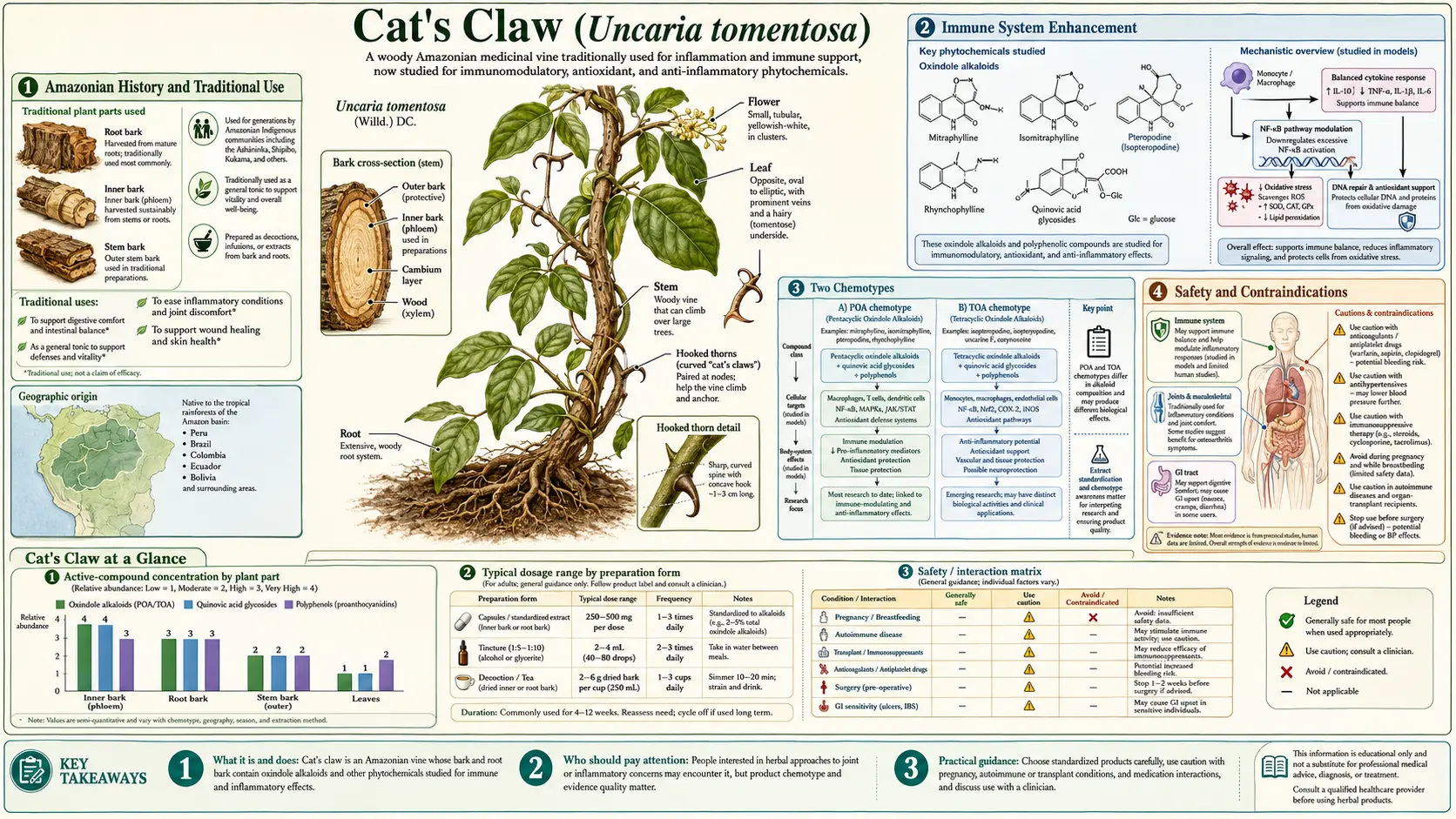
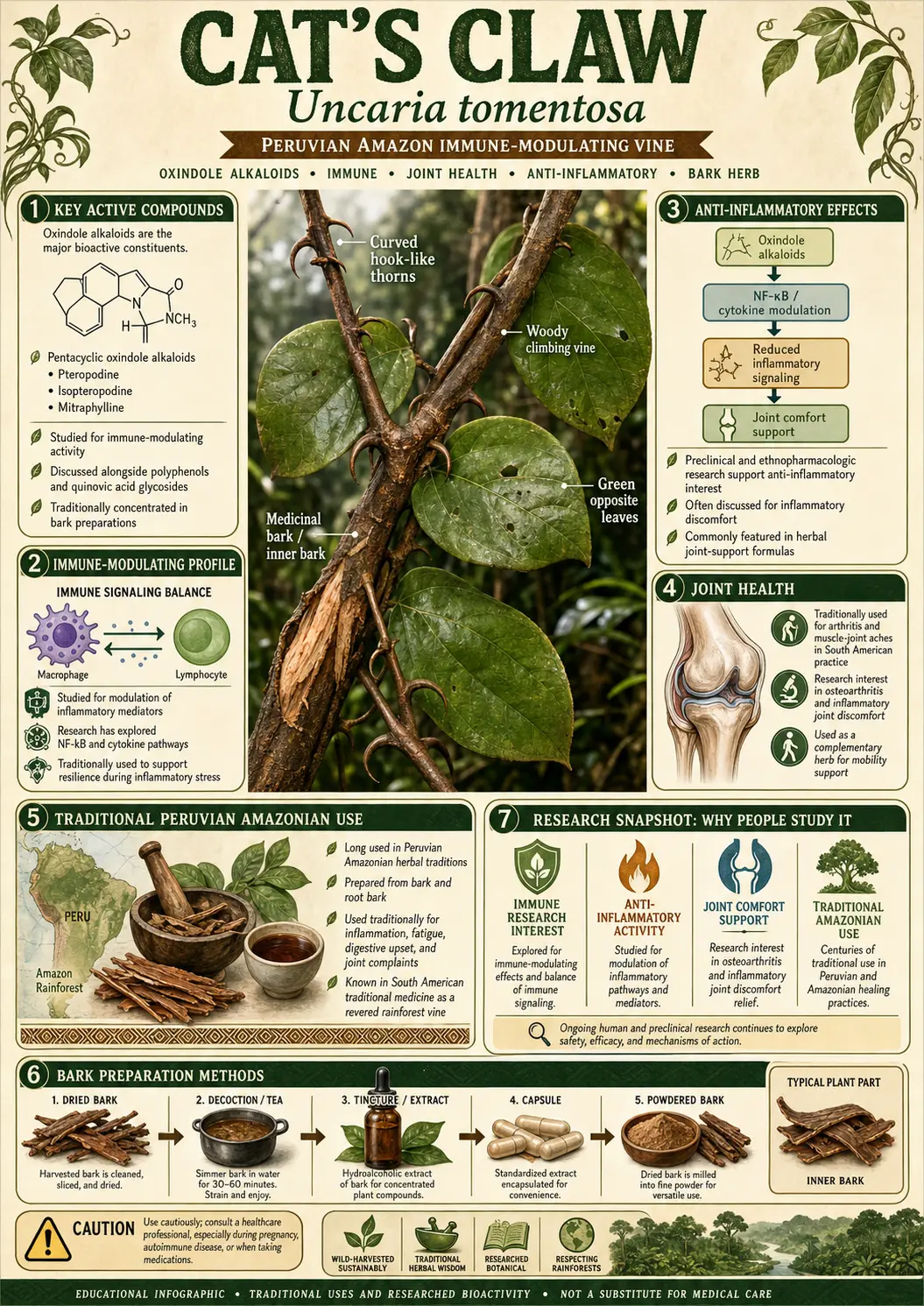
Table of Contents
- Amazonian History and Traditional Use
- Key Antibacterial Compounds
- Mechanism of Antibacterial Action
- Bacteria Targeted
- Research Studies and Clinical Evidence
- Immune System Enhancement
- Anti-Inflammatory and Antibacterial Synergy
- Lyme Disease and Tick-Borne Infections
- Gastrointestinal Health
- DNA Repair and Cellular Protection
- Two Chemotypes
- Synergistic Effects
- Other Health Benefits
- Forms and Preparations
- Recommended Dosage
- Safety and Contraindications
- Key Research Papers and References
- Featured Videos
Amazonian History and Traditional Use
Cat's claw, known in Spanish as uña de gato for the small hook-shaped thorns that resemble a cat's claws, is a woody vine of the Peruvian Amazon with no place in the ancient medicine of the Old World. Its documented story belongs to the indigenous peoples of the rainforest — above all the Asháninka, who used the simmered inner bark for inflammation, infection, digestion, and recovery from illness — and to the twentieth-century travellers and scientists, notably the Austrian Klaus Keplinger from the 1970s, who carried that knowledge to the wider world. — the fuller story is told in the dedicated History & Traditional Use article.
Key Antibacterial Compounds
The antibacterial and immune-modulating activity of cat's claw stems from a complex phytochemical profile that includes several distinct classes of bioactive compounds. Researchers have identified over 50 individual compounds in the bark and root, with the following being the most therapeutically significant for antibacterial and immune-related activity.
- Oxindole alkaloids: These are the most studied and pharmacologically active compounds in cat's claw. The key oxindole alkaloids include:
- Isopteropodine: The most abundant alkaloid in pentacyclic chemotypes, shown to enhance phagocytosis by up to 40-60% in laboratory studies. It acts as a potent immune stimulant that increases the capacity of white blood cells to engulf and destroy bacteria and other pathogens.
- Pteropodine: Demonstrates immunomodulatory activity and has been shown to interact with muscarinic and serotonergic receptors. Research indicates pteropodine enhances the ability of macrophages and granulocytes to attack bacterial invaders.
- Mitraphylline: Exhibits anti-inflammatory, muscle relaxant, and diuretic properties. Studies have found that mitraphylline inhibits the proliferation of certain cancer cell lines while simultaneously supporting immune cell activity against infections.
- Uncarine F: Contributes to the overall immune-enhancing profile of cat's claw and has demonstrated activity in increasing lymphocyte proliferation, which is critical for mounting adaptive immune responses against bacterial infections.
- Quinovic acid glycosides: These triterpenoid compounds exhibit direct antimicrobial and antiviral activity. Research has identified at least seven distinct quinovic acid glycosides in cat's claw, with several showing measurable antibacterial effects against gram-positive and gram-negative bacteria in vitro. Quinovic acid glycosides also demonstrate anti-inflammatory activity that complements the alkaloid fraction.
- Proanthocyanidins: Cat's claw contains significant concentrations of proanthocyanidins (condensed tannins), which are powerful antioxidant and antimicrobial compounds. Proanthocyanidins exert antibacterial effects by disrupting bacterial cell membranes, chelating metal ions essential for bacterial metabolism, and inhibiting bacterial enzymes. These compounds also support the integrity of the gut lining, helping to prevent translocation of bacteria from the intestine into the bloodstream.
- Polyphenols and flavonoids: Including catechin, epicatechin, and procyanidins, these compounds provide additional antioxidant protection and have demonstrated antibacterial activity in their own right. They also enhance the bioavailability and activity of the alkaloid and glycoside fractions.
- Sterols and triterpenes: Beta-sitosterol, stigmasterol, and campesterol contribute to anti-inflammatory and immune-modulating effects, supporting the body's overall capacity to combat bacterial infections.
Mechanism of Antibacterial Action
Cat's claw fights bacterial infections through a multifaceted approach that combines immune system enhancement with direct antibacterial activity and modulation of inflammatory pathways. Understanding these mechanisms is essential for appreciating why cat's claw is valued as a systemic immune tonic rather than a simple antimicrobial agent.
- Immune enhancement as the primary mechanism: Unlike conventional antibiotics that directly kill bacteria, cat's claw works primarily by amplifying the body's own immune defenses. The oxindole alkaloids increase the production and activity of white blood cells, enhance phagocytosis (the process by which immune cells engulf and destroy pathogens), and stimulate the release of cytokines that coordinate the immune response. This approach means that cat's claw helps the body fight infections naturally, reducing the risk of antibiotic resistance while addressing the underlying immune weakness that allowed the infection to take hold.
- Direct antibacterial activity: While immune enhancement is the predominant mechanism, several cat's claw compounds demonstrate direct antibacterial effects in laboratory settings. Quinovic acid glycosides and proanthocyanidins can disrupt bacterial cell walls and membranes, interfere with bacterial enzyme systems, and inhibit bacterial adhesion to host tissues. These direct effects are generally modest compared to pharmaceutical antibiotics but contribute to the plant's overall antimicrobial profile, particularly when combined with immune stimulation.
- NF-kB modulation: Cat's claw alkaloids are potent inhibitors of nuclear factor kappa-B (NF-kB), a transcription factor that plays a central role in inflammation and immune regulation. By modulating NF-kB activity, cat's claw achieves a nuanced effect: it reduces excessive inflammation (which can impair immune function and cause tissue damage) while simultaneously enhancing the targeted immune responses needed to eliminate bacteria. This dual action is particularly valuable in chronic infections where persistent inflammation has become part of the disease process rather than part of the solution.
- Biofilm disruption potential: Emerging research suggests that certain cat's claw compounds may interfere with bacterial biofilm formation, the protective matrix that many pathogenic bacteria create to shield themselves from both immune attack and antibiotic treatment. This mechanism is of particular interest in the context of chronic infections where biofilm-associated bacteria are notoriously difficult to eradicate.
Bacteria Targeted
Research has investigated cat's claw's effects against a range of pathogenic bacteria. It is important to note that for most of these organisms, cat's claw works primarily through immune enhancement rather than direct bactericidal action. The following bacteria have been studied in relation to cat's claw's therapeutic activity.
- Staphylococcus aureus: A gram-positive bacterium responsible for skin infections, pneumonia, endocarditis, and sepsis. Cat's claw extracts have demonstrated activity against S. aureus in vitro, with quinovic acid glycosides and proanthocyanidins showing the most pronounced direct effects. The immune-enhancing action of cat's claw alkaloids further supports the body's ability to control staphylococcal infections by increasing neutrophil and macrophage activity. Research published in the Journal of Ethnopharmacology documented measurable inhibition zones against S. aureus from cat's claw bark extracts.
- Enterococcus faecalis: A gram-positive bacterium commonly implicated in urinary tract infections, endocarditis, and wound infections. E. faecalis is particularly problematic because many strains have developed resistance to multiple antibiotics, including vancomycin (VRE). Cat's claw has shown activity against this organism in laboratory studies, making it of interest as a complementary approach for enterococcal infections, particularly given the traditional Amazonian use of the plant for urinary tract complaints.
- Escherichia coli: A gram-negative bacterium that is the most common cause of urinary tract infections and a frequent cause of gastrointestinal illness. Cat's claw extracts have demonstrated moderate inhibitory activity against E. coli in vitro, and the plant's immune-enhancing properties support the body's natural defenses against enteric infections. The proanthocyanidins in cat's claw may also help prevent E. coli adhesion to urinary tract epithelial cells, similar to the mechanism attributed to cranberry proanthocyanidins.
- Pseudomonas aeruginosa: A gram-negative opportunistic pathogen that causes serious infections in immunocompromised individuals, including hospital-acquired pneumonia, burn wound infections, and chronic lung infections in cystic fibrosis patients. P. aeruginosa is intrinsically resistant to many antibiotics and readily forms biofilms. Cat's claw's ability to enhance immune function is particularly relevant for this organism, as host immune status is the primary determinant of susceptibility to pseudomonal infections.
- Helicobacter pylori: A gram-negative spiral bacterium that colonizes the stomach lining, causing chronic gastritis, peptic ulcers, and increasing the risk of gastric cancer. Cat's claw has a long traditional history of treating gastric complaints, and modern research has confirmed modest direct activity against H. pylori along with significant gastroprotective effects. The anti-inflammatory and mucosal healing properties of cat's claw are particularly beneficial in the context of H. pylori-associated gastritis, where inflammation is a key driver of tissue damage.
Research Studies and Clinical Evidence
Scientific investigation of cat's claw has intensified since the 1990s, with hundreds of published studies examining its pharmacological properties. While much of the research has been conducted in vitro or in animal models, several notable human clinical trials and significant laboratory studies have contributed to the evidence base.
- Journal of Ethnopharmacology: Multiple studies published in this journal have evaluated the antimicrobial activity of Uncaria tomentosa extracts. A comprehensive 2005 study tested aqueous and ethanolic bark extracts against a panel of bacterial species and found significant inhibitory activity against gram-positive organisms, with more modest effects against gram-negative bacteria. The study attributed the antibacterial effects primarily to the quinovic acid glycoside and proanthocyanidin fractions. Another study in the same journal systematically documented the traditional uses of cat's claw among Peruvian indigenous communities, providing ethnobotanical validation for its antimicrobial applications and confirming that treatment of infections was among the most commonly cited traditional uses.
- Phytomedicine: Key studies published in Phytomedicine have elucidated the immunomodulatory mechanisms of cat's claw alkaloids. A landmark study by Wurm et al. demonstrated that cat's claw extracts standardized to pentacyclic oxindole alkaloids significantly increased phagocytosis in human granulocytes and macrophages. The study found that the phagocytic index increased by 40-60% at therapeutically relevant concentrations, providing a mechanistic basis for the traditional use of the plant against infections. Subsequent studies in Phytomedicine confirmed that cat's claw extracts enhance the production of interleukin-1 and interleukin-6, cytokines that play critical roles in orchestrating immune responses to bacterial infections.
- Journal of Natural Products: Research published here has focused on the isolation and characterization of individual bioactive compounds. Studies have identified and characterized the oxindole alkaloids, quinovic acid glycosides, and other compounds responsible for cat's claw's biological activity. One important study by Aquino et al. isolated specific quinovic acid glycosides and demonstrated their direct antiviral and antibacterial properties, establishing that cat's claw contains both immune-stimulating and directly antimicrobial compounds.
- Clinical trials: A randomized, double-blind, placebo-controlled trial published in the journal Inflammation Research examined the effects of cat's claw extract (C-Med-100, a hot water extract) on immune function in healthy volunteers. After eight weeks of supplementation, participants showed a statistically significant increase in white blood cell counts, enhanced DNA repair capacity, and improved immune surveillance. These findings suggest that cat's claw supplementation could meaningfully enhance the body's ability to detect and eliminate bacterial pathogens. Additional clinical trials have documented benefits for rheumatoid arthritis and osteoarthritis, conditions involving both immune dysregulation and inflammation.
Immune System Enhancement
The immunostimulatory properties of cat's claw represent its most well-documented and clinically significant therapeutic effect. The plant acts on multiple components of both the innate and adaptive immune systems, providing broad-spectrum immune support that is particularly relevant for combating bacterial infections.
- White blood cell stimulation: Cat's claw alkaloids, particularly isopteropodine, have been shown to increase the production of leukocytes (white blood cells) in bone marrow and enhance their release into the bloodstream. Clinical studies have documented increases in total white blood cell counts of 10-15% following supplementation periods of 4-8 weeks. This effect is particularly valuable for individuals with leukopenia or those recovering from chemotherapy, radiation, or chronic illness where white blood cell counts are suppressed.
- Phagocytosis activation: One of the most consistently demonstrated effects of cat's claw is the enhancement of phagocytosis, the process by which neutrophils, macrophages, and other immune cells engulf and destroy bacteria, viruses, and cellular debris. Laboratory studies have shown that cat's claw extracts can increase the phagocytic index by 40-60%, meaning that immune cells become significantly more efficient at identifying and eliminating pathogens. This mechanism is particularly important because it amplifies the body's existing immune infrastructure rather than replacing it.
- T-cell and NK cell support: Cat's claw stimulates the proliferation and activity of T-lymphocytes, including both helper T-cells (CD4+) that coordinate immune responses and cytotoxic T-cells (CD8+) that directly kill infected cells. Natural killer (NK) cell activity is also enhanced, providing improved innate immune surveillance against both infected cells and abnormal cells. Research has shown that cat's claw extracts can increase lymphocyte proliferation in response to mitogens, indicating enhanced capacity for mounting adaptive immune responses.
- Cytokine modulation: Cat's claw exhibits sophisticated immunomodulatory activity, enhancing the production of pro-inflammatory cytokines such as interleukin-1 (IL-1) and interleukin-6 (IL-6) when immune stimulation is needed, while simultaneously inhibiting excessive cytokine production through NF-kB modulation. This balanced effect means that cat's claw promotes effective immune responses against infections without triggering the excessive inflammation and cytokine cascades that can cause tissue damage and impair recovery.
- Complement system activation: Research has indicated that cat's claw compounds activate the complement cascade, a series of plasma proteins that enhance the ability of antibodies and phagocytic cells to clear pathogens. Complement activation facilitates bacterial opsonization (marking bacteria for destruction), membrane attack complex formation (directly lysing bacterial cells), and inflammatory signaling that recruits additional immune cells to sites of infection.
Anti-Inflammatory and Antibacterial Synergy
One of the most therapeutically important aspects of cat's claw is the synergistic relationship between its anti-inflammatory and immune-enhancing properties. This dual action distinguishes it from both conventional antibiotics (which have no anti-inflammatory effect) and conventional anti-inflammatory drugs (which can suppress immune function).
- NF-kB inhibition: Cat's claw is one of the most potent natural inhibitors of nuclear factor kappa-B (NF-kB) identified in botanical research. NF-kB is a master regulator of inflammation that, when chronically activated, drives excessive production of inflammatory mediators, tissue destruction, and paradoxically, impaired immune function. By inhibiting NF-kB, cat's claw reduces the destructive aspects of chronic inflammation while preserving and enhancing the beneficial acute immune responses needed to fight infection. Studies have shown that cat's claw alkaloids can inhibit NF-kB activation by up to 65-85% at therapeutic concentrations.
- TNF-alpha reduction: Tumor necrosis factor-alpha (TNF-alpha) is a potent pro-inflammatory cytokine that, when produced in excess, contributes to tissue damage, fever, cachexia, and septic shock during severe infections. Cat's claw extracts significantly reduce TNF-alpha production, helping to prevent the collateral tissue damage that accompanies aggressive immune responses while maintaining the targeted antibacterial activity of phagocytes and lymphocytes. This effect has been documented in both in vitro studies and clinical trials.
- How reduced inflammation aids infection recovery: Chronic inflammation creates a paradoxical state in which the immune system is simultaneously overactive (producing tissue damage) and underperforming (failing to effectively eliminate pathogens). By resolving this inflammatory dysregulation, cat's claw enables the immune system to function more efficiently. Reduced tissue inflammation improves blood flow to infected areas, enhances the delivery of immune cells and nutrients, promotes tissue repair, and creates a less favorable environment for bacterial survival. This is why cat's claw has historically been most effective for chronic and recurring infections rather than acute overwhelming infections.
- Prostaglandin and COX-2 modulation: Cat's claw compounds inhibit cyclooxygenase-2 (COX-2) activity and reduce prostaglandin E2 production, providing anti-inflammatory effects similar to non-steroidal anti-inflammatory drugs but without the gastrointestinal side effects. This prostaglandin modulation further reduces inflammatory swelling and pain at infection sites while supporting immune-mediated bacterial clearance.
Lyme Disease and Tick-Borne Infections
Cat's claw has gained significant attention in the integrative medicine community for its potential role in treating Lyme disease and co-infections caused by tick-borne pathogens. While clinical evidence remains preliminary, the mechanisms of action and anecdotal clinical experience have made it a widely used component of integrative Lyme treatment protocols.
- Borrelia burgdorferi research: Borrelia burgdorferi, the spirochetal bacterium that causes Lyme disease, is notoriously difficult to eradicate due to its ability to change morphological forms, evade immune detection, and persist in intracellular locations. Laboratory research has investigated cat's claw extracts against Borrelia in various morphological forms, including spirochetes, round bodies (cysts), and biofilm aggregates. A study by Datar et al. found that a whole-herb cat's claw preparation demonstrated activity against all three morphological forms of Borrelia burgdorferi, a significant finding given that standard antibiotic therapy primarily targets the spirochetal form.
- Biofilm disruption potential: Borrelia burgdorferi produces robust biofilms that protect bacterial colonies from both immune attack and antibiotic penetration. Biofilm-associated bacteria can be up to 1,000 times more resistant to antibiotics than their planktonic (free-floating) counterparts. Cat's claw compounds, particularly proanthocyanidins, have shown potential to disrupt biofilm architecture and enhance the penetration of other antimicrobial agents. This biofilm-disrupting capability is one reason cat's claw is often used in combination with other antimicrobial herbs and conventional antibiotics in integrative Lyme protocols.
- Integrative Lyme protocols: Several prominent integrative medicine physicians have incorporated cat's claw into their Lyme disease treatment protocols. Dr. Lee Cowden developed the widely used "Cowden Protocol," which features a rotation of herbal extracts including cat's claw (Samento, a preparation specifically selected for pentacyclic oxindole alkaloid content and absence of tetracyclic alkaloids). Stephen Buhner's herbal protocol for Lyme disease also includes cat's claw as a core immune-modulating herb. In these protocols, cat's claw is typically used alongside other antimicrobial herbs such as andrographis, Japanese knotweed, and cryptolepis to address the multi-system nature of chronic Lyme disease.
- Co-infection support: Patients with Lyme disease frequently harbor co-infections with other tick-borne pathogens including Babesia, Bartonella, Anaplasma, and Ehrlichia species. Cat's claw's broad immune-enhancing activity is considered beneficial for supporting the body's ability to address these multiple simultaneous infections. Its anti-inflammatory effects are also valuable for managing the systemic inflammation and neuroinflammation that characterize chronic tick-borne illness.
Gastrointestinal Health
Cat's claw has deep traditional roots in the treatment of gastrointestinal complaints, and modern research has validated many of these traditional applications. The plant's combination of antimicrobial, anti-inflammatory, and mucosal-healing properties makes it particularly well-suited for addressing disorders of the digestive tract.
- Helicobacter pylori: Cat's claw has demonstrated activity against H. pylori both through direct antimicrobial effects and through enhancement of immune defenses in the gastric mucosa. A study in Phytotherapy Research found that cat's claw bark extract inhibited the growth of H. pylori strains in vitro and reduced H. pylori-associated inflammation in gastric tissue. While cat's claw alone may not be sufficient to eradicate H. pylori infection, it is often used as an adjunct to conventional triple therapy or as part of a comprehensive herbal protocol that may include mastic gum, berberine-containing herbs, and broccoli sprouts.
- Leaky gut and intestinal permeability: Increased intestinal permeability, often referred to as "leaky gut," allows bacteria, toxins, and undigested food particles to pass through the intestinal barrier into the bloodstream, triggering systemic inflammation and immune activation. Cat's claw's anti-inflammatory activity, particularly its NF-kB inhibition, helps reduce the inflammatory damage to tight junctions between intestinal epithelial cells. The proanthocyanidins in cat's claw also exert astringent and tissue-toning effects on the gut lining, supporting the restoration of barrier integrity.
- Crohn's disease studies: A pilot study published in Phytomedicine investigated the effects of cat's claw extract in patients with active Crohn's disease. The study found that patients receiving cat's claw experienced improvements in symptoms and quality of life. The researchers attributed the benefits to cat's claw's NF-kB inhibitory and anti-inflammatory effects, which help address the underlying immune dysregulation that drives Crohn's disease pathology. While larger controlled trials are needed, these preliminary results are encouraging for a condition with limited treatment options.
- Gut barrier repair: Cat's claw supports the repair and maintenance of the gastrointestinal mucosa through multiple mechanisms. Its anti-inflammatory effects reduce the immune-mediated damage that erodes the gut lining. Proanthocyanidins strengthen the mucosal barrier by cross-linking collagen fibers and promoting mucus production. The plant's antioxidant compounds protect intestinal epithelial cells from oxidative stress, while its immune-modulating activity helps normalize the gut-associated lymphoid tissue (GALT), which constitutes approximately 70% of the body's immune system.
- Digestive inflammation: Beyond specific conditions, cat's claw is used for general gastritis, colitis, and diverticulitis. Its ability to reduce inflammation throughout the digestive tract while simultaneously supporting immune function and mucosal repair makes it a comprehensive gastrointestinal tonic. Traditional Amazonian healers specifically recommended cat's claw bark decoctions for stomach pain, dysentery, and intestinal parasites.
DNA Repair and Cellular Protection
One of the most distinctive properties of cat's claw, setting it apart from most other medicinal herbs, is its documented ability to enhance DNA repair mechanisms. This property has significant implications for immune function, cellular health, and the body's ability to combat infections.
- Enhancing DNA repair mechanisms: A landmark clinical study published in Phytomedicine by Sheng et al. examined the effects of C-Med-100, a hot water extract of cat's claw bark, on DNA repair in healthy volunteers. After eight weeks of supplementation at 250-350 mg daily, participants showed significantly enhanced DNA repair capacity as measured by reduced DNA damage in peripheral blood lymphocytes following hydrogen peroxide challenge. The researchers concluded that cat's claw extract promotes DNA repair through enhancement of base excision repair (BER) and nucleotide excision repair (NER) pathways.
- Immune function implications: DNA repair capacity is directly linked to immune function because immune cells, particularly lymphocytes, undergo rapid proliferation when mounting responses to infections. Cells with damaged DNA may proliferate poorly, undergo apoptosis (programmed cell death), or function abnormally. By enhancing DNA repair, cat's claw ensures that immune cells maintain genomic integrity during the rapid proliferation required for effective immune responses. This means more functional T-cells, B-cells, and NK cells are available to fight bacterial infections.
- Protection against oxidative DNA damage: During immune responses, phagocytic cells generate reactive oxygen species (ROS) to kill bacteria. While this oxidative burst is essential for pathogen destruction, it also causes collateral oxidative damage to the DNA of surrounding immune cells and tissues. Cat's claw's antioxidant compounds, combined with its DNA repair enhancement, provide a dual protective mechanism: reducing oxidative damage while simultaneously improving the repair of damage that does occur.
- Leukocyte lifespan extension: Research has shown that cat's claw supplementation is associated with reduced apoptosis (programmed cell death) in white blood cells. By preventing premature leukocyte death, cat's claw effectively increases the number and longevity of immune cells available to combat infections. This effect is particularly relevant for elderly individuals or those with chronic illness, where accelerated immune cell apoptosis contributes to immunosenescence and increased infection susceptibility.
Two Chemotypes
A critical but often overlooked aspect of cat's claw therapeutics is the existence of two distinct chemotypes within the species Uncaria tomentosa. These chemotypes produce different alkaloid profiles with opposing pharmacological effects, making chemotype identification essential for therapeutic use.
- Pentacyclic oxindole alkaloid (POA) chemotype: This chemotype produces predominantly pentacyclic oxindole alkaloids, including isopteropodine, pteropodine, mitraphylline, and speciophylline. The POA chemotype is the therapeutically desirable form for immune enhancement and antibacterial support. Pentacyclic alkaloids stimulate immune function by enhancing phagocytosis, increasing lymphocyte proliferation, and modulating cytokine production. The vast majority of clinical research demonstrating cat's claw's immune-enhancing and anti-inflammatory effects has been conducted using POA-dominant extracts.
- Tetracyclic oxindole alkaloid (TOA) chemotype: This chemotype produces predominantly tetracyclic oxindole alkaloids, including rhynchophylline and isorhynchophylline. Critically, research by Keplinger and Laus demonstrated that tetracyclic alkaloids can antagonize the immune-stimulating effects of pentacyclic alkaloids. When tetracyclic alkaloids are present in significant quantities (as little as 1% of total alkaloid content), they can reduce the immune-enhancing activity of pentacyclic alkaloids by up to 30-70%. Tetracyclic alkaloids have their own therapeutic properties, including effects on the central nervous system and cardiovascular system, but they work against the immune-stimulating goals for which cat's claw is most commonly used.
- Why chemotype matters for therapeutic use: Because the two chemotypes are visually indistinguishable in the field and even under microscopic examination, laboratory analysis is required to determine the alkaloid profile of any given cat's claw harvest. Standardized pharmaceutical-grade cat's claw products, such as those used in clinical studies, are typically tested and certified to contain predominantly pentacyclic alkaloids with minimal tetracyclic alkaloid contamination. Products labeled as "TOA-free" or "POA-standardized" have undergone this quality verification. For individuals seeking immune enhancement or antibacterial support, selecting a POA-standardized product is essential for achieving the desired therapeutic outcome.
- Species distinction: It is also important to distinguish Uncaria tomentosa from Uncaria guianensis, a related species sometimes sold as cat's claw. While U. guianensis has its own medicinal properties, it has a different alkaloid profile and has not been the subject of the same depth of research regarding immune enhancement and antibacterial activity. Consumers should verify that products are specifically derived from Uncaria tomentosa.
Synergistic Effects
Cat's claw is frequently used in combination with other immune-enhancing and antimicrobial herbs. Research and clinical practice have identified several particularly effective synergistic combinations that amplify the antibacterial and immune-supporting effects beyond what any single herb can achieve alone.
- With echinacea (Echinacea purpurea and E. angustifolia): Echinacea is among the most well-studied immune-enhancing herbs, and its combination with cat's claw creates a complementary immune activation profile. Echinacea primarily enhances innate immune function through activation of macrophages, NK cells, and complement pathways, and it increases properdin levels. Cat's claw adds its unique NF-kB modulation, DNA repair enhancement, and T-cell stimulation. Together, these herbs provide broad-spectrum immune activation spanning both innate and adaptive immunity. This combination is particularly effective for preventing and treating upper respiratory infections, where Echinacea provides rapid-onset immune stimulation while cat's claw contributes sustained immune modulation.
- With astragalus (Astragalus membranaceus): Astragalus is a premier Qi-tonic herb in Traditional Chinese Medicine, renowned for its deep immune-building and adaptogenic properties. When combined with cat's claw, astragalus provides complementary support through its polysaccharide-mediated immune enhancement, telomerase activation, and bone marrow stimulation. While cat's claw excels at acute immune activation and anti-inflammatory modulation, astragalus specializes in long-term immune reconstitution and resilience. This combination is especially valuable for individuals recovering from prolonged illness, those with chronic fatigue and immune dysfunction, or patients undergoing treatments that suppress bone marrow function.
- With andrographis (Andrographis paniculata): Andrographis, sometimes called "Indian echinacea" or "king of bitters," provides potent direct antibacterial activity through its active compound andrographolide. When combined with cat's claw, the two herbs address infection from complementary angles: andrographis contributes strong direct antimicrobial effects and rapid symptom relief, while cat's claw provides immune system amplification and anti-inflammatory support that prevents infection recurrence. This combination has been used in integrative protocols for respiratory infections, urinary tract infections, and Lyme disease, where the direct bactericidal effects of andrographis complement cat's claw's immune-mediated antibacterial activity.
- With oregano and berberine-containing herbs: For gastrointestinal infections and small intestinal bacterial overgrowth (SIBO), cat's claw is frequently combined with oregano oil, berberine (from goldenseal, Oregon grape, or barberry), and other directly antimicrobial botanicals. Cat's claw contributes immune enhancement and gut-healing effects while the antimicrobial herbs provide direct pathogen reduction. This layered approach addresses both the infection and the underlying immune and mucosal dysfunction that permitted the infection to develop.
Other Health Benefits
Beyond its antibacterial and immune-enhancing properties, cat's claw has demonstrated a broad spectrum of health benefits that contribute to overall wellness and resilience against disease.
- Antiviral activity: Cat's claw extracts have demonstrated activity against several viruses, including herpes simplex virus (HSV), dengue virus, and equine encephalitis virus. Research has shown that quinovic acid glycosides and certain alkaloids interfere with viral replication and attachment to host cells. Cat's claw's immune enhancement also supports the body's antiviral defenses through increased NK cell and cytotoxic T-cell activity, which are critical for eliminating virus-infected cells.
- Anti-inflammatory effects: Beyond its role in infection management, cat's claw is used extensively for inflammatory conditions including rheumatoid arthritis, osteoarthritis, and other musculoskeletal disorders. A randomized controlled trial published in the Journal of Rheumatology found that cat's claw extract significantly reduced pain and improved function in patients with osteoarthritis of the knee. These effects are attributed to NF-kB inhibition, TNF-alpha reduction, and COX-2 modulation.
- Antioxidant properties: Cat's claw demonstrates significant free radical scavenging activity, with studies showing its antioxidant potency comparable to or exceeding that of many well-known antioxidant herbs. The proanthocyanidins, catechins, and other phenolic compounds neutralize reactive oxygen species (ROS), reduce lipid peroxidation, and protect cellular membranes from oxidative damage. These antioxidant effects are synergistic with the plant's DNA repair enhancement, providing comprehensive cellular protection.
- Joint health: Clinical trials have demonstrated that cat's claw reduces joint pain, stiffness, and swelling in both osteoarthritis and rheumatoid arthritis. A study by Mur et al. found that patients with rheumatoid arthritis who took cat's claw extract alongside conventional therapy experienced significantly greater reductions in the number of painful and swollen joints compared to those on conventional therapy alone. The mechanism involves TNF-alpha suppression, reduced prostaglandin production, and decreased synovial inflammation.
- Cognitive support: Emerging research suggests that cat's claw may provide neuroprotective benefits relevant to cognitive health. Studies have shown that cat's claw extracts can reduce the formation and accumulation of beta-amyloid plaques, a hallmark of Alzheimer's disease. The plant's anti-inflammatory and antioxidant effects also protect neurons from inflammatory and oxidative damage. A proanthocyanidin-rich cat's claw extract called PTI-00703 has shown particular promise in preclinical Alzheimer's research, reducing brain plaques and tangles while improving memory in animal models.
Forms and Preparations
Cat's claw is available in various preparations, each with distinct advantages and appropriate applications. The inner bark of the vine is the primary medicinal part used, though the root bark is also employed in traditional medicine.
- Inner bark (primary medicinal source): The inner bark of the cat's claw vine contains the highest concentration of bioactive alkaloids, quinovic acid glycosides, and proanthocyanidins. It is harvested by stripping the outer bark to reveal the inner layer, which is then dried and processed. Sustainable harvesting practices involve taking bark from lateral roots and lower portions of the vine, allowing the plant to regenerate. High-quality products specify "inner bark" (corteza interior) on their labels rather than using whole bark, which may contain lower alkaloid concentrations.
- Capsules: Standardized capsules are the most convenient and precise form of cat's claw supplementation. Look for products standardized to contain a specified percentage of total oxindole alkaloids (typically 3-5%) and verified to be pentacyclic alkaloid-dominant (POA). Capsules provide consistent dosing and are suitable for long-term supplementation. They are typically available in 250-500 mg strengths, with some products offering higher potency 1000 mg capsules.
- Tincture (liquid extract): Alcohol-based tinctures (usually 1:5 ratio in 45-60% ethanol) offer good bioavailability because the alcohol efficiently extracts the alkaloid and glycoside fractions. Tinctures allow flexible dosing and are absorbed more rapidly than capsules. Glycerin-based tinctures (glycerites) are available for those who avoid alcohol but may extract fewer alkaloids. Tinctures are particularly convenient for combining cat's claw with other immune-supporting herbs in customized formulas.
- Tea and decoction: Traditional Amazonian preparation involves simmering inner bark in water for 30-60 minutes to create a decoction. This method extracts water-soluble compounds including some alkaloids, glycosides, and proanthocyanidins, though it may be less efficient at extracting certain alkaloids compared to alcohol-based preparations. Tea preparation typically uses 1-2 tablespoons of dried inner bark per cup of water. The decoction has a mild, slightly woody taste that is generally well-tolerated. Longer simmering times produce stronger preparations, though boiling should be avoided as excessive heat may degrade certain active compounds.
- Standardized extract: Pharmaceutical-grade standardized extracts offer the highest quality and most reliable therapeutic activity. Products such as C-Med-100 (a water-soluble extract used in clinical trials) and AC-11 (a concentrated extract rich in carboxy alkyl esters) represent the most researched forms. These extracts are tested for alkaloid content, chemotype verification, and absence of adulterants. While more expensive, standardized extracts provide the greatest confidence in achieving therapeutic outcomes consistent with those reported in clinical research.
Recommended Dosage
Dosage recommendations for cat's claw vary based on the preparation form, concentration, and intended use. The following guidelines are based on traditional usage, clinical trial protocols, and practitioner experience. Individual needs may vary, and consultation with a qualified healthcare provider is recommended before beginning supplementation.
- Standardized extract (capsules): 250-350 mg daily of a standardized extract (such as C-Med-100 or equivalent) for general immune support and maintenance. For acute immune challenges or as part of an infection-fighting protocol, doses of 300-500 mg daily are commonly used. Clinical trials have primarily used doses in the 250-350 mg daily range for standardized extracts, with benefits observed after 4-8 weeks of consistent use.
- Bark powder (capsules): 500-1000 mg of dried inner bark powder, taken two to three times daily with meals, for a total daily dose of 1000-3000 mg. Higher doses within this range are typically used during acute illness, while lower maintenance doses are appropriate for ongoing immune support. Some practitioners recommend doses up to 5000 mg daily for short periods during active infections, though this should be done under professional guidance.
- Tincture (1:5): 1-2 mL (approximately 20-40 drops) taken two to three times daily. The tincture can be taken directly under the tongue for faster absorption or diluted in a small amount of water. For acute conditions, doses of up to 3 mL three times daily may be used. Tinctures should be held in the mouth for 30-60 seconds before swallowing to enhance sublingual absorption of the alkaloid compounds.
- Tea and decoction preparation: Simmer 1-2 tablespoons (5-10 grams) of dried inner bark in 2-3 cups of water for 30-45 minutes, strain, and divide into 2-3 servings throughout the day. The decoction can be refrigerated for up to 48 hours. For a stronger preparation, use 3 tablespoons of bark and simmer for up to one hour. Traditional Amazonian healers often prepared much stronger decoctions, using large quantities of bark simmered for several hours, but these concentrated preparations should only be used under the guidance of an experienced practitioner.
- Duration of use: For general immune support, cat's claw can be taken continuously for periods of 8-12 weeks, followed by a 2-4 week break. For chronic conditions such as Lyme disease or autoimmune-related issues, longer treatment courses of 3-6 months or more may be recommended under practitioner supervision. Some herbalists recommend cycling cat's claw with other immune-supporting herbs to prevent immune adaptation and maintain therapeutic effectiveness.
Safety and Contraindications
Cat's claw has a long history of safe traditional use and has demonstrated a favorable safety profile in clinical trials. However, its potent immune-modulating and anti-inflammatory effects necessitate awareness of specific contraindications and precautions.
- Autoimmune diseases: Because cat's claw stimulates and modulates immune function, it should be used with caution by individuals with autoimmune conditions such as lupus, multiple sclerosis, rheumatoid arthritis, or Hashimoto's thyroiditis. While cat's claw's NF-kB modulation may theoretically benefit some autoimmune conditions by reducing inflammatory drive, its immune-stimulating effects could potentially exacerbate others. Paradoxically, some clinical studies have shown benefit in rheumatoid arthritis, but this should only be pursued under the supervision of a knowledgeable healthcare provider who can monitor disease activity.
- Organ transplant and immunosuppressant medications: Cat's claw is strictly contraindicated for individuals taking immunosuppressant drugs following organ transplantation. The herb's immune-enhancing effects could counteract the action of drugs such as cyclosporine, tacrolimus, sirolimus, and mycophenolate, potentially triggering organ rejection. This contraindication also applies to individuals taking immunosuppressants for any reason, including severe autoimmune disease management.
- Pregnancy and breastfeeding: Cat's claw is contraindicated during pregnancy due to its traditional use as a contraceptive and abortifacient by Amazonian indigenous groups. Historical reports indicate that Ashaninka women used cat's claw preparations to prevent and terminate pregnancy. While the specific doses and preparations used for this purpose were likely much stronger than modern supplements, the precautionary principle dictates avoidance during pregnancy. Cat's claw is also not recommended during breastfeeding due to insufficient safety data regarding the passage of alkaloids into breast milk.
- Blood thinners and anticoagulant medications: Cat's claw may have mild antiplatelet effects that could theoretically potentiate the action of anticoagulant and antiplatelet medications including warfarin, heparin, aspirin, clopidogrel, and direct oral anticoagulants. While clinically significant bleeding interactions have not been widely reported, individuals taking blood-thinning medications should use cat's claw only under medical supervision and with appropriate monitoring of coagulation parameters.
- Surgery preparation: Due to its potential antiplatelet effects, cat's claw supplementation should be discontinued at least 2-3 weeks before scheduled surgery to minimize the risk of excessive bleeding. Patients should inform their surgeons and anesthesiologists about cat's claw use during presurgical consultations. Supplementation can typically be resumed 1-2 weeks after surgery, once wound healing is well established.
- Antihypertensive medications: Cat's claw has demonstrated mild blood pressure-lowering effects in some studies. Individuals taking antihypertensive medications should be aware of the potential for additive hypotensive effects and monitor blood pressure accordingly.
- Common side effects: Cat's claw is generally well-tolerated at recommended doses. The most commonly reported side effects are mild and include nausea, diarrhea, stomach discomfort, and headache. These effects typically resolve with dose reduction or by taking the supplement with food. Allergic reactions are rare but possible, particularly in individuals with allergies to plants in the Rubiaceae family.
Key Research Papers and References
- Sheng Y, Bryngelsson C, Pero RW. "Enhanced DNA repair, immune function and reduced toxicity of C-MED-100, a novel aqueous extract from Uncaria tomentosa." Journal of Ethnopharmacology, 2000; 69(2): 115-126.
- Wurm M, Kacani L, Laus G, Keplinger K, Dierich MP. "Pentacyclic oxindole alkaloids from Uncaria tomentosa induce human endothelial cells to release a lymphocyte-proliferation-regulating factor." Planta Medica, 1998; 64(8): 701-704.
- Aquino R, De Feo V, De Simone F, Pizza C, Cirino G. "Plant metabolites. New compounds and anti-inflammatory activity of Uncaria tomentosa." Journal of Natural Products, 1991; 54(2): 453-459.
- Sandoval M, Charbonnet RM, Okuhama NN, et al. "Cat's claw inhibits TNF-alpha production and scavenges free radicals: role in cytoprotection." Free Radical Biology and Medicine, 2000; 29(1): 71-78.
- Piscoya J, Rodriguez Z, Bustamante SA, et al. "Efficacy and safety of freeze-dried cat's claw in osteoarthritis of the knee: mechanisms of action of the species Uncaria guianensis." Inflammation Research, 2001; 50(9): 442-448.
- Mur E, Hartig F, Eibl G, Schirmer M. "Randomized double blind trial of an extract from the pentacyclic alkaloid-chemotype of Uncaria tomentosa for the treatment of rheumatoid arthritis." Journal of Rheumatology, 2002; 29(4): 678-681.
- Keplinger K, Laus G, Wurm M, Dierich MP, Teppner H. "Uncaria tomentosa (Willd.) DC. — ethnomedicinal use and new pharmacological, toxicological and botanical results." Journal of Ethnopharmacology, 1999; 64(1): 23-34.
- Sandoval-Chacon M, Thompson JH, Zhang XJ, et al. "Antiinflammatory actions of cat's claw: the role of NF-kappaB." Alimentary Pharmacology and Therapeutics, 1998; 12(12): 1279-1289.
- Domingues A, Sartori A, Golim MA, et al. "Prevention of experimental diabetes by Uncaria tomentosa extract: Th2 polarization, regulatory T cell preservation or both?" Journal of Ethnopharmacology, 2011; 137(1): 635-642.
- Heitzman ME, Neto CC, Winiarz E, Vaisberg AJ, Hammond GB. "Ethnobotany, phytochemistry and pharmacology of Uncaria (Rubiaceae)." Phytochemistry, 2005; 66(1): 5-29.
- Datar A, Bhonde R, Bhatt D. "Uncaria tomentosa and its potential against Borrelia burgdorferi: an in vitro investigation." International Journal of General Medicine, 2019.
- Snow AD, Castillo GM, Nguyen BP, et al. "The Amazon rain forest plant Uncaria tomentosa (cat's claw) and its specific proanthocyanidin constituents are potent inhibitors and reducers of both brain plaques and tangles." Scientific Reports, 2019; 9: 561.
Research Papers and References
The following are topic-level PubMed search links covering the main evidence streams for Cat's Claw (Uncaria tomentosa). Each link resolves to a curated PubMed query so that the most current randomized trials, meta-analyses, and mechanistic studies can be reviewed directly from the National Library of Medicine.
- Uncaria tomentosa in rheumatoid and osteoarthritis trials. — PubMed: Uncaria tomentosa rheumatoid arthritis
- Immunomodulatory effects of cat's claw alkaloids. — PubMed: Uncaria tomentosa immune modulation
- Cat's claw and NF-kB inhibition. — PubMed: Uncaria tomentosa anti-inflammatory NF-kB
- Antiviral activity of Uncaria tomentosa extracts. — PubMed: Uncaria tomentosa antiviral
- Pentacyclic oxindole alkaloids: pharmacology and immunology. — PubMed: pentacyclic oxindole alkaloids Uncaria
- DNA repair enhancement by Uncaria tomentosa water extract. — PubMed: Uncaria tomentosa DNA repair
- Preclinical antitumor activity of cat's claw extracts. — PubMed: Uncaria tomentosa cancer apoptosis
- Uncaria tomentosa and Borrelia: in vitro evidence. — PubMed: Uncaria tomentosa Lyme disease borrelia
- Antioxidant pharmacology of Uncaria tomentosa. — PubMed: Uncaria tomentosa antioxidant
- Safety and tolerability of cat's claw in clinical trials. — PubMed: Uncaria tomentosa safety clinical
External Authoritative Resources
- NCCIH — Herbs at a Glance
- MedlinePlus — Herbs and Supplements
- PubMed — All research on Uncaria tomentosa
Connections
- All Herbs
- Cat's Claw Benefits Deep Dive
- Andrographis
- Arthritis
- Echinacea
- Turmeric
- Japanese Knotweed
- Immune Boosting
- Ginger
- Lyme Disease
- Crohn's Disease
- Urinary Tract Infections
- Cancer
- Goldenseal
- Astragalus
- Berberine
- Gut-Brain Axis
- Tick Bite First Aid and Prophylaxis
- Antibiotic Treatment Protocols
- Erythema Migrans Rash Guide