Pau d'Arco (Tabebuia impetiginosa / Handroanthus impetiginosus)
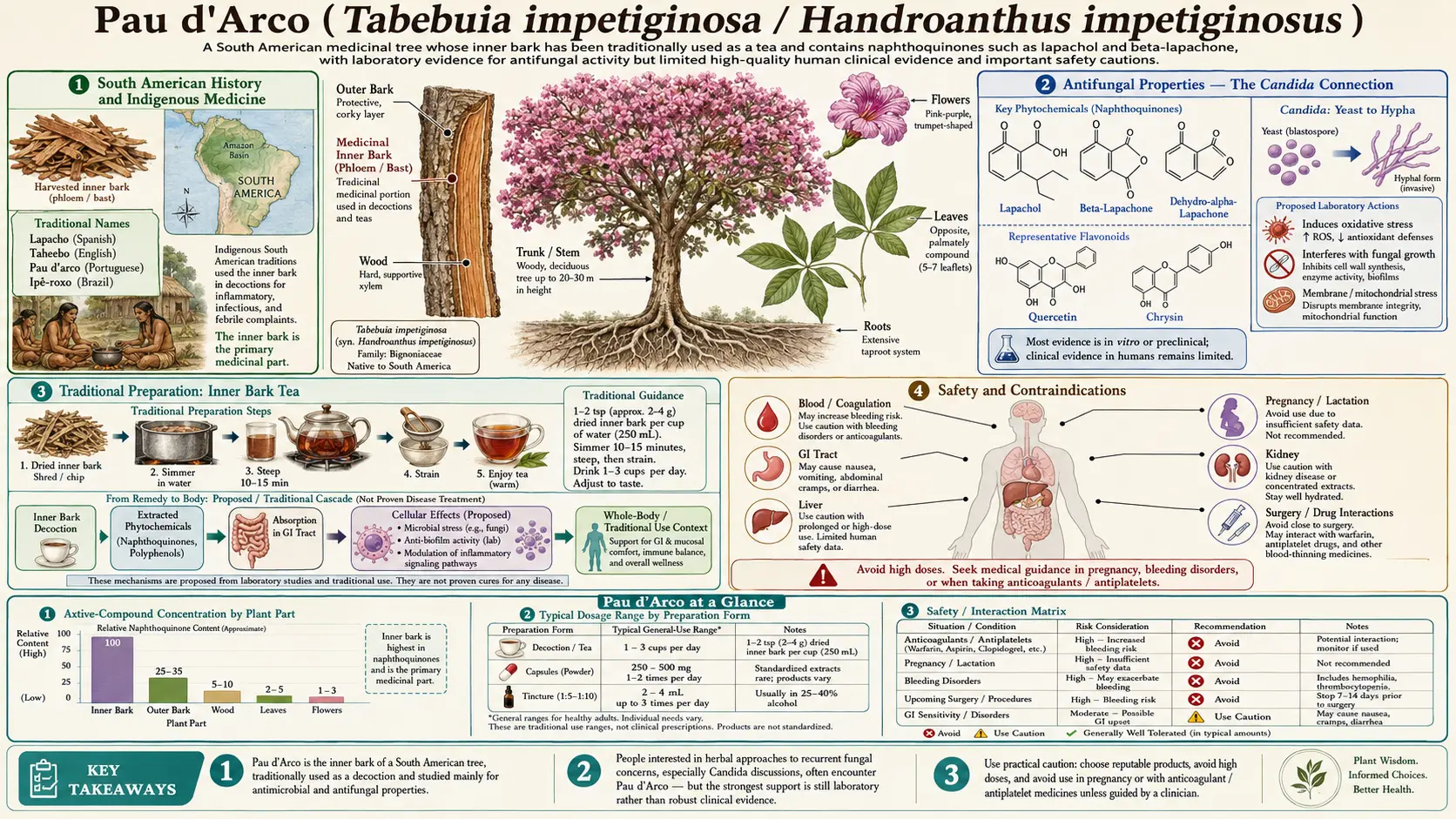
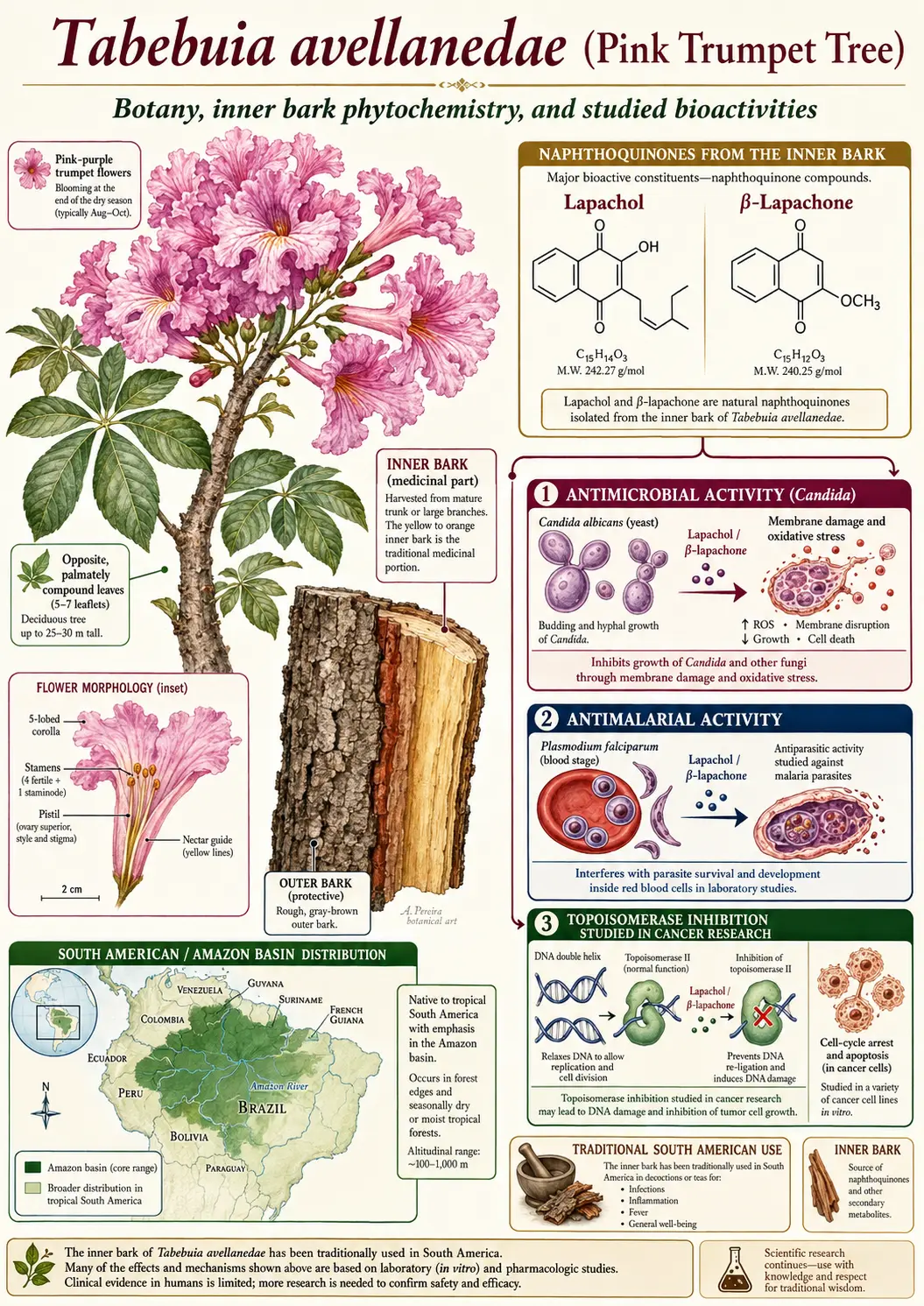
Pau d'Arco is a powerful medicinal tree native to the tropical rainforests of Central and South America. Also known as Taheebo, Lapacho, and Ipe Roxo, the inner bark of this tree has been used for centuries by indigenous peoples to treat infections, inflammation, and a wide range of ailments. Modern research has confirmed that the inner bark contains a remarkable concentration of bioactive naphthoquinones, particularly lapachol and beta-lapachone, which demonstrate potent antibacterial, antifungal, antiparasitic, and anticancer properties. The tree itself is a towering hardwood that produces striking pink-to-purple flowers and is one of the most durable timber species in the Americas.
Table of Contents
- South American History and Indigenous Medicine
- Key Antibacterial Compounds
- Mechanism of Antibacterial Action
- Bacteria Targeted
- Research Studies and Clinical Evidence
- Antifungal Properties — The Candida Connection
- Anti-Inflammatory and Immune Modulation
- Anticancer Research and Lapachol History
- Antiparasitic and Antiviral Activity
- Traditional Preparation: Inner Bark Tea
- Synergistic Effects with Other Herbs
- Other Health Benefits
- Forms and Preparations
- Recommended Dosage
- Safety and Contraindications
- Key Research Papers and References
- Featured Videos
1. South American History and Indigenous Medicine
Pau d'Arco's name is Portuguese for "bow stick," recording the tree's older use as tough, rot-resistant bow wood, and Amazonian peoples — the Guaraní and Tupí among the most documented — traditionally brewed its reddish inner bark into a decoction for infections, fevers, and skin and digestive complaints. A 1967 Brazilian press account turned this regional folk remedy into an internationally sought-after "tea," though many of the sweeping claims that followed were never borne out. — the fuller story is told in the dedicated History & Traditional Use article.
2. Key Antibacterial Compounds
The antibacterial potency of Pau d'Arco is attributed to a family of naturally occurring naphthoquinone compounds concentrated in the inner bark. These compounds act through multiple biochemical mechanisms and collectively give the bark its remarkable broad-spectrum antimicrobial activity.
- Lapachol — The primary and most abundant naphthoquinone in Pau d'Arco inner bark, lapachol (2-hydroxy-3-(3-methyl-2-butenyl)-1,4-naphthoquinone) was first isolated in 1882 by Emanuel Paterno. It is responsible for much of the bark's antibacterial activity and works by generating reactive oxygen species through redox cycling, which damage bacterial DNA and cell membranes. Lapachol has demonstrated activity against both Gram-positive and Gram-negative bacteria and also exhibits anticoagulant, anti-inflammatory, and antitumor properties. It is present in the inner bark at concentrations ranging from 2% to 7% by dry weight.
- Beta-lapachone — A cyclic derivative of lapachol, beta-lapachone (3,4-dihydro-2,2-dimethyl-2H-naphtho[1,2-b]pyran-5,6-dione) is considered by many researchers to be the most pharmacologically active compound in Pau d'Arco. It exhibits stronger antibacterial and antifungal activity than lapachol at equivalent concentrations and has received particular attention for its ability to inhibit the NF-kB inflammatory pathway. Beta-lapachone is also a substrate for NQO1 (NAD(P)H:quinone oxidoreductase 1), an enzyme overexpressed in many cancer cells, making it a focus of anticancer research. Its antibacterial mechanism involves disruption of bacterial electron transport chains and generation of superoxide radicals.
- Alpha-lapachone — An isomer of beta-lapachone, alpha-lapachone contributes to Pau d'Arco's antimicrobial profile through a mechanism similar to its beta counterpart but with somewhat lower potency. It demonstrates particular activity against Gram-positive organisms and has been shown to enhance the effects of other naphthoquinones when present in combination, suggesting synergistic interactions within the whole bark extract.
- Xyloidone — This lesser-studied naphthoquinone contributes to the overall antimicrobial activity of Pau d'Arco bark. Xyloidone has demonstrated activity against several bacterial strains in preliminary studies and may play a role in the bark's effectiveness against biofilm-forming bacteria. Its mechanism of action involves interference with bacterial quinone-dependent metabolic processes.
- Dehydro-alpha-lapachone — A dehydrogenated form of alpha-lapachone, this compound adds to the antimicrobial spectrum of the inner bark. Research has shown that dehydro-alpha-lapachone possesses notable activity against mycobacterial species and may contribute to the traditional use of Pau d'Arco against tuberculosis-like respiratory infections. It is present in smaller quantities than lapachol or beta-lapachone but contributes to the overall synergistic effect of the bark extract.
- Tabebuin — Also known as 2-(1-hydroxyethyl)naphtho[2,3-b]furan-4,9-dione, tabebuin is a furanonaphthoquinone unique to Tabebuia species. It demonstrates antibacterial activity particularly against Staphylococcus aureus and Bacillus species. Tabebuin works by intercalating with bacterial DNA and disrupting replication processes. It also exhibits antifungal properties and is believed to contribute to the tree's natural resistance to fungal decay.
The combination of these naphthoquinones in whole bark extracts is believed to produce a synergistic antimicrobial effect that is greater than any single isolated compound. This is a key reason why traditional whole-bark preparations have often shown broader activity in practice than purified individual compounds in laboratory settings.
3. Mechanism of Antibacterial Action
The antibacterial action of Pau d'Arco's naphthoquinones operates through several interconnected biochemical mechanisms that collectively overwhelm bacterial defenses. Understanding these mechanisms helps explain why the bark demonstrates broad-spectrum activity against diverse bacterial species and why resistance development appears to be relatively slow compared to conventional antibiotics.
Naphthoquinone Redox Cycling and Reactive Oxygen Species Generation
The primary antibacterial mechanism of Pau d'Arco involves the redox cycling of naphthoquinones, particularly lapachol and beta-lapachone. These compounds accept electrons from cellular NADH and NADPH via bacterial flavoenzymes, becoming reduced to semiquinone radicals. These unstable radicals rapidly transfer their electrons to molecular oxygen, generating superoxide anion radicals (O2-), which are subsequently converted to hydrogen peroxide (H2O2) and hydroxyl radicals (OH-) through Fenton chemistry. This cascade of reactive oxygen species (ROS) inflicts severe oxidative damage on bacterial DNA, proteins, and lipid membranes, leading to cell death. The continuous cycling means that a single naphthoquinone molecule can generate many ROS molecules, making this an efficient killing mechanism even at low concentrations.
Topoisomerase Inhibition
Beta-lapachone and related naphthoquinones have been shown to inhibit bacterial topoisomerase enzymes, particularly topoisomerase I and DNA gyrase (topoisomerase II). These enzymes are essential for bacterial DNA replication, transcription, and repair. By stabilizing the covalent enzyme-DNA complex (the "cleavable complex"), naphthoquinones prevent the religation step of the topoisomerase catalytic cycle, leading to double-strand DNA breaks that are lethal to the bacterial cell. This mechanism is analogous to that of fluoroquinolone antibiotics but operates through a different binding site, which may explain why Pau d'Arco retains activity against some quinolone-resistant bacterial strains.
Electron Transport Chain Disruption
Naphthoquinones structurally resemble ubiquinone (coenzyme Q), a natural electron carrier in the bacterial respiratory chain. Lapachol and beta-lapachone can intercalate into the bacterial electron transport chain, competing with native quinones for electron transfer. This disruption impairs oxidative phosphorylation and ATP synthesis, effectively starving the bacterium of energy. The disruption of electron flow also leads to additional ROS generation at the site of the blocked electron transport chain, compounding the oxidative damage. This mechanism is particularly effective against aerobic bacteria that depend heavily on oxidative phosphorylation for energy production.
Iron Chelation Effects on Bacterial Growth
Several Pau d'Arco naphthoquinones, including lapachol, possess iron-chelating properties. Iron is an essential nutrient for virtually all pathogenic bacteria, required for enzymes involved in DNA synthesis, electron transport, and oxidative stress defense. By chelating available iron in the local environment, Pau d'Arco compounds create an iron-restricted condition that inhibits bacterial growth, a strategy known as nutritional immunity. This iron chelation also contributes to the Fenton reaction pathway, where chelated iron catalyzes the conversion of hydrogen peroxide to highly reactive hydroxyl radicals, further amplifying oxidative damage to bacterial cells. The dual action of depriving bacteria of essential iron while simultaneously using that iron to generate toxic radicals represents a particularly elegant antimicrobial strategy.
4. Bacteria Targeted
Pau d'Arco inner bark extracts and their isolated naphthoquinone compounds have demonstrated antibacterial activity against a range of clinically significant pathogens. The following bacteria have been the subjects of published research studies.
Staphylococcus aureus including MRSA
Staphylococcus aureus is one of the most extensively studied targets for Pau d'Arco's antibacterial activity. Multiple studies have confirmed that lapachol and beta-lapachone exhibit significant inhibitory activity against both methicillin-sensitive and methicillin-resistant strains (MRSA). Minimum inhibitory concentration (MIC) values for beta-lapachone against S. aureus have been reported in the range of 4 to 32 micrograms per milliliter, depending on the strain and study conditions. The activity against MRSA is particularly noteworthy because these strains are resistant to beta-lactam antibiotics and represent a serious public health threat. Pau d'Arco's mechanism of action, involving oxidative damage rather than cell wall synthesis inhibition, circumvents the resistance mechanisms that make MRSA so dangerous.
Helicobacter pylori
Helicobacter pylori, the bacterium responsible for gastric ulcers and a risk factor for stomach cancer, has shown susceptibility to Pau d'Arco compounds. Studies have demonstrated that lapachol and whole bark extracts inhibit H. pylori growth at concentrations achievable through oral consumption of bark tea. This finding aligns with the traditional use of Pau d'Arco for digestive complaints in South American folk medicine. MIC values against H. pylori strains have been reported between 16 and 64 micrograms per milliliter for ethanolic bark extracts.
Bacillus subtilis
Bacillus subtilis, a common Gram-positive soil bacterium frequently used as a model organism in antibacterial research, is highly susceptible to Pau d'Arco naphthoquinones. MIC values as low as 2 micrograms per milliliter have been reported for beta-lapachone against B. subtilis, making it one of the most sensitive species tested. The strong activity against Bacillus species is consistent with the broader effectiveness of naphthoquinones against Gram-positive organisms.
Brucella Species
Brucella species, the causative agents of brucellosis (undulant fever), are intracellular pathogens that are notoriously difficult to treat with conventional antibiotics. Preliminary research has indicated that Pau d'Arco extracts demonstrate inhibitory activity against Brucella abortus and Brucella melitensis, potentially through the ability of lipophilic naphthoquinones to penetrate host cell membranes and reach intracellular bacteria. This intracellular activity is a property that many conventional antibiotics lack.
Mycobacterium tuberculosis
The activity of Pau d'Arco compounds against Mycobacterium tuberculosis has attracted considerable research interest, particularly in Brazil where both the tree and tuberculosis are prevalent. Lapachol and several related naphthoquinones have demonstrated antimycobacterial activity in vitro, with MIC values for lapachol against M. tuberculosis H37Rv reported in the range of 16 to 62.5 micrograms per milliliter. While these concentrations are higher than first-line TB drugs, the compounds may serve as leads for semi-synthetic derivatives with improved potency. The traditional use of Pau d'Arco for respiratory infections in indigenous medicine may partially reflect this antimycobacterial activity.
Streptococcus Species
Streptococcus mutans, the primary causative agent of dental caries, and Streptococcus pyogenes, which causes strep throat and skin infections, have both demonstrated susceptibility to Pau d'Arco extracts. Studies on S. mutans have shown MIC values between 8 and 32 micrograms per milliliter for lapachol, suggesting potential applications in oral health. The activity against S. pyogenes aligns with traditional use of Pau d'Arco bark decoctions as gargles for throat infections.
5. Research Studies and Clinical Evidence
The antibacterial and broader antimicrobial properties of Pau d'Arco have been the subject of numerous published studies in peer-reviewed journals. The body of scientific literature spans several decades, beginning with early phytochemical investigations in the mid-20th century and continuing through modern pharmacological and clinical studies.
Research published in the Journal of Ethnopharmacology has validated many of the traditional uses of Tabebuia species. Ethnobotanical surveys combined with in vitro antimicrobial testing have confirmed that inner bark extracts possess significant activity against both Gram-positive and Gram-negative bacteria. These studies have generally used disc diffusion assays and broth microdilution methods to determine zones of inhibition and minimum inhibitory concentrations, establishing a quantitative basis for the bark's traditional reputation.
Publications in Phytotherapy Research have explored the dose-response relationships of Pau d'Arco compounds and their mechanisms of action. Studies in this journal have particularly focused on the synergistic interactions between different naphthoquinones in whole bark extracts, demonstrating that crude extracts often outperform isolated compounds. This synergy research has important implications for the use of traditional preparations versus standardized single-compound supplements.
The journal Planta Medica, one of the leading publications in natural product pharmacology, has featured studies on the antimicrobial activity of lapachol and its derivatives. Research published here has established structure-activity relationships for naphthoquinones, showing how modifications to the quinone ring system affect antibacterial potency. These studies have guided the development of semi-synthetic naphthoquinone derivatives with enhanced activity.
Studies in Fitoterapia have documented the antifungal and antibacterial activity of various Tabebuia species, including comparative analyses of bark extracts from different geographic origins. The Brazilian Journal of Pharmacognosy (Revista Brasileira de Farmacognosia) has been a particularly important venue for Pau d'Arco research, given the tree's prevalence in Brazilian ecosystems and its deep roots in Brazilian traditional medicine. Research published in Bioorganic & Medicinal Chemistry has focused on the chemical synthesis and biological evaluation of lapachol analogues, exploring how structural modifications can enhance antibacterial potency while reducing toxicity.
While in vitro evidence is substantial, it should be noted that large-scale, controlled clinical trials of Pau d'Arco as an antibacterial agent in humans remain limited. Most clinical evidence comes from case series, traditional use documentation, and small pilot studies. Larger randomized controlled trials are needed to establish definitive clinical efficacy, optimal dosing, and safety profiles for specific infectious conditions.
6. Antifungal Properties — The Candida Connection
Of all the antimicrobial properties attributed to Pau d'Arco, its antifungal activity is perhaps the most extensively researched and clinically validated. The bark's effectiveness against Candida species has made it one of the most popular natural remedies for fungal infections worldwide, and this application has stronger scientific support than almost any other traditional use of the plant.
Candida albicans
Candida albicans, the most common cause of human fungal infections, is highly susceptible to Pau d'Arco naphthoquinones. Both lapachol and beta-lapachone have demonstrated potent fungicidal activity against C. albicans in multiple studies, with MIC values frequently reported between 8 and 32 micrograms per milliliter. The compounds work by disrupting the fungal cell membrane, inhibiting the ergosterol biosynthesis pathway (similar to azole antifungals but through a different mechanism), and generating oxidative stress within the fungal cell. Pau d'Arco has been traditionally used for oral thrush (oropharyngeal candidiasis), where bark decoctions are used as mouth rinses, and for vaginal candidiasis, where dilute decoctions have been used as douches. These applications leverage the direct contact between the antifungal compounds and the fungal organisms on mucosal surfaces.
Candida tropicalis and Other Candida Species
Candida tropicalis, increasingly recognized as a significant cause of invasive candidiasis particularly in immunocompromised patients, has also shown susceptibility to Pau d'Arco extracts. Studies have demonstrated that beta-lapachone is effective against C. tropicalis at concentrations comparable to those effective against C. albicans. Activity has also been reported against Candida krusei and Candida parapsilosis, species that are often intrinsically resistant to fluconazole, suggesting that Pau d'Arco may offer an alternative approach for difficult-to-treat Candida infections.
Cryptococcus neoformans
Cryptococcus neoformans, the causative agent of cryptococcal meningitis and a life-threatening infection in people with HIV/AIDS, has demonstrated susceptibility to Pau d'Arco compounds in vitro. Lapachol and beta-lapachone have shown inhibitory activity against C. neoformans, with some studies reporting MIC values in the range of 16 to 64 micrograms per milliliter. While these concentrations may be difficult to achieve systemically through oral supplementation alone, the finding suggests potential for Pau d'Arco compounds as leads for new antifungal drug development.
The broad antifungal spectrum of Pau d'Arco has made it a cornerstone of many natural Candida protocols, particularly for individuals dealing with recurrent candidiasis or those seeking to complement conventional antifungal therapy. Practitioners of integrative medicine frequently recommend Pau d'Arco tea or capsules as part of comprehensive anti-Candida programs that also include dietary modifications and probiotic supplementation.
7. Anti-Inflammatory and Immune Modulation
Beyond its direct antimicrobial actions, Pau d'Arco modulates the immune system and suppresses excessive inflammation through several well-characterized molecular pathways. These properties are crucial for fighting infection, as an appropriately regulated immune response clears pathogens more effectively than either an underactive or hyperactive one.
NF-kB Pathway Inhibition by Beta-Lapachone
Beta-lapachone is a potent inhibitor of the nuclear factor kappa-B (NF-kB) signaling pathway, one of the master regulators of inflammation and immune response in mammalian cells. NF-kB controls the expression of hundreds of genes involved in inflammation, including those encoding pro-inflammatory cytokines, chemokines, adhesion molecules, and enzymes that produce inflammatory mediators. Research published in the Journal of Biological Chemistry has demonstrated that beta-lapachone blocks the phosphorylation and degradation of IkB-alpha, the inhibitory protein that normally sequesters NF-kB in the cytoplasm, thereby preventing NF-kB from translocating to the nucleus and activating inflammatory gene transcription. This mechanism effectively dampens the inflammatory cascade without completely suppressing immune function.
COX-2 Inhibition
Pau d'Arco naphthoquinones, particularly lapachol, inhibit cyclooxygenase-2 (COX-2), the inducible enzyme responsible for producing prostaglandins that drive pain, fever, and inflammation at sites of infection and tissue damage. Unlike non-selective COX inhibitors such as aspirin and ibuprofen, Pau d'Arco compounds appear to show some selectivity for COX-2 over COX-1, which may reduce the risk of gastrointestinal side effects associated with non-selective COX inhibition. The COX-2 inhibitory activity contributes to the analgesic and antipyretic effects historically observed with Pau d'Arco use.
TNF-alpha Reduction
Tumor necrosis factor-alpha (TNF-alpha) is a key pro-inflammatory cytokine that is elevated during bacterial and fungal infections. While TNF-alpha plays an important role in pathogen clearance, excessive production leads to tissue damage, sepsis, and chronic inflammatory conditions. Beta-lapachone and related Pau d'Arco compounds reduce TNF-alpha production by activated macrophages, helping to modulate the inflammatory response during infection. This anti-TNF activity, combined with the direct antimicrobial effects, means that Pau d'Arco simultaneously attacks the pathogen while protecting host tissues from collateral inflammatory damage, a dual action that is difficult to achieve with conventional antibiotics alone.
8. Anticancer Research and Lapachol History
The anticancer potential of Pau d'Arco compounds has been investigated since the early 1960s when the U.S. National Cancer Institute (NCI) identified lapachol as a compound of interest during a large-scale screening program of natural products. Lapachol entered Phase I clinical trials in the late 1960s and showed some evidence of tumor-shrinking activity in patients with various solid tumors. However, the trials were discontinued when it became apparent that the doses required to achieve consistent antitumor effects also caused significant side effects, including nausea, vomiting, and anticoagulant effects that led to bleeding complications. The therapeutic window was deemed too narrow for lapachol to be developed as a standalone cancer drug.
Interest in Pau d'Arco's anticancer compounds was revived in the 1990s and 2000s with the study of beta-lapachone, which demonstrated a unique mechanism of action involving the enzyme NQO1 (NAD(P)H:quinone oxidoreductase 1). NQO1 is overexpressed in many types of cancer cells, including pancreatic, breast, lung, prostate, and colon cancers, at levels 5- to 100-fold higher than in normal tissues. Beta-lapachone is bioactivated by NQO1 in a futile redox cycle that generates massive amounts of reactive oxygen species specifically within cancer cells, leading to DNA damage, PARP1 hyperactivation, NAD+ and ATP depletion, and ultimately programmed necrosis. Because normal cells have low levels of NQO1, they are relatively spared from this toxic mechanism, offering a degree of tumor selectivity.
Current oncology research continues to investigate beta-lapachone and its synthetic derivatives, including ARQ 501 (a prodrug form), in combination with radiation therapy and conventional chemotherapy agents. Preclinical studies have shown promising synergistic effects. However, it is essential to emphasize that Pau d'Arco is not a proven cancer treatment. The concentrations of beta-lapachone achievable through drinking bark tea or taking supplements are far below those used in laboratory and clinical studies. No herbal preparation of Pau d'Arco should be used as a substitute for evidence-based cancer therapy. Anyone diagnosed with cancer should work with qualified oncologists and discuss any supplement use with their medical team.
9. Antiparasitic and Antiviral Activity
Malaria Research
Lapachol and several related naphthoquinones have demonstrated activity against Plasmodium falciparum, the most lethal malaria parasite. Research has shown that lapachol interferes with the parasite's mitochondrial electron transport chain and generates oxidative stress within the parasite. While the antimalarial potency of lapachol is lower than that of chloroquine or artemisinin, derivatives of lapachol have been synthesized with significantly enhanced antiparasitic activity, and these remain active areas of medicinal chemistry research. The traditional use of Pau d'Arco tea in malaria-endemic regions of South America may reflect this antiparasitic activity.
Trypanosoma cruzi and Chagas Disease
Trypanosoma cruzi, the protozoan parasite responsible for Chagas disease (American trypanosomiasis), is endemic to the same South American regions where Pau d'Arco grows. Research has demonstrated that beta-lapachone and related naphthoquinones are toxic to both the trypomastigote (bloodstream) and amastigote (intracellular) forms of T. cruzi. The mechanism involves generation of reactive oxygen species and inhibition of the parasite's trypanothione reductase, an enzyme unique to trypanosomatids that is essential for their oxidative stress defense. Given the limited treatment options for Chagas disease and the serious side effects of the two approved drugs (benznidazole and nifurtimox), naphthoquinone derivatives continue to be explored as potential new antiparasitic agents.
Antiviral Activity
Pau d'Arco compounds have demonstrated antiviral activity against several viruses in laboratory studies. Lapachol and beta-lapachone have shown inhibitory effects against herpes simplex virus (HSV-1 and HSV-2), where they appear to interfere with viral DNA replication and assembly. Activity has also been reported against influenza viruses, where the compounds may inhibit viral neuraminidase activity. Some preliminary studies have investigated activity against retroviruses, though results have been inconsistent. The antiviral mechanisms are thought to involve both direct effects on viral enzymes and enhancement of host antiviral immune responses through the immunomodulatory pathways described above. As with the anticancer research, it is important to note that antiviral activity demonstrated in vitro does not necessarily translate to clinical efficacy in human infections.
10. Traditional Preparation: Inner Bark Tea
The traditional and most widely used preparation of Pau d'Arco is a decoction of the inner bark, a method that has been refined over centuries of indigenous use. It is critically important to understand that the inner bark (the reddish-brown cambium layer between the outer bark and the sapwood) is the medicinally active part of the tree. The outer bark contains far lower concentrations of naphthoquinones and is not a suitable substitute. When purchasing Pau d'Arco, always ensure that the product is labeled as inner bark (entrecasca in Portuguese).
The traditional decoction method involves adding 15 to 20 grams (approximately 2 to 3 tablespoons) of dried, shredded inner bark to 1 liter (about 4 cups) of cold water in a non-reactive pot (stainless steel, glass, or enamel). The mixture is brought to a boil and then simmered for at least 20 minutes, often up to 30 minutes, at a gentle rolling boil. The long simmering time is essential because naphthoquinones, particularly lapachol and beta-lapachone, are relatively insoluble in water at lower temperatures. The prolonged boiling is necessary to extract these lipophilic compounds into the aqueous phase. After simmering, the decoction is strained through a fine mesh or cheesecloth and allowed to cool to a drinkable temperature.
It is important to understand why a simple infusion (steeping in hot water as one would with a tea bag) does not work effectively for Pau d'Arco. Unlike water-soluble herbal constituents such as flavonoids and tannins that readily dissolve in hot water, the naphthoquinones in Pau d'Arco require sustained high temperatures and extended contact time to be adequately extracted. Simply pouring boiling water over the bark and steeping for 5 to 10 minutes will yield a pleasant-tasting but medicinally weak preparation with only a fraction of the active compounds. The decoction method ensures that sufficient concentrations of lapachol and beta-lapachone are present in the final preparation to exert meaningful antimicrobial effects. The finished decoction has a reddish-brown color and a slightly bitter, woody flavor that some find pleasant and others choose to soften with honey or lemon.
11. Synergistic Effects with Other Herbs
With Cat's Claw for Immune Support
Pau d'Arco and Cat's Claw (Uncaria tomentosa) are both native to the South American rainforest and have a long history of combined use in traditional medicine. While Pau d'Arco provides direct antimicrobial action through its naphthoquinones, Cat's Claw enhances immune function through its oxindole alkaloids, which stimulate phagocytosis and increase natural killer cell activity. The combination is frequently recommended by herbalists for chronic infections, Lyme disease co-infections, and post-illness immune recovery. The two herbs complement each other well because Pau d'Arco attacks pathogens directly while Cat's Claw strengthens the body's own immune surveillance and response.
With Oregano Oil for Candida Protocols
The combination of Pau d'Arco with oregano oil (Origanum vulgare) is one of the most popular natural antifungal protocols. Oregano oil's primary active compound, carvacrol, disrupts fungal cell membranes through a different mechanism than the naphthoquinones in Pau d'Arco. Using both together provides two distinct antifungal mechanisms, reducing the likelihood of Candida developing resistance to either agent alone. Integrative medicine practitioners often recommend alternating between the two herbs or using them in combination as part of a comprehensive Candida management program that also includes dietary sugar restriction and probiotic supplementation. The combination has shown enhanced antifungal activity in in vitro studies compared to either agent alone.
With Echinacea for Infection Recovery
Echinacea (Echinacea purpurea) is well known for its immune-stimulating properties, particularly its ability to increase white blood cell production and enhance macrophage activity during acute infections. When combined with Pau d'Arco, the pair offers both immune stimulation (from Echinacea) and direct pathogen killing (from Pau d'Arco). This combination is particularly useful during the recovery phase of bacterial or viral infections, where the body needs both enhanced immune function to clear residual pathogens and anti-inflammatory support to heal damaged tissues. Herbalists often recommend this combination for upper respiratory infections, where Echinacea shortens the duration of symptoms while Pau d'Arco provides antimicrobial activity against secondary bacterial infections.
12. Other Health Benefits
- Anti-Inflammatory — Beyond its effects on NF-kB and COX-2, Pau d'Arco has demonstrated broad anti-inflammatory activity in animal models of arthritis, colitis, and dermatitis. The reduction of inflammatory mediators including interleukins IL-1beta and IL-6 contributes to pain relief and tissue protection in inflammatory conditions.
- Analgesic — Traditional use of Pau d'Arco for pain relief is supported by studies showing that bark extracts reduce pain perception in animal models through both peripheral anti-inflammatory mechanisms and central analgesic pathways. The bark has been traditionally used for headaches, arthritic pain, and muscle soreness.
- Blood Sugar Support — Preliminary research suggests that Pau d'Arco compounds may improve glucose metabolism and insulin sensitivity. Studies in diabetic animal models have shown that lapachol reduces fasting blood glucose levels and improves glucose tolerance, possibly through activation of AMPK (AMP-activated protein kinase) and enhancement of glucose uptake in muscle cells.
- Wound Healing — The antimicrobial and anti-inflammatory properties of Pau d'Arco make it useful as a topical wound healing agent. Traditional applications include poultices of moistened bark applied to cuts, abrasions, and skin infections. The bark's ability to kill bacteria at the wound site while reducing inflammation promotes faster healing with reduced scarring.
- Digestive Health — Pau d'Arco decoctions have been traditionally used to support digestive health, including treatment of gastritis, ulcerative conditions, and intestinal infections. The anti-Helicobacter activity, combined with anti-inflammatory and mucosal healing properties, makes it a valuable herb for gastrointestinal complaints. The bark's antifungal properties also help maintain a healthy gut microbiome by keeping Candida populations in check.
13. Forms and Preparations
- Inner Bark Shavings for Tea/Decoction — The most traditional form, consisting of dried, shredded or sliced inner bark. This form allows preparation of the traditional 20-minute decoction and provides the full spectrum of naphthoquinones and other bioactive compounds present in the bark. Look for bark that is reddish-brown in color (not gray outer bark) and has a slightly bitter taste when chewed. Store in an airtight container away from light and moisture.
- Capsules — Powdered inner bark in gelatin or vegetable capsules, typically containing 500mg per capsule. Capsules offer convenience and consistent dosing but may not provide the same extraction efficiency as a decoction, since the naphthoquinones need to be released from the powdered bark matrix during digestion. Some capsule products use concentrated extracts rather than raw bark powder, which may provide higher naphthoquinone content per dose.
- Tincture — Hydroalcoholic extract of inner bark, usually at a 1:5 ratio in 45% to 60% ethanol. Tinctures extract naphthoquinones more efficiently than water alone due to the lipophilic nature of these compounds, and they have a long shelf life (3 to 5 years). The alcohol base also provides some additional antimicrobial activity. Tinctures are convenient for dosing and can be added to water or juice.
- Standardized Extract — Concentrated extracts standardized to contain a specific percentage of lapachol or total naphthoquinones, typically 2% to 3% lapachol content. These products offer the most predictable dosing and are preferred for therapeutic applications where consistent potency is important. Standardized extracts are available in both capsule and liquid forms.
- Topical Applications — Pau d'Arco decoctions can be applied externally as compresses or washes for skin infections, fungal conditions (athlete's foot, ringworm), and wounds. Some commercial products include Pau d'Arco extract in creams, salves, and ointments for topical antifungal use. Diluted decoctions can also be used as mouth rinses for oral thrush or as vaginal douches for candidiasis.
14. Recommended Dosage
- Bark Tea (Decoction) — Simmer 15 to 20 grams of dried inner bark in 1 liter of water for 20 to 30 minutes. Strain and drink 2 to 3 cups per day. The decoction can be prepared in advance and refrigerated for up to 48 hours. For acute infections, some herbalists recommend up to 4 to 6 cups per day for short periods (1 to 2 weeks).
- Capsules — 500 to 1,500 mg of inner bark powder or standardized extract, taken 2 to 3 times daily with meals. For acute conditions, the higher end of the dosing range may be used for 2 to 4 weeks. For maintenance and immune support, lower doses are appropriate for longer-term use.
- Tincture — 2 to 4 milliliters (approximately 40 to 80 drops) of a 1:5 tincture, taken 2 to 3 times daily. The tincture can be taken directly under the tongue for fastest absorption or diluted in a small amount of water.
- Cycling Recommendations — Many herbalists recommend cycling Pau d'Arco to maintain its effectiveness and minimize the risk of side effects from long-term use. A common protocol is 3 weeks on followed by 1 week off, or alternating 2-week periods with other antimicrobial herbs such as oregano oil or olive leaf extract. Cycling may also help prevent the development of resistance in targeted organisms, though this has not been formally studied.
15. Safety and Contraindications
While Pau d'Arco is generally well tolerated at recommended doses, several important safety considerations must be understood before use.
- Blood Thinners and Anticoagulant Activity — Lapachol has well-documented anticoagulant properties, having been shown to interfere with vitamin K-dependent clotting factor synthesis. Pau d'Arco should not be taken concurrently with anticoagulant medications (warfarin, heparin) or antiplatelet drugs (aspirin, clopidogrel) due to the increased risk of bleeding. Discontinue Pau d'Arco at least 2 weeks before any scheduled surgery.
- Pregnancy — Absolute Contraindication — Pau d'Arco is absolutely contraindicated during pregnancy. Lapachol has been shown to be embryotoxic and teratogenic in animal studies, causing fetal resorption and developmental abnormalities. The anticoagulant effects also pose a risk of hemorrhage. Pau d'Arco should also be avoided during breastfeeding due to insufficient safety data on naphthoquinone excretion in breast milk.
- High-Dose Side Effects — At doses exceeding recommended levels, Pau d'Arco can cause nausea, vomiting, diarrhea, and dizziness. These symptoms are typically dose-dependent and resolve upon reducing the dose or discontinuing use. Excessive intake of naphthoquinones can lead to hemolytic effects and liver toxicity. Always start with lower doses and increase gradually.
- Liver Considerations — Because naphthoquinones are metabolized by the liver, individuals with pre-existing liver disease or impaired hepatic function should use Pau d'Arco with caution and under medical supervision. Liver function tests may be advisable for individuals using Pau d'Arco at high doses for extended periods.
- Drug Interactions — In addition to interactions with anticoagulants and antiplatelet drugs, Pau d'Arco may interact with immunosuppressant medications (due to its immune-modulating effects), certain chemotherapy drugs (due to NQO1-mediated interactions), and medications metabolized by cytochrome P450 enzymes. Consult a healthcare provider before combining Pau d'Arco with any prescription medications.
- Not for Children Under 12 — Insufficient safety data exists for the use of Pau d'Arco in children. The anticoagulant and hepatic effects of naphthoquinones pose particular concerns in pediatric populations. Pau d'Arco should not be given to children under 12 years of age without the guidance of a qualified healthcare practitioner.
16. Key Research Papers and References
- Guiraud, P., Steiman, R., Campos-Takaki, G.M., Seigle-Murandi, F., and Simeon de Buochberg, M. (1994). "Comparison of antibacterial and antifungal activities of lapachol and beta-lapachone." Planta Medica 60(4), 373-374.
- Machado, T.B., Pinto, A.V., Pinto, M.C.F.R., Leal, I.C.R., Silva, M.G., Amaral, A.C.F., Kuster, R.M., and Netto-dos-Santos, K.R. (2003). "In vitro activity of Brazilian medicinal plants, naturally occurring naphthoquinones and their analogues, against methicillin-resistant Staphylococcus aureus." International Journal of Antimicrobial Agents 21(3), 279-284.
- Pereira, E.M., Machado, T.B., Leal, I.C.R., Jesus, D.M., Damaso, C.R.A., Pinto, A.V., Giambiagi-deMarval, M., Kuster, R.M., and Santos, K.R.N. (2006). "Tabebuia avellanedae naphthoquinones: activity against methicillin-resistant staphylococcal strains, cytotoxic activity and in vivo dermal irritability analysis." Letters in Applied Microbiology 42(5), 472-477.
- Park, E.J., Min, K.R., Chiou, G.C.Y., and Kim, Y. (2006). "Beta-lapachone inhibits NF-kappaB activation and related gene expression." Bioorganic & Medicinal Chemistry 14(2), 377-385.
- Hussain, H., Krohn, K., Ahmad, V.U., Miana, G.A., and Green, I.R. (2007). "Lapachol: an overview." Arkivoc 2007(ii), 145-171.
- Pinto, A.V. and de Castro, S.L. (2009). "The trypanocidal activity of naphthoquinones: a review." Molecules, 14(11), 4570-4590.
- Goel, R.K., Pathak, N.K.R., Biber, J., and Elvira, G. (2002). "Antimicrobial activity of Tabebuia impetiginosa against oral pathogens." Phytotherapy Research, 16(5), 448-450.
- Portillo, A., Vila, R., Freixa, B., Adzet, T., and Canigueral, S. (2001). "Antifungal activity of Paraguayan plants used in traditional medicine." Journal of Ethnopharmacology 76(1), 93-98.
- de Almeida, E.R. (2009). "Preclinical and clinical studies of lapachol and beta-lapachone: a review." The Open Natural Products Journal, 2, 42-47.
- Kung, H.N., Yang, M.J., Chang, C.F., Chau, Y.P., and Lu, K.S. "In vitro and in vivo wound healing-promoting activities of beta-lapachone." American Journal of Physiology — Cell Physiology. 2008;295(4):C931–C943.
- Bonifazi, E.L., Rios-Luci, C., Leon, L.G., Burton, G., Padron, J.M., and Misico, R.I. (2010). "Antiproliferative activity of synthetic naphthoquinones related to lapachol." Bioorganic & Medicinal Chemistry, 18(7), 2621-2630.
- Wagner, H. and Bladt, S. (1996). "Plant Drug Analysis: A Thin Layer Chromatography Atlas." 2nd edition, Springer-Verlag, Berlin. (Reference work covering Pau d'Arco phytochemistry.)
Research Papers and References
The following are topic-level PubMed search links covering the main evidence streams for Pau d'Arco (Tabebuia / Handroanthus impetiginosus). Each link resolves to a curated PubMed query so that the most current randomized trials, meta-analyses, and mechanistic studies can be reviewed directly from the National Library of Medicine.
- Lapachol and beta-lapachone: anticancer pharmacology. — PubMed: pau d'arco lapachol antitumor
- Antimicrobial activity of Tabebuia extracts against Candida. — PubMed: Tabebuia antimicrobial candida
- Antiparasitic activity of pau d'arco naphthoquinones. — PubMed: Tabebuia antiparasitic
- Beta-lapachone and NQO1-mediated antitumor effects. — PubMed: beta-lapachone cancer NQO1
- Anti-inflammatory effects of Tabebuia impetiginosa. — PubMed: Tabebuia anti-inflammatory
- Antiviral activity of pau d'arco extracts. — PubMed: pau d'arco antiviral
- Immunomodulatory effects of pau d'arco. — PubMed: Tabebuia immune modulation
- Lapachol and topoisomerase inhibition. — PubMed: lapachol mechanism topoisomerase
- Antioxidant pharmacology of Tabebuia bark. — PubMed: Tabebuia antioxidant
- Safety and toxicology of pau d'arco preparations. — PubMed: pau d'arco safety toxicity
External Authoritative Resources
- NCCIH — Herbs at a Glance
- MedlinePlus — Herbs and Supplements
- PubMed — All research on Tabebuia / Handroanthus impetiginosus
Connections
- All Herbs
- Pau d'Arco Benefits Deep Dive
- Oregano
- Neem
- Goldenseal
- Cat's Claw
- Immune Boosting
- Cancer
- Echinacea
- Fungal Infections
- Tuberculosis
- Staphylococcus Aureus
- Malaria
- Iron
- Oxidative Stress
- Olive Leaf
- Lyme Disease
- Parasites