Black Seed (Nigella sativa)
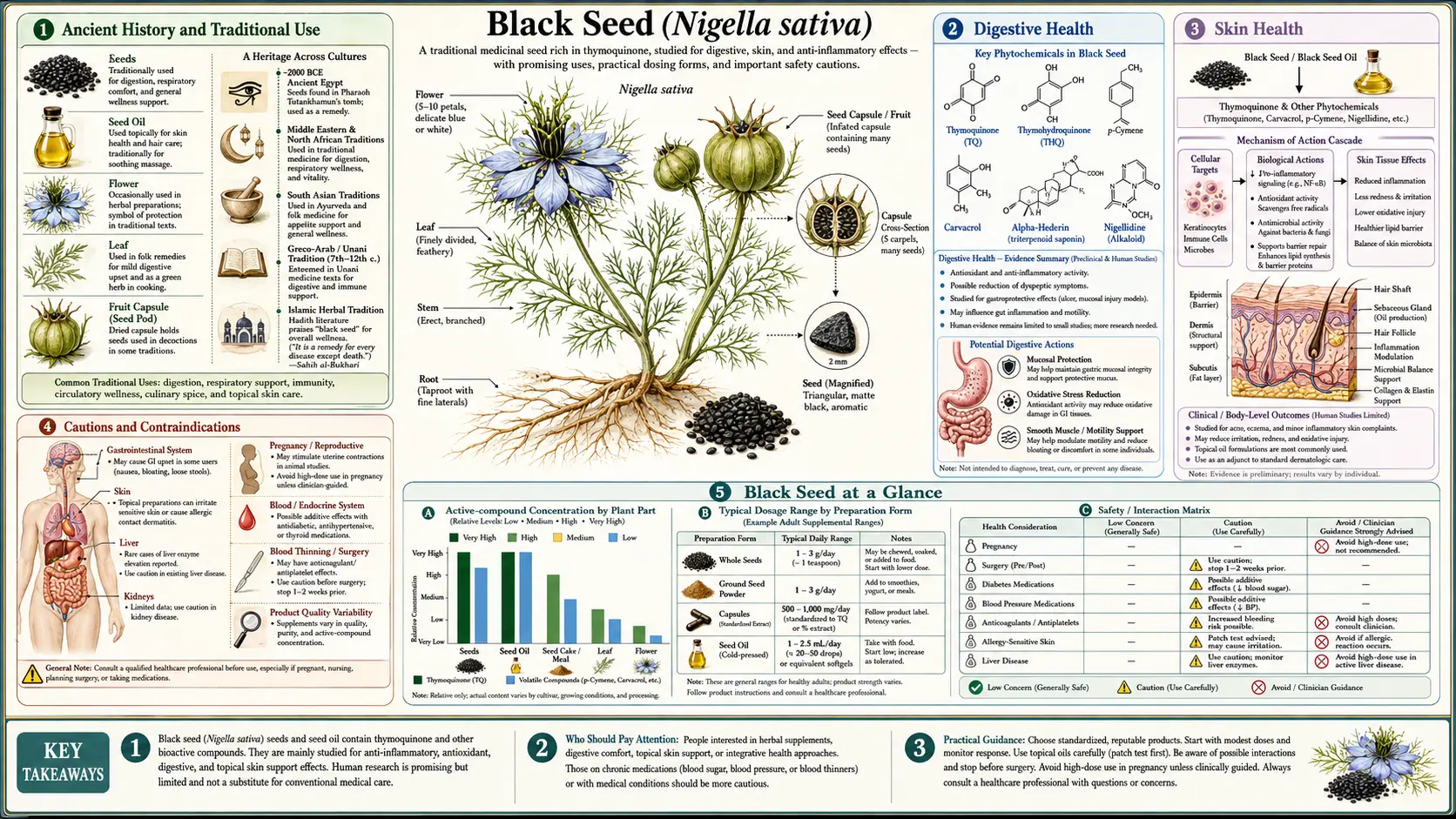
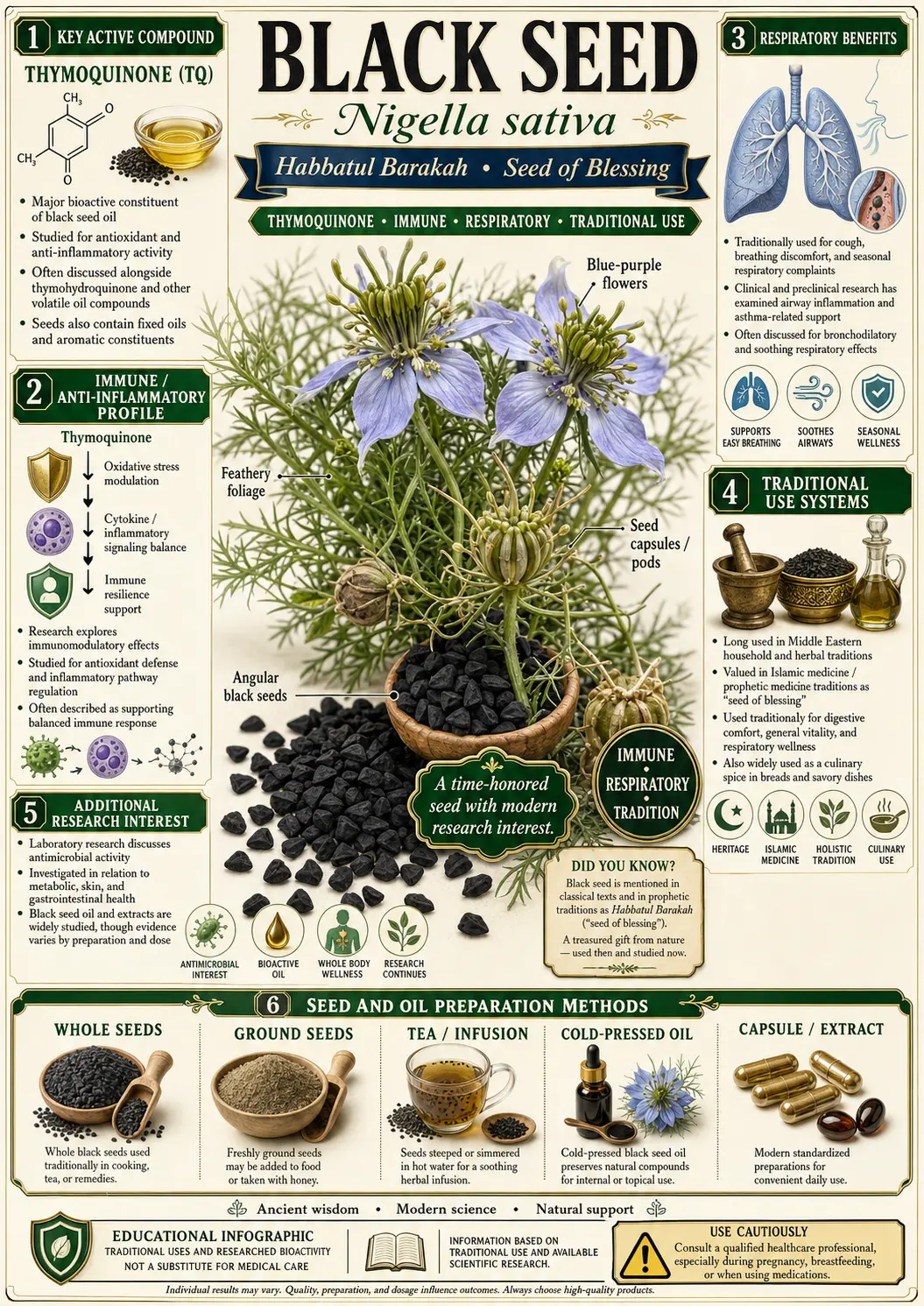
Table of Contents
- Ancient History and Traditional Use
- Thymoquinone: The Primary Active Compound
- Immune Modulation
- Anti-Inflammatory Properties
- Antioxidant Capacity
- Respiratory Health
- Digestive Health
- Liver Protection and Regeneration
- Cardiovascular Health
- Blood Sugar Regulation and Diabetes Support
- Cancer Research
- Antimicrobial Properties
- Autoimmune Support
- Skin Health
- Weight Management
- Brain Health and Neuroprotection
- Fertility Support
- Forms and Preparations
- Recommended Dosage
- Cautions and Contraindications
- Featured Videos
Ancient History and Traditional Use
Black seed holds an extraordinary place in the history of natural medicine, with a documented record of use reaching back several thousand years. Its seeds have been recovered from Bronze Age sites and, by repeated report, from the tomb of Tutankhamun; it is named in the Hebrew Bible, prescribed by the classical Greek physicians and by Avicenna, and honoured in a saying of the Prophet Muhammad as a remedy "for every disease except death." That so many independent cultures converged on the same little seed is exactly the kind of long tradition that has drawn modern researchers to study it — the fuller story is told in the dedicated History & Traditional Use article.
Thymoquinone: The Primary Active Compound
Thymoquinone (TQ) is the most pharmacologically significant compound in black seed, comprising 30 to 48 percent of the volatile oil. It is the molecule responsible for the majority of the therapeutic effects attributed to Nigella sativa.
- Chemical profile: Thymoquinone is a monoterpene diketone with potent antioxidant, anti-inflammatory, immunomodulatory, anticancer, hepatoprotective, and neuroprotective properties.
- Other key compounds: Thymohydroquinone, thymol, carvacrol, alpha-hederin, nigellone, and essential fatty acids (particularly linoleic acid and oleic acid) work synergistically with thymoquinone.
- Nutrient density: Black seed contains vitamins A, B1, B2, B3, and C, along with calcium, potassium, iron, magnesium, selenium, and zinc.
- Synergistic action: The full spectrum of compounds in whole black seed and cold-pressed oil often outperforms isolated thymoquinone, suggesting the whole plant extract provides benefits beyond any single active ingredient.
Immune Modulation
Black seed is one of the most powerful natural immune modulators known. Rather than simply stimulating or suppressing immune function, it helps regulate and balance the entire immune response, making it valuable for both immune deficiency and immune overactivity.
- Increases natural killer (NK) cell activity and cytotoxic T-lymphocyte function, strengthening the body's first line of defense against infections and abnormal cells
- Enhances macrophage phagocytic activity, improving the clearance of pathogens and cellular debris
- Promotes healthy T-helper cell balance (Th1/Th2 equilibrium), which is critical for preventing allergic and autoimmune responses
- Stimulates interferon production, boosting antiviral defenses
- Increases immunoglobulin levels, supporting humoral immunity
- Supports bone marrow function and healthy white blood cell production
This dual regulatory capacity makes black seed uniquely valuable as a long-term immune tonic rather than a short-term immune stimulant.
Anti-Inflammatory Properties
Chronic inflammation is recognized as the root driver of most degenerative diseases. Thymoquinone exerts its anti-inflammatory effects through multiple well-characterized molecular pathways.
- NF-kB pathway inhibition: Thymoquinone suppresses nuclear factor kappa B (NF-kB), a master transcription factor that activates genes involved in inflammation, immune dysregulation, and tumor growth. This is one of the most important anti-inflammatory mechanisms known in natural medicine.
- Inhibits cyclooxygenase (COX-2) and lipoxygenase (5-LOX) enzymes, reducing the production of pro-inflammatory prostaglandins and leukotrienes
- Reduces levels of inflammatory cytokines including TNF-alpha, IL-1 beta, and IL-6
- Suppresses inducible nitric oxide synthase (iNOS), reducing excessive nitric oxide that contributes to tissue damage
- Clinical studies demonstrate measurable reductions in C-reactive protein (CRP) and other inflammatory markers with regular supplementation
The multi-target anti-inflammatory action of black seed distinguishes it from single-mechanism pharmaceutical drugs and may explain its broad therapeutic applicability.
Antioxidant Capacity
Black seed ranks among the most potent botanical antioxidants, offering protection against oxidative stress at the cellular and systemic levels.
- Thymoquinone acts as both a direct free radical scavenger and an inducer of endogenous antioxidant enzymes
- Upregulates superoxide dismutase (SOD), catalase, and glutathione peroxidase — the body's primary internal antioxidant defenses
- Increases total glutathione levels, the master antioxidant critical for detoxification and cellular protection
- Protects cell membranes from lipid peroxidation, preserving cellular integrity
- Shields DNA from oxidative damage, reducing mutation risk and supporting healthy aging
- Demonstrates protective effects against oxidative damage induced by heavy metals, radiation, and chemical toxins
Respiratory Health
Black seed has been used for respiratory conditions since antiquity, and modern research validates these traditional applications with impressive clinical evidence.
- Asthma: Multiple clinical trials demonstrate that black seed supplementation improves pulmonary function test scores (FEV1), reduces wheeze frequency, and decreases the need for rescue inhaler use. Thymoquinone relaxes bronchial smooth muscle and reduces airway hyperresponsiveness.
- Allergic rhinitis: Significantly reduces nasal congestion, sneezing, itching, and runny nose in seasonal and perennial allergy sufferers, likely through mast cell stabilization and histamine reduction
- Bronchitis: Anti-inflammatory and antimicrobial properties help resolve both acute and chronic bronchitis, clearing mucus and reducing airway inflammation
- Sinusitis: Topical application of black seed oil and oral supplementation help reduce sinus inflammation and combat sinus infections
- General respiratory support: Acts as a bronchodilator, expectorant, and anti-inflammatory for the entire respiratory tract
Digestive Health
Traditional healers across cultures have prescribed black seed for digestive complaints, and the scientific basis for this use is well established.
- Protects the gastric mucosa and reduces stomach acid secretion, helping prevent and heal peptic ulcers
- Demonstrates significant activity against Helicobacter pylori, the bacterium responsible for most stomach ulcers
- Carminative properties reduce gas, bloating, and abdominal distension
- Antispasmodic effects relieve intestinal cramping and colic
- Supports healthy intestinal motility, beneficial for both constipation and diarrhea
- Anti-inflammatory action in the gut wall may benefit inflammatory bowel conditions
- Supports beneficial gut microbiome balance through selective antimicrobial activity
Liver Protection and Regeneration
The hepatoprotective effects of black seed are among its most well-documented therapeutic properties. The liver, as the body's primary organ of detoxification, benefits profoundly from black seed supplementation.
- Protects hepatocytes (liver cells) from damage caused by toxins, medications, alcohol, heavy metals, and viral infections
- Promotes liver cell regeneration and repair after toxic injury
- Reduces liver enzyme elevations (ALT, AST), indicating decreased liver inflammation and damage
- Prevents and reduces hepatic fibrosis (scarring), helping maintain healthy liver architecture
- Enhances Phase I and Phase II detoxification pathways, improving the liver's ability to process and eliminate toxins
- Increases bile production and flow, supporting fat digestion and toxin elimination
- Demonstrates protective effects against non-alcoholic fatty liver disease (NAFLD) in clinical studies
Cardiovascular Health
Black seed addresses multiple cardiovascular risk factors simultaneously, making it a valuable addition to a heart-protective protocol.
- Blood pressure: Clinical trials show consistent, significant reductions in both systolic and diastolic blood pressure with regular supplementation, likely through calcium channel blocking and diuretic effects
- Cholesterol: Reduces total cholesterol, LDL cholesterol, and triglycerides while increasing protective HDL cholesterol
- Anti-atherosclerotic: Inhibits oxidation of LDL cholesterol, a critical step in arterial plaque formation
- Anti-thrombotic: Mild natural blood-thinning properties reduce the risk of dangerous blood clot formation
- Vascular protection: Improves endothelial function and arterial elasticity, supporting healthy blood flow
- Cardiac protection: Thymoquinone protects heart muscle cells from ischemic damage and oxidative injury
Blood Sugar Regulation and Diabetes Support
Black seed shows remarkable promise as a complementary approach for blood sugar management and metabolic syndrome.
- Improves fasting blood glucose levels in both pre-diabetic and type 2 diabetic individuals
- Reduces HbA1c (glycated hemoglobin), the primary long-term marker of blood sugar control
- Enhances insulin sensitivity at the cellular level, improving glucose uptake by muscle and fat cells
- Stimulates beta-cell regeneration in the pancreas, potentially restoring the body's own insulin-producing capacity
- Reduces insulin resistance through AMPK pathway activation
- Inhibits intestinal glucose absorption, slowing the rise in blood sugar after meals
- Protects against diabetic complications including nephropathy, neuropathy, and retinopathy through antioxidant and anti-inflammatory mechanisms
A meta-analysis of clinical trials concluded that black seed supplementation produces statistically significant improvements in fasting glucose, HbA1c, and insulin resistance compared to placebo.
Cancer Research
Thymoquinone has emerged as one of the most intensively studied natural compounds in cancer research. While black seed is not a cancer cure, the preclinical and early clinical evidence is compelling.
- Anti-proliferative: Thymoquinone inhibits cancer cell growth and division across multiple cancer types in laboratory studies, including breast, colon, pancreatic, liver, lung, cervical, prostate, and brain cancers
- Apoptosis induction: Triggers programmed cell death specifically in cancer cells while sparing normal healthy cells, a property highly sought in cancer therapeutics
- Anti-metastatic: Inhibits cancer cell migration, invasion, and the formation of new blood vessels that feed tumors (anti-angiogenesis)
- Chemosensitization: Enhances the effectiveness of conventional chemotherapy drugs while reducing their toxic side effects on healthy tissues
- Radiosensitization: May improve the effectiveness of radiation therapy against tumor cells
- Immune surveillance: By enhancing NK cell activity and immune function, black seed may support the body's natural ability to detect and eliminate abnormal cells
Important note: Current evidence is primarily from cell studies and animal models. Black seed should be considered a complementary support alongside conventional cancer treatment, never a replacement. Always consult an oncologist before adding supplements during cancer treatment.
Antimicrobial Properties
Black seed demonstrates broad-spectrum antimicrobial activity against bacteria, viruses, fungi, and parasites, validating centuries of traditional use for infectious conditions.
- Antibacterial: Effective against both gram-positive and gram-negative bacteria, including methicillin-resistant Staphylococcus aureus (MRSA), Escherichia coli, Pseudomonas aeruginosa, and Helicobacter pylori
- Antiviral: Demonstrates activity against several viral pathogens, with research showing potential benefit in hepatitis C, influenza, and other viral infections
- Antifungal: Strong activity against Candida albicans and other fungal organisms, making it useful for both systemic and topical fungal infections
- Antiparasitic: Traditional use against intestinal parasites is supported by research showing activity against several parasitic organisms
- Biofilm disruption: Thymoquinone can penetrate and disrupt bacterial biofilms, which are a major cause of chronic, treatment-resistant infections
Autoimmune Support
The immune-modulating properties of black seed make it particularly relevant for autoimmune conditions, where the immune system mistakenly attacks the body's own tissues.
- Hashimoto's thyroiditis: Clinical research has demonstrated that black seed supplementation can reduce thyroid antibody levels (anti-TPO), improve thyroid hormone levels, and decrease thyroid gland inflammation in Hashimoto's patients. Some studies reported normalization of TSH levels and improved T3/T4 ratios.
- Rheumatoid arthritis: Anti-inflammatory and immune-modulating effects reduce joint inflammation, pain, and swelling
- Th1/Th2 rebalancing: By restoring the balance between pro-inflammatory and anti-inflammatory immune pathways, black seed helps calm autoimmune overactivity without suppressing necessary immune defenses
- Regulatory T-cell support: May enhance regulatory T-cell function, which is the body's natural mechanism for preventing autoimmune attacks
- NF-kB suppression reduces the inflammatory cascade that drives tissue damage in autoimmune diseases
Skin Health
Black seed oil has been used topically and internally for skin conditions for millennia, and dermatological research confirms significant therapeutic potential.
- Eczema (atopic dermatitis): Both topical application and oral supplementation reduce itching, redness, and scaling. Studies show improvement comparable to or exceeding topical corticosteroids in mild to moderate cases.
- Psoriasis: Anti-inflammatory and immunomodulatory effects help reduce psoriatic plaque formation, scaling, and redness
- Acne: Antimicrobial and anti-inflammatory properties address both bacterial infection and inflammatory pathology in acne
- Wound healing: Accelerates wound closure, reduces scar formation, and provides antimicrobial protection during the healing process
- Anti-aging: Antioxidant compounds protect against UV-induced skin damage and support collagen preservation
- Vitiligo: Preliminary research suggests topical black seed oil may help restore pigmentation in some vitiligo patients
Weight Management
Black seed supplementation supports healthy weight management through multiple metabolic mechanisms.
- Reduces body weight, body mass index (BMI), and waist circumference in clinical trials involving overweight and obese individuals
- Decreases appetite and food intake through effects on satiety hormones
- Improves insulin sensitivity, reducing the metabolic tendency to store excess calories as fat
- Enhances fat metabolism and thermogenesis, increasing the rate at which the body burns stored fat
- Reduces visceral (abdominal) fat, the most metabolically dangerous fat depot
- Lowers triglycerides and cholesterol, addressing the dyslipidemia commonly associated with excess weight
- Anti-inflammatory effects help resolve the chronic low-grade inflammation that perpetuates metabolic dysfunction and weight gain
Brain Health and Neuroprotection
Thymoquinone crosses the blood-brain barrier and exerts significant neuroprotective effects, making black seed relevant for cognitive health and neurological conditions.
- Protects neurons from oxidative stress and excitotoxicity, two primary drivers of neurodegeneration
- Reduces neuroinflammation by suppressing microglial activation and inflammatory cytokine production in brain tissue
- Enhances cholinergic function, supporting memory and cognitive performance
- Demonstrates protective effects in animal models of Alzheimer's disease, Parkinson's disease, and epilepsy
- Supports healthy cerebral blood flow and reduces the risk of ischemic brain injury
- May improve anxiety and depression symptoms through effects on serotonin and GABA neurotransmitter systems
- Protects against neurotoxic effects of heavy metals and environmental chemicals
Fertility Support
Black seed has a long history of use for reproductive health in both men and women, and modern research provides a scientific basis for these traditional applications.
- Male fertility: Improves sperm count, motility, morphology, and semen volume in clinical trials. Antioxidant protection of sperm DNA reduces fragmentation and improves fertilization potential.
- Testosterone support: May help optimize testosterone levels in men through effects on Leydig cell function and hormonal regulation
- Female reproductive health: Traditional use for menstrual regulation and fertility support. Anti-inflammatory effects may benefit conditions like polycystic ovary syndrome (PCOS) and endometriosis.
- Hormonal balance: Supports healthy estrogen metabolism and may help modulate hormonal fluctuations
- Lactation: Traditionally used as a galactagogue to support breast milk production, though more research is needed
Forms and Preparations
Black seed is available in several forms, each with particular advantages depending on the intended use.
- Whole seeds: Can be chewed directly, added to food, sprinkled on bread, or ground and mixed with honey. This is the most traditional form and provides both the oil and fiber components. Typical use is 1/2 to 1 teaspoon daily.
- Cold-pressed oil: The most popular and well-studied supplemental form. Look for organic, cold-pressed, unrefined oil in dark glass bottles. The oil preserves the full spectrum of volatile compounds including thymoquinone. Can be taken by mouth or applied topically.
- Capsules (soft gels): Convenient for those who find the taste of the oil too strong. Ensure the product specifies cold-pressed oil and lists the thymoquinone content.
- Standardized extract: Concentrated preparations standardized to a specific percentage of thymoquinone (commonly 1 to 5 percent). These provide a more consistent and potent dose of the active compound and are preferred for targeted therapeutic use.
- Topical preparations: Pure black seed oil or oil-based creams for skin conditions, joint pain, and wound care
Quality considerations: Always choose organic, non-irradiated products from reputable sources. Egyptian and Ethiopian black seeds are generally considered the highest quality. Cold-pressing is essential as heat extraction destroys thymoquinone and other volatile compounds.
Recommended Dosage
Dosages vary depending on the form and the condition being addressed. The following are general guidelines based on clinical research.
- Cold-pressed oil: 1 to 3 teaspoons daily (approximately 2.5 to 7.5 mL), taken with food to improve absorption and reduce digestive discomfort. Start with 1 teaspoon and increase gradually.
- Whole seeds: 1/2 to 1 teaspoon daily, chewed thoroughly or ground and mixed with honey
- Capsules: 500 mg to 2,000 mg of black seed oil daily, divided into two doses
- Standardized extract: Follow manufacturer's directions based on the specific thymoquinone concentration
- Topical use: Apply a thin layer of pure oil directly to the affected area two to three times daily
Best practices: Take consistently for a minimum of 8 to 12 weeks to evaluate therapeutic effects. Can be taken long-term as a health-maintenance supplement. Mixing the oil with honey or taking it with warm water and lemon can improve palatability.
Cautions and Contraindications
While black seed has an excellent safety profile at recommended doses, certain individuals should exercise caution or avoid its use.
- Blood thinners: Black seed has mild anticoagulant and antiplatelet properties. Use with caution if taking warfarin, heparin, aspirin, clopidogrel, or other blood-thinning medications. Consult your healthcare provider before combining.
- Blood pressure medications: Because black seed can lower blood pressure, concurrent use with antihypertensive drugs may cause blood pressure to drop too low. Monitor blood pressure regularly and inform your prescriber.
- Pregnancy: Avoid therapeutic doses of black seed during pregnancy. High doses may stimulate uterine contractions. Small culinary amounts used in cooking are generally considered safe, but supplemental doses should be avoided.
- Surgery: Discontinue black seed supplementation at least two weeks before scheduled surgery due to its blood-thinning and blood-pressure-lowering effects.
- Diabetes medications: Black seed can lower blood sugar, so combining with insulin or oral hypoglycemic drugs may increase the risk of hypoglycemia. Monitor blood sugar levels closely.
- Immunosuppressant drugs: Because black seed modulates immune function, use caution if taking immunosuppressive medications following organ transplant or for autoimmune conditions.
- Liver and kidney disease: While black seed is hepatoprotective at normal doses, those with severe liver or kidney disease should start with very low doses and consult their physician.
- Children: Reduce doses proportionally by body weight. Generally considered safe for children over age 2 at appropriate doses.
Side effects at normal doses are rare but may include mild digestive upset, nausea, or contact dermatitis with topical use. Start with a low dose and increase gradually to minimize any adverse effects.
Research Papers and References
The following are topic-level PubMed search links covering the main evidence streams for Black Seed (Nigella sativa). Each link resolves to a curated PubMed query so that the most current randomized trials, meta-analyses, and mechanistic studies can be reviewed directly from the National Library of Medicine.
- Nigella sativa for blood pressure reduction. — PubMed: Nigella sativa hypertension blood pressure
- Thymoquinone: anti-inflammatory and antioxidant pharmacology. — PubMed: thymoquinone anti-inflammatory
- Nigella sativa in bronchial asthma trials. — PubMed: Nigella sativa asthma
- Black seed and glycemic control in type 2 diabetes. — PubMed: Nigella sativa diabetes HbA1c
- Effects of Nigella sativa on lipid profile. — PubMed: Nigella sativa lipid cholesterol
- Nigella sativa in rheumatoid arthritis. — PubMed: Nigella sativa rheumatoid arthritis
- Preclinical antitumor activity of thymoquinone. — PubMed: thymoquinone cancer apoptosis
- Black seed oil in allergic rhinitis. — PubMed: Nigella sativa allergic rhinitis
- Antimicrobial activity of Nigella sativa. — PubMed: Nigella sativa antimicrobial
- Immunomodulatory effects of black seed. — PubMed: Nigella sativa immune modulation
- Hepatoprotective effects of Nigella sativa. — PubMed: Nigella sativa hepatoprotective
- Safety and tolerability of Nigella sativa: review. — PubMed: Nigella sativa safety review
External Authoritative Resources
- NCCIH — Herbs at a Glance
- MedlinePlus — Herbs and Supplements
- PubMed — All research on Nigella sativa
Connections
- All Herbs
- Black Seed Benefits Deep Dive
- Asthma
- Hypertension
- Garlic
- Turmeric
- Ginger
- Immune Boosting
- Cancer
- Blood Sugar
- Diabetes
- Insulin Resistance
- Heavy Metals
- Arthritis
- Acne
- Oxidative Stress
- Honey
- Natural Mast Cell Stabilizers
- Antibacterial Herbs
- Parasites