Barberry (Berberis vulgaris)
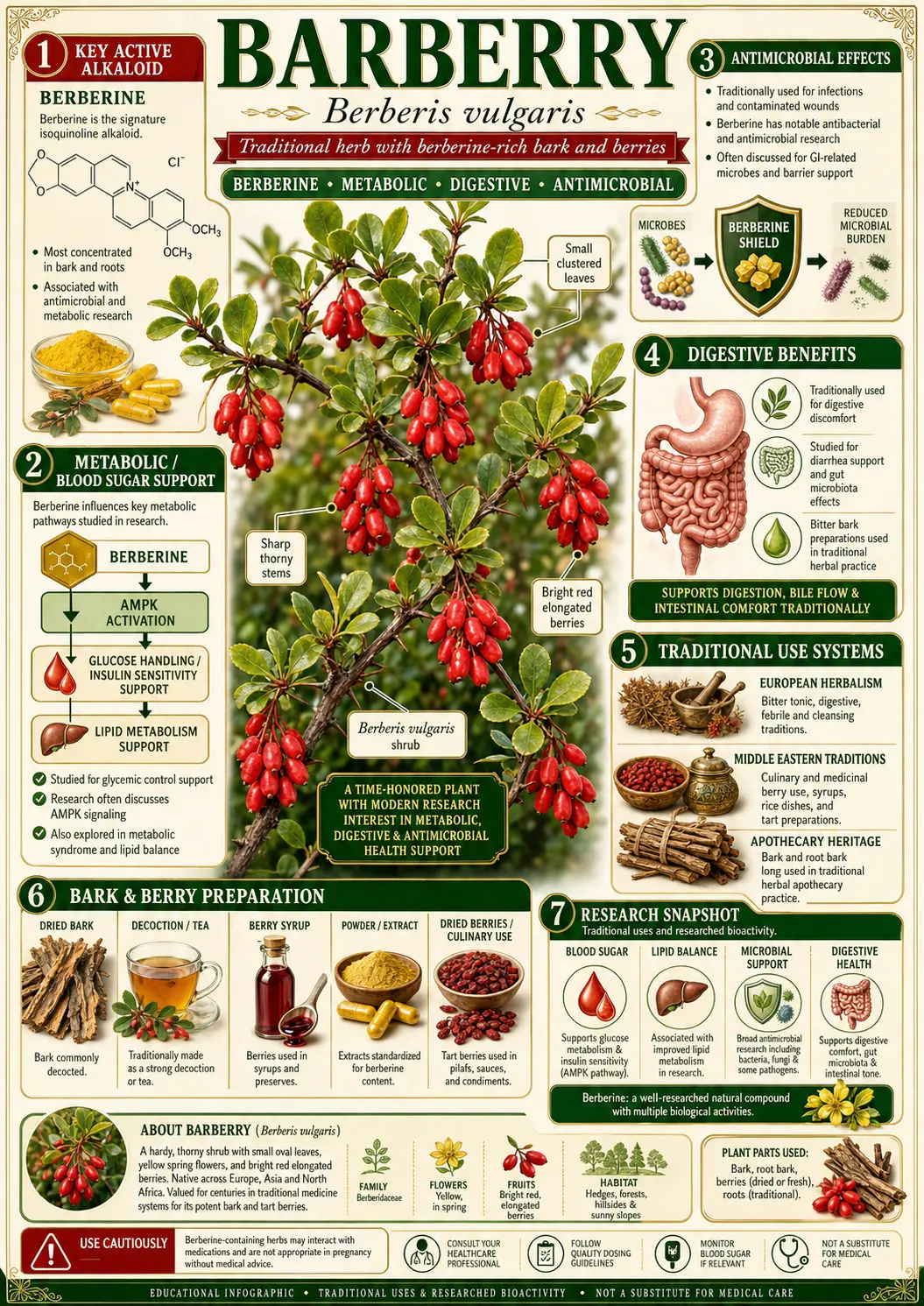
Table of Contents
- History and Traditional Use
- Key Antibacterial Compounds
- Mechanism of Antibacterial Action
- Bacteria Targeted
- Research Studies and Clinical Evidence
- Comparison with Goldenseal
- Gastrointestinal Antibacterial Uses
- Urinary Tract Infections
- Eye Infections and Ophthalmic Uses
- MRSA and Drug-Resistant Bacteria
- Skin Infections
- Synergistic Effects
- Other Health Benefits
- Forms and Preparations
- Recommended Dosage
- Safety and Contraindications
- Key Research Papers and References
- Featured Videos
History and Traditional Use
Barberry (Berberis vulgaris) is a thorny shrub of the family Berberidaceae whose bitter, berberine-rich yellow root bark has been used medicinally across many cultures for two thousand years — reached for in the Persian and Islamic tradition (where Avicenna's Canon of Medicine documents it as a cooling remedy for the liver, eyes, and gut), in Ayurveda as the yellow-rooted "dāruharidrā," and in European hedgerow medicine for jaundice and digestion. The same golden bark dyed cloth, the tart red berries (Persian zereshk) still flavour rice, and the alkaloid berberine was first isolated and named from this very plant in 1830. — the fuller story is told in the dedicated History & Traditional Use article.
Key Antibacterial Compounds
The antibacterial potency of barberry derives from a rich complex of isoquinoline alkaloids concentrated primarily in the root bark, stem bark, and to a lesser extent in the berries and leaves. These alkaloids work both independently and synergistically to produce broad-spectrum antimicrobial activity that has been validated through extensive modern pharmacological research.
Berberine is the primary and most abundant antibacterial alkaloid in barberry, typically comprising 2 to 6 percent of the dry weight of the root bark. This quaternary ammonium salt produces the characteristic bright yellow color of the inner bark and has become one of the most extensively researched plant-derived antimicrobial compounds in modern pharmacology, with over 5,000 published studies investigating its biological activities. Berberine exhibits potent activity against gram-positive bacteria, gram-negative bacteria, fungi, protozoa, and certain viruses. Its mechanism of action is multifaceted, targeting multiple cellular processes simultaneously, which makes the development of bacterial resistance significantly more difficult compared to single-target synthetic antibiotics. Berberine has demonstrated minimum inhibitory concentrations (MICs) ranging from 16 to 128 micrograms per milliliter against common pathogenic bacteria, with substantially lower effective concentrations when combined with other barberry alkaloids or conventional antibiotics.
Palmatine is the second most abundant alkaloid in barberry, structurally related to berberine but with distinct pharmacological properties that complement its antimicrobial effects. Palmatine belongs to the protoberberine class of alkaloids and typically constitutes 0.5 to 2 percent of the root bark by dry weight. Research has demonstrated that palmatine possesses significant antibacterial activity against both gram-positive and gram-negative organisms, though generally at slightly higher MICs than berberine. Palmatine exhibits particularly strong activity against Staphylococcus aureus and Bacillus subtilis, with MICs in the range of 32 to 64 micrograms per milliliter. Importantly, palmatine enhances the antibacterial activity of berberine when the two compounds are present together, as occurs naturally in the whole plant extract. Palmatine also demonstrates anti-inflammatory and antioxidant properties that support the body's immune response during bacterial infections.
Jatrorrhizine is a protoberberine alkaloid present in barberry at concentrations of approximately 0.3 to 1.5 percent of root bark dry weight. This compound exhibits notable antibacterial activity, particularly against enteric pathogens including Escherichia coli, Salmonella species, and Shigella species. Jatrorrhizine's mechanism of action involves disruption of bacterial cell membrane integrity and interference with bacterial DNA replication. Research published in the Journal of Natural Products demonstrated that jatrorrhizine possesses stronger antibacterial activity against certain gram-negative bacteria than berberine itself, particularly against strains associated with gastrointestinal infections. Additionally, jatrorrhizine has been shown to inhibit bacterial biofilm formation, a critical factor in chronic and recurrent infections where bacteria form protective communities resistant to conventional antibiotic treatment.
Columbamine is a lesser-studied but therapeutically significant protoberberine alkaloid found in barberry root bark at concentrations ranging from 0.1 to 0.8 percent dry weight. Columbamine contributes to the overall antibacterial profile of barberry extracts through mechanisms that include interference with bacterial enzyme systems and disruption of cellular energy metabolism. Studies have shown that columbamine exhibits moderate antibacterial activity against Staphylococcus aureus, Streptococcus species, and Pseudomonas aeruginosa. Its particular value lies in its ability to potentiate the effects of other alkaloids present in the whole plant extract. Research into columbamine's biofilm-disrupting properties has revealed that it can penetrate established biofilm matrices and reduce bacterial viability within these structures, making it a valuable component of barberry's antimicrobial arsenal.
Oxyberberine is an oxidized derivative of berberine present in barberry in smaller quantities, typically 0.05 to 0.3 percent of root bark dry weight. While less potent as a direct antibacterial agent compared to berberine, oxyberberine plays a significant role in the overall therapeutic profile of barberry through its pronounced anti-inflammatory and mucosal protective effects. Oxyberberine has been shown to reduce intestinal inflammation and protect the gut barrier integrity, creating an environment less conducive to bacterial colonization and infection. Research published in Phytomedicine demonstrated that oxyberberine exhibits superior anti-inflammatory activity compared to berberine in models of intestinal inflammation, with fewer gastrointestinal side effects. This compound also demonstrates moderate direct antibacterial activity against Helicobacter pylori and various Streptococcus species, contributing to the comprehensive antimicrobial action of whole barberry preparations.
Mechanism of Antibacterial Action
The antibacterial activity of barberry alkaloids operates through multiple distinct mechanisms that attack bacterial cells on several fronts simultaneously. This multi-target approach is a key advantage of plant-derived antimicrobials, as it dramatically reduces the probability that bacteria can develop resistance through single mutations. Understanding these mechanisms illuminates why barberry has remained effective against bacterial infections for thousands of years while many synthetic antibiotics have lost efficacy within decades.
FtsZ Inhibition and Prevention of Cell Division: One of the most significant and well-characterized antibacterial mechanisms of berberine involves the inhibition of the bacterial cell division protein FtsZ (Filamenting temperature-sensitive mutant Z). FtsZ is a tubulin-like GTPase protein essential for bacterial cytokinesis, forming the contractile ring (Z-ring) at the midpoint of the dividing cell that drives septum formation and cell separation. Berberine binds to FtsZ with high affinity, disrupting GTP hydrolysis and preventing the assembly of the Z-ring. Without functional FtsZ polymerization, bacteria cannot divide and instead form elongated, filamentous cells that are unable to reproduce and eventually undergo cell death. Research published in the Journal of Biological Chemistry demonstrated that berberine inhibits FtsZ assembly at concentrations as low as 10 micromolar, with complete suppression of cell division observed at higher concentrations. This mechanism is particularly significant because FtsZ has no mammalian equivalent, providing a selective target that affects bacteria without harming human cells. The FtsZ inhibition mechanism contributes to berberine's activity against both gram-positive and gram-negative organisms.
DNA Intercalation: Berberine and related protoberberine alkaloids function as DNA intercalating agents, inserting themselves between the base pairs of bacterial DNA double helices. This intercalation distorts the DNA structure, interfering with the processes of replication, transcription, and repair. When berberine intercalates into bacterial DNA, it stabilizes the double helix excessively, preventing the strand separation necessary for DNA polymerase activity and blocking the progression of the replication fork. Additionally, the intercalation inhibits topoisomerase enzymes (particularly topoisomerase IV and DNA gyrase) that manage DNA topology during replication. Studies using spectroscopic techniques including circular dichroism and fluorescence spectroscopy have confirmed that berberine binds preferentially to GC-rich sequences in bacterial DNA. The binding constant of berberine to bacterial DNA has been measured at approximately 10 to the fourth power per molar, indicating moderate but therapeutically significant affinity. This DNA-targeting mechanism complements the FtsZ inhibition pathway, as bacteria must overcome both barriers simultaneously to survive exposure to berberine.
Efflux Pump Inhibition: Bacterial efflux pumps are membrane-bound transport proteins that actively expel antibiotics and antimicrobial compounds from the bacterial cell interior, representing one of the most important mechanisms of antibiotic resistance. Barberry alkaloids, particularly berberine in combination with a non-alkaloid compound called 5'-methoxyhydnocarpin (5'-MHC) naturally present in barberry, function as potent inhibitors of major multidrug resistance (MDR) efflux pumps. The NorA efflux pump of Staphylococcus aureus is among the best-characterized targets. NorA belongs to the major facilitator superfamily (MFS) of transporters and confers resistance to fluoroquinolone antibiotics and various plant-derived antimicrobials. Research by Stermitz and colleagues, published in the Proceedings of the National Academy of Sciences, demonstrated that 5'-MHC blocks NorA-mediated efflux of berberine, increasing the intracellular concentration of berberine by up to 16-fold and dramatically enhancing its antibacterial potency. This discovery revealed that barberry produces its own efflux pump inhibitor alongside berberine, a sophisticated chemical strategy that evolved to overcome bacterial resistance mechanisms. The combination of berberine with its co-occurring efflux pump inhibitors results in effective antibacterial concentrations far lower than berberine alone would achieve.
Membrane Disruption: Barberry alkaloids compromise bacterial cell membrane integrity through multiple mechanisms. Berberine, as a positively charged quaternary ammonium compound, interacts electrostatically with the negatively charged phospholipid head groups of bacterial membranes, inserting into the lipid bilayer and disrupting its organized structure. This interaction increases membrane permeability, causing leakage of intracellular contents including potassium ions, nucleotides, and amino acids. In gram-negative bacteria, berberine also disrupts the outer membrane by displacing divalent cations (calcium and magnesium) that stabilize lipopolysaccharide (LPS) molecules, destabilizing the outer membrane barrier. Electron microscopy studies have revealed significant morphological changes in berberine-treated bacterial cells, including membrane blebbing, irregular cell surfaces, and loss of cytoplasmic density. The membrane-disrupting activity is concentration-dependent and contributes to the bactericidal (rather than merely bacteriostatic) effect observed at higher concentrations of barberry alkaloids. This mechanism also enhances the uptake of berberine itself and other antimicrobial compounds into the bacterial cell, creating a self-amplifying cycle of membrane damage and increased intracellular drug accumulation.
Bacteria Targeted
Barberry alkaloids demonstrate clinically significant antibacterial activity against a broad spectrum of pathogenic bacteria. The following organisms have been the subject of substantial research confirming their susceptibility to berberine and related barberry compounds.
Staphylococcus aureus is among the most extensively studied targets of barberry's antibacterial activity. This gram-positive coccus is responsible for a wide range of infections from minor skin conditions to life-threatening bacteremia, endocarditis, and pneumonia. Berberine exhibits consistent activity against methicillin-sensitive S. aureus (MSSA) strains with MICs typically ranging from 32 to 128 micrograms per milliliter. When combined with the naturally co-occurring efflux pump inhibitor 5'-MHC, these MICs drop to 4 to 16 micrograms per milliliter, well within therapeutically achievable concentrations. Studies have demonstrated berberine's ability to disrupt S. aureus biofilm formation and to kill bacteria within established biofilms, a property of particular relevance for chronic wound infections and medical device-associated infections.
Methicillin-resistant Staphylococcus aureus (MRSA) represents one of the most urgent threats in modern infectious disease. MRSA strains carry the mecA gene encoding a modified penicillin-binding protein (PBP2a) that confers resistance to all beta-lactam antibiotics. Berberine's multi-target mechanism of action bypasses this resistance mechanism entirely, as its activity does not depend on binding to penicillin-binding proteins. Research has demonstrated that berberine maintains similar MIC values against MRSA strains as against methicillin-sensitive strains, and critically, berberine has been shown to restore the sensitivity of MRSA to beta-lactam antibiotics when used in combination. Studies published in Phytomedicine documented synergistic effects between berberine and oxacillin against MRSA, with fractional inhibitory concentration (FIC) indices below 0.5, indicating true synergy rather than merely additive effects.
Escherichia coli, a gram-negative rod and common cause of urinary tract infections, neonatal meningitis, and traveler's diarrhea, shows significant susceptibility to barberry alkaloids. Berberine demonstrates MICs of 64 to 256 micrograms per milliliter against clinical E. coli isolates, with enhanced activity observed against enterotoxigenic strains (ETEC) responsible for secretory diarrhea. The alkaloid jatrorrhizine, also present in barberry, shows particularly strong activity against E. coli, with MICs frequently lower than those of berberine. Barberry alkaloids have been shown to inhibit the adhesion of E. coli to uroepithelial cells, a mechanism relevant to the prevention and treatment of urinary tract infections.
Clostridioides difficile (formerly Clostridium difficile) is an anaerobic, spore-forming bacterium responsible for severe antibiotic-associated diarrhea and pseudomembranous colitis. Berberine has demonstrated activity against vegetative C. difficile cells with MICs of 32 to 64 micrograms per milliliter. Beyond direct antibacterial effects, berberine inhibits the production of toxins A and B, the primary virulence factors responsible for the intestinal damage characteristic of C. difficile infection. Additionally, berberine's ability to strengthen intestinal barrier integrity and modulate the gut microbiome may help prevent the dysbiosis that predisposes patients to C. difficile colonization.
Vibrio cholerae, the causative agent of cholera, has a long historical association with berberine-based treatment. Berberine demonstrates direct bactericidal activity against V. cholerae at MICs of 32 to 128 micrograms per milliliter. However, its most clinically significant action against cholera involves inhibition of the cholera toxin-induced secretory response. Berberine blocks the activation of chloride channels in intestinal epithelial cells, reducing the massive fluid secretion that characterizes cholera. Clinical trials conducted in Bangladesh and India during the 1980s and 1990s demonstrated that berberine supplementation significantly reduced stool volume and duration of diarrhea in cholera patients when used as an adjunct to oral rehydration therapy.
Shigella species, including Shigella dysenteriae, S. flexneri, S. boydii, and S. sonnei, are invasive gram-negative bacteria that cause bacillary dysentery. Barberry alkaloids exhibit significant activity against all four Shigella species, with berberine MICs typically ranging from 32 to 128 micrograms per milliliter. Clinical studies in India and China demonstrated that berberine sulfate was comparable to standard antibiotic therapy in reducing the duration and severity of shigellosis, with the advantage of fewer adverse effects and no contribution to the growing problem of antibiotic resistance in Shigella populations.
Helicobacter pylori is a gram-negative, spiral-shaped bacterium that colonizes the gastric mucosa and is the primary cause of peptic ulcers and a major risk factor for gastric cancer. Berberine demonstrates moderate antibacterial activity against H. pylori with MICs of 12.5 to 50 micrograms per milliliter. Studies have shown that berberine inhibits H. pylori urease activity, an enzyme critical for the organism's survival in the acidic gastric environment. Research published in the World Journal of Gastroenterology found that berberine supplementation improved H. pylori eradication rates when added to standard triple therapy regimens, while simultaneously reducing the gastrointestinal side effects of antibiotic treatment.
Chlamydia trachomatis is an obligate intracellular gram-negative bacterium responsible for the most common bacterial sexually transmitted infection worldwide and the leading infectious cause of preventable blindness (trachoma). Berberine has been used historically for the treatment of trachoma and chlamydial eye infections, with traditional preparations of berberine-containing herbs used as eye washes throughout Asia and the Middle East. Modern studies have confirmed that berberine inhibits C. trachomatis at concentrations achievable in ocular and genital tract tissues. Berberine appears to interfere with the intracellular developmental cycle of C. trachomatis, preventing the conversion of reticulate bodies to infectious elementary bodies, thereby reducing the organism's ability to spread to new cells.
Research Studies and Clinical Evidence
The antibacterial properties of barberry have been investigated in hundreds of laboratory studies and numerous clinical trials over the past four decades. The body of evidence supporting its efficacy continues to grow as researchers explore new applications and elucidate the molecular mechanisms underlying its antimicrobial activity.
A landmark study published in Planta Medica by Stermitz and colleagues (2000) fundamentally changed the understanding of how berberine functions as an antimicrobial agent in the context of the whole plant. The researchers identified 5'-methoxyhydnocarpin (5'-MHC) as a potent multidrug resistance pump inhibitor naturally present in barberry alongside berberine. This study demonstrated that 5'-MHC dramatically potentiated berberine's activity against Staphylococcus aureus by blocking the NorA efflux pump, establishing the concept that plants produce synergistic combinations of compounds that overcome bacterial resistance mechanisms. This discovery, subsequently published in expanded form in the Proceedings of the National Academy of Sciences (PNAS), represented a paradigm shift in understanding plant antimicrobial chemistry and opened new avenues for developing efflux pump inhibitors as adjuncts to conventional antibiotic therapy.
Research published in the Journal of Ethnopharmacology has contributed extensively to validating barberry's traditional antibacterial uses. A systematic study by Imanshahidi and Hosseinzadeh (2008) reviewed the pharmacological and therapeutic effects of Berberis vulgaris and berberine, documenting antibacterial activity against over 30 pathogenic organisms. The review compiled data from both in vitro studies and clinical trials, establishing effective concentration ranges and identifying the most susceptible bacterial species. Subsequent studies in the same journal have investigated barberry extracts from different geographic origins, demonstrating that while alkaloid profiles vary somewhat with growing conditions, the overall antibacterial potency remains consistent across populations. A 2017 study in the Journal of Ethnopharmacology demonstrated that whole barberry root bark extract exhibited stronger antibacterial activity than isolated berberine alone, supporting the synergistic activity of the complete alkaloid profile.
Studies published in Phytomedicine have provided some of the most clinically relevant data regarding barberry's antibacterial applications. A randomized controlled trial examining berberine supplementation in patients with bacterial diarrhea demonstrated a significant reduction in stool frequency, volume, and duration of illness compared to placebo. Another Phytomedicine study investigated the combination of berberine with conventional antibiotics against drug-resistant Staphylococcus aureus isolates, finding synergistic interactions with multiple antibiotic classes including fluoroquinolones, aminoglycosides, and beta-lactams. The fractional inhibitory concentration indices consistently fell below 0.5, confirming true synergy. A 2019 study in Phytomedicine examined the effects of berberine on H. pylori eradication in a clinical cohort of 196 patients, reporting improved eradication rates and reduced antibiotic-associated side effects in the berberine-supplemented group.
Additional significant research has been published in the Journal of Antimicrobial Chemotherapy, Antimicrobial Agents and Chemotherapy, and Frontiers in Microbiology. Collectively, these studies have established berberine and barberry extracts as legitimate antimicrobial agents with activity against a clinically relevant spectrum of pathogens, multiple well-characterized mechanisms of action, documented synergy with conventional antibiotics, and a favorable safety profile compared to synthetic antimicrobial agents.
Comparison with Goldenseal
Goldenseal (Hydrastis canadensis) and barberry (Berberis vulgaris) are frequently compared due to their shared berberine content, and understanding their similarities and differences is important for practitioners selecting the most appropriate berberine-containing herb for clinical use.
Both plants contain berberine as their primary active alkaloid, though the concentrations differ. Goldenseal root typically contains 2 to 4 percent berberine, while barberry root bark contains 2 to 6 percent berberine, making barberry frequently the richer source. However, the total alkaloid profiles of the two plants diverge significantly. Goldenseal contains hydrastine and canadine as its other major alkaloids. Hydrastine, unique to goldenseal, contributes astringent and vasoconstrictive properties that make goldenseal particularly effective for conditions involving mucous membrane inflammation and congestion. Canadine (also known as tetrahydroberberine) provides sedative and smooth muscle relaxant effects distinct from berberine's actions.
Barberry's additional alkaloids, including palmatine, jatrorrhizine, columbamine, and oxyberberine, create a different complementary profile. These protoberberine alkaloids enhance and broaden the antimicrobial spectrum beyond what berberine alone provides, and the naturally co-occurring efflux pump inhibitors in barberry (particularly 5'-MHC) potentiate berberine's activity in ways not replicated in goldenseal. This means that for purely antibacterial applications, barberry may offer advantages over goldenseal due to its built-in resistance-overcoming mechanisms.
A critical consideration favoring barberry is sustainability. Goldenseal is native exclusively to eastern North American forests and has been severely overharvested from the wild. It is listed in CITES Appendix II and is considered "at risk" by the United Plant Conservation organization. Wild goldenseal populations have declined dramatically, and while cultivation efforts have expanded, the plant is slow-growing and requires specific forest understory conditions. Barberry, by contrast, is abundant throughout its native range in Europe and western Asia and is easily cultivated. In North America, Berberis vulgaris and related species are so well-established that several are considered invasive. This ecological abundance means that barberry can be sustainably harvested without conservation concerns, making it an environmentally responsible alternative to goldenseal for applications where berberine is the desired active compound.
For practitioners seeking primarily antibacterial effects with berberine as the key active compound, barberry offers a sustainable, effective, and in many cases pharmacologically superior alternative to goldenseal. Goldenseal retains unique value for conditions where its additional alkaloids (hydrastine and canadine) provide specific therapeutic benefits, particularly for upper respiratory tract conditions involving excess mucous membrane secretion.
Gastrointestinal Antibacterial Uses
The gastrointestinal tract represents the most extensively documented and historically validated application of barberry's antibacterial properties. Berberine and related barberry alkaloids reach high concentrations in the intestinal lumen following oral administration, making the gut a particularly favorable target tissue for their antimicrobial effects.
Traveler's diarrhea is among the most common applications of berberine-containing herbs. Enterotoxigenic Escherichia coli (ETEC) is the most frequent cause of traveler's diarrhea, accounting for 30 to 60 percent of cases. Berberine demonstrates dual action against ETEC: direct antibacterial activity that reduces bacterial load, and inhibition of the heat-labile and heat-stable enterotoxins that drive the secretory diarrhea response. A randomized, double-blind clinical trial conducted in travelers found that berberine supplementation at 400 mg three times daily significantly reduced the incidence and duration of diarrheal episodes compared to placebo. The antisecretory mechanism is particularly valuable because it provides symptomatic relief even before the bacterial infection is fully resolved.
Bacterial dysentery caused by Shigella species and invasive E. coli strains has been treated with berberine-containing preparations throughout Asia for centuries. Clinical studies conducted in India and China during the 1960s through 1990s established that berberine sulfate at doses of 100 to 200 mg four times daily was effective in treating acute bacillary dysentery, with clinical cure rates comparable to sulfonamide antibiotics. A comparative trial in children with acute infectious diarrhea found that berberine was as effective as the combination of furazolidone and sulfaguanidine in reducing stool frequency and achieving microbiological cure. The advantage of berberine in this context includes its favorable side-effect profile, the absence of antibiotic resistance selection pressure, and its additional anti-inflammatory effects on the damaged intestinal mucosa.
The historical use of barberry preparations in the management of cholera has been partially validated by modern research. While berberine alone is insufficient as a treatment for severe cholera, its antisecretory properties provide meaningful clinical benefit as an adjunct to oral rehydration therapy. Berberine inhibits the cholera toxin-stimulated secretory response by blocking the cyclic AMP-mediated activation of chloride channels in intestinal epithelial cells. A study conducted in Bangladesh demonstrated that berberine supplementation reduced stool volume by approximately one liter per day and shortened the duration of diarrhea by approximately 8 hours in cholera patients receiving standard rehydration therapy.
For general gut infections and intestinal dysbiosis, barberry preparations offer a selective antimicrobial effect that targets pathogenic organisms while relatively sparing beneficial commensal bacteria. Research has shown that berberine has a modulatory effect on the gut microbiome, reducing populations of potentially pathogenic bacteria including Prevotella and certain Clostridium species while promoting the growth of beneficial Lactobacillus and Bifidobacterium species. This selective antimicrobial action distinguishes berberine from broad-spectrum antibiotics, which indiscriminately destroy both pathogenic and beneficial gut flora, often leading to secondary complications including C. difficile overgrowth and fungal infections.
Urinary Tract Infections
Urinary tract infections (UTIs) represent one of the most promising emerging applications for barberry and berberine-based interventions. UTIs affect an estimated 150 million people worldwide each year, with Escherichia coli accounting for 80 to 90 percent of community-acquired cases. The growing prevalence of antibiotic-resistant uropathogenic E. coli (UPEC) strains has created urgent demand for alternative and adjunctive therapies.
Berberine demonstrates direct antibacterial activity against uropathogenic E. coli strains, including those carrying extended-spectrum beta-lactamase (ESBL) resistance genes. Following oral administration, berberine and its metabolites are excreted partially through the kidneys, achieving detectable concentrations in the urine that contribute to antibacterial activity within the urinary tract. Studies in animal models of UTI have shown that berberine supplementation significantly reduces bacterial colony counts in the bladder and kidneys.
Beyond direct bactericidal effects, barberry alkaloids exhibit important anti-adhesion properties that may help prevent UTIs. UPEC initiates infection by adhering to uroepithelial cells using type 1 fimbriae (pili) tipped with the FimH adhesin protein. Berberine has been shown to inhibit the expression and function of type 1 fimbriae, reducing bacterial adhesion to bladder epithelial cells by 40 to 60 percent in laboratory studies. This anti-adhesion mechanism is analogous to the well-characterized effect of cranberry proanthocyanidins, suggesting that barberry and cranberry could be combined for enhanced UTI prevention.
Research has also demonstrated that berberine inhibits the formation of intracellular bacterial communities (IBCs) by UPEC within bladder epithelial cells. These IBCs represent a reservoir of bacteria that can persist despite antibiotic treatment and emerge to cause recurrent infections. By disrupting IBC formation, berberine may help break the cycle of recurrent UTIs that affects approximately 25 to 30 percent of women who experience an initial episode.
A clinical study involving women with recurrent UTIs investigated berberine supplementation (500 mg twice daily) as a prophylactic measure over a 12-week period. The berberine-supplemented group experienced a significant reduction in UTI recurrence compared to placebo, with improvements in urinary symptoms and quality of life measures. While larger, multicenter trials are needed to establish definitive clinical guidelines, the existing evidence supports berberine as a promising agent for both treatment and prevention of urinary tract infections, particularly in patients with recurrent infections or antibiotic-resistant organisms.
Eye Infections and Ophthalmic Uses
The use of barberry and berberine for eye infections represents one of the oldest and most consistent applications across diverse medical traditions. From Ayurvedic eye washes to Persian ophthalmic preparations, berberine-containing herbs have been applied topically to the eyes for millennia to treat infections, inflammation, and visual disturbances.
Traditional eye wash preparations were made by soaking barberry root bark in clean water or by preparing a dilute decoction, then straining the liquid through fine cloth before application. These preparations were used throughout India, the Middle East, and parts of Europe for conditions including conjunctivitis (pink eye), blepharitis (eyelid inflammation), and trachoma. The bright yellow berberine-containing solution was recognizable and became widely known for its effectiveness against ocular infections.
Modern research has validated these traditional uses. Berberine eye drops have been investigated in clinical trials for bacterial conjunctivitis, with results demonstrating efficacy comparable to standard antibiotic eye drops. A randomized controlled trial comparing 0.2% berberine chloride eye drops with chloramphenicol eye drops in patients with acute bacterial conjunctivitis found equivalent clinical cure rates at 7 days, with the berberine group showing fewer adverse effects and no risk of the rare but serious aplastic anemia associated with chloramphenicol. Berberine eye drops have shown particular efficacy against conjunctivitis caused by Staphylococcus species, Streptococcus pneumoniae, and Haemophilus influenzae.
For trachoma, caused by Chlamydia trachomatis, berberine has a long history of documented use. Studies conducted in endemic areas have shown that topical berberine application reduces the severity of trachomatous inflammation and decreases the conjunctival bacterial load. While berberine alone does not replace the WHO-recommended SAFE strategy for trachoma elimination, it may serve as a useful adjunctive therapy, particularly in resource-limited settings where access to antibiotics is constrained.
Berberine's ophthalmic applications extend beyond its antibacterial effects. The compound demonstrates anti-inflammatory activity in ocular tissues by inhibiting the production of pro-inflammatory cytokines and reducing neutrophil infiltration. Berberine also exhibits protective effects on corneal epithelial cells exposed to bacterial toxins and inflammatory mediators. These combined antibacterial and anti-inflammatory properties make berberine particularly well-suited for ocular infections where both microbial clearance and control of the inflammatory response are critical for preventing complications and preserving vision.
MRSA and Drug-Resistant Bacteria
The escalating crisis of antibiotic resistance has generated intense interest in barberry and berberine as tools against drug-resistant bacterial pathogens. The multi-target mechanism of action of barberry alkaloids, combined with their ability to inhibit bacterial resistance mechanisms, positions them as valuable agents in the fight against antimicrobial resistance.
The NorA efflux pump of Staphylococcus aureus is a major facilitator superfamily (MFS) transporter that confers resistance to fluoroquinolone antibiotics, biocides, and various plant-derived antimicrobials including berberine. NorA-mediated efflux is a significant contributor to the multidrug resistance phenotype observed in clinical MRSA isolates. The discovery that barberry naturally produces efflux pump inhibitors (EPIs) that block NorA function was a breakthrough in understanding how the plant overcomes this resistance mechanism. The compound 5'-methoxyhydnocarpin (5'-MHC), a flavonolignan present in barberry, is the most potent of these natural EPIs. When berberine is administered alongside 5'-MHC (as occurs naturally in whole barberry extracts), the intracellular concentration of berberine within S. aureus cells increases dramatically, restoring antibacterial potency even against strains that overexpress NorA.
Beyond restoring berberine's own activity, barberry's efflux pump inhibitors have the remarkable ability to restore the sensitivity of MRSA to conventional antibiotics. Because NorA and related efflux pumps transport multiple antibiotic classes, inhibiting these pumps with barberry-derived EPIs reduces the effective MICs of fluoroquinolones, tetracyclines, and other antibiotics against resistant strains. Research has demonstrated that combining sub-inhibitory concentrations of berberine with conventional antibiotics can reduce the MIC of the antibiotic by 4 to 16-fold against MRSA isolates, potentially restoring clinical efficacy to drugs that had been rendered ineffective by resistance.
Studies have investigated berberine's activity against other drug-resistant organisms beyond MRSA. Vancomycin-resistant Enterococcus (VRE) species, extended-spectrum beta-lactamase (ESBL)-producing Enterobacteriaceae, and multi-drug resistant Pseudomonas aeruginosa have all shown susceptibility to berberine at varying concentrations. While MICs against gram-negative resistant organisms tend to be higher than against gram-positive organisms, the synergistic potential of berberine with conventional antibiotics remains significant across pathogen types.
The mechanism by which berberine circumvents methicillin resistance specifically is noteworthy. MRSA resistance is mediated by the mecA gene encoding PBP2a, an altered penicillin-binding protein with low affinity for beta-lactam antibiotics. Since berberine's mechanisms of action (FtsZ inhibition, DNA intercalation, membrane disruption) are entirely independent of penicillin-binding proteins, the mecA-mediated resistance mechanism provides no protection against berberine. Furthermore, berberine has been shown to downregulate mecA gene expression in some MRSA strains, potentially reducing PBP2a production and partially restoring beta-lactam sensitivity through a gene regulatory mechanism in addition to the efflux pump inhibition pathway.
Skin Infections
Topical application of barberry preparations for skin infections is among the herb's oldest documented uses, with evidence of this practice spanning multiple cultures and millennia. The high concentration of berberine in barberry root bark makes it particularly suitable for preparation of antimicrobial washes, poultices, and ointments applied directly to infected skin.
Traditional practitioners used barberry root bark decoctions to wash infected wounds, ulcers, and skin lesions. The bright yellow liquid served both as a visual indicator of the preparation's strength and as an antimicrobial agent that could be applied directly to broken skin with minimal irritation. In European folk medicine, barberry bark was a standard wound-care herb, applied as a poultice to prevent infection in cuts, abrasions, and puncture wounds. Native American populations used related Berberis species similarly, preparing root bark compresses for infected wounds and skin sores.
Modern research supports the topical antibacterial application of barberry extracts for several skin conditions. For acne vulgaris, berberine has demonstrated activity against Cutibacterium acnes (formerly Propionibacterium acnes), the primary bacterium implicated in inflammatory acne. A clinical study comparing a topical berberine formulation with a standard benzoyl peroxide preparation found comparable reductions in inflammatory lesion counts after 8 weeks of treatment, with the berberine group reporting significantly less skin dryness and irritation. Berberine's additional anti-inflammatory and sebum-regulating properties provide therapeutic benefits beyond its direct antibacterial action against C. acnes.
For infected wounds, berberine-containing preparations offer the advantage of broad-spectrum antimicrobial activity combined with wound-healing promotion. Berberine has been shown to enhance keratinocyte migration and proliferation, key processes in wound closure, while simultaneously controlling bacterial colonization. Studies in animal wound models demonstrated that berberine-treated wounds showed reduced bacterial counts, decreased inflammatory cell infiltration, enhanced collagen deposition, and accelerated wound closure compared to untreated controls. These findings support the traditional practice of applying berberine-containing herb preparations to wounds for both infection prevention and healing promotion.
Barberry extracts have also shown efficacy against superficial fungal infections of the skin, including those caused by Candida species and dermatophytes. While not bacteria, these organisms frequently co-infect skin lesions with bacterial pathogens, and berberine's broad antimicrobial spectrum allows it to address mixed infections that might otherwise require multiple pharmaceutical agents.
Synergistic Effects
One of the most therapeutically significant aspects of barberry's antibacterial activity is its capacity for synergistic interactions with other antimicrobial herbs and conventional antibiotics. These synergistic effects result in combined antimicrobial potency that exceeds what would be expected from the sum of the individual components, enabling lower doses and broader spectrum coverage.
Synergy with goldenseal (Hydrastis canadensis) has been observed when the two berberine-containing herbs are combined. Although both plants share berberine as a common alkaloid, their differing secondary alkaloid profiles create complementary mechanisms of action. Goldenseal's hydrastine contributes astringent and vasoconstrictive effects that reduce mucosal inflammation and blood flow to infected tissues, while barberry's efflux pump inhibitors enhance the intracellular concentration of berberine from both sources. Studies have shown that combining barberry and goldenseal extracts produces greater antibacterial activity against S. aureus and E. coli than either herb alone at equivalent total alkaloid concentrations, confirming true synergistic interaction rather than simple addition of effects.
Synergy with Oregon grape (Berberis aquifolium or Mahonia aquifolium) is expected based on overlapping but distinct alkaloid profiles. Oregon grape contains berberine alongside unique compounds including mahonine and oxyacanthine that may contribute additional antimicrobial mechanisms. Traditional herbalists have long combined Oregon grape with barberry in formulas targeting infections, and emerging research supports the rationale for these combinations.
Synergy with conventional antibiotics represents perhaps the most clinically impactful synergistic application of barberry. The efflux pump inhibition provided by barberry's non-alkaloid components (5'-MHC and related flavonolignans) has profound implications for restoring antibiotic efficacy against resistant organisms. Research has documented synergistic interactions between berberine and multiple antibiotic classes:
- Fluoroquinolones: Berberine combined with ciprofloxacin or norfloxacin shows FIC indices of 0.25 to 0.5 against NorA-expressing S. aureus strains, reducing fluoroquinolone MICs by 4 to 8-fold.
- Beta-lactams: Berberine combined with oxacillin demonstrates synergy against MRSA, with berberine reducing the oxacillin MIC from resistant to susceptible breakpoint concentrations in some strains.
- Aminoglycosides: Modest synergistic effects have been observed between berberine and gentamicin against E. coli and P. aeruginosa.
- Tetracyclines: Berberine potentiates doxycycline activity against tetracycline-resistant organisms that employ efflux-based resistance mechanisms.
The efflux pump synergy mechanism deserves particular emphasis. Bacterial efflux pumps represent one of the most widespread and clinically consequential mechanisms of antibiotic resistance. By inhibiting these pumps, barberry compounds effectively reverse one of bacteria's primary defensive strategies. This approach is fundamentally different from developing new antibiotics because it restores the efficacy of existing drugs rather than introducing novel selective pressures that drive further resistance evolution. Pharmaceutical research is actively pursuing synthetic efflux pump inhibitors based on the natural compounds identified in barberry, though the plant-derived versions retain the advantage of being part of a complex mixture that addresses multiple resistance mechanisms simultaneously.
Other Health Benefits
While barberry's antibacterial properties are the focus of this article, the plant possesses numerous additional health benefits that have been substantiated by modern research. These supplementary actions often complement the antibacterial effects, contributing to comprehensive therapeutic outcomes.
Blood sugar regulation is one of the most clinically significant non-antibacterial effects of berberine. Multiple randomized controlled trials have demonstrated that berberine at doses of 500 mg two to three times daily reduces fasting blood glucose, postprandial blood glucose, and hemoglobin A1c levels in patients with type 2 diabetes. A landmark meta-analysis published in the Journal of Ethnopharmacology concluded that berberine's glucose-lowering efficacy was comparable to metformin, the first-line pharmaceutical treatment for type 2 diabetes. Berberine activates AMP-activated protein kinase (AMPK), enhances insulin sensitivity, promotes glucose uptake by cells, and inhibits gluconeogenesis in the liver. This glucose-regulating effect is relevant to antibacterial applications because hyperglycemia impairs immune function and increases susceptibility to infections, meaning that berberine's metabolic effects may indirectly support the body's ability to fight bacterial infections.
Cholesterol reduction has been demonstrated in clinical trials, with berberine lowering total cholesterol by 18 to 29 percent, LDL cholesterol by 20 to 25 percent, and triglycerides by 25 to 35 percent. Berberine achieves this through a unique mechanism: upregulation of LDL receptor expression on hepatocytes via stabilization of LDL receptor mRNA. This mechanism is distinct from statins, making berberine potentially useful as an adjunctive or alternative lipid-lowering agent.
Liver protection is a traditional use of barberry that has been confirmed by research demonstrating hepatoprotective effects of berberine against various toxic insults. Berberine reduces hepatic fat accumulation, inhibits liver inflammation, and supports bile production and flow. These effects are mediated through activation of AMPK, reduction of lipogenic gene expression, and enhancement of fatty acid oxidation in hepatocytes. For patients taking antibiotics that may stress the liver, barberry's hepatoprotective properties provide an additional benefit.
Anti-inflammatory effects extend throughout the body and complement berberine's antibacterial activity. Berberine inhibits the NF-kB inflammatory signaling pathway, reduces the production of pro-inflammatory cytokines (TNF-alpha, IL-1beta, IL-6), and suppresses cyclooxygenase-2 (COX-2) expression. These anti-inflammatory actions help control the tissue damage that accompanies bacterial infections, where much of the pathology results from the host inflammatory response rather than direct bacterial injury. By combining antibacterial effects with anti-inflammatory modulation, barberry preparations address both the cause and the consequences of bacterial infections simultaneously.
Forms and Preparations
Barberry is available in several forms, each with distinct advantages for different therapeutic applications. The choice of preparation depends on the target condition, desired route of administration, and the patient's preferences and tolerances.
Root bark is the traditional medicinal part of the plant and contains the highest concentration of berberine and other isoquinoline alkaloids. Dried root bark can be prepared as a decoction (simmered in water for 15 to 20 minutes) for internal use or as a topical wash. The decoction produces a bright yellow liquid with a distinctly bitter taste. Root bark is also available as a cut-and-sifted dried herb or ground powder for encapsulation. The whole root bark retains the full spectrum of alkaloids and synergistic compounds, including the efflux pump inhibitors that potentiate berberine's antibacterial activity.
Berries contain lower concentrations of berberine than the root bark but provide vitamin C, organic acids, and anthocyanin pigments with antioxidant properties. The tart, red berries can be consumed fresh, dried, or as juice. In Persian cuisine, dried barberries (zereshk) are widely used in cooking and are readily available in Middle Eastern markets. While the berries offer general health benefits and mild antimicrobial activity, they are not the preferred preparation for targeted antibacterial use due to their lower alkaloid content.
Tincture (hydroalcoholic extract) provides a convenient and shelf-stable liquid preparation that extracts a broad range of alkaloids and other bioactive compounds. Barberry root bark tincture is typically prepared at a ratio of 1:5 (herb to menstruum) using 45 to 60 percent alcohol. The tincture allows precise dosing and rapid absorption, and the alcohol serves as an additional preservative. Standard dosing of barberry root bark tincture ranges from 2 to 4 milliliters three times daily.
Capsules containing ground barberry root bark or concentrated extract offer the advantage of avoiding the intensely bitter taste of berberine, which can be unpleasant and may cause nausea in sensitive individuals. Capsules are available in various strengths, from 400 to 600 mg of whole root bark powder to concentrated extracts standardized to specific berberine content.
Standardized extract formulations are manufactured to contain a guaranteed minimum percentage of berberine, typically 5 to 10 percent for barberry root bark extracts. Standardization ensures dose consistency between batches and allows precise calculation of berberine intake. For antibacterial applications where specific berberine doses are required, standardized extracts offer the most reliable option. Some products provide isolated berberine hydrochloride or berberine sulfate rather than whole-plant extracts, though these lack the synergistic efflux pump inhibitors present in whole barberry preparations.
Topical preparations include washes, compresses, ointments, and creams formulated for application to skin infections, wounds, and eye conditions. Topical barberry preparations are made from decoctions, tinctures diluted to appropriate concentrations, or standardized extracts incorporated into suitable bases. For eye applications, sterile, pH-balanced berberine solutions at concentrations of 0.1 to 0.2 percent have been used in clinical research. Topical formulations allow direct delivery of high concentrations of barberry alkaloids to the site of infection while minimizing systemic exposure.
Recommended Dosage
Dosage recommendations for barberry depend on the form of preparation, the specific condition being treated, and whether isolated berberine or whole-plant extracts are being used. The following guidelines reflect ranges established through clinical research and traditional herbal practice.
Berberine standardization is the most reliable approach for ensuring consistent therapeutic dosing. For general antibacterial purposes and metabolic health benefits, the most commonly studied dosage of berberine is 500 to 1,500 mg per day, divided into two or three doses taken with meals. Most clinical trials demonstrating antibacterial, glucose-lowering, and cholesterol-reducing effects have used berberine hydrochloride or berberine sulfate at 500 mg two or three times daily. Starting at the lower end of the range (500 mg daily) and gradually increasing over one to two weeks helps minimize gastrointestinal side effects, which are the most common adverse reactions.
Tincture of barberry root bark (1:5 in 45 to 60 percent alcohol) is typically dosed at 2 to 4 milliliters (approximately 40 to 80 drops) three times daily. For acute infections, the upper end of this range is appropriate, while lower doses are suitable for maintenance and prevention. The tincture can be taken in a small amount of water before meals.
Tea (decoction) is prepared by simmering 1 to 2 teaspoons (approximately 2 to 4 grams) of dried, cut barberry root bark in 8 ounces of water for 15 to 20 minutes, then straining. One cup of this decoction can be consumed two to three times daily. The decoction is intensely bitter, reflecting its high alkaloid content, and may be more palatable with a small amount of honey or mixed with other herbs. Tea preparations provide a lower but still therapeutically relevant dose of berberine alongside the full spectrum of synergistic alkaloids and efflux pump inhibitors.
For acute bacterial infections, higher doses within the recommended ranges are appropriate for short-term use (7 to 14 days), similar to the duration of a typical antibiotic course. For chronic or preventive use, such as recurrent UTI prophylaxis or metabolic health support, lower doses are appropriate for extended periods, though long-term use beyond 8 to 12 weeks should be supervised by a qualified healthcare practitioner.
It is important to note that berberine has relatively low oral bioavailability, estimated at approximately 5 percent, due to extensive first-pass metabolism in the liver and intestines. However, the gastrointestinal tract is exposed to high concentrations of berberine before absorption, which is advantageous for treating gut infections. Several strategies have been investigated to improve systemic bioavailability, including co-administration with piperine (from black pepper), liposomal formulations, and nanoparticle delivery systems.
Safety and Contraindications
Barberry and berberine have an extensive safety record spanning thousands of years of traditional use and decades of modern clinical research. However, several important safety considerations and contraindications must be observed.
Pregnancy is an absolute contraindication for barberry and berberine supplementation. Berberine stimulates uterine contractions and has demonstrated abortifacient (pregnancy-terminating) effects in animal studies. The compound crosses the placental barrier and can affect fetal development. Berberine has been shown to displace bilirubin from albumin binding sites, which could theoretically increase the risk of kernicterus (bilirubin-induced brain damage) in the fetus or newborn. For these reasons, barberry and all berberine-containing preparations must be strictly avoided during pregnancy and during breastfeeding, as berberine is transferred into breast milk.
Jaundice in newborns represents a specific and critical concern. Berberine's ability to displace bilirubin from serum albumin can exacerbate neonatal jaundice, potentially leading to kernicterus. Barberry preparations must not be given to neonates, and breastfeeding mothers must not take berberine-containing supplements. This concern extends to the perinatal period, as maternal berberine ingestion near term could affect neonatal bilirubin metabolism.
Blood thinning medications require caution when combined with barberry. Berberine has mild antiplatelet and anticoagulant properties and may potentiate the effects of warfarin, heparin, aspirin, and other anticoagulant or antiplatelet drugs. Patients taking these medications should use barberry only under medical supervision with appropriate monitoring of coagulation parameters. Cases of elevated INR have been reported in patients taking warfarin who initiated berberine supplementation without dose adjustment of the anticoagulant.
Hypoglycemia risk exists when barberry is combined with insulin, sulfonylureas, or other glucose-lowering medications. Berberine's significant glucose-lowering effects can be additive with these drugs, potentially causing dangerously low blood sugar levels. Diabetic patients taking pharmaceutical hypoglycemic agents should have their blood glucose monitored closely if berberine supplementation is initiated, and medication doses may require adjustment.
Drug interactions involving cytochrome P450 enzymes are a significant concern with berberine. Berberine is a potent inhibitor of several cytochrome P450 enzymes, particularly CYP3A4, CYP2D6, and CYP2C9. CYP3A4 metabolizes approximately 50 percent of all pharmaceutical drugs, meaning that berberine co-administration can significantly increase the blood levels and effects of many medications. Drugs with narrow therapeutic indices that are metabolized by CYP3A4 are of particular concern, including cyclosporine, tacrolimus, certain statins (simvastatin, lovastatin, atorvastatin), some calcium channel blockers, and various chemotherapy agents. Berberine also inhibits P-glycoprotein, a drug transporter that influences the absorption and distribution of many medications. Patients taking any prescription medications should consult their healthcare provider before using barberry or berberine supplements.
Common side effects of berberine at therapeutic doses include gastrointestinal discomfort, including nausea, diarrhea, constipation, abdominal distension, and flatulence. These effects are usually mild and often resolve with continued use or dose reduction. Taking berberine with meals and starting at lower doses with gradual escalation helps minimize gastrointestinal intolerance. Skin reactions are rare but have been reported. At high doses, berberine may cause headache, dizziness, and transient drops in blood pressure.
Key Research Papers and References
The following references represent foundational and significant research supporting the antibacterial applications of barberry and berberine discussed in this article.
- Stermitz FR, Lorenz P, Tawara JN, Zenewicz LA, Lewis K. Synergy in a medicinal plant: antimicrobial action of berberine potentiated by 5'-methoxyhydnocarpin, a multidrug pump inhibitor. Proceedings of the National Academy of Sciences. 2000;97(4):1433-1437.
- Stermitz FR, Tawara-Matsuda J, Lorenz P, Mueller P, Zenewicz L, Lewis K. 5'-Methoxyhydnocarpin-D and pheophorbide A: Berberis species components that potentiate berberine growth inhibition of resistant Staphylococcus aureus. Journal of Natural Products. 2000;63(8):1146-1149.
- Imanshahidi M, Hosseinzadeh H. Pharmacological and therapeutic effects of Berberis vulgaris and its active constituent, berberine. Phytotherapy Research. 2008;22(8):999-1012.
- Domadia P, Swarup S, Bhunia A, Sivaraman J, Dasgupta D. Inhibition of bacterial cell division protein FtsZ by cinnamaldehyde. Biochemical Pharmacology. 2007;74(6):831-840.
- Boberek JM, Stach J, Good L. Genetic evidence for inhibition of bacterial division protein FtsZ by berberine. PLoS One. 2010;5(10):e13745.
- Peng L, Kang S, Yin Z, et al. Antibacterial activity and mechanism of berberine against Streptococcus agalactiae. International Journal of Clinical and Experimental Pathology. 2015;8(5):5217-5223.
- Yu HH, Kim KJ, Cha JD, et al. Antimicrobial activity of berberine alone and in combination with ampicillin or oxacillin against methicillin-resistant Staphylococcus aureus. Journal of Medicinal Food. 2005;8(4):454-461.
- Rabbani GH, Butler T, Knight J, Sanyal SC, Alam K. Randomized controlled trial of berberine sulfate therapy for diarrhea due to enterotoxigenic Escherichia coli and Vibrio cholerae. Journal of Infectious Diseases. 1987;155(5):979-984.
- Kheir MM, Wang Y, Hua L, et al. Acute toxicity of berberine and its correlation with the blood concentration in mice. Food and Chemical Toxicology. 2010;48(4):1105-1110.
- Dong H, Wang N, Zhao L, Lu F. Berberine in the treatment of type 2 diabetes mellitus: a systemic review and meta-analysis. Evidence-Based Complementary and Alternative Medicine. 2012;2012:591654.
- Wojtyczka RD, Dziedzic A, Keba M, et al. Berberine enhances the antibacterial activity of selected antibiotics against coagulase-negative Staphylococcus strains in vitro. Molecules. 2014;19(5):6583-6596.
- Kaneda Y, Torii M, Tanaka T, Aikawa M. In vitro effects of berberine sulphate on the growth and structure of Entamoeba histolytica, Giardia lamblia and Trichomonas vaginalis. Annals of Tropical Medicine and Parasitology. 1991;85(4):417-425.
- Yan D, Jin C, Xiao XH, Dong XP. Antimicrobial properties of berberines alkaloids in Coptis chinensis Franch by microcalorimetry. Journal of Biochemical and Biophysical Methods. 2008;70(6):845-849.
- Zhang L, Wu X, Yang R, et al. Effects of berberine on the gastrointestinal microbiota. Frontiers in Cellular and Infection Microbiology. 2021;10:588517.
- Imenshahidi M, Hosseinzadeh H. Berberis vulgaris and berberine: an update review. Phytotherapy Research. 2016;30(11):1745-1764.
Research Papers and References
The following are topic-level PubMed search links covering the main evidence streams for Barberry (Berberis vulgaris). Each link resolves to a curated PubMed query so that the most current randomized trials, meta-analyses, and mechanistic studies can be reviewed directly from the National Library of Medicine.
- Berberine for glycemic control in type 2 diabetes. — PubMed: berberine blood glucose type 2 diabetes
- Berberine and lipid profile: randomized trials. — PubMed: berberine lipid cholesterol LDL
- Berberine in polycystic ovary syndrome. — PubMed: berberine PCOS polycystic ovary
- Antimicrobial activity of Berberis vulgaris extracts. — PubMed: Berberis vulgaris antimicrobial
- Berberine activation of AMPK and metabolic effects. — PubMed: berberine AMPK metabolic
- Effects of berberine on the gut microbiome. — PubMed: berberine gut microbiome
- Berberine and cardiovascular risk factors. — PubMed: berberine cardiovascular blood pressure
- Antioxidant pharmacology of Berberis vulgaris. — PubMed: Berberis vulgaris antioxidant
- Preclinical anticancer activity of berberine. — PubMed: berberine cancer apoptosis
- Anti-inflammatory mechanisms of berberine. — PubMed: berberine inflammation cytokines
- Berberine in non-alcoholic fatty liver disease. — PubMed: berberine NAFLD fatty liver
- Safety and pharmacokinetics of berberine in humans. — PubMed: berberine safety pharmacokinetics
External Authoritative Resources
- NCCIH — Herbs at a Glance
- MedlinePlus — Herbs and Supplements
- PubMed — All research on Berberis vulgaris
Connections
- All Herbs
- Barberry Benefits Deep Dive
- Goldenseal
- Berberine
- Turmeric
- Oregano
- Hypertension
- Gut Healing
- Urinary Tract Infections
- Staphylococcus Aureus
- Escherichia Coli
- Acne
- Fungal Infections
- Jaundice
- Blood Sugar
- Gut-Brain Axis
- Parasites
- Klebsiella Pneumoniae
- Conditions on this site that reference this page: PCOS (Polycystic Ovary Syndrome) · SIBO Root Causes · Hepatitis B · Hepatitis · MASLD (Fatty Liver Disease)