Astragalus (Astragalus membranaceus)
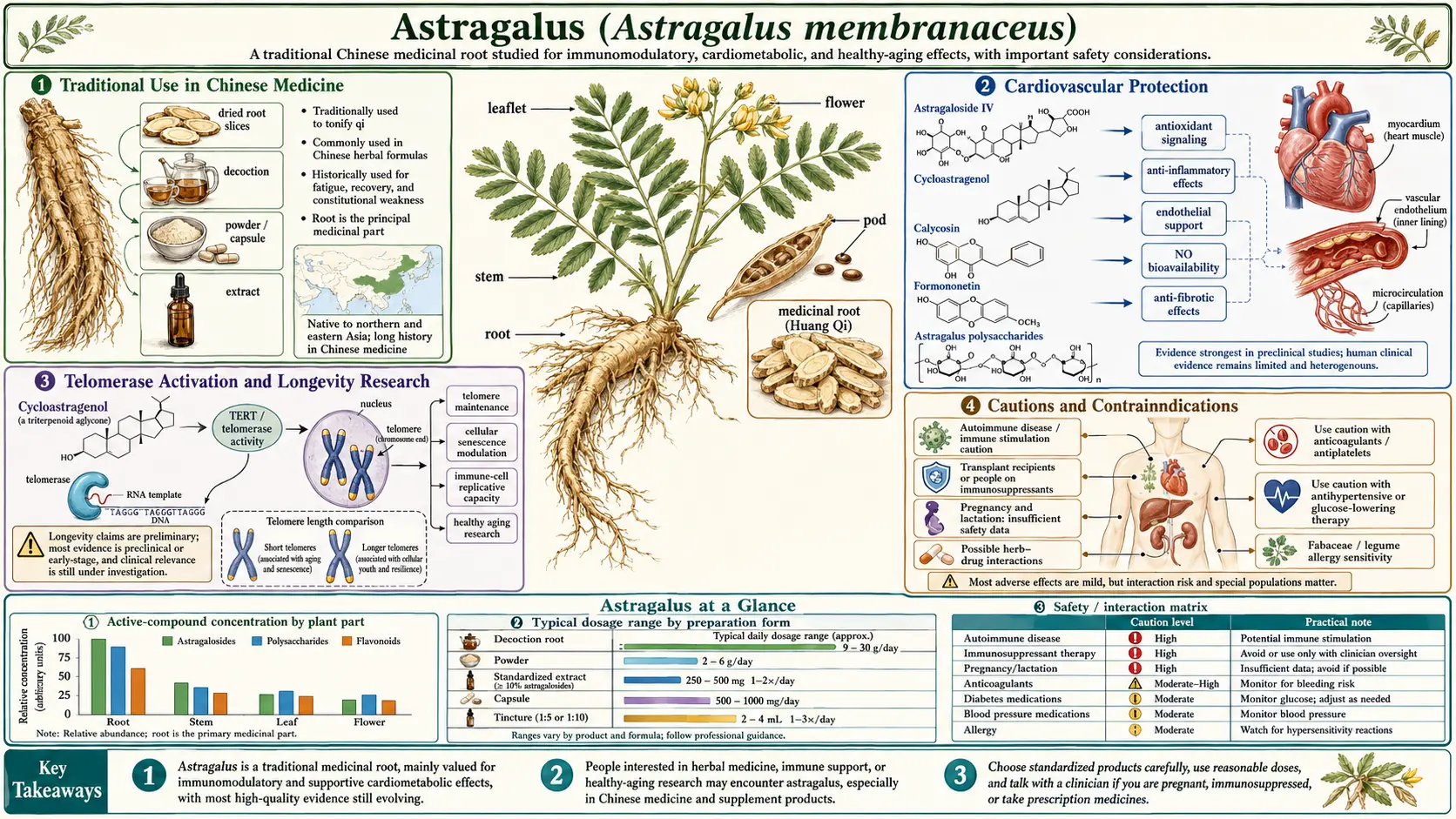
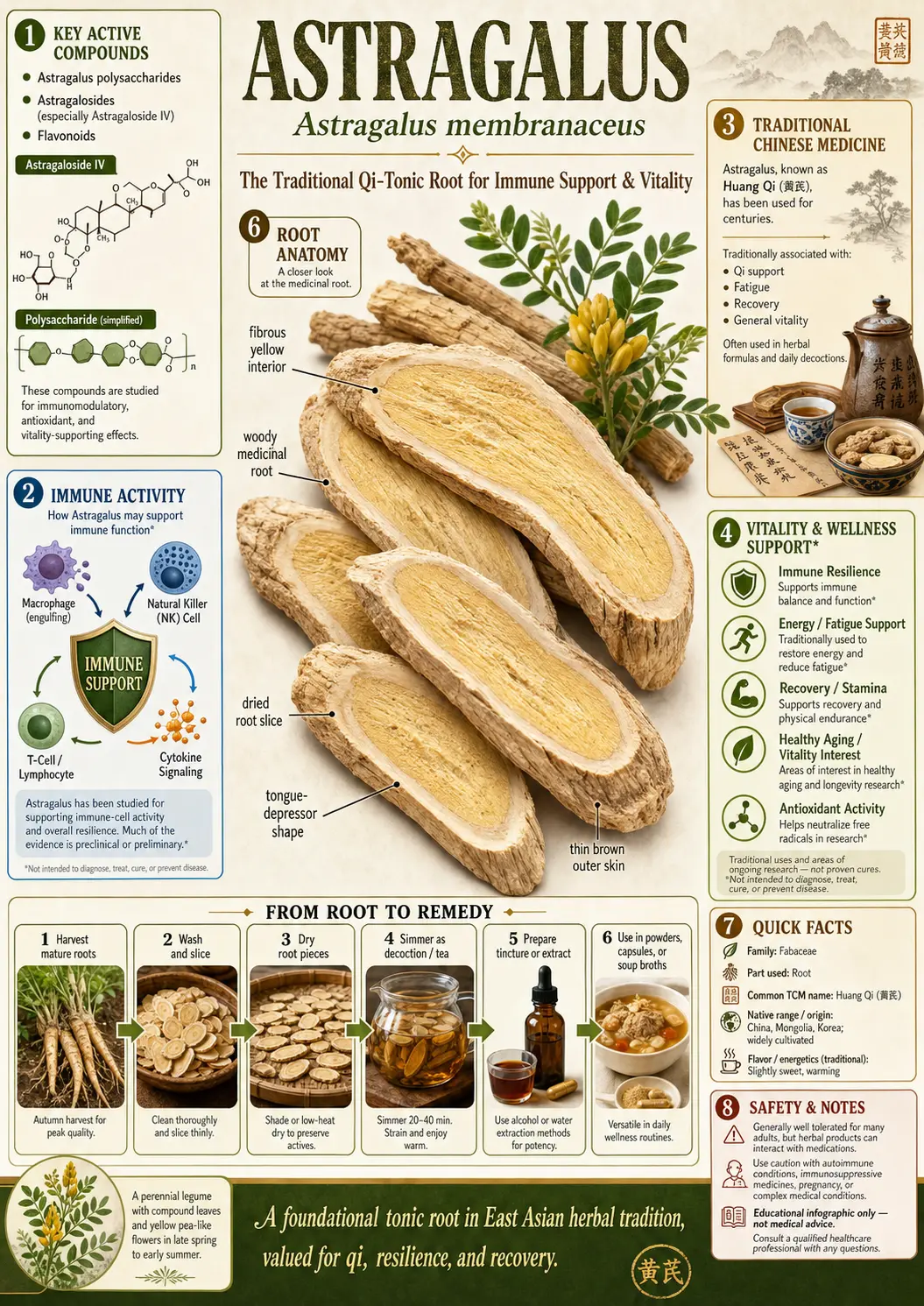
Table of Contents
- Traditional Use in Chinese Medicine
- Active Compounds
- Immune System Support
- Cardiovascular Protection
- Kidney Function and Diabetic Nephropathy
- Fatigue, Stamina, and Adaptogenic Action
- Telomerase Activation and Longevity Research
- Forms and Preparations
- Recommended Dosage
- Cautions and Contraindications
- Featured Videos
Traditional Use in Chinese Medicine
Astragalus (huang qi, 黄耀, "yellow leader") is one of the most respected tonic herbs in Traditional Chinese Medicine, first recorded around two thousand years ago and ranked among the "superior" herbs taken long-term to fortify the body's qi (vital energy), strengthen the lungs and spleen, and bolster its defences. It is the chief or signature herb in famous classical formulas such as Yu Ping Feng San (Jade Windscreen Powder) and Bu Zhong Yi Qi Tang (Tonify the Middle and Augment the Qi Decoction), and reached Western herbalism only in recent decades — the fuller story is told in the dedicated History & Traditional Use article.
Active Compounds
Astragalus root contains more than one hundred identified bioactive constituents. The most pharmacologically significant fall into three main categories:
- Astragalus polysaccharides (APS) — complex sugar molecules that act as immunomodulators, stimulating macrophage and natural killer cell activity, enhancing antibody production, and modulating cytokine signaling
- Astragalosides — a family of triterpenoid saponins (astragaloside I, II, III, IV, etc.) with cardioprotective, neuroprotective, and anti-inflammatory effects
- Isoflavones and flavonoids — including formononetin, calycosin, and kumatakenin, which exert antioxidant and estrogen-modulating activity
- Cycloastragenol — a saponin aglycone studied for its potential to activate telomerase, the enzyme that maintains chromosomal telomere length
The synergy among these constituents produces astragalus's broad therapeutic profile. Standardized extracts typically report polysaccharide content (for immune indications) or astragaloside IV content (for cardiovascular indications).
Immune System Support
Astragalus is one of the most thoroughly characterized immunomodulators in the herbal pharmacopoeia. Unlike echinacea, which produces a relatively short-term boost suitable for acute infection, astragalus is taken over weeks to months to build sustained immune resilience. This makes it particularly useful for individuals with frequent infections, chronic immune suppression, or seasonal vulnerability.
Documented immunological effects include:
- Increased activity of natural killer (NK) cells and cytotoxic T lymphocytes
- Enhanced macrophage phagocytic activity and oxidative burst capacity
- Stimulation of interferon production, supporting antiviral defense
- Increased serum immunoglobulin levels (IgA, IgG, IgM)
- Modulation of T-helper Th1/Th2 balance, useful in both immunodeficient and allergic states
- Restoration of bone marrow function and white blood cell counts in patients with chemotherapy-induced myelosuppression
Multiple clinical trials have shown that astragalus supplementation reduces the frequency, severity, and duration of upper respiratory infections in adults and children. In integrative oncology, it is one of the most-studied adjuvants for restoring immune function during and after conventional cancer treatment.
Cardiovascular Protection
Astragaloside IV, the most clinically researched saponin, has demonstrated significant cardioprotective activity. Mechanisms include reduced cardiac fibrosis, improved myocardial contractility, protection against ischemia-reperfusion injury, and modulation of mitochondrial function in heart muscle cells.
In congestive heart failure, controlled trials in China have shown that astragalus injection added to standard therapy improves left ventricular ejection fraction, exercise tolerance, and quality of life. Oral preparations are commonly used in integrative cardiology for their gentler, longer-acting support.
Additional cardiovascular benefits documented in the literature:
- Mild blood pressure lowering through nitric oxide-mediated vasodilation
- Antiplatelet activity that may reduce abnormal clot formation
- Antioxidant protection of vascular endothelium against oxidative damage
- Reduction of LDL oxidation and atherosclerotic plaque progression in animal models
Kidney Function and Diabetic Nephropathy
One of the strongest evidence bases for astragalus is in the treatment of chronic kidney disease, particularly diabetic nephropathy. Multiple meta-analyses of controlled trials — mostly conducted in China — have shown that astragalus, alone or combined with conventional treatment, can reduce proteinuria, improve glomerular filtration rate, and slow the progression of kidney damage.
Proposed mechanisms include reduction of TGF-beta-mediated kidney fibrosis, protection of podocyte (filtration cell) integrity, and improvement of renal microcirculation. Astragalus also appears to reduce oxidative stress in kidney tissue and modulate inflammatory cytokines that contribute to diabetic nephropathy progression.
Patients with chronic kidney disease should always work with a nephrologist before adding herbal therapy, but astragalus is one of the few herbs with substantial clinical evidence for this indication.
Fatigue, Stamina, and Adaptogenic Action
Although classically a qi tonic rather than an adaptogen in the Russian sense, astragalus shares many properties with classical adaptogens like Rhodiola and Eleuthero. It supports recovery from physical exertion, improves stamina, and reduces fatigue in chronically depleted individuals.
Naturopathic clinicians frequently use astragalus for patients presenting with post-viral fatigue, recovery from major surgery, chronic stress with poor sleep, and the fatigue that accompanies autoimmune conditions in remission. Effects are gradual and accumulate over six to twelve weeks of consistent use, making it best suited for chronic rather than acute presentations.
Telomerase Activation and Longevity Research
Cycloastragenol, an aglycone derived from astragaloside IV, has attracted research attention for its ability to activate telomerase, the enzyme that maintains the protective end caps (telomeres) on chromosomes. Telomere shortening is a recognized hallmark of cellular aging, and pharmacological telomerase activators are an active area of investigation in geroscience.
The most well-known commercial product, TA-65, is a purified cycloastragenol preparation. Small clinical studies have reported modest increases in telomere length and improvements in immune cell markers in older adults, though large-scale trials are limited and long-term safety remains under study. The longevity claims should be considered preliminary, but the underlying biology is scientifically credible.
Forms and Preparations
- Sliced root — traditional preparation, simmered in water for 20-30 minutes as a decoction; mild, slightly sweet flavor; can be added to soups and stocks
- Standardized extracts — capsules or tablets standardized to polysaccharide content (often 40% APS) or to astragaloside IV (typically 0.3-1%)
- Tinctures — alcohol-based liquid extracts at 1:3 or 1:5 ratios for fast absorption
- Decoction blends — combined with other tonifying herbs in classical Chinese formulas (Yu Ping Feng San, Bu Zhong Yi Qi Tang)
- TA-65 / cycloastragenol — highly concentrated, purified telomerase-activating compound; expensive, used primarily for longevity research
Recommended Dosage
- Sliced root decoction — 9-30 g of dried root simmered in water daily; traditional Chinese dosing range is 9-15 g for general tonification, 15-30 g for stronger therapeutic effect
- Standardized capsule extract — 250-500 mg, two to three times daily, of an extract standardized to polysaccharide or astragaloside IV content
- Tincture (1:3) — 2-4 mL three times daily
- Long-term use — astragalus is considered safe for daily use over months to years; benefits accumulate with consistent use
- Cycloastragenol (TA-65) — follow manufacturer guidance, typically 5-25 mg daily; this is a concentrated product and dosing differs from whole-root preparations
Cautions and Contraindications
Astragalus is one of the safest medicinal herbs, with an extensive traditional record and a favorable modern safety profile. Important considerations include:
- Acute infection (traditional caution) — some traditional Chinese medicine schools advise against using astragalus during the early, "exterior" phase of an acute infection because its qi-tonifying action could theoretically "trap" the pathogen inward; safer to begin after the acute febrile phase resolves
- Autoimmune conditions — astragalus stimulates immune activity; patients with active autoimmune disease (multiple sclerosis, lupus, Crohn's) should use only under professional guidance
- Immunosuppressant medications — may theoretically interfere with the action of cyclosporine, tacrolimus, corticosteroids, and biologic immunosuppressants used after organ transplantation or for autoimmune disease
- Lithium — astragalus has mild diuretic effects and could affect lithium clearance
- Anticoagulants — mild antiplatelet activity may add to the effects of warfarin, clopidogrel, and other blood thinners
- Pregnancy and breastfeeding — limited safety data; avoid in the absence of clinical guidance
Research Papers and References
The following PubMed search links provide curated entry points into the published clinical and mechanistic literature on Astragalus (Astragalus membranaceus). Each link opens directly in PubMed at the National Library of Medicine.
- Astragalus polysaccharides and immune modulation — PubMed: astragalus polysaccharides immune
- Astragaloside IV in cardiovascular disease — PubMed: astragaloside IV cardiovascular
- Astragalus and chronic fatigue — PubMed: astragalus fatigue
- Astragalus as adjuvant in chemotherapy — PubMed: astragalus chemotherapy adjuvant
- Astragalus for kidney function and proteinuria — PubMed: astragalus kidney proteinuria
- Astragalus and respiratory infection — PubMed: astragalus respiratory infection
- Astragalus and longevity / telomerase activation — PubMed: astragalus telomerase TA-65
- Astragalus safety and adverse events — PubMed: astragalus safety
External Authoritative Resources
- NCCIH — Herbs at a Glance
- MedlinePlus — Herbs and Supplements
- PubMed — All research on Astragalus membranaceus
Connections
- All Herbs
- Astragalus Benefits Deep Dive
- Echinacea
- Ashwagandha
- Ginseng
- Schisandra
- Rhodiola Rosea
- Holy Basil
- Stress Management
- Complete Blood Count
- Fatigue
- Kidney Function
- Kidney Disease
- Cancer
- Oxidative Stress
- Cardiovascular Disease
- Immune Boosting
- Cats Claw
- History Traditional Use and Botany
- Japanese Knotweed
- Codonopsis (Dang Shen) — the gentle, non-stimulant qi tonic used in place of ginseng
- Dong Quai (Angelica sinensis) — the Chinese blood tonic — a different species from European angelica
- Atractylodes (Bai Zhu) — the spleen-qi and digestion tonic paired with it in the classical Four Gentlemen formula
- Blackburn, Greider & Szostak — the telomerase Nobel behind cycloastragenol and TA-65 marketing claims