Cancer
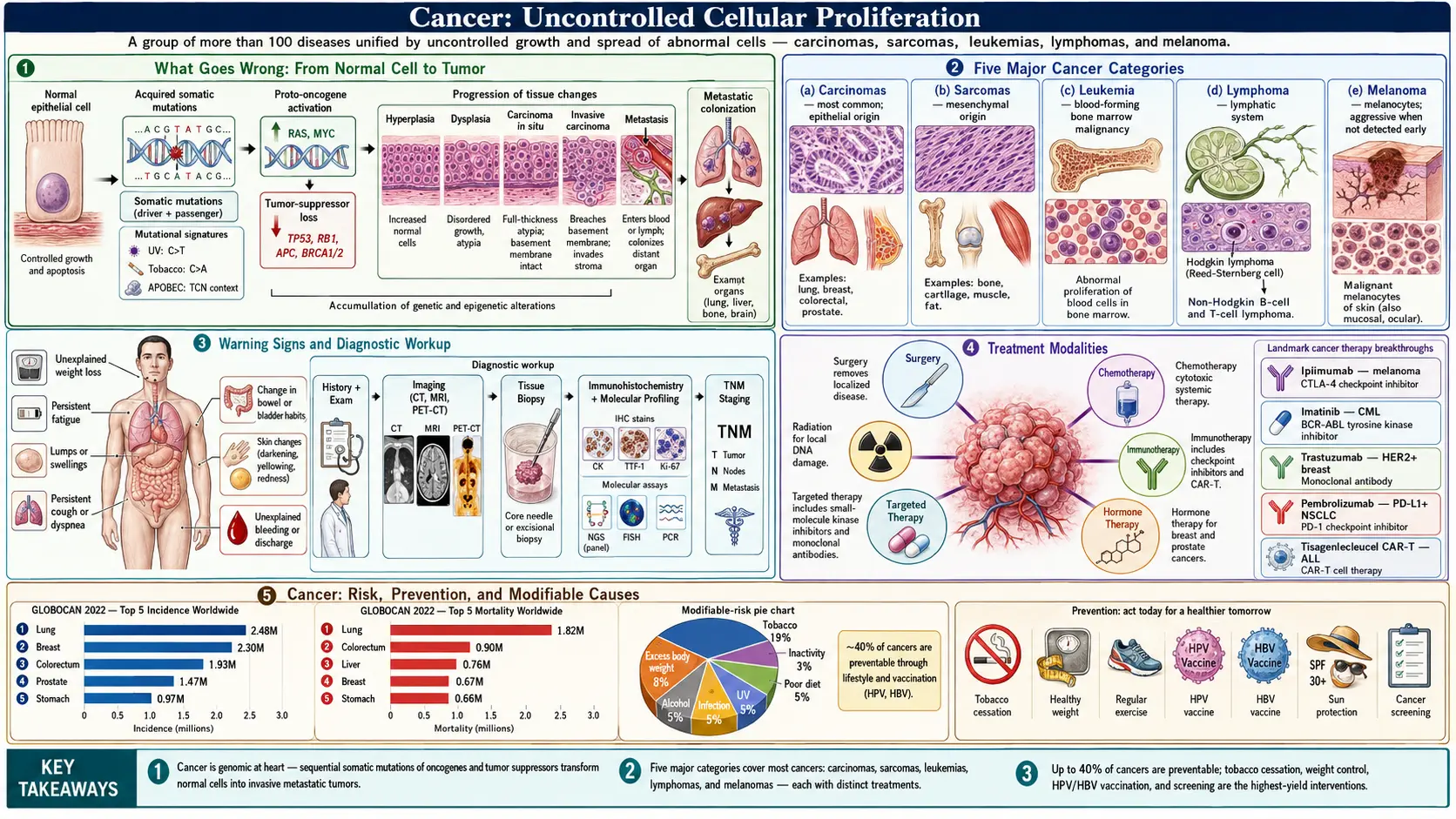
Table of Contents
- What is Cancer?
- Types of Cancer
- Symptoms of Cancer
- Risk Factors
- Prevention Strategies
- Treatment Options
- Complications of Cancer
- Research Papers
- Connections
- Featured Videos
What is Cancer?
Cancer is a group of diseases characterized by the uncontrolled growth and spread of abnormal cells in the body. If not controlled, it can result in serious health complications and death.
Types of Cancer
1. Carcinomas
- Most common type: Originates in the skin or tissues that line or cover internal organs.
- Examples include: Breast cancer, lung cancer, colorectal cancer.
2. Sarcomas
- Begins in connective tissues such as bones, cartilage, fat, muscle, or blood vessels.
3. Leukemia
- Cancer of the blood-forming tissues, including the bone marrow.
- Leads to abnormal blood cells being produced and entering the bloodstream.
4. Lymphomas
- Cancer of the lymphatic system: Includes lymph nodes, spleen, and other organs.
- Main types: Hodgkin lymphoma and non-Hodgkin lymphoma.
5. Melanoma
- Begins in the melanocytes: Cells that produce the pigment melanin, commonly in the skin.
- Highly aggressive if not detected early.
Symptoms of Cancer
Symptoms vary depending on the type and location of the cancer, but common signs may include:
- Unexplained weight loss
- Persistent fatigue
- Unusual lumps or swellings
- Persistent cough or difficulty breathing
- Changes in bowel or bladder habits
- Changes in the skin: Darkened, yellowed, or red areas
- Unexplained bleeding or discharge
Risk Factors
- Age: Risk increases with age.
- Genetics: Family history of cancer can increase risk.
- Lifestyle factors: Such as smoking, excessive alcohol consumption, poor diet, and lack of physical activity.
- Exposure to carcinogens: Includes chemicals, radiation, and certain viruses.
- Chronic inflammation: Can contribute to the development of cancer.
Prevention Strategies
- Healthy diet: Emphasize fruits, vegetables, and whole grains.
- Avoid tobacco: Smoking is a leading cause of cancer, particularly lung cancer.
- Limit alcohol intake: Excessive consumption increases the risk of certain cancers.
- Protect skin from the sun: Reduces the risk of skin cancer.
- Regular physical activity: Helps maintain a healthy weight and reduces cancer risk.
Treatment Options
- Surgery: Removal of the tumor and surrounding tissues.
- Chemotherapy: Use of drugs to kill or slow the growth of cancer cells.
- Radiation therapy: High doses of radiation to target and kill cancer cells.
- Immunotherapy: Boosts the body’s natural defenses to fight cancer.
- Targeted therapy: Focuses on specific genes or proteins involved in cancer growth.
- Hormone therapy: Used for cancers that are driven by hormones (e.g., breast or prostate cancer).
Complications of Cancer
- Metastasis: Spread of cancer cells to other parts of the body.
- Organ damage: Can result from tumors growing and disrupting normal function.
- Weakened immune system: Certain cancers and treatments can lower immunity.
- Chronic pain: Associated with advanced cancer stages.
- Emotional impact: Can lead to stress, anxiety, and depression.
References & Research
Historical Background
Cancer has been documented since ancient Egypt, with the earliest known description found in the Edwin Smith Papyrus (c. 1600 BCE). The term "cancer" derives from the Greek physician Hippocrates (c. 460-370 BCE), who used the words "carcinos" and "carcinoma." Modern oncology advanced dramatically with Rudolf Virchow's cellular pathology theory in the 1850s and Sidney Farber's pioneering chemotherapy work in 1947.
Key Research Papers
- Siegel RL, Miller KD, Wagle NS, Jemal A. Cancer statistics, 2023. CA Cancer J Clin. 2023;73(1):17-48.
- Bray F, Ferlay J, Soerjomataram I, et al. Global cancer statistics 2018: GLOBOCAN estimates of incidence and mortality worldwide. CA Cancer J Clin. 2018;68(6):394-424.
- Hanahan D, Weinberg RA. Hallmarks of cancer: the next generation. Cell. 2011;144(5):646-674.
- Hanahan D. Hallmarks of cancer: new dimensions. Cancer Discov. 2022;12(1):31-46.
- Topalian SL, Hodi FS, Brahmer JR, et al. Safety, activity, and immune correlates of anti-PD-1 antibody in cancer. N Engl J Med. 2012;366(26):2443-2454.
- Hodi FS, O'Day SJ, McDermott DF, et al. Improved survival with ipilimumab in patients with metastatic melanoma. N Engl J Med. 2010;363(8):711-723.
- Alexandrov LB, Nik-Zainal S, Wedge DC, et al. Signatures of mutational processes in human cancer. Nature. 2013;500(7463):415-421.
- The ICGC/TCGA Pan-Cancer Analysis of Whole Genomes Consortium. Pan-cancer analysis of whole genomes. Nature. 2020;578(7793):82-93.
- Korde LA, Somerfield MR, Carey LA, et al. Neoadjuvant chemotherapy, endocrine therapy, and targeted therapy for breast cancer: ASCO guideline. J Clin Oncol. 2021;39(13):1485-1505.
- Vogelstein B, Papadopoulos N, Velculescu VE, et al. Cancer genome landscapes. Science. 2013;339(6127):1546-1558.
- Islami F, Goding Sauer A, Miller KD, et al. Proportion and number of cancer cases and deaths attributable to potentially modifiable risk factors. CA Cancer J Clin. 2018;68(1):31-54.
- Maude SL, Laetsch TW, Buechner J, et al. Tisagenlecleucel in children and young adults with B-cell lymphoblastic leukemia (ELIANA). N Engl J Med. 2018;378(5):439-448.
Research Papers
The following PubMed topic searches surface the current peer-reviewed literature on Cancer. Each link opens a live PubMed query; results update as new papers are indexed.
- PubMed search: cancer hallmarks
- PubMed search: cancer staging TNM
- PubMed search: cancer screening
- PubMed search: chemotherapy cancer
- PubMed search: immunotherapy checkpoint inhibitor
- PubMed search: cancer targeted therapy
- PubMed search: cancer genomics precision medicine
- PubMed search: cancer biomarkers circulating tumor DNA
- PubMed search: radiation oncology
- PubMed search: cancer epidemiology incidence
- PubMed search: cancer prevention lifestyle
- PubMed search: cancer cachexia
Connections
- Oncology
- Tumor Markers — what cancer blood tests can and cannot say
- Leukemia
- Lymphoma
- Metastatic Cancers
- Sarcoma
- Multiple Myeloma
- Thyroid Cancer
- Turmeric
- Vitamin D3
- Green Tea
- Turkey Tail Mushroom
- Reishi Mushroom
- Chaga Mushroom
- Selenium
- Selenium and Cancer Prevention — selenoprotein biology, the NPC and SELECT trials, evidence across prostate/colorectal/lung cancers, and the U-shaped dose-response curve.
- Coffee and Cancer Prevention
- Aspirin and Cancer Prevention
- Fatigue
- Vitamin C
- Garlic
- Lung Cancer
- Breast Cancer
- Colorectal Cancer
- Prostate Cancer
- Pancreatic Cancer
- Skin Cancer
- Ovarian Cancer
- Cervical Cancer
- Liver Cancer
- Stomach Cancer
- Esophageal Cancer
- Kidney Cancer
- Endometrial Cancer
- Bishop & Varmus: cancer genes are our own genes — the 1976 discovery that oncogenes are corrupted copies of normal cellular genes, and the foundation of every targeted cancer drug