Stress Management Techniques
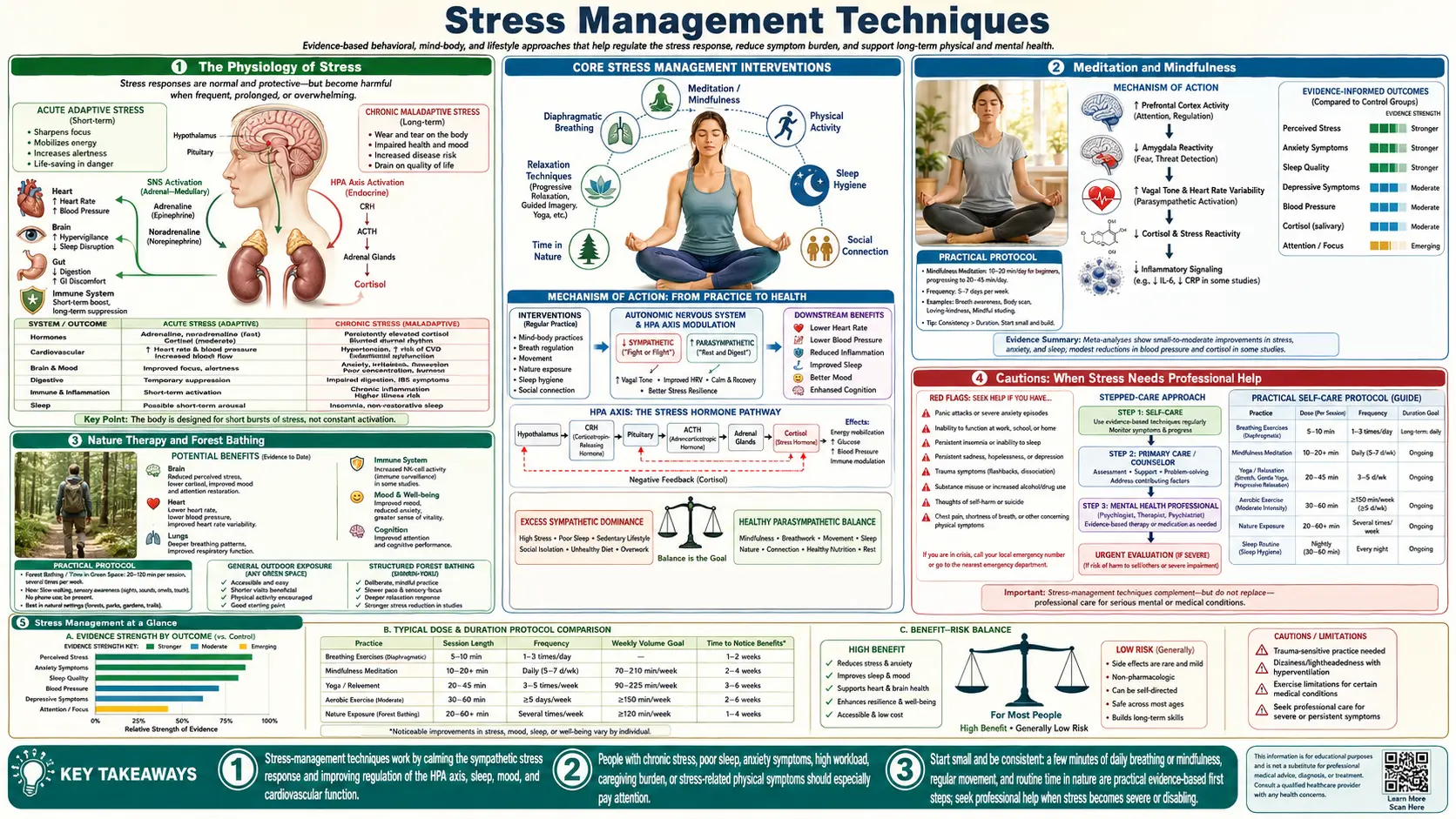
Table of Contents
- The Physiology of Stress
- Acute vs Chronic Stress
- How Chronic Stress Destroys Health
- Adrenal Fatigue and HPA Axis Dysregulation
- Measuring Stress: Cortisol Testing
- Breathing Techniques
- Meditation and Mindfulness
- Vagus Nerve Stimulation
- Adaptogenic Herbs
- Nutritional Support for Stress
- Exercise as Stress Medicine
- Nature Therapy and Forest Bathing
- Sleep Optimization for Stress Recovery
- Journaling and Cognitive Techniques
- Social Connection and Community
- Digital Detox and Boundaries
- Daily Stress Management Protocol
- Cautions: When Stress Needs Professional Help
- Featured Videos
The Physiology of Stress
Stress is not merely a psychological experience. It is a whole-body physiological cascade that begins in the brain and rapidly affects every organ system. Understanding the biological machinery of the stress response is essential for anyone seeking to manage it effectively.
The HPA Axis
The hypothalamic-pituitary-adrenal (HPA) axis is the central command system for the stress response. When the brain perceives a threat, whether physical, emotional, or imagined, the hypothalamus releases corticotropin-releasing hormone (CRH). CRH travels to the anterior pituitary gland, which responds by secreting adrenocorticotropic hormone (ACTH) into the bloodstream. ACTH then stimulates the adrenal cortex to produce and release cortisol, the primary stress hormone.
Under normal circumstances, cortisol feeds back to the hypothalamus and pituitary to suppress further CRH and ACTH release, creating a self-regulating negative feedback loop. When this feedback mechanism breaks down due to chronic stress, cortisol levels remain elevated, and the entire system becomes dysregulated.
The Cortisol Cascade
Cortisol is a glucocorticoid hormone with widespread effects throughout the body. In the short term, cortisol performs essential functions:
- Raises blood sugar by stimulating gluconeogenesis in the liver, ensuring the brain and muscles have immediate fuel
- Suppresses non-essential functions including digestion, reproduction, and immune surveillance to redirect energy toward survival
- Increases blood pressure and heart rate to deliver oxygen and nutrients to working muscles
- Mobilizes fatty acids from adipose tissue for quick energy
- Heightens alertness and sharpens focus by modulating neurotransmitter activity
The Sympathetic Nervous System and Fight-or-Flight
Simultaneously with the HPA axis activation, the sympathetic nervous system (SNS) triggers the immediate fight-or-flight response. The adrenal medulla releases epinephrine (adrenaline) and norepinephrine, causing pupils to dilate, airways to open, heart rate to surge, and blood flow to redirect from the digestive organs to skeletal muscles. This response evolved to help our ancestors escape predators and survive acute physical dangers. The problem arises when this alarm system fires repeatedly in response to modern stressors such as financial pressure, relationship conflict, work deadlines, and constant digital stimulation.
Acute vs Chronic Stress
It is critically important to distinguish between acute stress and chronic stress, because they produce fundamentally different effects on the body.
Acute stress is a short-lived response to a specific event. The HPA axis fires, cortisol and adrenaline surge, the body mobilizes its resources, and once the threat passes, the parasympathetic nervous system activates to restore calm. Heart rate drops, digestion resumes, and cortisol levels return to baseline. This cycle is healthy and adaptive. Brief bursts of acute stress can actually enhance immune function, improve cognitive performance, and build resilience through a process called hormesis.
Chronic stress occurs when the stress response remains activated for weeks, months, or years without adequate recovery. The HPA axis never fully resets. Cortisol levels remain persistently elevated, or in advanced cases, the adrenal output becomes blunted and erratic. The parasympathetic nervous system cannot regain dominance. The body remains in a low-grade state of emergency, and every organ system pays the price.
Modern life is a chronic stress incubator. Financial anxiety, toxic workplaces, sleep deprivation, processed food diets, social isolation, news consumption, and constant screen exposure create a persistent background hum of stress that the human nervous system was never designed to endure.
How Chronic Stress Destroys Health
The downstream consequences of unmanaged chronic stress are staggering in their scope and severity. From a naturopathic perspective, chronic stress is arguably the single greatest obstacle to healing, because it disrupts virtually every pathway the body uses to repair and regenerate.
Immune Suppression
Chronic cortisol elevation suppresses the activity of natural killer (NK) cells, reduces T-cell proliferation, lowers secretory IgA levels in mucosal tissues, and shifts the immune system from a balanced Th1/Th2 response toward a pro-inflammatory Th2 dominance. This makes the body simultaneously more vulnerable to infections and more prone to autoimmune and allergic conditions. Research has consistently shown that chronically stressed individuals experience more frequent colds and slower wound healing.
Gut Damage
The gut is extraordinarily sensitive to stress. Chronic cortisol reduces blood flow to the gastrointestinal tract, impairs mucosal repair, and increases intestinal permeability, commonly known as leaky gut. Stress alters the composition of the gut microbiome, reducing beneficial Lactobacillus and Bifidobacterium populations while allowing pathogenic species to flourish. The gut-brain axis becomes a vicious feedback loop: stress damages the gut, a damaged gut sends inflammatory signals to the brain, and brain inflammation amplifies the stress response.
Hormonal Disruption
Cortisol competes with other hormones for biosynthetic precursors. Under chronic stress, the body preferentially produces cortisol at the expense of progesterone, testosterone, DHEA, and thyroid hormones, a phenomenon sometimes referred to as the pregnenolone steal. Women may experience menstrual irregularities, infertility, worsening PMS, and early menopause. Men may experience declining testosterone, reduced libido, and erectile dysfunction. Thyroid function often becomes suppressed, leading to fatigue, weight gain, and cold intolerance.
Cardiovascular Damage
Persistent sympathetic nervous system activation raises resting heart rate and blood pressure, increases systemic inflammation, promotes endothelial dysfunction, and accelerates the formation of atherosclerotic plaques. Chronic stress is an independent risk factor for heart attack, stroke, hypertension, and arrhythmias. The landmark INTERHEART study identified psychosocial stress as one of the top modifiable risk factors for myocardial infarction worldwide.
Brain Shrinkage and Cognitive Decline
Chronically elevated cortisol is directly neurotoxic. The hippocampus, the brain region responsible for memory consolidation and emotional regulation, is particularly vulnerable because it has a high density of cortisol receptors. Chronic stress has been shown to reduce hippocampal volume, impair neurogenesis, and weaken synaptic connections. Meanwhile, the amygdala, the brain's fear and threat-detection center, becomes hyperactive and enlarged, creating a brain that is wired for anxiety and reactivity rather than calm, clear thinking.
Weight Gain
Cortisol drives visceral fat accumulation, particularly around the abdomen, by increasing appetite for calorie-dense foods and promoting fat storage through insulin resistance. Stress-driven weight gain is notoriously resistant to diet and exercise, because the hormonal environment actively favors fat deposition as long as cortisol remains elevated.
Accelerated Aging and Telomere Shortening
One of the most striking findings in stress research comes from Dr. Elizabeth Blackburn and her colleagues, who demonstrated that chronic psychological stress accelerates the shortening of telomeres, the protective caps on the ends of chromosomes. Shorter telomeres are associated with cellular aging, increased disease risk, and earlier mortality. Women caring for chronically ill children showed telomere shortening equivalent to 9 to 17 years of additional biological aging compared to low-stress controls. This research provides molecular proof that chronic stress literally ages us from the inside out.
Adrenal Fatigue and HPA Axis Dysregulation
While the term adrenal fatigue is not recognized as a formal diagnosis in conventional endocrinology, naturopathic and functional medicine practitioners widely observe a clinical pattern of HPA axis dysregulation that develops in predictable stages as chronic stress persists.
Stage 1: Alarm (High Cortisol)
In the early stages of chronic stress, the adrenal glands respond by producing elevated cortisol throughout the day. The individual feels wired, anxious, and unable to relax. Sleep is disrupted, particularly with difficulty falling asleep. Energy may be artificially high during the day, fueled by adrenaline and cortisol, but the person feels an underlying sense of being driven and unable to stop.
Stage 2: Resistance (Cortisol Dysregulation)
As the stress continues, the HPA axis begins to lose its normal rhythm. Cortisol may be elevated at night and low in the morning, the reverse of a healthy pattern. The individual wakes unrefreshed, relies heavily on caffeine, experiences afternoon energy crashes, and may develop sugar cravings. Hormonal imbalances begin to manifest. Recurrent infections, digestive issues, and mood instability become common.
Stage 3: Exhaustion (Low Cortisol)
After prolonged overstimulation, the HPA axis downregulates and cortisol output becomes chronically low. The person experiences profound fatigue, brain fog, inability to handle even minor stressors, orthostatic hypotension, salt cravings, and a general sense of depletion. Recovery from illness or exercise is significantly impaired. This stage can take months to years of dedicated restoration to reverse.
Measuring Stress: Cortisol Testing
Accurate assessment of HPA axis function requires testing methods that capture the dynamic rhythm of cortisol production rather than a single snapshot.
4-Point Salivary Cortisol Testing
The 4-point salivary cortisol test is the gold standard in functional medicine for evaluating the diurnal cortisol curve. Saliva samples are collected at four time points across the day: upon waking, before lunch, late afternoon, and before bed. A healthy pattern shows the highest cortisol upon waking (the cortisol awakening response), a gradual decline through the day, and the lowest levels at bedtime. Deviations from this pattern reveal whether an individual is in a state of cortisol excess, deficiency, or dysregulation.
DUTCH Testing
The Dried Urine Test for Comprehensive Hormones (DUTCH) provides an even more detailed picture by measuring cortisol metabolites, free cortisol, cortisone, and the cortisol awakening response alongside a full sex hormone panel. The DUTCH test reveals not only how much cortisol the adrenals produce but also how effectively the body metabolizes and clears cortisol. This information is invaluable for creating targeted treatment protocols. For example, an individual with normal cortisol production but impaired cortisol clearance will present differently and require different interventions than someone with genuinely low adrenal output.
Breathing Techniques
Conscious breathing is the single fastest tool for shifting the nervous system from sympathetic dominance to parasympathetic activation. It costs nothing, requires no equipment, and can be practiced anywhere. From a naturopathic perspective, breathwork is the foundation upon which all other stress management strategies are built.
4-7-8 Breathing
Developed by Dr. Andrew Weil, the 4-7-8 technique is a powerful parasympathetic activator. Inhale quietly through the nose for 4 counts, hold the breath for 7 counts, and exhale completely through the mouth for 8 counts. The extended exhalation stimulates the vagus nerve and engages the relaxation response. Practice twice daily, starting with 4 cycles and building to 8. Many practitioners find this technique particularly effective for falling asleep.
Box Breathing
Box breathing, also called square breathing, is used by Navy SEALs and first responders for rapid stress control in high-pressure environments. Inhale for 4 counts, hold for 4 counts, exhale for 4 counts, and hold for 4 counts. Repeat for 4 to 8 minutes. The symmetrical pattern creates a profound sense of balance and calm, making it ideal for acute anxiety or panic.
Coherent Breathing at 5 Breaths Per Minute
Coherent breathing involves breathing at a rate of approximately 5 breaths per minute (inhale for 6 seconds, exhale for 6 seconds) with no pauses between breaths. Research by Stephen Elliott and others has shown that this specific rate maximizes heart rate variability (HRV), a key biomarker of autonomic nervous system health and resilience. Higher HRV is associated with greater emotional regulation, reduced anxiety, and improved cardiovascular function. Practicing coherent breathing for 10 to 20 minutes daily can produce measurable improvements in HRV within two to four weeks.
Wim Hof Method
The Wim Hof breathing technique involves 30 to 40 cycles of deep, rapid inhalations followed by passive exhalations, then a breath hold after the last exhale for as long as comfortable, followed by a recovery breath held for 15 seconds. This is repeated for 3 to 4 rounds. The technique deliberately induces a controlled stress response, creating a hormetic effect that trains the nervous system to recover more quickly from activation. Research at Radboud University demonstrated that Wim Hof practitioners could voluntarily influence their autonomic nervous system and immune response, previously thought to be impossible.
Caution: The Wim Hof method should never be practiced in water, while driving, or by individuals with epilepsy, cardiovascular conditions, or during pregnancy without medical clearance.
Meditation and Mindfulness
The scientific evidence supporting meditation as a stress management tool has grown from intriguing to overwhelming over the past two decades. Meditation is no longer a fringe practice; it is evidence-based medicine for the nervous system.
Research on Brain Structure Changes
Landmark research by Dr. Sara Lazar at Harvard demonstrated that just 8 weeks of mindfulness meditation produced measurable increases in gray matter density in the hippocampus (memory and learning), the posterior cingulate cortex (self-awareness), the temporoparietal junction (empathy and compassion), and the cerebellum (emotional regulation). Simultaneously, the amygdala showed reduced gray matter density, corresponding to decreased stress and anxiety. These structural brain changes occurred with an average of just 27 minutes of daily practice.
Additional research has shown that long-term meditators have increased cortical thickness, greater white matter integrity, and preserved brain volume with aging compared to non-meditators. Meditation literally protects the brain from the neurodegenerative effects of chronic stress.
The 10-Minute Daily Practice
For those new to meditation, a 10-minute daily practice is sufficient to begin experiencing meaningful benefits. The simplest and most well-researched approach is mindfulness of breathing:
- Sit comfortably with a straight spine, either in a chair or on the floor
- Close the eyes or soften the gaze
- Direct attention to the natural sensation of breathing at the nostrils or abdomen
- When the mind wanders (and it will), gently return attention to the breath without judgment
- Continue for 10 minutes, using a timer
The therapeutic value lies not in achieving a blank mind but in the repeated act of noticing when attention has wandered and redirecting it. This builds the neural circuitry for attentional control and emotional regulation. Consistency matters far more than duration. Ten minutes every day is vastly more beneficial than one hour once a week.
Vagus Nerve Stimulation
The vagus nerve is the longest cranial nerve in the body and the primary channel of the parasympathetic nervous system. It connects the brain to the heart, lungs, gut, and other major organs. Strong vagal tone is associated with rapid recovery from stress, emotional resilience, reduced inflammation, and healthy digestion. Conversely, low vagal tone is associated with chronic inflammation, depression, anxiety, and poor stress recovery.
Several simple, evidence-based techniques can stimulate the vagus nerve and enhance parasympathetic tone:
Cold Exposure
Exposing the body to cold water activates the vagus nerve and triggers a robust parasympathetic response after the initial sympathetic spike. Practical approaches include finishing a shower with 30 to 90 seconds of cold water, applying cold water or a cold pack to the face and neck, or cold water immersion. Regular cold exposure has been shown to increase vagal tone, reduce resting heart rate, and improve stress resilience. Start gradually and increase exposure over weeks.
Humming and Chanting
The vagus nerve passes through the muscles of the throat and larynx. Humming, chanting Om, or singing creates vibrations that mechanically stimulate the vagus nerve. Research has shown that the vibration frequency produced by chanting Om closely matches the resonant frequency associated with maximal vagal activation. Even humming softly for a few minutes can produce a noticeable calming effect.
Gargling
Vigorous gargling with water stimulates the muscles at the back of the throat innervated by the vagus nerve. Gargle vigorously enough to produce mild tearing of the eyes, which indicates adequate vagal activation. Practice for 30 to 60 seconds, two to three times daily. This is a particularly useful technique for individuals in advanced stages of HPA axis dysregulation.
Deep Breathing
All of the breathing techniques described in the previous section stimulate the vagus nerve, particularly techniques that emphasize a prolonged exhalation. The diaphragm is directly innervated by the vagus nerve, and slow, deep diaphragmatic breathing is one of the most reliable methods of vagal stimulation available.
Adaptogenic Herbs
Adaptogens are a unique class of botanical medicines that help the body resist and recover from the effects of stress by modulating the HPA axis and supporting adrenal function. They do not push the body in any single direction but rather help restore balance, whether cortisol is too high or too low. This bidirectional, normalizing action is their defining characteristic.
Ashwagandha (Withania somnifera)
Ashwagandha is the most extensively researched adaptogen for stress management. A randomized controlled trial published in the Indian Journal of Psychological Medicine found that 300 mg of full-spectrum ashwagandha root extract twice daily for 60 days reduced serum cortisol levels by 27.9% and significantly improved scores on perceived stress scales. Ashwagandha supports GABA-ergic signaling in the brain, promotes healthy thyroid function, and has been shown to improve sleep quality, reduce anxiety, and enhance physical performance. It is particularly well suited for individuals with elevated cortisol and anxiety-dominant stress presentations.
Rhodiola (Rhodiola rosea)
Rhodiola is a powerful adaptogen that excels at combating mental and physical fatigue associated with chronic stress. It works primarily by modulating cortisol release and enhancing the sensitivity of serotonin and dopamine receptors in the brain. Clinical trials have demonstrated that rhodiola significantly reduces fatigue, improves cognitive function under stress, and enhances exercise performance. It is particularly effective for individuals experiencing burnout, brain fog, and motivation loss. Typical dosage is 200 to 600 mg of a standardized extract (3% rosavins, 1% salidroside) daily.
Holy Basil (Ocimum tenuiflorum)
Known as Tulsi in Ayurvedic medicine, holy basil is revered as the Queen of Herbs and has been used for thousands of years as a daily tonic for stress resilience. Holy basil acts as a COX-2 inhibitor, modulates cortisol, normalizes blood sugar, and protects the liver. Clinical studies have shown it reduces generalized anxiety, improves sleep, and enhances cognitive clarity. It can be consumed as a tea (2 to 3 cups daily) or as a standardized extract (300 to 600 mg twice daily).
Eleuthero (Eleutherococcus senticosus)
Formerly known as Siberian ginseng, eleuthero has been used extensively in Russian sports medicine and military applications to enhance physical endurance and mental performance under stress. It increases the body's resistance to physical, chemical, and biological stressors by modulating adrenal output and supporting healthy immune function. Eleuthero is particularly useful for individuals under high physical demand or those recovering from prolonged illness.
Reishi (Ganoderma lucidum)
Reishi is a medicinal mushroom with potent adaptogenic, immune-modulating, and calming properties. Its triterpene compounds support the nervous system and promote restful sleep, while its polysaccharides enhance immune surveillance. Reishi is especially appropriate for individuals whose stress manifests as insomnia, immune suppression, or nervous agitation. Typical dosage is 1,000 to 3,000 mg of dried mushroom extract daily.
Cordyceps (Cordyceps militaris / sinensis)
Cordyceps is a medicinal mushroom that supports adrenal function, enhances cellular energy production through improved mitochondrial efficiency, and increases oxygen utilization. It is particularly valued for combating the physical exhaustion that accompanies chronic stress. Athletes and individuals with exercise intolerance related to adrenal fatigue often report significant improvement with cordyceps supplementation. Typical dosage is 1,000 to 3,000 mg daily.
Nutritional Support for Stress
Chronic stress dramatically increases the body's demand for specific nutrients while simultaneously impairing absorption and increasing urinary excretion. Targeted nutritional support is essential for replenishing depleted stores and providing the raw materials the adrenal glands, nervous system, and brain require to function under stress.
Magnesium
Magnesium is arguably the most important mineral for stress management. It is a cofactor in over 300 enzymatic reactions, including those involved in neurotransmitter synthesis, muscle relaxation, and HPA axis regulation. Stress depletes magnesium, and magnesium deficiency amplifies the stress response, creating a vicious cycle. An estimated 50 to 80 percent of the population is deficient. Supplementation with magnesium glycinate (for calming and sleep support) or magnesium threonate (for cognitive support) at doses of 300 to 600 mg of elemental magnesium daily can produce significant improvements in anxiety, sleep, and stress resilience.
B Vitamins
The B-complex vitamins, particularly B5 (pantothenic acid), B6 (pyridoxine), and B12 (methylcobalamin), are essential cofactors in adrenal hormone synthesis, neurotransmitter production, and methylation pathways. Chronic stress depletes B vitamins rapidly. A high-quality activated B-complex providing methylated forms (methylfolate, methylcobalamin, P5P) ensures optimal bioavailability. Vitamin B5 is sometimes called the anti-stress vitamin because of its direct role in cortisol production.
Vitamin C
The adrenal glands contain the highest concentration of vitamin C in the body. During stress, adrenal vitamin C stores are rapidly depleted to support cortisol synthesis. Supplementation with 1,000 to 3,000 mg of vitamin C daily (divided doses, buffered form) has been shown to reduce cortisol levels and perceived stress. Vitamin C also supports immune function, which is compromised by chronic stress.
Omega-3 Fatty Acids
EPA and DHA from fish oil are potent anti-inflammatory molecules that counteract the systemic inflammation driven by chronic stress. Research has demonstrated that omega-3 supplementation reduces cortisol and epinephrine levels, lowers inflammatory cytokines, and protects against stress-induced brain changes. A dose of 2,000 to 4,000 mg of combined EPA and DHA daily provides meaningful anti-stress and neuroprotective effects.
L-Theanine
L-theanine is an amino acid found naturally in green tea that promotes calm alertness without drowsiness. It works by increasing alpha brain wave activity and supporting the production of GABA, serotonin, and dopamine. Clinical studies have shown that 200 mg of L-theanine reduces cortisol, lowers heart rate, and decreases subjective anxiety within 30 to 40 minutes of ingestion. It is an excellent daytime anxiolytic that does not impair cognitive function.
Phosphatidylserine
Phosphatidylserine (PS) is a phospholipid that is a critical component of cell membranes, particularly in the brain. Supplementation with 100 to 300 mg daily has been shown to blunt the cortisol response to physical and psychological stress, improve memory, and support cognitive function. PS is particularly useful for individuals with elevated evening cortisol who experience difficulty sleeping and racing thoughts at night.
Exercise as Stress Medicine
Regular physical exercise is one of the most powerful and well-documented strategies for managing stress. Exercise reduces cortisol, increases endorphins and endocannabinoids, improves sleep quality, enhances brain-derived neurotrophic factor (BDNF) production, and provides a direct outlet for the physical energy generated by the fight-or-flight response.
Types of Exercise for Stress
- Moderate aerobic exercise (brisk walking, cycling, swimming) for 30 to 45 minutes is the best-studied form of exercise for stress reduction. It lowers cortisol, elevates mood, and improves HRV.
- Yoga combines physical movement with breathwork and mindfulness, making it uniquely effective for activating the parasympathetic nervous system. Research shows yoga reduces cortisol, lowers inflammatory markers, and increases GABA levels in the brain.
- Resistance training 2 to 3 times per week improves stress resilience, builds confidence, and supports healthy testosterone and growth hormone production.
- Tai chi and qigong are gentle movement practices that have been shown to lower cortisol, reduce blood pressure, and improve immune function in stressed populations.
Timing Considerations
For individuals with advanced HPA axis dysregulation, intense exercise can actually worsen the stress burden by further elevating cortisol. In these cases, gentle movement such as walking, restorative yoga, or tai chi is preferable until adrenal recovery is underway. Vigorous exercise is best performed in the morning or early afternoon, when cortisol is naturally higher. Evening high-intensity exercise can disrupt sleep by elevating cortisol and core body temperature at a time when both should be declining.
Nature Therapy and Forest Bathing
Shinrin-yoku, or forest bathing, originated in Japan in the 1980s as a formal practice of immersing oneself in a forest environment for health benefits. Since then, a substantial body of research has validated its profound effects on the stress response.
- Cortisol reduction: Multiple studies have demonstrated that spending 2 to 4 hours in a forested environment significantly reduces salivary cortisol levels compared to time spent in urban settings.
- Sympathetic nervous system suppression: Forest environments lower heart rate, blood pressure, and sympathetic nerve activity while increasing parasympathetic tone.
- Immune enhancement: Trees release volatile organic compounds called phytoncides that, when inhaled, increase the number and activity of natural killer cells for up to 30 days after a single forest visit.
- Mood improvement: Forest bathing reduces scores for anxiety, depression, anger, fatigue, and confusion on standardized psychological assessments.
The practice involves walking slowly and mindfully through a natural environment, engaging all five senses. There is no goal, no destination, and no requirement for physical exertion. Simply being present in nature is the medicine. Even 20 minutes in a park or garden with trees provides measurable stress reduction benefits for those who cannot access a forest.
Sleep Optimization for Stress Recovery
Sleep and stress exist in a bidirectional relationship: stress disrupts sleep, and poor sleep amplifies the stress response. Breaking this cycle is essential for recovery. During deep sleep, the body performs its most critical repair processes, growth hormone is released, the glymphatic system clears metabolic waste from the brain, and the HPA axis resets.
Key strategies for optimizing sleep in the context of stress management include:
- Consistent sleep schedule: Go to bed and wake at the same time every day, including weekends, to reinforce circadian rhythm
- Light management: Get bright natural light exposure within 30 minutes of waking to suppress melatonin and set the circadian clock. Eliminate blue light exposure 2 hours before bed using blue-blocking glasses or device settings
- Temperature: Keep the bedroom cool (65 to 68 degrees Fahrenheit) to facilitate the natural core body temperature drop that initiates sleep
- Evening cortisol management: Practice calming breathwork or meditation in the evening. If cortisol is elevated at night, phosphatidylserine (100 to 200 mg) taken before bed can help blunt the cortisol spike
- Magnesium before bed: 300 to 400 mg of magnesium glycinate 30 to 60 minutes before sleep promotes muscle relaxation and GABA activity
- Caffeine curfew: Eliminate caffeine after 12:00 PM. Caffeine has a half-life of 5 to 6 hours and significantly disrupts sleep architecture even when consumed in the early afternoon
- Alcohol avoidance: While alcohol may help with sleep onset, it fragments sleep architecture, suppresses REM sleep, and increases nighttime cortisol
Journaling and Cognitive Techniques
The way we think about stress profoundly influences how the body responds to it. Cognitive and expressive techniques can interrupt the rumination loops that keep the stress response chronically activated.
Expressive Writing
Research by Dr. James Pennebaker has demonstrated that writing about stressful or traumatic experiences for 15 to 20 minutes on 3 to 4 consecutive days produces measurable improvements in immune function, reduces healthcare visits, lowers cortisol, and decreases symptoms of anxiety and depression. The key is to write freely and without censorship about your deepest thoughts and feelings regarding the stressor.
Gratitude Journaling
Writing down 3 to 5 things you are genuinely grateful for each evening has been shown to shift activity from the amygdala and stress circuits toward the prefrontal cortex and reward pathways. Over time, this practice rewires the brain's default mode away from threat detection and toward appreciation and contentment.
Cognitive Reframing
Based on principles from cognitive behavioral therapy (CBT), cognitive reframing involves identifying distorted thinking patterns such as catastrophizing, black-and-white thinking, and mind reading, then consciously replacing them with more accurate and balanced interpretations. A simple practice is to write down the stressful thought, identify the cognitive distortion, and then write a more realistic alternative. Over time, this weakens the automatic stress response to habitual thought patterns.
Worry Time
For chronic worriers, designating a specific 15 to 20 minute window each day as worry time can paradoxically reduce overall anxiety. Write down all worries during this window, then deliberately set them aside until the next designated session. This trains the brain that worry has a container and does not need to bleed into every moment of the day.
Social Connection and Community
Human beings are fundamentally social creatures, and isolation is one of the most potent chronic stressors known. Loneliness activates the same neural pathways as physical pain and drives cortisol elevation, systemic inflammation, and immune suppression. Research has shown that social isolation carries a mortality risk comparable to smoking 15 cigarettes per day.
Conversely, meaningful social connection is a powerful buffer against stress:
- Oxytocin release: Physical touch, eye contact, and emotional bonding trigger oxytocin, which directly suppresses cortisol and promotes feelings of safety and trust
- Co-regulation: The human nervous system is designed to regulate in relationship with others. Being in the presence of a calm, grounded individual can help down-regulate an activated stress response through a process known as co-regulation
- Sense of belonging: Membership in a community, whether a spiritual community, support group, sports team, or volunteer organization, provides a sense of purpose and belonging that protects against the existential stress of isolation
- Emotional processing: Talking through stressful experiences with a trusted friend or partner activates the prefrontal cortex and reduces amygdala reactivity, literally calming the fear center of the brain
From a naturopathic perspective, prescribing social connection is as important as prescribing supplements or herbs. Prioritize regular face-to-face time with people who make you feel safe, seen, and supported.
Digital Detox and Boundaries
The constant stimulation of digital devices is a modern stressor that the human nervous system has had no evolutionary time to adapt to. Smartphones, social media, 24-hour news cycles, and endless notifications keep the sympathetic nervous system in a state of perpetual low-grade activation.
- Dopamine dysregulation: Social media and notifications create intermittent variable reward patterns (the same mechanism that makes slot machines addictive), leading to compulsive checking behavior and chronic sympathetic arousal
- Comparison stress: Social media exposure triggers social comparison, which is strongly associated with increased cortisol, anxiety, and depressive symptoms
- Blue light disruption: Evening screen use suppresses melatonin production by up to 50%, delaying sleep onset and reducing sleep quality
- Information overload: The sheer volume of information processed daily exceeds anything in human history, creating chronic cognitive stress and decision fatigue
Practical digital detox strategies include:
- Establish a phone-free first hour after waking and phone-free last hour before bed
- Disable all non-essential notifications
- Set specific times for checking email and social media rather than responding to every alert
- Designate one day per week as a digital sabbath with minimal screen time
- Remove social media apps from your phone and access them only through a browser on a computer
- Use the do not disturb function liberally during work blocks and family time
Daily Stress Management Protocol
The following protocol integrates the most effective evidence-based strategies into a practical daily framework. Adapt it to your schedule and needs, but consistency is the non-negotiable element.
Morning Routine
- Wake at a consistent time and resist the urge to check your phone immediately
- Hydrate: Drink 16 to 24 ounces of water with a pinch of sea salt and a squeeze of lemon to support adrenal function and rehydrate after sleep
- Breathwork: 5 minutes of coherent breathing (5 breaths per minute) to establish parasympathetic tone for the day
- Meditation: 10 minutes of mindfulness meditation
- Sunlight: Get outside for 10 to 15 minutes of natural light to set your circadian clock
- Movement: 20 to 45 minutes of exercise appropriate for your current stress level
- Nourishing breakfast: Prioritize protein, healthy fats, and fiber to stabilize blood sugar and support neurotransmitter production
- Morning supplements: Adaptogenic herbs, B-complex, vitamin C, omega-3s
Evening Routine
- Digital sunset: Turn off screens 1 to 2 hours before bed
- Gratitude journal: Write 3 to 5 things you are grateful for from the day
- Calming breathwork: 5 minutes of 4-7-8 breathing
- Evening supplements: Magnesium glycinate, phosphatidylserine if needed for elevated evening cortisol
- Cool, dark environment: Set bedroom temperature to 65 to 68 degrees, use blackout curtains
- Consistent bedtime: Aim for 7 to 9 hours of sleep opportunity
Throughout the day, incorporate micro-practices: a few cycles of box breathing before a stressful meeting, a 5-minute walk outside during a work break, a brief body scan to notice and release held tension. These small interventions prevent stress from accumulating and keep the nervous system closer to a balanced baseline.
Cautions: When Stress Needs Professional Help
While the strategies outlined in this article are powerful and effective for managing everyday and moderate chronic stress, there are situations where self-management is insufficient and professional help is essential.
Seek professional evaluation if you experience any of the following:
- Anxiety disorders: Persistent, excessive worry that is difficult to control and interferes with daily functioning, panic attacks, phobias, or obsessive-compulsive patterns
- Post-traumatic stress disorder (PTSD): Flashbacks, nightmares, hypervigilance, emotional numbing, or avoidance behaviors following a traumatic event. PTSD involves deep neurological changes that typically require specialized therapies such as EMDR, somatic experiencing, or trauma-focused cognitive behavioral therapy
- Clinical depression: Persistent low mood, loss of interest in activities, changes in appetite or sleep, feelings of worthlessness or hopelessness, difficulty concentrating, or thoughts of self-harm or suicide
- Suicidal ideation: Any thoughts of ending your life require immediate professional intervention. Contact the 988 Suicide and Crisis Lifeline (call or text 988) or go to your nearest emergency department
- Substance dependence: Using alcohol, drugs, or other substances as a primary coping mechanism for stress
- Severe burnout: Complete inability to function at work or in daily life despite rest and self-care efforts
- Physical symptoms without medical explanation: Chest pain, chronic headaches, unexplained digestive issues, or other somatic symptoms that have been medically evaluated and attributed to stress
A naturopathic approach to stress management works best as part of an integrated care model. If you are struggling, consider working with a naturopathic doctor, a licensed therapist trained in somatic or trauma-informed approaches, or both. There is no shame in needing support. Recognizing when self-management strategies are not enough is itself an act of wisdom and self-care.
Key Research Papers
Selected PubMed topic searches relevant to HPA-axis biology and evidence-based stress-reduction interventions.
- PubMed: Chronic stress and the HPA axis
- PubMed: Mindfulness meditation and cortisol
- PubMed: Ashwagandha and stress/cortisol
- PubMed: Rhodiola rosea and stress
- PubMed: Diaphragmatic breathing and HRV
- PubMed: Yoga and stress/anxiety
- PubMed: Tai chi/qigong and stress
- PubMed: Vagus nerve stimulation and stress
- PubMed: Aerobic exercise and stress
- PubMed: Magnesium and stress
- PubMed: Phosphatidylserine and cortisol
- PubMed: Social support and stress outcomes
Connections
- All Remedies
- Mucuna Pruriens — the dopaminergic adaptogen, evidence honestly tiered
- Anxiety
- Depression
- Adrenal Fatigue
- Burnout
- PTSD
- Ashwagandha
- Rhodiola Rosea
- Holy Basil
- Ginseng
- Magnesium
- Vitamin B6
- Natural Anxiety Relief
- Sleep Hygiene
- Breathwork
- Longevity Protocols
- Cortisol Test
- Hormone Panel
- Obesity
- Conditions on this site that reference this page: Arrhythmia · Alopecia · Urticaria (Hives) · Vitiligo · Tinnitus · Vertigo & Ménière's Disease · Vocal Cord Dysfunction (VCD) · Gut-Directed Hypnotherapy and CBT for IBS
Featured Videos