Cardiovascular Disease
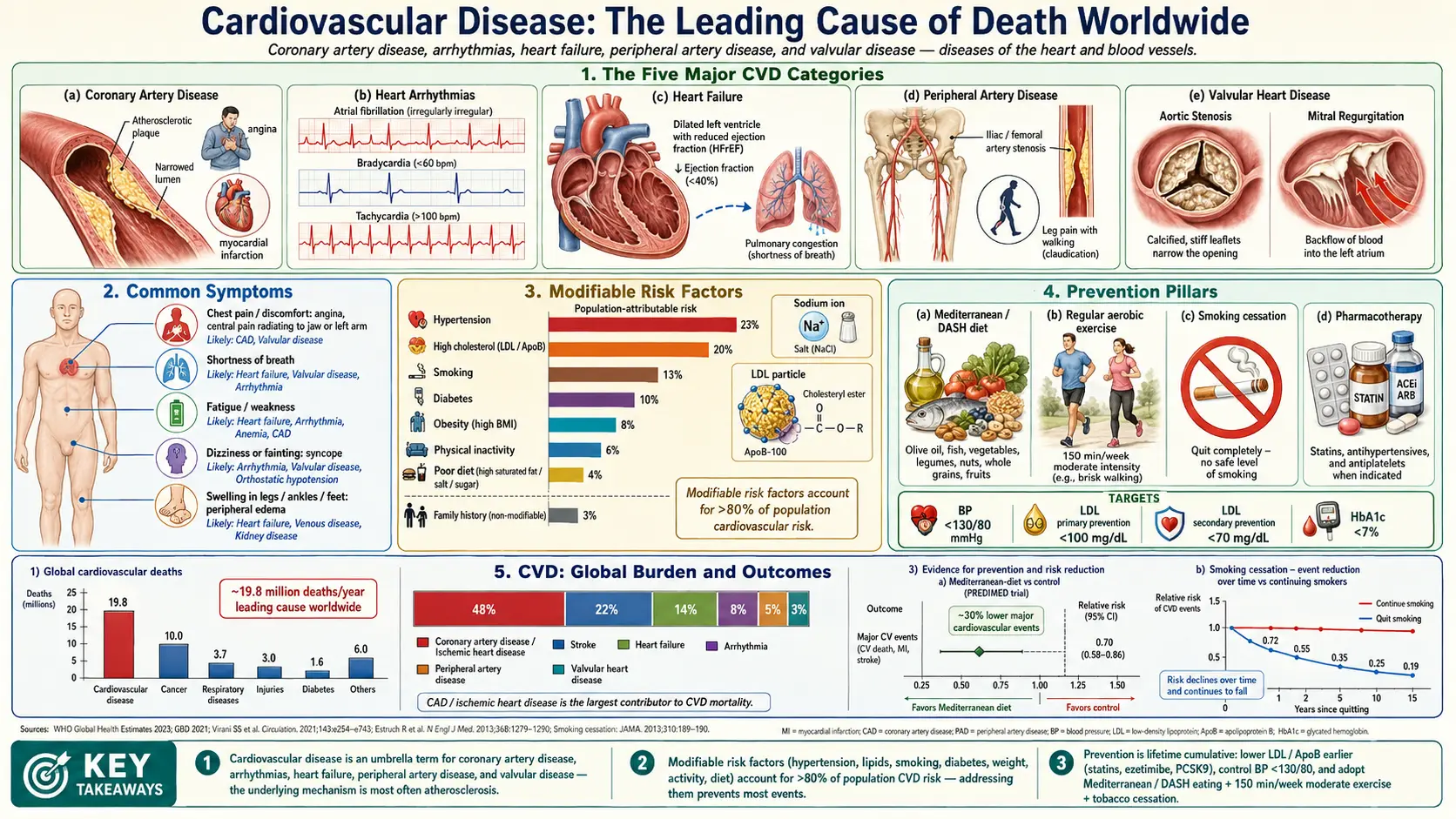
Table of Contents
- What is Cardiovascular Disease?
- Types of Cardiovascular Disease
- Common Symptoms of Cardiovascular Disease
- Risk Factors
- Prevention Strategies
- Treatment Options
- Complications of Cardiovascular Disease
- Research Papers
- Connections
- Featured Videos
What is Cardiovascular Disease?
Cardiovascular disease (CVD) refers to a class of diseases involving the heart and blood vessels. It encompasses various conditions that affect the cardiovascular system and is a leading cause of death worldwide.
Types of Cardiovascular Disease
1. Coronary Artery Disease (CAD)
- Most common type: Affects blood flow to the heart.
- Caused by plaque buildup in the arteries, leading to narrowed or blocked vessels.
- Can result in: Chest pain (angina), heart attacks.
2. Heart Arrhythmias
- Irregular heartbeats: The heart may beat too fast, too slow, or irregularly.
- Common types include:
- Atrial fibrillation
- Bradycardia (slow heartbeat)
- Tachycardia (fast heartbeat)
3. Heart Failure
- Occurs when the heart cannot pump blood effectively.
- Causes: CAD, high blood pressure, or other underlying conditions.
4. Peripheral Artery Disease (PAD)
- Affects blood flow to the limbs.
- Common symptoms: Leg pain, especially when walking.
5. Heart Valve Disease
- Problems with heart valves not opening or closing properly.
- Examples include: Mitral valve regurgitation, aortic stenosis.
Common Symptoms of Cardiovascular Disease
- Chest pain or discomfort (angina)
- Shortness of breath
- Fatigue and weakness
- Swelling in legs, ankles, and feet
- Dizziness or fainting
Risk Factors
- High blood pressure (hypertension)
- High cholesterol
- Smoking
- Diabetes
- Obesity
- Physical inactivity
- Poor diet: High in saturated fat, salt, and sugar
- Family history of cardiovascular disease
Prevention Strategies
- Maintain a healthy diet: Focus on fruits, vegetables, whole grains, and lean proteins.
- Regular physical activity: At least 150 minutes of moderate exercise per week.
- Quit smoking: Reduces risk significantly.
- Manage stress: Techniques such as yoga, meditation, or deep breathing.
- Control other health conditions: Keep diabetes, high blood pressure, and cholesterol under control.
Treatment Options
- Lifestyle changes: Essential for managing cardiovascular health.
- Medications: May include blood pressure medications, statins, and antiplatelet drugs.
- Medical procedures: Such as angioplasty, stent placement, or bypass surgery.
- Cardiac rehabilitation: A supervised program involving exercise, health education, and counseling.
Complications of Cardiovascular Disease
- Heart attack: Sudden blockage of blood flow to the heart muscle.
- Stroke: Reduced blood flow to the brain, leading to potential brain damage.
- Aneurysm: Abnormal bulging of a blood vessel, which can burst and cause life-threatening bleeding.
- Heart failure: Chronic condition where the heart fails to pump effectively.
- Peripheral artery disease: Can result in pain, infection, and amputation.
Research Papers
The following PubMed topic searches return current peer-reviewed literature relevant to this condition. Each link opens a live PubMed query.
- Cardiovascular disease epidemiology
- Cardiovascular disease prevention
- Cardiovascular disease risk factors
- Statin cardiovascular disease
- Mediterranean diet cardiovascular disease
- Exercise cardiovascular disease
- Cardiovascular disease mortality
- Inflammation cardiovascular disease
- Cardiovascular disease prevention guidelines
- Women cardiovascular disease
- Cardiovascular disease biomarkers
- Atherosclerosis pathophysiology
Connections
- Cardiology
- Coronary Artery Disease
- Heart Failure
- Peripheral Artery Disease
- Stroke
- Hypertension
- Atherosclerosis
- Atrial Fibrillation
- Valvular Heart Disease
- Lipid Panel
- Garlic
- Magnesium
- Anti-Inflammatory Diet
- Omega-3 Fatty Acids
- Diabetes
- Obesity
- Chest Pain
- NAC and Cardiovascular Health
- Vitamin D3
- Rheumatoid Arthritis
- Gum Disease