Immune Boosting Regimen: A Naturopathic Approach to Resilient Immunity
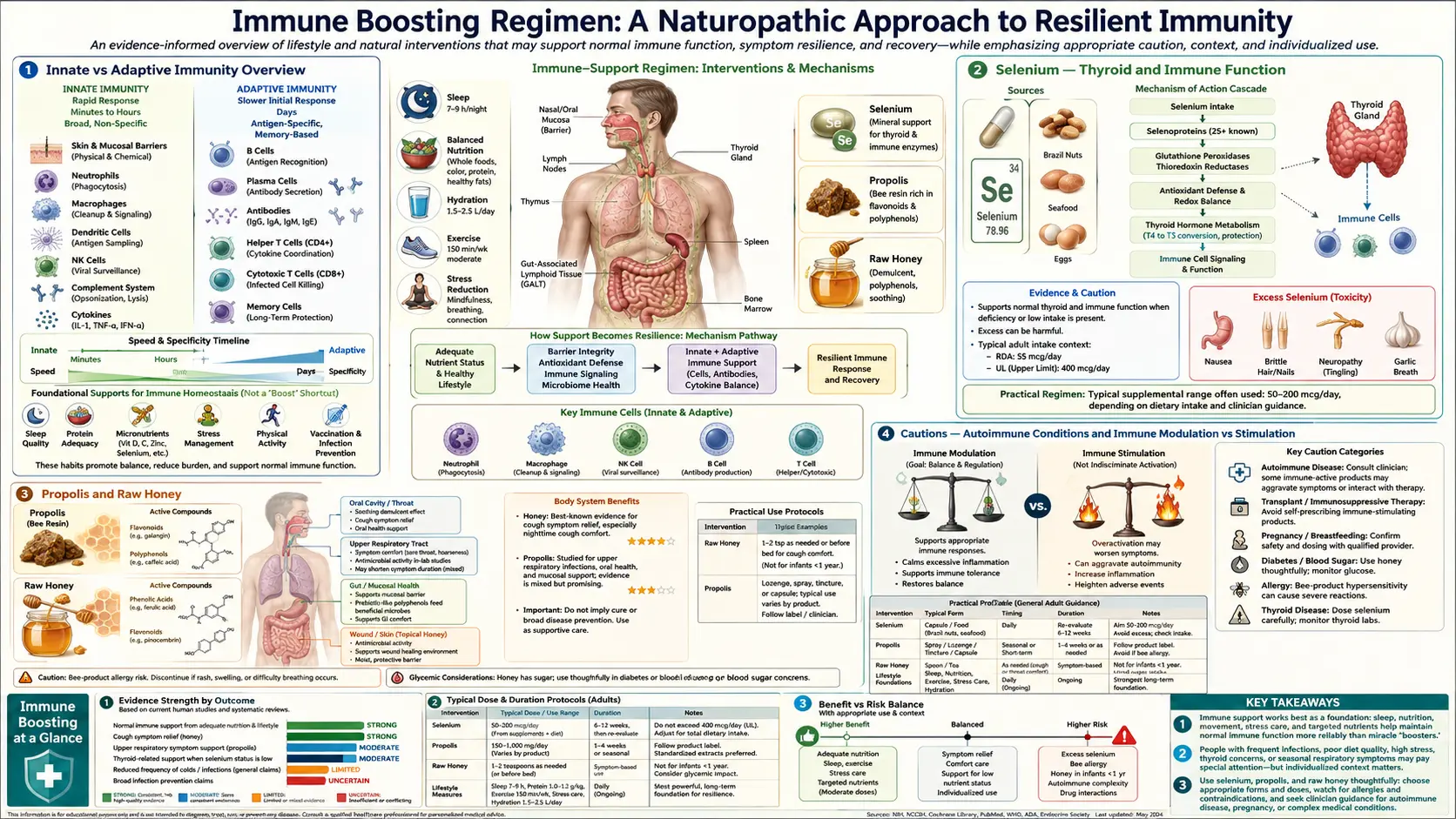

A well-functioning immune system is the foundation of health. From a naturopathic perspective, the goal is not simply to stimulate the immune system but to modulate it — supporting its ability to respond appropriately to threats while avoiding overreaction. This guide covers the key nutrients, botanicals, foods, and lifestyle practices that build and maintain robust immune defense, along with practical protocols for both daily maintenance and acute illness.
Table of Contents
- Innate vs Adaptive Immunity Overview
- The Gut-Immune Connection
- Vitamin D — The Master Immune Regulator
- Vitamin C — High-Dose Protocols
- Zinc — Immune Cell Function
- Vitamin A — Mucosal Barrier Integrity
- Selenium — Thyroid and Immune Function
- Quercetin — Zinc Ionophore and Mast Cell Stabilizer
- Elderberry (Sambucus nigra) — Cytokine Modulation
- Medicinal Mushrooms — Beta-Glucans and Immune Intelligence
- Echinacea and Astragalus
- Propolis and Raw Honey
- Colostrum
- Immune-Supportive Foods
- Lifestyle Factors
- Acute Illness Protocol
- Daily Maintenance Protocol vs Acute Protocol
- Cautions — Autoimmune Conditions and Immune Modulation vs Stimulation
- Research Papers
- Connections
- Featured Videos
1. Innate vs Adaptive Immunity Overview
The human immune system operates through two interconnected branches that work in concert to protect against pathogens, toxins, and aberrant cells.
Innate Immunity (First Line of Defense)
The innate immune system is the body's rapid-response force. It is non-specific, meaning it does not target particular pathogens but instead recognizes broad categories of threats. Key components include:
- Physical barriers — Skin, mucous membranes, stomach acid, and respiratory cilia prevent pathogen entry.
- Cellular defenders — Neutrophils, macrophages, dendritic cells, and natural killer (NK) cells patrol tissues and destroy invaders on contact.
- Inflammatory response — Cytokines and chemokines recruit additional immune cells to sites of infection or injury.
- Complement system — A cascade of proteins that tag pathogens for destruction and directly lyse bacterial membranes.
Adaptive Immunity (Targeted Defense)
The adaptive immune system is slower to activate but highly specific and capable of immunological memory:
- T cells — Helper T cells coordinate immune responses; cytotoxic T cells destroy infected cells directly. Regulatory T cells (Tregs) prevent autoimmune overreaction.
- B cells and antibodies — B cells produce immunoglobulins (IgA, IgG, IgM, IgE) that neutralize pathogens and mark them for destruction.
- Memory cells — Long-lived T and B memory cells enable faster, stronger responses upon re-exposure to a known pathogen.
Naturopathic immune support targets both branches — strengthening barriers and innate responses while ensuring the adaptive system has the nutritional cofactors it needs to function optimally.
2. The Gut-Immune Connection
An estimated 70–80% of the body's immune cells reside in the gut-associated lymphoid tissue (GALT), making the gastrointestinal tract the largest immune organ in the body. The gut microbiome plays a central role in immune education and regulation.
How the Gut Shapes Immunity
- Microbiome diversity — A diverse population of beneficial bacteria trains the immune system to distinguish friend from foe, reducing the risk of allergies and autoimmune conditions.
- Short-chain fatty acids (SCFAs) — Butyrate, propionate, and acetate produced by gut bacteria nourish intestinal cells, strengthen the gut barrier, and regulate Treg cell function.
- Secretory IgA (sIgA) — The gut produces the majority of the body's sIgA, which coats mucosal surfaces and neutralizes pathogens before they can invade.
- Intestinal permeability — A compromised gut barrier ("leaky gut") allows bacterial endotoxins (lipopolysaccharides) into the bloodstream, triggering chronic systemic inflammation and immune dysregulation.
Supporting the Gut-Immune Axis
- Probiotics — Lactobacillus and Bifidobacterium strains support sIgA production and reduce gut inflammation. Saccharomyces boulardii is particularly useful during acute illness.
- Prebiotics — Inulin, FOS, GOS, and resistant starch feed beneficial bacteria and increase SCFA production.
- Fermented foods — Sauerkraut, kimchi, kefir, yogurt, miso, and kombucha provide live organisms and postbiotics.
- L-glutamine — The primary fuel source for enterocytes (intestinal lining cells); supports barrier integrity at doses of 5–15 g daily.
- Avoid gut disruptors — Minimize unnecessary antibiotics, NSAIDs, processed foods, excess alcohol, and artificial sweeteners, all of which damage the microbiome and gut lining.
3. Vitamin D — The Master Immune Regulator
Vitamin D is arguably the single most important nutrient for immune function. It acts as a steroid hormone, with receptors on virtually every immune cell in the body. From a naturopathic standpoint, vitamin D deficiency is one of the most common and correctable causes of immune dysfunction.
Immune Functions of Vitamin D
- Activates antimicrobial peptides — Vitamin D upregulates cathelicidin and defensins, natural antibiotics produced by immune cells and epithelial tissue.
- Enhances innate immunity — Improves macrophage and monocyte function, boosting the first-line response against bacteria and viruses.
- Modulates adaptive immunity — Promotes Treg differentiation while dampening excessive Th1 and Th17 responses, reducing the risk of autoimmune flares.
- Reduces respiratory infections — Meta-analyses consistently show that vitamin D supplementation reduces the incidence and severity of upper respiratory infections, with the greatest benefit in those who are deficient.
Optimal Levels and Dosing
- Target serum 25(OH)D — 50–80 ng/mL (125–200 nmol/L) for optimal immune function, well above the conventional "sufficiency" cutoff of 30 ng/mL.
- Maintenance dose — 5,000–10,000 IU of vitamin D3 daily for most adults, adjusted based on lab testing.
- Cofactors — Always pair with vitamin K2 (MK-7, 100–200 mcg) to direct calcium into bones and away from soft tissues. Magnesium is also essential for vitamin D metabolism.
- Sun exposure — 15–30 minutes of midday sun on large skin areas (without sunscreen) is the most natural way to produce vitamin D, when seasonally available.
- Test regularly — Serum 25(OH)D should be checked at least twice yearly to guide dosing.
4. Vitamin C — High-Dose Protocols
Vitamin C (ascorbic acid) is a potent antioxidant and essential cofactor for immune cell function. Unlike most mammals, humans cannot synthesize vitamin C and must obtain it entirely from diet or supplementation. During infection or stress, vitamin C is rapidly depleted.
Immune Roles of Vitamin C
- Enhances neutrophil chemotaxis and phagocytosis — Improves the ability of neutrophils to migrate to infection sites and engulf pathogens.
- Supports lymphocyte proliferation — Essential for T cell and B cell maturation and function.
- Protects against oxidative damage — Quenches reactive oxygen species generated during immune responses, preventing collateral tissue damage.
- Regenerates other antioxidants — Recycles vitamin E and glutathione back to their active forms.
- Supports epithelial barrier function — Promotes collagen synthesis in skin and mucosal tissues.
Dosing Protocols
- Daily maintenance — 1,000–3,000 mg in divided doses throughout the day.
- Acute illness — 1,000 mg every 1–2 hours until bowel tolerance (the dose at which loose stools occur), then reduce slightly. This can reach 10,000–20,000+ mg during acute infection.
- Liposomal vitamin C — Encapsulated in phospholipid liposomes for significantly higher bioavailability and absorption, reaching near-IV plasma levels without GI distress. Dose: 2,000–6,000 mg daily during illness.
- IV vitamin C — 25–75 g intravenous infusions administered by a naturopathic or integrative physician for severe illness; achieves plasma concentrations impossible through oral dosing.
5. Zinc — Immune Cell Function
Zinc is involved in over 300 enzymatic reactions and is critical for the development and function of virtually every immune cell type. Even mild zinc deficiency impairs immune surveillance and increases susceptibility to infections.
How Zinc Supports Immunity
- T cell development — Zinc is essential for thymic function and the maturation of T lymphocytes. Zinc deficiency causes thymic atrophy and reduced T cell output.
- NK cell activity — Zinc enhances natural killer cell cytotoxicity against virus-infected cells and tumor cells.
- Neutrophil function — Required for the oxidative burst that neutrophils use to destroy engulfed pathogens.
- Cytokine regulation — Helps balance pro-inflammatory and anti-inflammatory cytokine production.
- Antiviral activity — Zinc ions inhibit viral replication, particularly of RNA viruses, by interfering with viral RNA-dependent RNA polymerase.
Forms and Dosing
- Daily maintenance — 15–30 mg of elemental zinc (as zinc picolinate, zinc bisglycinate, or zinc citrate for optimal absorption).
- Acute illness — 30–50 mg daily for up to two weeks. Zinc acetate or zinc gluconate lozenges (dissolving slowly in the mouth) have been shown to reduce the duration of common colds by 33% when started within 24 hours of symptom onset.
- Copper balance — Long-term zinc supplementation above 30 mg daily should be balanced with 1–2 mg of copper to prevent copper depletion.
6. Vitamin A — Mucosal Barrier Integrity
Vitamin A is often called the "anti-infection vitamin" due to its critical role in maintaining mucosal barriers and supporting immune cell function. It exists in two primary forms: preformed retinol (from animal sources) and provitamin A carotenoids such as beta-carotene (from plant sources).
Immune Functions
- Mucosal barrier maintenance — Vitamin A is essential for the integrity of epithelial tissues lining the respiratory tract, gut, and urogenital system. Deficiency leads to squamous metaplasia, where protective mucus-producing cells are replaced by dry, keratinized tissue easily penetrated by pathogens.
- sIgA production — Vitamin A supports secretory IgA synthesis, the primary antibody defending mucosal surfaces.
- T cell differentiation — Retinoic acid (the active metabolite) promotes Treg and Th2 responses while modulating Th17 activity, helping to prevent excessive inflammation.
- NK cell and macrophage activity — Supports both phagocytic capacity and cytotoxic activity of innate immune cells.
Dosing
- Daily maintenance — 5,000–10,000 IU of preformed retinol (retinyl palmitate or emulsified vitamin A).
- Acute illness (short-term) — 50,000–100,000 IU daily for 2–3 days at illness onset, then reduce to maintenance. This protocol should only be used under practitioner guidance.
- Caution — Vitamin A is fat-soluble and can accumulate. Avoid high-dose protocols during pregnancy due to teratogenic risk. Beta-carotene is a safer alternative for long-term use.
7. Selenium — Thyroid and Immune Function
Selenium is a trace mineral that serves as a cofactor for selenoproteins, including glutathione peroxidase (the body's master antioxidant enzyme) and thioredoxin reductase. It sits at the intersection of immune health and thyroid function.
Immune Roles
- Glutathione production — Selenium-dependent glutathione peroxidase protects immune cells from oxidative damage during the respiratory burst.
- Enhanced viral defense — Selenium deficiency is associated with increased virulence of RNA viruses. Supplementation has been shown to reduce viral mutation rates and improve immune clearance of infections.
- T cell proliferation — Adequate selenium supports robust T cell expansion and cytokine production.
- Thyroid connection — The thyroid contains the highest concentration of selenium per gram of tissue. Selenium supports the conversion of T4 to active T3 and protects the thyroid from oxidative damage. Since thyroid hormones regulate metabolic rate and immune cell activity, thyroid dysfunction directly impairs immunity.
Dosing
- Daily maintenance — 200 mcg as selenomethionine or selenium from whole food sources.
- Food sources — Brazil nuts (1–3 nuts daily provide approximately 70–200 mcg), sardines, organ meats, eggs, and sunflower seeds.
- Upper limit — Do not exceed 400 mcg daily long-term; toxicity (selenosis) can cause hair loss, brittle nails, and neurological symptoms.
8. Quercetin — Zinc Ionophore and Mast Cell Stabilizer
Quercetin is a flavonoid found abundantly in onions, apples, berries, capers, and green tea. It has gained significant attention for its dual role as a zinc ionophore and a natural mast cell stabilizer.
Immune Mechanisms
- Zinc ionophore — Quercetin facilitates the transport of zinc ions across cell membranes into the cytoplasm, where zinc can directly inhibit viral RNA replication. This makes the combination of quercetin and zinc a powerful antiviral pairing.
- Mast cell stabilization — Quercetin inhibits histamine release from mast cells and basophils, making it valuable for allergies, histamine intolerance, and mast cell activation syndrome (MCAS).
- Anti-inflammatory — Inhibits NF-kB, a key transcription factor driving inflammatory cytokine production (IL-6, TNF-alpha, IL-1beta).
- Antiviral activity — Independent of its zinc ionophore action, quercetin has demonstrated direct antiviral effects against influenza, rhinovirus, and respiratory syncytial virus in vitro.
- Senolytic properties — Quercetin selectively clears senescent (aged, dysfunctional) immune cells, promoting immune system renewal.
Dosing
- Daily maintenance — 500–1,000 mg daily, taken with zinc for synergistic effect.
- Acute illness — 1,000 mg two to three times daily, combined with zinc 30–50 mg.
- Bioavailability — Quercetin phytosome (complexed with phospholipids) has 20x greater bioavailability than standard quercetin powder. Take with a fat-containing meal.
9. Elderberry (Sambucus nigra) — Cytokine Modulation
Elderberry (Sambucus nigra) is one of the most widely used and clinically studied natural remedies for colds and influenza. Its deep purple berries are rich in anthocyanins and other polyphenols with direct antiviral and immunomodulatory properties.
How Elderberry Works
- Viral entry inhibition — Elderberry compounds bind to viral surface proteins (hemagglutinin in influenza), preventing the virus from attaching to and entering host cells.
- Cytokine modulation — Elderberry increases production of beneficial cytokines (IL-6, IL-8, TNF-alpha) during early infection to activate immune response, while evidence suggests it does not cause the dangerous "cytokine storm" pattern seen in severe infections.
- Clinical evidence — A meta-analysis published in Complementary Therapies in Medicine found that elderberry supplementation substantially reduced upper respiratory symptoms, with the greatest effect in cold and flu cases.
- Antioxidant activity — Anthocyanins provide potent free radical scavenging, protecting tissues from immune-mediated oxidative damage.
Dosing
- Standardized extract (syrup) — 15 mL (1 tablespoon) for adults, 2–4 times daily during acute illness; 15 mL once daily for prevention.
- Capsules/lozenges — 300–600 mg of standardized extract daily for maintenance; double during illness.
- Caution — Use only commercially prepared elderberry products. Raw elderberries, bark, and leaves contain cyanogenic glycosides that can cause nausea and toxicity.
10. Medicinal Mushrooms — Beta-Glucans and Immune Intelligence
Medicinal mushrooms have been used for thousands of years in Traditional Chinese Medicine and are now supported by a growing body of modern immunological research. Their primary bioactive compounds are beta-glucans — complex polysaccharides that bind to receptors on innate immune cells (Dectin-1, complement receptor 3) and activate broad-spectrum immune surveillance.
Key Medicinal Mushrooms
- Reishi (Ganoderma lucidum) — The "mushroom of immortality." Modulates both innate and adaptive immunity, enhances NK cell activity, supports Treg function, and has anti-inflammatory and adaptogenic properties. Particularly useful for autoimmune conditions due to its immunomodulatory (not purely stimulatory) effects. Dose: 1,000–3,000 mg of dual extract daily.
- Chaga (Inonotus obliquus) — Extremely high in antioxidants (ORAC score among the highest of any food). Contains betulinic acid and melanin. Supports immune surveillance and protects against oxidative stress. Traditionally consumed as tea or tincture. Dose: 1,000–2,000 mg daily or 1–2 cups of chaga tea.
- Turkey Tail (Trametes versicolor) — Contains PSK (polysaccharide-K) and PSP (polysaccharopeptide), the most clinically researched mushroom compounds. Used as adjunctive therapy in oncology in Japan. Enhances T cell and NK cell activity. Dose: 2,000–3,000 mg daily.
- Lion's Mane (Hericium erinaceus) — Best known for neurological benefits (nerve growth factor stimulation), but also contains beta-glucans that enhance gut immune function and macrophage activity. Supports the gut-brain-immune axis. Dose: 1,000–3,000 mg daily.
- Shiitake (Lentinula edodes) — Contains lentinan, a beta-glucan shown to enhance immune cell proliferation and antibody production. Also a good dietary source of vitamin D2 when sun-dried. Dose: 5–10 g of dried shiitake in cooking or 1,000–2,000 mg as extract.
Choosing Mushroom Products
- Dual extraction — Look for products using both hot water and alcohol extraction to capture water-soluble beta-glucans and alcohol-soluble triterpenes.
- Fruiting body vs mycelium — Fruiting body extracts contain higher concentrations of beta-glucans. Mycelium-on-grain products may be diluted with starch.
- Combination formulas — Multi-mushroom blends (5–7 species) provide broad-spectrum immune support through complementary mechanisms.
11. Echinacea and Astragalus
These two botanical powerhouses serve complementary roles in immune support — echinacea as an acute-phase immune activator and astragalus as a long-term immune tonic.
Echinacea (Echinacea purpurea and E. angustifolia)
- Mechanism — Alkylamides and polysaccharides activate macrophages, increase phagocytosis, and stimulate NK cell activity. Echinacea also increases properdin, a complement system activator.
- Clinical use — Most effective when taken at the very first sign of illness and continued for 7–10 days. Research shows it can reduce cold duration by 1–4 days and decrease severity of symptoms.
- Dosing — Tincture: 2–4 mL every 2–3 hours at onset, tapering over the following days. Capsules: 1,000–2,000 mg three times daily during acute illness.
- Note — Best used intermittently (during acute illness or for 2–3 week cycles), not continuously year-round.
Astragalus (Astragalus membranaceus)
- Mechanism — Contains astragalosides and polysaccharides that increase T cell count, enhance NK cell activity, and support bone marrow production of immune cells. Also an adaptogen that modulates the stress response.
- Telomere support — Astragaloside IV activates telomerase, potentially slowing immune cell aging and maintaining a robust immune repertoire.
- Clinical use — Best used as a preventive tonic during cold and flu season. Unlike echinacea, astragalus is appropriate for daily long-term use.
- Dosing — 500–1,000 mg of standardized extract twice daily, or 4–8 g of dried root simmered in soups and broths (traditional preparation).
- Caution — Discontinue astragalus during active acute infection with fever, as it may theoretically intensify the immune response. Resume after the acute phase resolves.
12. Propolis and Raw Honey
Bee products have been used medicinally for millennia. Propolis and raw honey contain complex mixtures of bioactive compounds with antimicrobial, anti-inflammatory, and immune-modulating properties.
Propolis
- Composition — A resinous substance bees produce from plant exudates, containing over 300 bioactive compounds including flavonoids (pinocembrin, galangin, chrysin), phenolic acids (caffeic acid phenethyl ester or CAPE), and terpenes.
- Antimicrobial activity — Broad-spectrum antibacterial, antiviral, and antifungal effects. Effective against Streptococcus, Staphylococcus, Candida, influenza, and herpes simplex virus.
- Immune modulation — Increases macrophage activation and antibody production while modulating inflammatory cytokines.
- Dosing — Propolis tincture: 10–20 drops in water, 2–3 times daily. Propolis spray for sore throats. Capsules: 500–1,000 mg daily.
Raw Honey
- Antimicrobial mechanisms — Hydrogen peroxide production, low pH, high osmolarity, methylglyoxal (especially in Manuka honey), and bee defensin-1 all contribute to its antimicrobial properties.
- Cough suppression — Clinical studies show honey is as effective as dextromethorphan for nighttime cough in children and adults.
- Wound healing — Medical-grade honey (Manuka UMF 15+) is used topically for wound care, burns, and skin infections.
- Use — 1–2 tablespoons of raw, unfiltered honey daily. Add to warm (not hot) tea or take straight. Manuka honey (UMF 10+) provides additional therapeutic benefit.
13. Colostrum
Bovine colostrum is the first milk produced by cows in the initial 24–48 hours after calving. It is extraordinarily rich in immune factors and growth compounds that transfer passive immunity and support immune development.
Key Immune Components
- Immunoglobulins (IgG, IgA, IgM) — Bovine colostrum contains 20–40% immunoglobulins by weight. IgG antibodies survive digestion and provide passive immune protection in the gut, neutralizing bacteria, viruses, and toxins.
- Lactoferrin — An iron-binding glycoprotein with antimicrobial, antiviral, and anti-inflammatory properties. Lactoferrin also acts as a prebiotic, promoting Bifidobacterium growth.
- Proline-rich polypeptides (PRPs) — Also known as colostrinin, PRPs modulate the immune system by promoting or suppressing cytokine production as needed, making colostrum a true immunomodulator rather than a simple stimulant.
- Growth factors — IGF-1, TGF-beta, and EGF support gut lining repair and tissue healing.
Clinical Applications and Dosing
- Gut barrier repair — Colostrum has been shown to reduce intestinal permeability, making it valuable for leaky gut and its downstream immune consequences.
- Upper respiratory infections — Studies show colostrum supplementation reduces the incidence and duration of upper respiratory tract infections.
- Athletic immunity — Intense exercise temporarily suppresses immunity; colostrum supplementation reduces the incidence of upper respiratory symptoms in athletes.
- Dosing — 10–20 g of powdered bovine colostrum daily (first-milking, minimally processed). Take on an empty stomach for best absorption. Capsules: 2,000–5,000 mg daily.
14. Immune-Supportive Foods
A nutrient-dense whole foods diet is the foundation of immune health. The following foods provide concentrated immune-active compounds:
Garlic (Allium sativum)
- Active compound — Allicin (released when raw garlic is crushed and allowed to sit for 10 minutes) has potent antibacterial, antiviral, and antifungal properties.
- Immune enhancement — Stimulates NK cells, macrophages, and lymphocyte proliferation. Regular garlic consumption is associated with reduced incidence and duration of colds.
- Dose — 2–3 raw cloves daily (crushed and rested), or aged garlic extract 600–1,200 mg daily.
Ginger (Zingiber officinale)
- Active compounds — Gingerols and shogaols provide anti-inflammatory and antimicrobial activity.
- Benefits — Reduces inflammatory cytokines, supports digestion and nutrient absorption, and provides warming circulatory support to move immune cells efficiently.
- Use — Fresh ginger tea (2–3 slices simmered 10 minutes), added to cooking, or as a tincture.
Turmeric (Curcuma longa)
- Active compound — Curcumin is a powerful anti-inflammatory that modulates NF-kB, COX-2, and multiple inflammatory pathways.
- Immune modulation — Enhances antibody responses and T cell function while reducing excessive inflammation.
- Bioavailability — Pair with black pepper (piperine) and fat for 2,000% increased absorption, or use curcumin phytosome formulations.
Bone Broth
- Benefits — Rich in glycine, proline, glutamine, and collagen, which support gut lining repair, reduce inflammation, and provide easily absorbable minerals.
- Preparation — Simmer bones (chicken, beef, or fish) for 12–24 hours with apple cider vinegar (1–2 tablespoons per quart) to extract minerals. Consume 1–2 cups daily.
Fermented Foods
- Examples — Sauerkraut, kimchi, kefir, yogurt (full-fat, unsweetened), miso, tempeh, and kombucha.
- Benefits — Provide live beneficial bacteria, postbiotics, and organic acids that support microbiome diversity and gut immune function.
- Goal — Include at least one serving of fermented food at every meal.
15. Lifestyle Factors
No supplement protocol can compensate for a lifestyle that undermines immune function. The following factors are foundational and non-negotiable for robust immunity.
Sleep
- Duration — 7–9 hours of quality sleep per night. Even one night of poor sleep reduces NK cell activity by up to 70%.
- Circadian rhythm — Melatonin, produced during darkness, is a potent immunomodulator that enhances T cell function and antioxidant defense.
- Sleep hygiene — Dark room, cool temperature (65–68 degrees F), no screens 1 hour before bed, consistent sleep/wake times.
Exercise
- Moderate exercise — 30–60 minutes of moderate activity (walking, cycling, swimming) most days enhances immune surveillance by increasing circulation of NK cells, neutrophils, and T cells.
- Overtraining — Excessive intense exercise without adequate recovery suppresses immunity and increases upper respiratory infections. Follow hard training days with rest or light activity.
Stress Management
- Cortisol impact — Chronic psychological stress elevates cortisol, which suppresses sIgA production, reduces lymphocyte proliferation, and shifts the immune system away from antiviral defense.
- Practices — Meditation, deep breathing, yoga, time in nature, social connection, and adaptogenic herbs (ashwagandha, rhodiola, holy basil) all lower cortisol and restore immune balance.
Cold Exposure and Hormesis
- Mechanism — Brief cold exposure (cold showers, ice baths, winter swimming) activates the sympathetic nervous system, increases norepinephrine, and has been shown to increase circulating immune cells and improve immune resilience over time.
- Protocol — Start with 30 seconds of cold water at the end of a shower and gradually increase to 2–5 minutes. Consistent daily practice yields the greatest immune benefits.
- Hormesis principle — Small, controlled stressors (cold, heat, fasting, exercise) trigger adaptive responses that strengthen the body's defense systems, including immunity.
16. Acute Illness Protocol
At the first sign of a cold, flu, or respiratory infection, implement this aggressive naturopathic protocol within the first 24 hours for maximum benefit:
First 24–48 Hours
- Vitamin C — 1,000 mg every 1–2 hours to bowel tolerance (typically 10,000–20,000 mg/day). Liposomal vitamin C 2,000–4,000 mg if available.
- Zinc lozenges — Zinc acetate or gluconate lozenges providing 15–25 mg elemental zinc, dissolved slowly in the mouth every 2–3 hours while awake (total 50–75 mg/day). Do not exceed 7 days at this dose.
- Quercetin — 1,000 mg three times daily with meals (enhances zinc absorption into cells).
- Vitamin D3 — 50,000 IU as a single loading dose on day one, then 10,000 IU daily for 5 days (only if not already at optimal levels).
- Vitamin A — 50,000–100,000 IU for 2 days, then reduce to 10,000 IU (not for pregnant women).
- Elderberry syrup — 1 tablespoon every 3–4 hours.
- Echinacea tincture — 2–4 mL every 2–3 hours for the first day, then every 4 hours.
- Raw honey and ginger tea — Hot water with fresh ginger, lemon, and raw honey throughout the day for hydration, throat soothing, and antimicrobial benefit.
- Bone broth — 2–3 cups daily with garlic and turmeric added.
- Rest — Cancel non-essential activities. Sleep as much as the body needs. Fever is a healing response — do not suppress a mild to moderate fever (under 103 degrees F in adults) unless medically necessary.
Days 3–7
- Reduce vitamin C to 3,000–5,000 mg daily in divided doses.
- Continue zinc at 30–50 mg daily.
- Maintain quercetin, elderberry, and echinacea at standard doses.
- Return vitamin D and A to maintenance levels.
- Add medicinal mushroom blend (turkey tail, reishi) at 2,000–3,000 mg daily.
- Continue rest, hydration, and nutrient-dense foods.
17. Daily Maintenance Protocol vs Acute Protocol
The distinction between daily immune maintenance and acute illness intervention is critical. The goal of daily maintenance is to keep the immune system well-nourished, balanced, and prepared. The acute protocol is a short-term intensification designed to overwhelm a pathogen during the narrow window when intervention is most effective.
Daily Maintenance Protocol
- Vitamin D3 — 5,000–10,000 IU daily (with K2 and magnesium)
- Vitamin C — 1,000–2,000 mg daily
- Zinc — 15–30 mg daily (with 1–2 mg copper if above 30 mg)
- Selenium — 200 mcg daily
- Quercetin — 500 mg daily
- Medicinal mushroom blend — 1,000–2,000 mg daily
- Astragalus — 500–1,000 mg daily (during cold/flu season)
- Probiotics — Multi-strain, 25–50 billion CFU daily
- Colostrum — 2,000–5,000 mg daily (optional, especially for those prone to respiratory infections)
Acute Protocol Summary
- Vitamin D3 — 50,000 IU day one, then 10,000 IU for 5 days
- Vitamin C — 1,000 mg every 1–2 hours to bowel tolerance
- Zinc lozenges — 50–75 mg daily for up to 7 days
- Vitamin A — 50,000–100,000 IU for 2 days, then 10,000 IU
- Quercetin — 1,000 mg three times daily
- Elderberry — 1 tablespoon every 3–4 hours
- Echinacea — 2–4 mL tincture every 2–3 hours initially
- Propolis spray — Every 2–3 hours for sore throat
- Bone broth, garlic, ginger, raw honey — Throughout the day
- Complete rest and maximal sleep
18. Cautions — Autoimmune Conditions and Immune Modulation vs Stimulation
This is perhaps the most important section of this guide. Not everyone should "boost" their immune system, and understanding the difference between immune stimulation and immune modulation is essential for safe practice.
The Critical Distinction
- Immune stimulation — Upregulates immune activity across the board. Beneficial for acute infections in healthy individuals, but potentially dangerous for those with autoimmune conditions (e.g., rheumatoid arthritis, lupus, Hashimoto's thyroiditis, multiple sclerosis, Crohn's disease) where the immune system is already overactive and attacking self-tissue.
- Immune modulation — Balances the immune system, upregulating what is deficient and downregulating what is excessive. This is the naturopathic ideal and the safer approach for individuals with autoimmune conditions.
Substances That Primarily Stimulate (Use with Caution in Autoimmunity)
- Echinacea — Activates macrophages and NK cells; may worsen autoimmune flares.
- Elderberry — Increases pro-inflammatory cytokine production; generally avoid during autoimmune flares.
- High-dose vitamin A — Acute protocol doses can stimulate immune activity excessively.
- Astragalus — While generally modulatory, may stimulate overactive Th1 responses in certain autoimmune conditions.
- Colostrum — Generally considered modulatory but should be introduced cautiously.
Substances That Are Primarily Modulatory (Generally Safer in Autoimmunity)
- Vitamin D — One of the most important interventions for autoimmune conditions; promotes Treg function and reduces Th1/Th17 excess. Most autoimmune patients are profoundly deficient.
- Reishi mushroom — True immunomodulator; supports Tregs and balances Th1/Th2 responses.
- Quercetin — Anti-inflammatory and mast cell stabilizing; beneficial in autoimmune-related inflammation.
- Omega-3 fatty acids — EPA and DHA resolve inflammation through specialized pro-resolving mediators (SPMs).
- Probiotics — Support Treg development and balanced immune responses in the gut.
- Selenium — Particularly important in Hashimoto's thyroiditis; reduces TPO antibodies.
- Curcumin — Potent anti-inflammatory without immune stimulation.
General Guidelines for Autoimmune Patients
- Focus on immune modulation, not stimulation.
- Prioritize gut healing (the gut-immune connection is central to autoimmune pathology).
- Correct nutrient deficiencies (vitamin D, selenium, zinc, omega-3s) which are almost universally present.
- Work with a naturopathic doctor or integrative practitioner who understands the nuances of autoimmune immunology.
- Introduce supplements one at a time and monitor for any worsening of symptoms.
- During acute infections, use a modified acute protocol focusing on vitamin C, vitamin D, zinc, and quercetin while avoiding strong immune stimulants.
Research Papers
- Vitamin D and immune function — PubMed search
- Zinc and respiratory infection — PubMed search
- High-dose vitamin C and immunity — PubMed search
- Elderberry (Sambucus) and influenza — PubMed search
- Beta-glucans from mushrooms and immunity — PubMed search
- Quercetin as a zinc ionophore — PubMed search
- Astragalus and immune modulation — PubMed search
- Selenium deficiency and immune function — PubMed search
Connections
- All Remedies
- Zinc
- Vitamin C
- Quercetin
- Elderberry
- Selenium
- Echinacea
- Vitamin D3
- Astragalus
- Vitamin A
- Garlic
- Ginger
- Probiotics
- Gut Healing
- Reishi Mushroom
- Stress Management
- Turmeric
- Fasting
- Asthma
- Conditions on this site that reference this page: Klebsiella pneumoniae · MRSA Decolonization, Hand Hygiene, and Hospital Infection · Staphylococcus Aureus Treatment and Prevention · Staphylococcus aureus · Sinusitis · ENT (Ear, Nose & Throat) · Babesiosis · Cellulitis