Magnesium – Essential Mineral for Human Health
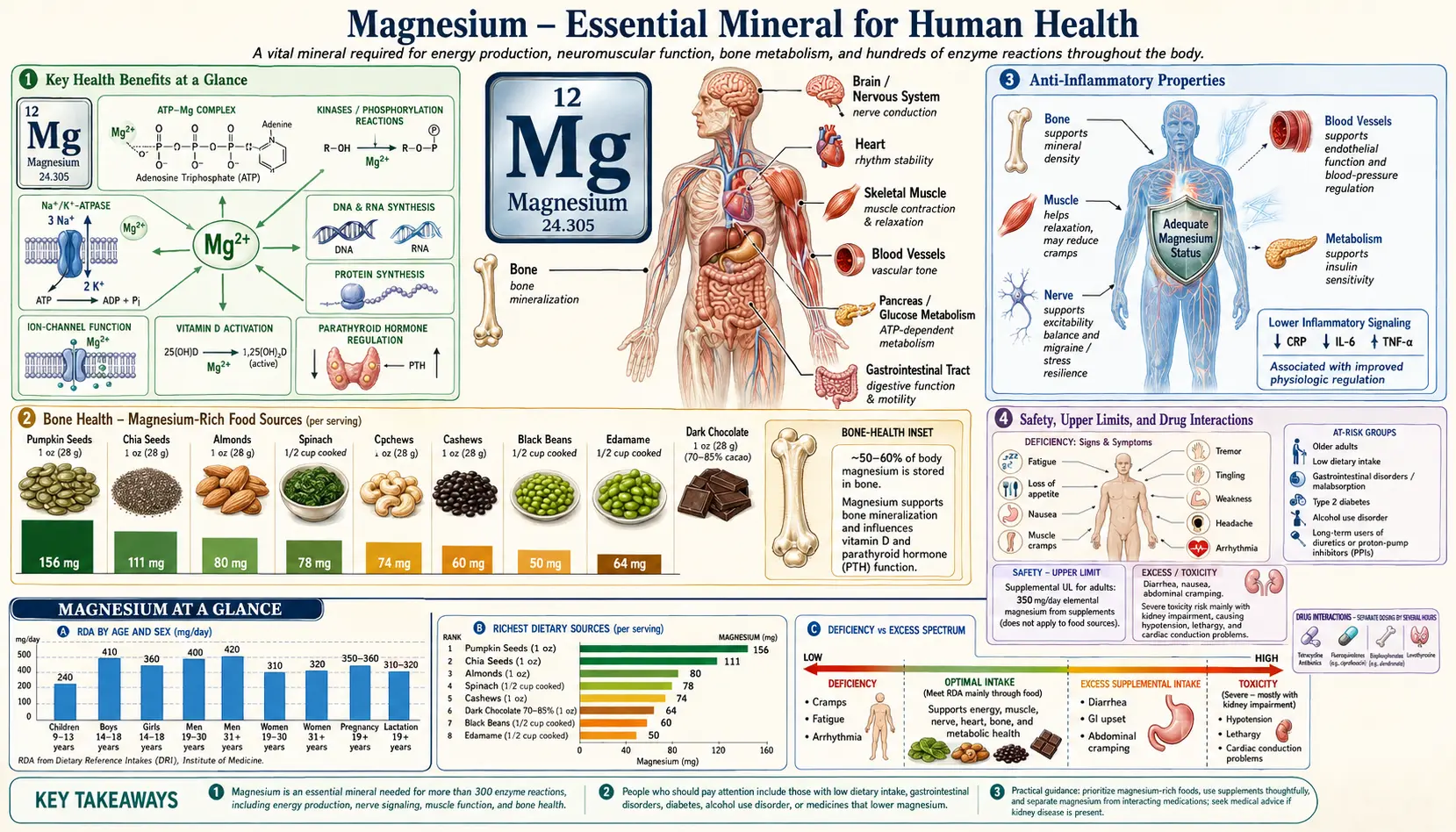
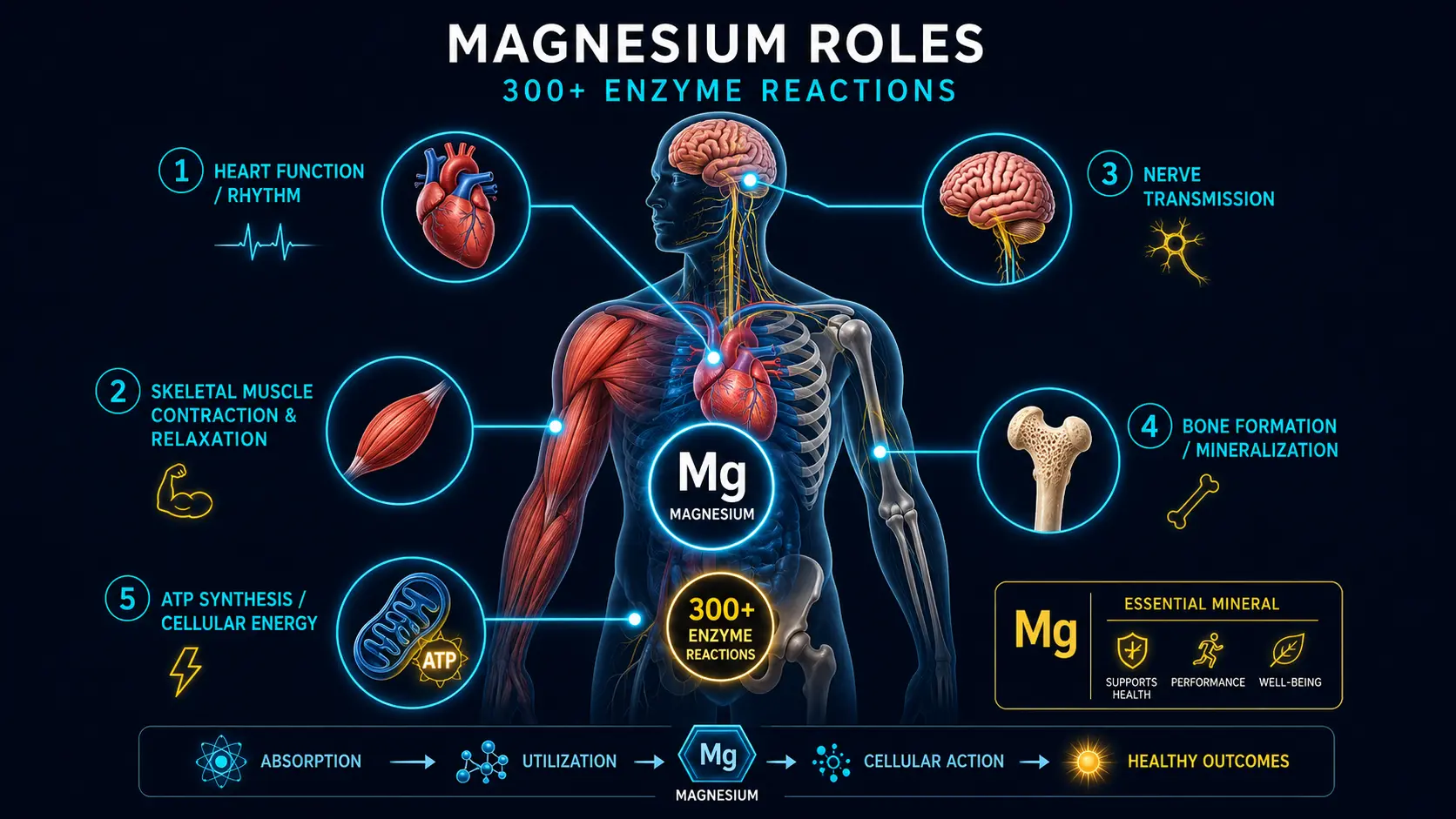
Magnesium is the fourth most abundant mineral in the human body and a silent partner in virtually every biological process that keeps you alive. Approximately 60% is locked inside bone, 39% resides in soft tissues, and barely 1% circulates in the blood — which is why serum magnesium is a poor deficiency test. The adult body contains roughly 25 grams of magnesium, and it sits at the catalytic core of more than 600 enzyme reactions and acts as a regulator in another 200, spanning energy production, DNA replication, neurotransmission, muscle contraction, cardiovascular tone, and bone mineralization.
Despite its centrality, magnesium deficiency is remarkably common. Population studies suggest that up to 50% of adults in the United States and other developed countries fail to meet the estimated average requirement, and subclinical deficiency is now recognized as a driver of hypertension, type 2 diabetes, migraine, anxiety, insomnia, osteoporosis, and cardiac arrhythmia. This page summarizes the mechanisms, the clinical evidence, the symptoms of deficiency, the dietary sources, and the research papers that underpin modern magnesium therapy.
Interactive Visualization How Your Skin Makes Vitamin D Hit 7-dehydrocholesterol with UVB and follow it through liver and kidney to the active hormone — then try winter, sunscreen, darker skin, or low magnesium. Launch → Interactive Visualization Magnesium — the mineral that makes ATP work Bare ATP is useless and enzymes reject it. Watch magnesium clamp the phosphates and switch it on, plug the NMDA channel, and let a cramping muscle finally let go. Launch → Interactive Visualization Stomach Acid & PPIs — run the proton pump Drive your stomach to pH 2, activate pepsin and free your B12 and iron — then take a PPI and watch the pH climb while the nutrients stop being released. Launch → Interactive Visualization The Sodium–Potassium Pump — why you have a voltage Run the pump that gives every cell its charge — three sodium out, two potassium in, on Mg-ATP — then drop the magnesium and see exactly why low potassium refuses to correct. Launch → Interactive Visualization Inside the Beta Cell — release insulin yourself Zoom inside a beta cell and watch glucose close the K-ATP channel, calcium flood in, and insulin granules pop out — then force it with a sulfonylurea or silence it with diazoxide. Launch → Interactive Visualization Potassium & the Heartbeat — bend the ECG with one slider Slide your blood potassium up and down and watch the ECG morph in real time — peaked T waves and a widening QRS as it climbs, U waves and a stretched QT as it falls. Launch → Interactive Visualization Glycolysis & the Krebs Cycle — turn sugar into energy carriers Split glucose into pyruvate through ten enzyme steps, feed the Krebs cycle, and load the NADH and FADH₂ carriers the mitochondria turn into ATP — then cut the oxygen and watch it fall to lactate. Launch → Interactive Visualization Lactate & the Cori Cycle — bust the muscle-burn myth Sprint until lactate floods your blood, follow it to the liver to be rebuilt into glucose — and bury the myth that lactic acid causes the burn or next-day soreness. Launch → Interactive Visualization Enzymes: How They Speed Up Life Drop a substrate into an enzyme's active site and watch induced-fit catalysis fly — then heat it, swing the pH, or add an inhibitor and watch it stall. Many enzymes need a vitamin or mineral cofactor. Launch →Table of Contents
- Key Health Benefits at a Glance
- Enzymatic Functions
- Energy Production and ATP Synthesis
- Nervous System Function
- Muscle Function
- Cardiovascular Health
- Bone Health
- Blood Sugar Regulation and Type 2 Diabetes
- Sleep and Relaxation
- Brain Health and Cognitive Function
- Migraine Prevention and Treatment
- Mood, Anxiety, and Depression
- Immune Function
- Anti-Inflammatory Properties
- Pregnancy and Women’s Health
- Dietary Sources of Magnesium
- Recommended Daily Intake (RDA)
- Signs of Magnesium Deficiency
- Forms of Supplemental Magnesium
- Safety, Upper Limits, and Drug Interactions
- Research Papers and References
- Connections
- Featured Videos
Key Health Benefits at a Glance
Before diving into the mechanism-level detail, the following is a high-level summary of the evidence-backed benefits of adequate magnesium status. Each of these is explored in more depth below, and the supporting research papers are listed in the Research Papers section.
- Lowers blood pressure – Meta-analyses of randomized trials show magnesium supplementation reduces systolic blood pressure by 2–4 mmHg and diastolic by 1.5–2.5 mmHg, with larger effects in hypertensive and magnesium-deficient subjects.
- Reduces type 2 diabetes risk – Prospective cohort meta-analyses report a ~15–30% lower risk of developing type 2 diabetes with each 100 mg/day increase in dietary magnesium.
- Improves sleep quality – Clinical trials in older adults show shorter sleep onset latency, longer total sleep time, and higher subjective sleep quality after magnesium supplementation.
- Reduces anxiety and stress reactivity – Systematic reviews link magnesium status to subjective anxiety measures and cortisol response.
- Prevents migraine – The American Headache Society and American Academy of Neurology classify magnesium as Level B (probably effective) for migraine prevention.
- Supports bone mineral density – Higher magnesium intake is associated with greater bone density and reduced fracture risk, particularly in postmenopausal women.
- Protects the heart – Higher circulating and dietary magnesium are associated with lower risk of ischemic heart disease, sudden cardiac death, and atrial fibrillation.
- Relieves muscle cramps – Clinical resolution of nocturnal leg cramps and exercise-induced cramping with supplementation is widely reported, though effects are most pronounced in deficient individuals.
- Supports immune function – 2022 research identified magnesium as required for the surface expression of LFA-1 on cytotoxic T cells, directly linking magnesium status to antiviral and anticancer immunity.
Enzymatic Functions
Magnesium serves as a cofactor or activator for more than 600 enzyme systems in the human body — a number revised upward from the classical estimate of 300 by modern proteomics work — making it one of the most biochemically versatile minerals known.
- Cofactor in 600+ Enzymes – Magnesium is required by enzymes involved in energy production, nucleic acid synthesis, protein synthesis, ion transport, cell signaling, and structural functions. Without adequate magnesium, these enzymatic processes slow or fail entirely.
- Kinase Activation – Nearly all enzymes that use or synthesize ATP (adenosine triphosphate) require magnesium. Kinases, which transfer phosphate groups from ATP to target molecules, are dependent on magnesium-ATP complexes for their catalytic activity.
- DNA and RNA Polymerase – Magnesium is essential for the function of DNA and RNA polymerases, the enzymes responsible for DNA replication and RNA transcription. This makes magnesium fundamental to cell division and gene expression.
- Glutathione Synthesis – The production of glutathione, the body’s primary intracellular antioxidant, requires magnesium-dependent enzymes. Adequate magnesium therefore supports the body’s defense against oxidative stress.
- Phosphatase and Phospholipase Activity – Magnesium activates phosphatases (which remove phosphate groups) and phospholipases (which break down phospholipids), both critical for cell signaling and membrane remodeling.
Energy Production and ATP Synthesis
Magnesium is often referred to as the “energy mineral” because of its central role in the creation and utilization of ATP, the universal energy currency of cells. Every ATP molecule in a cell is, strictly speaking, a magnesium-ATP complex — without magnesium, ATP is biologically inert.
- ATP-Magnesium Complex – ATP exists in cells primarily as a complex with magnesium (Mg-ATP). This complex is the biologically active form of ATP. Without magnesium, ATP cannot be properly utilized by enzymes, effectively rendering the cell energy-deficient even if ATP levels are adequate.
- Glycolysis – Several enzymes in the glycolytic pathway, including hexokinase and pyruvate kinase, require magnesium for catalytic activity. Glycolysis is the initial stage of glucose metabolism and a primary source of cellular energy.
- Citric Acid Cycle (Krebs Cycle) – Magnesium is needed by key enzymes in the citric acid cycle, including isocitrate dehydrogenase and alpha-ketoglutarate dehydrogenase, which drive the oxidative generation of NADH and FADH2 for the electron transport chain.
- Oxidative Phosphorylation – In the mitochondria, magnesium supports the function of the electron transport chain complexes and ATP synthase, the enzyme that directly generates ATP. Magnesium deficiency impairs mitochondrial function and reduces overall energy output.
- Creatine Kinase – This enzyme, which maintains energy reserves in muscle and brain tissue by converting creatine to phosphocreatine, is magnesium-dependent. This is particularly important during high-energy-demand states such as exercise.
Nervous System Function
Magnesium plays a multifaceted role in the nervous system, influencing neurotransmitter release, receptor function, nerve conduction, and neuroprotection. Its two most famous neural actions — NMDA receptor blockade and GABA receptor activation — together make magnesium the body’s endogenous calming mineral.
Neurotransmitter Regulation
- Serotonin Synthesis – Magnesium is involved in the conversion of tryptophan to serotonin, a neurotransmitter critical for mood regulation, appetite, and sleep. Low magnesium has been associated with reduced serotonin levels and increased risk of depression.
- Dopamine Pathways – Magnesium modulates dopaminergic signaling and is involved in the synthesis and release of dopamine, which governs motivation, reward, and motor control.
- Acetylcholine Release – At neuromuscular junctions, magnesium influences the release of acetylcholine, the neurotransmitter that triggers muscle contraction. This helps maintain appropriate neuromuscular signaling.
GABA Support and NMDA Blockade
- GABA Receptor Binding – Magnesium binds to and activates GABA (gamma-aminobutyric acid) receptors, which are the primary inhibitory receptors in the brain. Activation of GABA receptors promotes relaxation, reduces anxiety, and facilitates sleep.
- NMDA Receptor Blockade – Magnesium acts as a natural voltage-dependent blocker of NMDA (N-methyl-D-aspartate) receptors. By blocking excessive NMDA activation, magnesium prevents excitotoxicity, protects neurons from overstimulation, and reduces the risk of anxiety and neuronal damage.
- Stress Response Modulation – Through its combined action on GABA and NMDA receptors, magnesium helps regulate the hypothalamic-pituitary-adrenal (HPA) axis, dampening the stress response and lowering cortisol levels.
Nerve Conduction and Neuroprotection
- Ion Channel Regulation – Magnesium regulates the flow of calcium and potassium through ion channels in nerve cell membranes, which is essential for proper action potential generation and propagation.
- Myelin Sheath Integrity – Adequate magnesium supports the maintenance of myelin sheaths, the insulating layers around nerve fibers that enable rapid signal transmission.
- Neuroprotection – By preventing excessive calcium influx into neurons (which can trigger cell death), magnesium exerts significant neuroprotective effects and may reduce the risk of neurodegenerative conditions.
Muscle Function
Magnesium is indispensable for proper muscle function, governing both contraction and relaxation cycles across skeletal, smooth, and cardiac muscle tissue.
Muscle Contraction and Relaxation
- Calcium Counterbalance – Muscle contraction is triggered by calcium influx into muscle cells, while magnesium promotes muscle relaxation by competing with calcium at binding sites on muscle proteins. This calcium-magnesium balance is fundamental to normal muscle function.
- Sarcoplasmic Reticulum Function – Magnesium regulates calcium release and reuptake by the sarcoplasmic reticulum, the intracellular calcium store in muscle cells. Proper magnesium levels ensure smooth contraction-relaxation cycling.
- Cramp Prevention – Magnesium deficiency is a well-established cause of muscle cramps, spasms, and twitching. Supplementation often resolves these symptoms, particularly nocturnal leg cramps.
- ATP for Muscle Energy – Muscles require large amounts of ATP during contraction. Since ATP must be complexed with magnesium to be biologically active, magnesium is directly required for muscular energy production.
Exercise Performance
- Lactate Clearance – Magnesium supports enzymes involved in the clearance of lactate from muscles during and after exercise, reducing soreness and fatigue.
- Oxygen Delivery – By supporting red blood cell function and hemoglobin production, magnesium contributes to efficient oxygen delivery to working muscles.
- Electrolyte Balance – During exercise, magnesium losses through sweat can be significant. Maintaining adequate magnesium status is important for sustained athletic performance and prevention of exercise-induced muscle dysfunction.
Cardiovascular Health
Magnesium is one of the most important minerals for cardiovascular function, with roles spanning blood pressure regulation, heart rhythm maintenance, vascular health, and protection against atherosclerosis. For a deeper dive see Magnesium for Heart Health.
Blood Pressure Regulation
- Vasodilation – Magnesium promotes relaxation of vascular smooth muscle, leading to vasodilation and reduced peripheral resistance. This mechanism directly lowers blood pressure.
- Endothelial Function – Magnesium supports the production of nitric oxide by endothelial cells, which is the primary signaling molecule for vasodilation. Deficiency impairs nitric oxide synthesis and contributes to endothelial dysfunction.
- Renin-Angiotensin System – Magnesium modulates the renin-angiotensin-aldosterone system (RAAS), which controls blood pressure and fluid balance. Adequate magnesium may reduce excessive activation of this system.
- Clinical Evidence – A 2016 meta-analysis of 34 randomized trials by Zhang and colleagues in Hypertension demonstrated that supplemental magnesium (median dose 368 mg/day for 3 months) reduced systolic blood pressure by 2.0 mmHg and diastolic by 1.78 mmHg, with larger effects in hypertensive and deficient populations.
Heart Rhythm
- Cardiac Ion Channel Regulation – Magnesium regulates sodium, potassium, and calcium channels in cardiac muscle cells. Proper channel function is essential for maintaining normal heart rhythm (sinus rhythm).
- Arrhythmia Prevention – Magnesium deficiency is a recognized risk factor for cardiac arrhythmias, including atrial fibrillation, ventricular tachycardia, and torsades de pointes. Intravenous magnesium is used therapeutically to treat certain acute arrhythmias.
- QT Interval – Magnesium helps maintain a normal QT interval on electrocardiography. Hypomagnesemia can prolong the QT interval, increasing the risk of dangerous ventricular arrhythmias.
- Sudden Cardiac Death – Prospective cohort data from the Nurses’ Health Study linked higher plasma magnesium concentrations with a 41% lower risk of sudden cardiac death.
Atherosclerosis and Vascular Protection
- Anti-Inflammatory Effects – Magnesium reduces levels of C-reactive protein (CRP) and other inflammatory markers that contribute to the development of atherosclerotic plaques.
- Lipid Metabolism – Magnesium influences cholesterol synthesis and may improve the ratio of HDL to LDL cholesterol, reducing atherogenic risk.
- Platelet Aggregation – Magnesium inhibits excessive platelet aggregation, reducing the tendency for blood clot formation within arteries.
- Vascular Calcification – Adequate magnesium inhibits the deposition of calcium in arterial walls, a process known as vascular calcification that stiffens arteries and increases cardiovascular risk.
Bone Health
While calcium and vitamin D receive the most attention for bone health, magnesium is equally critical. Approximately 60% of the body’s total magnesium is stored in bone tissue, where it influences hydroxyapatite crystal structure, vitamin D activation, and the activity of both osteoblasts and osteoclasts.
- Bone Mineral Density – Magnesium is a structural component of the bone mineral matrix (hydroxyapatite). Studies have shown that higher magnesium intake is associated with greater bone mineral density, particularly in older adults.
- Calcium Absorption and Metabolism – Magnesium is required for the activation of vitamin D into its active form (calcitriol), which in turn regulates calcium absorption from the intestines. Without sufficient magnesium, vitamin D remains inactive and calcium absorption is impaired.
- Parathyroid Hormone Regulation – Magnesium modulates the secretion of parathyroid hormone (PTH), which governs calcium and phosphorus homeostasis. Magnesium deficiency can lead to dysregulated PTH secretion and disrupted bone metabolism.
- Osteoblast and Osteoclast Balance – Magnesium influences the activity of osteoblasts (bone-forming cells) and osteoclasts (bone-resorbing cells). Adequate magnesium supports bone formation while preventing excessive bone resorption.
- Osteoporosis Prevention – Data from the Women’s Health Initiative Observational Study (Orchard et al., 2014) linked higher dietary magnesium with greater hip and whole-body bone mineral density, though the effect on fracture risk was mixed and age-dependent.
Blood Sugar Regulation and Type 2 Diabetes
Magnesium plays a fundamental role in glucose metabolism and insulin signaling, making it one of the most relevant minerals for the prevention and management of type 2 diabetes and metabolic syndrome. The evidence here is arguably the strongest in the nutritional-magnesium literature.
- Insulin Receptor Function – Magnesium is required for the proper function of the insulin receptor’s tyrosine kinase activity. When magnesium is deficient, insulin receptors become less responsive, leading to insulin resistance.
- GLUT4 Translocation – Magnesium supports the translocation of GLUT4 glucose transporters to the cell surface, which is the mechanism by which insulin enables cells to absorb glucose from the bloodstream.
- Pancreatic Beta-Cell Function – Magnesium influences insulin secretion from pancreatic beta cells. Deficiency impairs the insulin secretory response to elevated blood glucose.
- Dose-Response Evidence – A 2016 meta-regression (Fang et al., Nutrients) pooling 25 prospective cohorts of >600,000 participants found a linear dose-response: each 100 mg/day increase in dietary magnesium was associated with an 8–13% reduction in incident type 2 diabetes.
- HbA1c Improvement – A 2016 meta-analysis by Veronese and colleagues showed that magnesium supplementation in insulin-resistant or prediabetic individuals significantly improved fasting plasma glucose and HOMA-IR scores, with HbA1c benefits concentrated in documented-deficient subjects.
- Metabolic Syndrome – Magnesium deficiency is associated with multiple components of metabolic syndrome, including insulin resistance, central obesity, hypertension, and dyslipidemia.
Sleep and Relaxation
Magnesium has gained significant recognition for its role in promoting sleep quality and overall relaxation through multiple neurochemical and physiological mechanisms. See the dedicated article Magnesium for Sleep for a deeper discussion of dosing, forms, and clinical trial evidence.
- GABA Enhancement – By binding to GABA receptors, magnesium enhances inhibitory neurotransmission in the brain, promoting a state of calm conducive to sleep onset and maintenance.
- Melatonin Regulation – Magnesium is involved in the synthesis and regulation of melatonin, the hormone that controls the sleep-wake cycle (circadian rhythm). Deficiency may disrupt melatonin production and impair sleep timing.
- Cortisol Reduction – Magnesium helps regulate the HPA axis and can reduce elevated cortisol levels, which are a common cause of nighttime wakefulness and difficulty falling asleep.
- Muscle Relaxation for Sleep – By promoting skeletal muscle relaxation and preventing nocturnal cramps, magnesium contributes to physical comfort during sleep.
- Restless Leg Syndrome – Magnesium supplementation has shown benefit in some cases of restless leg syndrome (RLS), a condition that frequently disrupts sleep onset.
- Clinical Evidence – A 2012 double-blind trial by Abbasi and colleagues (J Res Med Sci) found that 500 mg/day of elemental magnesium for 8 weeks in elderly adults with primary insomnia significantly improved Insomnia Severity Index scores, sleep efficiency, sleep onset latency, and serum cortisol and melatonin levels.
Brain Health and Cognitive Function
Magnesium is increasingly being studied for its role in cognitive health, memory consolidation, and neurodegenerative disease risk. The brain concentrates magnesium for use in synaptic plasticity and NMDA receptor regulation, and certain supplemental forms (notably magnesium L-threonate) are designed to penetrate the blood-brain barrier.
- Synaptic Plasticity – NMDA receptor function, gated by magnesium, underlies long-term potentiation (LTP), the cellular basis of learning and memory. Adequate brain magnesium maintains the threshold for synaptic strengthening.
- Magnesium L-Threonate Research – Preclinical work by Slutsky et al. (MIT, Neuron 2010) demonstrated that magnesium L-threonate, a form capable of elevating brain magnesium levels, improved spatial and associative memory in aged rats. Early human trials have shown modest cognitive benefits in older adults with cognitive impairment.
- Neuroprotection Against Excitotoxicity – By blocking excessive NMDA receptor activation, magnesium protects neurons from glutamate-mediated excitotoxicity implicated in stroke, traumatic brain injury, and neurodegenerative disease.
- Dementia and Alzheimer’s Risk – Observational studies have linked low serum magnesium with increased risk of all-cause dementia and Alzheimer’s disease, though causality remains under investigation.
- Stroke Neuroprotection – Intravenous magnesium has been trialed as an acute neuroprotective agent in ischemic stroke; the FAST-MAG trial did not show improvement in functional outcomes, but research continues in subarachnoid hemorrhage and traumatic brain injury.
Migraine Prevention and Treatment
Migraine sufferers have measurably lower serum and intracellular magnesium levels than controls, and magnesium is one of the few over-the-counter supplements with guideline-level evidence for migraine prophylaxis.
- Mechanism – Magnesium stabilizes the neuronal membrane, antagonizes NMDA receptors implicated in cortical spreading depression (the initiating event of migraine with aura), inhibits platelet aggregation, and regulates serotonergic tone — each of which plausibly contributes to migraine reduction.
- Guideline Endorsement – The American Headache Society and American Academy of Neurology classify oral magnesium as Level B evidence (probably effective) for migraine prevention.
- Dosing – Typical prophylactic dosing is 400–600 mg/day of elemental magnesium (often as magnesium citrate or glycinate) for at least 8–12 weeks before judging response.
- Acute Treatment – Intravenous magnesium sulfate (1–2 g) has been shown in emergency-department trials to abort acute migraine, particularly migraine with aura.
- Menstrual Migraine – Magnesium is especially useful in menstrual migraine, where serum magnesium falls in the late luteal phase.
Mood, Anxiety, and Depression
Magnesium’s effects on the HPA axis, NMDA receptors, GABA signaling, and serotonin synthesis position it as a mineral with genuine psychiatric relevance. The quality of the human evidence is uneven but increasingly supportive.
- Anxiety – A 2017 systematic review by Boyle and colleagues (Nutrients) of 18 studies found that magnesium supplementation consistently reduced subjective anxiety in anxiety-prone populations, though methodological quality varied.
- Depression – A 2017 open-label trial by Tarleton et al. in PLOS ONE reported that 248 mg of elemental magnesium daily produced clinically significant improvements in PHQ-9 depression scores within two weeks.
- Stress Reactivity – Magnesium blunts cortisol responses to stress and may reduce the tonic hyperactivation of the HPA axis that underlies chronic-stress pathology.
- NMDA Antagonism – The rapid antidepressant effect of ketamine (an NMDA antagonist) highlights the therapeutic potential of NMDA modulation — a pathway that endogenous magnesium contributes to at physiologic doses.
- Synergy with B-Vitamins – Magnesium is often combined with vitamin B6, which supports its cellular uptake and shares mechanistic overlap in neurotransmitter synthesis.
Immune Function
Magnesium is increasingly recognized as an important modulator of both innate and adaptive immune responses. The most striking recent finding comes from 2022 work in Cell identifying magnesium as a required cofactor for cytotoxic T-cell function.
- Cytotoxic T-Cell Activation (Cell, 2022) – Lötscher and colleagues demonstrated that extracellular magnesium is required for the active conformation of LFA-1, an integrin adhesion molecule on CD8+ T cells and NK cells. Without magnesium, cytotoxic lymphocytes cannot efficiently form immunological synapses with infected or malignant target cells. This represents the most direct mechanistic link yet between magnesium status and antiviral/antitumor immunity.
- Natural Killer Cell Activity – Magnesium is required for the cytotoxic function of natural killer (NK) cells, which are a critical component of the innate immune defense against viruses and tumor cells.
- T-Cell Activation – Magnesium is necessary for proper T-cell receptor signaling and T-cell activation. Deficiency impairs T-cell-mediated immunity and may increase susceptibility to infections.
- Immunoglobulin Production – B-cell function and immunoglobulin (antibody) synthesis are supported by adequate magnesium levels.
- Complement System – Some components of the complement cascade, an important arm of innate immunity, are influenced by magnesium availability.
- NF-kB Pathway – Magnesium modulates the NF-kB signaling pathway, which is a master regulator of inflammatory and immune gene expression. Proper regulation of this pathway is essential for balanced immune responses.
Anti-Inflammatory Properties
Chronic low-grade inflammation is a driver of numerous diseases, and magnesium exerts significant anti-inflammatory effects through multiple pathways.
- C-Reactive Protein (CRP) – Magnesium supplementation has been shown to reduce serum CRP levels, a key biomarker of systemic inflammation. Meta-analyses indicate a consistent inverse relationship between magnesium intake and CRP concentrations.
- Interleukin-6 (IL-6) – Magnesium deficiency is associated with elevated IL-6, a pro-inflammatory cytokine implicated in chronic inflammatory conditions. Restoring magnesium levels helps normalize IL-6 production.
- Tumor Necrosis Factor-alpha (TNF-alpha) – Magnesium reduces the production of TNF-alpha, another potent pro-inflammatory cytokine, through modulation of the NF-kB pathway.
- Oxidative Stress Reduction – By supporting glutathione synthesis and other antioxidant defense mechanisms, magnesium indirectly reduces inflammation driven by oxidative damage.
- Substance P Regulation – Magnesium deficiency increases substance P, a neuropeptide that promotes inflammation and pain perception. Adequate magnesium helps keep substance P levels in check.
- Clinical Relevance – The anti-inflammatory effects of magnesium are relevant to a wide range of conditions, including cardiovascular disease, diabetes, arthritis, asthma, migraine, and chronic pain syndromes.
Pregnancy and Women’s Health
Magnesium has several established roles in obstetrics and gynecology, with IV magnesium sulfate remaining one of the most consequential drugs in modern obstetric practice.
- Preeclampsia and Eclampsia – Intravenous magnesium sulfate is the standard of care for seizure prophylaxis in severe preeclampsia and for the treatment of eclamptic seizures, based on the Magpie Trial (Lancet, 2002) which showed a 58% reduction in eclampsia risk.
- Preterm Labor & Neuroprotection – Antenatal magnesium sulfate given to women at risk of preterm delivery reduces the risk of cerebral palsy in surviving infants (Cochrane Review, Doyle et al., 2009).
- Leg Cramps in Pregnancy – Nocturnal leg cramps are common in the second and third trimesters and often respond to oral magnesium supplementation.
- Premenstrual Syndrome (PMS) – Trials suggest that 200–360 mg/day of magnesium, often combined with vitamin B6, reduces the severity of mood symptoms and bloating associated with PMS.
- Bone Health in Postmenopause – Postmenopausal women are particularly vulnerable to both magnesium deficiency and osteoporotic fracture, making magnesium adequacy a component of a comprehensive bone-health strategy.
Dietary Sources of Magnesium
- Dark Leafy Greens – Spinach, Swiss chard, and kale are among the richest vegetable sources of magnesium, as magnesium is the central atom in the chlorophyll molecule.
- Nuts and Seeds – Pumpkin seeds, almonds, cashews, and Brazil nuts are excellent sources, with pumpkin seeds providing approximately 150 mg per ounce.
- Legumes – Black beans, chickpeas, and lentils are rich in magnesium, providing 60–120 mg per cooked cup.
- Whole Grains – Brown rice, quinoa, oats, and whole wheat contain significant magnesium, much of which is lost during the refining process.
- Dark Chocolate – High-quality dark chocolate (70% cacao or higher) provides approximately 65 mg of magnesium per ounce.
- Fish – Fatty fish such as mackerel, salmon, and halibut are good animal sources of magnesium.
- Avocado – A medium avocado provides approximately 58 mg of magnesium along with healthy fats and fiber.
- Mineral Water – Certain hard-water and mineral-water sources (e.g., Gerolsteiner, Apollinaris) provide 100+ mg per liter, a frequently overlooked dietary source.
Recommended Daily Intake (RDA)
- Adult Men (19–30 years) – 400 mg/day
- Adult Men (31+ years) – 420 mg/day
- Adult Women (19–30 years) – 310 mg/day
- Adult Women (31+ years) – 320 mg/day
- Pregnancy – 350–360 mg/day (varies by age)
- Lactation – 310–320 mg/day (varies by age)
Signs of Magnesium Deficiency
Too little or too much magnesium both cause problems. Low magnesium often begins quietly — loss of appetite, fatigue, muscle cramps, twitching, and palpitations — and severe cases can trigger seizures and dangerous heart-rhythm disturbances. Because only about 1% of body magnesium circulates in blood, a normal serum result does not rule out depletion. At the other extreme, magnesium can build to harmful levels, most often in people with reduced kidney function.
For a full, patient-friendly guide to the symptoms, causes, and treatment, see Hypomagnesemia (Low Magnesium) and Hypermagnesemia (High Magnesium).
Forms of Supplemental Magnesium
- Magnesium Glycinate – Chelated with glycine; well-absorbed, gentle on the stomach, and often recommended for sleep and anxiety due to the calming properties of glycine. See Magnesium Glycinate for detailed discussion.
- Magnesium L-Threonate – Uniquely capable of crossing the blood-brain barrier; studied for cognitive benefits and neuroprotection.
- Magnesium Citrate – Well-absorbed and widely available; has a mild laxative effect, making it useful for individuals with constipation.
- Magnesium Taurate – Combined with taurine; often recommended for cardiovascular support due to the synergistic effects of both compounds on heart function.
- Magnesium Malate – Bound to malic acid; often preferred for energy production and muscle pain, as malic acid is involved in the Krebs cycle.
- Magnesium Oxide – Contains the highest percentage of elemental magnesium but has relatively poor bioavailability. Commonly used as an antacid and laxative.
- Magnesium Chloride – Well-absorbed; available in oral and topical forms. Topical magnesium chloride (magnesium oil) is popular for transdermal absorption.
- Magnesium L-Aspartate – Good bioavailability; sometimes used in combination supplements for energy and athletic performance.
- Magnesium Sulfate – Used intravenously in clinical medicine for preeclampsia, torsades de pointes, severe asthma, and hypomagnesemia. Also sold as Epsom salt for topical/bath use.
Safety, Upper Limits, and Drug Interactions
- Tolerable Upper Intake Level (UL) – The Institute of Medicine sets the UL for supplemental magnesium at 350 mg/day for adults. This applies only to magnesium from supplements — there is no UL from food, because the kidneys efficiently excrete dietary excess in healthy individuals.
- Common Side Effect – Diarrhea is the most common side effect and the mechanism behind magnesium citrate’s and magnesium oxide’s laxative use. Switching to glycinate or threonate typically resolves GI upset.
- Kidney Disease – Individuals with chronic kidney disease (CKD) have reduced magnesium excretion and are at risk of hypermagnesemia with supplementation. Magnesium supplements should only be used under medical supervision in CKD.
- Drug Interactions
- Proton Pump Inhibitors (PPIs) – Long-term PPI use (>1 year) depletes magnesium via reduced intestinal absorption; the FDA issued a safety communication about this in 2011.
- Loop and Thiazide Diuretics – Increase urinary magnesium loss.
- Certain Antibiotics – Quinolones (ciprofloxacin, levofloxacin) and tetracyclines form insoluble chelates with magnesium; separate doses by 2–4 hours.
- Bisphosphonates – Magnesium reduces absorption; separate by at least 2 hours.
- Insulin and Oral Diabetes Medications – Magnesium may enhance glucose-lowering; monitor blood sugar when initiating.
This content is provided for informational purposes only and does not constitute medical advice. Consult a qualified healthcare provider before beginning any supplementation regimen, especially if you have kidney disease or are taking medications that affect magnesium levels.
Research Papers and References
The following are landmark and frequently cited research papers underpinning the claims on this page. Links resolve to the publisher DOI or PubMed record.
Foundational Reviews
- de Baaij JH, Hoenderop JG, Bindels RJ. Magnesium in man: implications for health and disease. Physiological Reviews. 2015;95(1):1-46.
- Rosanoff A, Weaver CM, Rude RK. Suboptimal magnesium status in the United States: are the health consequences underestimated? Nutrition Reviews. 2012;70(3):153-164.
- Gröber U, Schmidt J, Kisters K. Magnesium in prevention and therapy. Nutrients. 2015;7(9):8199-8226.
Blood Pressure and Cardiovascular Disease
- Zhang X, Li Y, Del Gobbo LC, et al. Effects of magnesium supplementation on blood pressure: a meta-analysis of randomized double-blind placebo-controlled trials. Hypertension. 2016;68(2):324-333.
- Del Gobbo LC, Imamura F, Wu JH, de Oliveira Otto MC, Chiuve SE, Mozaffarian D. Circulating and dietary magnesium and risk of cardiovascular disease: a systematic review and meta-analysis of prospective studies. American Journal of Clinical Nutrition. 2013;98(1):160-173.
- Qu X, Jin F, Hao Y, et al. Magnesium and the risk of cardiovascular events: a meta-analysis of prospective cohort studies. PLoS ONE. 2013;8(3):e57720.
Type 2 Diabetes and Metabolic Syndrome
- Dong JY, Xun P, He K, Qin LQ. Magnesium intake and risk of type 2 diabetes: meta-analysis of prospective cohort studies. Diabetes Care. 2011;34(9):2116-2122.
- Fang X, Han H, Li M, et al. Dose-response relationship between dietary magnesium intake and risk of type 2 diabetes mellitus: a systematic review and meta-regression analysis of prospective cohort studies. Nutrients. 2016;8(11):739.
- Veronese N, Watutantrige-Fernando S, Luchini C, et al. Effect of magnesium supplementation on glucose metabolism in people with or at risk of diabetes: a systematic review and meta-analysis of double-blind randomized controlled trials. European Journal of Clinical Nutrition. 2016;70(12):1354-1359.
- Barbagallo M, Dominguez LJ. Magnesium and type 2 diabetes. World Journal of Diabetes. 2015;6(10):1152-1157.
Sleep, Anxiety, and Mood
- Abbasi B, Kimiagar M, Sadeghniiat K, Shirazi MM, Hedayati M, Rashidkhani B. The effect of magnesium supplementation on primary insomnia in elderly: a double-blind placebo-controlled clinical trial. Journal of Research in Medical Sciences. 2012;17(12):1161-1169.
- Rondanelli M, Opizzi A, Monteferrario F, Antoniello N, Manni R, Klersy C. The effect of melatonin, magnesium, and zinc on primary insomnia in long-term care facility residents in Italy: a double-blind, placebo-controlled clinical trial. Journal of the American Geriatrics Society. 2011;59(1):82-90.
- Boyle NB, Lawton C, Dye L. The effects of magnesium supplementation on subjective anxiety and stress — a systematic review. Nutrients. 2017;9(5):429.
- Tarleton EK, Littenberg B, MacLean CD, Kennedy AG, Daley C. Role of magnesium supplementation in the treatment of depression: a randomized clinical trial. PLOS ONE. 2017;12(6):e0180067.
Migraine
- Mauskop A, Varughese J. Why all migraine patients should be treated with magnesium. Journal of Neural Transmission. 2012;119(5):575-579.
- Search PubMed
Bone Health
- Orchard TS, Larson JC, Alghothani N, et al. Magnesium intake, bone mineral density, and fractures: results from the Women’s Health Initiative Observational Study. American Journal of Clinical Nutrition. 2014;99(4):926-933.
Brain, Memory, and Neuroscience
- Slutsky I, Abumaria N, Wu LJ, et al. Enhancement of learning and memory by elevating brain magnesium. Neuron. 2010;65(2):165-177.
Immunity
- Lötscher J, Martí i Líndez AA, Kirchhammer N, et al. Magnesium sensing via LFA-1 regulates CD8+ T cell effector function. Cell. 2022;185(4):585-602.e29.
Obstetrics
- Altman D, Carroli G, Duley L, et al. (Magpie Trial Collaboration Group). Do women with pre-eclampsia, and their babies, benefit from magnesium sulphate? The Magpie Trial: a randomised placebo-controlled trial. Lancet. 2002;359(9321):1877-1890.
- Doyle LW, Crowther CA, Middleton P, Marret S, Rouse D. Magnesium sulphate for women at risk of preterm birth for neuroprotection of the fetus. Cochrane Database of Systematic Reviews. 2009;(1):CD004661.
External Authoritative Resources
- NIH Office of Dietary Supplements — Magnesium Fact Sheet for Health Professionals
- Harvard T.H. Chan School of Public Health — The Nutrition Source: Magnesium
- PubMed — Magnesium supplementation RCT search
Connections
- Fluoride Chelation — binds fluoride, and the required partner to a boron protocol
- Hydration — the third electrolyte in the fluid story
- All Minerals
- Enzymes: How They Speed Up Life — interactive animation
- Lactate, the Cori Cycle & the Muscle-Burn Myth — interactive animation
- From Sugar to Energy: Glycolysis & the Krebs Cycle — interactive animation
- Potassium & the Heartbeat — interactive animation
- Inside the Beta Cell: How Insulin Is Released — interactive animation
- The Sodium–Potassium Pump — interactive animation
- Stomach Acid, pH & the PPI Trade-off — interactive animation
- Magnesium: The Mineral That Makes ATP Work — interactive animation
- How Your Skin Makes Vitamin D — interactive animation
- Magnesium Benefits Deep Dive
- Magnesium for Heart Health
- Magnesium for Sleep
- Magnesium for Muscle Function
- Magnesium for Migraines
- Hypomagnesemia (Low Magnesium)
- Hypermagnesemia (High Magnesium)
- Magnesium Glycinate
- Magnesium Sulfate (Epsom Salt)
- Hypertension
- Atrial Fibrillation
- Migraine
- Anxiety
- Depression
- Insomnia
- Osteoporosis
- Insulin Resistance
- Calcium
- Calcium and Muscle Function — excitation-contraction coupling, cramps, tetany, and the calcium-magnesium balance for cardiac and skeletal muscle.
- Potassium
- Zinc
- Vitamin D3
- Vitamin K
- Sleep Hygiene
- Stress Management