Copper in Human Physiology – Advanced Medical Overview
Interactive Visualization Vitamin C, Collagen & Why Sailors Fell Apart Zip three protein chains into the strongest rope in biology — then take the vitamin C away and watch the helix unravel, and old healed scars split back open. Launch →
Table of Contents
- Introduction
- Molecular and Enzymatic Functions
- Hematologic and Iron Metabolism Benefits
- Mitochondrial Energy Production
- Antioxidant and Redox Regulation
- Neurological and Neurotransmitter Function
- Cardiovascular System Benefits
- Connective Tissue and Structural Integrity
- Immune System Function
- Endocrine and Metabolic Regulation
- Pigmentation and Skin Health
- Clinical Implications of Copper Sufficiency
- Summary
- Deficiency and Excess
- Connections
Introduction
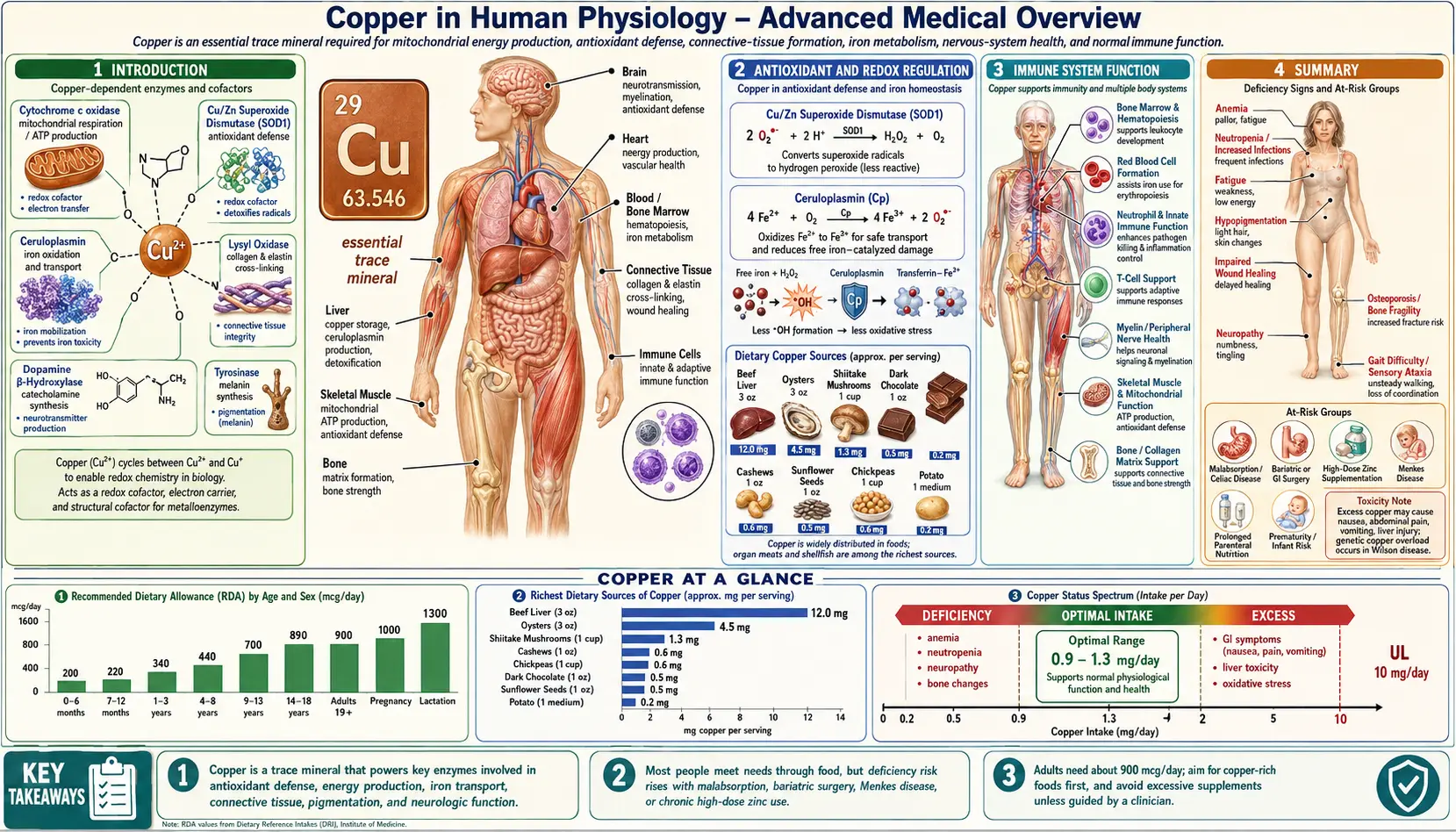
- Copper is an essential trace element required for enzymatic, hematologic, neurologic, cardiovascular, immune, and connective tissue functions.
- It acts primarily as a redox-active cofactor in multiple critical enzymes.
- Copper homeostasis is tightly regulated; both deficiency and excess have clinical consequences.
Molecular and Enzymatic Functions
- Copper cycles between Cu⁺ and Cu²⁺, enabling electron transfer reactions.
- Functions as a catalytic cofactor in multiple metalloenzymes.
Key Copper-Dependent Enzymes
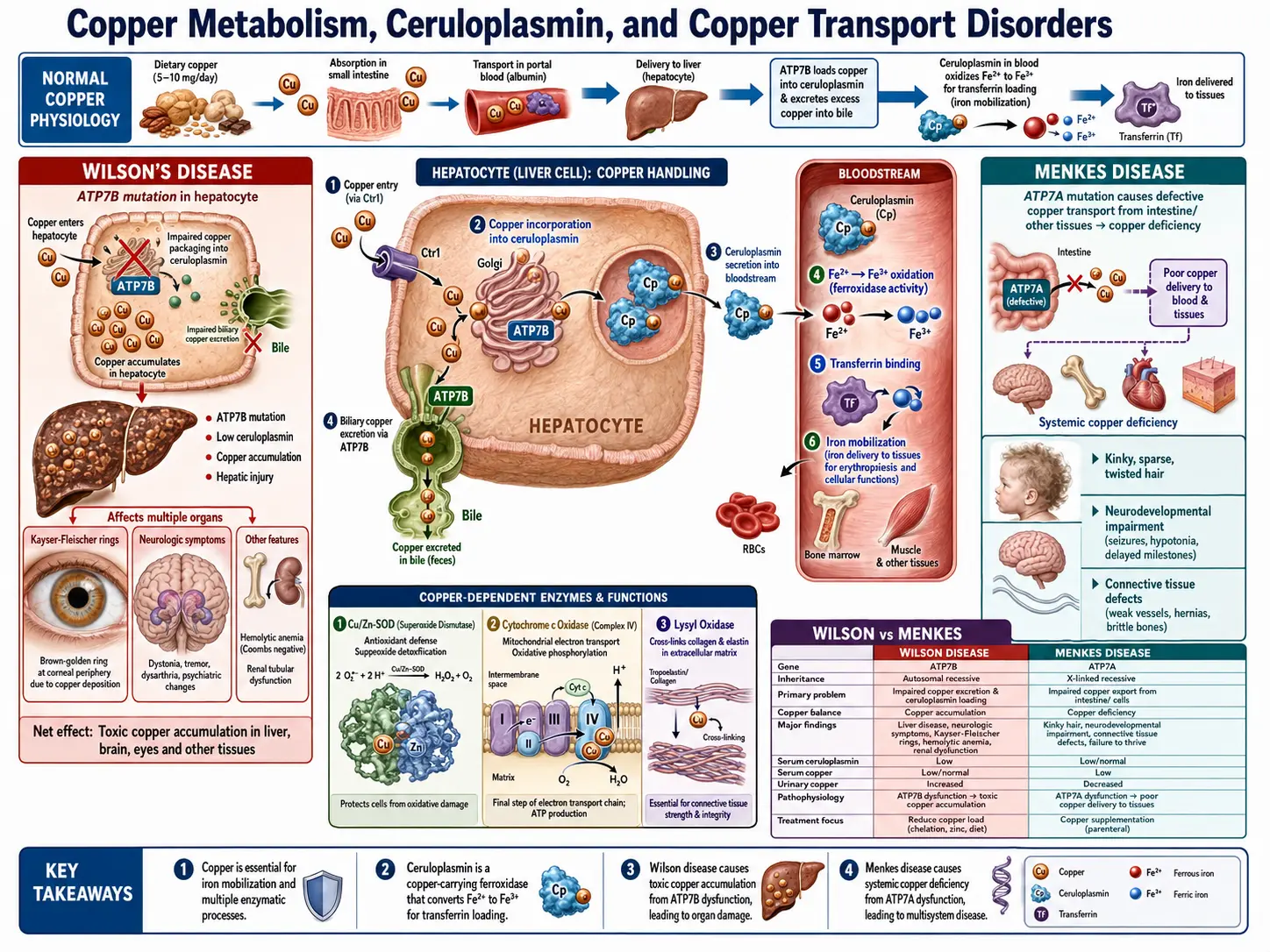
- Ceruloplasmin – ferroxidase required for iron mobilization.
- Cytochrome c oxidase – terminal enzyme of the mitochondrial electron transport chain.
- Superoxide dismutase (Cu/Zn-SOD) – antioxidant defense against superoxide radicals.
- Dopamine β-hydroxylase – converts dopamine to norepinephrine.
- Lysyl oxidase – cross-linking of collagen and elastin.
- Tyrosinase – melanin synthesis.
Hematologic and Iron Metabolism Benefits
- Required for oxidation of iron from Fe²⁺ to Fe³⁺.
- Enables binding of iron to transferrin.
- Facilitates iron release from macrophages and hepatocytes.
- Supports effective hemoglobin synthesis.
- Prevents functional iron deficiency and anemia.
Mitochondrial Energy Production
- Copper is essential for oxidative phosphorylation.
- Cytochrome c oxidase requires copper for electron transfer to oxygen.
- Deficiency impairs ATP generation.
- Results in fatigue, muscle weakness, and reduced metabolic efficiency.
Antioxidant and Redox Regulation
- Cu/Zn-SOD converts superoxide radicals to hydrogen peroxide.
- Protects lipids, proteins, and DNA from oxidative damage.
- Maintains cellular redox balance.
- Reduces oxidative stress-related tissue injury.
Neurological and Neurotransmitter Function
- Essential for synthesis of norepinephrine.
- Supports myelin formation and axonal integrity.
- Regulates synaptic signaling and neuronal excitability.
- Involved in neurodevelopment and cognitive function.
Cardiovascular System Benefits
- Maintains structural integrity of blood vessels.
- Supports elastin and collagen cross-linking.
- Helps regulate lipid metabolism.
- Reduces susceptibility to oxidative LDL modification.
- Supports normal cardiac energy metabolism.
Connective Tissue and Structural Integrity
- Lysyl oxidase requires copper for collagen and elastin maturation.
- Essential for strength and elasticity of skin, tendons, ligaments, and bone.
- Supports normal skeletal development.
- Prevents connective tissue fragility.
Immune System Function
- Supports neutrophil and macrophage activity.
- Required for normal immune cell proliferation.
- Enhances pathogen killing via oxidative mechanisms.
- Deficiency may result in leukopenia and impaired immunity.
Endocrine and Metabolic Regulation
- Involved in peptide hormone processing.
- Supports thyroid hormone metabolism.
- Participates in glucose and lipid homeostasis.
Pigmentation and Skin Health
- Required for melanin production.
- Supports normal skin, hair, and eye pigmentation.
- Plays a role in wound healing.
Clinical Implications of Copper Sufficiency
- Prevents anemia unresponsive to iron therapy.
- Supports neurological integrity.
- Maintains vascular and connective tissue strength.
- Optimizes mitochondrial and antioxidant function.
Summary
- Copper is indispensable for life.
- It integrates iron metabolism, energy production, antioxidant defense, and structural biology.
- Adequate copper status is critical for hematologic, neurologic, cardiovascular, and immune health.
Deficiency and Excess
Copper homeostasis is tightly regulated, and both too little and too much copper cause serious problems. Deficiency can lead to anemia unresponsive to iron, neutropenia, neurological decline, and connective-tissue fragility, while excess accumulation is toxic to the liver and brain. For a full, patient-friendly guide to the symptoms, causes, and treatment of each, see Copper Deficiency: Symptoms, Causes, and Recovery and Copper Toxicity (Wilson's Disease): Symptoms, Causes, and Risks.
Connections
- All Minerals
- Vitamin C, Collagen & Why Sailors Fell Apart — interactive animation
- Copper Deficiency: Symptoms, Causes, and Recovery
- Copper Toxicity (Wilson's Disease): Symptoms, Causes, and Risks
- Copper Toxicity & Wilson's Disease
- Copper Benefits Deep Dive
- Hemoglobin and Ceruloplasmin
- Iron
- Copper-Iron Dysregulation
- Ceruloplasmin and Bioavailable Copper
- Morley Robbins
- Whole Food Copper Sources
- Iron Overload Hidden Toxicity
- Zinc
- Magnesium
- Anemia
- Collagen
- Vitamin C
- Beef
- Dark Chocolate
- Fatigue
- Relationship Between Hemoglobin and Ceruloplasmin — why ceruloplasmin (the copper ferroxidase) is required to load iron into hemoglobin, and why "iron-deficiency anemia" is often functional copper deficiency.
- Root Cause Protocol
- Oxidative Stress
- Vitamin E