Diabetes Disease
What is Diabetes?
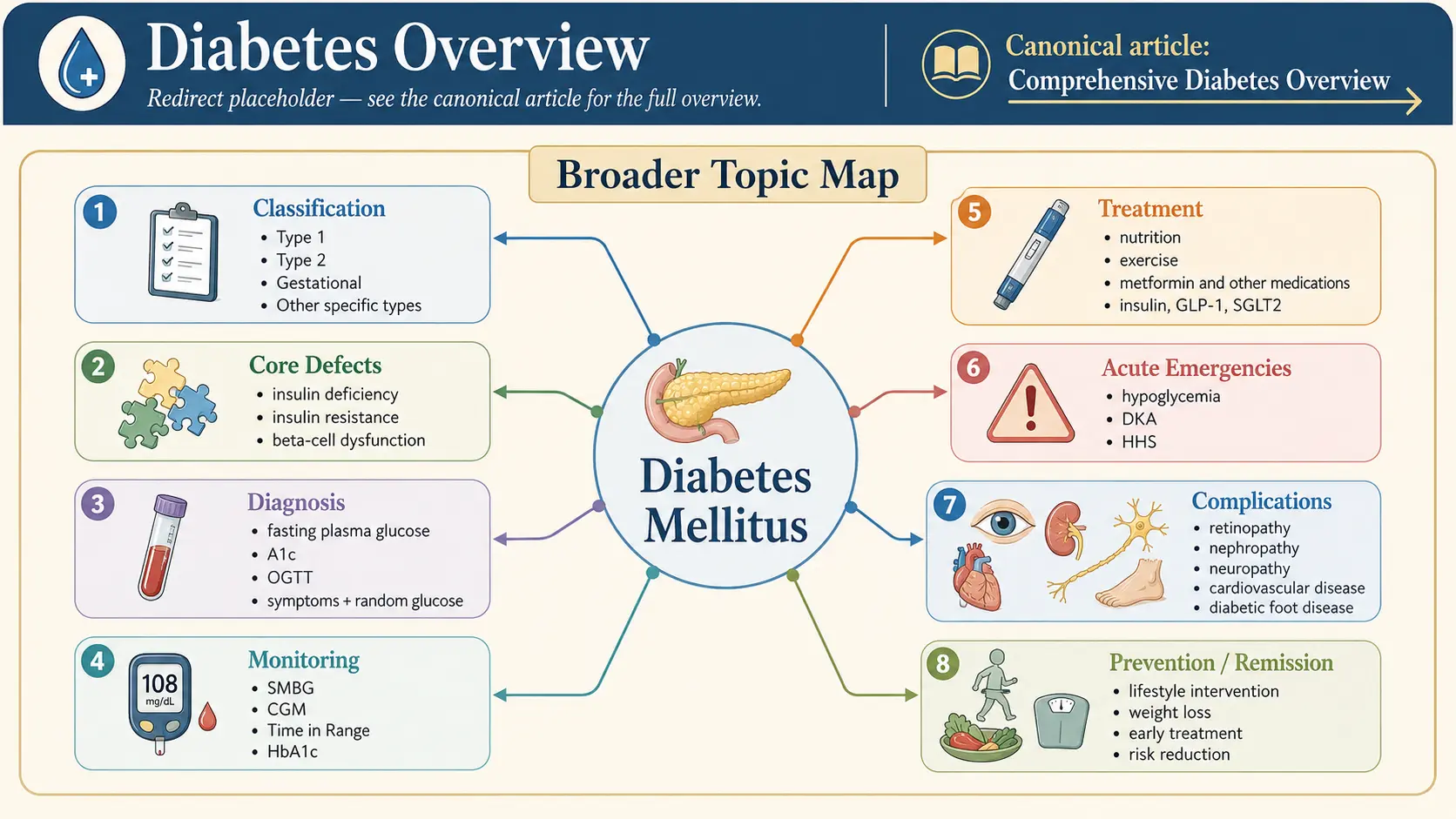
Diabetes is a chronic health condition that affects how your body turns food into energy. It occurs when your blood glucose (blood sugar) is too high.
Types of Diabetes
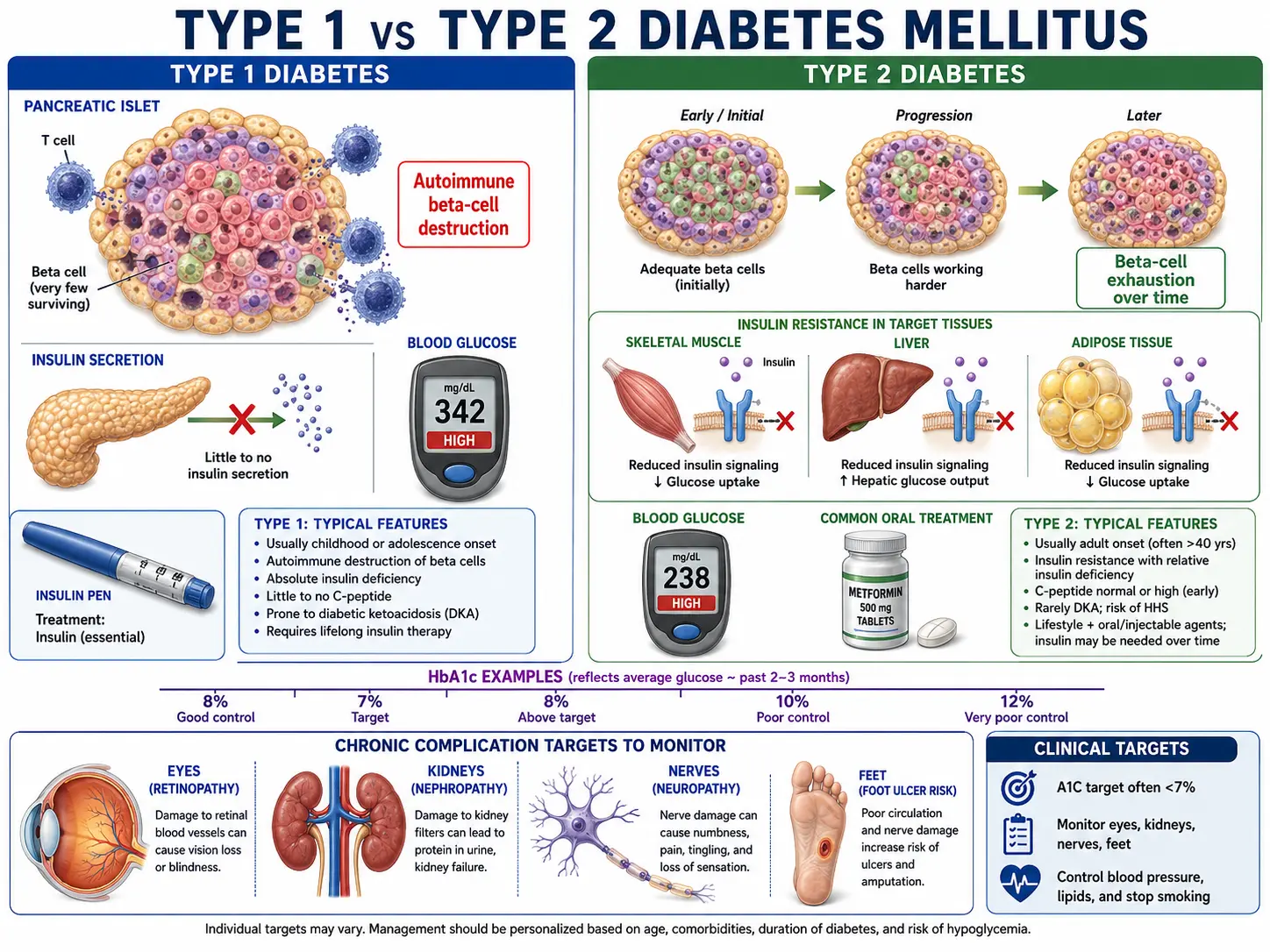
1. Type 1 Diabetes
- Autoimmune condition: The immune system attacks and destroys insulin-producing cells in the pancreas.
- Insulin-dependent: Patients need to take insulin regularly.
- Commonly diagnosed in children and young adults.
2. Type 2 Diabetes
- Most common type: Represents the majority of diabetes cases.
- Insulin resistance: The body does not use insulin properly.
- Risk factors: Obesity, sedentary lifestyle, genetics, and age.
3. Gestational Diabetes
- Occurs during pregnancy: Can develop in women who did not previously have diabetes.
- Usually temporary: Typically resolves after childbirth, but increases the risk of developing type 2 diabetes later.
Symptoms of Diabetes
- Frequent urination
- Increased thirst
- Unexplained weight loss
- Fatigue
- Blurred vision
- Slow-healing sores
Causes and Risk Factors
- Genetics: Family history increases the likelihood.
- Lifestyle factors: Diet, physical inactivity, and obesity contribute to type 2 diabetes.
- Autoimmune response: Causes type 1 diabetes when the immune system mistakenly attacks insulin-producing cells.
Management and Treatment
Type 1 Diabetes
- Insulin therapy: Essential for survival.
- Blood sugar monitoring: Regular checks to manage levels.
- Healthy diet and exercise: Supports overall health.
Type 2 Diabetes
- Lifestyle changes: Diet, exercise, and weight management.
- Medications: Oral drugs or insulin may be needed.
- Monitoring blood glucose: Helps in adjusting treatment.
Gestational Diabetes
- Special meal plans and regular physical activity.
- Monitoring blood sugar to prevent complications.
Complications of Diabetes
- Cardiovascular disease: Increased risk of heart attack and stroke.
- Nerve damage (neuropathy): Can cause pain and numbness.
- Kidney damage (nephropathy): Potential kidney failure.
- Eye damage: Risk of blindness due to retinopathy.
- Foot damage: Poor blood flow and neuropathy can lead to amputations.
References & Research
Historical Background
Diabetes has been known since antiquity -- the term "diabetes" was coined by the Greek physician Aretaeus of Cappadocia in the 2nd century AD. The distinction between type 1 and type 2 diabetes was established by Harold Himsworth in 1936. The discovery of insulin by Frederick Banting and Charles Best in 1921 at the University of Toronto remains one of the most transformative breakthroughs in medical history, earning the Nobel Prize in 1923.
Key Research Papers
- The Diabetes Control and Complications Trial Research Group. The effect of intensive treatment of diabetes on the development and progression of long-term complications in insulin-dependent diabetes mellitus. N Engl J Med. 1993;329(14):977-986.
- UK Prospective Diabetes Study (UKPDS) Group. Intensive blood-glucose control with sulphonylureas or insulin compared with conventional treatment and risk of complications in patients with type 2 diabetes (UKPDS 33). Lancet. 1998;352(9131):837-853.
- ADVANCE Collaborative Group. Intensive blood glucose control and vascular outcomes in patients with type 2 diabetes. N Engl J Med. 2008;358(24):2560-2572.
- Zinman B, Wanner C, Lachin JM, et al. Empagliflozin, cardiovascular outcomes, and mortality in type 2 diabetes (EMPA-REG OUTCOME). N Engl J Med. 2015;373(22):2117-2128.
- Marso SP, Daniels GH, Poulter NR, et al. Liraglutide and cardiovascular outcomes in type 2 diabetes (LEADER). N Engl J Med. 2016;375(4):311-322.
- Knowler WC, Barrett-Connor E, Fowler SE, et al. Reduction in the incidence of type 2 diabetes with lifestyle intervention or metformin (Diabetes Prevention Program). N Engl J Med. 2002;346(6):393-403.
- American Diabetes Association. Standards of Medical Care in Diabetes -- 2020. Diabetes Care. 2020;43(Suppl 1):S1-S212.
- Neal B, Perkovic V, Mahaffey KW, et al. Canagliflozin and cardiovascular and renal events in type 2 diabetes (CANVAS Program). N Engl J Med. 2017;377(7):644-657.
- Tuomilehto J, Lindstrom J, Eriksson JG, et al. Prevention of type 2 diabetes mellitus by changes in lifestyle among subjects with impaired glucose tolerance (Finnish Diabetes Prevention Study). N Engl J Med. 2001;344(18):1343-1350.
- Inzucchi SE, Bergenstal RM, Buse JB, et al. Management of hyperglycemia in type 2 diabetes, 2015: a patient-centered approach. Diabetes Care. 2015;38(1):140-149.
- NCD Risk Factor Collaboration. Worldwide trends in diabetes since 1980: a pooled analysis of 751 population-based studies. Lancet. 2016;387(10027):1513-1530.
- Gerstein HC, Colhoun HM, Dagenais GR, et al. Dulaglutide and cardiovascular outcomes in type 2 diabetes (REWIND). Lancet. 2019;394(10193):121-130.
Deep-Dive Articles
Type 1 vs Type 2 vs LADA & MODY
Autoimmune T1D, insulin-resistant T2D, slowly-progressing LADA, and monogenic MODY — how to tell them apart and why misdiagnosis is common in adults.
A1c, Fructosamine & Glycation
What HbA1c actually measures, when it lies (anemia, pregnancy, hemoglobinopathies), fructosamine as a 2-3 week alternative, and the glycation-marker landscape.
CGM & Time-in-Range
Time-in-range (70-180) as the modern gold standard, GMI vs A1c, ambulatory glucose profile interpretation, and which devices (Dexcom G7, Libre 3, Medtronic 780G).
Insulin Types & Dosing
Basal, bolus, pre-mixed, ultra-rapid; basal-bolus vs pump therapy; carb counting, correction factors, insulin-to-carb ratios, and the closed-loop pump systems.
Cardio-Renal Protection: SGLT2s & GLP-1s
EMPA-REG, DAPA-HF, CREDENCE, FLOW, LEADER, SELECT — why these drugs' benefits extend beyond glucose and have reshaped diabetes guidelines.
Remission & Reversal
DiRECT trial, Virta Health 2-year keto data, bariatric-surgery remission, early-intensive-insulin, time-restricted eating. When remission is realistic and how to hold it.
Complications: Eye, Kidney, Nerve
Annual dilated eye exam, UACR and eGFR, monofilament and vibration testing, autonomic neuropathy. Screening cadence, prevention, and the drugs that slow progression.
Hypoglycemia & Awareness
Recognizing lows, hypoglycemia unawareness, the rule of 15, glucagon (Baqsimi, Gvoke, Zegalogue), nocturnal lows, dead-in-bed syndrome, and awareness restoration.
Diabetic Foot Care & Ulcer Prevention
Monofilament testing, ABI screening, offloading, and when to refer to wound care.
Table of Contents
Research Papers
The following PubMed topic searches aggregate the current peer-reviewed literature. Each link opens a live PubMed query — results update as new studies are indexed.
- PubMed — diabetes mellitus type 2
- PubMed — type 1 diabetes
- PubMed — HbA1c glycemic control
- PubMed — metformin type 2 diabetes
- PubMed — GLP-1 receptor agonist
- PubMed — SGLT2 inhibitor
- PubMed — diabetic retinopathy
- PubMed — diabetic nephropathy
- PubMed — diabetic neuropathy
- PubMed — insulin therapy diabetes
- PubMed — continuous glucose monitoring
- PubMed — diabetes lifestyle intervention
Connections
- Endocrinology
- Frederick Banting — the Nobel laureate who co-discovered insulin in 1921-22
- Glycation & HbA1c: What That Number Actually Measures — interactive animation
- How the Liver Keeps Your Blood Sugar Steady — interactive animation
- SGLT2: Why Diabetes Drugs Make You Pee Sugar — interactive animation
- Blood pH: The Acid–Base Balancing Act — interactive animation
- Blood Sugar & Insulin — interactive animation
- Type 2 Diabetes
- Diabetic Kidney Disease
- Lactulose & Blood Sugar — Emerging Research (In-Depth)
- Beans for Blood Sugar & Diabetes
- A1c, Fructosamine, and Glycation Markers
- CGM and Time-in-Range
- Cardio-Renal Protection: SGLT2 and GLP-1
- Complications: Retinopathy, Nephropathy, Neuropathy
- Diabetic Foot Care and Ulcer Prevention
- Hypoglycemia Awareness and Prevention
- Insulin Types and Dosing Strategies
- Remission and Reversal Strategies
- Type 1 vs Type 2 vs LADA and MODY
- Insulin Resistance
- Obesity
- Metabolic Syndrome
- Hashimoto's Thyroiditis
- Chromium
- Magnesium
- Vitamin D3
- Gestational Diabetes
- Diabetes Insipidus
- Pancreatic Cancer
- Gum Disease
- Diabetic Retinopathy
- Frozen Shoulder
- Yeast Infections
- Salt in Socks — a popular foot remedy that violates standard diabetic foot-care guidance