Cryptosporidium — The Cause of Cryptosporidiosis

Symptoms & Diagnosis
From self-limited diarrhea to life-threatening illness, and why routine stool tests miss it.
Read the deep dive →Watery Diarrhea & Dehydration
The profuse watery diarrhea of cryptosporidiosis — usually self-limited, sometimes dangerous.
Read the deep dive →Cryptosporidiosis in the Immunocompromised
Why a brief illness becomes chronic and life-threatening when immunity is low.
Read the deep dive →Cryptosporidiosis in Children & Malnutrition
A leading cause of severe diarrhea and death in young children — and its toll on growth.
Read the deep dive →Treatment & Prevention
Why supportive care is the backbone, the one approved drug's limits, and stopping outbreaks.
Read the deep dive →Nitazoxanide & Treatment
The one approved drug, its real limits, and why restoring immunity matters most.
Read the deep dive →Supportive Care & Rehydration
Fluids, electrolytes, and nutrition — the backbone of getting through cryptosporidiosis.
Read the deep dive →Prevention: Water & Outbreaks
Chlorine-resistant oocysts, the Milwaukee outbreak, pools, and keeping water safe.
Read the deep dive →Cryptosporidium — often shortened to "Crypto" — is a microscopic, single-celled parasite that causes the diarrheal illness cryptosporidiosis. It is one of the most important causes of waterborne disease worldwide, and it is famous for a single, stubborn property: its hardy egg-like stage survives the levels of chlorine used to disinfect swimming pools and drinking water. That resilience is why a single sick swimmer can seed an outbreak that sickens thousands. In healthy people the illness is usually a miserable but self-limited week or two of watery diarrhea; in people with weakened immune systems it can become severe, chronic, and even life-threatening. This page explains what the parasite is, how it lives and spreads, the symptoms it causes, how it is diagnosed and treated, and how the disease can be prevented.
Interactive Visualization Cyclospora: From Contaminated Field to Relapsing Illness — watch why washing cannot save the salad Follow the parasite from irrigation water to your gut: rinse the leaves and watch it survive, chill the field so it never ripens, then treat it with the drug that works — and the one that has no target on it. Launch →Table of Contents
1. What Is Cryptosporidium?
Cryptosporidium is a genus of single-celled protozoan parasites — tiny, animal-like microbes — that infect the intestines of humans and a wide range of animals. The disease it causes is called cryptosporidiosis. Two species account for the great majority of human infections: Cryptosporidium hominis, which mainly cycles between people, and Cryptosporidium parvum, which infects both people and animals such as cattle. Several other species occasionally infect humans as well.
Although it is microscopic, Cryptosporidium casts a long shadow over public health. It is a leading cause of waterborne diarrheal disease around the globe, and it is a major contributor to diarrhea in young children in low-income settings. The landmark Global Enteric Multicenter Study (GEMS), a large case-control study of diarrheal disease in infants and young children across Africa and South Asia, identified Cryptosporidium as one of the top causes of moderate-to-severe diarrhea — ranking it among the handful of pathogens responsible for the greatest share of serious childhood diarrhea, and linking it to an increased risk of death in toddlers. Later analyses have tied repeated Cryptosporidium infection in early childhood not only to acute illness and death but also to longer-term harms such as impaired growth.
What makes this parasite so successful is a combination of three features: it is shed in enormous numbers, it takes only a tiny number of organisms to infect a new person, and its infective stage is encased in a tough protective shell that resists chlorine and survives for a long time in water. The rest of this page returns to each of these properties in turn.
2. Life Cycle
Cryptosporidium spreads by the fecal-oral route: the parasite leaves an infected host in stool and must be swallowed by the next host to continue its life cycle. The stage that travels between hosts is the oocyst — a microscopic, thick-walled, egg-like capsule that is the infective and environmentally tough form of the parasite. The oocyst is what allows Cryptosporidium to survive outside a body, in water and on surfaces, sometimes for weeks or months.
When a person swallows oocysts in contaminated water or food, the cycle unfolds inside the small intestine:
- Excystation. In the gut, each oocyst splits open and releases four banana-shaped infective forms called sporozoites.
- Invasion. The sporozoites attach to and enter the cells that line the intestine. Distinctively, the parasite settles in a niche inside the host cell but just beneath its surface membrane — it is intracellular yet remains outside the cell's main interior — where it is partly shielded from both the gut contents and the body's defenses.
- Multiplication. Inside the intestinal lining the parasite multiplies through successive asexual and then sexual stages, damaging the cells it occupies and disrupting the gut's ability to absorb fluid.
- Oocyst formation and shedding. The cycle produces new oocysts. Some are thin-walled and can re-infect the same host (which helps explain why the infection can persist), but most are thick-walled and are passed out in the stool — already infectious the moment they are shed — ready to start the cycle again in someone else.
Two facts about this cycle drive everything that follows. First, an infected person can shed vast numbers of oocysts — many millions per day at the peak of illness. Second, the infectious dose is very low: studies in human volunteers have shown that swallowing only a small number of oocysts can establish infection in a healthy adult. A large output of a highly infectious, durable particle is a recipe for explosive spread through shared water.
3. How It Spreads
Because the oocyst is so durable and so infectious, Cryptosporidium can travel by many routes. The main ways people get infected are:
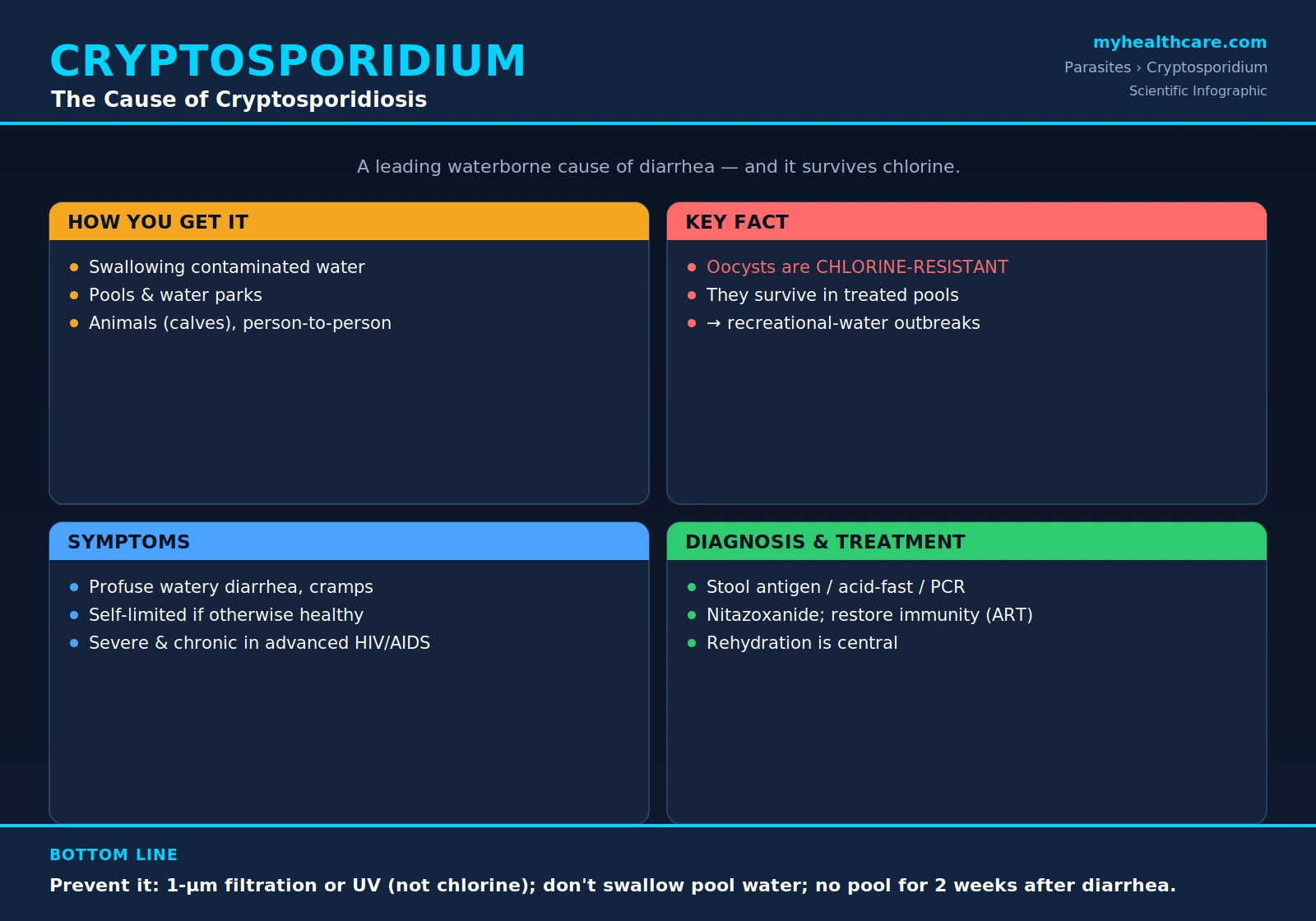
- Swallowing contaminated recreational water. This is the route that has made Cryptosporidium notorious. It is one of the most common causes of outbreaks linked to swimming pools, water parks, splash pads, and lakes. A single person with diarrhea who contaminates the water can expose everyone who swallows even a mouthful.
- Drinking water. Oocysts can contaminate drinking-water supplies when treatment fails or is overwhelmed. The most famous example is the 1993 Milwaukee outbreak, in which a breakdown in the city's water-treatment system led to an estimated 400,000 cases — the largest documented waterborne-disease outbreak in U.S. history.
- Person-to-person contact. The fecal-oral route operates directly between people too — especially in households, childcare centers, and among caregivers changing diapers or caring for someone who is ill.
- Contact with infected animals. C. parvum readily infects livestock. Young calves are a classic source, and infections are well documented in farm workers, veterinary students, and visitors to petting zoos and farms.
- Food. Less commonly, oocysts contaminate food — for example produce irrigated or washed with contaminated water, or food handled by an infected person.
The critical point that ties these routes together is chlorine resistance. The thick wall of the oocyst makes Cryptosporidium highly resistant to chlorine at the concentrations normally used to disinfect pools and drinking water. Unlike most bacteria and viruses, which chlorine kills within minutes, Cryptosporidium oocysts can survive for days in a properly chlorinated pool. This single fact is the reason the parasite causes recreational-water outbreaks: ordinary pool chlorination, which reliably protects against other germs, does not reliably kill Crypto. Controlled laboratory studies of disinfectants confirmed long ago that the oocyst is far more resistant to chlorine than to oxidants such as ozone — a finding that continues to shape how water and pools are treated today.
4. Symptoms
The hallmark of cryptosporidiosis is profuse, watery diarrhea. After an incubation period of roughly a week, symptoms typically include:
- Watery diarrhea — often frequent and voluminous, the dominant feature of the illness.
- Stomach cramps and abdominal pain.
- Nausea and sometimes vomiting.
- Low-grade fever.
- Loss of appetite and weight loss.
- Dehydration, the main danger of the illness, resulting from fluid lost in the diarrhea.
In healthy people with a normal immune system, cryptosporidiosis is usually self-limited. It is thoroughly unpleasant, but it tends to run its course in about one to two weeks, sometimes with symptoms that wax and wane before resolving. The body's immune defenses clear the parasite, and most people recover fully without specific antiparasitic treatment.
The picture is very different in people with weakened immunity. In those with advanced HIV/AIDS — particularly when the CD4 T-cell count is very low — and in other profoundly immunocompromised patients, cryptosporidiosis can become severe, prolonged, and chronic. The diarrhea may be relentless and high-volume, leading to dangerous fluid loss, malnutrition, and wasting, and it can be life-threatening. In these patients the infection can also spread beyond the intestine to involve the bile ducts and gallbladder (a complication sometimes called biliary cryptosporidiosis) and, less often, the pancreatic ducts or respiratory tract. For people living with HIV, severe cryptosporidiosis has historically been a marker of advanced immunodeficiency.
5. Diagnosis
A key practical lesson about cryptosporidiosis is that it can be missed unless it is specifically looked for. The routine stool "ova-and-parasite" (O&P) examination — the standard test ordered to hunt for intestinal parasites — does not reliably detect Cryptosporidium, because the oocysts are small and are not highlighted by the usual stains. Clinicians generally have to request Cryptosporidium testing by name. The main laboratory methods are:
- Stool antigen tests (enzyme immunoassay, EIA). These detect Cryptosporidium proteins in a stool sample and are widely used as a sensitive, practical screening test.
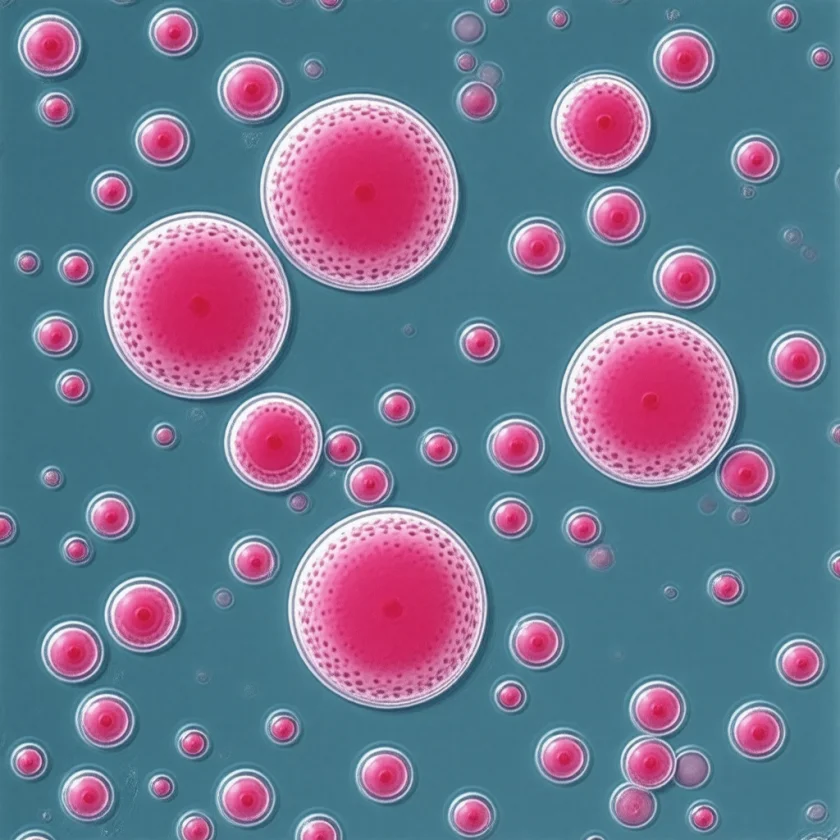
- Modified acid-fast staining. A special stain applied to a stool smear makes the oocysts stand out as distinctive round, pink-to-red spheres against a contrasting background, allowing them to be seen and counted under the microscope.
- Direct fluorescent antibody (DFA) testing. Fluorescently labeled antibodies bind the oocysts so they glow under a fluorescence microscope; DFA is regarded as one of the most reliable microscopy-based methods.
- Multiplex molecular (PCR) panels. Modern gastrointestinal PCR panels detect Cryptosporidium DNA — alongside many other diarrhea-causing germs — from a single stool specimen. They are highly sensitive and increasingly the first-line test in laboratories that have them.
Because oocysts are shed intermittently, examining more than one stool sample collected on different days can improve the chance of detection when microscopy is used. The overall message for both patients and clinicians is the same: in a case of persistent watery diarrhea — especially after swimming, travel, animal contact, or in someone who is immunocompromised — Cryptosporidium should be considered and tested for deliberately.
6. Treatment
Treatment of cryptosporidiosis depends heavily on the state of the patient's immune system, and across all cases the single most important intervention is rehydration — replacing the fluid and salts lost in the diarrhea, by mouth where possible and intravenously when the illness is severe. The following reflects how treatment is generally reported; specific decisions should be directed by a clinician.
- In people with a healthy immune system, the illness is usually self-limited and often needs only supportive care and fluids. When a medication is used, nitazoxanide is the antiparasitic drug most associated with cryptosporidiosis; in people with normal immunity it has been shown to shorten the duration of illness and the time oocysts are shed. A randomized trial in immunocompetent Zambian children, for example, found that nitazoxanide reduced the duration of diarrhea and oocyst shedding.
- In people with weakened immunity, nitazoxanide is far less reliably effective, and the cornerstone of management is restoring immune function. In a person with HIV, the most powerful "treatment" for cryptosporidiosis is starting effective antiretroviral therapy (ART) to rebuild the CD4 T-cell count; as immune function recovers, the body is often able to clear the parasite. Where immunosuppression is caused by medication, reducing it when medically safe can have a similar benefit. Aggressive fluid and nutritional support remains essential throughout.
There is no single drug that reliably cures cryptosporidiosis in every patient, which is one reason an effective Cryptosporidium vaccine and better drugs remain active research goals. In practice, the combination of supportive care, nitazoxanide in those likely to benefit, and — above all — restoration of immune defenses is what carries most patients through the illness.
7. Prevention
Because chlorine does not reliably kill Cryptosporidium, prevention does not rely on disinfection alone; it leans on physical barriers, alternative treatments, and simple behavior. The most effective measures are:
- Don't swallow recreational water. Avoid swallowing water from pools, water parks, splash pads, lakes, rivers, and the ocean. This is the most direct way to avoid the most common outbreak route.
- Stay out of the water when you are sick — and for two weeks after. Anyone who has had diarrhea should not swim for at least two weeks after symptoms resolve, because oocysts can continue to be shed after a person feels better. This single rule, widely promoted by public-health agencies, is central to stopping pool outbreaks.
- Treat water properly when chlorine is not enough. Because the oocysts resist chlorine, making water safe relies on methods that physically remove or destroy them: fine filtration using a filter rated to remove particles down to about 1 micron (an "absolute 1-micron" filter), ultraviolet (UV) treatment, or boiling, which reliably kills the parasite. These approaches matter for private wells, backcountry water, and for immunocompromised people choosing how to make their drinking water safe.
- Wash hands thoroughly, especially around animals. Wash hands with soap and water after using the toilet, changing diapers, and before preparing or eating food — and especially after contact with animals (notably calves and farm or petting-zoo animals) or their environment. Hand sanitizers are not reliable against Cryptosporidium, so soap-and-water washing is the key step.
- Extra care for high-risk people. People with weakened immune systems benefit from being especially careful with drinking water, recreational water, and animal contact, given how serious the infection can be for them.
Key Research Papers
Peer-reviewed outbreak reports, large epidemiological studies, mechanistic reviews, and treatment trials covering Cryptosporidium biology, transmission, the global burden of disease, diagnosis, and treatment. Journal names appear as plain text; the year/volume/pages link opens the full citation via DOI.
- Mac Kenzie WR, Hoxie NJ, Proctor ME, et al. A Massive Outbreak in Milwaukee of Cryptosporidium Infection Transmitted through the Public Water Supply. New England Journal of Medicine. 1994;331(3):161–167. — doi:10.1056/NEJM199407213310304
- Chen X-M, Keithly JS, Paya CV, LaRusso NF. Cryptosporidiosis. New England Journal of Medicine. 2002;346(22):1723–1731. — doi:10.1056/NEJMra013170
- Hunter PR, Nichols G. Epidemiology and Clinical Features of Cryptosporidium Infection in Immunocompromised Patients. Clinical Microbiology Reviews. 2002;15(1):145–154. — doi:10.1128/CMR.15.1.145-154.2002
- Korich DG, Mead JR, Madore MS, Sinclair NA, Sterling CR. Effects of Ozone, Chlorine Dioxide, Chlorine, and Monochloramine on Cryptosporidium parvum Oocyst Viability. Applied and Environmental Microbiology. 1990;56(5):1423–1428. — doi:10.1128/aem.56.5.1423-1428.1990
- Putignani L, Menichella D. Global Distribution, Public Health and Clinical Impact of the Protozoan Pathogen Cryptosporidium. Interdisciplinary Perspectives on Infectious Diseases. 2010;2010:753512. — doi:10.1155/2010/753512
- Kotloff KL, Nataro JP, Blackwelder WC, et al. Burden and Aetiology of Diarrhoeal Disease in Infants and Young Children in Developing Countries (the Global Enteric Multicenter Study, GEMS): a Prospective, Case-Control Study. The Lancet. 2013;382(9888):209–222. — doi:10.1016/S0140-6736(13)60844-2
- Bouzid M, Hunter PR, Chalmers RM, Tyler KM. Cryptosporidium Pathogenicity and Virulence. Clinical Microbiology Reviews. 2013;26(1):115–134. — doi:10.1128/CMR.00076-12
- Checkley W, White AC Jr, Jaganath D, et al. A Review of the Global Burden, Novel Diagnostics, Therapeutics, and Vaccine Targets for Cryptosporidium. The Lancet Infectious Diseases. 2015;15(1):85–94. — doi:10.1016/S1473-3099(14)70772-8
- Khalil IA, Troeger C, Rao PC, et al. Morbidity, Mortality, and Long-Term Consequences Associated with Diarrhoea from Cryptosporidium Infection in Children Younger than 5 Years: a Meta-Analyses Study. The Lancet Global Health. 2018;6(7):e758–e768. — doi:10.1016/S2214-109X(18)30283-3
- Amadi B, Mwiya M, Musuku J, et al. Effect of Nitazoxanide on Morbidity and Mortality in Zambian Children with Cryptosporidiosis: a Randomised Controlled Trial. The Lancet. 2002;360(9343):1375–1380. — doi:10.1016/S0140-6736(02)11401-2
PubMed Topic Searches
Each link opens a live PubMed query so results stay current as new papers are indexed.
- PubMed: Cryptosporidiosis review
- PubMed: Cryptosporidium waterborne outbreak
- PubMed: Cryptosporidium chlorine resistance
- PubMed: Cryptosporidium HIV/AIDS diarrhea
- PubMed: Nitazoxanide cryptosporidiosis treatment
- PubMed: Cryptosporidium diagnosis (stool PCR)
- PubMed: Cryptosporidium recreational water
- PubMed: Cryptosporidium children & growth