Cryptosporidiosis in the Immunocompromised
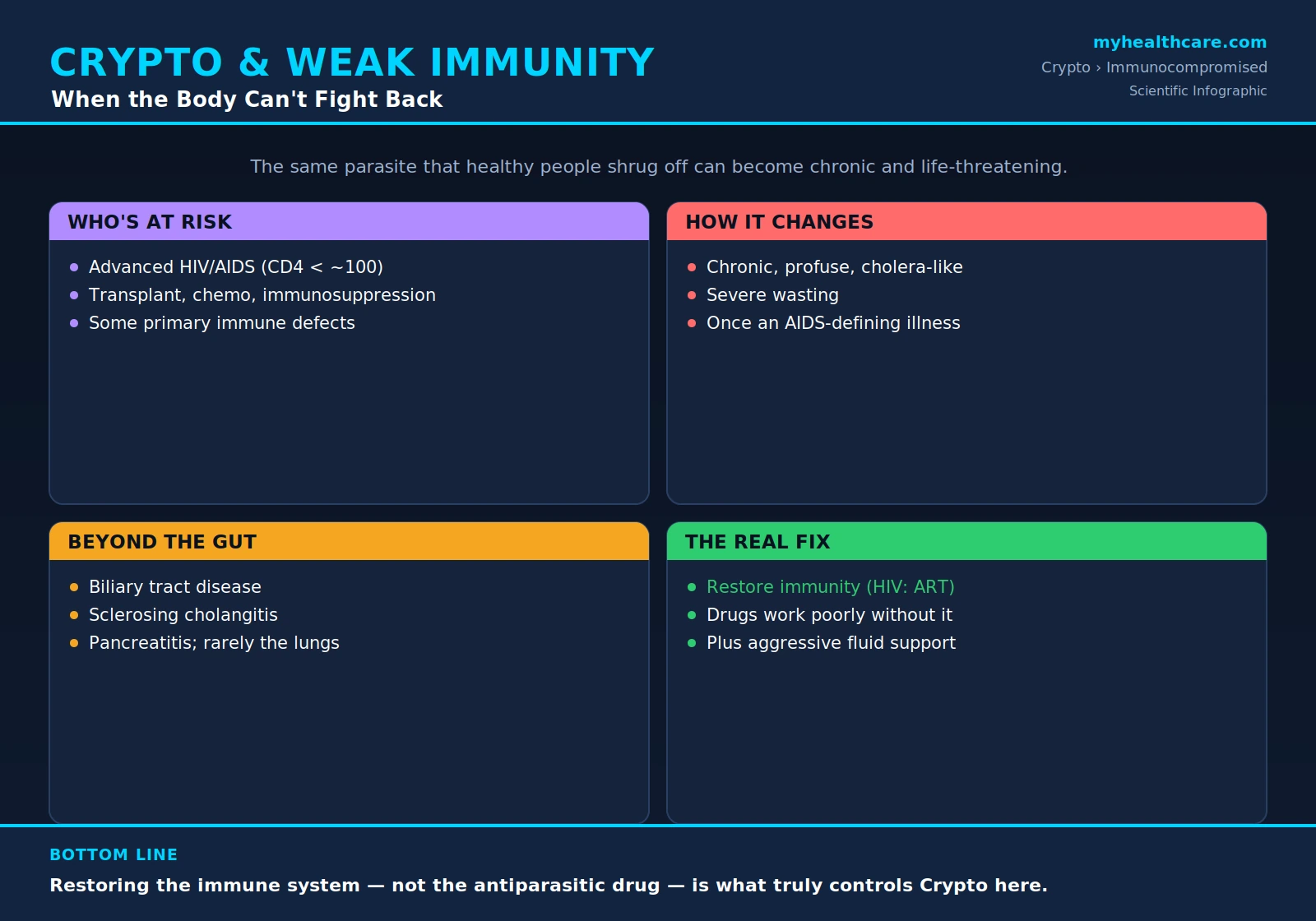
For most healthy people, Cryptosporidium is a miserable but self-limiting nuisance: a week or two of watery diarrhea that the immune system clears on its own. The same parasite becomes something else entirely when the immune system is weakened. In a person whose defenses are failing — from advanced HIV, from the drugs that protect a transplant, or from a rare inherited immune disorder — the infection can become relentless, draining the body of fluid and weight for months and, in the most severe cases, threatening life. This page explains why the same organism behaves so differently depending on the strength of immunity, what it does in advanced HIV/AIDS, how effective HIV treatment transformed the outlook, how the parasite can spread to the bile ducts and (rarely) the lungs, which other groups are vulnerable, and why the cornerstone of care is restoring the immune system rather than relying on antiparasitic drugs alone. The tone here is meant to be honest, not alarming: in the modern treatment era, outcomes are far better than they once were — but profound immune suppression still makes this a serious infection that belongs in the hands of an experienced clinical team.
Table of Contents
- Why Intact Immunity Is Needed to Clear the Parasite
- Advanced HIV/AIDS: The Historical Picture
- The Transformative Effect of HIV Treatment
- Biliary Tract Disease
- Rare Respiratory Involvement
- Other Immunocompromised Groups
- The Treatment Gap: Why Drugs Are Not Enough
- Prognosis in the Modern Era
- Prevention for People With Weak Immunity
- Key Research Papers
- Featured Videos
1. Why Intact Immunity Is Needed to Clear the Parasite
Cryptosporidium lives just inside the cells that line the intestine, tucked into a compartment at the very surface of those cells. Getting rid of it is not a job the body can do with antibodies alone; it requires cell-mediated immunity, the arm of the immune system that coordinates a direct cellular attack on infected tissue. At the center of that response are CD4 T-cells — a type of white blood cell that acts as the immune system's conductor, organizing and amplifying the response to the parasite. A key signaling molecule in this defense is interferon-gamma, a chemical message that switches the gut lining and immune cells into an anti-parasite mode.
When this CD4-driven response is working, infection is contained and then cleared, usually within a couple of weeks. When it is not — because CD4 cells are depleted or because the signals they send are missing — the parasite is never brought under control. It keeps multiplying along the gut, and the infection that should have resolved instead becomes chronic. This single fact explains the entire difference between the two faces of cryptosporidiosis: the parasite itself is the same; what changes is whether the host can mount the cellular response needed to evict it. Everything else on this page — the severity in AIDS, the dramatic improvement with HIV treatment, the vulnerability of transplant patients and children with immune defects — follows from the central role of CD4 T-cell immunity.
2. Advanced HIV/AIDS: The Historical Picture
To understand why cryptosporidiosis was so feared, it helps to recall what HIV does. Untreated HIV gradually destroys CD4 T-cells — precisely the cells needed to clear Cryptosporidium. The CD4 count, measured in cells per microliter of blood, is the standard yardstick of how much immune protection remains; a healthy adult sits in the hundreds to over a thousand, and the risk of severe opportunistic infections rises steeply as the count falls.
Historically, in people with very low CD4 counts — generally below about 100 cells/µL — Cryptosporidium could produce a devastating illness. Instead of a brief bout of diarrhea, patients developed chronic, profuse, "cholera-like" watery diarrhea: enormous volumes of fluid passed many times a day, sometimes amounting to several liters or more, persisting not for days but for weeks and months. The relentless fluid and nutrient loss led to severe wasting — the dramatic weight loss and malnutrition that became one of the grim signatures of advanced AIDS. Because of this, before effective HIV treatment existed, chronic cryptosporidiosis was recognized as an AIDS-defining illness — one of the specific severe infections whose presence marked the transition from HIV infection to full-blown AIDS. It was a common and dreaded complication, and at the time there was no reliably effective drug to stop it.
3. The Transformative Effect of HIV Treatment
The single most important development in the story of cryptosporidiosis was not a new antiparasitic drug — it was effective treatment for HIV itself. Antiretroviral therapy (ART) — the combination of medicines that suppress HIV, historically called highly active antiretroviral therapy or HAART — works by stopping the virus from replicating. When the virus is suppressed, the immune system is no longer being destroyed, and the CD4 count recovers. As those CD4 T-cells return, so does the very cell-mediated response that clears Cryptosporidium.
The clinical effect was striking. In people whose CD4 counts rose with treatment, the chronic, life-threatening diarrhea frequently resolved — not because the parasite had been attacked directly, but because the restored immune system could finally do its job. This is the crucial conceptual point that runs through all management of severe cryptosporidiosis: it is the recovery of immunity, not an antiparasitic medicine, that actually brings the infection under control. Where antiretroviral therapy is available and the immune system rebuilds, the disease becomes far less common and far less severe; the cholera-like wasting illness that once defined advanced AIDS has largely receded in those settings. There is even laboratory evidence that some of the HIV medicines themselves (a class called protease inhibitors) may have a modest direct inhibitory effect on the parasite, but the dominant benefit is unmistakably the rebuilding of CD4 immunity. The hardest cases today are concentrated where HIV remains undiagnosed or untreated and CD4 counts stay profoundly low.
4. Biliary Tract Disease
When immunity is severely impaired, Cryptosporidium is not always confined to the intestine. It can spread to the bile ducts — the small tubes that carry bile from the liver and gallbladder into the gut — and cause inflammation and damage there. The umbrella term for this in the setting of advanced HIV is AIDS cholangiopathy (sometimes called HIV cholangiopathy), and several distinct problems fall under it:
- Sclerosing cholangitis — inflammation that narrows and scars the bile ducts, disrupting the normal flow of bile. Cryptosporidium is one of the organisms most often implicated in this picture in people with AIDS.
- Acalculous cholecystitis — inflammation of the gallbladder that occurs without gallstones (the usual cause). "Acalculous" simply means "without stones," and here the inflammation is driven by infection rather than a blockage by a stone.
- Pancreatitis — inflammation of the pancreas, which can occur when the infection and inflammation involve the shared drainage system where the bile and pancreatic ducts meet.
The typical symptoms of biliary involvement are right-upper-abdominal pain (over the liver and gallbladder), nausea, and abnormal liver blood tests, often alongside the chronic diarrhea. Doctors investigate it with imaging of the bile ducts — ultrasound, and detailed studies such as MRCP (a magnetic-resonance scan of the bile and pancreatic ducts) or, in selected cases, ERCP (an endoscopic procedure that both images the ducts and can relieve a blockage). Biliary cryptosporidiosis is a marker of profound immune suppression and historically carried a poor outlook; here, again, restoring the immune system through HIV treatment is central, while procedures such as ERCP can relieve specific obstructions and pain.
5. Rare Respiratory Involvement
Much less commonly, in people with very severe immune deficiency, Cryptosporidium has been found in the respiratory tract — the airways and lungs — producing symptoms such as cough and shortness of breath, and the parasite has been detected in respiratory secretions. Respiratory cryptosporidiosis is rare, and it tends to appear in the context of advanced disease, often alongside heavy intestinal infection. It is mentioned here for completeness and to underline a general principle: when cell-mediated immunity collapses, an organism that normally stays put in the gut can turn up in unexpected places. For the great majority of patients, though, the gut and the biliary tract are where the disease plays out.
6. Other Immunocompromised Groups
HIV/AIDS is the most familiar setting, but it is not the only one. Cryptosporidiosis can become severe and persistent in anyone whose cell-mediated immunity is substantially impaired, including:
- Organ and stem-cell (bone-marrow) transplant recipients. Transplant patients take medicines that deliberately suppress the immune system to prevent rejection of the new organ or to manage a transplant from a donor. That same suppression can let Cryptosporidium establish a prolonged, difficult infection.
- People on strong immunosuppressants or cancer chemotherapy. Treatments for autoimmune disease and many cancer regimens blunt the cellular immune response, and some specifically deplete or disable the T-cells the body needs to clear the parasite.
- Children with primary (inherited) immunodeficiencies. A handful of rare genetic immune disorders leave children especially vulnerable. Two examples stand out. In CD40-ligand deficiency (X-linked hyper-IgM syndrome), a faulty signal between immune cells cripples the coordinated T-cell response; these children are prone not only to chronic intestinal cryptosporidiosis but also to the sclerosing-cholangitis form of biliary disease. In severe combined immunodeficiency (SCID) — the most profound inherited immune defect, in which the cellular immune system is essentially absent — Cryptosporidium can cause severe, intractable infection. In such children, definitive control usually depends on correcting the underlying immune defect (for example, with a stem-cell transplant), not on antiparasitic drugs alone.
Across all of these groups the lesson is the same as in HIV: the parasite exploits the gap left by missing cell-mediated immunity, and the most durable solution is to restore or rebuild that immunity wherever it is possible to do so.
7. The Treatment Gap: Why Drugs Are Not Enough
Here is the uncomfortable reality that shapes management: there is no antiparasitic drug that reliably cures cryptosporidiosis in a person whose immune system remains severely impaired. Nitazoxanide is the medicine most often used and is the only one approved in the United States for cryptosporidiosis, and it does help shorten illness in people with normal immunity. But in those with profound immune suppression — the very patients who need it most — it works poorly. This was shown directly in a controlled trial of HIV-positive children with severely weakened immune systems, in which even high-dose, prolonged nitazoxanide failed to outperform placebo. The drug needs a functioning immune system to lean on; without one, it cannot do the job by itself.
That is why effective management of severe cryptosporidiosis rests on two pillars, with antiparasitic medication playing only a supporting role:
- Restore immunity. This is the decisive step. In HIV, it means starting or optimizing antiretroviral therapy to raise the CD4 count. In transplant or chemotherapy patients, it means reducing immunosuppression where safe to do so. In inherited immune disorders, it may mean treating the underlying defect. As immunity recovers, the infection comes under control.
- Aggressive supportive care. Because the immediate danger is the massive loss of fluid, the body must be kept hydrated and nourished while immune recovery is pursued — with careful fluid and electrolyte replacement and attention to nutrition. This buys time and prevents the dehydration and wasting that cause the most acute harm.
Nitazoxanide and other agents are typically used alongside these two pillars — not as a substitute for them. For the full drug detail, including how nitazoxanide is dosed and where it fits, see Nitazoxanide and Treatment; for the fluid, electrolyte, and nutritional side of management, see Supportive Care and Rehydration.
8. Prognosis in the Modern Era
The outlook for cryptosporidiosis in an immunocompromised person depends almost entirely on whether their immune system can be restored. In the modern treatment era, the prognosis is dramatically better than it was in the early years of the HIV epidemic. Where antiretroviral therapy is available and the CD4 count recovers, the once-feared chronic wasting illness usually resolves, and the disease has become both less common and far less deadly.
The honest qualification is that this good news is conditional. In people with profound, persistent immune suppression — those whose HIV is undiagnosed or untreated and whose CD4 count stays very low, or those who cannot recover immune function for other reasons — cryptosporidiosis remains serious, capable of causing severe dehydration, malnutrition, biliary disease, and death. The decisive variable is immune recovery, not the parasite. For patients and families, the most empowering message is therefore a constructive one: because the disease tracks so closely with immune status, the steps that rebuild immunity — above all, effective HIV treatment — are also the steps that change the prognosis. These are clinical decisions that must be individualized by an experienced medical team; the purpose of this page is to make the underlying logic clear, not to substitute for that care.
9. Prevention for People With Weak Immunity
Because the infection is so much more dangerous when immunity is impaired, prevention deserves extra attention in this group. The parasite spreads through water and surfaces contaminated by tiny, hardy infective forms (oocysts) that resist ordinary chlorine levels, so the practical measures are aimed at keeping those oocysts out of the body. People with significantly weakened immune systems — especially those with low CD4 counts — can lower their risk substantially:
- Make drinking water safe. Where the safety of tap or other water is uncertain, bring water to a rolling boil (the most reliable method of killing the parasite), or use a filter capable of removing Cryptosporidium (one rated to remove particles of about one micrometer, often labeled for "cyst" removal). Bottled water from a protected source is another option. Routine chlorination alone is not dependable against this organism.
- Avoid swallowing recreational water. Lakes, rivers, and especially swimming pools and water parks are common sources of outbreaks; people with weak immunity are generally advised to avoid swallowing such water and to use particular caution around pools during the warm-weather season when outbreaks cluster.
- Reduce high-risk exposures. This includes careful hand hygiene after contact with farm animals (especially young calves and lambs), after contact with the stool of an infected person or animal, and after gardening or other soil contact; thorough handwashing before eating and food preparation; and sensible caution around the diapering and stool of young children and other people with diarrhea.
These measures, tailored to a person's degree of immune suppression, are an important complement to the general public-health advice. For the broader picture of how Cryptosporidium spreads and how outbreaks happen, see Prevention: Water and Outbreaks. Specific prevention recommendations for someone with a weakened immune system should be set in partnership with their own clinician.
Key Research Papers
Peer-reviewed reviews, controlled trials, and cohort studies on cryptosporidiosis in immunocompromised hosts — covering the role of CD4 immunity, the impact of antiretroviral therapy, biliary and respiratory disease, and the limits of antiparasitic drugs. Journal names appear as plain text; the year/volume/pages link opens the full citation via DOI.
- Checkley W, White AC Jr, Jaganath D, et al. A Review of the Global Burden, Novel Diagnostics, Therapeutics, and Vaccine Targets for Cryptosporidium. The Lancet Infectious Diseases. 2015;15(1):85–94.
- Hunter PR, Nichols G. Epidemiology and Clinical Features of Cryptosporidium Infection in Immunocompromised Patients. Clinical Microbiology Reviews. 2002;15(1):145–154.
- O'Connor RM, Shaffie R, Kang G, Ward HD. Cryptosporidiosis in Patients with HIV/AIDS. AIDS. 2011;25(5):549–560.
- Chen XM, Keithly JS, Paya CV, LaRusso NF. Cryptosporidiosis. The New England Journal of Medicine. 2002;346(22):1723–1731.
- Abubakar I, Aliyu SH, Arumugam C, Hunter PR, Usman NK. Prevention and Treatment of Cryptosporidiosis in Immunocompromised Patients. Cochrane Database of Systematic Reviews. 2007;(1):CD004932.
- Amadi B, Mwiya M, Musuku J, et al. Effect of Nitazoxanide on Morbidity and Mortality in Zambian Children with Cryptosporidiosis: A Randomised Controlled Trial. The Lancet. 2002;360(9343):1375–1380.
- Amadi B, Mwiya M, Sianongo S, et al. High Dose Prolonged Treatment with Nitazoxanide Is Not Effective for Cryptosporidiosis in HIV Positive Zambian Children: A Randomised Controlled Trial. BMC Infectious Diseases. 2009;9:195.
- Devarbhavi H, Sebastian T, Seetharamu SM, Karanth D. HIV/AIDS Cholangiopathy: Clinical Spectrum, Cholangiographic Features and Outcome in 30 Patients. Journal of Gastroenterology and Hepatology. 2010;25(10):1656–1660.
- Højlyng N, Jensen BN. Respiratory Cryptosporidiosis in HIV-Positive Patients. The Lancet. 1988;331(8585):590–591.
- White AC Jr, Chappell CL, Hayat CS, Kimball KT, Flanigan TP, Goodgame RW. Paromomycin for Cryptosporidiosis in AIDS: A Prospective, Double-Blind Trial. The Journal of Infectious Diseases. 1994;170(2):419–424.
- Hommer V, Eichholz J, Petry F. Effect of Antiretroviral Protease Inhibitors Alone, and in Combination with Paromomycin, on the Excystation, Invasion and In Vitro Development of Cryptosporidium parvum. Journal of Antimicrobial Chemotherapy. 2003;52(3):359–364.
- Hung CC, Chang SC. Impact of Highly Active Antiretroviral Therapy on Incidence and Management of Human Immunodeficiency Virus-Related Opportunistic Infections. Journal of Antimicrobial Chemotherapy. 2004;54(5):849–853.
Live PubMed Searches
Each link opens a live PubMed query so results stay current as new papers are indexed.
- Cryptosporidiosis in immunocompromised hosts
- Cryptosporidium, HIV/AIDS, and CD4 count
- Cryptosporidiosis and antiretroviral therapy
- AIDS cholangiopathy and biliary cryptosporidiosis
- Cryptosporidium sclerosing cholangitis
- Nitazoxanide for cryptosporidiosis in HIV
- Cryptosporidium in hyper-IgM / CD40-ligand deficiency
- Cryptosporidium in transplant recipients
Connections
- All Parasites
- Symptoms & Diagnosis
- Watery Diarrhea & Dehydration
- Cryptosporidiosis in Children & Malnutrition
- Treatment & Prevention
- Nitazoxanide and Treatment
- Supportive Care & Rehydration
- Prevention: Water & Outbreaks
- Cryptosporidium Overview
- Gastroenterology
- Infectious Disease
- All Conditions