Ascaris — The Giant Roundworm
Symptoms & Diagnosis
The spectrum from silent infection to obstruction, and how ascariasis is diagnosed.
Read the deep dive →Pulmonary Ascariasis & Löffler Syndrome
When migrating larvae pass through the lungs — cough, wheeze, and eosinophilic pneumonitis.
Read the deep dive →Intestinal Obstruction & Biliary Complications
The dangerous complications — a worm bolus blocking the gut, and worms in the bile and pancreatic ducts.
Read the deep dive →Malnutrition & Childhood Growth
How chronic infection saps nutrition and stunts growth and learning in children.
Read the deep dive →Treatment & Prevention
The safe deworming drugs, managing complications, and how to break the soil cycle.
Read the deep dive →Anthelmintic Treatment: Albendazole & Mebendazole
The safe, inexpensive deworming drugs — often a single dose — and surgery for complications.
Read the deep dive →Prevention: Sanitation & Hygiene
Toilets, handwashing, washing produce, and keeping human waste out of the soil.
Read the deep dive →Mass Deworming Programs
WHO preventive chemotherapy for schoolchildren — what it achieves and the reinfection problem.
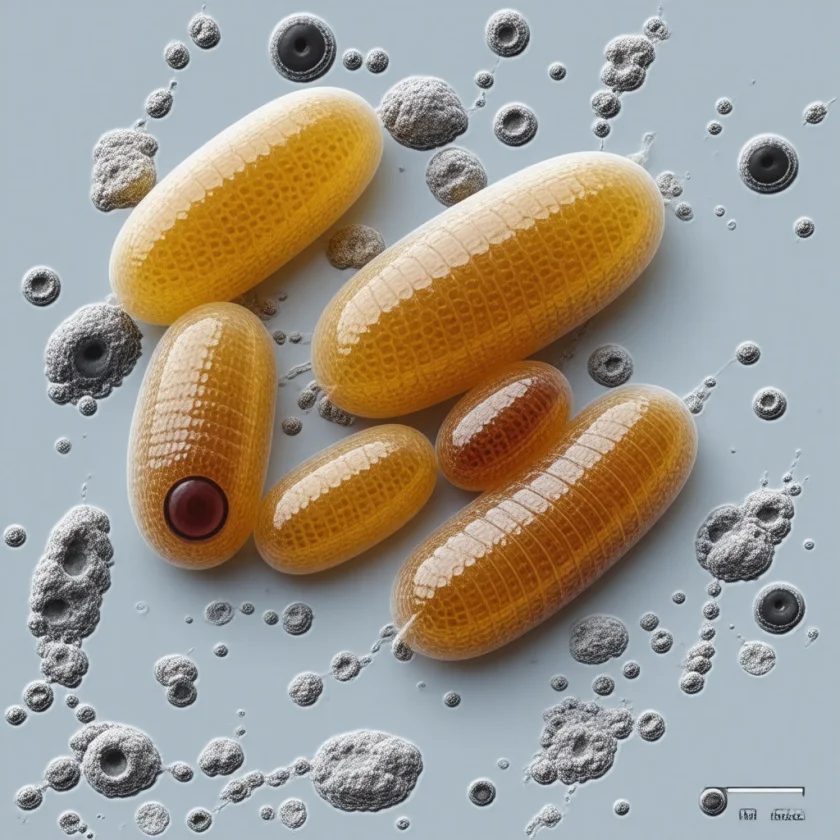
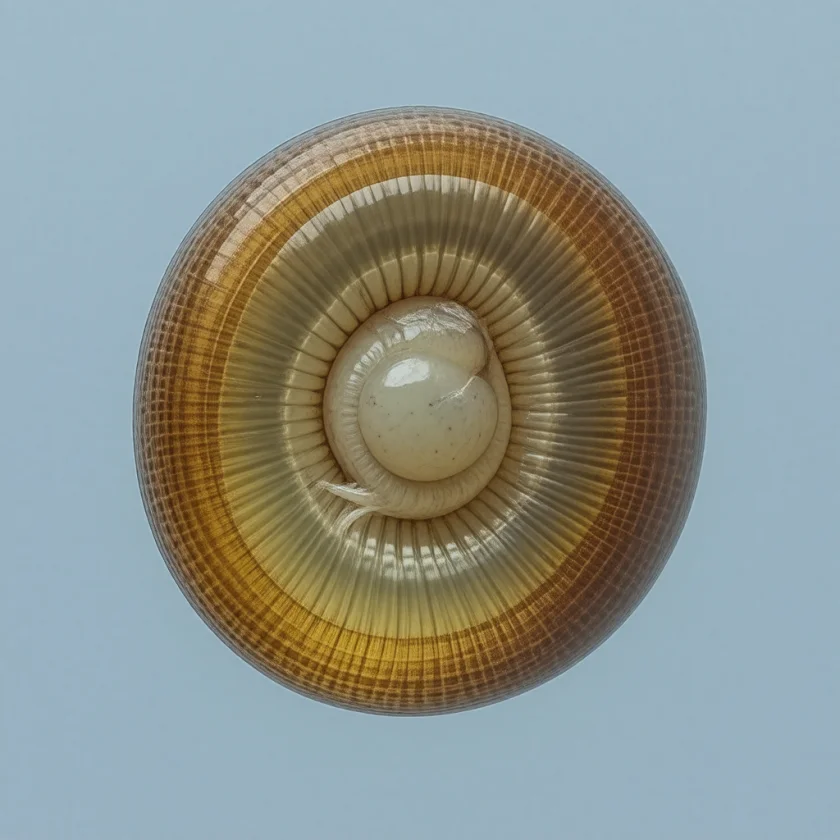
Read the deep dive →Ascaris lumbricoides is the giant roundworm of the human intestine — the largest and most common nematode to live inside people, and one of the small group of "soil-transmitted helminths" that thrive where sanitation is poor. An adult female can grow as long and as thick as a pencil. Ascariasis, the infection it causes, is among the most widespread human infections on Earth, with hundreds of millions of people carrying the worm at any given time, overwhelmingly children in warm, low-income regions. This page explains what Ascaris is, the remarkable journey it takes through the body, how it spreads from person to person through soil, the range of symptoms it produces, and how it is diagnosed, treated, and — above all — prevented.
Table of Contents
1. What Is Ascaris?
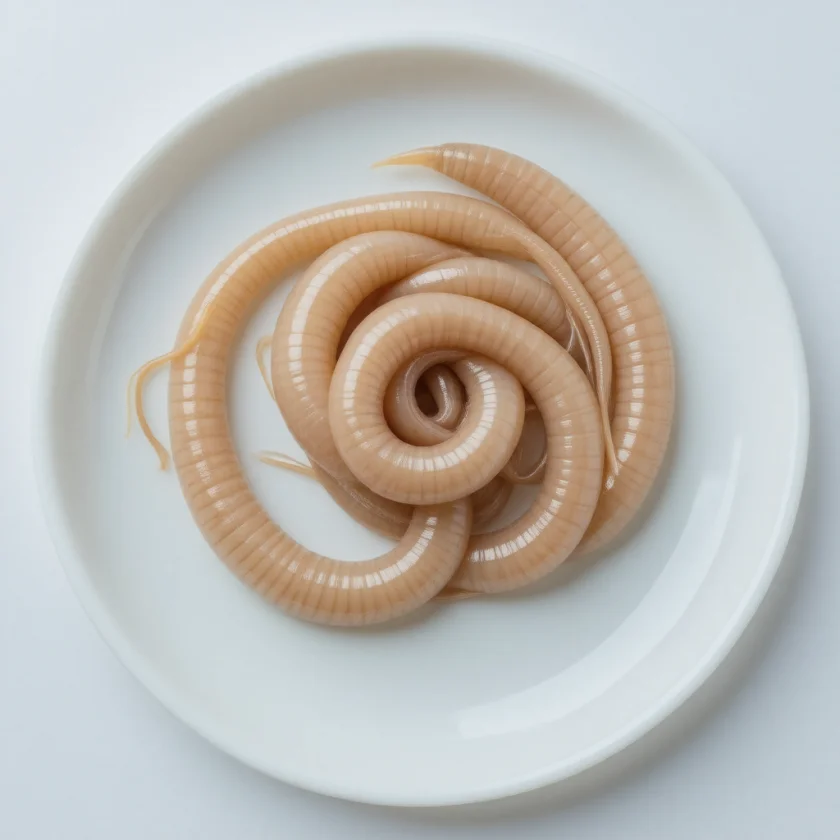
Ascaris lumbricoides is a roundworm — a member of the nematodes, a vast group of unsegmented worms. Among the worms that parasitize humans, it stands out for its sheer size: it is the largest and most common roundworm of the human intestine, and the adult worm is big enough to see easily with the naked eye. Females typically reach 20 to 35 centimeters in length (about 8 to 14 inches), and males are somewhat smaller. A heavy infection can mean dozens of these worms coiled together inside a single person's small intestine.
Ascaris belongs to a small but important group called the soil-transmitted helminths — intestinal worms whose eggs or larvae must spend time developing in soil before they can infect the next person. The other major members of this group are the human hookworms and the whipworm (Trichuris trichiura). Because they share the same routes of spread and the same favorable conditions — warmth, moisture, and contamination of soil with human feces — these worms tend to occur together in the same communities and are often controlled with the same public-health measures.
Ascariasis is one of the most common human infections in the world. Estimates have ranged from several hundred million to, in older figures, well over a billion people infected at any one time; more recent global analyses place the figure in the high hundreds of millions, with the heaviest burden falling on children in tropical and subtropical regions where sanitation is inadequate. Although many infections are light and cause little obvious illness, the sheer number of people affected makes Ascaris a major contributor to ill health, poor childhood growth, and lost potential across the developing world.
2. Life Cycle
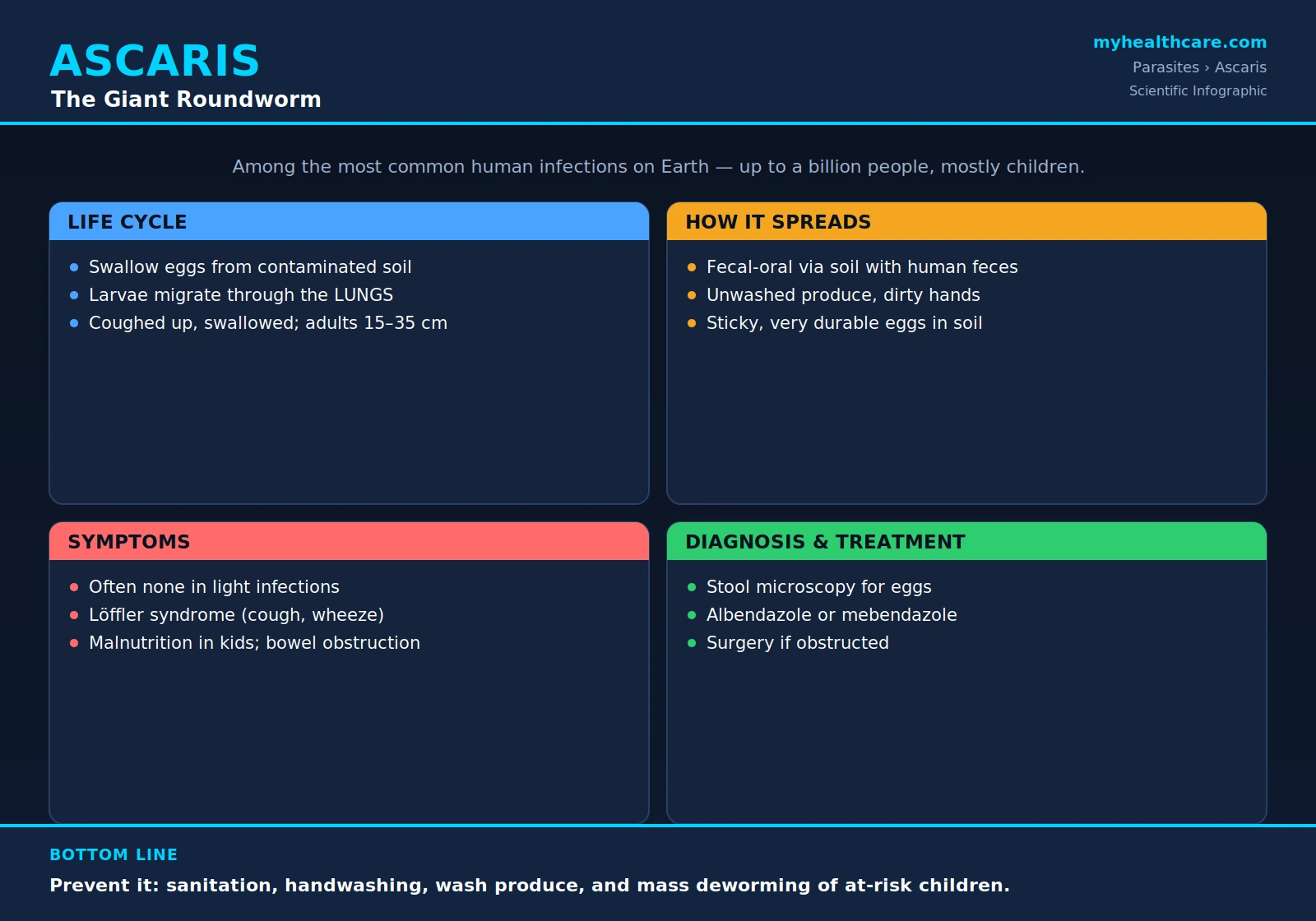
The life cycle of Ascaris is one of the most striking in human parasitology, because the worm does not simply settle in the gut and stay there. Instead, the immature larvae take a long detour through the bloodstream and lungs before returning to the intestine to grow up. The journey unfolds in several stages.
- Swallowing the eggs. Infection begins when a person swallows microscopic Ascaris eggs — far too small to see — that are clinging to food, in water, or on contaminated hands and fingers. The eggs come from soil that has been polluted with human feces.
- Hatching in the intestine. In the small intestine, the eggs hatch and release tiny larvae.
- Into the bloodstream. The larvae do not stay in the gut. They burrow through the intestinal wall and enter the bloodstream.
- Through the liver to the lungs. Carried by the blood, the larvae travel to the liver and then onward to the lungs, where they break out into the tiny air sacs (alveoli). This pulmonary migration is what can make ascariasis a temporary lung illness as well as an intestinal one.
- Up the airway and swallowed again. From the air sacs, the larvae climb up the airways — up the bronchi and windpipe to the throat — where they are coughed up and then swallowed a second time, returning to the digestive tract.
- Maturing in the small intestine. Back in the small intestine, the larvae finally mature into the long adult worms, which can live for a year or more.
- Releasing eggs. Adult females are prolific egg-layers, releasing enormous numbers of eggs each day. These eggs pass out of the body in the stool.
- Ripening in the soil. The eggs are not immediately infectious. They must spend time in warm, moist soil — weeks — to develop and become capable of infecting the next person. Once mature, they can survive in soil for a long time, waiting to be swallowed and start the cycle again.
A crucial point about this cycle is that Ascaris does not spread directly from one person to another by casual contact. The egg must pass through a period of development in the environment before it can infect anyone. That single fact — the obligatory stop in the soil — is what makes sanitation so powerful a tool against the worm.
3. How It Spreads
Ascariasis spreads by the fecal-oral route: the eggs leave one person's body in feces, ripen in the soil, and are then swallowed by another person. The chain depends entirely on human waste reaching the soil where people grow food, play, and work. The common routes of infection include:
- Soil polluted with human feces. Where there are no toilets or where sewage is not properly contained, the ground around homes, fields, and play areas becomes seeded with eggs. This is the root of the problem.
- Using untreated human waste as fertilizer. In some farming traditions, untreated or inadequately treated human feces ("night soil") is used to fertilize crops, spreading viable eggs directly onto the food supply.
- Unwashed fruits and vegetables. Produce grown in or contaminated by polluted soil can carry sticky eggs on its surface, which are then eaten if the food is not washed, peeled, or cooked.
- Contaminated hands and fingers. Children playing in contaminated soil, and anyone who handles soil or contaminated produce, can carry eggs to the mouth on unwashed hands.
Two features of the eggs make them especially good at spreading. They are sticky, so they cling readily to food, fingers, and surfaces, and they are extremely durable in soil, able to survive harsh conditions for months or even years. This toughness is why the worm persists so stubbornly in communities once it is established, and why a single round of treatment without improved sanitation does not eliminate it — the soil remains a reservoir of waiting eggs.
4. Symptoms
The illness Ascaris causes ranges from nothing at all to serious, life-threatening complications, depending largely on how many worms a person carries. Most light infections are silent, producing no noticeable symptoms, and may be discovered only when a worm is passed in the stool or eggs turn up on a laboratory test. When symptoms do occur, they fall into a few patterns.
The lung-migration phase. When large numbers of larvae pass through the lungs, they can provoke a temporary but distinctive lung reaction known as Löffler syndrome. This causes cough, wheezing, and fever, often accompanied by a marked rise in a type of white blood cell called eosinophils, which the body produces in response to parasites. This phase is self-limited but can be mistaken for asthma or pneumonia.
The intestinal phase. Once the adult worms are established in the gut, a modest burden may cause vague abdominal pain, discomfort, and poor appetite. In children, who often carry the heaviest worm loads, a significant infection can contribute to malnutrition and to impaired growth and learning — the worms compete for nutrients and the chronic infection saps a developing child's health, with consequences that can extend to schooling and long-term wellbeing.
Serious complications. The most dangerous problems arise from the sheer size and number of the worms:
- Intestinal obstruction. In a heavy infection, a tangled mass of worms can physically block the intestine. This is a surgical emergency and is most common in young children, whose intestines are narrower.
- Blockage of the bile or pancreatic ducts. A worm can migrate out of the intestine and lodge in the ducts that drain the liver, gallbladder, or pancreas, causing intense pain and potentially serious illness such as obstruction of the bile flow or inflammation of the pancreas.
It is the combination of a very common infection and these occasional severe complications — especially in children — that makes Ascaris a significant public-health concern rather than a mere curiosity.
5. Diagnosis
Ascariasis is usually diagnosed by examining the stool under a microscope. The female worm sheds enormous numbers of eggs, and these eggs have a characteristic appearance that a trained laboratory worker can recognize, making stool microscopy the standard and most widely used diagnostic test.
The infection can also become apparent in other ways:
- Passing an adult worm. Sometimes the diagnosis is made dramatically when a person passes a whole adult worm in the stool — or, less commonly, coughs or vomits one up.
- Imaging. The large adult worms can occasionally be seen on ultrasound or X-ray studies, for example when they cause a blockage or are found in the bile ducts. Imaging is especially useful when a complication such as obstruction is suspected.
- Endoscopy. A worm in the bile or pancreatic duct may be discovered — and sometimes removed — during an endoscopic procedure.
Because the lung-migration phase happens before the worms are mature enough to lay eggs, stool tests are typically negative during that early stage, and Löffler syndrome may be recognized only later, once eggs begin to appear or other clues emerge.
6. Treatment
Ascariasis responds very well to a small number of safe, inexpensive deworming drugs. As reported in the medical literature, the mainstays of treatment are albendazole and mebendazole, antiparasitic medicines that are highly effective against the worm — frequently as a single dose. Ivermectin is described as an alternative agent. These medicines work against the adult worms in the intestine, and their low cost and simplicity are exactly what make large-scale community treatment programs feasible.
When a serious complication has already developed, drugs alone may not be enough. A bolus of worms blocking the intestine, or a worm lodged in the bile or pancreatic ducts, may require surgical or endoscopic care — an operation to relieve an obstruction, or an endoscopic procedure to retrieve a worm from a duct.
The information here is presented as reported in the public-health and medical literature for general understanding. Any actual diagnosis and treatment — including the choice of drug, the dose, and the management of complications — should be directed by a qualified clinician, who can take into account a person's age, pregnancy status, the intensity of infection, and local treatment guidelines.
7. Prevention
Because Ascaris eggs must pass through the soil to spread, the infection is, in principle, entirely preventable. The measures that work all aim at one of two goals: keeping human feces out of the soil and food supply, and keeping the eggs already in the environment from reaching the mouth. Key strategies include:
- Sanitation and proper sewage disposal. Building and using toilets and latrines, and safely containing and treating human waste, breaks the cycle at its source. This is the single most important long-term measure.
- Handwashing. Washing hands with soap and water — especially before eating and preparing food, and after contact with soil — removes eggs picked up from the environment.
- Washing and peeling produce. Thoroughly washing, peeling, or cooking fruits and vegetables removes or destroys eggs that may cling to the surface, particularly for food grown in areas where contamination is possible.
- Not using untreated human waste as fertilizer. Avoiding the use of raw or inadequately treated human feces on crops prevents eggs from being spread directly onto the food supply.
- Periodic mass deworming. The World Health Organization recommends regular, preventive treatment of at-risk groups — especially school-age children — in communities where these worms are common. Periodic deworming lowers the worm burden, protects children's growth and development, and reduces the number of eggs being shed into the environment while sanitation is being improved.
Sustained control comes from combining these measures: deworming reduces the immediate harm and the egg load, while better sanitation and hygiene gradually drain the reservoir of eggs in the soil so that re-infection becomes less and less likely.
Key Research Papers
Peer-reviewed reviews and global analyses of ascariasis and the soil-transmitted helminths — covering their biology, the worldwide burden of infection, drug efficacy, diagnosis, and control. Journal names appear as plain text; the year/volume/pages link opens the full citation via DOI.
- Bethony J, Brooker S, Albonico M, Geiger SM, et al. Soil-Transmitted Helminth Infections: Ascariasis, Trichuriasis, and Hookworm. The Lancet. 2006;367(9521):1521–1532. — doi:10.1016/S0140-6736(06)68653-4
- Jourdan PM, Lamberton PHL, Fenwick A, Addiss DG. Soil-Transmitted Helminth Infections. The Lancet. 2018;391(10117):252–265. — doi:10.1016/S0140-6736(17)31930-X
- Pullan RL, Smith JL, Jasrasaria R, Brooker SJ. Global Numbers of Infection and Disease Burden of Soil Transmitted Helminth Infections in 2010. Parasites & Vectors. 2014;7:37. — doi:10.1186/1756-3305-7-37
- Keiser J, Utzinger J. Efficacy of Current Drugs Against Soil-Transmitted Helminth Infections: Systematic Review and Meta-analysis. JAMA. 2008;299(16):1937–1948. — doi:10.1001/jama.299.16.1937
- Moser W, Schindler C, Keiser J. Efficacy of Recommended Drugs Against Soil Transmitted Helminths: Systematic Review and Network Meta-analysis. BMJ. 2017;358:j4307. — doi:10.1136/bmj.j4307
- Hotez PJ, Molyneux DH, Fenwick A, Kumaresan J, et al. Control of Neglected Tropical Diseases. New England Journal of Medicine. 2007;357(10):1018–1027. — doi:10.1056/NEJMra064142
- Hotez PJ, Alvarado M, Basáñez M, Bolliger I, et al. The Global Burden of Disease Study 2010: Interpretation and Implications for the Neglected Tropical Diseases. PLoS Neglected Tropical Diseases. 2014;8(7):e2865. — doi:10.1371/journal.pntd.0002865
- Hotez PJ, Kamath A. Neglected Tropical Diseases in Sub-Saharan Africa: Review of Their Prevalence, Distribution, and Disease Burden. PLoS Neglected Tropical Diseases. 2009;3(8):e412. — doi:10.1371/journal.pntd.0000412
- Becker SL, Vogt J, Knopp S, Panning M, et al. Persistent Digestive Disorders in the Tropics: Causative Infectious Pathogens and Reference Diagnostic Tests. BMC Infectious Diseases. 2013;13:37. — doi:10.1186/1471-2334-13-37
PubMed Topic Searches
Each link opens a live PubMed query so results stay current as new papers are indexed.
- PubMed: Ascaris lumbricoides ascariasis
- PubMed: Soil-transmitted helminth infection
- PubMed: Ascariasis intestinal obstruction children
- PubMed: Ascariasis biliary and pancreatic
- PubMed: Albendazole mebendazole ascariasis
- PubMed: Löffler syndrome Ascaris pulmonary
- PubMed: Mass drug administration deworming helminth
- PubMed: Ascaris sanitation and reinfection
Connections
- All Parasites
- Acanthamoeba
- Giardia
- Malaria
- Toxoplasma
- Entamoeba
- Cryptosporidium
- Pinworm
- Hookworm
- Tapeworm
- Schistosoma
- Infectious Disease
- Gastroenterology
- All Conditions
- Herbs covered on this site that discuss this condition: Black Walnut · Elecampane · Wormwood
- Dr. Bryan Ardis: Nicotine and Parasites