Cryptosporidiosis: Supportive Care and Rehydration
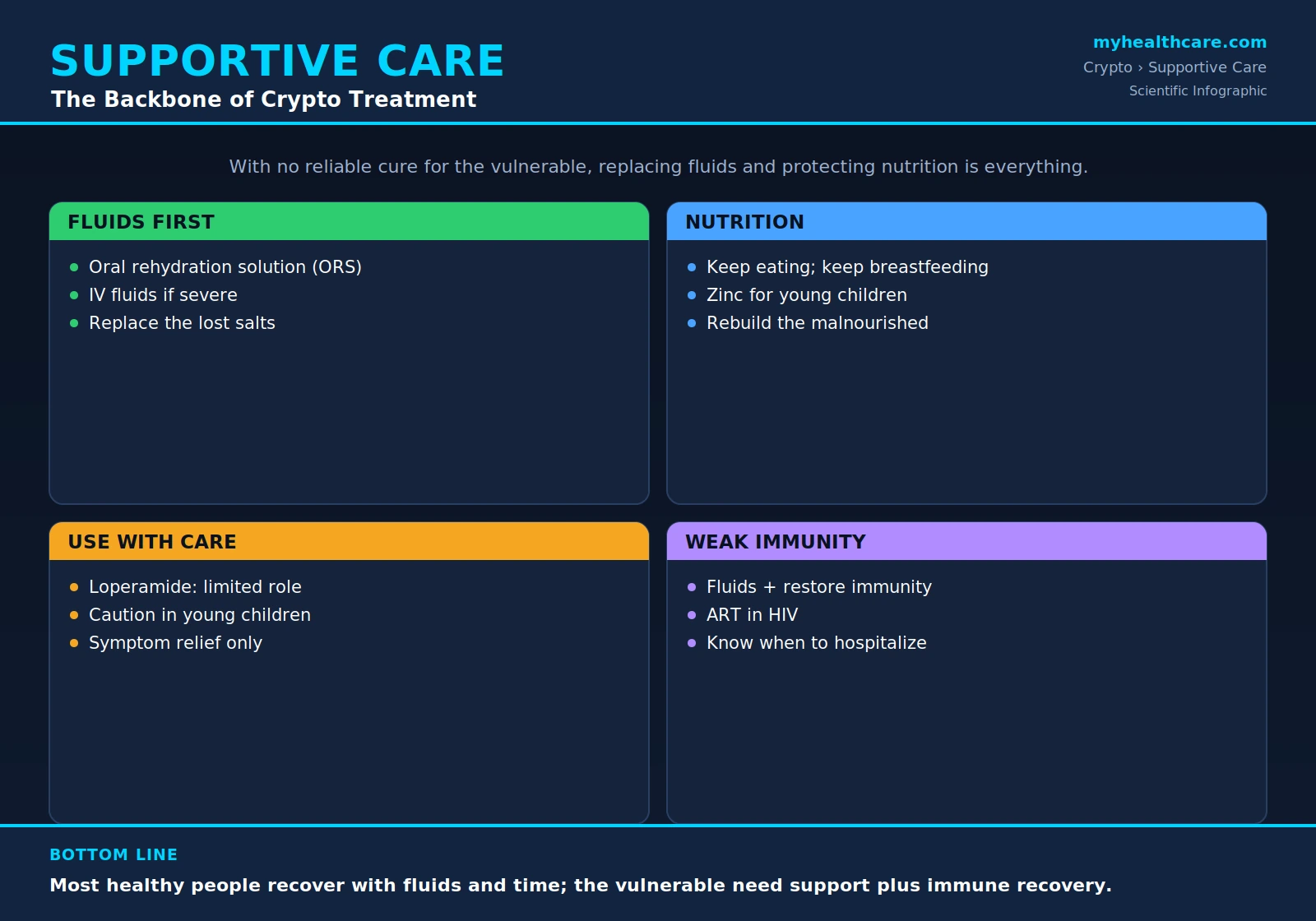
For most infections, the obvious goal of treatment is a drug that kills the germ. Cryptosporidiosis is different. There is no medicine that reliably cures the infection in the people who are hurt most by it — young children, the malnourished, and those with weakened immune systems. The one approved drug, nitazoxanide, helps shorten illness in otherwise-healthy people but works poorly or not at all in those whose immune systems are not intact. Because of this, the true backbone of care is not an antiparasitic pill at all. It is supportive care: replacing the fluid and salts lost to watery diarrhea, protecting nutrition, and — in the immunocompromised — restoring the immune system itself. This page explains why supportive care is the foundation, how to rehydrate safely, how to recognize when dehydration is becoming dangerous, the role of nutrition and zinc, the careful and limited use of anti-diarrheal medicines, and when home care is enough versus when to seek help. Treatment details here are presented as reported in the medical literature; actual treatment is clinician-directed.
Table of Contents
- Why Supportive Care Is the Foundation
- Fluid and Electrolyte Replacement
- Recognizing the Severity of Dehydration
- Nutrition, Breastfeeding, and Zinc
- The Limited Role of Anti-Diarrheal Medicines
- Managing the Immunocompromised
- Home Care Versus Seeking Medical Help
- Reducing Spread to Others During Illness
- Reassurance for Otherwise-Healthy Patients
- Key Research Papers
- Featured Videos
1. Why Supportive Care Is the Foundation
Cryptosporidiosis is caused by a microscopic parasite (Cryptosporidium) that infects the lining of the small intestine and triggers profuse, watery diarrhea. To understand why supportive care — rather than a drug — is the centerpiece of treatment, it helps to hold two facts side by side.
First: in a healthy person, the illness is self-limited. Someone with a normal immune system usually clears the infection on their own. The diarrhea typically lasts one to two weeks and then stops as the body's defenses bring the parasite under control. No drug is required to make that recovery happen; the immune system does the curing. What the person needs during those days or weeks is simply to stay hydrated and nourished so that the diarrhea does no lasting harm while the body finishes the job.
Second: in the vulnerable, there is no reliably curative drug. The only medication approved for cryptosporidiosis, nitazoxanide, has been shown to modestly shorten illness in immune-competent adults and children, but it has not been shown to work reliably in the very groups who suffer the worst disease — people with advanced HIV/AIDS or other severe immune deficiency, and young, malnourished children. A randomized trial in malnourished Zambian children, many of whom were also HIV-infected, found nitazoxanide reduced illness and death in HIV-negative children but provided no benefit in the HIV-positive group, underscoring how the drug fails exactly where it is needed most. For a fuller account of the drug options and their limits, see Nitazoxanide and Treatment.
Put those two facts together and the logic is clear. For the healthy, the infection passes on its own, so support is all that is needed. For the vulnerable, no pill dependably ends the infection, so support — keeping the person alive and well-nourished while immunity is rebuilt — is again what matters most. In both cases, replacing fluid and protecting nutrition is the intervention that actually changes outcomes. Cryptosporidiosis is, at its core, a disease of fluid loss; the deaths it causes, especially in children, come overwhelmingly from dehydration and the malnutrition that repeated diarrhea drives. Preventing those is the goal of every line that follows.
2. Fluid and Electrolyte Replacement
The single most important treatment for any watery diarrhea, cryptosporidiosis included, is putting back the water and salts the body is losing. Diarrhea does not just drain water; it drains electrolytes — especially sodium, potassium, and the buffers that keep the blood from turning acidic. Replacing plain water alone is not enough, and can even be harmful, because it dilutes those salts. The solution that works is one that contains water, salts, and a little sugar in the right balance.
Oral rehydration solution (ORS) is the mainstay for mild-to-moderate dehydration. ORS is a precisely formulated mix of glucose and electrolytes dissolved in clean water. Its effectiveness rests on a piece of intestinal biology: even when the gut is inflamed and leaking fluid, it retains the ability to absorb sodium together with glucose, and water follows that absorbed salt back into the body. This glucose-sodium co-transport is why a sugar-and-salt drink can rehydrate a person whom plain water cannot. The World Health Organization and UNICEF recommend a low-osmolarity ORS formulation as standard care for diarrheal dehydration worldwide; large analyses credit the spread of ORS with preventing an enormous share of childhood diarrhea deaths. ORS is cheap, given by mouth, needs no needle, and can be used at home — which is precisely what makes it so powerful in the settings where cryptosporidiosis is deadliest.
Commercially prepared ORS packets (and ready-made oral electrolyte drinks marketed for children) are the most reliable option because the proportions are correct. Ordinary sports drinks, sodas, and fruit juices are not good substitutes — they carry too much sugar and too little salt, and the excess sugar can pull more water into the gut and worsen the diarrhea. The practical approach is to drink ORS steadily in small, frequent sips, taking more after each loose stool to keep pace with ongoing losses, rather than gulping a large amount at once (which is more likely to be vomited back).
Intravenous (IV) fluids are needed for severe dehydration, or when a person cannot keep fluids down. Oral rehydration depends on the person being able to drink and absorb. When dehydration is severe — when someone is in shock, deeply lethargic, or unable to drink — or when relentless vomiting defeats every attempt to take ORS by mouth, fluids must be given directly into a vein. IV rehydration is faster and bypasses the gut entirely, and it is the appropriate, often life-saving choice in those situations. It generally requires a clinic or hospital. Once a severely dehydrated person has been stabilized with IV fluids and can drink again, care is usually stepped back down to ORS by mouth.
3. Recognizing the Severity of Dehydration
Because rehydration is the heart of treatment, knowing how dehydrated a person is — and whether they are getting worse — is the most useful skill a caregiver can have. Clinicians grade dehydration roughly into three levels, and the simple signs below mirror what they look for.
Mild (or no) dehydration. The person is alert, thirsty, and drinking normally. The mouth may be a little dry, but the eyes look normal, urine is still being passed, and when a fold of skin is pinched it springs straight back. At this stage the person can almost always be managed at home with ORS, replacing fluid as it is lost.
Moderate dehydration. Now there are clearer warning signs: noticeable thirst and restlessness or irritability, sunken eyes, a dry mouth and tongue, reduced urine (fewer wet diapers in a baby, darker and less frequent urine in an adult), and a skin pinch that goes back slowly. Moderate dehydration calls for more deliberate, supervised rehydration — often a measured ORS plan over several hours — and a lower threshold for getting medical advice, especially in a young child or an older adult.
Severe dehydration is a medical emergency. The danger signs include marked drowsiness or floppiness, inability or refusal to drink, or drinking poorly; eyes that are deeply sunken; a skin pinch that goes back very slowly (two seconds or more); a weak or absent urine output for many hours; and, in the worst cases, cold and mottled hands and feet, a fast and weak pulse, and a depressed level of consciousness. This level requires immediate medical care and usually intravenous fluids.
Warning signs in children deserve special attention, because babies and small children dehydrate faster than adults and cannot tell you how they feel. Caregivers should seek urgent help for a child who is unusually sleepy or hard to wake, who has no wet diaper for several hours, who has sunken eyes or (in an infant) a sunken soft spot on the head, who has no tears when crying, who is too weak to drink or vomiting everything, or who has a high fever, blood in the stool, or signs of belly pain that seem severe. In a young child, dehydration can become dangerous within hours, so when in doubt it is always safer to have the child seen.
4. Nutrition, Breastfeeding, and Zinc
Rehydration keeps a person alive through the illness; nutrition is what carries them out the other side and prevents the lasting damage that repeated diarrhea can cause. An old instinct — to "rest the gut" by withholding food during diarrhea — is now known to be a mistake. The modern, evidence-based approach is to keep eating through the illness.
Continue feeding. The intestine recovers faster when it is fed, and continuing age-appropriate food during and after diarrhea helps prevent the weight loss and nutritional decline that otherwise follow. Children should be offered their usual foods in small, frequent amounts, with extra food during recovery to make up for what was lost. There is no need for special "diarrhea diets," diluted formula, or prolonged fasting; ordinary nourishing food, as tolerated, is correct.
For infants, continue breastfeeding. Breastfeeding should not be stopped during a diarrheal illness — it should, if anything, be offered more often. Breast milk supplies fluid, nutrition, and protective immune factors all at once, is always clean, and is well tolerated even when the gut is upset. Continued breastfeeding is one of the most protective things a mother can do for a sick infant, and it works alongside ORS rather than instead of it.
Zinc supplementation in young children. For childhood diarrhea, the World Health Organization and UNICEF recommend a short course of zinc — commonly 20 mg per day (10 mg for infants under six months) for 10 to 14 days — alongside ORS. A Cochrane systematic review of oral zinc in children with diarrhea found that, in settings where zinc deficiency and malnutrition are common, zinc shortens the duration of the diarrhea and reduces the chance of it dragging on. Zinc is thought to help repair the gut lining and support immune function; it is given to all young children with acute diarrhea in WHO-guided programs, not only to those with a proven deficiency. (The benefit is clearest in lower-income, higher-deficiency settings; the principle, as standard guidance, is to add zinc to ORS for young children with diarrhea.)
Nutritional rehabilitation for malnourished children. Cryptosporidiosis and malnutrition feed on each other: malnourished children get worse, longer cryptosporidiosis, and each bout of diarrhea pushes a child further into malnutrition and can stunt growth and development. Breaking that cycle requires more than rehydration — it requires deliberate nutritional rehabilitation, rebuilding the child's nutritional reserves with adequate energy and protein (and treating any underlying deficiencies) during and after the illness. This is covered more fully on Cryptosporidiosis in Children and Malnutrition, which explains why nutrition is, for the most vulnerable children, as much a part of treatment as fluid.
5. The Limited Role of Anti-Diarrheal Medicines
It is natural to want a medicine that simply stops the diarrhea. Drugs such as loperamide (a common over-the-counter anti-diarrheal) slow the bowel and can reduce the number of stools, offering some symptom relief for an uncomfortable adult. But their role in cryptosporidiosis is limited and cautious, and they are no substitute for rehydration.
Several cautions matter. Anti-diarrheal drugs treat only the symptom — they do nothing to the parasite, and by slowing the gut they can mask ongoing fluid loss (fluid still pools inside the bowel even when fewer stools come out), which can give a false sense that things are improving. They are intended, at most, for short-term comfort in an otherwise-stable adult who is keeping up with fluids. They are generally avoided in young children, in whom loperamide can cause serious side effects and offers little benefit, and they are avoided in dysentery — diarrhea with blood and fever — because slowing the gut in an invasive, inflammatory infection can be harmful. (Cryptosporidiosis itself usually causes watery, non-bloody diarrhea, but bloody stool is a red flag that should prompt medical assessment rather than self-treatment with anti-diarrheals.) The safe rule of thumb is that anti-diarrheal medicines are an optional comfort measure for stable adults only, used briefly and with care, while ORS and nutrition remain the real treatment.
6. Managing the Immunocompromised
For people with weakened immune systems, cryptosporidiosis is a far more serious matter. Instead of a self-limited illness of a week or two, it can become chronic, severe, and life-threatening, with large-volume diarrhea that drains fluid faster than the person can replace it and drives profound weight loss. Managing it takes two things at once.
First, intensive fluid support. The volumes lost can be extraordinary — in advanced cases, liters of stool per day — so rehydration has to be aggressive and sustained, frequently requiring intravenous fluids and careful, repeated correction of electrolytes in a hospital. Oral rehydration is still used where possible, but it often cannot keep up with the losses on its own.
Second, and decisively, restoring immunity. Because no antiparasitic drug reliably clears Cryptosporidium in someone whose immune system is failing, the most effective "treatment" is to repair the immune system itself so the body can finally control the parasite. In people with HIV/AIDS, the great lesson of the modern era is that antiretroviral therapy (ART) — effective HIV treatment that raises the immune (CD4) cell count — can resolve cryptosporidiosis that no antiparasitic drug had been able to touch. Restoring immune function does what pills cannot. The same principle applies in other forms of immune suppression: wherever possible, reducing or reversing the cause of the immune deficiency is central to recovery. This crucial topic is covered in depth on Cryptosporidiosis in the Immunocompromised.
7. Home Care Versus Seeking Medical Help
Most otherwise-healthy people with cryptosporidiosis can be cared for at home. The home plan is straightforward: rest, drink ORS steadily — taking extra after every loose stool — keep eating nourishing food as tolerated, continue breastfeeding an infant, and watch carefully for the warning signs of worsening dehydration described above. The aim is simply to stay ahead of the fluid losses until the body clears the infection on its own.
Certain situations, however, call for medical attention rather than waiting it out at home. Seek care if there are signs of moderate-to-severe dehydration (marked drowsiness, very little or no urine for many hours, sunken eyes, inability to drink); if vomiting makes it impossible to keep ORS down; if the diarrhea is severe, very high-volume, or lasts more than a couple of weeks without improvement; if there is blood in the stool, a high fever, or severe abdominal pain; or if the person is very young, very old, pregnant, or has a weakened immune system or another serious medical condition. Hospitalization is appropriate when dehydration is severe and IV fluids are needed, when oral rehydration has failed, or when an immunocompromised person has overwhelming diarrhea. Erring toward getting help is especially wise for infants and small children, who can decline quickly.
8. Reducing Spread to Others During Illness
Cryptosporidium is highly contagious. It spreads when the parasite, shed in the stool of an infected person (or animal), is swallowed by another — through contaminated water, food, surfaces, or hands. The parasite is also notably tough: it is protected by a hardy outer shell that lets it survive for days and makes it resistant to chlorine at the levels normally used in swimming pools, which is exactly how recreational-water outbreaks happen. So part of caring for an infected person is taking simple steps to keep the infection from spreading to the household and beyond.
- Wash hands thoroughly with soap and water, especially after using the toilet, after changing a diaper, and before preparing or eating food. (Because the parasite resists chlorine, alcohol-based hand sanitizers are less dependable against it than soap-and-water washing, which physically removes the organism.)
- Do not swim in pools, lakes, splash pads, or other shared water while ill, and — importantly — for at least two weeks after the diarrhea stops, because the parasite can still be shed during that window. A single ill swimmer can contaminate a pool for everyone.
- Do not prepare food for others while symptomatic; an infected food handler is a classic source of outbreaks.
- Avoid sharing towels, and clean and disinfect contaminated surfaces and bathrooms; the very young, the elderly, pregnant women, and the immunocompromised in the household should be protected from contact with the ill person's stool.
These everyday measures matter as much for public health as the rehydration matters for the patient. The broader picture of water treatment, recreational-water rules, and outbreak control is covered on Prevention: Water and Outbreaks.
9. Reassurance for Otherwise-Healthy Patients
If you are an otherwise-healthy person who has been diagnosed with cryptosporidiosis, the most important message is a reassuring one: most people recover fully with fluids and time. The watery diarrhea, cramping, and fatigue are genuinely miserable, and the illness can drag on for a week or two — sometimes with the symptoms easing and then briefly returning before they finally clear — but in a person with a normal immune system the body wins. You generally do not need an antiparasitic drug to get better; your own immune system does the curing, and your job is to support it.
The plan, in plain terms, is this: keep drinking oral rehydration solution and replace what you lose; keep eating when you can; rest; wash your hands well and stay out of shared water until two weeks after the diarrhea ends; and watch for the warning signs that mean it is time to get help. Within that framework, the great majority of healthy people make a complete recovery. The seriousness of cryptosporidiosis is real for the vulnerable — which is why this site treats children, the malnourished, and the immunocompromised separately — but for the healthy patient, patience and fluids are usually all that is needed. As with any illness, the specifics of your care should be guided by your own clinician, who can tailor this general guidance to your situation.
Key Research Papers
Peer-reviewed reviews, randomized trials, systematic reviews, and burden studies on the rehydration and supportive management of cryptosporidiosis and of childhood diarrhea more broadly. Journal names appear as plain text; the year/volume/pages link opens the full citation via DOI.
- Checkley W, White AC Jr, Jaganath D, et al. A Review of the Global Burden, Novel Diagnostics, Therapeutics, and Vaccine Targets for Cryptosporidium. The Lancet Infectious Diseases. 2015;15(1):85–94.
- Abubakar I, Aliyu SH, Arumugam C, Usman NK, Hunter PR. Prevention and Treatment of Cryptosporidiosis in Immunocompromised Patients. Cochrane Database of Systematic Reviews. 2007;(1):CD004932.
- Amadi B, Mwiya M, Musuku J, et al. Effect of Nitazoxanide on Morbidity and Mortality in Zambian Children with Cryptosporidiosis: A Randomised Controlled Trial. The Lancet. 2002;360(9343):1375–1380.
- Lazzerini M, Wanzira H. Oral Zinc for Treating Diarrhoea in Children. Cochrane Database of Systematic Reviews. 2016;12:CD005436.
- Munos MK, Walker CLF, Black RE. The Effect of Oral Rehydration Solution and Recommended Home Fluids on Diarrhoea Mortality. International Journal of Epidemiology. 2010;39(Suppl 1):i75–i87.
- Guarino A, Ashkenazi S, Gendrel D, et al. ESPGHAN/ESPID Evidence-Based Guidelines for the Management of Acute Gastroenteritis in Children in Europe: Update 2014. Journal of Pediatric Gastroenterology and Nutrition. 2014;59(1):132–152.
- Gregorio GV, Gonzales MLM, Dans LF, Martinez EG. Polymer-Based Oral Rehydration Solution for Treating Acute Watery Diarrhoea. Cochrane Database of Systematic Reviews. 2016;12:CD006519.
- Walker CLF, Rudan I, Liu L, et al. Global Burden of Childhood Pneumonia and Diarrhoea. The Lancet. 2013;381(9875):1405–1416.
- Kotloff KL, Nataro JP, Blackwelder WC, et al. Burden and Aetiology of Diarrhoeal Disease in Infants and Young Children in Developing Countries (the Global Enteric Multicenter Study, GEMS): A Prospective, Case-Control Study. The Lancet. 2013;382(9888):209–222.
- Khalil IA, Troeger C, Rao PC, et al. Morbidity, Mortality, and Long-Term Consequences Associated with Diarrhoea from Cryptosporidium Infection in Children Younger than 5 Years: A Meta-Analyses Study. The Lancet Global Health. 2018;6(7):e758–e768.
- Mac Kenzie WR, Hoxie NJ, Proctor ME, et al. A Massive Outbreak in Milwaukee of Cryptosporidium Infection Transmitted through the Public Water Supply. New England Journal of Medicine. 1994;331(3):161–167.
- Oberhelman RA, Guerrero ES, Fernandez ML, et al. Correlations Between Intestinal Parasitosis, Physical Growth, and Psychomotor Development Among Infants and Children from Rural Nicaragua. The American Journal of Tropical Medicine and Hygiene. 1998;58(4):470–475.
- Bryce J, Boschi-Pinto C, Shibuya K, Black RE. WHO Estimates of the Causes of Death in Children. The Lancet. 2005;365(9465):1147–1152.
- Parashar UD, Nelson EAS, Kang G. Diagnosis, Management, and Prevention of Rotavirus Gastroenteritis in Children. BMJ. 2013;347:f7204.
Live PubMed Searches
Each link opens a live PubMed query so results stay current as new papers are indexed.
- Cryptosporidiosis supportive care and rehydration
- Oral rehydration solution for childhood diarrhoea
- Zinc supplementation for acute diarrhea in children
- Cryptosporidium, children, malnutrition, and growth
- Cryptosporidiosis, HIV, and antiretroviral therapy
- Loperamide and acute diarrhea safety in children
- Dehydration assessment in children: clinical signs
- Continued feeding and breastfeeding in diarrhoea
Connections
- All Parasites
- Symptoms & Diagnosis
- Watery Diarrhea and Dehydration
- Cryptosporidiosis in the Immunocompromised
- Cryptosporidiosis in Children and Malnutrition
- Treatment & Prevention
- Nitazoxanide and Treatment
- Prevention: Water and Outbreaks
- Cryptosporidium Overview
- Gastroenterology
- Infectious Disease
- All Conditions