Obesity
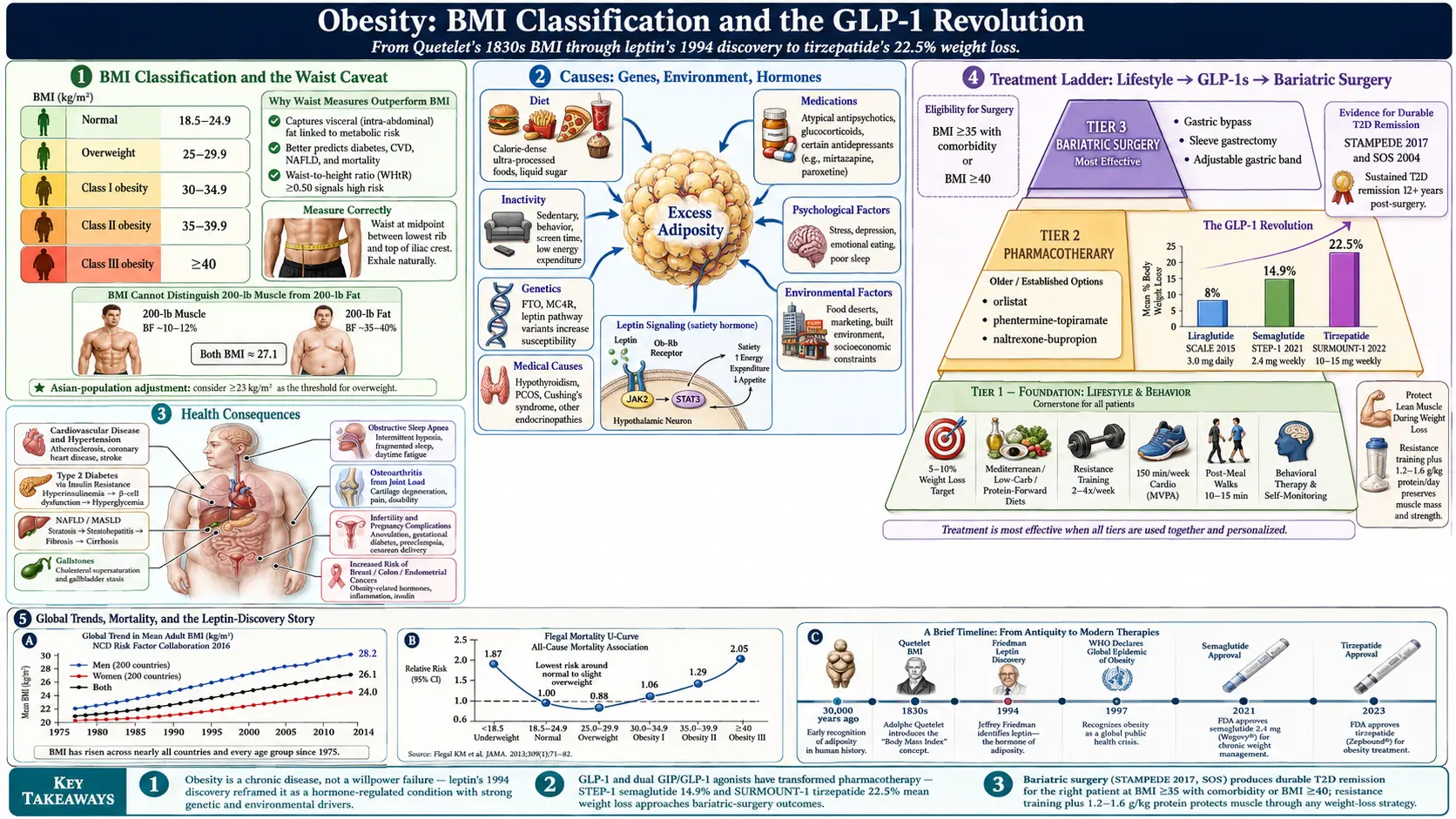
What is Obesity?
Obesity is a medical condition characterized by an excessive amount of body fat, which can negatively impact health. It is often measured using the body mass index (BMI), where a BMI of 30 or higher is classified as obese.
Causes of Obesity
- Poor diet: High intake of calorie-dense, nutrient-poor foods, such as fast food, sugary drinks, and snacks.
- Physical inactivity: Sedentary lifestyle with minimal exercise or physical activity.
- Genetics: Family history can influence body weight and fat distribution.
- Medical conditions: Conditions like hypothyroidism, polycystic ovary syndrome (PCOS), and Cushing's syndrome can contribute.
- Medications: Some medications, including certain antidepressants and antipsychotics, may cause weight gain.
- Psychological factors: Stress, depression, and emotional eating can lead to overeating.
- Environmental factors: Limited access to healthy foods, lack of safe spaces for physical activity, and socioeconomic status.
Health Risks Associated with Obesity
- Cardiovascular disease: Higher risk of heart disease, hypertension, and stroke.
- Type 2 diabetes: Strongly linked to obesity due to insulin resistance.
- Joint problems: Increased weight places more stress on joints, leading to osteoarthritis.
- Sleep apnea: Excess fat around the neck can obstruct airways and cause breathing problems during sleep.
- Certain cancers: Increased risk of cancers such as breast, colon, and endometrial cancer.
- Liver disease: Nonalcoholic fatty liver disease (NAFLD) is more common in obese individuals.
- Gallbladder disease: Higher likelihood of developing gallstones.
- Reproductive issues: Can affect fertility and increase the risk of complications during pregnancy.
Symptoms of Obesity
- Excess body fat: Accumulated fat in different parts of the body.
- Breathlessness: Shortness of breath even with mild exertion.
- Fatigue: Constant feeling of tiredness or low energy.
- Joint and back pain: Strain on joints and back due to excess weight.
- Low self-esteem and depression: Emotional and mental health challenges related to body image.
Diagnosis of Obesity
- Body Mass Index (BMI): A primary screening tool where BMI of 30 or higher indicates obesity.
- Waist circumference: Used to assess abdominal fat, which poses a higher risk for health issues.
- Blood tests: To check cholesterol levels, blood sugar, and thyroid function.
- Health history and physical exam: Review of diet, activity level, and overall health history.
Prevention Strategies
- Healthy eating habits: Focus on a balanced diet with plenty of fruits, vegetables, whole grains, and lean proteins.
- Regular physical activity: Aim for at least 150 minutes of moderate exercise per week.
- Portion control: Monitor portion sizes to prevent overeating.
- Limit processed foods: Reduce consumption of high-calorie, low-nutrient foods.
- Stay hydrated: Drinking enough water helps regulate appetite and metabolism.
- Reduce stress: Engage in stress management techniques such as meditation or deep breathing.
Treatment Options
- Lifestyle changes: Diet and exercise modifications to promote weight loss.
- Behavioral therapy: Counseling to identify and change unhealthy eating and activity patterns.
- Medications: Prescription drugs to aid in weight loss (e.g., orlistat, liraglutide).
- Bariatric surgery:
- Gastric bypass: Reduces stomach size and changes digestion.
- Gastric sleeve: Part of the stomach is removed to limit food intake.
- Adjustable gastric band: A band is placed around the upper part of the stomach to create a smaller pouch.
Complications of Obesity
- Reduced quality of life: Limited mobility and participation in activities.
- Social and psychological issues: Stigma, discrimination, and mental health struggles.
- Chronic pain: Joint and back pain due to increased stress on the body.
- Metabolic syndrome: A cluster of conditions that increase the risk of heart disease and diabetes.
- Premature death: Higher risk of early mortality due to associated health conditions.
References & Research
Historical Background
While obesity has been recognized since ancient times -- depicted in Venus figurines dating to 30,000 years ago -- its modern clinical understanding began with Adolphe Quetelet's development of the body mass index (BMI) in the 1830s. The World Health Organization formally classified obesity as a global epidemic in 1997, and the discovery of leptin by Jeffrey Friedman in 1994 revolutionized understanding of the hormonal regulation of body weight.
Key Research Papers
- Must A, Spadano J, Coakley EH, et al. The disease burden associated with overweight and obesity. JAMA. 1999;282(16):1523-1529.
- NCD Risk Factor Collaboration. Trends in adult body-mass index in 200 countries from 1975 to 2014: a pooled analysis of 1698 population-based measurement studies. Lancet. 2016;387(10026):1377-1396.
- Wilding JPH, Batterham RL, Calanna S, et al. Once-weekly semaglutide in adults with overweight or obesity (STEP 1). N Engl J Med. 2021;384(11):989-1002.
- Schauer PR, Bhatt DL, Kirwan JP, et al. Bariatric surgery versus intensive medical therapy for diabetes -- 5-year outcomes (STAMPEDE). N Engl J Med. 2017;376(7):641-651.
- Sjostrom L, Lindroos AK, Peltonen M, et al. Lifestyle, diabetes, and cardiovascular risk factors 10 years after bariatric surgery (Swedish Obese Subjects Study). N Engl J Med. 2004;351(26):2683-2693.
- Flegal KM, Kit BK, Orpana H, Graubard BI. Association of all-cause mortality with overweight and obesity using standard body mass index categories. JAMA. 2013;309(1):71-82.
- Zhang Y, Proenca R, Maffei M, et al. Positional cloning of the mouse obese gene and its human homologue. Nature. 1994;372(6505):425-432.
- Bluher M. Obesity: global epidemiology and pathogenesis. Nat Rev Endocrinol. 2019;15(5):288-298.
- Apovian CM, Aronne LJ, Bessesen DH, et al. Pharmacological management of obesity: an Endocrine Society clinical practice guideline. J Clin Endocrinol Metab. 2015;100(2):342-362.
- Pi-Sunyer X, Astrup A, Fujioka K, et al. A randomized, controlled trial of 3.0 mg of liraglutide in weight management (SCALE Obesity and Prediabetes). N Engl J Med. 2015;373(1):11-22.
- Jastreboff AM, Aronne LJ, Ahmad NN, et al. Tirzepatide once weekly for the treatment of obesity (SURMOUNT-1). N Engl J Med. 2022;387(3):205-216.
- Adams TD, Davidson LE, Litwin SE, et al. Weight and metabolic outcomes 12 years after gastric bypass. N Engl J Med. 2017;377(12):1143-1155.
Interactive Visualization Hunger, Leptin & Why Diets Fight Back Watch the hunger neurons and the fullness neurons fight it out — then lose weight and see leptin fall, hunger climb and metabolism drop. It isn’t willpower. It’s a defended system. Launch → Interactive Visualization GLP-1 & Incretins — fire the gut hormone behind the new weight-loss drugs Eat a meal and watch your gut fire GLP-1 at the pancreas, brain and stomach at once — then see how Ozempic-style drugs resist the enzyme that destroys it in two minutes. Launch → Interactive Visualization Brown Fat — burn calories as heat Watch brown-fat mitochondria leak their proton gradient through UCP1 to make pure heat instead of ATP — the uncoupling trick cold switches on, and the dangerous one a banned diet drug forced. Launch → Interactive Visualization Autophagy — clean out a cell by fasting Watch a cell wrap up its damaged parts, digest them in the lysosome and recycle the pieces — idle when you're fed, ramping up when you fast, failing when junk piles into disease. Launch →
Table of Contents
Research Papers
The following PubMed topic searches aggregate the current peer-reviewed literature. Each link opens a live PubMed query — results update as new studies are indexed.
- PubMed — obesity epidemiology
- PubMed — obesity pathophysiology
- PubMed — bariatric surgery
- PubMed — GLP-1 agonist obesity
- PubMed — semaglutide weight loss
- PubMed — tirzepatide weight loss
- PubMed — childhood obesity
- PubMed — obesity cardiovascular risk
- PubMed — obesity cancer risk
- PubMed — obesity pharmacotherapy
- PubMed — very low calorie diet obesity
- PubMed — physical activity obesity
Connections
- Endocrinology
- Autophagy: How Fasting Cleans Out Your Cells — interactive animation
- Brown Fat: How You Burn Calories as Heat — interactive animation
- GLP-1, Incretins & the New Weight-Loss Drugs — interactive animation
- Hunger, Leptin & Why Diets Fight Back — interactive animation
- Gynecomastia
- Diabetes
- Metabolic Syndrome
- Insulin Resistance
- Cardiovascular Disease
- Hypertension
- Magnesium
- Chromium
- Vitamin D3
- Polycystic Ovary Syndrome
- Cushing's Syndrome
- GLP-1 Receptor Agonists
- Liver Disease
- Depression
- NAFLD & MASLD Connection
- Exercise and Muscle Insulin Sensitivity
- Gallbladder Disease
- Stress Management
- Fatty Liver Disease
- Breast Cancer
- Pancreatic Cancer
- Osteoarthritis
- Endometrial Cancer
- Plantar Fasciitis