Hypertension
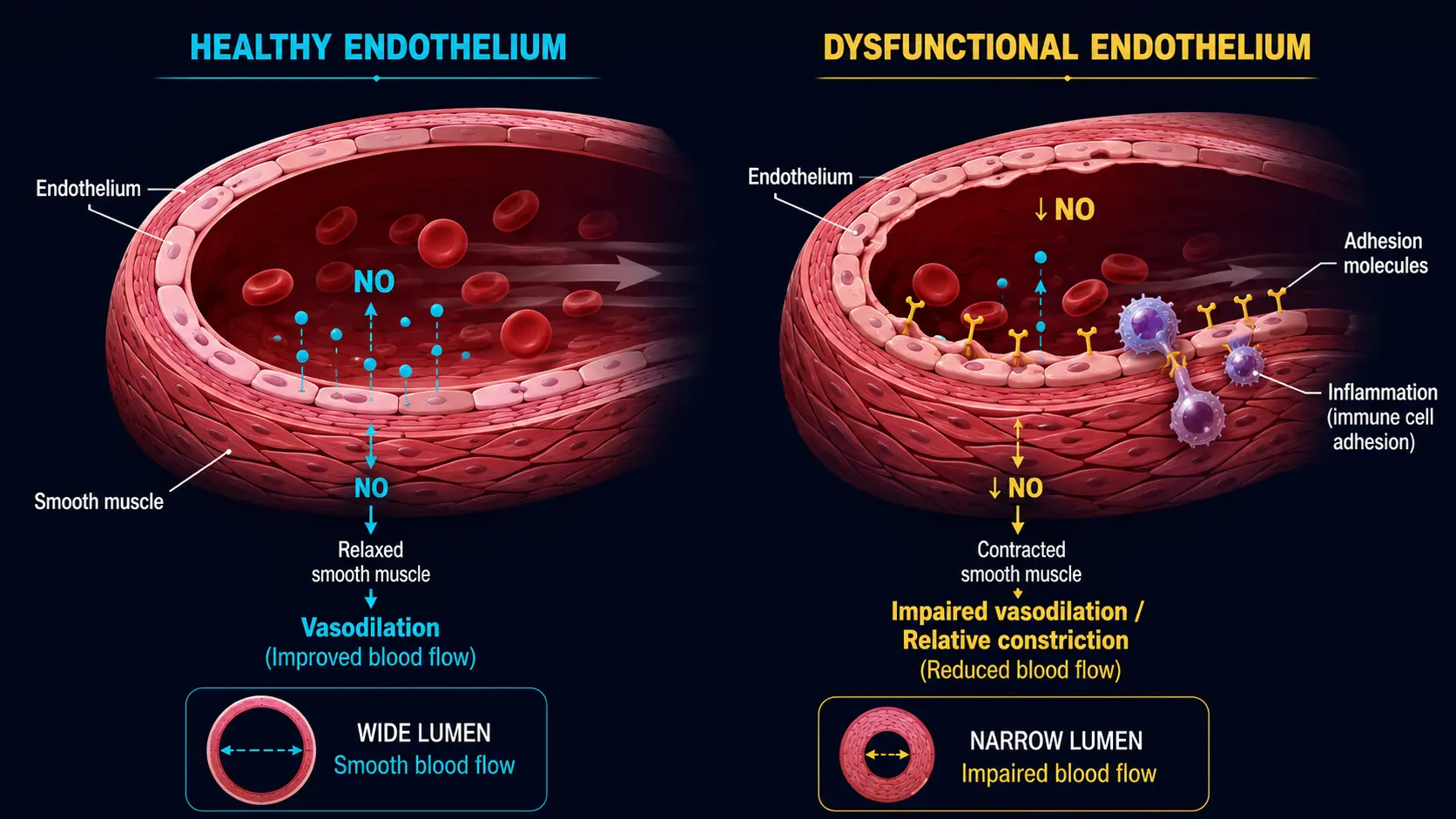
Interactive Visualization The Heart & Circulation — watch a blood cell make the loop Trace a blood cell through all four chambers and both circuits, with a live ECG, chamber pressures, and an exercise mode. Launch → Interactive Visualization How Your Body Controls Blood Pressure Watch the kidney fire renin, angiotensin clamp the arteries, and aldosterone hold sodium — then eat salt, or take an ACE inhibitor. Launch → Interactive Visualization Nitric Oxide — make an artery relax Watch the endothelium turn L-arginine into nitric oxide and widen the artery — then let oxidative stress uncouple eNOS and stiffen it, or pour in beet nitrate to rescue the flow. Launch → Interactive Visualization The Baroreflex — catch a falling blood pressure Stand up and watch your blood pressure dip, then get caught in a heartbeat by the baroreceptors and brainstem — or trip a vasovagal faint and see why passing out rescues the brain. Launch → Interactive Visualization What Happens in a Stroke (and Why Minutes Matter) Block a brain artery and watch the core die while the penumbra flickers — then reopen the clot and see why 'time is brain' means about 1.9 million neurons a minute. Launch → Interactive Visualization How Heart Failure Develops Weaken the pump and watch the ejection fraction fall, fluid back up into the lungs, and the body's own 'fixes' quietly make it worse — then unload it with the right drugs. Launch →
Table of Contents
- What is Hypertension?
- Types of Hypertension
- Symptoms of Hypertension
- Risk Factors
- Prevention and Management
- Treatment Options
- Complications of Untreated Hypertension
- Research Papers
- Connections
- Featured Videos
What is Hypertension?
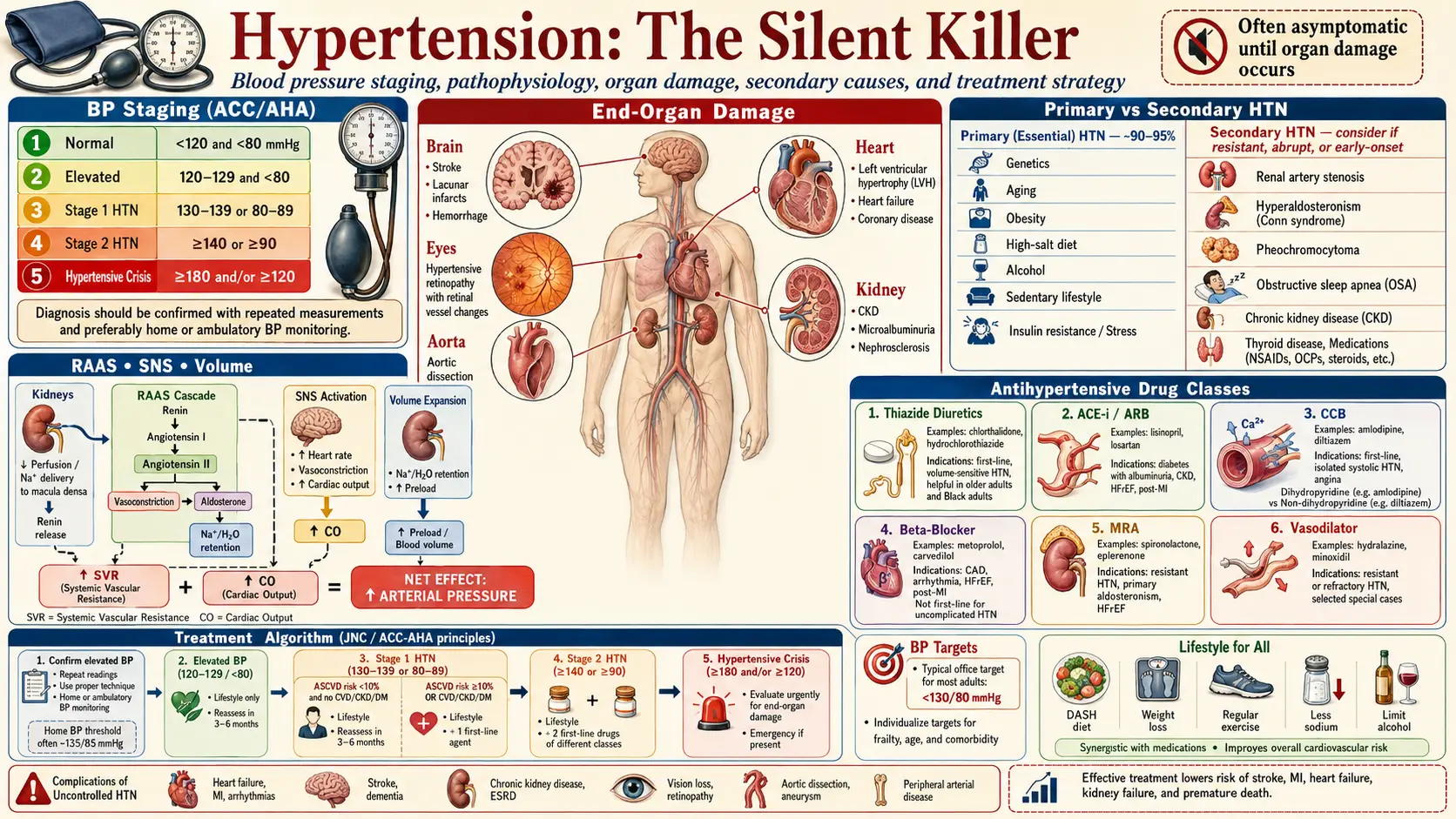
Hypertension, also known as high blood pressure, is a chronic medical condition in which the force of the blood against the artery walls is consistently too high. This can lead to serious health complications, including heart disease and stroke.
Types of Hypertension
1. Primary (Essential) Hypertension
- Most common type: Develops gradually over many years.
- No identifiable cause: Typically linked to genetics, aging, and lifestyle factors.
2. Secondary Hypertension
- Less common: Caused by an underlying condition.
- Potential causes include:
- Kidney disease
- Hormonal disorders (e.g., adrenal gland tumors)
- Obstructive sleep apnea
- Medications (e.g., birth control pills, decongestants)
Symptoms of Hypertension
Often referred to as a "silent killer", hypertension may not present noticeable symptoms until it reaches severe or life-threatening levels. However, some potential signs include:
- Headaches
- Shortness of breath
- Nosebleeds (less common and usually occur when blood pressure is extremely high)
Risk Factors
- Age: Risk increases with age.
- Family history: Genetics can play a role.
- Being overweight or obese: Increases the risk.
- Physical inactivity: Sedentary lifestyle contributes to higher risk.
- Poor diet: High salt, fat, and cholesterol intake can elevate blood pressure.
- Excessive alcohol consumption: Linked to increased blood pressure.
- Smoking: Damages blood vessel walls, contributing to high blood pressure.
- Chronic stress: Can contribute to temporary or long-term blood pressure spikes.
Prevention and Management
- Healthy diet: Emphasize fruits, vegetables, whole grains, and lean proteins (e.g., the DASH diet).
- Regular physical activity: At least 30 minutes of moderate exercise most days of the week.
- Maintaining a healthy weight: Helps manage blood pressure.
- Limiting alcohol intake: Reduces blood pressure risks.
- Quitting smoking: Improves overall cardiovascular health.
- Managing stress: Techniques such as meditation and deep breathing can be beneficial.
Treatment Options
- Medications: Commonly prescribed drugs include diuretics, ACE inhibitors, beta-blockers, calcium channel blockers, and more.
- Lifestyle changes: Essential to support medication and reduce blood pressure naturally.
- Regular monitoring: Tracking blood pressure at home helps manage treatment effectiveness.
Complications of Untreated Hypertension
- Heart disease: Includes heart attack, heart failure, and arrhythmias.
- Stroke: Caused by reduced blood flow to the brain.
- Kidney damage: May lead to kidney failure.
- Vision loss: Damage to blood vessels in the eyes can lead to vision problems.
- Aneurysms: Increased pressure can cause blood vessels to weaken and bulge.
Research Papers
The following PubMed topic searches return current peer-reviewed literature relevant to this condition. Each link opens a live PubMed query.
- Hypertension guidelines
- SPRINT trial blood pressure
- DASH diet hypertension
- Resistant hypertension
- Ambulatory blood pressure monitoring
- Antihypertensive medication
- Hypertension cardiovascular outcomes
- Hypertension pregnancy
- Secondary hypertension
- Hypertension sodium intake
- Renal denervation hypertension
- Hypertension prevalence worldwide
Connections
- Cardiology
- DASH Diet — the eating pattern with real feeding-trial blood-pressure numbers
- How Heart Failure Develops — interactive animation
- What Happens in a Stroke — interactive animation
- The Baroreflex: Your Blood Pressure’s Split-Second Autopilot — interactive animation
- Nitric Oxide & Vessel Dilation — interactive animation
- How Your Body Controls Blood Pressure — interactive animation
- The Heart & Circulation — interactive animation
- Slowing CKD Progression
- Stroke
- Heart Failure
- Coronary Artery Disease
- Cardiovascular Disease
- Aortic Aneurysm
- Headache
- Edema
- Magnesium
- Potassium
- Garlic
- Lipid Panel
- Omega-3 Fatty Acids
- Anti-Inflammatory Diet
- Celery Juice and Blood Pressure
- Lead Poisoning
- Kidney Disease
- Obstructive Sleep Apnea
- Pulmonary Hypertension
- Kidney Cancer
- Diabetic Retinopathy
- Polycystic Kidney Disease
- Takayasu Arteritis
- HELLP Syndrome — a severe hypertensive complication of pregnancy; women who survive it carry a markedly higher lifetime risk of chronic hypertension.