Stroke
Interactive Visualization How Blood Clots — and how thinners stop it Build a platelet plug, weave a fibrin mesh, then watch aspirin, warfarin and a DOAC each break a different step — with a live INR. Launch →
Table of Contents
- What is a Stroke?
- Types of Stroke
- Symptoms of Stroke
- Risk Factors
- Prevention Strategies
- Treatment Options
- Complications of Stroke
- Research Papers
- Connections
- Featured Videos
What is a Stroke?
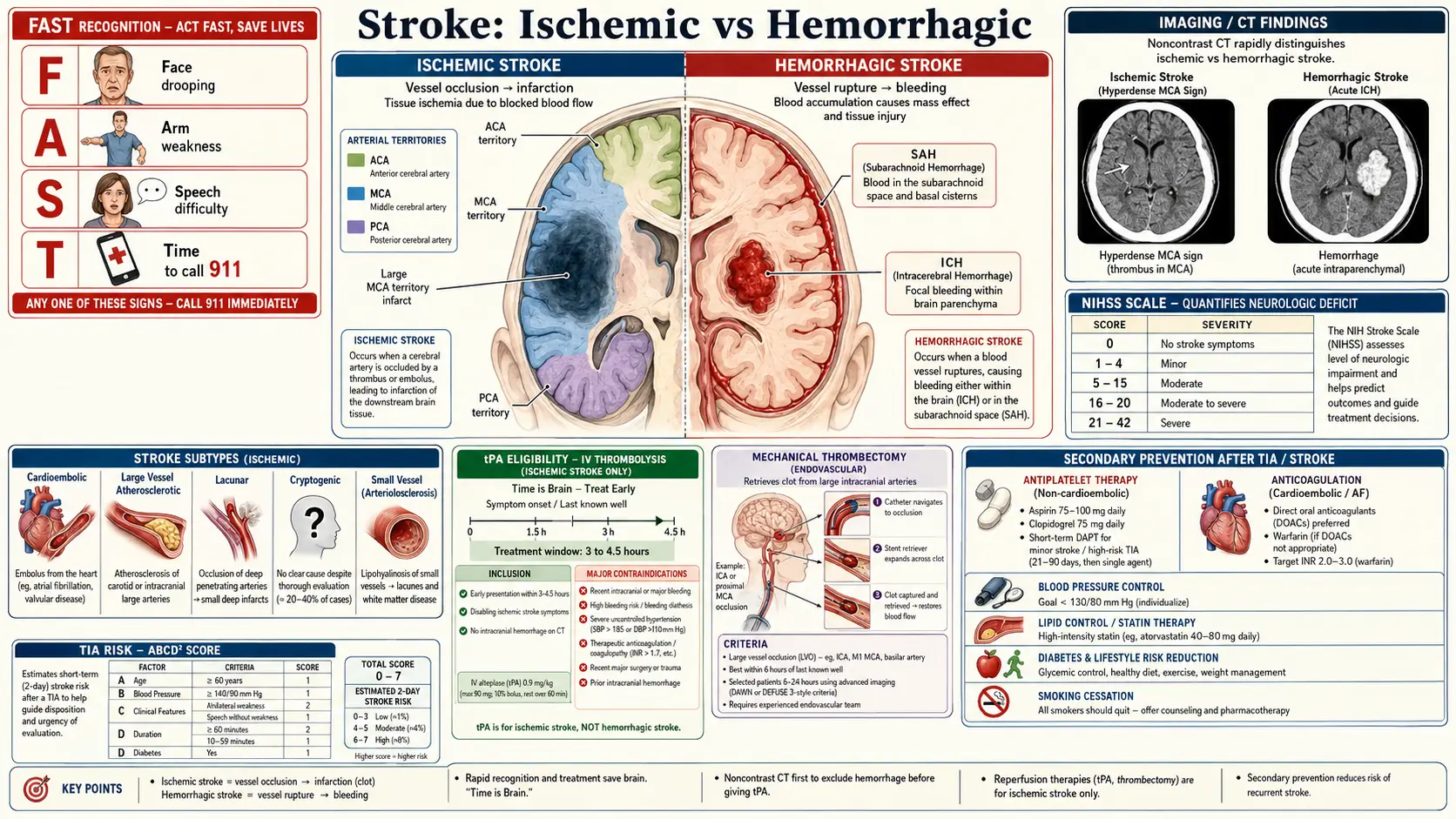
Stroke is a medical emergency that occurs when the blood supply to part of the brain is interrupted or reduced, preventing brain tissue from getting oxygen and nutrients. This can lead to brain cell death within minutes if not treated promptly.
Types of Stroke
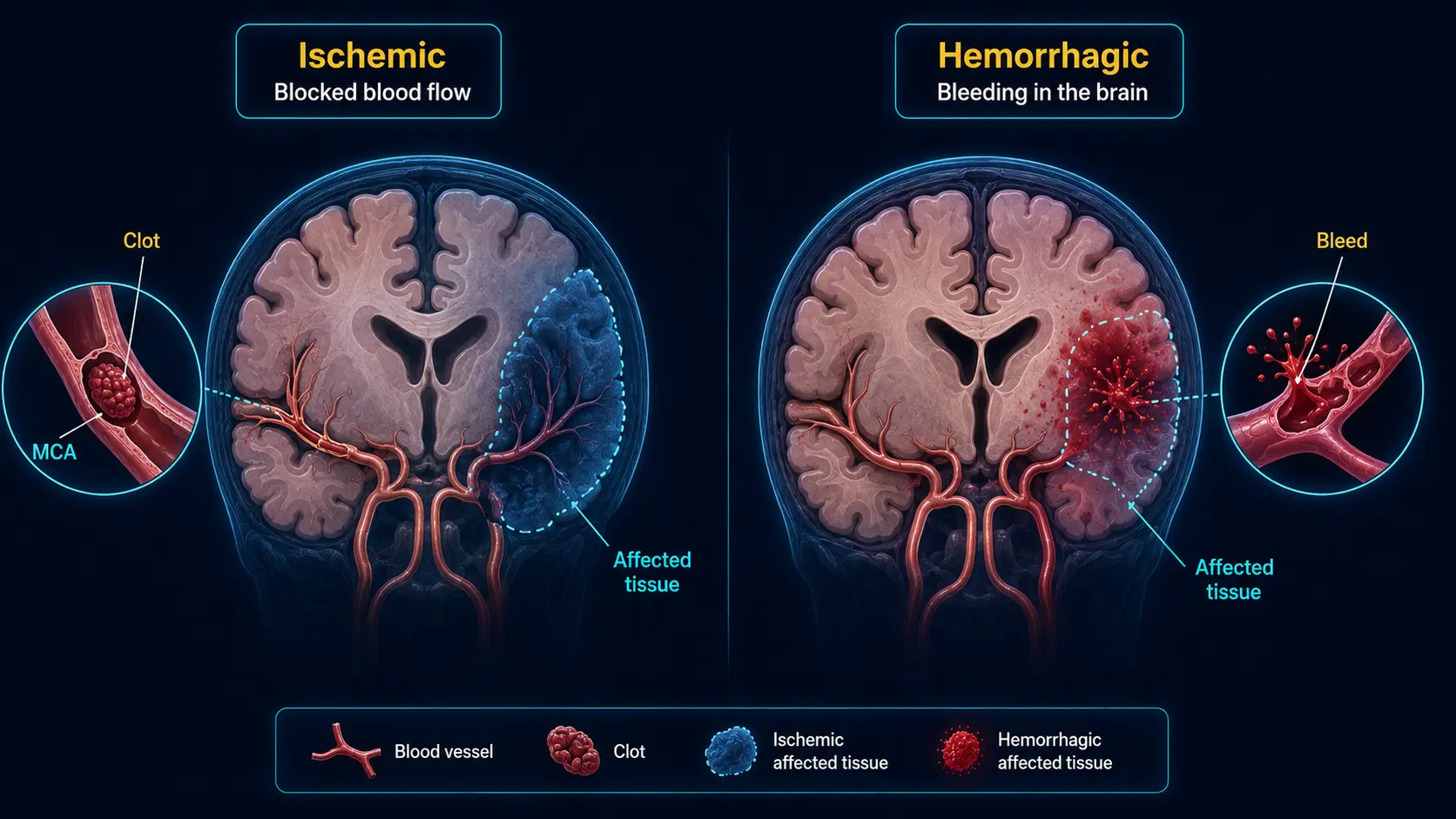
1. Ischemic Stroke
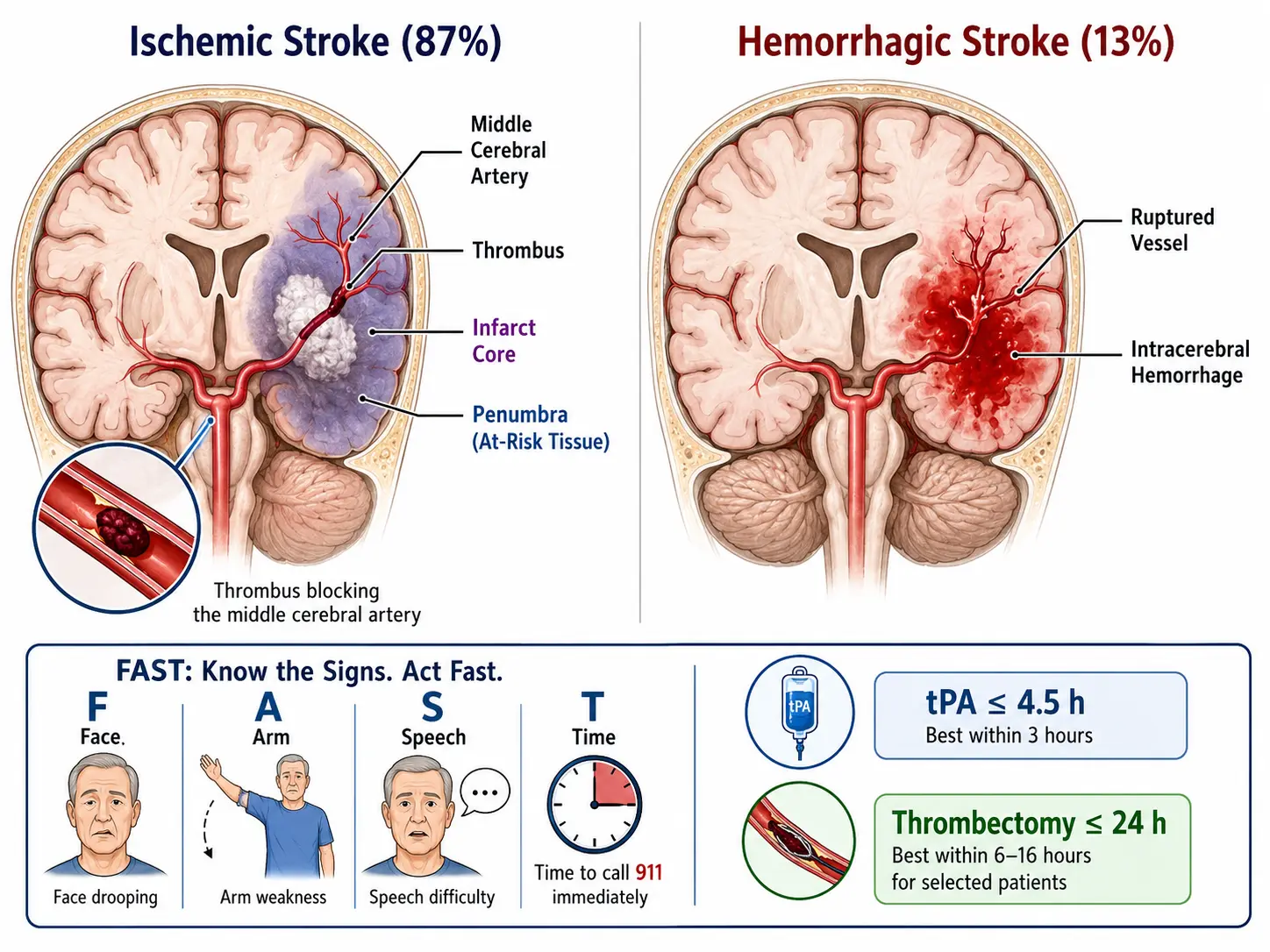
- Most common type: Accounts for about 87% of all strokes.
- Occurs due to a blocked artery: Caused by a blood clot or plaque buildup.
- Subtypes include:
- Thrombotic stroke: Clot forms in an artery supplying blood to the brain.
- Embolic stroke: Clot forms elsewhere in the body and travels to the brain.
2. Hemorrhagic Stroke
- Caused by a ruptured blood vessel in the brain.
- Can result from: High blood pressure, aneurysms, or head injuries.
- Types include:
- Intracerebral hemorrhage: Bleeding occurs within the brain.
- Subarachnoid hemorrhage: Bleeding occurs in the space between the brain and the thin tissues covering it.
3. Transient Ischemic Attack (TIA)
- Also known as a “mini-stroke”.
- Temporary blockage of blood flow to the brain.
- Symptoms last a few minutes to hours but do not cause permanent damage.
- Warning sign of a potential future stroke.
Symptoms of Stroke
It is crucial to recognize stroke symptoms quickly. Common signs include:
- Sudden numbness or weakness in the face, arm, or leg, especially on one side of the body.
- Sudden confusion, trouble speaking, or difficulty understanding speech.
- Sudden trouble seeing in one or both eyes.
- Sudden dizziness, loss of balance, or lack of coordination.
- Sudden severe headache with no known cause.
Risk Factors
- High blood pressure (hypertension): The most significant risk factor for stroke.
- Diabetes: Increases stroke risk due to damage to blood vessels over time.
- Smoking: Damages blood vessels and increases clot formation.
- High cholesterol: Leads to plaque buildup in arteries.
- Heart disease: Conditions such as atrial fibrillation increase stroke risk.
- Obesity: Linked to other stroke risk factors like diabetes and high blood pressure.
- Family history of stroke or heart disease.
- Age: Risk increases with age, especially after 55.
Prevention Strategies
- Maintain healthy blood pressure: Regular monitoring and management.
- Exercise regularly: At least 30 minutes of moderate activity most days.
- Adopt a healthy diet: Emphasize fruits, vegetables, lean proteins, and whole grains.
- Manage diabetes: Keep blood sugar levels in check.
- Limit alcohol consumption: Excessive intake increases stroke risk.
- Avoid smoking: Quitting reduces risk significantly.
- Manage stress: Techniques like meditation and deep breathing can help.
Treatment Options
1. Ischemic Stroke Treatment
- Clot-busting drugs (thrombolytics): Tissue plasminogen activator (tPA) can dissolve the clot if administered within a few hours of symptom onset.
- Mechanical thrombectomy: A procedure to remove the clot using a catheter.
- Medications: Antiplatelet drugs and anticoagulants may be used to prevent future strokes.
2. Hemorrhagic Stroke Treatment
- Emergency surgery: To repair damaged blood vessels or relieve pressure in the brain.
- Medications: Used to control blood pressure, prevent seizures, and reduce brain swelling.
Complications of Stroke
- Paralysis or loss of muscle movement: Common on one side of the body.
- Speech and language difficulties: Can include problems speaking or understanding speech (aphasia).
- Cognitive impairment: Memory loss, difficulty thinking, or changes in behavior.
- Emotional challenges: Depression and anxiety are common after a stroke.
- Pain and sensory issues: May include numbness or unusual sensations.
Research Papers
The following PubMed topic searches return current peer-reviewed literature relevant to this condition. Each link opens a live PubMed query.
- Ischemic stroke epidemiology
- Thrombolysis stroke tPA alteplase
- Mechanical thrombectomy stroke
- Hemorrhagic stroke
- Stroke secondary prevention
- Carotid endarterectomy
- Stroke rehabilitation
- Stroke management guidelines
- Transient ischemic attack
- Acute stroke CT MRI imaging
- Stroke risk factors
- Stroke mortality
Connections
- Cardiology
- How Blood Clots — interactive animation
- Hypertension
- Atrial Fibrillation
- Cardiovascular Disease
- Coronary Artery Disease
- Peripheral Artery Disease
- Deep Vein Thrombosis
- Sickle Cell Disease
- Lipid Panel
- Omega-3 Fatty Acids
- Diabetes
- Headache
- Anti-Inflammatory Diet
- Magnesium
- Garlic
- Atherosclerosis
- Heart Failure
- Potassium
- Inflammatory Markers
- Bell's Palsy
- Polycystic Kidney Disease