Heart Failure
Interactive Visualization The Heart & Circulation — watch a blood cell make the loop Trace a blood cell through all four chambers and both circuits, with a live ECG, chamber pressures, and an exercise mode. Launch → Interactive Visualization SGLT2 — watch the kidney spill sugar into the urine Watch the kidney reclaim every gram of glucose — until blood sugar passes the threshold and it spills into the urine, or an SGLT2-inhibitor drug dumps it there on purpose. Launch → Interactive Visualization How Heart Failure Develops Weaken the pump and watch the ejection fraction fall, fluid back up into the lungs, and the body's own 'fixes' quietly make it worse — then unload it with the right drugs. Launch →
Table of Contents
- What is Heart Failure?
- Causes and Risk Factors
- Symptoms of Heart Failure
- Diagnosis and Treatment
- Prognosis
- Research Papers
- Connections
- Featured Videos
What is Heart Failure?
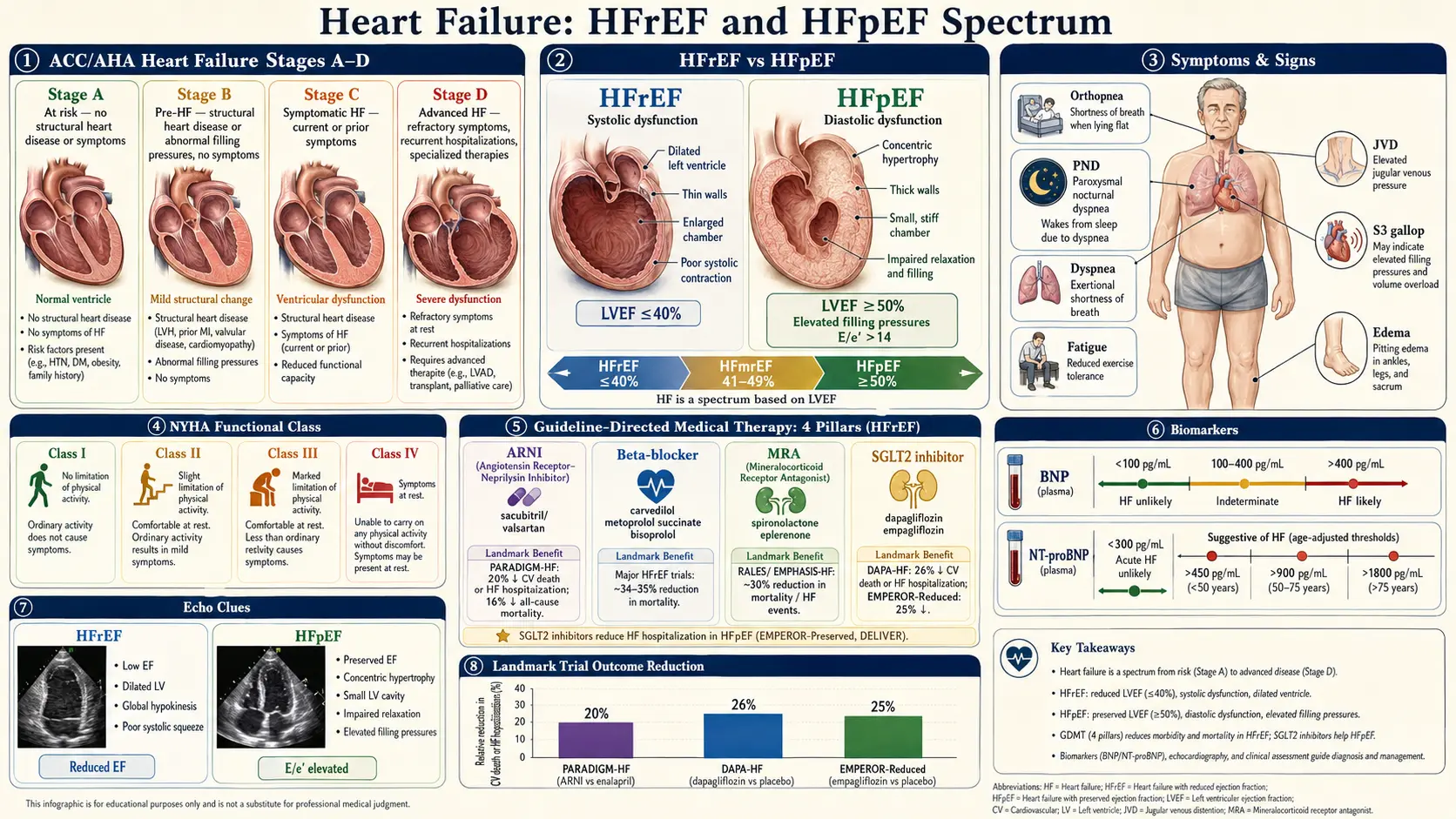
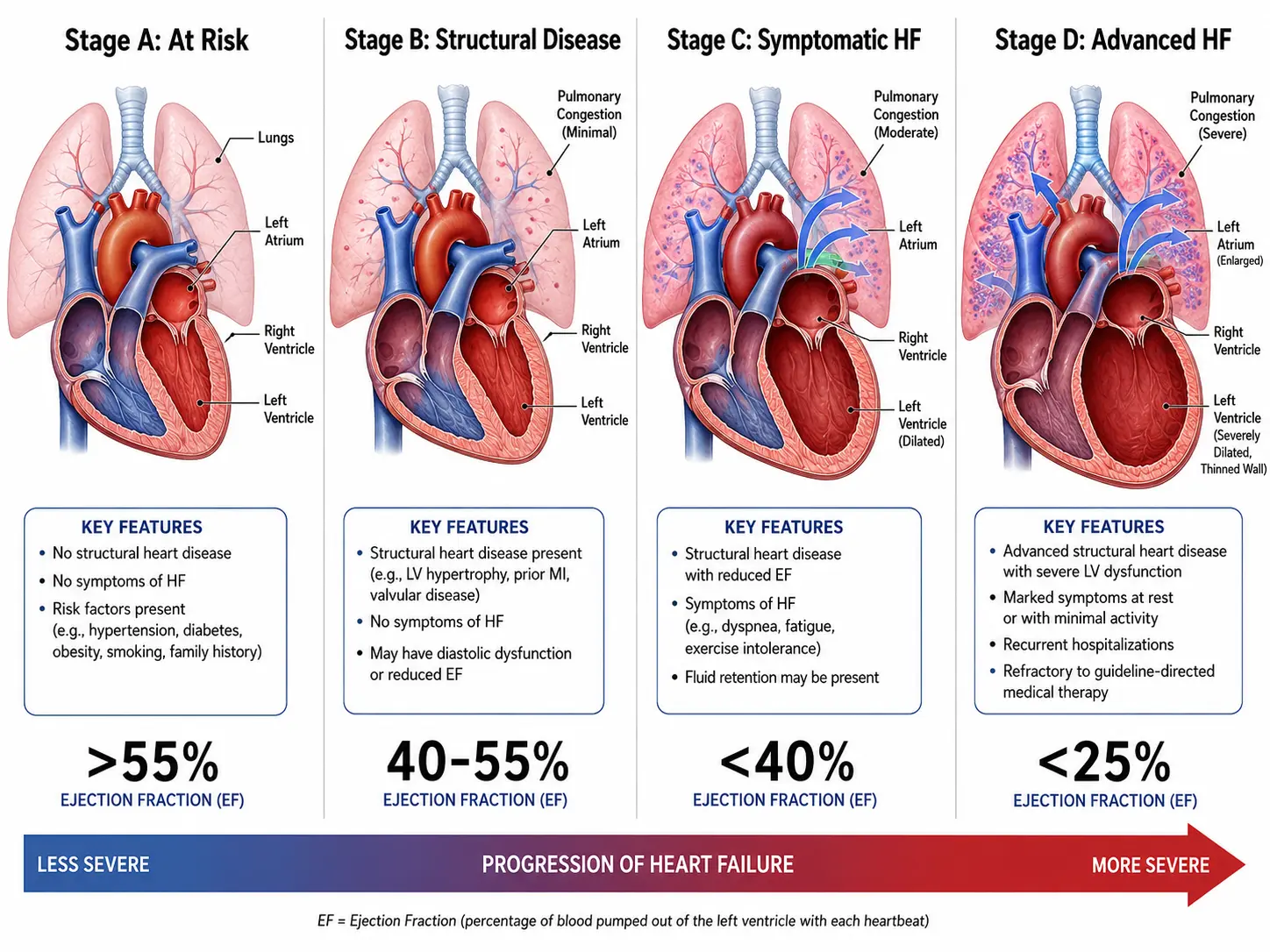
Heart failure is a chronic condition where the heart is unable to pump blood effectively to meet the body's needs. This can lead to a buildup of fluid in the lungs, legs, and other tissues, causing congestion and swelling.
Causes and Risk Factors
- Coronary artery disease: The most common cause, involving the narrowing or blockage of coronary arteries.
- High blood pressure: Forces the heart to work harder, which can weaken it over time.
- Heart attack: Damages the heart muscle, affecting its pumping ability.
- Cardiomyopathy: Disease of the heart muscle from genetic conditions, infections, or alcohol abuse.
- Diabetes: Increases the risk of developing heart failure.
Symptoms of Heart Failure
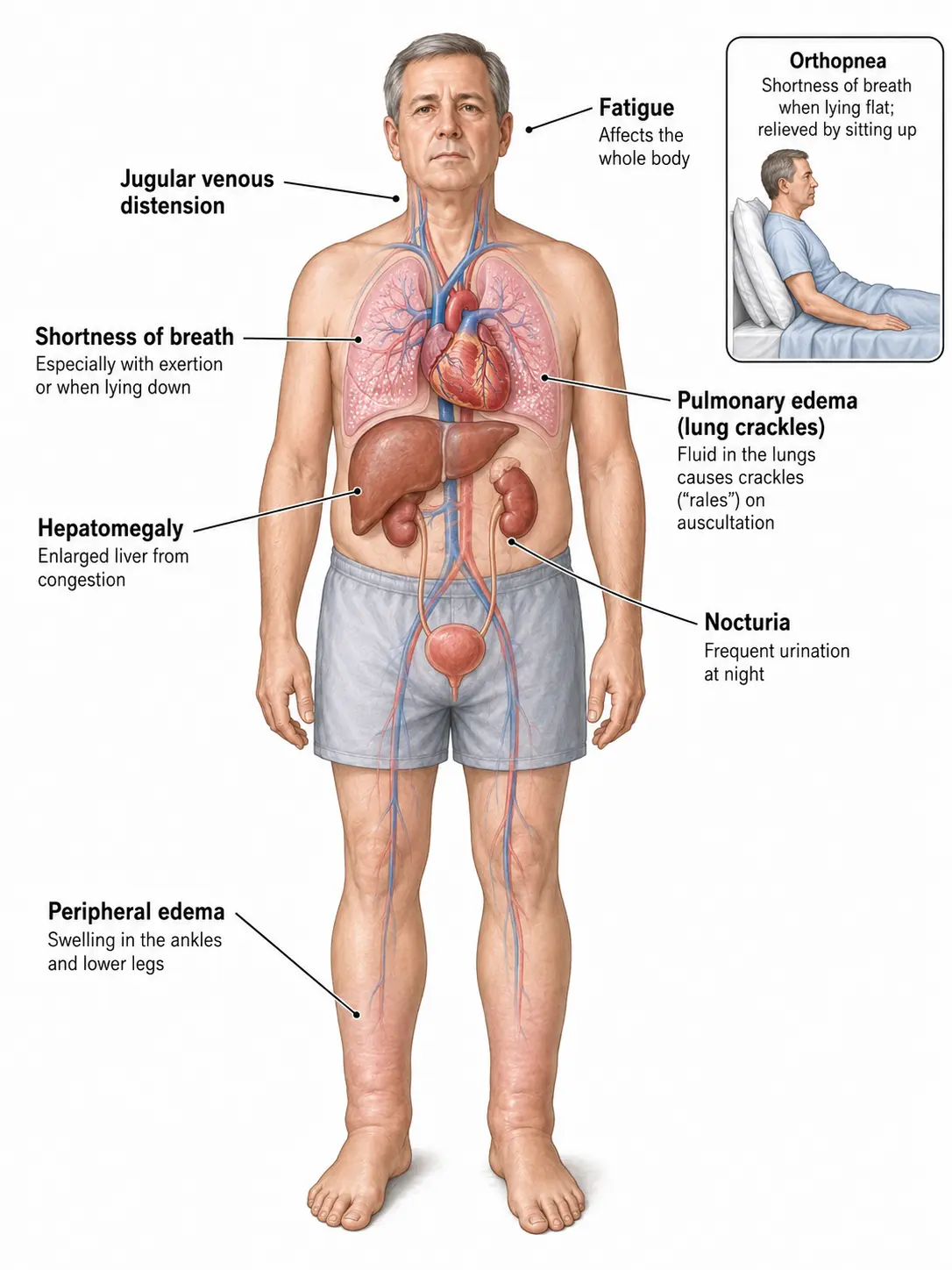
Common symptoms include:
- Shortness of breath, especially during exertion or when lying down
- Fatigue and weakness
- Swelling in the legs, ankles, and feet
- Rapid or irregular heartbeat
- Persistent cough or wheezing with white or pink-tinged mucus
- Increased need to urinate at night
- Sudden weight gain from fluid retention
Diagnosis and Treatment
Diagnostic Tests
To diagnose heart failure, doctors may use:
- Physical examination: To check for signs of fluid retention and listen to the heart.
- Blood tests: To check for markers indicating heart failure.
- Imaging tests: Such as echocardiograms, X-rays, and MRI to assess heart function.
- Electrocardiogram (ECG): To detect irregular heart rhythms.
Treatment Options
- Medications: Such as ACE inhibitors, beta-blockers, and diuretics to manage symptoms and improve heart function.
- Lifestyle changes: Including a heart-healthy diet, exercise, and weight management.
- Surgery: Such as coronary bypass surgery or heart valve repair for severe cases.
- Implantable devices: Pacemakers or defibrillators to help manage heart rhythms.
Prognosis
The prognosis for heart failure varies based on its severity and the patient’s overall health. While it is a chronic condition, proper management can improve quality of life and longevity.
Research Papers
The following PubMed topic searches return current peer-reviewed literature relevant to this condition. Each link opens a live PubMed query.
- Heart failure epidemiology
- HFrEF reduced ejection fraction
- HFpEF preserved ejection fraction
- SGLT2 inhibitor heart failure
- ACE inhibitor heart failure
- Beta blocker heart failure
- Heart failure guidelines
- BNP NT-proBNP heart failure
- Cardiac resynchronization therapy heart failure
- Heart failure mortality
- Sacubitril valsartan heart failure
- Heart failure hospitalization
Connections
- Cardiology
- How Heart Failure Develops — interactive animation
- SGLT2: Why Diabetes Drugs Make You Pee Sugar — interactive animation
- The Heart & Circulation — interactive animation
- Cardiomyopathy
- Coronary Artery Disease
- Hypertension
- Arrhythmia
- Valvular Heart Disease
- Atrial Fibrillation
- Shortness of Breath
- Edema
- Chest Pain
- Fatigue
- Magnesium
- Potassium
- Omega-3 Fatty Acids
- Cardiovascular Disease
- Diabetes
- Pulmonary Embolism
- Anti-Inflammatory Diet
- Stroke
- Astragalus for Cardiovascular Health — the Chinese trials adding astragalus injection to standard therapy, and what they measured.