Coronary Artery Disease (CAD)
Interactive Visualization The Heart & Circulation — watch a blood cell make the loop Trace a blood cell through all four chambers and both circuits, with a live ECG, chamber pressures, and an exercise mode. Launch → Interactive Visualization Cholesterol & the Artery Wall — watch a plaque form Follow LDL particles into the artery wall and see foam cells build plaque — then add a statin and watch the receptors clear them. Launch → Interactive Visualization Nitric Oxide — make an artery relax Watch the endothelium turn L-arginine into nitric oxide and widen the artery — then let oxidative stress uncouple eNOS and stiffen it, or pour in beet nitrate to rescue the flow. Launch → Interactive Visualization How Heart Failure Develops Weaken the pump and watch the ejection fraction fall, fluid back up into the lungs, and the body's own 'fixes' quietly make it worse — then unload it with the right drugs. Launch →
Table of Contents
- What is Coronary Artery Disease?
- Causes and Risk Factors
- Symptoms of Coronary Artery Disease
- Diagnosis and Treatment
- Prognosis
- Research Papers
- Connections
- Featured Videos
What is Coronary Artery Disease?
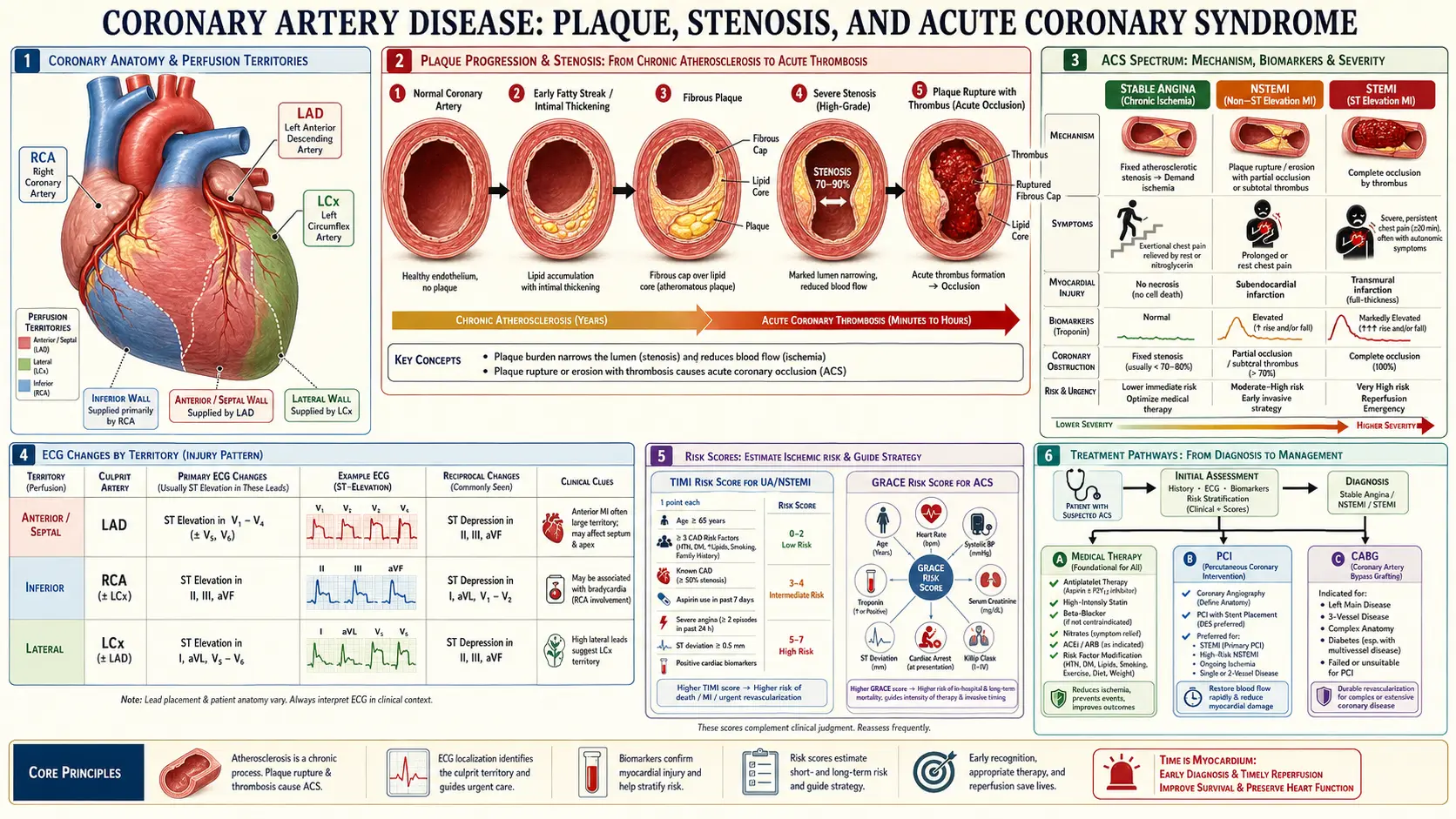
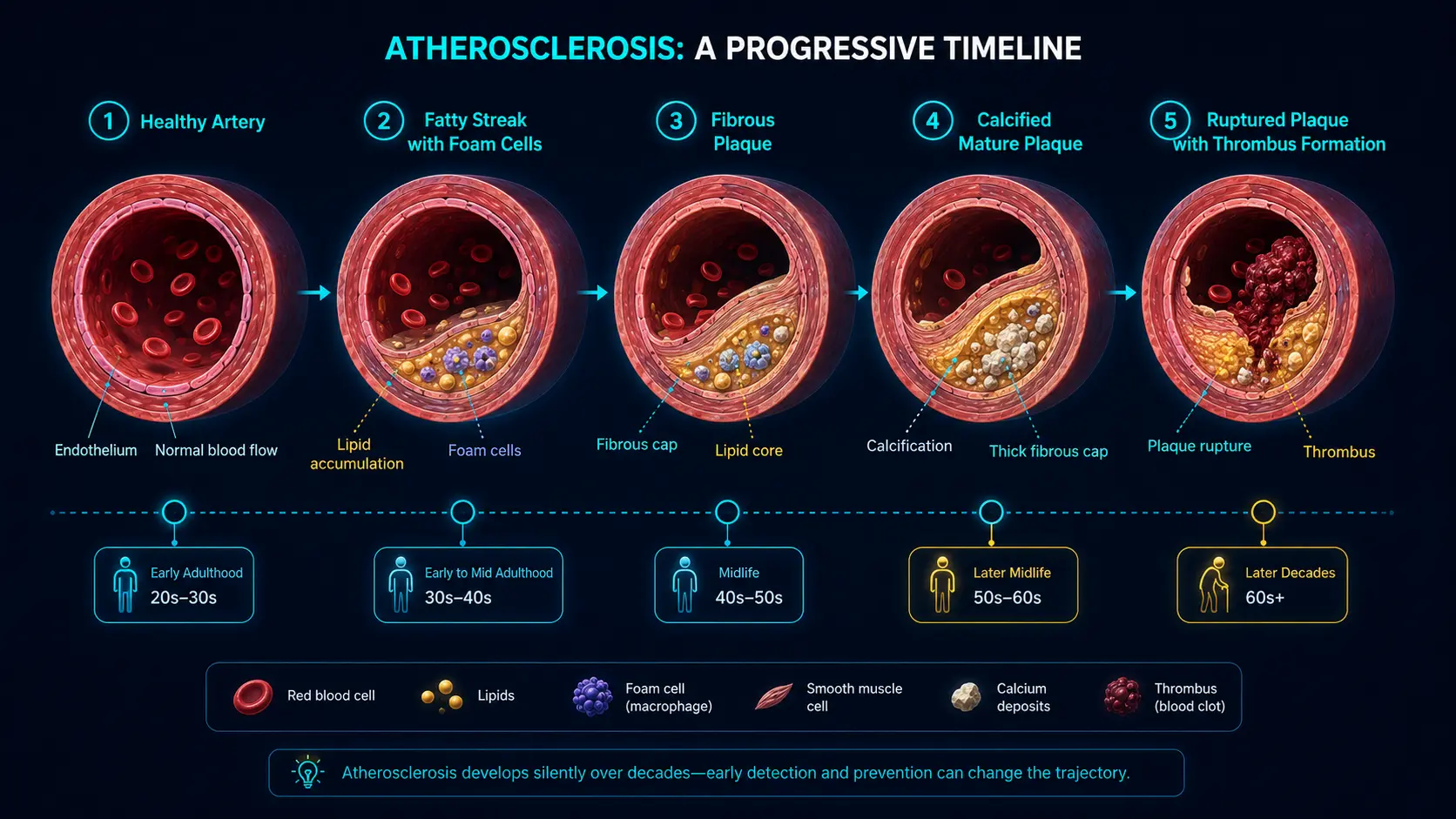
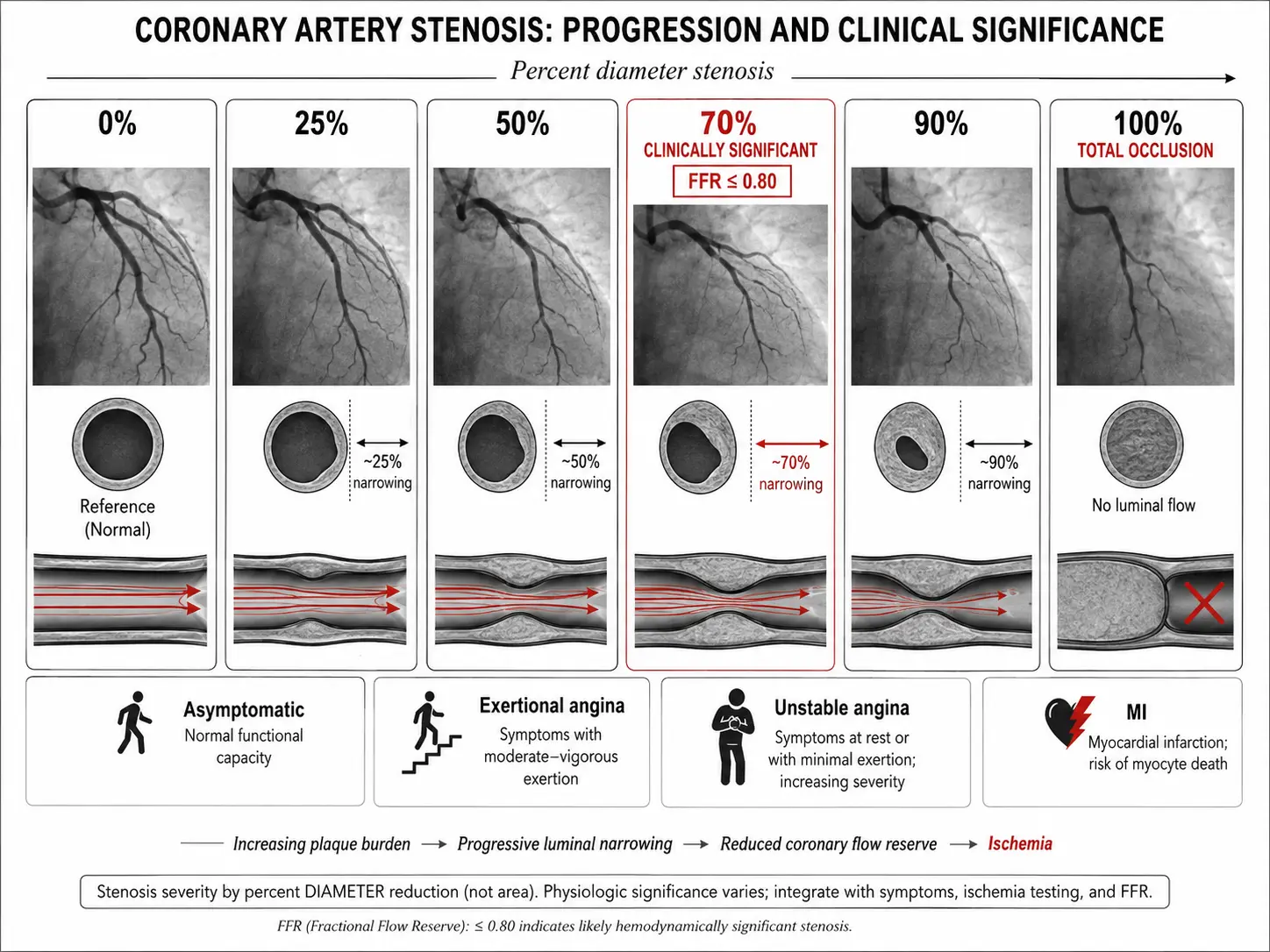
Coronary Artery Disease (CAD) is a condition where the coronary arteries, which supply blood to the heart muscle, become narrowed or blocked due to the buildup of plaque (atherosclerosis). This can reduce blood flow and lead to chest pain (angina) or heart attacks.
Causes and Risk Factors
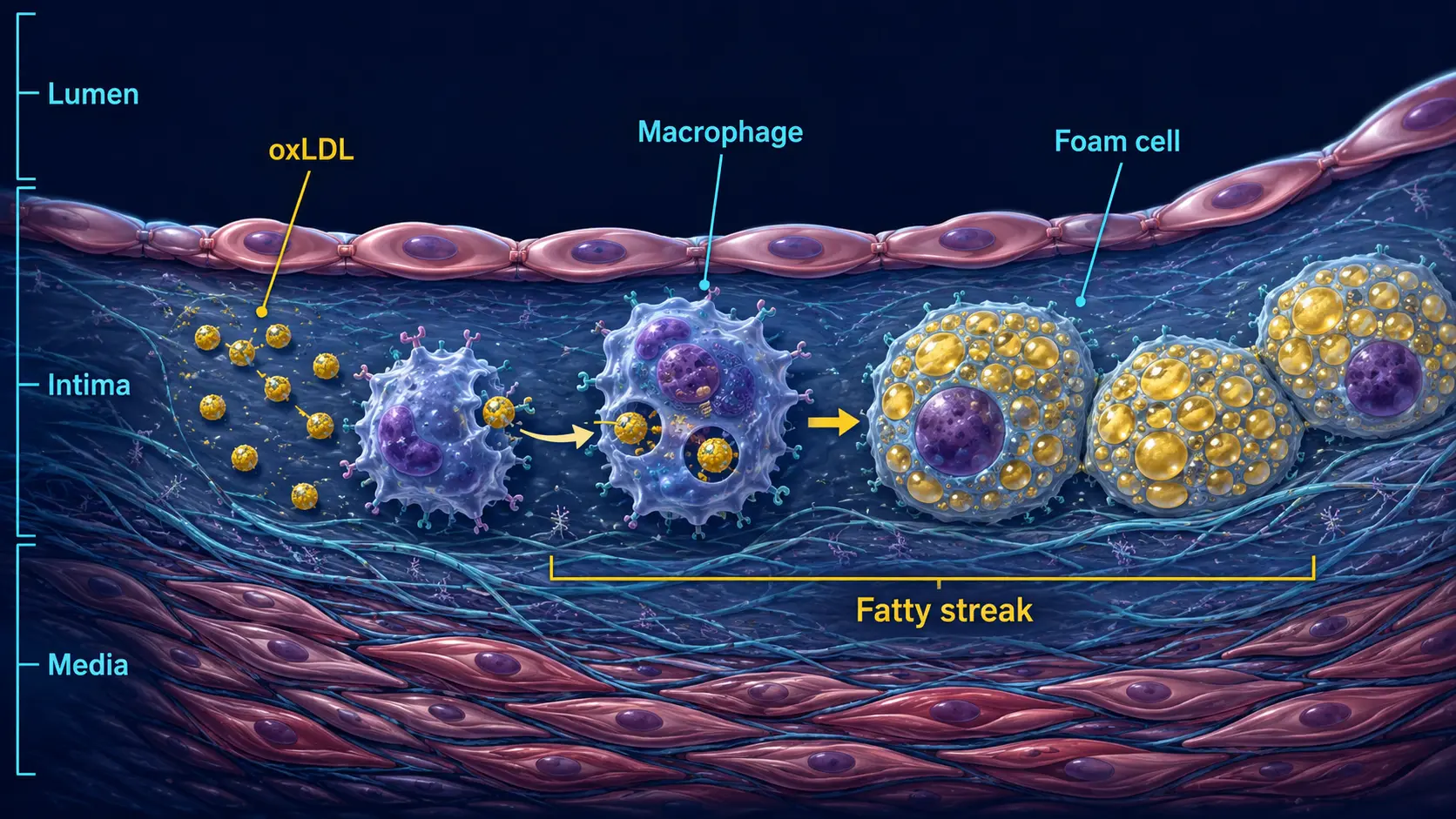
- Plaque buildup: Due to cholesterol, fatty deposits, and other substances in the artery walls.
- High blood pressure: Can damage arteries over time and promote plaque formation.
- Smoking: Damages the lining of arteries and contributes to plaque buildup.
- Diabetes: Increases the risk of CAD due to high blood sugar levels.
- Family history: A family history of CAD can increase the risk.
Symptoms of Coronary Artery Disease
Common symptoms include:
- Chest pain or discomfort (angina), especially during physical activity or stress
- Shortness of breath
- Fatigue
- Heart attack symptoms: Such as chest pain, nausea, and sweating
Diagnosis and Treatment
Diagnostic Tests
To diagnose CAD, doctors may use:
- Electrocardiogram (ECG): To detect abnormalities in the heart's electrical activity.
- Stress test: To monitor heart function during physical exertion.
- Coronary angiography: An imaging test using dye and X-rays to show artery blockages.
- CT scan: To provide detailed images of the coronary arteries.
Treatment Options
- Lifestyle changes: Diet, exercise, and smoking cessation to improve heart health.
- Medications: Such as statins, beta-blockers, and antiplatelet drugs to manage symptoms and prevent progression.
- Angioplasty and stenting: A minimally invasive procedure to open blocked arteries and place a stent.
- Coronary artery bypass grafting (CABG): Surgery to create a new path for blood to flow around blocked arteries.
Prognosis
The prognosis for coronary artery disease depends on the severity of the blockage, the number of affected arteries, and the effectiveness of treatment. With proper lifestyle changes and medical management, many patients can lead active and fulfilling lives.
Research Papers
The following PubMed topic searches return current peer-reviewed literature relevant to this condition. Each link opens a live PubMed query.
- Coronary artery disease pathophysiology
- Coronary angiography
- Percutaneous coronary intervention
- Coronary artery bypass grafting
- Stable angina management
- Acute coronary syndrome
- Myocardial infarction
- Coronary artery disease guidelines
- CT coronary angiography
- Coronary artery calcium score
- Statin coronary artery disease
- Coronary artery disease prevention
Connections
- Cardiology
- How Heart Failure Develops — interactive animation
- Nitric Oxide & Vessel Dilation — interactive animation
- Cholesterol & the Artery Wall — interactive animation
- The Heart & Circulation — interactive animation
- Angina
- Heart Attack (Myocardial Infarction)
- Cardiovascular Disease
- Chest Pain
- Stroke
- Hypertension
- Heart Failure
- Peripheral Artery Disease
- Shortness of Breath
- Atherosclerosis
- Lipid Panel
- Coronary Calcium Score
- ApoB
- Garlic
- Anti-Inflammatory Diet
- Omega-3 Fatty Acids
- Diabetes
- Magnesium
- Aspirin
- Homocysteine