Vitamin B3 (Niacin): The Cellular Energy, Longevity, and Metabolic Rescue Vitamin
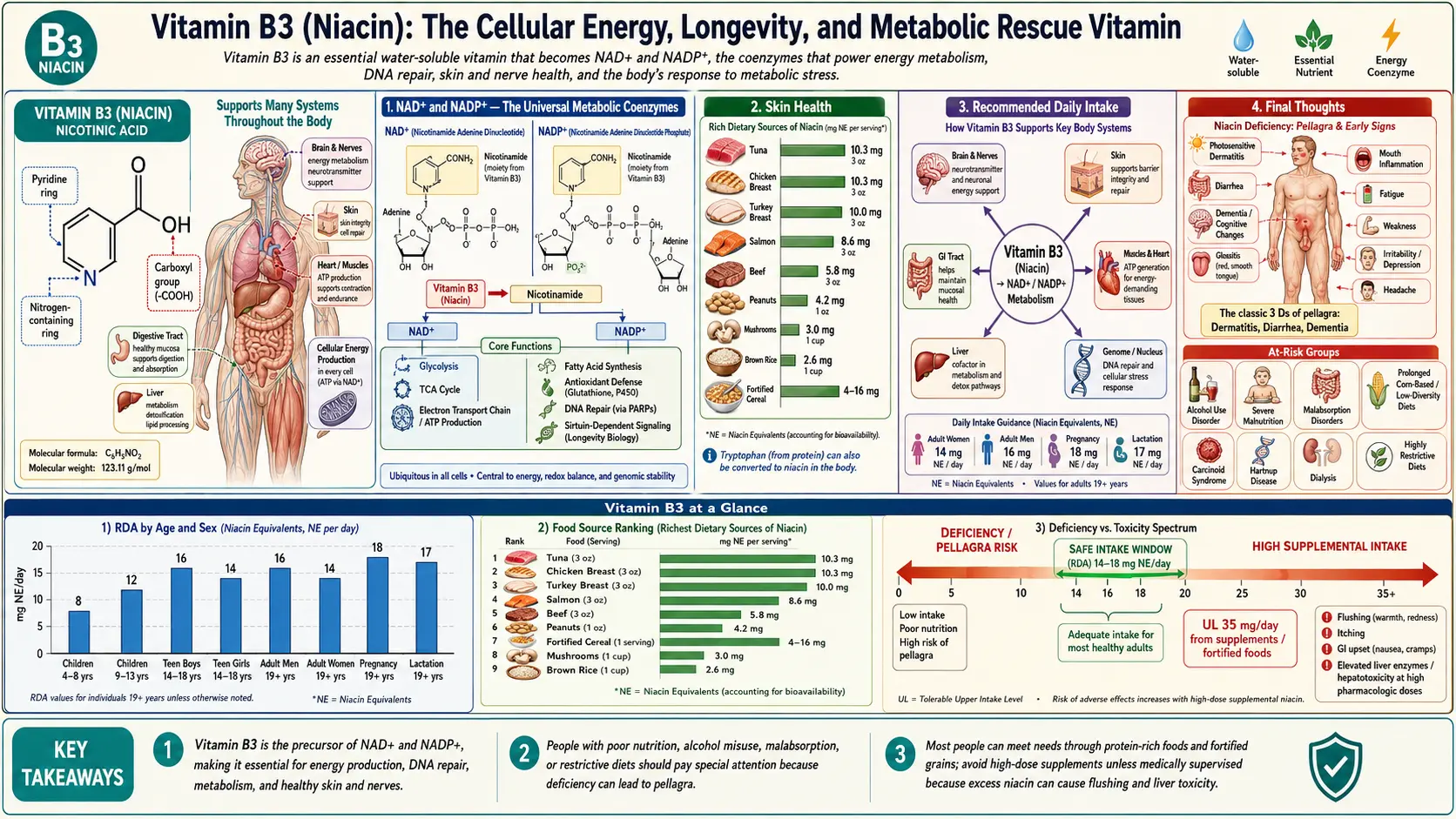
Vitamin B3, known collectively as niacin, encompasses three primary dietary forms — nicotinic acid, nicotinamide (niacinamide), and nicotinamide riboside (NR) — all of which are converted in the body to the two metabolically active coenzymes nicotinamide adenine dinucleotide (NAD+) and nicotinamide adenine dinucleotide phosphate (NADP+). In natural medicine, Vitamin B3 holds a singular position of importance: NAD+ and NADP+ participate in over 500 enzymatic reactions — more than any other coenzyme derived from any vitamin. These reactions encompass virtually every aspect of cellular metabolism, from energy production and DNA repair to antioxidant defense, gene expression, and the emerging science of longevity. Historically, niacin rescued entire populations from the devastating deficiency disease pellagra, and today it continues to rescue individuals from metabolic dysfunction, cardiovascular disease, neurological decline, and the ravages of aging at the cellular level.
Interactive Visualization Mitochondria & ATP — watch your cells make energy Follow electrons through the transport chain and watch the ATP-synthase motor spin — then block Complex IV and see the chain stall. Launch → Interactive Visualization Glycolysis & the Krebs Cycle — turn sugar into energy carriers Split glucose into pyruvate through ten enzyme steps, feed the Krebs cycle, and load the NADH and FADH₂ carriers the mitochondria turn into ATP — then cut the oxygen and watch it fall to lactate. Launch → Interactive Visualization Enzymes: How They Speed Up Life Drop a substrate into an enzyme's active site and watch induced-fit catalysis fly — then heat it, swing the pH, or add an inhibitor and watch it stall. Many enzymes need a vitamin or mineral cofactor. Launch →Table of Contents
- NAD+ and NADP+ — The Universal Metabolic Coenzymes
- Cellular Energy Production
- NAD+, Sirtuins, and the Science of Longevity
- DNA Repair — PARPs and Genomic Stability
- Cardiovascular Health
- Brain Health and Neuroprotection
- Antioxidant Defense — The NADPH-Glutathione Axis
- Skin Health
- Joint Health and Anti-Inflammatory Effects
- Blood Sugar Regulation and Diabetes
- Mental Health
- Historical Medical Use (1926 U.S. Dispensatory) & the Lipid-Drug Story
- Immune System Modulation
- Pellagra — The Deficiency Disease of the Four D's
- Natural Food Sources
- Recommended Daily Intake
- Supplemental Forms
- Synergistic Nutrients
- Populations at Higher Risk of Deficiency
- Signs of Deficiency
- Safety and Toxicity Considerations
- Special Therapeutic Applications
- Connections
- Featured Videos
1. NAD+ and NADP+ — The Universal Metabolic Coenzymes
Understanding Vitamin B3 begins with understanding the two coenzymes it produces — molecules so fundamental to life that no cell can survive without them.
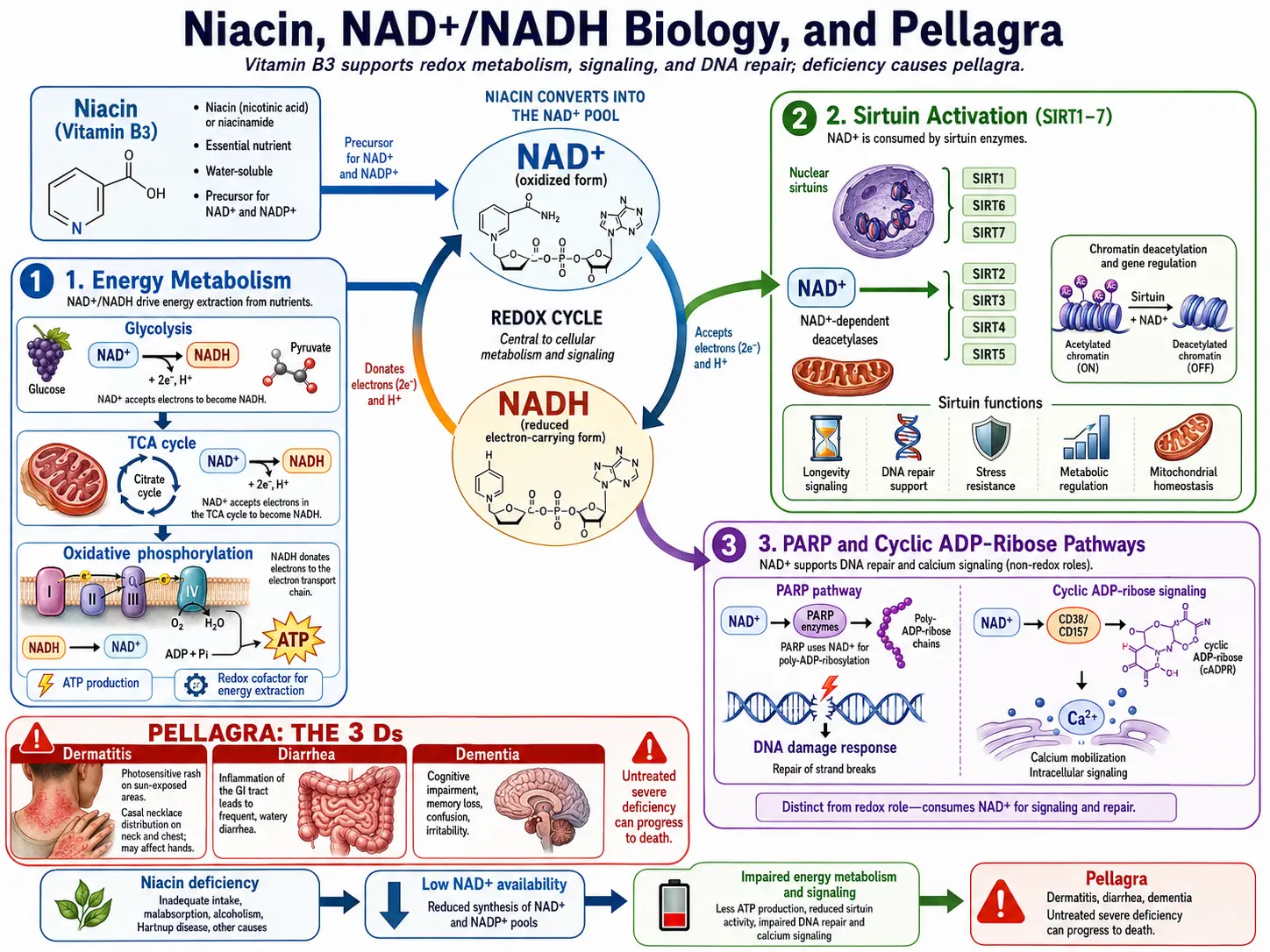
- NAD+ (Nicotinamide Adenine Dinucleotide): Functions as the body's primary electron carrier in catabolic (energy-producing) reactions. NAD+ accepts electrons (becoming NADH) during the breakdown of carbohydrates, fats, and proteins in glycolysis, the Krebs cycle, and beta-oxidation. NADH then donates these electrons to the mitochondrial electron transport chain for ATP synthesis. NAD+ is also essential for the activity of sirtuins (longevity enzymes), PARPs (DNA repair enzymes), and CD38 (an immune signaling molecule) — all of which consume NAD+ as a substrate, not merely as a cofactor.
- NADP+ (Nicotinamide Adenine Dinucleotide Phosphate): Functions primarily in anabolic (biosynthetic) reactions. NADPH (the reduced form) is the essential electron donor for fatty acid synthesis, cholesterol synthesis, steroid hormone production, and — critically — the regeneration of glutathione, the body's master antioxidant. NADPH is produced primarily through the pentose phosphate pathway and is the single most important molecule for maintaining the cell's reductive (antioxidant) capacity.
- Scale of Involvement: Together, NAD+ and NADP+ participate in over 500 enzymatic reactions — a number that dwarfs the involvement of any other vitamin-derived coenzyme. This means that Vitamin B3 status influences virtually every metabolic pathway in the body simultaneously.
- NAD+ as a Signaling Molecule: Beyond its role as an electron carrier, NAD+ functions as a critical signaling molecule and substrate for enzymes that regulate aging, inflammation, circadian rhythm, DNA repair, and cellular stress responses. This dual role as both metabolic coenzyme and signaling molecule makes NAD+ one of the most important molecules in the emerging science of longevity.
2. Cellular Energy Production
Vitamin B3 sits at the absolute center of the body's energy-generating machinery — no other vitamin is involved in more steps of ATP production.
- Glycolysis: NAD+ is required as the electron acceptor in the glyceraldehyde-3-phosphate dehydrogenase reaction — a critical step in glycolysis that generates NADH for downstream energy production.
- Pyruvate Dehydrogenase Complex: NAD+ is the electron acceptor in this gateway reaction that converts pyruvate to acetyl-CoA, linking glycolysis to the Krebs cycle. This reaction also requires Vitamins B1, B2, and B5 — illustrating the profound interdependence of the B-vitamin family.
- Krebs Cycle (Citric Acid Cycle): NAD+ serves as the electron acceptor in three of the eight reactions of the Krebs cycle — isocitrate dehydrogenase, alpha-ketoglutarate dehydrogenase, and malate dehydrogenase — generating three molecules of NADH per cycle turn.
- Electron Transport Chain: NADH delivers its electrons to Complex I of the mitochondrial electron transport chain, initiating the proton gradient that drives ATP synthase — the final step of oxidative phosphorylation. Each NADH molecule generates approximately 2.5 ATP.
- Beta-Oxidation: NAD+ is required during the oxidation of fatty acids in the mitochondria, generating NADH from each round of beta-oxidation. This pathway is the primary energy source during fasting, endurance exercise, and low-carbohydrate states.
- Alcohol Metabolism: NAD+ is consumed in both steps of hepatic alcohol metabolism — alcohol dehydrogenase (ethanol → acetaldehyde) and aldehyde dehydrogenase (acetaldehyde → acetate). Heavy alcohol consumption can deplete hepatic NAD+ levels so severely that other metabolic pathways are compromised.
- Metabolic Bottleneck: Because NAD+ is required at so many points in energy metabolism, even modest reductions in NAD+ availability can create metabolic bottlenecks that manifest as fatigue, metabolic inflexibility, and impaired cellular function across multiple organ systems.
3. NAD+, Sirtuins, and the Science of Longevity
One of the most exciting frontiers in modern nutritional science is the discovery that NAD+ is the essential substrate for sirtuins — a family of enzymes increasingly recognized as master regulators of aging, metabolism, and cellular resilience.
- The Sirtuin Family: Humans possess seven sirtuins (SIRT1–SIRT7), each localized to different cellular compartments and governing different aspects of cellular health. All seven require NAD+ as a co-substrate — they literally consume NAD+ to perform their functions.
- SIRT1 — The Metabolic Master Switch: The most studied sirtuin, SIRT1 regulates glucose and fat metabolism, insulin sensitivity, mitochondrial biogenesis, inflammation, and cellular stress resistance. It is activated by caloric restriction — and its activity is directly dependent on NAD+ availability.
- SIRT3 — The Mitochondrial Guardian: Localized in the mitochondria, SIRT3 deacetylates and activates enzymes involved in the Krebs cycle, fatty acid oxidation, and antioxidant defense (including superoxide dismutase 2). It protects mitochondria from oxidative damage and supports metabolic efficiency.
- SIRT6 — The DNA Protector: SIRT6 plays a critical role in DNA repair, telomere maintenance, and the suppression of genomic instability. Its deficiency in animal models causes accelerated aging, while its overexpression extends lifespan.
- NAD+ Decline with Age: One of the most significant discoveries in aging research is that NAD+ levels decline substantially with age — by approximately 50% between ages 40 and 60 in many tissues. This decline reduces sirtuin activity and is increasingly believed to be a central driver of metabolic dysfunction, inflammation, neurodegeneration, and other hallmarks of aging.
- NAD+ Restoration Strategies: Supplementation with NAD+ precursors — particularly nicotinamide riboside (NR) and nicotinamide mononucleotide (NMN) — has been shown to restore NAD+ levels in tissues and improve markers of metabolic health, mitochondrial function, and cellular resilience in both animal and human studies. This represents one of the most promising anti-aging interventions currently under investigation.
- Caloric Restriction Mimicry: Caloric restriction — the most robustly documented intervention for lifespan extension across species — works partly by raising the NAD+/NADH ratio and activating sirtuins. NAD+ precursor supplementation may replicate some of these benefits without requiring caloric restriction itself.
4. DNA Repair — PARPs and Genomic Stability
- Poly(ADP-Ribose) Polymerases (PARPs): PARPs are a family of enzymes that detect and initiate the repair of single-strand DNA breaks — the most common type of DNA damage. PARPs use NAD+ as their substrate, consuming it to synthesize poly(ADP-ribose) chains that recruit repair machinery to damaged DNA sites.
- PARP1 — The First Responder: PARP1 is the most abundant and active PARP enzyme, responsible for detecting and repairing the vast majority of single-strand DNA breaks. It is one of the largest consumers of NAD+ in the cell, and its activity increases dramatically with age as accumulated DNA damage rises.
- NAD+ Competition: PARPs and sirtuins compete for the same pool of NAD+. As DNA damage accumulates with age, PARPs consume increasing amounts of NAD+, leaving less available for sirtuins — contributing to the age-related decline in sirtuin-mediated protective functions. Maintaining adequate NAD+ levels may help support both repair and longevity pathways simultaneously.
- Cancer Prevention: Efficient DNA repair is the frontline defense against mutagenesis and carcinogenesis. By supporting PARP function through adequate NAD+ availability, Vitamin B3 contributes to genomic stability and cancer prevention.
- Radiation and Toxin Defense: Environmental insults — UV radiation, chemical toxins, oxidative stress — all cause DNA damage that activates PARPs and consumes NAD+. Adequate B3 status ensures the cell has the resources to mount an effective repair response.
5. Cardiovascular Health
Nicotinic acid (one specific form of Vitamin B3) has the longest and most extensively documented history of any nutrient in cardiovascular medicine.
- Lipid Profile Optimization: Nicotinic acid at pharmacological doses (1,000–3,000 mg/day) is the single most effective agent for raising HDL cholesterol — increasing it by 15–35%. It simultaneously reduces LDL cholesterol by 5–25%, total cholesterol by 10–20%, triglycerides by 20–50%, and lipoprotein(a) by up to 30%. No pharmaceutical drug matches this comprehensive lipid-modifying profile.
- Lipoprotein(a) Reduction: Lipoprotein(a), or Lp(a), is a genetically determined, highly atherogenic lipoprotein that is largely resistant to lifestyle modification and statin therapy. Nicotinic acid is one of the very few interventions that meaningfully reduces Lp(a) — a fact of great significance for individuals with elevated Lp(a) and high cardiovascular risk.
- LDL Particle Size: Nicotinic acid shifts the LDL particle distribution from small, dense LDL (the most atherogenic pattern) to large, buoyant LDL (less atherogenic), providing cardiovascular protection beyond what LDL cholesterol numbers alone reflect.
- Endothelial Function: Through its lipid-modifying, anti-inflammatory, and antioxidant effects, nicotinic acid supports healthy endothelial function and nitric oxide availability.
- The Coronary Drug Project: In this landmark clinical trial (1966–1975), nicotinic acid was the only lipid-lowering agent to demonstrate a reduction in total mortality — a result that long-term follow-up confirmed even 15 years after the trial ended.
- The Flush: Nicotinic acid causes a characteristic prostaglandin-mediated vasodilatory "flush" — a warm, tingling, red sensation of the skin (particularly the face, neck, and chest) that typically begins 20–30 minutes after ingestion. While harmless and temporary, the flush is the primary reason many patients discontinue nicotinic acid. Strategies to manage the flush are discussed in the supplemental forms section below.
- Important Note: The cardiovascular benefits described above are specific to nicotinic acid. Nicotinamide (niacinamide) does not produce the same lipid-modifying effects and does not cause flushing.
6. Brain Health and Neuroprotection
- Brain Energy Metabolism: The brain consumes approximately 20% of the body's total energy output despite representing only 2% of body weight. This extraordinary energy demand is met through NAD+-dependent oxidative phosphorylation — making the brain exquisitely sensitive to NAD+ depletion.
- NAD+ and Neurodegeneration: Declining NAD+ levels in the brain are increasingly implicated in the pathogenesis of Alzheimer's disease, Parkinson's disease, and other neurodegenerative conditions. NAD+ depletion impairs mitochondrial function, reduces sirtuin-mediated neuroprotection, compromises DNA repair, and increases neuroinflammation.
- Pellagra Dementia: The historical disease of severe niacin deficiency — pellagra — culminates in dementia, demonstrating that B3 is absolutely essential for normal cognitive function. The dementia of pellagra is characterized by confusion, disorientation, memory loss, psychosis, and eventually death if untreated.
- Tryptophan-Kynurenine Pathway: B3 metabolism is intricately connected to the kynurenine pathway — the primary route of tryptophan degradation. Dysregulation of this pathway produces neurotoxic metabolites (quinolinic acid, 3-hydroxykynurenine) implicated in depression, anxiety, schizophrenia, and neurodegeneration. Adequate B3 status helps ensure that tryptophan metabolism proceeds along healthier routes.
- Niacin Receptors in the Brain: The niacin receptor GPR109A (also called HCA2 or HCAR2) is expressed in the brain, where its activation by nicotinic acid exerts anti-inflammatory and neuroprotective effects — reducing microglial activation and neuroinflammation.
- Multiple Sclerosis and Neuroprotection: Preclinical research has shown that NAD+ precursors (particularly nicotinamide riboside) can prevent axonal degeneration and promote neuroprotection in models of demyelinating disease, generating interest in their potential for MS and other neurological conditions.
- Cognitive Function: Higher niacin intake from food sources has been associated with reduced risk of Alzheimer's disease and age-related cognitive decline in large epidemiological studies.
7. Antioxidant Defense — The NADPH-Glutathione Axis
- NADPH — The Antioxidant Currency: NADP+ (derived from Vitamin B3) is reduced to NADPH primarily through the pentose phosphate pathway. NADPH is the essential electron donor for virtually all reductive biosynthetic reactions and, critically, for the regeneration of the body's antioxidant defenses.
- Glutathione Recycling: NADPH is the cofactor for glutathione reductase, the enzyme that recycles oxidized glutathione (GSSG) back to its active, reduced form (GSH). Without NADPH, the entire glutathione antioxidant system collapses. Since glutathione is the body's most abundant intracellular antioxidant and the central molecule of Phase II liver detoxification, NADPH — and therefore Vitamin B3 — is foundational to antioxidant defense.
- Thioredoxin System: NADPH also powers the thioredoxin reductase system — another major intracellular antioxidant network that protects proteins from oxidative damage and supports DNA synthesis.
- Catalase Support: NADPH binds to and stabilizes catalase — the enzyme that converts hydrogen peroxide to water and oxygen. Without NADPH, catalase activity is impaired and hydrogen peroxide accumulates, causing oxidative damage.
- Detoxification: NADPH powers cytochrome P450 enzymes in the liver — the Phase I detoxification system that metabolizes drugs, hormones, toxins, and environmental chemicals. Adequate B3 is therefore essential for the liver's detoxification capacity.
- Immune Cell Oxidative Burst: Neutrophils and macrophages use NADPH oxidase to generate reactive oxygen species (the "oxidative burst") that kill invading pathogens. Adequate NADPH supply ensures effective microbicidal activity while NADPH-dependent antioxidant systems protect the immune cells themselves from self-inflicted oxidative damage.
8. Skin Health
- Pellagra Dermatitis: The most dramatic dermatological manifestation of B3 deficiency is the photosensitive dermatitis of pellagra — a characteristic bilateral, symmetrical rash that appears on sun-exposed areas of skin (face, neck, arms, hands) and is aggravated by ultraviolet light. The rash progresses from redness and burning to thickening, darkening, cracking, and peeling of the skin.
- Nicotinamide for Skin Cancer Prevention: A landmark randomized controlled trial (the ONTRAC study, published in the New England Journal of Medicine) demonstrated that nicotinamide at 500 mg twice daily reduced the rate of new nonmelanoma skin cancers by 23% and actinic keratoses (precancerous lesions) by 11–20% in high-risk individuals. This effect is attributed to nicotinamide's ability to enhance cellular energy for DNA repair after UV damage and to reduce immunosuppression caused by ultraviolet radiation.
- Skin Barrier Function: Nicotinamide supports the synthesis of ceramides, sphingolipids, and fatty acids that form the skin's lipid barrier. Topical nicotinamide improves barrier function, reduces transepidermal water loss, and enhances skin hydration.
- Anti-Inflammatory Effects: Topical nicotinamide reduces inflammatory mediators in the skin and has demonstrated clinical benefit in acne, rosacea, and atopic dermatitis.
- Hyperpigmentation: Nicotinamide inhibits the transfer of melanosomes from melanocytes to keratinocytes, helping to reduce hyperpigmentation, dark spots, and uneven skin tone without affecting melanin production itself.
- Anti-Aging: Through its support of NAD+-dependent sirtuins, DNA repair enzymes, and antioxidant pathways, nicotinamide supports skin cell longevity, reduces the appearance of fine lines and wrinkles, and improves skin elasticity.
9. Joint Health and Anti-Inflammatory Effects
- Osteoarthritis: Pioneering work by Dr. William Kaufman in the 1940s and 1950s documented remarkable improvements in joint mobility, range of motion, and function in osteoarthritis patients treated with high-dose nicotinamide (niacinamide). His protocols involved 250 mg taken 6–16 times daily (total 1,500–4,000 mg/day) and were among the earliest documented nutritional interventions for arthritis.
- Anti-Inflammatory Mechanisms: Nicotinamide inhibits the production of pro-inflammatory cytokines (IL-1, IL-6, TNF-α), reduces NF-κB activation, and modulates immune cell function — providing broad anti-inflammatory effects relevant to arthritic and autoimmune conditions.
- Cartilage Protection: Through its support of NAD+-dependent cellular energy and repair pathways, nicotinamide may help protect chondrocytes (cartilage cells) from degenerative damage and support cartilage matrix maintenance.
- Joint Stiffness and Mobility: Patients in Kaufman's original studies reported significant reductions in morning stiffness, improved joint flexibility, and enhanced overall functional capacity — improvements that reversed upon discontinuation and returned upon resumption of supplementation.
10. Blood Sugar Regulation and Diabetes
- Type 1 Diabetes Prevention: Nicotinamide has been investigated as a potential preventive agent for type 1 diabetes in high-risk individuals (those with positive autoantibodies). The rationale is that nicotinamide protects pancreatic beta cells from autoimmune destruction through its PARP-inhibiting, anti-inflammatory, and NAD+-replenishing effects. While large clinical trials (ENDIT) did not show prevention of clinical diabetes, smaller studies suggested delayed onset and preserved beta cell function in some subgroups.
- Beta Cell Protection: Nicotinamide's ability to inhibit PARP overactivation — which can deplete NAD+ and trigger cell death in stressed beta cells — provides a potential protective mechanism for preserving insulin-producing capacity.
- Insulin Sensitivity: NAD+-dependent sirtuin activation (particularly SIRT1) enhances insulin sensitivity, improves glucose uptake, and supports healthy metabolic function. Restoring NAD+ levels through B3 supplementation may improve metabolic flexibility in insulin-resistant individuals.
- Glucose Tolerance: Nicotinic acid at high doses can paradoxically impair glucose tolerance and raise fasting blood sugar — an effect mediated through increased lipolysis and free fatty acid release. This is an important consideration when using pharmacological-dose nicotinic acid in individuals with diabetes or prediabetes, and is one reason nicotinamide or NR may be preferred in this population.
- NAD+ and Metabolic Syndrome: Declining NAD+ levels are implicated in the metabolic dysfunction that underlies metabolic syndrome — insulin resistance, central obesity, dyslipidemia, and hypertension. NAD+ restoration through B3 precursors is being investigated as a strategy to address the root metabolic dysfunction.
11. Mental Health
- Pellagra Psychosis: The psychiatric manifestations of pellagra (severe B3 deficiency) include depression, anxiety, irritability, apathy, confusion, disorientation, hallucinations, delusions, and psychosis — culminating in dementia. These symptoms are fully reversible with niacin repletion if treated before permanent brain damage occurs.
- The Tryptophan Connection: Tryptophan is the precursor to both serotonin (via the serotonin pathway) and NAD+ (via the kynurenine pathway). When B3 status is low, tryptophan is diverted away from serotonin production toward NAD+ synthesis, potentially contributing to serotonin depletion and mood disturbances.
- Orthomolecular Psychiatry: Pioneering psychiatrists Drs. Abram Hoffer and Humphry Osmond conducted extensive research using high-dose niacin (3,000–18,000 mg/day) for the treatment of schizophrenia, beginning in the 1950s. While their work remains controversial in mainstream psychiatry, the orthomolecular approach to mental illness using niacin and other nutrients has influenced generations of natural medicine practitioners.
- Anxiety: Niacinamide has been studied for its anxiolytic (anti-anxiety) effects, with some researchers noting that it interacts with benzodiazepine receptors in the brain, producing a calming effect without the sedation or addiction potential of pharmaceutical benzodiazepines.
- Depression: Through its support of serotonin synthesis (by preserving tryptophan for the serotonin pathway), NAD+-dependent energy metabolism in the brain, and sirtuin-mediated neuroprotection, adequate B3 contributes to mood stability and resilience against depression.
- ADHD: Some integrative practitioners include niacinamide in protocols for attention deficit hyperactivity disorder, based on its role in neurotransmitter metabolism and its calming effects on the nervous system.
Historical Medical Use (1926 U.S. Dispensatory) & the Lipid-Drug Story
Niacin sits at an interesting crossroads of medical history. By the early twentieth century — the era of the United States Dispensatory (21st edition, 1926), the authoritative American drug reference of its day — physicians were already working out where this newly understood B vitamin fit in medicine. Over the following decades, niacin was credited with (and studied for) a remarkable list of uses: lowering triglycerides and raising HDL ("good") cholesterol, possibly extending lifespan and reducing cardiovascular events, treating certain psychiatric conditions such as bipolar disorder and schizophrenia, and serving as the precursor for NAD+, the coenzyme that powers the mitochondria. Each of those claims contains a real kernel of biochemistry — but a century of careful research has sharpened, and in some places overturned, the original enthusiasm. Here is the honest, balanced picture.
- The lipid claim is genuinely true — niacin really does improve the cholesterol panel. This was no exaggeration. Nicotinic acid remains one of the most powerful lipid-modifying agents ever found: it raises HDL by 15–35%, lowers triglycerides by 20–50%, lowers LDL, and uniquely reduces lipoprotein(a) (see the Cardiovascular Health section above). For decades this made niacin a cornerstone of cholesterol management, and in the pre-statin Coronary Drug Project it was the one lipid drug that actually reduced long-term mortality.
- But "better numbers" did not survive the outcome trials of the statin era. This is the crucial modern correction. A better lipid panel is only worth having if it translates into fewer heart attacks, strokes, and deaths — and when that question was finally tested in large, rigorous trials of patients already taking statins, niacin failed. The AIM-HIGH trial (2011) was stopped early because adding extended-release niacin to statin therapy produced no reduction in cardiovascular events despite raising HDL and lowering triglycerides. The even larger HPS2-THRIVE trial (2014, more than 25,000 patients) confirmed this and went further: niacin added no cardiovascular benefit and increased harms — more diabetes, infections, bleeding, and gastrointestinal and musculoskeletal problems. As a result, niacin has fallen out of first-line cardiovascular use, and the FDA withdrew approval of niacin–statin combination products. The takeaway is not that niacin "doesn't work on cholesterol" — it does — but that, on top of a statin, moving those numbers did not help patients live longer or avoid events.
- The psychiatric claims (the orthomolecular movement) are only weakly supported. Beginning in the 1950s, psychiatrists Abram Hoffer and Humphry Osmond championed very high-dose niacin for schizophrenia, launching what became the "orthomolecular psychiatry" movement (also referenced in the Mental Health section above). Their early reports were encouraging, but later controlled trials — including replications organized by the American Psychiatric Association — largely failed to confirm a benefit of megadose niacin in schizophrenia, and mainstream psychiatry does not recommend it. Niacin's role in bipolar disorder is likewise unproven. What is solid is the reverse relationship: severe niacin deficiency (pellagra) causes psychiatric symptoms up to and including psychosis, and those reverse with repletion — but that is correcting a deficiency, not megadosing an otherwise well-nourished person.
- The NAD+/mitochondria claim is real biochemistry. Niacin genuinely is the dietary precursor of NAD+, the coenzyme at the center of mitochondrial energy production, DNA repair, and the sirtuin longevity enzymes (covered in depth in the NAD+ and Longevity sections above). This part of the historical enthusiasm has aged well and is now one of the most active areas of nutritional science — though the leap from "NAD+ matters" to "niacin supplements extend human lifespan" remains an open research question, not an established fact.
- The one rock-solid, undisputed use is pellagra. Stripped of the controversies, niacin's foundational place in medicine rests on a single unimpeachable achievement: it prevents and cures pellagra, the deficiency disease of the "Four D's" (dermatitis, diarrhea, dementia, death) that killed hundreds of thousands before the vitamin was identified. That use — detailed in the Pellagra section above — is not in any doubt and never will be.
Safety the historical enthusiasm left out. The old framing of niacin as a near-harmless cure-all glossed over real risks that matter at the high doses once used for cholesterol and psychiatry. These are covered fully in the Safety and Toxicity Considerations section above, but in brief: high-dose nicotinic acid causes the prostaglandin-mediated flush (harmless but the main reason people quit); it can cause serious liver toxicity, especially with sustained-release formulations; and it can raise blood glucose (worsening or unmasking diabetes — exactly what HPS2-THRIVE observed) and raise uric acid (a problem for people prone to gout). High-dose niacin is a drug, not a casual supplement, and belongs under medical supervision.
Key references for this section. AIM-HIGH Investigators. Niacin in Patients with Low HDL Cholesterol Levels Receiving Intensive Statin Therapy. New England Journal of Medicine, 2011;365(24):2255–2267. — HPS2-THRIVE Collaborative Group. Effects of Extended-Release Niacin with Laropiprant in High-Risk Patients. New England Journal of Medicine, 2014;371(3):203–212. — Canner PL, et al. Fifteen Year Mortality in Coronary Drug Project Patients: Long-Term Benefit with Niacin. Journal of the American College of Cardiology, 1986;8(6):1245–1255. For the orthomolecular-psychiatry question, see the PubMed search on niacin and schizophrenia controlled trials.
12. Immune System Modulation
- Innate Immunity: NAD+-dependent enzymes support the metabolic reprogramming of macrophages and neutrophils during immune activation. The NADPH-dependent oxidative burst — the primary mechanism by which phagocytes kill bacteria — requires adequate B3-derived NADPH.
- Adaptive Immunity: T-cell and B-cell proliferation, differentiation, and effector function all require NAD+ for the rapid DNA synthesis and metabolic reprogramming that accompany clonal expansion.
- CD38 and Immune Signaling: CD38 is an NAD+-consuming enzyme expressed on immune cells that regulates intracellular calcium signaling, immune cell migration, and cytokine production. It is also one of the major consumers of NAD+ and a significant contributor to age-related NAD+ decline.
- Anti-Inflammatory Properties: Nicotinamide inhibits the NLRP3 inflammasome and reduces production of pro-inflammatory cytokines, providing anti-inflammatory effects relevant to chronic inflammatory conditions, autoimmunity, and sepsis.
- GPR109A Receptor: Nicotinic acid activates the GPR109A receptor expressed on immune cells (macrophages, dendritic cells, neutrophils), modulating inflammatory signaling and promoting anti-inflammatory responses. This receptor is also activated by the ketone body beta-hydroxybutyrate — linking fasting, ketosis, and niacin through a shared anti-inflammatory pathway.
- UV Immunosuppression Prevention: As demonstrated in skin cancer prevention studies, nicotinamide protects against UV-induced immunosuppression — the mechanism by which ultraviolet radiation allows precancerous skin cells to evade immune surveillance.
13. Pellagra — The Deficiency Disease of the Four D's
Pellagra is the classical disease of severe Vitamin B3 deficiency, historically characterized by the "Four D's":
- Dermatitis: Bilateral, symmetrical, photosensitive skin rash on sun-exposed areas. The rash progresses from erythema to vesiculation, cracking, hyperpigmentation, and eventually a thick, dark, scaly appearance. The characteristic necklace-like rash around the neck is called Casal's necklace.
- Diarrhea: Inflammation of the entire gastrointestinal tract produces glossitis (smooth, red tongue), stomatitis (mouth inflammation), nausea, vomiting, abdominal pain, and profuse diarrhea that can lead to dehydration and malabsorption.
- Dementia: Progressive neurological and psychiatric deterioration including depression, anxiety, irritability, insomnia, confusion, disorientation, hallucinations, psychosis, and ultimately dementia.
- Death: Without treatment, pellagra is fatal. Before the discovery of niacin, pellagra killed hundreds of thousands of people — particularly in populations dependent on corn (maize) as a dietary staple, as the niacin in corn is bound in a form (niacytin) that is not bioavailable unless treated with alkali (as in the traditional Mesoamerican practice of nixtamalization).
While frank pellagra is now rare in developed countries, subclinical B3 insufficiency — producing milder versions of dermatitis, digestive problems, and neuropsychiatric symptoms — may be more common than recognized, particularly among individuals with alcoholism, malabsorption, carcinoid syndrome, isoniazid use, and severely restrictive diets.
14. Natural Food Sources
Vitamin B3 is obtained from food in three ways: as preformed niacin (nicotinic acid and nicotinamide), and through the body's conversion of the amino acid tryptophan to NAD+ (approximately 60 mg of tryptophan yields 1 mg of niacin equivalent).
Richest Whole Food Sources
- Turkey and Chicken Breast (pasture-raised): Among the richest dietary sources of preformed niacin and tryptophan combined
- Tuna, Salmon, and Other Fatty Fish: Excellent sources of niacin alongside omega-3 fatty acids and Vitamin D
- Beef Liver and Organ Meats: Concentrated sources of niacin along with the full spectrum of B vitamins
- Grass-Fed Beef: Provides both niacin and tryptophan in a bioavailable food matrix
- Peanuts and Peanut Butter: One of the richest plant-based sources of niacin
- Mushrooms (especially portobello and cremini): Outstanding plant-based sources, with some varieties providing substantial niacin per serving
- Green Peas: A legume with notable niacin content alongside plant protein and fiber
- Sunflower Seeds: Nutrient-dense seeds providing niacin, vitamin E, and healthy fats
- Avocados: Provide niacin along with monounsaturated fats and potassium
- Brown Rice and Whole Grains: Unrefined grains retain their natural niacin; refining strips 80–90% away (many refined grain products are fortified with synthetic niacin to compensate)
- Nutritional Yeast: A plant-based B-vitamin powerhouse valued in vegan and vegetarian diets
- Tryptophan-Rich Foods: Turkey, chicken, eggs, cheese, milk, nuts, seeds, tofu, and legumes provide tryptophan — the amino acid precursor that the body converts to NAD+ (requiring Vitamins B2, B6, and iron as cofactors in the conversion pathway)
Important Notes on Niacin Bioavailability
- Corn (Maize): Niacin in corn is bound as niacytin, an essentially unavailable form, unless the corn is treated with alkaline water (nixtamalization) — the traditional processing method used by indigenous Mesoamerican cultures for thousands of years. The European adoption of corn without nixtamalization directly caused the pellagra epidemics of the 18th–20th centuries.
- Coffee: Interestingly, coffee beans contain trigonelline, which is converted to nicotinic acid during roasting. A cup of coffee provides approximately 1–3 mg of niacin, making it a minor but notable dietary source.
- Cooking: Niacin is relatively heat-stable compared to other B vitamins, though water-soluble losses occur during boiling. Roasting, baking, and grilling preserve niacin well.
15. Recommended Daily Intake
Niacin requirements are expressed in Niacin Equivalents (NE), where 1 NE = 1 mg niacin = 60 mg tryptophan:
- Adult Men: 16 mg NE per day
- Adult Women: 14 mg NE per day
- Pregnant Women: 18 mg NE per day
- Breastfeeding Women: 17 mg NE per day
- Children (4–8 years): 8 mg NE per day
- Children (9–13 years): 12 mg NE per day
Therapeutic Doses: Doses vary dramatically by form and indication. Nicotinamide for skin cancer prevention: 500 mg twice daily. Nicotinic acid for lipid management: 1,000–3,000 mg/day (under medical supervision). Nicotinamide riboside for NAD+ restoration: 250–1,000 mg/day. High-dose nicotinamide for arthritis: 1,500–4,000 mg/day in divided doses. The Tolerable Upper Intake Level (UL) for niacin is 35 mg/day based on the flushing threshold — but this applies primarily to supplemental nicotinic acid in the general population and is routinely exceeded in therapeutic settings under practitioner guidance.
16. Supplemental Forms
The choice of B3 form is one of the most important decisions in clinical practice, as the different forms have dramatically different properties, benefits, and side effect profiles.
- Nicotinic Acid (Niacin): The classic form used for cardiovascular lipid management. Uniquely raises HDL, lowers LDL, triglycerides, and Lp(a). Causes the characteristic niacin "flush" at doses above 50–100 mg. The flush can be managed by starting at low doses (50–100 mg) and gradually increasing, taking with food, using aspirin (325 mg, 30 minutes before dosing) to block prostaglandin release, or using sustained-release formulations (though sustained-release carries a higher risk of liver toxicity than immediate-release at equivalent doses).
- Nicotinamide (Niacinamide): The amide form that does not cause flushing and does not produce the cardiovascular lipid benefits of nicotinic acid. It is the preferred form for skin cancer prevention, arthritis, anti-inflammatory applications, type 1 diabetes prevention research, anxiety, and general NAD+ support. Well-tolerated at high doses, though very high doses (>3,000 mg/day) may cause nausea, liver enzyme elevation, and sirtuin inhibition.
- Nicotinamide Riboside (NR): A novel NAD+ precursor that efficiently raises cellular NAD+ levels without causing flushing or the lipid effects of nicotinic acid. NR is converted to NAD+ via the salvage pathway through nicotinamide riboside kinase (NRK). It is the most studied novel NAD+ precursor for anti-aging, neuroprotection, and metabolic health. Marketed as Niagen® and TRU NIAGEN®. Typical doses: 250–1,000 mg/day.
- Nicotinamide Mononucleotide (NMN): Another NAD+ precursor, one step closer to NAD+ than NR in the biosynthetic pathway. NMN has generated significant interest following David Sinclair's research on aging at Harvard. Available as a supplement in many countries, with typical doses of 250–1,000 mg/day. Clinical human trial data is still accumulating but early results are promising.
- Inositol Hexanicotinate ("No-Flush Niacin"): A compound of six nicotinic acid molecules bound to inositol, marketed as a flush-free alternative to nicotinic acid. However, research suggests that it does not reliably raise NAD+ or produce the cardiovascular lipid benefits of free nicotinic acid, and natural practitioners have generally moved away from recommending it for therapeutic purposes.
- NADH (Reduced NAD+): Available as a supplement (often marketed as Enada®), NADH is the reduced form of NAD+ that directly enters the electron transport chain. It has been studied for chronic fatigue syndrome and cognitive enhancement. Bioavailability when taken orally is limited and somewhat controversial.
17. Synergistic Nutrients
- Tryptophan: The amino acid precursor to NAD+ synthesis through the kynurenine pathway. Dietary tryptophan provides a significant contribution to total B3/NAD+ status — approximately 60 mg of tryptophan produces 1 mg of niacin equivalent. Adequate protein intake supports endogenous niacin synthesis.
- Vitamin B6 (Pyridoxine): PLP is a required cofactor for kynureninase and kynurenine aminotransferase in the tryptophan-to-NAD+ conversion pathway. B6 deficiency impairs this conversion, potentially contributing to functional B3 insufficiency.
- Vitamin B2 (Riboflavin): FAD (from B2) is a cofactor for kynurenine 3-monooxygenase in the tryptophan-to-NAD+ pathway. B2 deficiency impairs niacin synthesis from tryptophan. FAD and NAD+ also work side by side throughout the electron transport chain and in fatty acid metabolism.
- Iron: Iron is a cofactor for several enzymes in the tryptophan-to-NAD+ conversion pathway. Iron deficiency can impair endogenous niacin synthesis.
- Vitamin B1 (Thiamine) and B5 (Pantothenic Acid): NAD+ (from B3), TPP (from B1), FAD (from B2), and CoA (from B5) work together at the pyruvate dehydrogenase complex and throughout the Krebs cycle. These four B vitamins are functionally inseparable in energy metabolism.
- Vitamin B3 and Glutathione: NADPH (from B3) is required for glutathione recycling via glutathione reductase. This links B3 directly to Vitamin B2 (which also supports glutathione reductase as FAD) and to the cysteine/glutathione pathway supported by folate, B12, and B6.
- Resveratrol and Other Sirtuin Activators: Resveratrol activates SIRT1 but requires adequate NAD+ as the co-substrate. Taking resveratrol without sufficient NAD+ is like pressing the gas pedal without fuel. NAD+ precursors (NR, NMN) and sirtuin activators (resveratrol, pterostilbene) work synergistically.
18. Populations at Higher Risk of Deficiency
- Individuals with Alcohol Use Disorders: Alcoholism is the most common cause of niacin deficiency in developed countries. Alcohol impairs absorption, diverts NAD+ to alcohol metabolism, increases urinary excretion, and frequently coexists with poor dietary intake.
- Populations Dependent on Unprocessed Corn: Communities relying heavily on corn that has not undergone nixtamalization remain at risk of pellagra, particularly in parts of Africa and Asia.
- Individuals with Carcinoid Syndrome: Carcinoid tumors divert up to 60% of dietary tryptophan toward serotonin synthesis, leaving insufficient tryptophan for NAD+ production and causing secondary pellagra.
- Individuals on Isoniazid: The tuberculosis drug isoniazid depletes B6, which is required for tryptophan-to-NAD+ conversion, causing secondary niacin deficiency and pellagra-like symptoms. B6 supplementation is standard practice during isoniazid therapy.
- Individuals with Hartnup Disease: This rare genetic disorder impairs tryptophan absorption from the intestine and its reabsorption by the kidneys, causing pellagra-like symptoms that respond to high-dose niacin supplementation.
- Individuals with Inflammatory Bowel Disease: Malabsorption, chronic inflammation, and poor dietary intake contribute to B3 depletion.
- Elderly Individuals: Age-related decline in NAD+ levels, combined with reduced dietary intake and impaired absorption, places older adults at increased risk.
- Individuals on Restrictive Diets: Very low-protein diets, prolonged fasting without supplementation, and severely restrictive eating disorders can provide insufficient niacin and tryptophan.
- HIV/AIDS Patients: Increased tryptophan catabolism via the kynurenine pathway during chronic infection can deplete NAD+ precursors and contribute to niacin insufficiency.
19. Signs of Deficiency
Niacin deficiency runs along a spectrum, from subclinical insufficiency — fatigue, irritability, depression, brain fog, digestive complaints, and skin sensitive to sunlight — to the devastating clinical syndrome of pellagra (the "Four D's": dermatitis, diarrhea, dementia, and, untreated, death). For a full, patient-friendly guide to the symptoms, causes, at-risk groups, testing, and recovery, see Niacin Deficiency.
20. Safety and Toxicity Considerations
Niacin is safe from food, but high-dose supplements — especially pharmacological doses of nicotinic acid — carry real risks: the prostaglandin-mediated flush, liver toxicity (highest with sustained-release forms), raised blood glucose, elevated uric acid (a problem in gout), and, with very high-dose nicotinamide, possible sirtuin inhibition. For a full, patient-friendly guide to the symptoms, causes, safe upper limits, and what to do, see Niacin Toxicity.
21. Special Therapeutic Applications
- Cardiovascular Lipid Optimization: Nicotinic acid 1,000–3,000 mg/day (immediate-release, titrated gradually) for raising HDL, lowering triglycerides and Lp(a), and shifting LDL to a less atherogenic pattern. Requires liver function monitoring.
- Skin Cancer Prevention: Nicotinamide 500 mg twice daily for high-risk individuals with a history of nonmelanoma skin cancers or extensive actinic keratoses. Evidence-based and well-tolerated.
- Anti-Aging and NAD+ Restoration: Nicotinamide riboside (250–1,000 mg/day) or NMN (250–1,000 mg/day) for restoring age-related NAD+ decline, supporting sirtuin activity, and promoting mitochondrial health.
- Osteoarthritis: Nicotinamide 1,500–4,000 mg/day in divided doses (250 mg 6–16 times daily per the Kaufman protocol) for joint mobility, stiffness reduction, and functional improvement.
- Anxiety: Nicotinamide 500–3,000 mg/day in divided doses for calming effects mediated through benzodiazepine receptor interaction and anti-inflammatory activity.
- Pellagra Treatment: Nicotinamide 300–500 mg/day in divided doses produces rapid resolution of pellagra symptoms, with improvement typically beginning within 24–48 hours.
- Chronic Fatigue: NADH (5–10 mg sublingual) or NAD+ precursors for improving mitochondrial energy production in chronic fatigue syndrome.
- Neuroprotection: NAD+ precursors for supporting neuronal energy metabolism, DNA repair, and sirtuin activity in neurodegenerative conditions — an area of active research.
Final Thoughts
Vitamin B3, in all its forms, occupies a position of unparalleled metabolic importance — its coenzymes NAD+ and NADP+ touch more biochemical reactions than those of any other single vitamin. From the electron transport chain that powers every heartbeat to the sirtuins that govern aging, from the PARPs that repair our DNA to the glutathione system that defends against oxidative destruction, from the lipid profiles that predict cardiovascular fate to the neurotransmitters that shape our mental landscape — Vitamin B3 is woven into the deepest fabric of cellular life. The modern discovery that NAD+ declines profoundly with age — and that this decline can be partially reversed through targeted supplementation — represents one of the most exciting frontiers in longevity science and natural medicine. Whether you are addressing cardiovascular risk with nicotinic acid, protecting sun-damaged skin with nicotinamide, restoring youthful cellular energy with NR or NMN, or simply ensuring that the 500+ enzymes that depend on NAD+ have the fuel they need, Vitamin B3 deserves its place among the most essential and therapeutically versatile nutrients in the natural medicine cabinet.
From the ancient scourge of pellagra to the cutting edge of longevity research, niacin's story is a testament to the power of a single molecule to sustain, protect, and renew the fire of life within every cell.
Connections
- All Vitamins
- Dr. Abram Hoffer — the psychiatrist-biochemist whose niacin and vitamin C program founded orthomolecular medicine
- Niacin (Vitamin B3) in the Gerson Therapy — the same vitamin used at pharmacologic doses inside a cancer protocol — Gerson’s dosing schedule, the deliberately provoked flush, the monitoring it requires, and where the rationale outruns the evidence.
- Enzymes: How They Speed Up Life — interactive animation
- From Sugar to Energy: Glycolysis & the Krebs Cycle — interactive animation
- Mitochondria & ATP — interactive animation
- Niacin Deficiency
- Niacin Toxicity
- Pellagra and Niacin Deficiency
- Niacin and Cholesterol
- Tryptophan
- Depression
- Anxiety
- Dementia
- Diabetes
- Alzheimer's Disease
- Cardiovascular Disease
- Glutathione
- Vitamin B2
- Vitamin B6
- Vitamin B1
- Uric Acid
- Fatigue
- Beef
- Lipid Panel
- Chromium