Anxiety
Interactive Visualization The Stress Response — fire a stressor and watch cortisol rise Adrenaline spikes in a second, cortisol follows in minutes — then compare acute stress with chronic, and watch the feedback loop blunt. Launch → Interactive Visualization Serotonin, Mood & SSRIs — build it, fire it, block reuptake Assemble serotonin from tryptophan, fire it across the synapse, then take an SSRI and watch the cleft flood — or starve the tryptophan and watch the signal fade. Launch → Interactive Visualization GABA, the Brain's Brake — press it with a benzo or alcohol Watch glutamate try to fire a neuron while GABA slams the chloride brake on — then add a benzodiazepine or alcohol and see the brake amplified, and why stacking them is dangerous. Launch → Interactive Visualization The Gut-Brain Axis — hear the gut talk to the brain Follow the vagus nerve carrying signals up from your gut, the gut making most of your serotonin, and the microbiome shaping mood — then flip it and watch stress disrupt the gut. Launch →
Table of Contents
- What is Anxiety?
- Types of Anxiety Disorders
- Common Symptoms of Anxiety
- Causes and Risk Factors
- Diagnosis
- Treatment Options
- Prevention Strategies
- Complications of Anxiety
- Research Papers
- Connections
- Featured Videos
What is Anxiety?
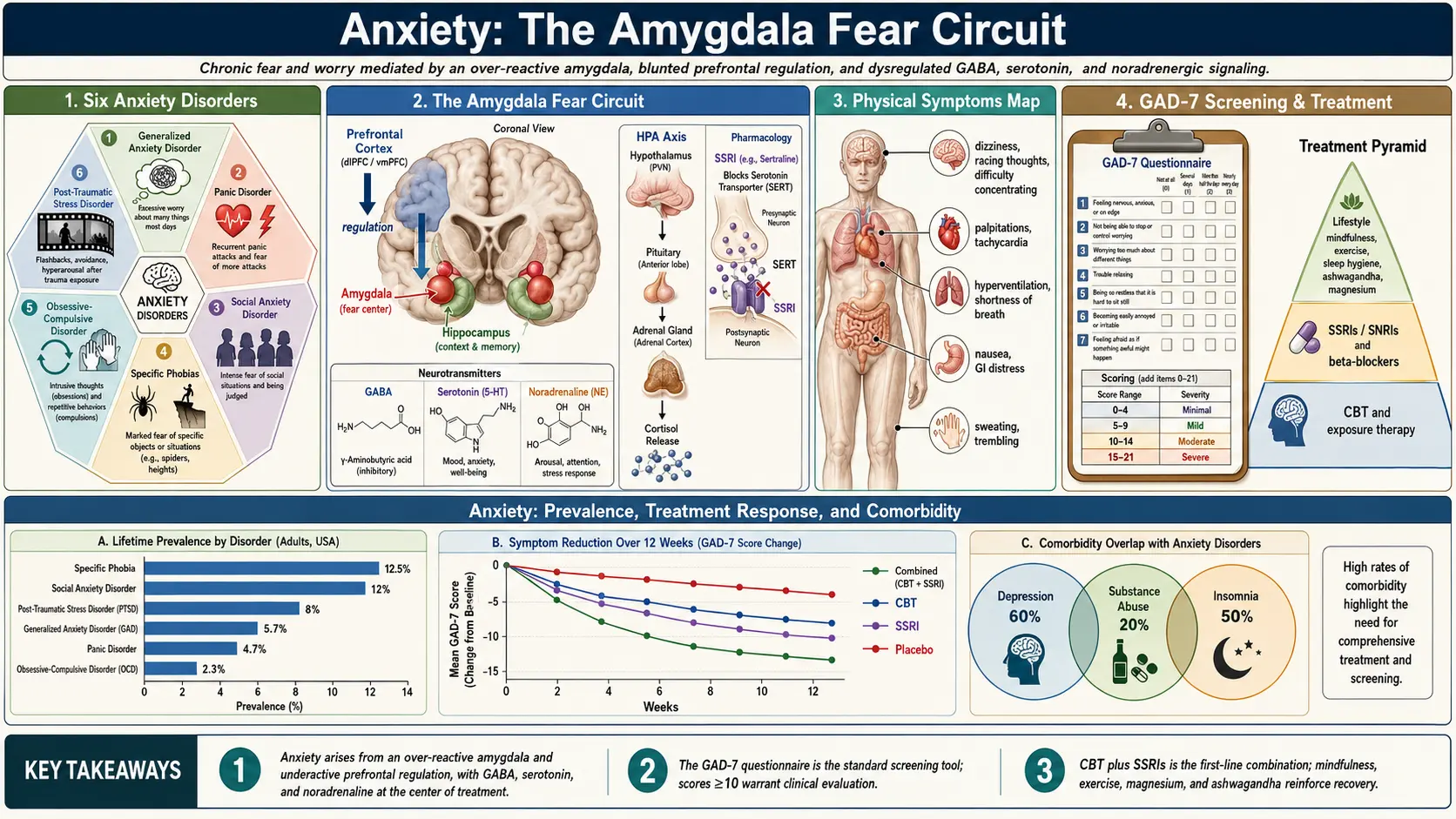
Anxiety is a natural response to stress and involves feelings of fear or apprehension about future events. While occasional anxiety is a normal part of life, anxiety disorders are chronic and can interfere with daily activities.
Types of Anxiety Disorders
1. Generalized Anxiety Disorder (GAD)
- Characterized by excessive, uncontrollable worry about various aspects of daily life.
- Common symptoms: Restlessness, fatigue, trouble concentrating, and sleep disturbances.
2. Panic Disorder
- Involves recurrent panic attacks: Sudden, intense episodes of fear accompanied by physical symptoms.
- Symptoms: Heart palpitations, shortness of breath, dizziness, and a sense of impending doom.
3. Social Anxiety Disorder
- Fear of social situations and being judged or embarrassed in front of others.
- Common symptoms: Avoidance of social interactions, sweating, and rapid heartbeat.
4. Specific Phobias
- Intense fear of a specific object or situation, such as heights, spiders, or flying.
- Symptoms: Immediate anxiety response and avoidance behavior.
5. Obsessive-Compulsive Disorder (OCD)
- Characterized by recurring, unwanted thoughts (obsessions) and repetitive behaviors (compulsions).
- Common examples: Excessive hand-washing, checking locks, or counting rituals.
6. Post-Traumatic Stress Disorder (PTSD)
- Develops after experiencing or witnessing a traumatic event.
- Symptoms: Flashbacks, nightmares, and severe anxiety related to the event.
Common Symptoms of Anxiety
- Feelings of nervousness or restlessness
- Sense of impending danger or panic
- Increased heart rate
- Rapid breathing (hyperventilation)
- Sweating and trembling
- Fatigue and weakness
- Difficulty concentrating or thinking about anything other than the present worry
- Trouble sleeping
Causes and Risk Factors
- Genetics: Family history can increase the likelihood of developing anxiety disorders.
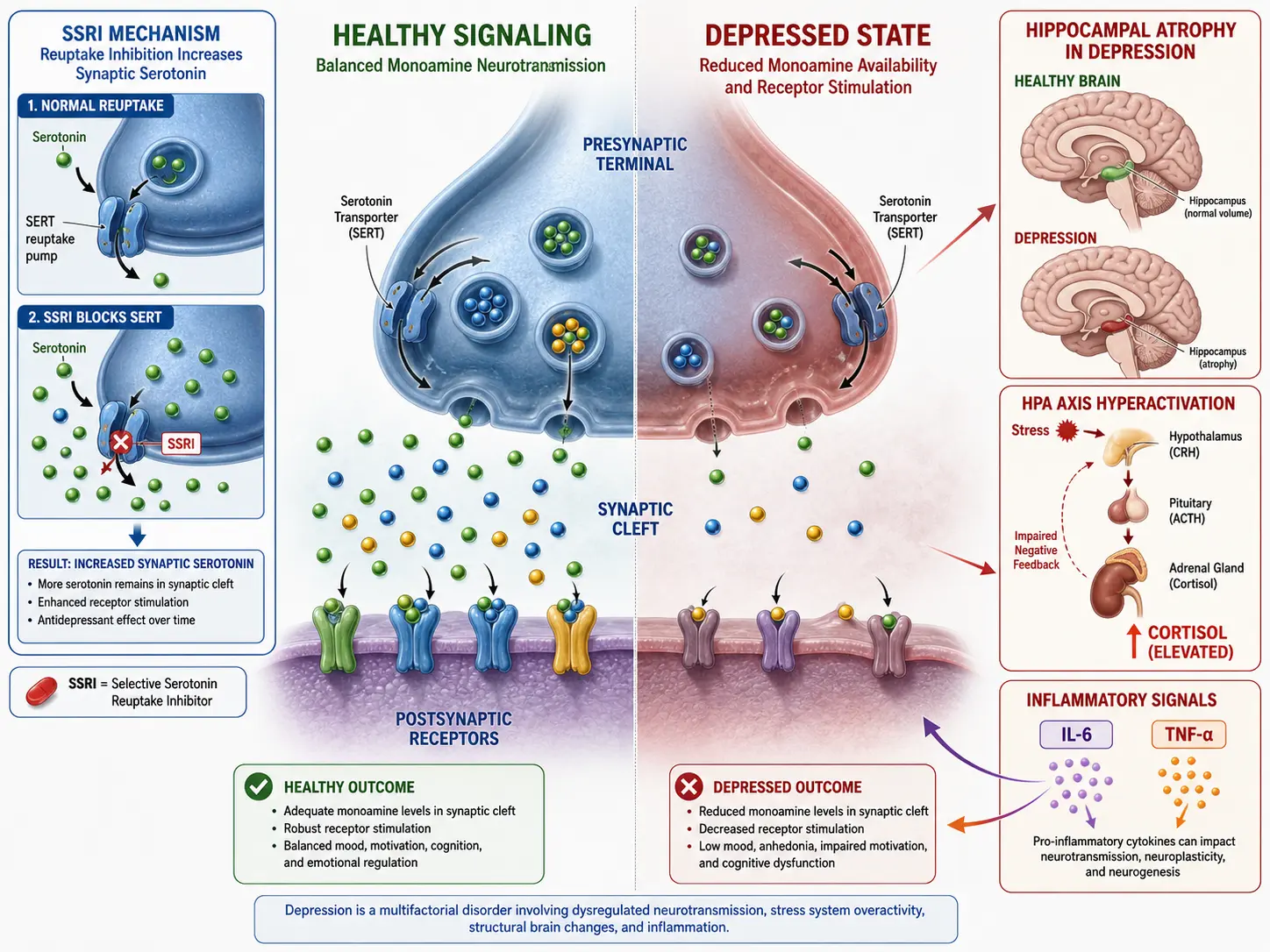
- Brain chemistry: Imbalances in neurotransmitters may play a role.
- Personality: Individuals with certain personality traits may be more prone to anxiety.
- Trauma and stress: Significant life events or ongoing stress can trigger anxiety disorders.
- Health conditions: Chronic illnesses or certain medical conditions can be associated with anxiety.
Diagnosis
- Clinical evaluation: Healthcare providers assess symptoms and medical history.
- Questionnaires: Standardized tools like the Generalized Anxiety Disorder 7 (GAD-7) scale help determine severity.
- Physical examination: To rule out any medical conditions that may contribute to anxiety symptoms.
Treatment Options
- Medications:
- Antidepressants: Such as SSRIs and SNRIs to help manage symptoms.
- Benzodiazepines: For short-term relief of severe anxiety.
- Beta-blockers: To manage physical symptoms like rapid heartbeat.
- Psychotherapy:
- Cognitive-behavioral therapy (CBT): Helps identify and change negative thought patterns and behaviors.
- Exposure therapy: Effective for phobias and PTSD by gradually exposing individuals to the source of their anxiety.
- Lifestyle changes:
- Regular physical activity: Exercise can reduce stress and improve mood.
- Mindfulness and relaxation techniques: Such as deep breathing, yoga, and meditation.
- Sleep hygiene: Ensuring a regular sleep schedule and good sleep practices.
Prevention Strategies
- Maintain a healthy lifestyle: Balanced diet, regular exercise, and adequate sleep.
- Limit alcohol and caffeine: These can aggravate anxiety symptoms.
- Manage stress: Use relaxation techniques and set boundaries to prevent overload.
- Stay connected: Engaging with friends and family can provide support and reduce feelings of isolation.
Complications of Anxiety
- Reduced quality of life: Difficulty enjoying daily activities and maintaining relationships.
- Physical health problems: Increased risk of heart disease, high blood pressure, and other chronic conditions.
- Substance abuse: Higher likelihood of developing alcohol or drug dependence.
- Depression: Anxiety often coexists with depression, compounding emotional challenges.
- Impaired work and school performance: Difficulty focusing and maintaining productivity.
Research Papers
Historical Background
Anxiety as a clinical concept was first systematically described by Sigmund Freud in the 1890s, who distinguished "anxiety neurosis" from other nervous conditions. The modern classification of anxiety disorders began with the DSM-III in 1980, which separated anxiety into distinct categories including panic disorder, generalized anxiety disorder, and phobias.
Key Research Papers
- Kessler RC, et al. Lifetime prevalence and age-of-onset distributions of DSM-IV disorders in the National Comorbidity Survey Replication. Archives of General Psychiatry. 2005;62(6):593-602.
- Bandelow B, Michaelis S. Epidemiology of anxiety disorders in the 21st century. Dialogues in Clinical Neuroscience. 2015;17(3):327-335.
- Craske MG, et al. Anxiety disorders. Nature Reviews Disease Primers. 2017;3:17024.
- Stein MB, Sareen J. Generalized anxiety disorder. New England Journal of Medicine. 2015;373(21):2059-2068.
- Barlow DH. Cognitive-behavioral therapy for panic disorder: current status. Journal of Clinical Psychiatry. 1997;58(Suppl 2):32-36.
- Bandelow B, et al. Efficacy of treatments for anxiety disorders: a meta-analysis. International Clinical Psychopharmacology. 2015;30(4):183-192.
- Hofmann SG, Smits JA. Cognitive-behavioral therapy for adult anxiety disorders: a meta-analysis of randomized placebo-controlled trials. Journal of Clinical Psychiatry. 2008;69(4):621-632.
- Hettema JM, Neale MC, Kendler KS. A review and meta-analysis of the genetic epidemiology of anxiety disorders. American Journal of Psychiatry. 2001;158(10):1568-1578.
- Craske MG, Stein MB. Anxiety. The Lancet. 2016;388(10063):3048-3059.
- Spitzer RL, et al. A brief measure for assessing generalized anxiety disorder: the GAD-7. Archives of Internal Medicine. 2006;166(10):1092-1097.
- Shin LM, Liberzon I. The neurocircuitry of fear, stress, and anxiety disorders. Neuropsychopharmacology. 2010;35(1):169-191.
- Baxter AJ, et al. Global prevalence of anxiety disorders: a systematic review and meta-regression. Psychological Medicine. 2013;43(5):897-910.
PubMed Topic Searches
- PubMed: anxiety disorders epidemiology
- PubMed: generalized anxiety disorder treatment
- PubMed: panic disorder SSRI
- PubMed: social anxiety CBT
- PubMed: anxiety GABA neurobiology
- PubMed: anxiety magnesium
- PubMed: anxiety ashwagandha
- PubMed: anxiety exercise
- PubMed: anxiety mindfulness meditation
- PubMed: anxiety microbiome gut-brain
- PubMed: anxiety omega-3
- PubMed: anxiety genetics GWAS
Connections
- Psychiatry
- The Gut-Brain Axis: How Your Gut Talks to Your Brain — interactive animation
- GABA: The Brain’s Brake — interactive animation
- Serotonin, Mood & SSRIs — interactive animation
- The Stress Response & Cortisol — interactive animation
- Depression
- PTSD
- OCD
- Insomnia
- Magnesium
- Ashwagandha
- Passionflower
- Chamomile
- Vitamin B6
- Natural Anxiety Relief
- Stress Management
- Sleep Hygiene
- Shortness of Breath
- Chest Pain
- Fatigue
- Obstructive Sleep Apnea
- Irritable Bowel Syndrome
- Gut Healing
- Addiction
- Essential Tremor
- PMS and PMDD
- Postpartum Depression