Alzheimer's Disease
Deep-Dive Articles
IDOL Enzyme — A New Drug Target
The Indiana University 2026 discovery that removing the neuronal E3 ubiquitin ligase IDOL raises LDL-receptor recycling, lowers brain APOE, and reduces amyloid plaque burden — a resilience mechanism distinct from lecanemab and donanemab.
What is Alzheimer's Disease?
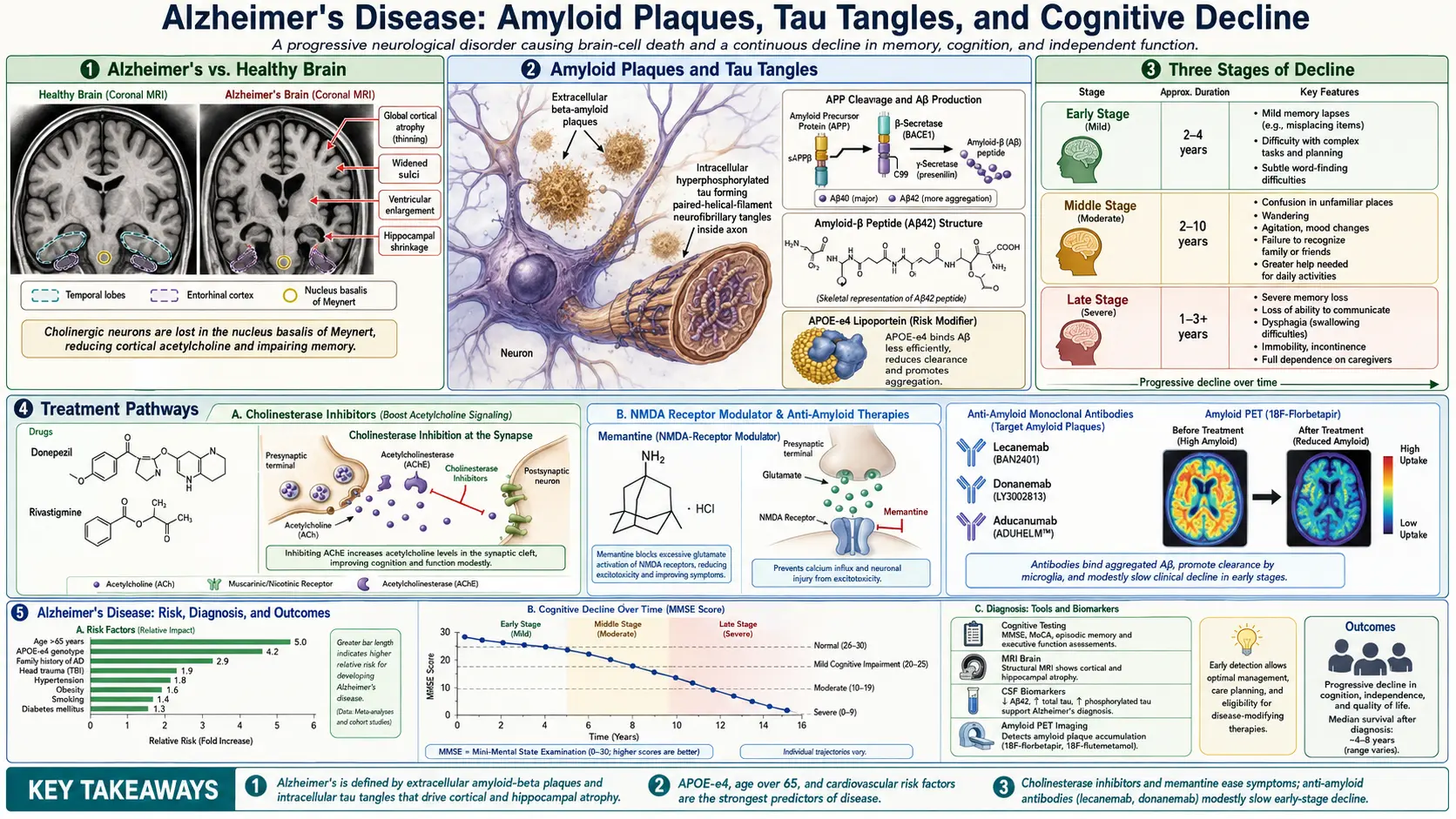
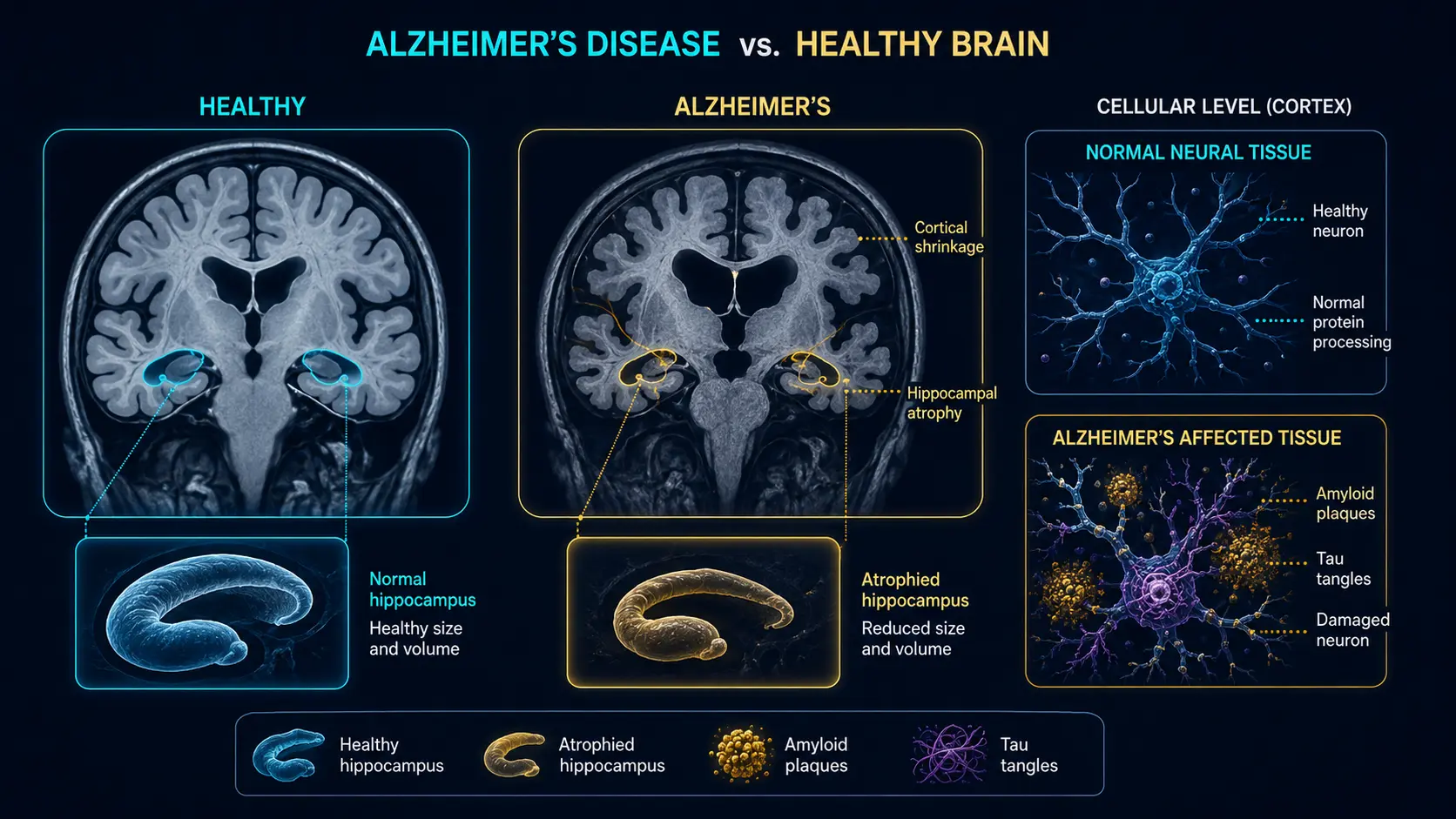
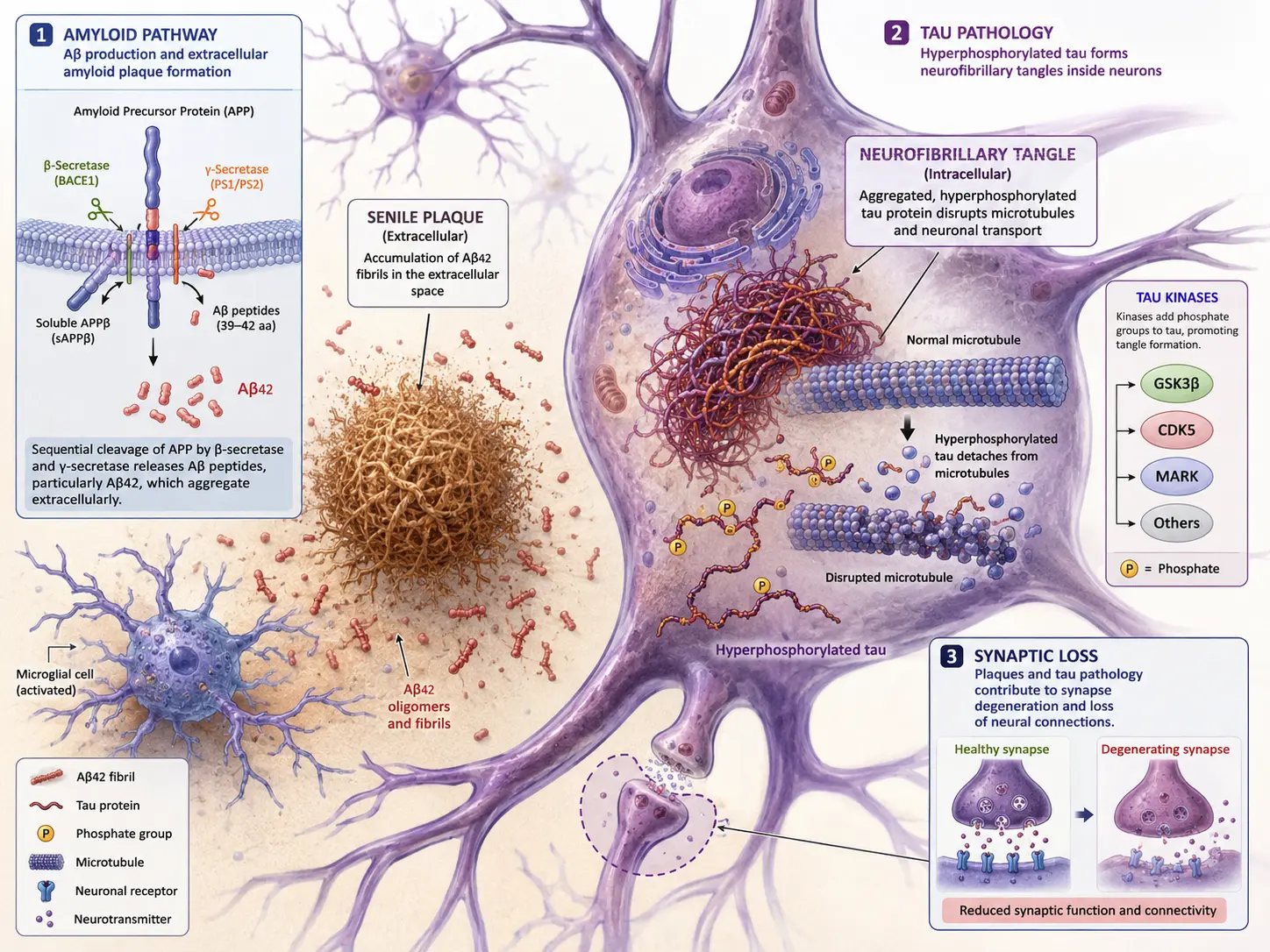
Alzheimer's disease is a progressive neurological disorder that causes brain cells to degenerate and die. It is the most common cause of dementia, leading to a continuous decline in cognitive, behavioral, and social skills, which affects a person's ability to function independently.
Symptoms of Alzheimer's Disease
- Memory loss: One of the earliest and most common signs, especially forgetting recently learned information.
- Difficulty in planning or solving problems: Trouble following familiar recipes or managing bills.
- Confusion with time or place: Losing track of dates, seasons, or the passage of time.
- Challenges understanding visual images and spatial relationships: Issues with reading, judging distance, or recognizing objects.
- Problems with speaking or writing: Struggling with vocabulary, stopping in the middle of a conversation, or repeating oneself.
- Misplacing items and being unable to retrace steps to find them.
- Poor judgment: Decreased judgment or decision-making skills.
- Withdrawal from social activities: Avoiding social interactions or hobbies.
- Changes in mood or personality: Increased confusion, suspicion, depression, or anxiety.
Risk Factors
- Age: The most significant known risk factor. Most people with Alzheimer's are 65 and older.
- Family history and genetics: Having a parent or sibling with Alzheimer's increases the risk.
- Genetic predisposition: Specific genes, such as APOE-e4, are linked to a higher risk.
- Head injuries: Past head trauma may increase the risk.
- Lifestyle and heart health: Factors like smoking, obesity, high blood pressure, and diabetes can elevate the risk.
Stages of Alzheimer's Disease
1. Early Stage (Mild Alzheimer's)
- Symptoms: Minor memory lapses and difficulty with complex tasks.
- Independence: Individuals may still function independently but with occasional assistance.
2. Middle Stage (Moderate Alzheimer's)
- Symptoms: More pronounced memory loss, confusion, and difficulty recognizing family and friends.
- Behavioral changes: Increased wandering, agitation, and repetitive behaviors.
- Assistance: Requires more significant support with daily activities.
3. Late Stage (Severe Alzheimer's)
- Symptoms: Severe memory loss, loss of communication abilities, and complete dependence on caregivers.
- Physical symptoms: Difficulty walking, swallowing, and general unresponsiveness.
Diagnosis
- Medical history: Reviewing medical and family history, along with changes in behavior.
- Cognitive tests: Assessing memory, problem-solving, attention, and language skills.
- Neurological exams: Evaluate balance, reflexes, and senses.
- Brain imaging: CT or MRI scans to rule out other conditions and identify brain atrophy.
- Biomarker tests: Can include spinal fluid tests or PET scans to detect specific protein changes associated with Alzheimer's.
Management and Treatment
- Medications:
- Cholinesterase inhibitors: Helps increase communication between brain cells (e.g., donepezil, rivastigmine).
- Memantine: Regulates brain chemicals and may help with memory and learning.
- Medications for symptoms: To manage depression, anxiety, or behavioral issues.
- Therapies:
- Occupational therapy: Helps adapt living environments for safety.
- Cognitive stimulation: Engages memory and thinking skills through activities.
- Lifestyle modifications: Regular physical activity, a balanced diet, social engagement, and mental stimulation.
Complications of Alzheimer's Disease
- Inability to communicate: Leads to increased frustration and behavioral challenges.
- Reduced mobility: Can lead to bedsores, blood clots, and infections.
- Malnutrition and dehydration: Challenges with swallowing or forgetting to eat/drink.
- Increased risk of infections: Such as pneumonia due to weakened immune function.
- Death: Alzheimer's is a terminal disease, with most people succumbing to complications such as infections or organ failure.
Interactive Visualization Smell — light up a pattern across 400 receptors Send an odour at your ~400 receptor types and watch a unique pattern light up — how you smell a trillion things with a few hundred sensors, and why losing smell warns of Parkinson's. Launch → Interactive Visualization Apoptosis — trigger a cell's programmed self-destruct Watch a damaged cell trigger its own tidy self-destruct with caspases — then see cancer block the death switch so bad cells survive, or too much of it kill healthy neurons. Launch → Interactive Visualization Autophagy — clean out a cell by fasting Watch a cell wrap up its damaged parts, digest them in the lysosome and recycle the pieces — idle when you're fed, ramping up when you fast, failing when junk piles into disease. Launch → Interactive Visualization Protein Folding — fold it right, or watch it clump Watch a chaperone help a new protein fold into shape — then take it away and see it clump into the aggregates behind Alzheimer's and Huntington's, or a prion convert its neighbours. Launch →
Table of Contents
- Deep-Dive Articles
- What is Alzheimer's Disease?
- Symptoms of Alzheimer's Disease
- Risk Factors
- Stages of Alzheimer's Disease
- Diagnosis
- Management and Treatment
- Complications of Alzheimer's Disease
- Research Papers
- Connections
- Featured Videos
Research Papers
Curated PubMed topic searches on Alzheimer's Disease. Each link opens a live PubMed query so the result set stays current as new studies are indexed.
- PubMed topic search: Alzheimer disease review
- PubMed topic search: Amyloid beta hypothesis Alzheimer
- PubMed topic search: Tau tangles Alzheimer disease
- PubMed topic search: APOE4 Alzheimer risk
- PubMed topic search: Lecanemab clinical trial
- PubMed topic search: Donanemab clinical trial
- PubMed topic search: Aducanumab amyloid plaque
- PubMed topic search: Cholinesterase inhibitor donepezil
- PubMed topic search: Memantine Alzheimer disease
- PubMed topic search: Lancet Commission dementia prevention
- PubMed topic search: MCI biomarkers diagnosis
- PubMed topic search: Alzheimer genome-wide association
Connections
- Neurology
- How Proteins Fold — and Misfold in Disease — interactive animation
- Autophagy: How Fasting Cleans Out Your Cells — interactive animation
- Apoptosis: Your Cells’ Programmed Self-Destruct — interactive animation
- Smell: How Your Nose Reads a Trillion Odours — interactive animation
- Deep Dives: IDOL Enzyme — A New Drug Target
- Dementia
- Parkinson's Disease
- Magnesium
- Vitamin B12
- Vitamin D3
- Ginkgo Biloba
- Lion's Mane Mushroom
- Sleep Hygiene
- Stress Management
- Depression
- Anxiety
- Diabetes
- Omega-3 Fatty Acids
- Bacopa Monnieri
- Multiple Sclerosis
- Epilepsy
- Turmeric
- Gut Brain Axis
- Hearing Loss
- Gum Disease
- O’Keefe & the Mosers: the brain’s map of place — why the entorhinal cortex, where Alzheimer’s damage begins, is also the brain’s coordinate system — and why getting lost in a familiar place differs from ordinary forgetfulness