Vitamin A: Nature's Essential Healer
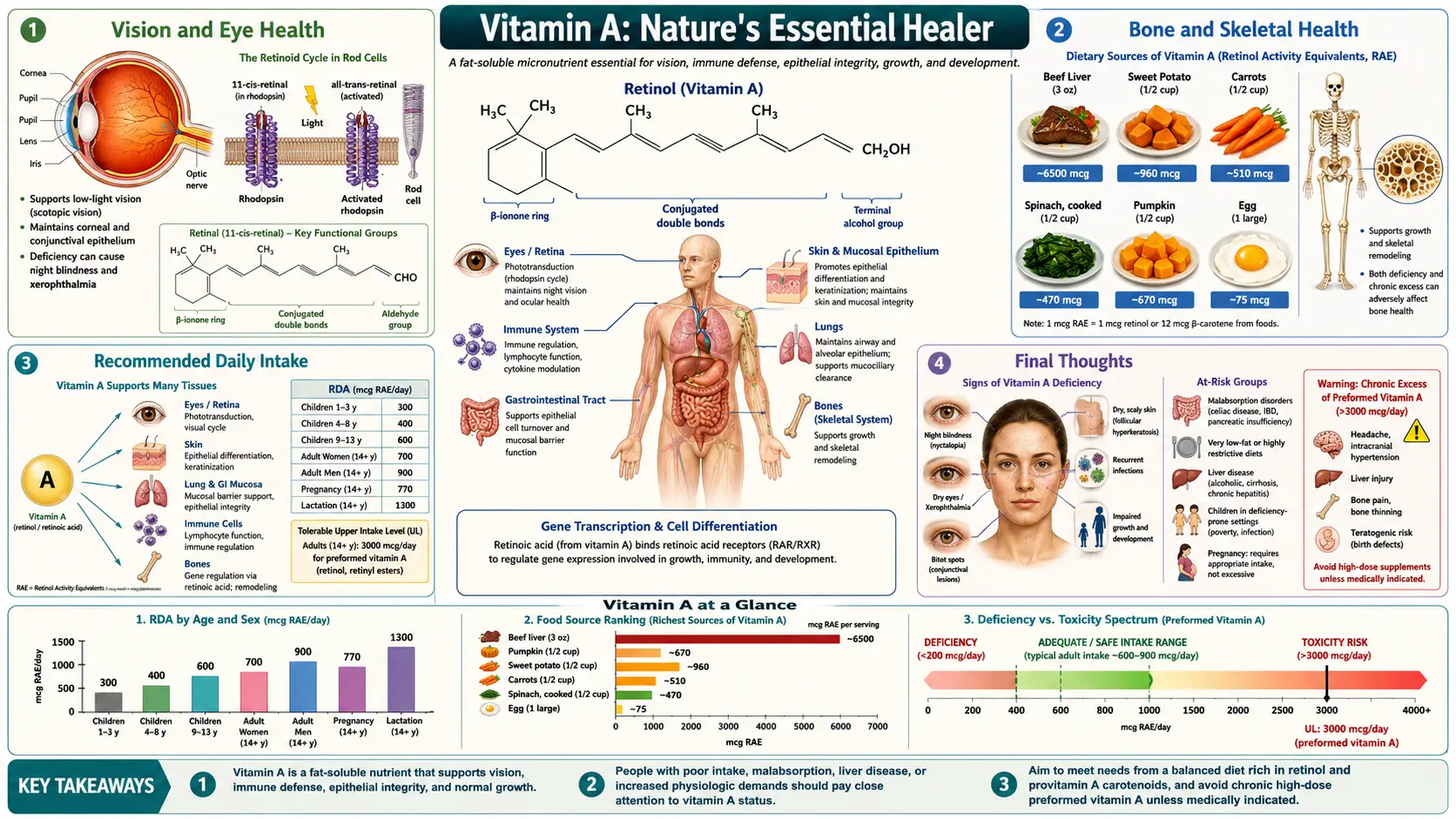
Vitamin A is a fat-soluble vitamin that exists in two primary forms: preformed Vitamin A (retinol), found in animal sources, and provitamin A (beta-carotene), found abundantly in colorful fruits and vegetables. As a cornerstone of natural medicine, Vitamin A has been revered for centuries for its profound healing and protective properties across nearly every system of the body.
Interactive Visualization Vision & the Retina — focus light and watch rods fire Follow the phototransduction cascade as rods and cones react, then dim the lights and watch the eye adapt. Launch →Table of Contents
- Vision and Eye Health
- Immune System Fortification
- Skin, Hair, and Nail Health
- Reproductive Health and Fertility
- Bone and Skeletal Health
- Antioxidant and Anti-Inflammatory Properties
- Digestive and Gut Health
- Respiratory Health
- Natural Food Sources
- Recommended Daily Intake
- Synergistic Nutrients
- Cautions and Considerations
- Signs of Deficiency
- Connections
- Featured Videos
1. Vision and Eye Health
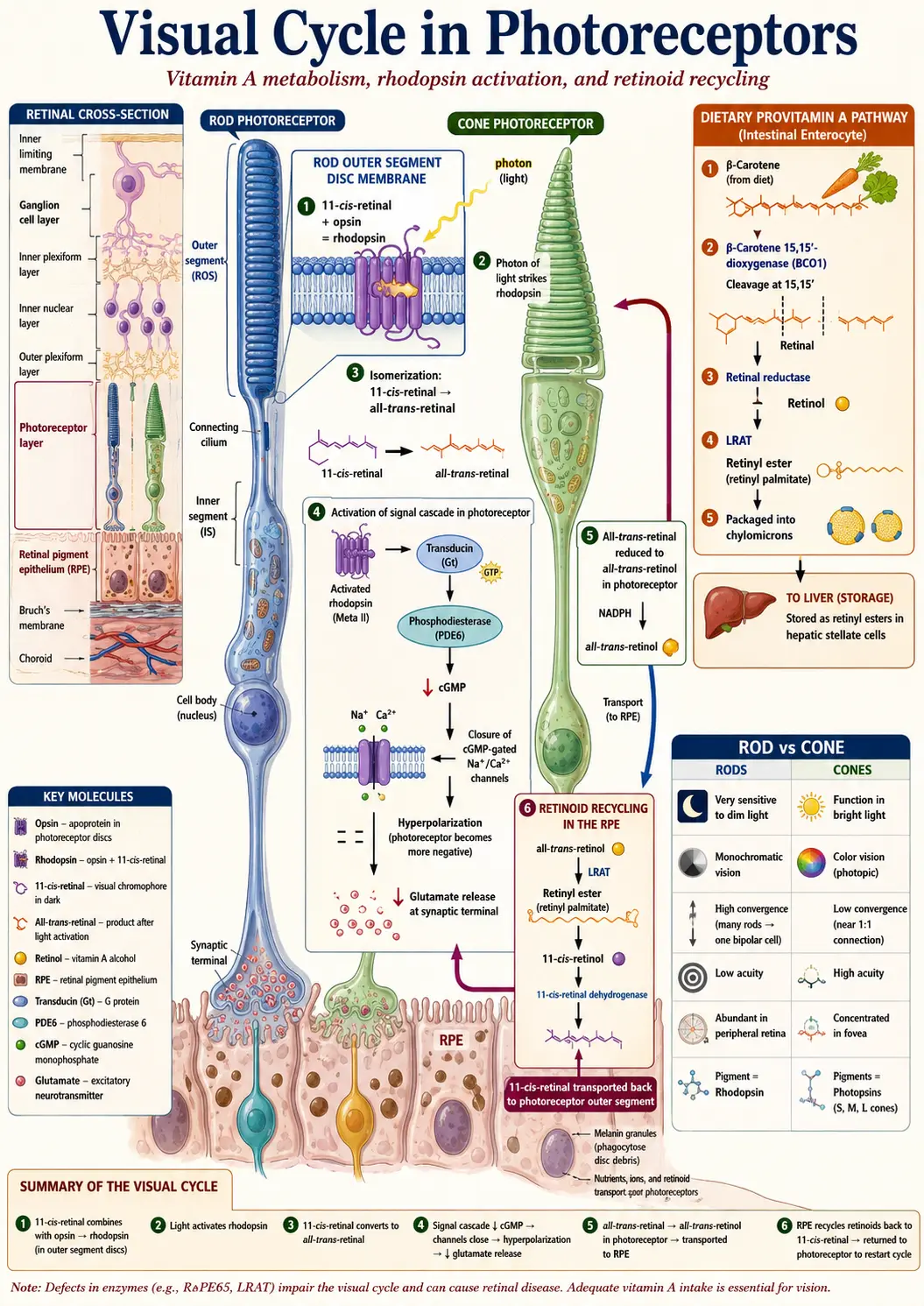
Vitamin A is perhaps best known for its critical role in maintaining healthy eyesight. It is an essential component of rhodopsin, the protein in the retina that allows the eyes to detect light.
- Night Vision: Adequate Vitamin A prevents night blindness (nyctalopia) by supporting the rod cells in the retina responsible for low-light vision.
- Corneal Health: It maintains the integrity of the cornea, the outermost layer of the eye, preventing dryness and ulceration known as xerophthalmia.
- Age-Related Macular Degeneration (AMD): Beta-carotene, in combination with other antioxidants, has been shown to slow the progression of AMD, a leading cause of vision loss in older adults.
- Tear Production: Vitamin A supports healthy mucous membranes in the eyes, promoting natural tear film and reducing dry eye syndrome.
2. Immune System Fortification
In natural medicine, Vitamin A is often called the "anti-infective vitamin" due to its powerful role in immune defense.
- First Line of Defense: It strengthens the mucosal barriers in the eyes, lungs, gut, and urinary tract — the body's natural shields against pathogens.
- White Blood Cell Production: Vitamin A stimulates the production and function of white blood cells, including lymphocytes and natural killer (NK) cells, which identify and destroy harmful invaders.
- T-Cell Regulation: It plays a role in the differentiation of T-cells, critical for adaptive immunity and long-term immune memory.
- Gut-Associated Lymphoid Tissue (GALT): Vitamin A supports immune function within the digestive tract, where approximately 70% of the immune system resides.
- Reduced Infection Severity: Adequate levels have been associated with shorter duration and reduced severity of respiratory infections, measles, and diarrheal diseases, especially in children.
3. Skin, Hair, and Nail Health
Vitamin A is one of the most vital nutrients for maintaining radiant, healthy skin and strong hair and nails.
- Cellular Turnover: It promotes the healthy growth and repair of skin cells, accelerating the natural shedding of old, damaged cells and encouraging fresh cell regeneration.
- Acne and Blemishes: Vitamin A regulates sebum production in the skin's oil glands, helping to prevent clogged pores, acne breakouts, and inflammatory skin conditions.
- Anti-Aging: As a potent antioxidant, it combats free radical damage that leads to fine lines, wrinkles, and age spots. It promotes collagen synthesis for firmer, more elastic skin.
- Wound Healing: Vitamin A accelerates the wound healing process by stimulating collagen production and supporting tissue repair at the cellular level.
- Hair Strength: It supports the production of sebum that moisturizes the scalp and keeps hair healthy, shiny, and resilient.
- Nail Integrity: Adequate intake helps prevent brittle, peeling nails by supporting keratin production.
4. Reproductive Health and Fertility
Vitamin A is essential for healthy reproductive function in both men and women.
- Female Fertility: It supports proper ovarian function, egg development, and implantation. It is also critical for healthy placental development during pregnancy.
- Male Fertility: Vitamin A is necessary for spermatogenesis — the production and maturation of healthy sperm cells.
- Fetal Development: During pregnancy, it supports the healthy development of the heart, lungs, kidneys, eyes, and skeletal system of the growing fetus.
- Hormonal Balance: It supports the synthesis and regulation of reproductive hormones, including estrogen and testosterone.
5. Bone and Skeletal Health
While calcium and Vitamin D often receive the spotlight, Vitamin A is equally important for maintaining strong, healthy bones.
- Osteoblast and Osteoclast Balance: Vitamin A helps regulate osteoblasts (bone-building cells) and osteoclasts (bone-resorbing cells), maintaining the delicate balance needed for healthy bone remodeling.
- Growth and Development: In children and adolescents, adequate Vitamin A is essential for proper skeletal growth and development.
- Fracture Prevention: Balanced levels contribute to bone density and structural integrity, reducing fracture risk.
6. Antioxidant and Anti-Inflammatory Properties
Beta-carotene, the plant-based precursor to Vitamin A, is a powerful antioxidant that the body converts as needed.
- Free Radical Neutralization: It scavenges reactive oxygen species (ROS) that damage DNA, proteins, and cell membranes, reducing oxidative stress throughout the body.
- Chronic Disease Prevention: By reducing oxidative damage, Vitamin A may lower the risk of chronic conditions including cardiovascular disease, certain cancers, and neurodegenerative disorders.
- Inflammatory Modulation: It helps regulate inflammatory cytokines, reducing systemic inflammation that underlies conditions like arthritis, autoimmune disorders, and metabolic syndrome.
7. Digestive and Gut Health
From a holistic perspective, gut health is the foundation of overall wellness, and Vitamin A plays a central role.
- Mucosal Lining Integrity: It maintains the health of the intestinal mucosal lining, preventing "leaky gut" syndrome where toxins and undigested food particles cross into the bloodstream.
- Microbiome Support: A healthy gut lining nourished by Vitamin A creates a favorable environment for beneficial gut bacteria.
- Secretory IgA Production: It supports the production of secretory immunoglobulin A (sIgA), an antibody critical for gut immune defense.
8. Respiratory Health
- Lung Tissue Maintenance: Vitamin A is essential for the maintenance and repair of epithelial tissues lining the respiratory tract.
- Mucus Production: It supports healthy mucus secretion that traps pathogens and irritants before they can enter the lungs.
- Reduced Respiratory Infections: Deficiency is strongly linked to increased susceptibility to bronchitis, pneumonia, and other respiratory illnesses.
9. Natural Food Sources
A natural medicine practitioner always emphasizes obtaining nutrients from whole food sources first. The richest natural sources of Vitamin A include:
Preformed Vitamin A (Retinol) — Animal Sources
- Beef Liver: The single richest source of retinol in nature
- Cod Liver Oil: A traditional remedy providing both Vitamin A and D
- Egg Yolks: Especially from pasture-raised hens
- Grass-Fed Butter and Ghee: Rich in bioavailable retinol
- Wild-Caught Salmon and Mackerel: Provide retinol along with omega-3 fatty acids
- Raw Whole Milk and Cheese: From grass-fed, pasture-raised animals
Provitamin A (Beta-Carotene) — Plant Sources
- Sweet Potatoes: One of the highest beta-carotene foods available
- Carrots: A classic source of provitamin A
- Dark Leafy Greens: Kale, spinach, collard greens, and Swiss chard
- Butternut Squash and Pumpkin: Deeply pigmented and nutrient-dense
- Red and Orange Bell Peppers: Excellent raw or lightly cooked
- Mangoes, Papayas, and Apricots: Tropical fruits rich in carotenoids
- Spirulina and Chlorella: Nutrient-dense superfoods with significant beta-carotene
10. Recommended Daily Intake
The following are general guidelines measured in micrograms of Retinol Activity Equivalents (mcg RAE):
- Adult Men: 900 mcg RAE per day
- Adult Women: 700 mcg RAE per day
- Pregnant Women: 770 mcg RAE per day
- Breastfeeding Women: 1,300 mcg RAE per day
- Children (4–8 years): 400 mcg RAE per day
- Children (9–13 years): 600 mcg RAE per day
11. Synergistic Nutrients
In holistic practice, nutrients rarely work in isolation. Vitamin A functions best when paired with its natural partners:
- Vitamin D: Works synergistically with Vitamin A to regulate immune function and gene expression. Both are fat-soluble and share receptor sites.
- Vitamin K2: Partners with Vitamins A and D to direct calcium into bones and teeth and away from soft tissues and arteries.
- Zinc: Required for the transport of Vitamin A from the liver and for the conversion of retinol to its active form, retinal. Deficiency in zinc impairs Vitamin A metabolism.
- Healthy Fats: As a fat-soluble vitamin, Vitamin A requires dietary fat for proper absorption. Consume with olive oil, coconut oil, avocado, or butter.
- Iron: Vitamin A helps mobilize iron from storage, improving iron status and preventing anemia.
12. Cautions and Considerations
Because Vitamin A is fat-soluble, preformed retinol from supplements or animal sources can accumulate in the liver and become toxic at high doses, and excess retinol during pregnancy is linked to birth defects. Plant-based beta-carotene is far safer, as the body converts only what it needs. For a full, patient-friendly guide to the symptoms, causes, and treatment of too much Vitamin A, see Hypervitaminosis A (Vitamin A Toxicity).
13. Signs of Deficiency
Early warning signs of insufficient Vitamin A include night blindness, dry or scaly skin, dry eyes, frequent infections, slow wound healing, and delayed growth in children. Left uncorrected, deficiency is a leading cause of preventable blindness worldwide. For a full, patient-friendly guide to the symptoms, causes, and recovery, see Vitamin A Deficiency.
Final Thoughts
Vitamin A is truly one of nature's most versatile and essential nutrients. From protecting your vision to fortifying your immune system, nurturing your skin, supporting reproduction, and fighting chronic inflammation — its benefits are both wide-reaching and profound. As with all aspects of natural medicine, the key lies in balance: prioritize whole food sources, respect the synergy between nutrients, and seek guidance from a qualified practitioner before supplementing at high doses.
Nourish your body with the colors of nature — the deep oranges, vibrant greens, and rich yellows — and Vitamin A will take care of the rest.
Connections
- All Vitamins
- Vision & the Retina — interactive animation
- Vitamin A Deficiency
- Hypervitaminosis A (Vitamin A Toxicity)
- Beta-Carotene
- Vitamin A and Immune Function
- Vitamin A and Vision
- Zinc
- Iron
- Vitamin C
- Vitamin K
- Vitamin E
- Macular Degeneration
- Acne
- Organ Meats
- Immune Boosting
- Sweet Potatoes
- Kale
- Crohn's Disease
- Celiac Disease
- Infertility
- Vitamin D3
- Omega 3 Fatty Acids