Elimination Diet: The Gold Standard for Identifying Food Sensitivities
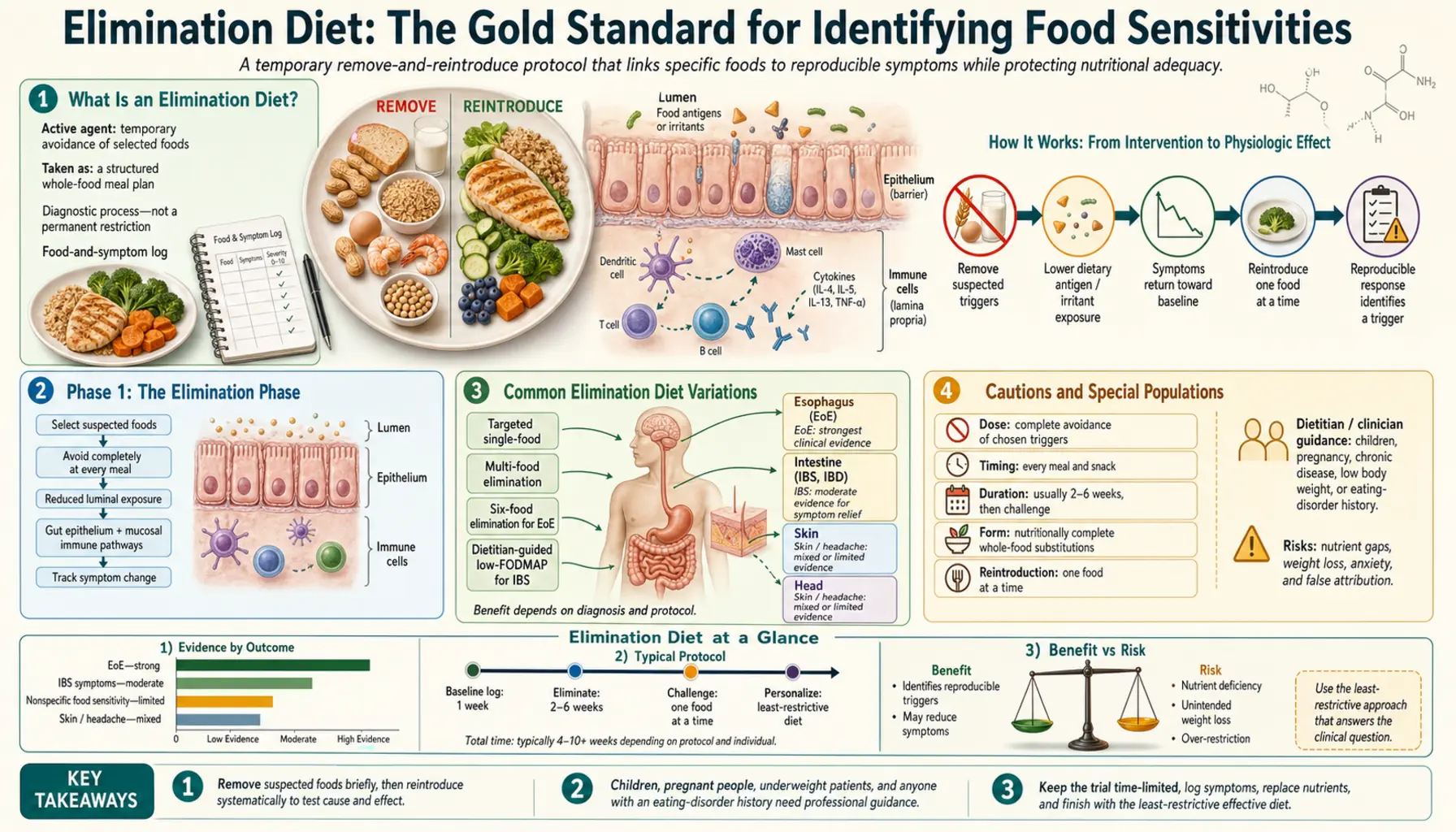


From a naturopathic perspective, the elimination diet remains the single most powerful clinical tool for uncovering hidden food sensitivities that drive chronic inflammation and a wide range of seemingly unrelated symptoms. Unlike lab tests that offer a snapshot, the elimination diet provides direct, personalized evidence of how your body responds to specific foods. When performed correctly, it can be life-changing — revealing the root cause of symptoms that patients have struggled with for years.
Table of Contents
- What Is an Elimination Diet?
- Food Allergy vs. Food Sensitivity vs. Food Intolerance
- Why Food Sensitivities Are So Common
- Symptoms of Food Sensitivities
- The Top Triggers to Eliminate
- Phase 1: The Elimination Phase
- What to Eat During the Elimination Phase
- Phase 2: Systematic Reintroduction
- How to Track Reactions
- Common Elimination Diet Variations
- Testing Alternatives: IgG Food Sensitivity Panels
- What to Do When You Identify Triggers
- Long-Term Management
- Healing the Gut So Sensitivities Resolve
- Cautions and Special Populations
- Research Papers
- Connections
- Featured Videos
1. What Is an Elimination Diet?
An elimination diet is a structured dietary protocol in which the most commonly reactive foods are completely removed from the diet for a defined period — typically 21 to 30 days — and then reintroduced one at a time in a controlled manner. The goal is to identify which specific foods are provoking symptoms by observing how the body responds when each food is removed and then brought back.
It is widely regarded as the gold standard for identifying food sensitivities because it relies on your own body's real-time immune and physiological responses, rather than on indirect laboratory markers. No blood test can replicate the clarity that a well-executed elimination diet provides.
The concept is simple: remove the suspects, allow the body to calm down, and then challenge it with one food at a time to observe the reaction. In clinical practice, patients frequently report dramatic improvements during the elimination phase — reduced bloating, clearer skin, improved energy, better mood, and resolution of chronic pain — often within the first two weeks.
2. Food Allergy vs. Food Sensitivity vs. Food Intolerance
Understanding the distinction between these three categories is essential, as they involve different immune pathways and produce different clinical pictures.
Food Allergy (IgE-Mediated)
A true food allergy involves the IgE (immunoglobulin E) branch of the immune system. Reactions are immediate — occurring within minutes to two hours — and can range from hives and swelling to anaphylaxis, a life-threatening emergency. Common IgE-mediated allergens include peanuts, tree nuts, shellfish, fish, milk, eggs, wheat, and soy. These are diagnosed through skin-prick tests and serum IgE testing and require strict lifelong avoidance.
Food Sensitivity (IgG-Mediated / Immune-Mediated)
Food sensitivities involve a delayed immune response, often mediated by IgG (immunoglobulin G) and other immune complexes. Reactions can take anywhere from several hours to 72 hours to manifest, making them extremely difficult to identify without a structured elimination protocol. Symptoms are often systemic and subtle — fatigue, brain fog, joint stiffness, mood disturbances, or skin eruptions rather than the acute, obvious reactions seen with allergies.
Food Intolerance (Enzyme Deficiency)
Food intolerances are non-immune reactions caused by the body's inability to properly digest a particular food component, usually due to an enzyme deficiency. The classic example is lactose intolerance, where the body lacks sufficient lactase enzyme to break down milk sugar. Histamine intolerance and fructose malabsorption are other common examples. Symptoms are predominantly gastrointestinal — gas, bloating, diarrhea, and cramping.
3. Why Food Sensitivities Are So Common
The prevalence of food sensitivities has risen dramatically in recent decades. From a naturopathic standpoint, several interconnected factors explain this trend:
- Intestinal Permeability (Leaky Gut): When the tight junctions of the intestinal lining become compromised — through stress, medications (especially NSAIDs and antibiotics), infections, or poor diet — partially digested food proteins pass into the bloodstream, triggering immune responses against foods that would otherwise be well-tolerated.
- Immune Dysregulation: Chronic stress, environmental toxin exposure, nutrient deficiencies (particularly vitamin D, zinc, and omega-3 fatty acids), and sleep deprivation all shift the immune system toward a pro-inflammatory, hyper-reactive state, increasing the likelihood of reacting to foods.
- Gut Microbiome Imbalance (Dysbiosis): A diverse, healthy gut microbiome plays a critical role in immune tolerance. Antibiotic overuse, processed food diets, and insufficient fiber dramatically reduce microbial diversity, impairing the gut's ability to properly mediate immune responses to food antigens.
- Overconsumption of the Same Foods: Eating the same foods repeatedly — particularly wheat, dairy, corn, and soy, which appear in the vast majority of processed foods — increases immune exposure and the likelihood of developing sensitivity.
- Processed and Industrialized Food Supply: Modern food processing introduces additives, emulsifiers, pesticide residues, and modified proteins (such as deamidated gluten) that may be more immunogenic than their traditional counterparts.
4. Symptoms of Food Sensitivities
One of the most challenging aspects of food sensitivities is that reactions are delayed — often by 12 to 72 hours — and can affect virtually any organ system. This delay makes it nearly impossible to connect symptoms to specific foods without a systematic approach. Common symptoms include:
- Digestive: Bloating, gas, constipation, diarrhea, abdominal pain, nausea, acid reflux
- Neurological: Brain fog, difficulty concentrating, headaches, migraines, dizziness
- Energy: Chronic fatigue, afternoon energy crashes, unrefreshing sleep
- Musculoskeletal: Joint pain, joint stiffness, muscle aches, generalized body pain
- Skin: Eczema, acne, rashes, hives, psoriasis flares, dark circles under the eyes (allergic shiners)
- Mood and Mental Health: Anxiety, depression, irritability, mood swings, difficulty with emotional regulation
- Respiratory: Chronic nasal congestion, post-nasal drip, sinus pressure, frequent throat clearing, asthma exacerbation
- Other: Water retention, weight-loss resistance, recurrent infections, autoimmune flares
Because the symptoms are so varied and delayed, many patients have seen multiple specialists and received diagnoses such as irritable bowel syndrome, fibromyalgia, chronic fatigue syndrome, or "unexplained" symptoms before a food sensitivity is considered.
5. The Top Triggers to Eliminate
A comprehensive elimination diet removes the foods most commonly associated with immune reactivity. The top 8 allergens recognized by regulatory bodies are:
- Gluten (wheat, barley, rye, spelt, and most oats due to cross-contamination)
- Dairy (all cow's milk products — milk, cheese, yogurt, butter, whey, casein)
- Eggs
- Soy (tofu, soy sauce, tempeh, edamame, soy lecithin, soy protein isolates)
- Corn (including corn starch, corn syrup, dextrose, and many processed food additives)
- Peanuts
- Tree Nuts (almonds, cashews, walnuts, pecans, pistachios, etc.)
- Shellfish (shrimp, crab, lobster, and often all fish)
In a thorough naturopathic elimination diet, additional triggers are also removed:
- Sugar and artificial sweeteners: Refined sugar fuels inflammation and dysbiosis; artificial sweeteners disrupt the microbiome
- Alcohol: Directly increases intestinal permeability and is a burden on detoxification pathways
- Nightshades: Tomatoes, peppers, eggplant, white potatoes — contain alkaloids that can aggravate joint pain and autoimmune conditions
- Lectins: Found in beans, grains, and nightshades — can irritate the gut lining in sensitive individuals
- Caffeine: Can mask fatigue signals and stimulate cortisol, complicating symptom assessment
- Processed foods: Contain numerous additives, preservatives, and emulsifiers that independently drive inflammation
6. Phase 1: The Elimination Phase
The elimination phase involves the strict and complete removal of all identified trigger foods for a period of 21 to 30 days. This duration is not arbitrary — it takes approximately three weeks for IgG antibodies to clear from the system and for the gut lining to begin healing, allowing the baseline inflammation to subside.
Key principles of the elimination phase:
- 100% compliance is essential. Even small amounts of a reactive food can sustain the immune response and invalidate the protocol. "Mostly" gluten-free, for example, is not sufficient.
- Read every label. Trigger foods hide in unexpected places — soy lecithin in chocolate, dairy proteins in deli meats, corn-derived ingredients in medications and supplements.
- Prepare your own meals. Eating at home gives you full control over ingredients. Restaurant meals carry significant risk of hidden exposures.
- Expect an adjustment period. The first 3 to 7 days can be challenging. Some patients experience withdrawal-like symptoms — headaches, fatigue, irritability, cravings — particularly when removing gluten, dairy, sugar, and caffeine. This is normal and typically resolves within a week.
- Note symptom improvements. Many patients notice changes as early as days 7 to 14 — improved digestion, more energy, clearer thinking, better skin. By day 21 to 30, your new baseline should be well established.
7. What to Eat During the Elimination Phase
The elimination phase is not about deprivation — it is about eating clean, whole, nourishing foods. A well-planned elimination diet can be deeply satisfying and nutrient-dense.
Proteins
- Wild-caught fish (salmon, cod, sardines, halibut)
- Organic, pasture-raised chicken and turkey
- Grass-fed lamb
- Organic, grass-fed beef (if tolerated)
- Bone broth (highly recommended for gut healing)
Vegetables
- All leafy greens (spinach, kale, arugula, romaine, Swiss chard)
- Cruciferous vegetables (broccoli, cauliflower, Brussels sprouts, cabbage)
- Root vegetables (sweet potatoes, beets, carrots, parsnips, turnips)
- Squash (butternut, acorn, zucchini, spaghetti squash)
- Asparagus, artichokes, celery, cucumbers, green beans
Fruits
- Berries (blueberries, raspberries, blackberries, strawberries)
- Apples, pears, bananas, avocados
- Citrus (lemons, limes — oranges if tolerated)
- Stone fruits (peaches, plums, cherries)
Healthy Fats
- Extra virgin olive oil, avocado oil, coconut oil
- Coconut milk and coconut cream
- Olives, avocados
- Seeds (if not eliminated): pumpkin, sunflower, hemp, flax
Grains and Starches (Gluten-Free)
- Rice (white and brown), quinoa, millet, amaranth, buckwheat
- Sweet potatoes, plantains, taro, cassava
Beverages
- Filtered water (aim for half your body weight in ounces daily)
- Herbal teas (ginger, peppermint, chamomile, rooibos)
- Bone broth as a warm, healing beverage
8. Phase 2: Systematic Reintroduction
The reintroduction phase is where the real detective work happens. This phase must be approached with patience and discipline — rushing it will compromise the entire process.
Follow this protocol for each food being reintroduced:
- Day 1: Eat a small serving of the test food in the morning. If no reaction, eat a larger, normal-sized serving later in the day. Continue eating the rest of your elimination diet as usual.
- Day 2: Remove the test food completely. Observe your body carefully for any returning symptoms — digestive changes, energy shifts, mood changes, pain, skin eruptions, congestion, or headaches.
- Day 3: Continue observing. Remember that reactions can take up to 72 hours to manifest. Monitor all body systems.
- Day 4: If no reaction occurred, the food is likely safe. Move on to the next food. If a reaction occurred, note the food as a trigger and wait until symptoms fully resolve (usually 2 to 3 additional days) before testing the next food.
Important reintroduction guidelines:
- Test only one food at a time — never two simultaneously
- Test the food in its purest form (plain dairy, not pizza; plain wheat bread, not a pastry with sugar and butter)
- Begin with the foods you miss least and save the most suspected triggers for last
- Do not reintroduce sugar, alcohol, or highly processed foods as part of this phase — these are inflammatory for everyone and should remain limited regardless
9. How to Track Reactions
A detailed food and symptom journal is an indispensable tool throughout both phases of the elimination diet. Without written records, the delayed and subtle nature of food sensitivity reactions makes accurate identification unreliable.
Your journal should track:
- Everything you eat and drink — with approximate times and portion sizes
- Digestive symptoms: bloating, gas, bowel changes, nausea, reflux
- Energy levels: rate on a 1-10 scale throughout the day
- Sleep quality: time to fall asleep, number of awakenings, how refreshed you feel
- Mood and cognition: anxiety, irritability, brain fog, clarity, motivation
- Pain: joint stiffness, headaches, muscle aches — note location and severity
- Skin: any new breakouts, rashes, itching, or changes in existing skin conditions
- Respiratory: congestion, sneezing, throat clearing, sinus pressure
- Other observations: water retention, puffiness, heart rate changes, bowel habits
Review your journal entries over the full 3-day reintroduction window for each food. Patterns that are invisible in real-time often become obvious in written form.
10. Common Elimination Diet Variations
Several structured elimination protocols exist, each with a different scope and clinical application. Your naturopathic doctor can help determine which is most appropriate for your situation.
Standard Elimination Diet
Removes the top 8 allergens plus sugar, alcohol, caffeine, and processed foods. This is the most commonly recommended starting point and is appropriate for the majority of patients investigating food sensitivities.
Autoimmune Protocol (AIP)
The AIP is a more restrictive protocol designed specifically for patients with autoimmune conditions. In addition to the standard eliminations, it also removes nightshades, eggs, nuts, seeds, legumes, coffee, alcohol, refined sugars, and food additives. It emphasizes nutrient-dense foods that support immune regulation and gut healing. The AIP has growing clinical evidence supporting its efficacy in conditions such as inflammatory bowel disease and Hashimoto's thyroiditis.
Low-FODMAP Diet
The low-FODMAP protocol focuses on fermentable oligosaccharides, disaccharides, monosaccharides, and polyols — short-chain carbohydrates that are poorly absorbed and rapidly fermented by gut bacteria, causing bloating, gas, and pain. It is particularly useful for patients with IBS and SIBO (small intestinal bacterial overgrowth). It is not a sensitivity test per se but an excellent adjunct when digestive symptoms dominate.
Whole30
Whole30 eliminates grains, legumes, dairy, sugar, alcohol, and processed foods for 30 days with a structured reintroduction. While more of a consumer-oriented program than a clinical protocol, it can serve as a practical and well-supported entry point for patients new to elimination dieting. It provides extensive recipes, community support, and clear guidelines.
11. Testing Alternatives: IgG Food Sensitivity Panels
IgG food sensitivity blood panels are widely available and measure IgG antibody levels against a large array of foods (often 96 to 200+ foods). Many integrative and naturopathic practitioners use them as a starting point, and they can provide useful clinical clues — particularly when a patient cannot commit to a full elimination diet or when the clinical picture is complex.
However, it is important to understand their limitations:
- IgG antibodies to foods may simply reflect exposure and tolerance, not necessarily a pathological reaction. Elevated IgG to a food you eat frequently does not automatically mean it is harmful.
- Results can vary between laboratories and between tests taken at different times
- There is no consensus among mainstream immunologists or allergists on the clinical validity of IgG testing for food sensitivities
- False positives and false negatives are common — a food may test negative on the panel but still provoke symptoms on reintroduction, and vice versa
- IgG panels do not measure non-immune food intolerances (such as lactose or fructose intolerance)
In naturopathic practice, IgG panels are best used as a guide rather than a definitive answer — helpful for prioritizing which foods to eliminate and reintroduce first, but not a substitute for the direct evidence provided by a properly conducted elimination diet.
12. What to Do When You Identify Triggers
Once you have identified specific food triggers through the reintroduction process, the next steps depend on the severity and nature of the reaction:
- Strong reactors: Foods that provoke clear, significant symptoms should be completely removed for a minimum of 3 to 6 months while you work on healing the underlying gut dysfunction.
- Mild reactors: Foods that cause subtle or minor symptoms may be tolerated occasionally — perhaps once every 4 to 7 days on a rotation basis — while gut healing protocols are in place.
- Dose-dependent reactions: Some foods are tolerated in small amounts but cause problems in larger servings. Identify your threshold and stay below it.
- Context-dependent reactions: Some foods may only cause problems when combined with other triggers, when you are stressed, or when gut health is compromised. These nuances become clear with careful observation over time.
The goal is not lifelong restriction but rather strategic avoidance while healing the root cause. Many food sensitivities can be resolved.
13. Long-Term Management
Successfully completing an elimination diet is the beginning of a long-term strategy, not a one-time event. The following practices support sustained results:
- Dietary rotation: Rotate your foods on a 4-day cycle to prevent developing new sensitivities from overconsumption of the same items
- Periodic reassessment: Every 3 to 6 months, consider retesting previously reactive foods to see if tolerance has improved as gut healing progresses
- Stress management: Chronic stress directly increases intestinal permeability and immune reactivity. Incorporate daily practices such as meditation, breathwork, gentle movement, and adequate sleep.
- Diverse, whole-foods diet: Eat a wide variety of colorful vegetables, quality proteins, and healthy fats to ensure broad nutrient intake and to support microbiome diversity
- Minimize processed foods: Continue limiting exposure to additives, emulsifiers, artificial ingredients, and refined sugars that compromise gut barrier function
- Address underlying infections or dysbiosis: Work with your practitioner to test for and treat SIBO, candida overgrowth, parasites, or other gut infections that perpetuate food sensitivities
14. Healing the Gut So Sensitivities Resolve
From a naturopathic perspective, food sensitivities are almost always a symptom of underlying gut dysfunction — not the root cause. The ultimate goal is to heal the gut so that many (and sometimes all) sensitivities resolve over time. The classic naturopathic approach follows the "5R" framework:
- Remove: Eliminate trigger foods, infections (SIBO, candida, parasites), and gut-irritating substances (NSAIDs, excess alcohol, unnecessary antibiotics).
- Replace: Support digestion with digestive enzymes, hydrochloric acid (betaine HCl if indicated), and bile salts as needed to ensure thorough food breakdown.
- Reinoculate: Restore healthy gut bacteria with targeted probiotics (species-specific strains such as Lactobacillus rhamnosus GG, Saccharomyces boulardii, and Bifidobacterium longum) and prebiotic-rich foods to nourish beneficial flora.
- Repair: Heal the intestinal lining with nutrients such as L-glutamine, zinc carnosine, omega-3 fatty acids, vitamin A, collagen, bone broth, deglycyrrhizinated licorice (DGL), slippery elm, and marshmallow root.
- Rebalance: Address lifestyle factors that perpetuate gut dysfunction — manage stress, prioritize sleep (7 to 9 hours), engage in regular moderate exercise, and cultivate healthy relationships and a sense of purpose.
With consistent effort over 3 to 12 months, many patients are able to successfully reintroduce foods that were previously triggering. Complete resolution is most likely when the underlying cause — such as leaky gut, dysbiosis, or chronic stress — is directly and comprehensively addressed.
15. Cautions and Special Populations
While the elimination diet is safe and beneficial for most adults, certain populations and circumstances warrant additional care:
- History of Eating Disorders: The restrictive nature of an elimination diet can be triggering for individuals with a history of anorexia, bulimia, orthorexia, or disordered eating. These patients should only undertake an elimination diet under close supervision by both a naturopathic doctor and a mental health professional experienced in eating disorders. The goal is healing, not restriction — and the psychological relationship with food must be carefully monitored.
- Nutritional Adequacy: Removing multiple food groups simultaneously can lead to caloric and nutrient deficiencies if not properly planned. Ensure adequate protein, healthy fats, iron, calcium, B-vitamins, and fiber from the remaining permitted foods. Work with a practitioner or nutritionist to design balanced meal plans.
- Children: Children have unique nutritional requirements for growth and development. Elimination diets in children should always be supervised by a qualified healthcare provider. The elimination and reintroduction phases may be shortened, and nutrient supplementation is often necessary to prevent deficiencies.
- Pregnancy and Breastfeeding: Pregnant and breastfeeding women have increased caloric and nutrient demands. A modified, less restrictive elimination approach may be appropriate, but should always be guided by a healthcare provider to ensure the health of both mother and baby.
- Medication Interactions: Some medications, particularly those for diabetes and blood pressure, may need dose adjustments as inflammation decreases and dietary patterns shift. Coordinate with your prescribing physician.
- Duration: Elimination diets are therapeutic tools, not permanent diets. Excessively prolonged restriction without reintroduction can lead to nutrient deficiencies, disordered eating patterns, social isolation around food, and unnecessary anxiety. Follow the protocol, complete the reintroduction, and work toward the broadest, most diverse diet your body can tolerate.
Research Papers
- Clinical trials on elimination diets and food sensitivity — PubMed search
- IgG food sensitivity testing research — PubMed search
- Low-FODMAP diet and IBS — PubMed search
- Non-celiac gluten sensitivity — PubMed search
- Histamine intolerance and diet — PubMed search
- Autoimmune Protocol (AIP) diet — PubMed search
- Intestinal permeability and food antigens — PubMed search
Connections
- All Remedies
- Gut Healing
- Gut-Brain Axis
- Leaky Gut
- Glutamine
- Irritable Bowel Syndrome
- Celiac Disease
- SIBO
- Food Intolerance
- Bloating
- Gluten-Free Diet Guide
- Inflammatory Bowel Disease
- Hashimoto's Thyroiditis
- Eczema
- Psoriasis
- Probiotics
- Zinc
- Allergies
- Bone Broth
- Conditions on this site that reference this page: Contact Dermatitis · Rosacea · AIP and Gluten Elimination for Hashimoto's · Gut-Thyroid Axis & Intestinal Permeability · Reversing Insulin Resistance · Non-Celiac Gluten Sensitivity (NCGS) · Crohn's Disease · Gastroesophageal Reflux Disease (GERD)