Natural Detox Protocols

Interactive Visualization How Your Liver Actually Detoxifies Watch Phase I make a toxin *more* reactive and Phase II neutralise it — and see exactly why a juice cleanse changes nothing. Launch →
Table of Contents
- What Detoxification Actually Means
- Why Detox Is Necessary in the Modern World
- Signs You Need to Detox
- The Liver as the Primary Detox Organ
- Phase I Detoxification: Cytochrome P450
- Phase II Detoxification: Conjugation Pathways
- Phase III Detoxification: Transport and Elimination
- Heavy Metal Detoxification
- Supporting Detox Pathways Naturally
- Lymphatic System Support
- Sweat Therapy
- Colon Health and Elimination
- Hydration and Detoxification
- Juice Cleansing: Pros and Cons
- Detox Diet Guidelines
- Detox Reactions and the Herxheimer Response
- Timeline and Protocols
- Cautions and Contraindications
- Research Papers
- Connections
- Featured Videos
What Detoxification Actually Means
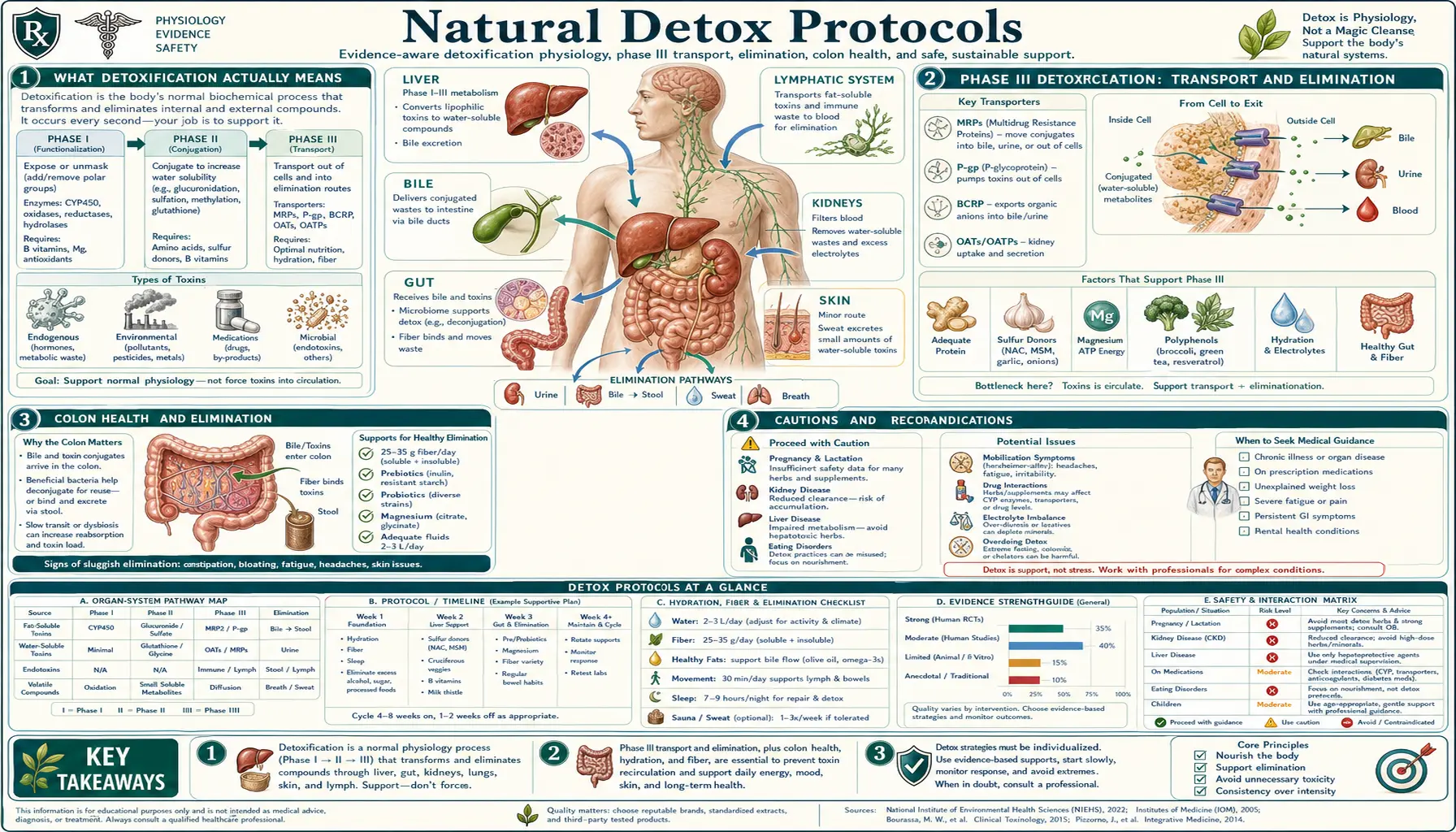
Detoxification is the physiological process by which the body identifies, neutralizes, and eliminates harmful substances. Far from being a marketing buzzword, detoxification is a continuous, biochemically complex process that occurs primarily in the liver but also involves the kidneys, lungs, skin, lymphatic system, and gastrointestinal tract.
From a naturopathic perspective, detoxification operates through three distinct phases in the liver:
- Phase I (Functionalization): Enzymes of the cytochrome P450 family modify toxins through oxidation, reduction, and hydrolysis, making them more reactive and preparing them for Phase II processing.
- Phase II (Conjugation): The reactive intermediates from Phase I are bound to water-soluble molecules through pathways including glutathione conjugation, methylation, sulfation, glucuronidation, acetylation, and amino acid conjugation, rendering them less toxic and easier to excrete.
- Phase III (Transport and Elimination): Specialized transporter proteins move the conjugated toxins out of cells and into bile or urine for final elimination from the body.
True detoxification is not about deprivation or extreme fasting. It is about providing the body with the specific nutrients, cofactors, and conditions it needs to run these biochemical pathways efficiently and completely.
Why Detox Is Necessary in the Modern World
The human body evolved sophisticated detoxification mechanisms over millennia. However, the modern world presents a toxic burden that far exceeds anything our ancestors encountered. The sheer volume and variety of synthetic chemicals now present in our environment have overwhelmed the body's natural capacity for elimination in many individuals.
- Environmental toxins: Over 80,000 synthetic chemicals have been introduced into commerce since the 1940s, the vast majority never tested for long-term human safety. These include industrial solvents, flame retardants, per- and polyfluoroalkyl substances (PFAS), and volatile organic compounds found in building materials and household products.
- Heavy metals: Mercury from dental amalgams and contaminated fish, lead from aging infrastructure and paint, arsenic in well water and rice, cadmium from cigarette smoke and industrial emissions, and aluminum from cookware, antiperspirants, and antacids accumulate in tissues over time.
- Pesticides and herbicides: Glyphosate, organophosphates, and hundreds of other agricultural chemicals contaminate food and water supplies. Even organic produce may carry residues from soil and water contamination.
- Plastics and endocrine disruptors: Bisphenol A (BPA), phthalates, and microplastics have become ubiquitous in food packaging, water bottles, and the environment. These compounds mimic hormones and disrupt the endocrine system at extremely low concentrations.
- Air pollution: Particulate matter, ozone, nitrogen dioxide, and sulfur dioxide contribute to systemic inflammation and oxidative stress, placing additional burden on detoxification pathways.
- Pharmaceutical residues: Medications, both prescribed and over-the-counter, require hepatic processing and can deplete the very nutrients needed for detoxification.
The cumulative effect of this chronic low-level toxic exposure is often referred to as total body burden. When the body's detoxification capacity is exceeded by its toxic load, symptoms of toxicity begin to manifest.
Signs You Need to Detox
When detoxification pathways become sluggish or overwhelmed, the body sends signals that should not be ignored. A naturopathic assessment considers the following symptoms as potential indicators of toxic overload:
- Persistent fatigue that does not improve with adequate rest
- Brain fog, difficulty concentrating, and poor memory
- Skin problems including acne, eczema, rashes, and dull complexion
- Digestive complaints such as bloating, constipation, gas, and food sensitivities
- Headaches and migraines without clear cause
- Joint and muscle pain with no obvious injury
- Chemical sensitivity to perfumes, cleaning products, or exhaust fumes
- Hormonal imbalances including PMS, irregular cycles, and estrogen dominance
- Weight gain or difficulty losing weight despite proper diet and exercise, as the body stores toxins in adipose tissue
- Mood disturbances including anxiety, depression, and irritability
- Recurrent infections indicating compromised immune function
- Bad breath and body odor despite good hygiene
- Dark circles under the eyes often called allergic shiners
The presence of multiple symptoms from this list, particularly when conventional testing reveals no clear pathology, strongly suggests that impaired detoxification is a contributing factor.
The Liver as the Primary Detox Organ
The liver is the central organ of detoxification, performing over 500 known biochemical functions. Weighing approximately three pounds, it processes virtually every substance that enters the body, whether absorbed from the gut, inhaled through the lungs, or absorbed through the skin.
- Blood filtration: The liver filters approximately 1.4 liters of blood per minute, removing bacteria, endotoxins, immune complexes, and various toxins from the portal circulation coming from the gut.
- Bile production: The liver produces 800 to 1,000 milliliters of bile daily, which serves as a primary route for excreting fat-soluble toxins, cholesterol, and metabolic waste products.
- Nutrient metabolism: The liver converts nutrients into their biologically active forms, stores vitamins and minerals, and regulates blood sugar, all of which directly affect detoxification capacity.
- Immune function: Kupffer cells in the liver comprise 80 to 90 percent of the body's tissue macrophages, providing a critical line of immune defense.
A healthy liver is the foundation of effective detoxification. When the liver is overburdened, congested, or damaged by alcohol, medications, viral infections, or toxic exposure, every downstream detoxification process suffers. Supporting liver health is therefore the first priority in any detox protocol.
Phase I Detoxification: Cytochrome P450
Phase I detoxification is carried out primarily by the cytochrome P450 (CYP450) enzyme superfamily, a group of over 50 enzymes concentrated in the endoplasmic reticulum of liver cells. These enzymes transform fat-soluble toxins into intermediate metabolites through three types of chemical reactions.
Oxidation
The most common Phase I reaction, oxidation adds an oxygen atom or removes a hydrogen atom from the toxin. This is the primary mechanism for processing most drugs, environmental chemicals, and steroid hormones. Key CYP450 enzymes involved include CYP1A2, CYP2D6, CYP2C9, CYP2C19, and CYP3A4.
Reduction
Certain toxins undergo reduction reactions in which electrons are added to the molecule. This pathway is particularly important for processing nitrogen-containing compounds and certain pharmaceutical agents.
Hydrolysis
Water is used to break chemical bonds within the toxin molecule, splitting it into smaller, more manageable fragments. Ester and amide bonds are commonly cleaved through this mechanism.
Critical concern: Phase I reactions frequently produce intermediate metabolites that are more reactive and toxic than the original compounds. These free radical intermediates can cause significant oxidative damage to DNA, proteins, and cell membranes if Phase II conjugation does not process them quickly. This is why Phase I and Phase II must be in balance. An overactive Phase I coupled with a sluggish Phase II is one of the most dangerous detoxification imbalances.
Nutrients required for Phase I:
- B vitamins: B2 (riboflavin), B3 (niacin), B6 (pyridoxine), B9 (folate), and B12 (cobalamin)
- Glutathione to neutralize free radical intermediates
- Branched-chain amino acids (leucine, isoleucine, valine)
- Flavonoids from fruits and vegetables
- Vitamins A, C, and E as antioxidant protection
- Iron, calcium, copper, zinc, magnesium, and selenium
Phase II Detoxification: Conjugation Pathways
Phase II detoxification neutralizes the reactive intermediates produced by Phase I by attaching (conjugating) them to water-soluble molecules. This makes the metabolites less toxic and prepares them for excretion through bile or urine. There are six major conjugation pathways, each requiring specific nutrients and cofactors.
Glutathione Conjugation
The most important Phase II pathway, glutathione conjugation is responsible for neutralizing a vast range of toxins including heavy metals, solvents, pesticides, and the reactive intermediates from Phase I. Glutathione is a tripeptide composed of cysteine, glutamic acid, and glycine. It is often called the body's master antioxidant. Depletion of glutathione is one of the most significant factors in impaired detoxification. Supportive nutrients include N-acetylcysteine (NAC), alpha-lipoic acid, selenium, vitamins C and E, and sulfur-containing foods.
Methylation
Methylation involves the transfer of a methyl group (CH3) to a toxin, making it suitable for elimination. This pathway is critical for processing estrogens, dopamine, histamine, and heavy metals such as arsenic and mercury. Methylation depends on S-adenosylmethionine (SAMe) as the methyl donor. Key nutrients include folate (as 5-methyltetrahydrofolate), vitamin B12 (as methylcobalamin), vitamin B6, trimethylglycine (betaine), and choline. Genetic polymorphisms in the MTHFR gene can significantly impair this pathway.
Sulfation
Sulfation attaches a sulfate group to toxins, neurotransmitters, and hormones. This pathway is essential for processing thyroid hormones, steroid hormones, bile acids, and many pharmaceutical compounds. Sulfation requires adequate sulfur intake from foods such as garlic, onions, cruciferous vegetables, and eggs. Molybdenum is a critical cofactor. Sulfation capacity is commonly depleted in individuals with chronic toxic exposure.
Glucuronidation
Glucuronidation conjugates toxins with glucuronic acid, making them water-soluble for excretion in bile and urine. This pathway processes bilirubin, steroid hormones, thyroid hormones, many drugs, and environmental chemicals. Calcium D-glucarate from cruciferous vegetables, apples, and oranges supports this pathway by inhibiting beta-glucuronidase, an enzyme produced by gut bacteria that can reverse glucuronidation and release toxins back into circulation.
Acetylation
Acetylation attaches an acetyl group to toxins and is the primary pathway for processing aromatic amines, hydrazines, and sulfonamide drugs. This pathway requires acetyl-CoA, which depends on adequate pantothenic acid (vitamin B5) and thiamine (vitamin B1). Genetic variations in N-acetyltransferase enzymes create slow and fast acetylator phenotypes, significantly affecting how individuals process certain toxins and medications.
Amino Acid Conjugation
This pathway conjugates toxins with amino acids, primarily glycine, taurine, and glutamine. Glycine conjugation is one of the most important yet commonly overlooked pathways, processing salicylates, benzoic acid, and many food preservatives. Many individuals are deficient in glycine relative to their detoxification needs. Bone broth, collagen, and glycine supplementation can support this pathway.
Phase III Detoxification: Transport and Elimination
Phase III detoxification, sometimes called the antiporter system, involves the active transport of conjugated toxins out of cells and into the bloodstream, bile, or urine for final elimination. Without efficient Phase III transport, even properly conjugated toxins can accumulate within cells and cause damage.
- P-glycoprotein (Pgp): A membrane transporter that pumps conjugated toxins out of cells and into bile or the intestinal lumen. Pgp is found in the liver, intestines, kidneys, and blood-brain barrier.
- Multidrug resistance-associated proteins (MRPs): A family of transporters that move glutathione and glucuronide conjugates out of cells for biliary and renal excretion.
- Organic anion transporting polypeptides (OATPs): Facilitate the uptake and transport of a wide variety of organic compounds including bile acids, hormones, and drug conjugates.
Supporting Phase III:
- Adequate fiber intake to bind toxins excreted in bile and prevent reabsorption through enterohepatic recirculation
- Healthy gut flora to minimize beta-glucuronidase activity and support proper elimination
- Curcumin from turmeric, which upregulates several Phase III transporters
- Quercetin from onions and apples, which modulates transporter activity
- Regular bowel movements to prevent the reabsorption of toxins that have been excreted into the intestinal tract
Heavy Metal Detoxification
Heavy metal toxicity is one of the most significant and underdiagnosed health problems in modern society. Unlike many organic toxins, heavy metals do not biodegrade. They accumulate in bones, brain, kidneys, liver, and adipose tissue over a lifetime of exposure. Effective heavy metal detoxification requires specific strategies beyond general detox protocols.
Chelation
Chelation therapy uses agents that bind to heavy metals and facilitate their excretion. In clinical settings, DMSA (dimercaptosuccinic acid), DMPS (2,3-dimercapto-1-propanesulfonic acid), and EDTA (ethylenediaminetetraacetic acid) are used under medical supervision. Natural chelating agents, while gentler, can also be effective over longer periods of use.
Natural Binders
- Chlorella: A single-celled green algae with a strong affinity for heavy metals including mercury, lead, and cadmium. Its broken cell wall form binds metals in the gut and facilitates their elimination. Typical dosing ranges from 3 to 10 grams daily. Start low and increase gradually.
- Cilantro (Coriandrum sativum): Cilantro mobilizes mercury and other heavy metals from tissues, particularly the central nervous system. It should always be used alongside a binding agent such as chlorella to prevent redistribution of mobilized metals. Use as a tincture, tea, or in food.
- Activated charcoal: A highly porous form of carbon that adsorbs a wide range of toxins and metals in the gastrointestinal tract. Take on an empty stomach, separated from food and supplements by at least two hours, as it binds indiscriminately. Typical dosing is 500 milligrams to 2 grams daily during a detox protocol.
- Bentonite clay: A negatively charged volcanic clay that attracts and binds positively charged toxins and heavy metals. Can be taken internally (food-grade only) or used in detox baths. Internal dosing is typically one teaspoon in water daily, taken away from food and medications.
- Zeolite (clinoptilolite): A naturally occurring volcanic mineral with a cage-like structure that traps heavy metals and other toxins through ion exchange. Micronized or nano-sized forms offer superior bioavailability. Zeolite has a particular affinity for lead, cadmium, and mercury.
Important principle: Always use a binder when mobilizing heavy metals. Mobilizing metals without binding them can redistribute toxins to more sensitive tissues, particularly the brain, potentially worsening symptoms.
Supporting Detox Pathways Naturally
The foundation of any effective detox protocol is providing the body with the raw materials it needs to run its detoxification pathways at full capacity. Specific foods, herbs, and supplements have been shown to upregulate and support these processes.
Cruciferous Vegetables
Broccoli, cauliflower, Brussels sprouts, cabbage, kale, and broccoli sprouts contain sulforaphane and indole-3-carbinol, which powerfully induce Phase II detoxification enzymes. Broccoli sprouts contain 20 to 50 times more sulforaphane than mature broccoli. Aim for at least one to two servings of cruciferous vegetables daily.
Sulfur-Rich Foods
Garlic, onions, leeks, shallots, and eggs provide sulfur amino acids essential for glutathione synthesis and sulfation. Garlic additionally contains allicin, which supports liver detoxification and has chelating properties for certain heavy metals.
Key Supplements
- Milk thistle (Silybum marianum): The silymarin complex, particularly silybin, is the most well-researched hepatoprotective botanical. It stabilizes liver cell membranes, promotes glutathione synthesis, stimulates liver cell regeneration, and has potent antioxidant and anti-inflammatory effects. Standard dosing is 200 to 400 milligrams of standardized silymarin extract, two to three times daily.
- N-Acetylcysteine (NAC): The most effective oral precursor to glutathione. NAC directly replenishes cysteine, the rate-limiting amino acid in glutathione synthesis. It also has direct antioxidant and mucolytic properties. Typical dosing is 600 to 1,800 milligrams daily in divided doses.
- Glutathione: Liposomal or acetylated forms offer superior bioavailability compared to standard oral glutathione, which is largely broken down in the digestive tract. Intravenous glutathione, administered by a qualified practitioner, provides the most direct support. Typical oral liposomal dosing is 250 to 500 milligrams daily.
- Alpha-lipoic acid (ALA): A unique antioxidant that is both water- and fat-soluble, allowing it to work in every compartment of the cell. ALA recycles glutathione, vitamin C, and vitamin E, and has chelating properties for mercury and other heavy metals. Dosing ranges from 300 to 600 milligrams daily. The R-lipoic acid form has superior bioavailability.
- Vitamin C: A foundational antioxidant that protects against free radical damage generated during Phase I detoxification, supports glutathione recycling, and enhances urinary excretion of heavy metals. Dosing during a detox protocol ranges from 2,000 to 5,000 milligrams daily in divided doses, or to bowel tolerance.
Lymphatic System Support
The lymphatic system is the body's secondary circulatory system and its primary waste removal network. Unlike the cardiovascular system, the lymphatic system has no central pump. It relies entirely on muscle contraction, movement, and manual techniques to circulate lymph fluid and transport cellular debris, toxins, and immune cells to the lymph nodes for processing.
Dry Brushing
Dry skin brushing uses a natural-bristle brush to stimulate lymphatic flow, exfoliate dead skin cells, and improve circulation. Brush the dry skin in long strokes toward the heart before showering, starting at the feet and working upward. Spend five to ten minutes daily. This simple practice can noticeably improve skin texture and support lymphatic drainage within days.
Rebounding
Bouncing on a mini trampoline (rebounder) is one of the most effective methods for stimulating lymphatic circulation. The rhythmic bouncing creates shifts in gravitational force that open and close lymphatic valves, pumping lymph fluid throughout the body. Even gentle bouncing for ten to twenty minutes daily provides significant lymphatic benefit. Rebounding was studied by NASA and found to be 68 percent more efficient than jogging for cardiovascular conditioning.
Movement
Any form of regular physical activity supports lymphatic flow. Walking, yoga, swimming, and stretching all create the muscle contractions necessary to move lymph. Sedentary lifestyles lead to lymphatic stagnation, contributing to fluid retention, immune dysfunction, and impaired toxin clearance. Aim for at least 30 minutes of moderate movement daily during a detox protocol.
Sweat Therapy
The skin is the body's largest organ and an important route of toxin elimination. Sweat contains not only water and electrolytes but also heavy metals, BPA, phthalates, flame retardants, and various other toxins. Inducing sweat through heat exposure or vigorous exercise is a powerful adjunct to any detox protocol.
Sauna Therapy
- Infrared sauna: Infrared saunas penetrate tissue more deeply than traditional saunas, operating at lower temperatures (120 to 150 degrees Fahrenheit versus 150 to 195 degrees for conventional saunas). Research has demonstrated that infrared sauna sessions increase the excretion of heavy metals, BPA, and other environmental chemicals through sweat. Sessions of 20 to 45 minutes, three to five times weekly, are recommended during active detoxification.
- Traditional Finnish sauna: High-heat saunas produce copious sweating and have centuries of traditional use for purification and health. They offer cardiovascular benefits and significant toxin excretion.
- Steam rooms: Moist heat promotes sweating and opens airways, supporting respiratory detoxification as well.
Exercise-Induced Sweating
Vigorous exercise that produces sustained sweating provides the dual benefits of lymphatic stimulation and sweat-based toxin elimination. High-intensity interval training, hot yoga, and endurance exercise are particularly effective. Always shower promptly after sweating to prevent reabsorption of excreted toxins through the skin.
Hydration reminder: Replace fluids and electrolytes lost through sweating. Drink filtered water with a pinch of sea salt or an electrolyte formula before, during, and after sweat therapy sessions.
Colon Health and Elimination
The colon is the final stage of the detoxification pathway. If elimination is sluggish or impaired, toxins that the liver has processed and excreted into bile are reabsorbed through the intestinal wall and recirculated through the body, a process known as enterohepatic recirculation. Maintaining healthy bowel function is therefore essential for effective detoxification.
- Fiber: Aim for 30 to 40 grams of fiber daily from vegetables, fruits, ground flaxseed, chia seeds, and psyllium husk. Fiber binds toxins in the gut and promotes regular elimination. Soluble fiber feeds beneficial gut bacteria, while insoluble fiber adds bulk and speeds transit time.
- Probiotics: A healthy and diverse gut microbiome is essential for proper detoxification. Certain bacterial strains reduce beta-glucuronidase activity, preventing the deconjugation and reabsorption of toxins. Fermented foods such as sauerkraut, kimchi, kefir, and miso provide natural probiotic support.
- Bowel regularity: Ideally, one to three well-formed bowel movements daily ensure that toxins are eliminated promptly. Constipation is a significant impediment to detoxification. Magnesium citrate or oxide (400 to 800 milligrams at bedtime) can support regularity.
- Enemas and colonics: Coffee enemas have a long history of use in naturopathic medicine. The caffeine and palmitic acid in coffee stimulate the production of glutathione S-transferase in the liver by up to 700 percent and promote bile flow. Colonic hydrotherapy can help clear accumulated waste from the large intestine. Both should be performed under guidance from a qualified practitioner.
Hydration and Detoxification
Water is the universal solvent and the primary medium through which the body eliminates water-soluble toxins via the kidneys. Adequate hydration is non-negotiable during any detox protocol. Dehydration concentrates toxins in the blood, impairs kidney filtration, slows lymphatic flow, and contributes to constipation.
- Daily intake: Drink at least half your body weight in ounces of filtered water daily. During active detoxification, increase this by an additional 16 to 32 ounces.
- Water quality: Use filtered water to avoid adding to your toxic burden. Reverse osmosis, carbon block, and Berkey-style gravity filters effectively remove chlorine, fluoride, heavy metals, and pharmaceutical residues. Re-mineralize reverse osmosis water with trace mineral drops.
- Lemon water: Starting the day with warm water and the juice of half a fresh lemon stimulates bile production, supports liver function, provides vitamin C, and alkalizes the body. This simple practice is one of the most accessible detox supports available.
- Herbal teas: Dandelion root tea supports liver and kidney function. Nettle leaf tea provides minerals and supports kidney filtration. Ginger tea stimulates circulation and digestion. Red clover tea supports blood purification.
Juice Cleansing: Pros and Cons
Juice cleansing has become one of the most popular approaches to detoxification, but it carries both genuine benefits and significant limitations that must be understood in context.
Potential Benefits
- Concentrated nutrients: Fresh vegetable and fruit juices deliver a dense concentration of vitamins, minerals, enzymes, and phytonutrients in an easily absorbable form.
- Digestive rest: Removing solid food temporarily gives the digestive system a break, allowing energy to be redirected toward repair and detoxification.
- Increased vegetable intake: Many people consume far more vegetables during a juice cleanse than they normally would.
- Hydration: Juice cleansing naturally increases fluid intake.
Significant Concerns
- Protein deficiency: Juices provide minimal protein, yet Phase II detoxification is entirely dependent on amino acids including glycine, taurine, glutamine, and cysteine. A protein-deficient juice fast can actually impair detoxification by starving Phase II pathways of their required substrates while Phase I continues to produce toxic intermediates.
- Blood sugar spikes: Fruit-heavy juices deliver a concentrated dose of fructose without the fiber that normally slows absorption, potentially causing blood sugar instability, insulin spikes, and increased liver burden.
- Fiber removal: Juicing removes the fiber that binds toxins in the gut and feeds beneficial bacteria. Without fiber, excreted toxins are more likely to be reabsorbed.
- Oxalate load: High-oxalate vegetables such as spinach, Swiss chard, and beet greens, when juiced in large quantities, can contribute to kidney stone formation in susceptible individuals.
Naturopathic recommendation: If juice cleansing is desired, limit it to three to five days, emphasize vegetable-based juices over fruit, supplement with protein (collagen, bone broth, or a clean protein powder), and include a fiber source such as ground flaxseed or psyllium separately.
Detox Diet Guidelines
A well-designed detox diet provides all the nutrients necessary to support Phase I, II, and III detoxification while minimizing additional toxic exposure. The following guidelines form the foundation of a naturopathic detox eating plan.
Foods to Emphasize
- Cruciferous vegetables: Broccoli, broccoli sprouts, cauliflower, Brussels sprouts, cabbage, kale, arugula, and radishes
- Allium family: Garlic, onions, leeks, shallots, and chives for sulfur compounds
- Leafy greens: Spinach, Swiss chard, collard greens, and dandelion greens for chlorophyll and minerals
- Berries: Blueberries, raspberries, and blackberries for antioxidant flavonoids
- Citrus fruits: Lemons, limes, and grapefruits for vitamin C and limonene
- Clean protein: Wild-caught fish, pasture-raised eggs, organic poultry, and legumes for amino acids essential to Phase II conjugation
- Healthy fats: Extra virgin olive oil, avocado, coconut oil, and raw nuts and seeds
- Bitter foods: Dandelion greens, arugula, endive, and artichoke stimulate bile production
- Fermented foods: Sauerkraut, kimchi, miso, and coconut yogurt for gut microbiome support
Foods to Eliminate
- Processed foods: All packaged, refined, and chemically preserved foods
- Sugar and artificial sweeteners: Deplete B vitamins and glutathione, feed pathogenic organisms
- Alcohol: Directly toxic to the liver and consumes detoxification resources
- Caffeine: Reduce or eliminate during the initial phase of a detox protocol, as it burdens Phase I enzymes
- Gluten and dairy: Common inflammatory triggers that can impair gut integrity and detoxification
- Conventionally raised meat: May contain antibiotics, hormones, and pesticide residues
- Refined vegetable oils: Soybean, corn, canola, and cottonseed oils are pro-inflammatory and often contain solvent residues
Detox Reactions and the Herxheimer Response
One of the most important aspects of any detox protocol is understanding and managing detox reactions. When toxins are mobilized faster than the body can eliminate them, or when large numbers of pathogenic organisms die off, a temporary worsening of symptoms known as the Herxheimer reaction (or healing crisis) can occur.
Common Detox Reaction Symptoms
- Fatigue and lethargy
- Headaches
- Muscle and joint aches
- Skin breakouts including rashes, acne, and hives
- Digestive upset including nausea, diarrhea, or bloating
- Flu-like symptoms
- Mood changes including irritability, anxiety, or emotional sensitivity
- Brain fog that temporarily worsens before improving
Managing Detox Reactions
- Slow down: Reduce the intensity of the detox protocol. This is the most important response. More aggressive is not better if your elimination pathways cannot keep up.
- Increase hydration: Drink additional water to support kidney excretion of mobilized toxins.
- Support elimination: Ensure regular bowel movements, use binders such as activated charcoal or bentonite clay, and incorporate sweat therapy.
- Rest: Allow the body the energy it needs for detoxification and healing.
- Epsom salt baths: Magnesium sulfate baths draw toxins through the skin, provide magnesium, and promote relaxation. Use two cups of Epsom salts in a warm bath for 20 minutes.
A Herxheimer reaction typically lasts one to five days. If symptoms persist beyond a week or are severe, the protocol should be reassessed and potentially paused under the guidance of a qualified practitioner.
Timeline and Protocols
Effective detoxification is not a weekend project. While short cleanses can provide a reset, meaningful reduction in body burden requires sustained effort. The following timeline provides a general framework that can be adapted to individual needs.
Preparation Phase (1 to 2 Weeks)
- Gradually eliminate processed foods, sugar, alcohol, and caffeine
- Increase vegetable intake, particularly cruciferous vegetables
- Begin hydration optimization
- Start gentle liver support with milk thistle and dandelion root tea
- Ensure regular bowel movements before beginning active detoxification
Active Detox Phase (2 to 6 Weeks)
- Follow the detox diet guidelines strictly
- Implement full supplement protocol (NAC, glutathione, ALA, milk thistle, vitamin C, B vitamins)
- Daily dry brushing and movement
- Sauna sessions three to five times weekly
- Include binders if targeting heavy metals
- Monitor symptoms and adjust intensity as needed
Transition Phase (1 to 2 Weeks)
- Gradually reintroduce eliminated foods one at a time, noting any reactions
- Maintain core supplements at reduced dosages
- Continue sauna and movement practices
- Identify and eliminate any foods that provoke adverse reactions
Maintenance Phase (Ongoing)
- Follow a clean whole-foods diet as a permanent lifestyle
- Continue foundational supplements such as NAC, vitamin C, and a quality multivitamin
- Practice regular sauna, exercise, and stress management
- Consider a focused detox protocol one to four times per year depending on exposure level and health status
For heavy metal detoxification specifically, expect the process to take three to twelve months or longer depending on the level of accumulation and the aggressiveness of the protocol.
Cautions and Contraindications
While detoxification is a natural and necessary process, certain situations require caution, modified protocols, or medical supervision. Aggressive or inappropriate detox practices can cause harm.
- Pregnancy and breastfeeding: Active detoxification protocols should be avoided during pregnancy and lactation. Mobilized toxins can cross the placenta or enter breast milk, exposing the developing infant. Focus instead on a clean diet, gentle hydration, and minimizing new toxic exposures. Ideally, a thorough detox should be completed before conception.
- Medications: Many detox supplements and foods can alter the metabolism of pharmaceutical drugs by inducing or inhibiting cytochrome P450 enzymes. Grapefruit, St. John's Wort, and high-dose supplements can have significant drug interactions. Always consult with a healthcare provider before beginning a detox protocol if you are on any medication.
- Too-aggressive detox: Mobilizing toxins faster than the body can eliminate them leads to redistribution, where toxins are moved from less sensitive storage sites (such as fat tissue) to more sensitive organs (such as the brain and kidneys). Start slow, use binders, and support all elimination pathways before increasing the intensity of any protocol. The principle of start low and go slow is paramount.
- Kidney and liver disease: Individuals with compromised kidney or liver function have reduced capacity to eliminate mobilized toxins. Detox protocols in these individuals require medical supervision and significant modification.
- Eating disorders: Detox protocols that involve caloric restriction can be triggering for individuals with a history of eating disorders. Focus on nourishing, food-based approaches rather than fasting or elimination protocols.
- Children: Children's detoxification systems are immature and more sensitive. Pediatric detox protocols should be designed and supervised by a qualified naturopathic or integrative physician.
- Dental amalgams: Do not begin aggressive mercury detoxification while mercury amalgam fillings are still in place. The fillings continuously release mercury vapor, and chelation can mobilize mercury from the fillings, increasing rather than decreasing exposure. Work with a biological dentist to safely remove amalgams before pursuing mercury detoxification.
- Electrolyte imbalances: Extended fasting, excessive sweating, or overuse of laxatives and binders can deplete essential electrolytes including sodium, potassium, and magnesium, potentially causing dangerous cardiac and neurological complications.
The guiding principle of naturopathic detoxification is to support the body's innate capacity for self-healing. Work with a qualified practitioner who can assess your individual toxic burden, identify your specific detoxification weaknesses, and design a protocol that is both effective and safe for your unique situation.
Research Papers
- Glutathione and detoxification — PubMed search
- Cytochrome P450 phase I detoxification — PubMed search
- Heavy metal chelation therapy — PubMed search
- Sauna and sweat toxin excretion — PubMed search
- Cruciferous vegetables and liver detoxification — PubMed search
- Milk thistle (silymarin) and liver function — PubMed search
- Herxheimer reaction research — PubMed search
Connections
- Fluoride Chelation — the fluoride-specific protocol
- Bentonite Clay — where the binder claims meet the evidence
- All Remedies
- How Your Liver Actually Detoxifies — interactive animation
- Heavy Metals
- Glutathione
- Milk Thistle
- Fasting
- Dandelion
- Chlorella
- Liver Cleansing
- Gut Healing
- Bryan Ardis
- Detox and Recovery
- Mercury
- Lead
- Pesticides
- NAC
- Vitamin C
- Gerson Detoxification
- Sulfur
- Broccoli
- Salt in Socks — the claim that salt “draws moisture and toxins out” through the soles, and why skin does not work that way